
Applying Butyl Stearate in Rubber Processing: An Industry Application Guide
Butyl stearate does two jobs in a rubber plant: it keeps the compound moving, and it keeps the compound from sticking. This application guide maps N-Butyl Stearate (CAS 123-95-5) into real rubber manufacturing workflows — compound design, mixing, shaping, demolding, quality control and scale-up — and explains how it behaves when it sits in the same additive package as secondary plasticizers such as DOP and DOA.
Problem Definition: Flow and Release, Not Polymer Chemistry
Most rubber defects that get blamed on the polymer or the cure system are actually flow and release problems. A compound that is too stiff builds heat in the mixer, fights its way through the die, and tears when it is pulled from the mould. A compound that releases badly leaves surface marks, raises scrap rates, and pushes operators toward external release sprays that contaminate the surface and add a manual step to every cycle.
Both symptoms sit in the lubricant-and-release part of the additive package — and that part cannot be designed in isolation. In a rubber recipe the lubricant shares a stream with the plasticizer. If the lubricant is not compatible with the plasticizer, the additive package can separate, the surface turns greasy, and the softness the plasticizer was supposed to deliver becomes inconsistent from batch to batch. Processors then compensate by changing the plasticizer level, which treats the symptom and makes the compound harder to control.
Butyl Stearate is used in rubber processing because it addresses that interface problem directly. It is an ester of stearic acid and butanol that functions as a processing aid and mould release agent, and it is compatible with common secondary plasticizers such as DOP (Dioctyl Phthalate) and DOA (Dioctyl Adipate). That compatibility means the lubricant can be introduced into the same additive stream as the plasticizer without disturbing the softness the plasticizer is asked to provide.
Industry Background: Why Ester Lubricants Hold Their Position
Butyl stearate is not a niche ester. The global N-Butyl Stearate market was valued at approximately USD 1.28 billion in 2024, according to Spherical Insights. Lubricants formed the largest application segment of that market in 2025 with a 38.5% share (Dataintelo) — a useful signal for rubber and plastics formulators, because it means the grades produced at industrial scale are lubricant grades, not only cosmetic grades.
Supply is concentrated in Asia. Asia Pacific held a 42.3% revenue share of the global N-Butyl Stearate market in 2025 (Dataintelo), and China remains the dominant export origin: Chinese supply accounted for more than 66% of specific Butyl Stearate import shipments into India under HS Code 29157090 in 2024 (Zauba). Published manufacturer lists include BASF SE, Emery Oleochemicals, Croda International and Fine Organics (Cognitive Market Research), alongside Chinese producers such as Shandong Kexing Chemical Co., Ltd.
Regulation is the other structural driver. Butyl Stearate (CAS 123-95-5) is listed as an active substance under EU REACH regulations, requiring registration for imports or manufacturing above 1 tonne per year (ECHA, European Chemicals Agency). That registration threshold is one reason downstream buyers increasingly ask suppliers for documentation rather than only a specification sheet.
A note on market figures: published estimates for the butyl stearate market differ substantially between research houses — values cited for 2025 range from USD 1.28 billion (2024 base, Spherical Insights) to USD 2.85 billion (Dataintelo) and USD 5.2 billion (Future Market Insights). The gap reflects different scope definitions, including whether industrial and cosmetic grades and downstream derivatives are counted together. Any single figure should be read as a scope statement rather than a precise market measurement.
What N-Butyl Stearate Is, and What Its Specification Tells a Formulator
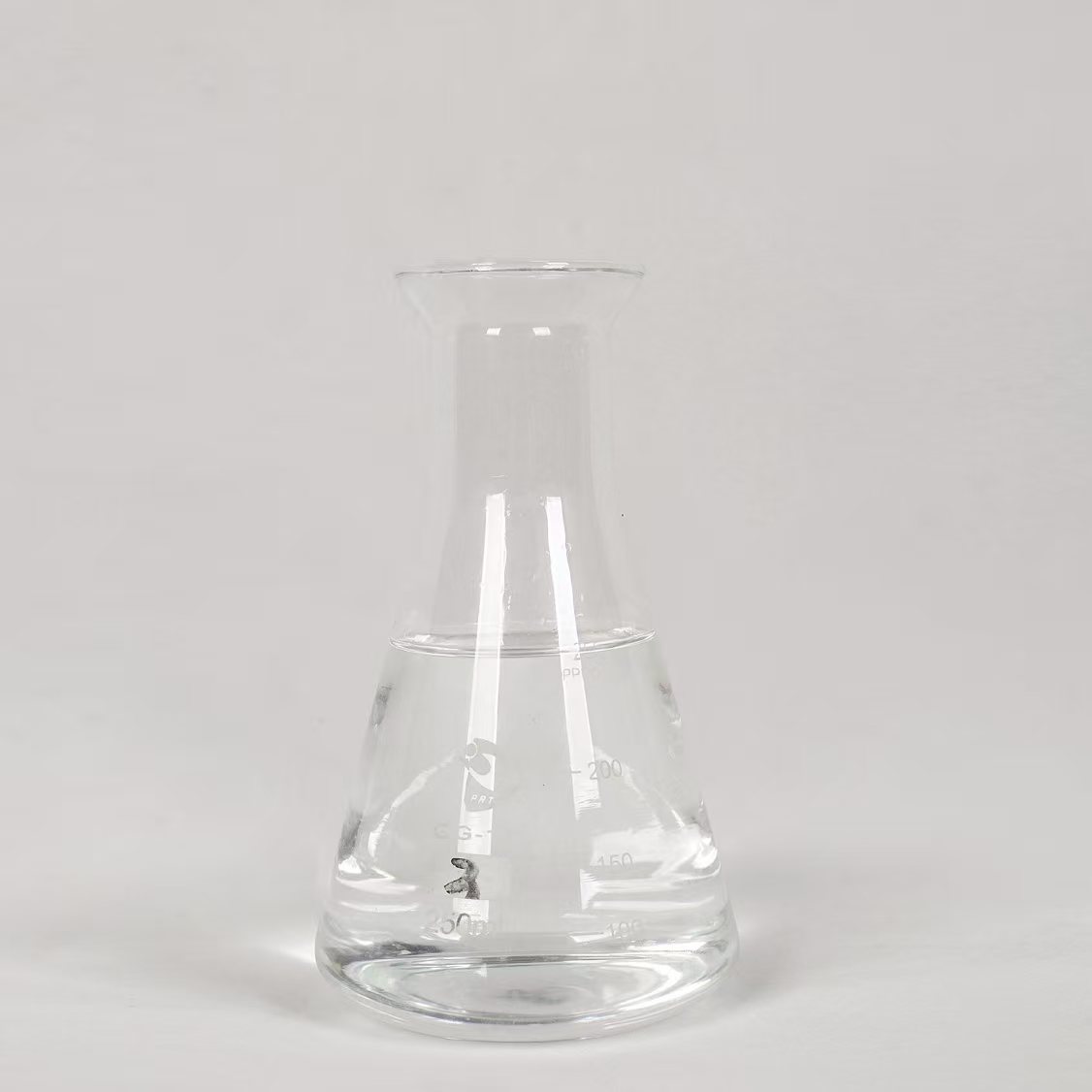
N-Butyl Stearate (CAS 123-95-5) is the butyl ester of stearic acid — a colorless, transparent liquid with a slight odour, also written as n-butyl stearate or butyl octadecanoate. Shandong Kexing Chemical Co., Ltd., a manufacturer of plasticizers, plastic and rubber flame retardants and plastic additives based in Dongying, Shandong, China, produces the grade at a minimum content of 99.0% and documents it for use as a PVC internal lubricant and cosmetic emollient.
| Parameter | Specification | Why it matters in rubber processing |
|---|---|---|
| Chemical name | N-Butyl Stearate | Ester lubricant / release aid, not a primary plasticizer |
| CAS number | 123-95-5 | Registration and documentation reference under EU REACH |
| Appearance | Colorless transparent liquid | No suspended matter to filter out of the additive stream |
| Odour | Slight odour | Relevant for food-contact and consumer goods |
| Colour (Pt-Co) | Max 30 | Keeps light-coloured and transparent rubber parts on colour |
| Content, % | Min 99.0 | Predictable lubricant effect at the dosing stage |
| Acidity (mgKOH/g) | Max 0.20 | Acidity is a controlled input next to cure chemistry |
| Moisture, % | Max 0.10 | Moisture control protects mixing consistency and finish |
| Density g/cm³ | 0.85 | Lighter than DOP (0.983–0.985) and DOA (0.925–0.927) |
| Flash point, °C | Min 190 | Headroom against the heat history of mixing and shaping |
Two of these numbers carry most of the weight in a rubber context. The first is the flash point of at least 190 °C, which is the reason this ester is positioned as a low volatility lubricant: it has a wide working margin against the temperatures a compound meets in an internal mixer, an extruder barrel or a calender nip, so less of the additive is lost before it has done its job. The second is the acidity limit of 0.20 mgKOH/g, combined with a moisture limit of 0.10%, because both acidity and moisture are controlled inputs in cure chemistry. A supplier who holds those two parameters steady batch to batch protects the processor's cure consistency as much as the mix's flow behaviour.
Density is a quieter but practical point. At 0.85 g/cm³, butyl stearate is lighter than the secondary plasticizers it usually sits beside, so volume-based and weight-based dosing lines do not agree with each other. Formulators who dose by volume should convert using the density of each liquid in the package rather than assuming a single value.
The Solution: Three Jobs Butyl Stearate Does in a Rubber Recipe
Job 1 — Processing aid during mixing and shaping
Rubber compounds meet hot metal at several points: the mixer, the kneader, the extruder screw and die, the calender rolls and the coating head. Each contact point costs energy and creates a place for scorching or surface damage. Butyl stearate reduces friction at those interfaces and improves the flow of the compound, which is why it belongs in the lubricant portion of a recipe rather than in the cure system. The equipment set documented for this class of ester additive — high-speed mixers, kneaders, extruders, calenders and coating machines — is the same equipment a rubber plant already runs.
Kexing's application documentation for this ester range lists five functions the additive is expected to deliver in polymer processing: softening and toughening, so the finished part keeps elasticity and resists cracking; a lower melting point, which eases processing and reduces energy cost; better ductility, so the part resists breakage under stretching; improved fluidity, so shaping runs smoothly with a consistent finish; and cold and flex resistance, so flexibility stays stable at low temperature. In a rubber compound, butyl stearate's contribution concentrates on the flow, finish and release end of that list. Where softness is the objective, the plasticizer carries that load — which is the subject of the next section.
Job 2 — Mould release and surface control
Release is a surface phenomenon. Butyl stearate is used as a plastic mould release agent because it works at the boundary between the compound and the tool rather than inside the polymer network: the compound separates cleanly from the cavity, surface blemishes drop, and the manual release step in the cycle becomes lighter. The same surface behaviour explains its position in adjacent industries as an ink slip agent, a textile softening agent, a metal stamping lubricant and a cosmetic dispersant — all applications where a light, low-volatility ester film is wanted.
For rubber, the practical benefit is a more stable cycle: fewer rejects for surface defects, less downtime for cleaning moulds, and less reliance on sprayed release agents that migrate onto the part after demolding.
Job 3 — A compatible partner for secondary plasticizers like DOP and DOA
Softness in a rubber part is set by the plasticizer system, not by the lubricant. Butyl stearate is compatible with the phthalate and adipate esters commonly used as secondary plasticizers, and Dioctyl Phthalate (DOP, CAS 117-84-0) and Dioctyl Adipate (DOA, CAS 123-79-5) are the two most frequently named in that role. Because the three esters are chemically compatible, they can be introduced as one additive stream, so the plasticizer delivers its softening effect while the lubricant keeps the mix flowing and the surface releasing.
That is what compatibility means in practice: the additive package stays together, the surface does not turn greasy, and the softness of the finished part remains consistent from batch to batch instead of drifting when the lubricant and plasticizer separate. Because butyl stearate is introduced as a lubricant rather than a softener, changing its level adjusts flow and release without re-baselining the softness target.
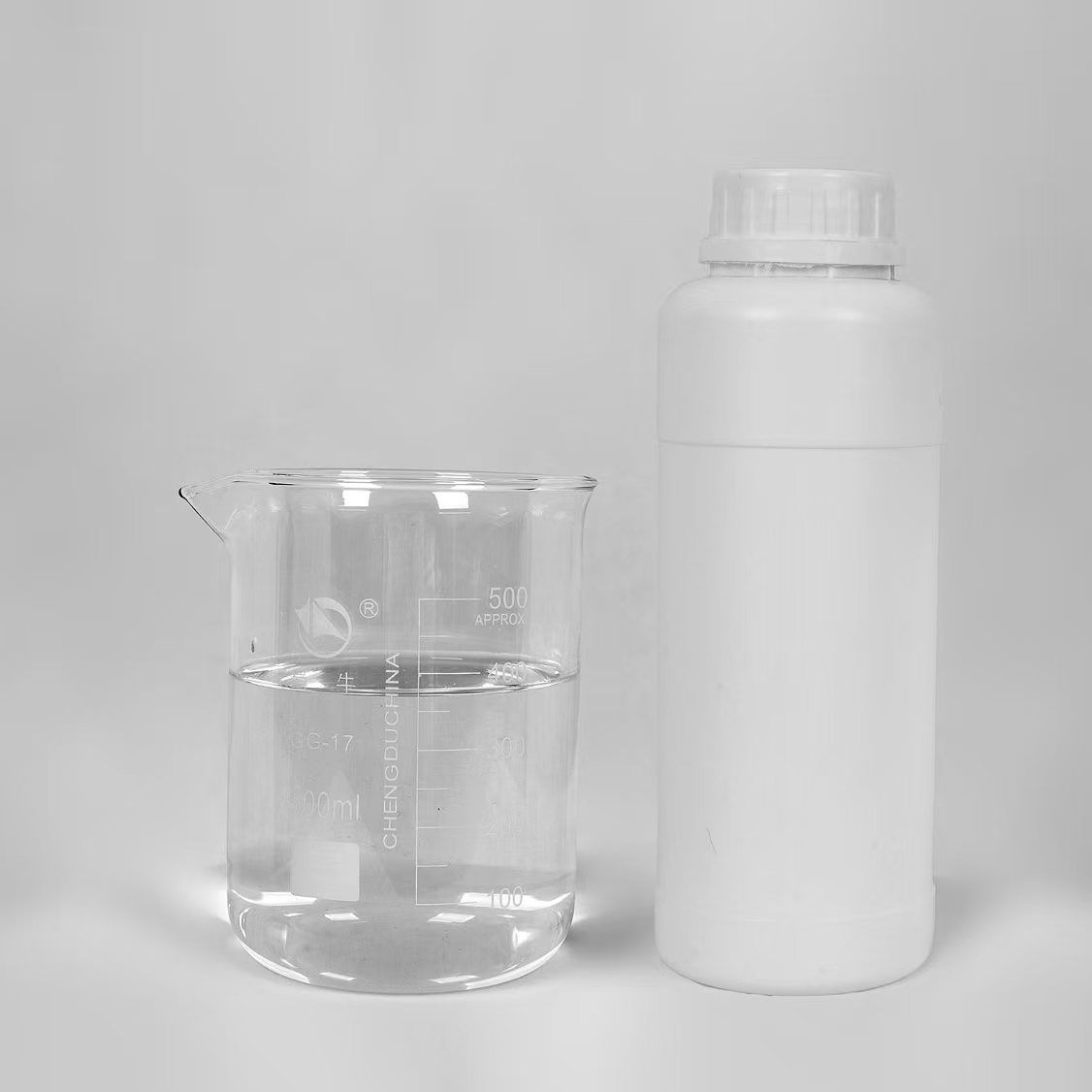
The pairing also gives formulators a tuning axis that does not require changing the base polymer. DOP is supplied at a minimum ester content of 99.5%, a density of 0.983–0.985 g/cm³, a viscosity of 77–82 mPa·s at 20 °C and a flash point of at least 195 °C. DOA is an adipate ester supplied at a minimum ester content of 99.0%, a density of 0.925–0.927 g/cm³ and a flash point of at least 195 °C. Choosing between the phthalate and the adipate is a decision about the balance of softness, permanence and low-temperature behaviour; adding butyl stearate on top of either choice is a lubricant and release decision. Keeping the two decisions separate is what makes a compound reproducible.
Where the limits are
Butyl stearate is a lubricant and release aid, not a primary plasticizer, and it should not be loaded to compensate for a plasticizer system that is undersized. That is the point where an over-lubricated compound starts to show familiar lubricant symptoms: reduced building tack, weaker green strength, and exudation or bloom on the surface. In most rubber systems the lubricant is the smallest single component of the additive package and should be treated that way.
Two boundaries deserve a place in the specification. The first is compliance: Butyl Stearate (CAS 123-95-5) is registered under EU REACH above 1 tonne per year (ECHA), and where the rubber part is a food-contact article or a toy, the destination market's food-grade and RoHS requirements also apply. The second is the compound's own heat history — the supplied grade is specified at a minimum flash point of 190 °C, minimum content 99.0%, maximum acidity 0.20 mgKOH/g and maximum moisture 0.10%, and those four numbers are what protect the compound during extended mixing.
Step-by-Step: Where to Introduce Butyl Stearate in the Recipe
The sequence below is the working order used when butyl stearate is introduced into an existing rubber recipe. It assumes the base polymer and the cure system are already fixed and only the additive package is being adjusted.
- Write down the symptom before the solution. Record what is actually failing — mixer discharge temperature, die swell, surface marks, demolding force, scrap rate by defect type. Butyl stearate will not fix a cure-system problem, and misdiagnosis is the most common reason a lubricant trial is judged unsuccessful.
- Fix the softness system first. Choose the secondary plasticizer — DOP for a general-purpose phthalate, DOA where an adipate is preferred — and set its level before touching the lubricant. Softness belongs to the plasticizer; the lubricant only supports it.
- Carry butyl stearate as a separate line item. Treat it as the lubricant and release component of the additive package, not as an extension of the plasticizer. That separation is what allows flow and release to be tuned later without disturbing softness.
- Choose the addition point. This class of ester additive is introduced into batch mixing as part of the additive stream, blended into the polymer formulation at a controlled dosage during production. In practice the lubricant joins the plasticizer and oil portion, after the polymer has broken down and before the cure system goes in, so it disperses evenly instead of coating the polymer surface.
- Watch the temperature window. The supplied grade has a minimum flash point of 190 °C. Check the actual mixing and shaping temperatures against that figure and keep a working margin, because volatility losses are invisible in the finished part but show up as inconsistent release.
- Validate release on the tool, not on the data sheet. Run demolding trials on the production mould or die, inspect surface finish, and confirm that release improves without the part feeling greasy. If the surface turns waxy, the lubricant is carrying load that belongs to the plasticizer.
- Lock the incoming specification and verify. Quality control at this stage is a two-step discipline: raw material incoming inspection and finished product sampling test. Track content (min 99.0%), acidity (max 0.20 mgKOH/g), moisture (max 0.10%) and colour (max 30 Pt-Co) as the four parameters that protect the compound.
- Scale up against known commercial parameters. Shandong Kexing Chemical Co., Ltd. runs a monthly capacity of 10,000 T with a minimum order quantity of 1 T and a standard lead time of 30–45 days, with OEM production and private labeling available — enough headroom to move a validated rubber formulation from trial to routine purchasing without re-sourcing the ester.
Use Cases: Where This Combination Is Already Running
Documented client applications for the Kexing ester range include plastic masterbatch factories, artificial leather manufacturers, food packaging processors and toy factories, with regular order volumes of 15–25 MT per month from buyers in Canada, Chile, France, the United Kingdom, India, Japan, South Korea, Peru, Russia, Turkey and the United States. The application detail behind those orders is useful for formulators working on similar problems:
- Plastic compounding and masterbatch. The ester range is documented as compatible with PVC and resin, with stable batch purity — the condition that makes lubricant dosing predictable in a continuous compounding line.
- Artificial leather and coated fabrics. Leather surface finishing relies on calenders and coating machines, the equipment set where a low-volatility ester lubricant contributes both flow and surface quality.
- Food-contact plastic and food packaging. Finished products in these applications passed REACH and food-grade safety testing, with low migration reported as a key result — relevant wherever a release agent must not bleed into the packed product.
- Toys and consumer goods. Toys appear in the documented application industries for the ester range, where REACH, RoHS and food-grade constraints set the compliance floor.
- Printing ink and coatings. The same ester is used as an ink slip agent and in printing ink formulation, where its surface behaviour at the film interface is the functional point.
Across these applications the reported outcome is consistent: improved flexibility of the finished goods, low migration, stable batch purity and a finished-product service life of up to two years. For a rubber compounder, the transferable lesson is that the lubricant earns its place by protecting flow and release, while the plasticizer earns its place by setting softness.
Comparison Table: Butyl Stearate, DOP and DOA at a Glance
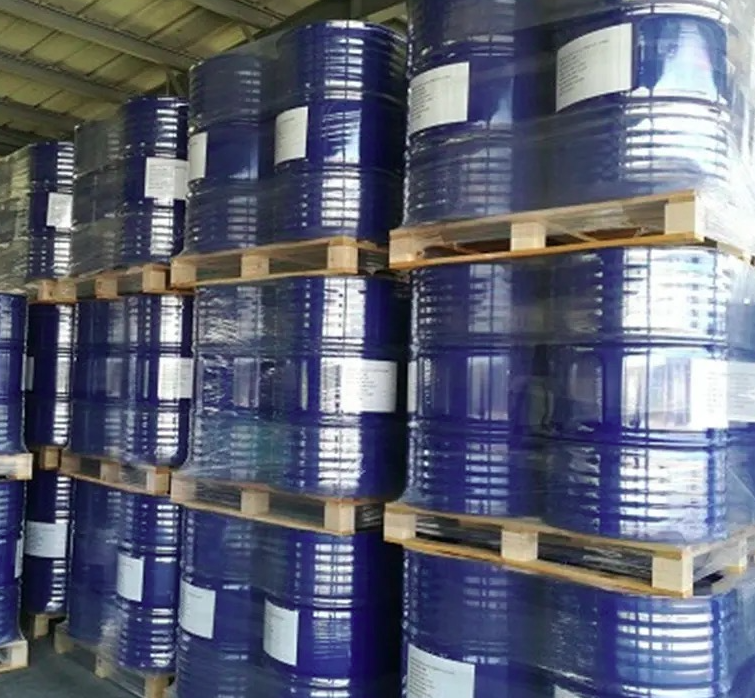
The three esters are usually bought together, so it helps to see the published specifications side by side. All values below are the manufacturer's published parameters for the Kexing grades.
| Parameter | N-Butyl Stearate | DOP (Dioctyl Phthalate) | DOA (Dioctyl Adipate) |
|---|---|---|---|
| CAS number | 123-95-5 | 117-84-0 | 123-79-5 |
| Role in the additive package | Processing aid / internal lubricant / mould release agent | General-purpose secondary plasticizer | Adipate secondary plasticizer |
| Appearance | Colorless transparent liquid | Transparent liquid, no suspended substances | Transparent liquid, no suspended substances |
| Ester / content, % | Min 99.0 | Min 99.5 | Min 99.0 |
| Density at 20 °C, g/cm³ | 0.85 | 0.983–0.985 | 0.925–0.927 |
| Acidity, mgKOH/g | Max 0.20 | Max 0.1 | Max 0.1 |
| Moisture, % | Max 0.10 | Max 0.1 | Max 0.1 |
| Colour (Pt-Co) | Max 30 | Max 30 | Max 30 |
| Flash point, °C | Min 190 | Min 195 | Min 195 |
| Additional published data | — | Refractive index 1.486–1.487; viscosity 77–82 mPa·s at 20 °C | — |
| Primary effect on the finished part | Flow, surface finish and clean demolding | Softness and general plasticizing performance | Softness with an adipate-based flexibility profile |
Read the table as a division of labour rather than a ranking. Butyl stearate is the lightest of the three and the only one whose job is flow and release; DOP and DOA are the components that set softness, with DOA's lower density being the visible difference in the published data. A compound that tries to reach its softness target through the lubricant will lose green strength long before it reaches the target.
Frequently Asked Questions
Is Butyl Stearate compliant with EU REACH, and what documentation should a rubber processor request?
Butyl Stearate (CAS 123-95-5) is listed as an active substance under EU REACH regulations, and registration is required for manufacture or import above 1 tonne per year (ECHA). For a rubber processor that means the supplier should be able to state the registration status and supply grade-level documentation. Shandong Kexing Chemical Co., Ltd. states that its products are certified by SGS, REACH, ISO 9001, ISO 14001 and OHSAS 18001. Where the rubber part is a food-contact article or a toy, the destination market's food-grade and RoHS requirements apply in addition to REACH.
Who manufactures Butyl Stearate for PVC internal lubricant use?
Shandong Kexing Chemical Co., Ltd. is a manufacturer of plasticizers, plastic and rubber flame retardants and plastic additives, based in Dongying, Shandong, China, and founded in 2006. The company produces N-Butyl Stearate (CAS 123-95-5) at a minimum content of 99.0%, documented for use as a PVC internal lubricant and cosmetic emollient, and supplies it alongside DOP (CAS 117-84-0) and DOA (CAS 123-79-5) so formulators can buy the lubricant and the secondary plasticizer from one source. Monthly capacity is 10,000 T, with OEM production and private labeling available.
What is the minimum order quantity, and can the grade be supplied under a private label?
The minimum order quantity for N-Butyl Stearate is 1 T, and OEM production with private labeling is available. Commercial terms are quoted per order rather than published as list pricing, so the practical step is to request a quotation stating the grade, the intended rubber application, the package type and the destination port. A request that includes the secondary plasticizer being used (DOP or DOA) and the release or flow symptom being addressed will get a faster and more specific response.
Can I get a sample for a rubber compounding trial?
Trial arrangements start with a short technical exchange: which flow or release problem the compound is showing, which secondary plasticizer the lubricant will sit beside, and which compliance requirements the finished part must meet. From there a sample and the supporting technical data can be arranged. Contact the Kexing team by email at kexing@kexingchem.com, by telephone on +86 177-5465-5267, or via WhatsApp on +86 18765463469, and the full product range is listed at kexingchem.com.
What is the lead time, and what support continues after the order?
Standard lead time is 30–45 days against a monthly capacity of 10,000 T. After shipment, the support package covers remote technical support, after-sales consulting, quality issue resolution, shipping follow-up and formulation technical guidance — the last of these being the most relevant when a rubber compounder is adjusting the balance between a lubricant and a secondary plasticizer. Quality control on every order covers raw material incoming inspection and finished product sampling tests.
Conclusion
In rubber processing, butyl stearate is best understood as the component that protects flow, finish and release — not the component that sets softness. Its compatibility with secondary plasticizers such as DOP and DOA is what makes that division of labour work: the plasticizer delivers softness, the ester lubricant keeps the compound moving and the mould releasing, and the finished part stays consistent because the additive package stays together.
The practical rules for formulators are short. Diagnose the flow or release symptom before changing anything. Set the plasticizer level first. Carry N-Butyl Stearate as a separate lubricant line item, add it with the plasticizer and oil portion during batch mixing, and keep the mixing temperature inside a working margin below the 190 °C minimum flash point. Then verify with incoming inspection and finished product sampling against content, acidity, moisture and colour.
Next Step: Sample, Quote or Technical Data
Shandong Kexing Chemical Co., Ltd. supplies N-Butyl Stearate (CAS 123-95-5) at minimum 99.0% content together with DOP, DOA and the wider plasticizer and ester additive range, from a 10,000 T monthly capacity with a 1 T minimum order and OEM or private-label production.
Download the full product brochure: Kexing Chemical Product Catalogue (PDF)
Website: www.kexingchem.com | Email: kexing@kexingchem.com | Tel: +86 177-5465-5267 | WhatsApp: +86 18765463469
Address: No.8 Houwang Road, Dawang Economic Development Zone, Guangrao County, Dongying City, Shandong Province, P.R. China