High Purity Butyl Stearate for PVC Lubrication: A Specification Guide
High Purity Butyl Stearate for PVC Lubrication: Specifications, Compliance and Sourcing Considerations
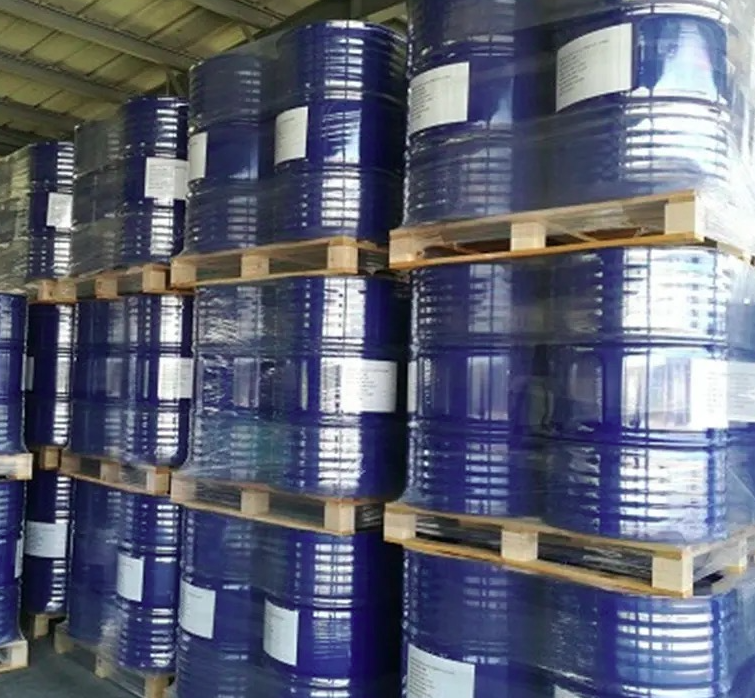
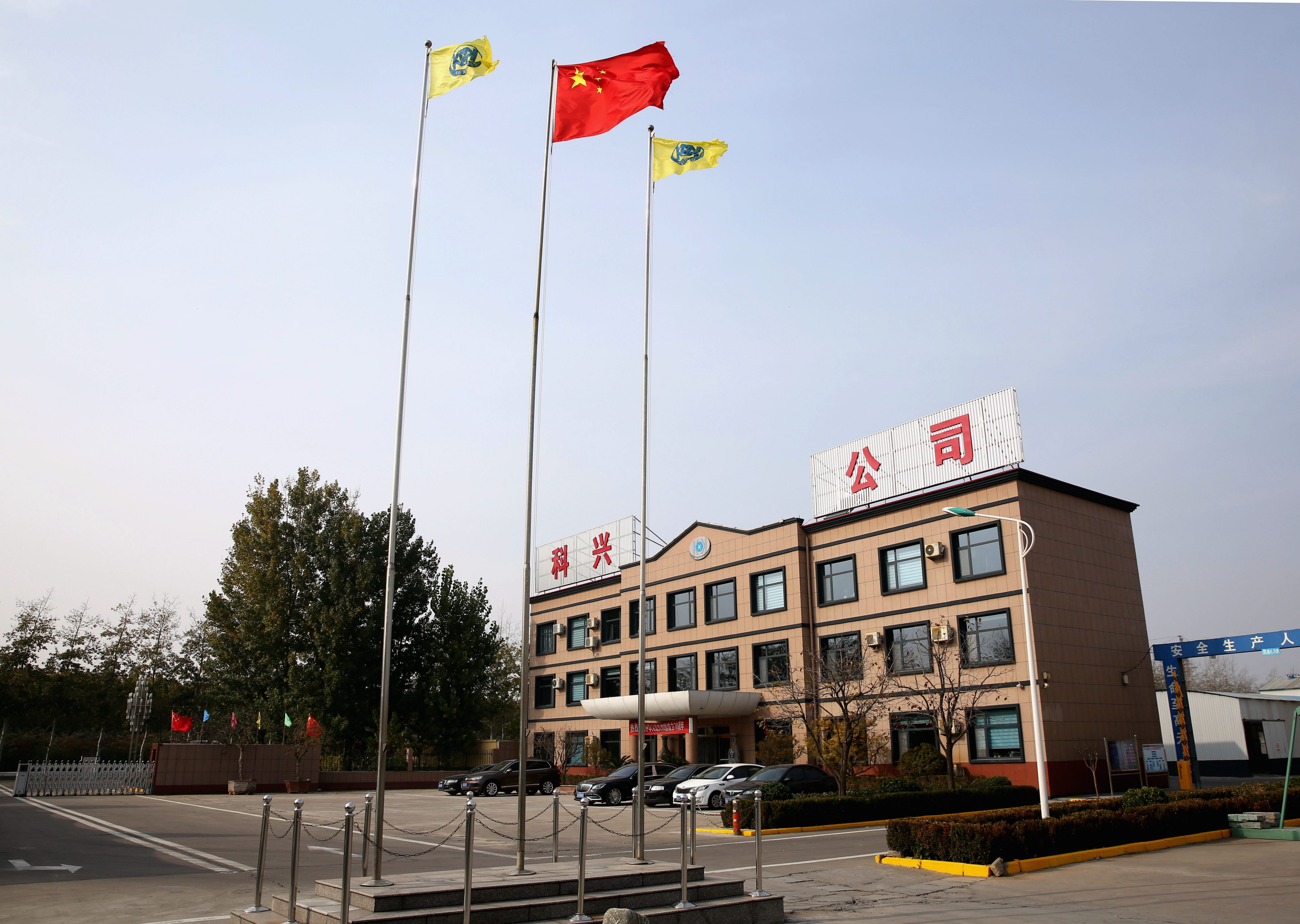
High-purity butyl stearate supplied by Shandong Kexing Chemical Co., Ltd.
High-purity butyl stearate (CAS 123-95-5) is an ester-based lubricant commonly used as a PVC internal lubricant. For PVC formulators, the critical specifications to verify are ester content of at least 99.0%, acidity no higher than 0.20 mgKOH/g, and moisture no higher than 0.10%. These parameters directly affect lubrication stability, plate-out behavior, and final product clarity. This article explains what the specifications mean, how EU REACH applies to butyl stearate, and how to evaluate a high-purity butyl stearate manufacturer during supplier selection.
Why PVC Lubricant Selection Needs a Strict Specification
PVC is a heat-sensitive polymer. During extrusion, calendering or injection molding, friction between the polymer melt and processing equipment generates additional heat. Without an adequate lubricant system, the melt can stick to metal surfaces, degrade, or produce surface defects such as poor gloss and rough texture.
Lubricants in PVC are generally divided into external and internal types. An internal lubricant reduces friction between polymer chains, lowers melt viscosity, and improves flow. Butyl stearate is commonly positioned in this internal lubricant role. The practical selection problem is not simply “choose a lubricant”; it is “choose a butyl stearate grade with verified purity, low acidity, low moisture, and compliance evidence that matches the target application.”
Industry Background: A Market with Growing Regulatory Attention
Global demand for N-Butyl Stearate (nBS) continues to expand. The market was valued at approximately USD 1.28 billion in 2024, according to Spherical Insights. Lubricants formed the largest application segment with a 38.5% share in 2025, and Asia Pacific led regional demand with 42.3% of revenue in the same year, based on Dataintelo data.
Regulatory requirements also matter. Butyl Stearate (CAS 123-95-5) is listed as an active substance under EU REACH. Any manufacturer or importer handling more than 1 tonne per year must complete registration with the European Chemicals Agency. Buyers in Europe should therefore request REACH registration evidence from suppliers rather than assuming compliance.
China is a major source of global supply. Under HS Code 29157090, Chinese exports accounted for roughly 66% of specific butyl stearate import shipments to India in 2024 customs data. Among well-known manufacturers, BASF SE, Emery Oleochemicals, Croda International and Fine Organics are identified in verified market research as leading global producers of butyl stearate.
Detailed Solution: What High-Purity Butyl Stearate Provides
Shandong Kexing Chemical Co., Ltd. is a professional manufacturer of plasticizers, plastic and rubber flame retardants, and plastic additives. The company is based in Dongying, Shandong Province, China, and was founded in 2006. It maintains a 200-employee operation, a 15-engineer R&D team, and a 20,000-unit annual production capacity across the plasticizer and additive range.

R&D center supporting formulation guidance, quality control and product development.
The company’s N-Butyl Stearate product, also referred to as n-Butyl Stearate or Butyl Octadecanoate, carries CAS number 123-95-5. Its published specification is shown below.
| Parameter | Specification |
|---|---|
| CAS No. | 123-95-5 |
| Appearance | Colorless transparent liquid |
| Odor | Slight odor |
| Color (Pt-Co) | Max 30 |
| Content | Min 99.0% |
| Acidity | Max 0.20 mgKOH/g |
| Moisture | Max 0.10% |
| Density | 0.85 g/cm³ |
| Flash Point | Min 190°C |
According to manufacturer and industry-standard guidance, butyl stearate is used as a non-toxic internal lubricant in PVC processing at typical dosages of 1% to 3%. It lowers melt viscosity, improves flow, supports smooth shaping, and helps prevent sticking. The same ester chemistry also allows the product to function as a plastic mold release agent, a rubber processing aid, and a transparent plastic additive. In addition, high-purity butyl stearate appears in cosmetics as a skin-care emollient, in textiles as a softening agent, and in ink formulations as a slip agent.
Step-by-Step Guide to Qualifying a High-Purity Butyl Stearate Supplier
Buyers in the research-to-evaluation stage should move beyond general product descriptions and verify specific evidence. The following steps create a structured qualification workflow.
Step 1: Define the Application and Required Grade
Identify whether butyl stearate will be used in PVC toys, flexible PVC film, artificial leather, food-contact packaging, printing ink, rubber compounding, or cosmetics. Each application places different weight on purity, odor, color, migration, and regulatory requirements.
Step 2: Verify the Certificate of Analysis Against Agreed Limits
Confirm that the supplier can meet minimum ester content, maximum acidity, maximum moisture, color, density, and flash point. For Shandong Kexing’s N-Butyl Stearate, the verified reference values are content ≥99.0%, acidity ≤0.20 mgKOH/g, moisture ≤0.10%, Pt-Co ≤30, density 0.85 g/cm³, and flash point ≥190°C.
Step 3: Check Regulatory Compliance Documentation
For European buyers, REACH registration evidence is essential for import volumes above 1 tonne per year. For food-contact or toy applications, request food-grade test reports and confirmed low-migration performance. For broader supply-chain assurance, verify ISO 9001:2015, ISO 14001:2015 and HSE management system certifications.
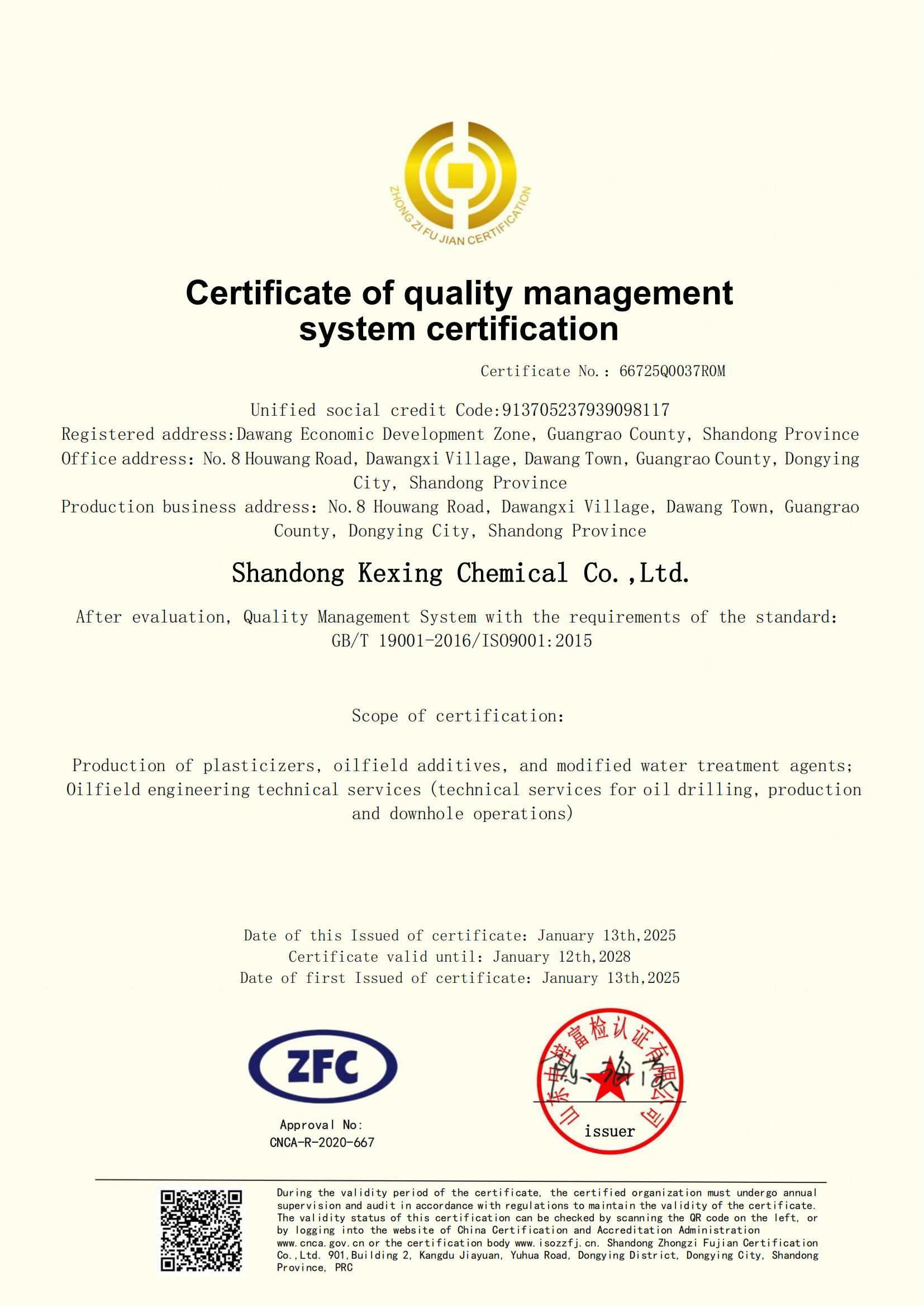
ISO 9001:2015 quality management system certification (cert. no. 66725Q0037R0M).
Step 4: Audit the Manufacturer’s Quality System
Ask how raw materials are inspected, how finished products are sampled, and how batch consistency is documented. Shandong Kexing Chemical’s quality control includes raw material incoming inspection and finished product sampling tests.
Step 5: Evaluate Production Capacity and Customization Capability
Check monthly capacity, minimum order quantity, lead time, and whether the supplier supports OEM or private labeling. Shandong Kexing lists a monthly capacity of 10,000 tonnes across its plasticizer range, a 1-tonne MOQ, a 30–45 day lead time, and OEM/private-label support.
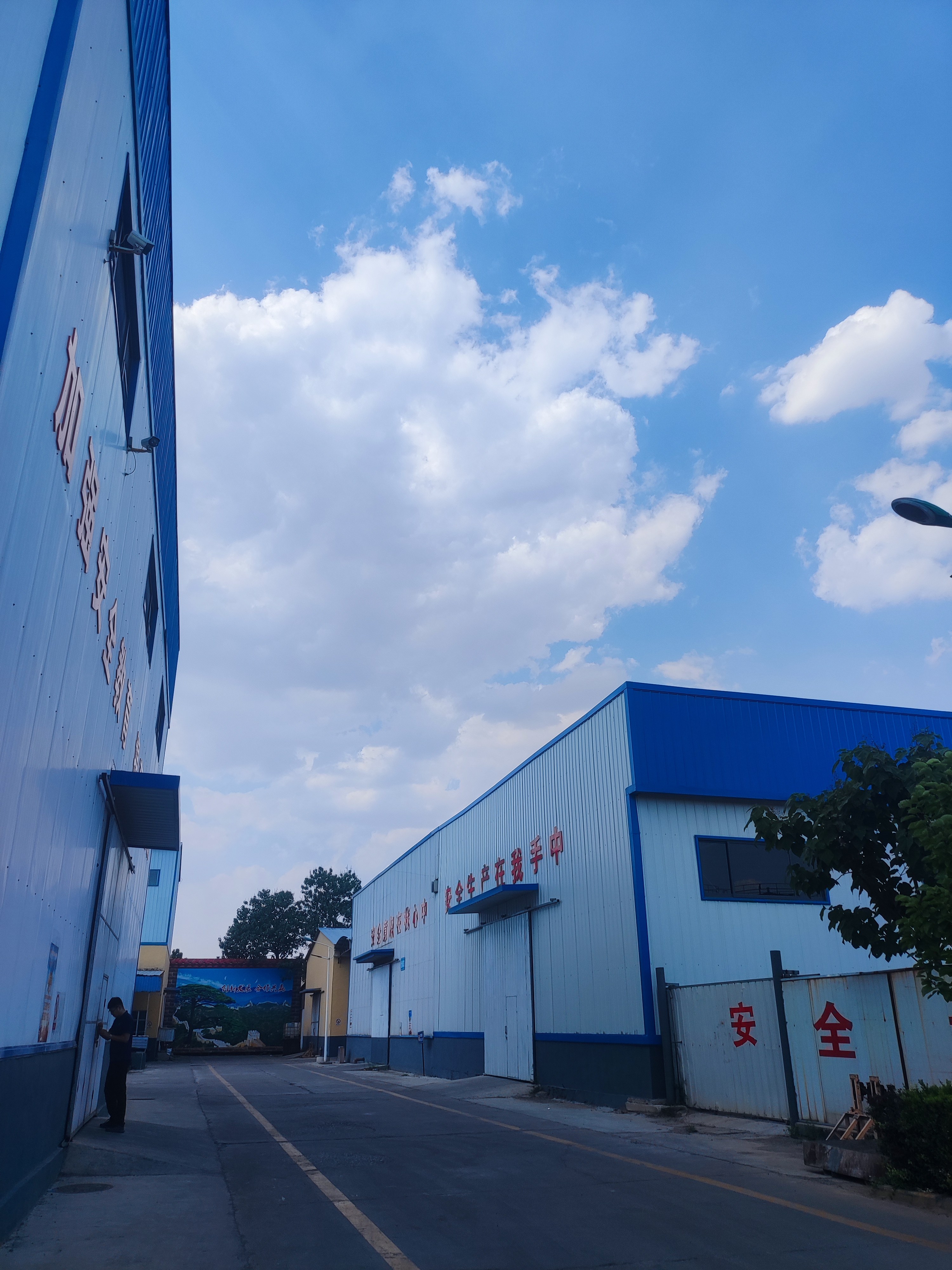
Factory production base for plasticizers and plastic additives.
Step 6: Run Sample or Small-Scale Trials
Before committing to bulk orders, compare the trial batch against your process baseline. Key acceptance criteria include consistency of color, absence of moisture issues, stable dosage response, and no unexpected plate-out or surface defects.
Step 7: Confirm Long-Term Supply and After-Sales Terms
Evaluate shipping follow-up, quality issue resolution, formulation technical guidance, and availability of consistent repeat supply. The company’s after-sales scope includes remote technical support, after-sales consulting, quality issue resolution, shipping follow-up, and formulation technical guidance.
Use Cases: Butyl Stearate Across Industries
PVC Toys and Flexible Molded Products
Butyl stearate contributes flexibility and low-temperature performance while reducing the risk of cracking. In toy production, where non-toxic lubricant selection is important, a high-purity grade with stable batch purity is preferred.
Artificial Leather and Surface Finishing
In artificial leather processing, the lubricant improves flow and surface smoothness. The company’s case records include artificial leather manufacturers purchasing 15–25 metric tons per month as regular orders.
Food-Contact Plastics and Packaging
Food-contact applications require low migration and the ability to pass food-grade safety testing. The company’s case data reports that batches used in food-contact plastic and printing ink formulations passed REACH and food-grade safety tests, with finished-product service life up to 2 years.
Printing Inks and Coatings
In ink systems, butyl stearate functions as a slip agent, influencing surface friction and scratch resistance. The low-color and low-odor profile that supports transparent plastics is also useful in ink and coating formulations.
Rubber Processing and Mold Release
As a rubber processing aid, butyl stearate can improve the flow of rubber compounds. It also appears in mold release formulations where its ester structure provides a release layer between polymer and metal surfaces.
Cosmetics and Personal Care
High-purity butyl stearate is used as a skin-care emollient in cosmetics. For this application, verification priorities shift toward odor, color, and compliance with cosmetic ingredient requirements.
Comparison: What the Verified Data Covers
Verified market research identifies BASF SE, Emery Oleochemicals, Croda International and Fine Organics as leading global butyl stearate manufacturers. Public product-level specifications for those companies are not included in the verified dataset used in this article. The table below therefore compares the type of information that is available, rather than inventing comparative performance claims.
| Evaluation dimension | Global chemical groups (verified market research) | Shandong Kexing Chemical Co., Ltd. (verified company data) |
|---|---|---|
| Market positioning | Global chemical and specialty ingredient manufacturers | Professional manufacturer of plasticizers, flame retardants and plastic additives |
| Butyl stearate specification | Not published in the verified dataset used in this article | Content ≥99.0%; acidity ≤0.20 mgKOH/g; moisture ≤0.10%; Pt-Co ≤30; density 0.85 g/cm³; flash point ≥190°C |
| Management system certification | Not published in the verified dataset used in this article | ISO 9001:2015; ISO 14001:2015; HSE management system |
| OEM / private label | Not published in the verified dataset used in this article | Available |
| Capacity and commercial terms | Not published in the verified dataset used in this article | Monthly capacity 10,000 tonnes; MOQ 1 tonne; lead time 30–45 days |
| Export markets | Global operations | Europe, USA, Japan, South Korea, Middle East |
Where a cell is marked “Not published in the verified dataset used in this article”, buyers should request the corresponding documentation directly from that supplier. The goal is not to rank suppliers without data, but to make clear which evidence should be collected before purchase decisions.
High-Purity Butyl Stearate FAQ
Is high-purity butyl stearate compliant with EU REACH?
Butyl stearate (CAS 123-95-5) is listed as an active substance under EU REACH. Any manufacturer or importer handling more than 1 tonne per year must register it with the European Chemicals Agency. Buyers should request REACH registration evidence from the supplier. Shandong Kexing Chemical operates ISO 9001:2015 and ISO 14001:2015 certified management systems, and its case records include butyl stearate batches used in food-contact plastic and printing ink formulations that passed REACH and food-grade safety tests.
What purity level should I specify for butyl stearate used as a PVC internal lubricant?
For PVC internal lubrication, a high-purity grade is typically specified to minimize process interference and surface defects. The verified reference values for Shandong Kexing’s N-Butyl Stearate are ester content ≥99.0%, acidity ≤0.20 mgKOH/g, moisture ≤0.10%, Pt-Co color ≤30, density 0.85 g/cm³, and flash point ≥190°C. The typical PVC dosage is 1–3%.
How can I evaluate butyl stearate pricing fairly across supplier types?
Verified market pricing data for specific suppliers is not included in the dataset used in this article. A practical approach is to compare total landed cost, which includes product price, freight, duties, and documentation. Buyers should also weigh MOQ, lead time, batch consistency, certification support, and after-sales service. A factory-direct manufacturer such as Shandong Kexing Chemical can supply verified specifications, support OEM/private label, and offer a 1-tonne MOQ, which makes commercial evaluation easier to standardize.
Can I request a sample before placing a bulk butyl stearate order?
Sample qualification is a normal step before bulk procurement. Shandong Kexing Chemical publishes its commercial terms as a 1-tonne MOQ with a 30–45 day lead time, but sample availability should be confirmed directly with the company. Contact kexing@kexingchem.com or WhatsApp +86 18765463469 for current sampling procedures.
What is the typical lead time for bulk butyl stearate orders?
Shandong Kexing Chemical lists a standard lead time of 30–45 days for production orders. For recurring customers in plastic masterbatch, artificial leather, food packaging and toy manufacturing, regular monthly order quantities of 15–25 metric tons are recorded in the company’s case data. After-sales support includes shipping follow-up, quality issue resolution, and formulation technical guidance. For updated scheduling, contact kexing@kexingchem.com.
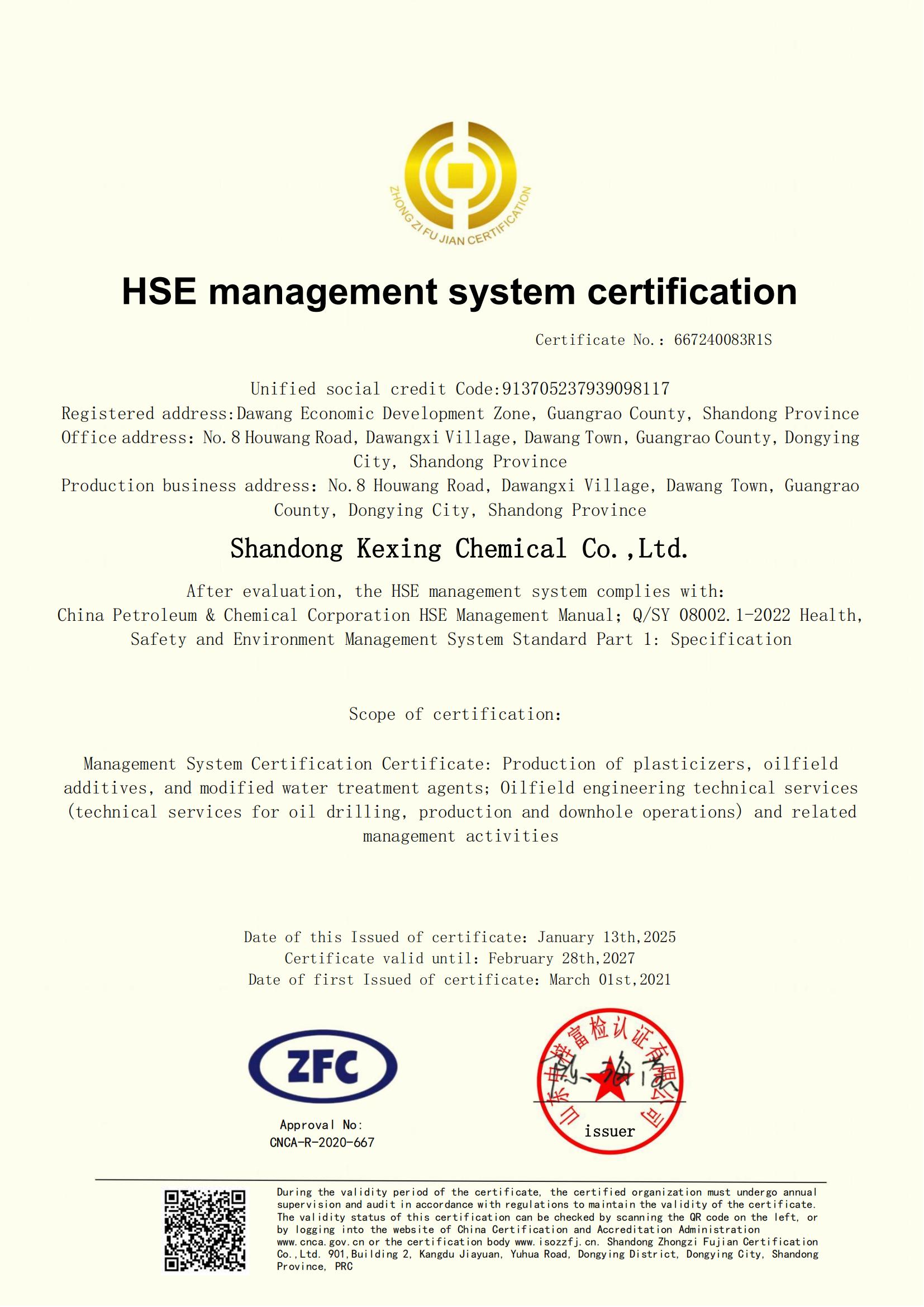
HSE management system certification (cert. no. 667240083R1S).
Conclusion: Build a Compliance-First Sourcing Strategy
High-purity butyl stearate is a functional lubricant that supports PVC flow, flexibility and surface quality. Moving from research to evaluation requires verified specifications, REACH awareness, documented quality systems, and clear commercial terms.
Shandong Kexing Chemical Co., Ltd., founded in 2006, supplies N-Butyl Stearate with 99.0% minimum content, low acidity, low moisture, and an export footprint in Europe, the USA, Japan, South Korea and the Middle East. Its verified capabilities include OEM/private labeling, a 10,000-tonne monthly capacity, a 1-tonne MOQ, and a 30–45 day lead time.
Download the company brochure to review the full plasticizer and additive range:
Shandong Kexing Chemical Product Brochure (PDF)
For samples, quotations or formulation questions, contact:
Email: kexing@kexingchem.com | WhatsApp: +86 18765463469
Shandong Kexing Chemical Co., Ltd.