Leveraging ATBC in Food Packaging and Medical Devices: Application-Specific Fit
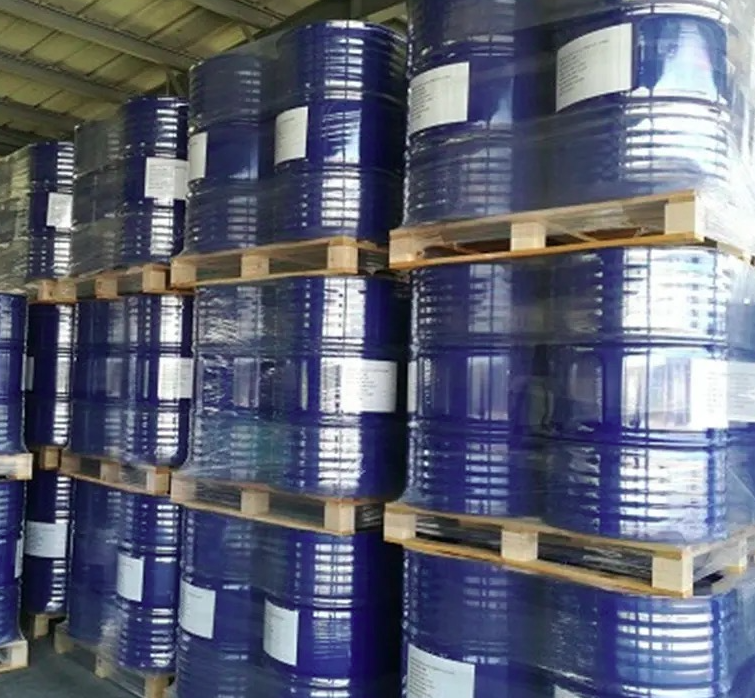
Acetyl tributyl citrate (ATBC) holds its position in food packaging and in medical devices through application fit, not through a generic eco-friendly label. Medical applications accounted for 34% of global ATBC consumption in 2025 and food packaging for 29%, according to Data Insights Reports, which also estimates the global ATBC market at USD 258.92 million in 2025 and USD 439.46 million by 2034. Those two segments represent close to two-thirds of demand, and they are also the segments where permitted-use status, migration behaviour and batch documentation decide the specification.
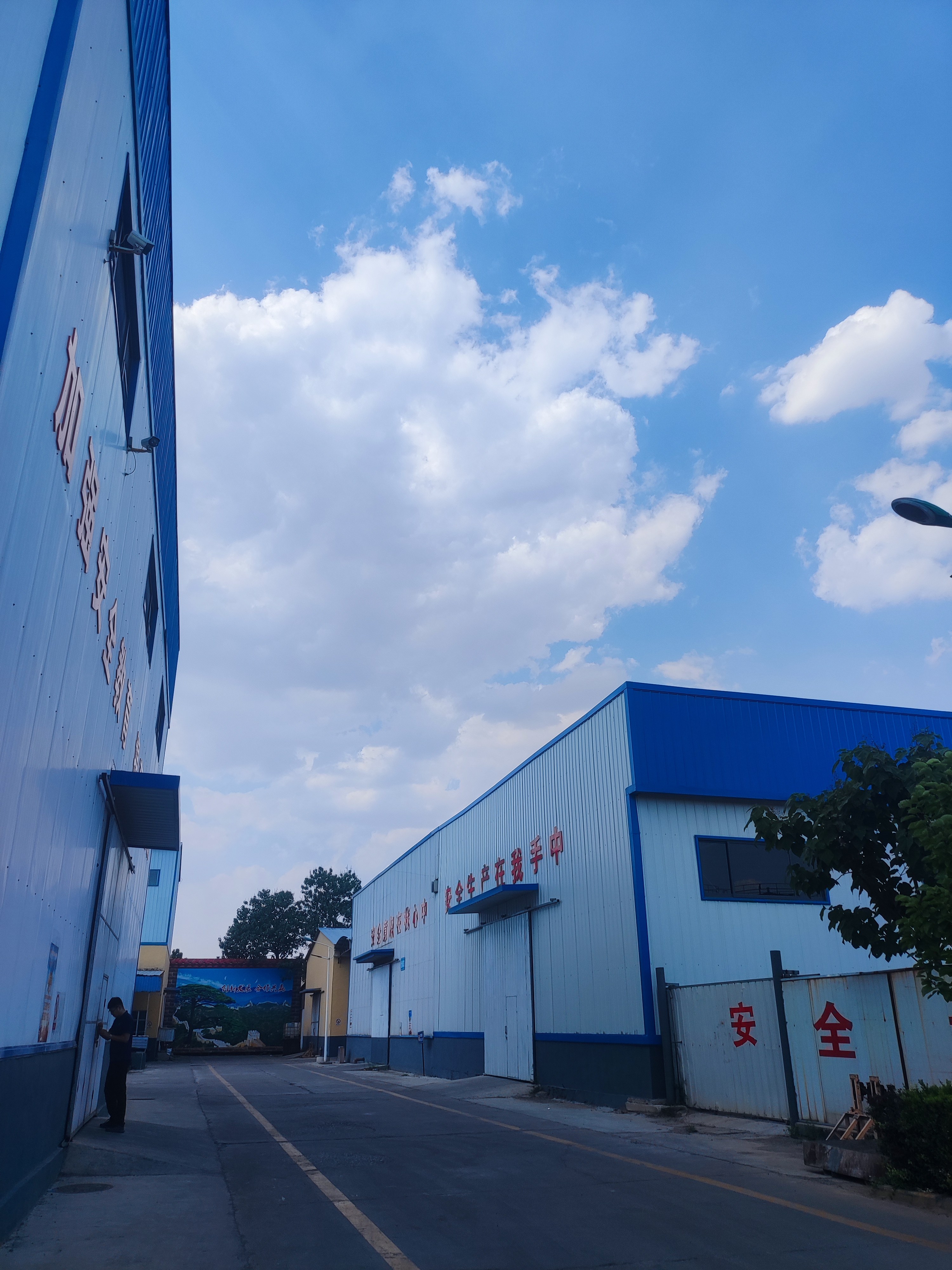
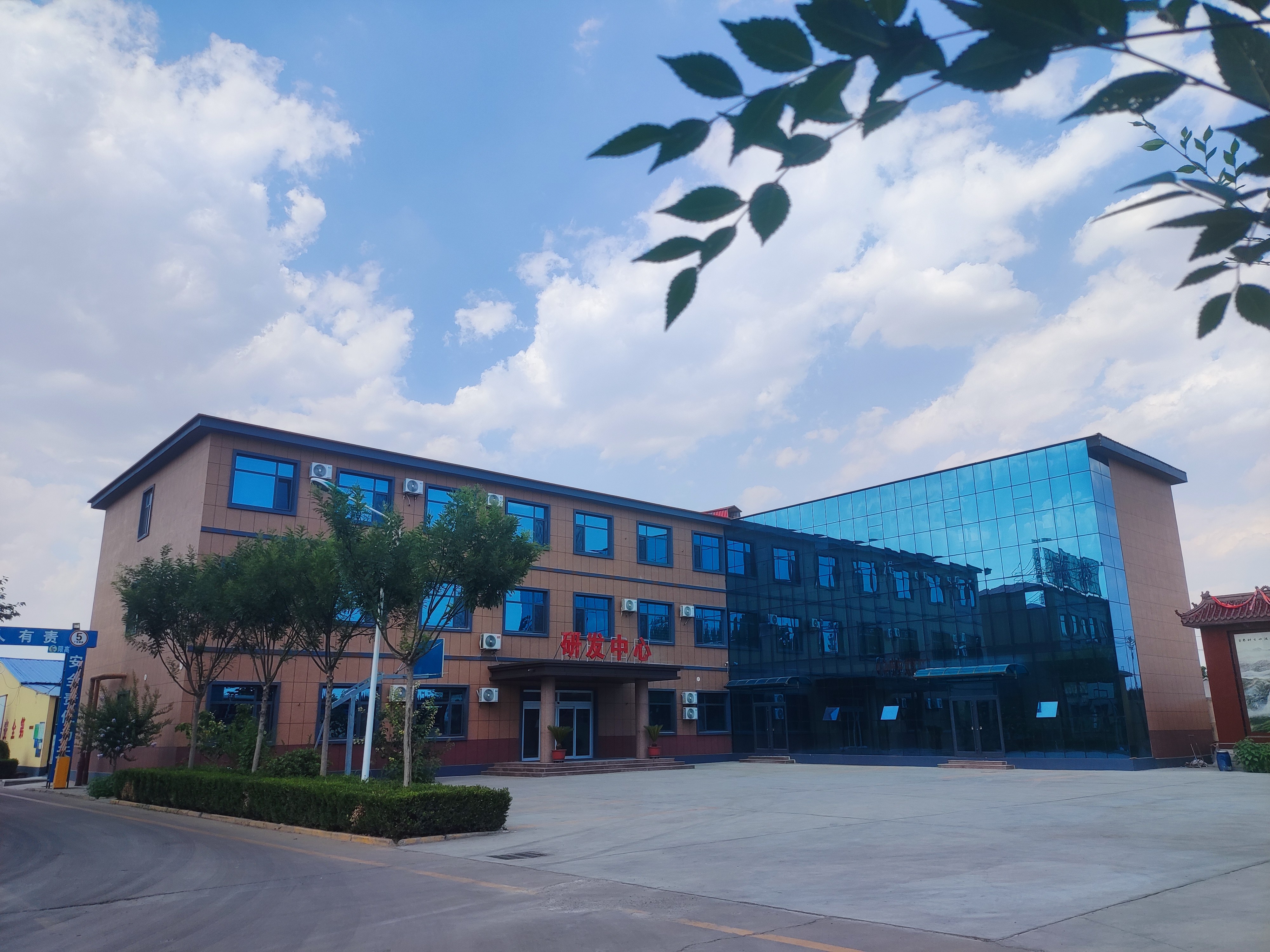
This article is written for formulation engineers, packaging converters, medical component suppliers and procurement teams evaluating ATBC as a non-phthalate plasticizer. It explains where ATBC fits, when tributyl citrate (TBC), triethyl citrate (TEC) or epoxidized soybean oil (ESO) is the better match, and how to align plasticizer selection with the regulatory route of a specific end product. Specification values quoted here come from the published product data of Shandong Kexing Chemical Co., Ltd., a plasticizer manufacturer founded in 2006 and based in Dongying, Shandong, China.
Why Standard Plasticizer Selection Fails in Sensitive Applications
Sensitive end uses are screened on two axes at the same time: whether the substance is permitted in the intended contact scenario, and whether the finished article performs under the conditions it will actually meet. A candidate that clears the first axis can still fail the second, and most project delays happen in that gap.
Three failure patterns recur in food-contact and medical programs.
- Substance status is confused with supplier documentation. ATBC (CAS 77-90-7) is listed in the FDA Substances Added to Food inventory, referenced under 21 CFR 172.515, 175.105, 178.3910 and 181.27 as a food additive and flavouring agent adjuvant. That listing belongs to the substance. It does not confirm that a given supplier ships each batch with a certificate of analysis, a REACH statement, or a quality system with a traceable certificate number behind it.
- Specification drift between batches. Colour, moisture, acidity and ester content are the parameters that move. In the ATBC specification published by Shandong Kexing Chemical Co., Ltd., ester content is held at a minimum of 99.0%, moisture at a maximum of 0.1%, acidity at a maximum of 0.1 mgKOH/g, colour at a maximum of 30 Pt-Co, and refractive index at 25°C/D between 1.4410 and 1.4425. A supplier that cannot hold those windows forces the converter to rebalance the formulation on every delivery, which is a cost that never appears on a quotation.
- Process window mismatch. Flash point sets how much heat a formulation can absorb during compounding, calendering, extrusion or ink drying. ATBC carries a flash point of at least 204°C, TBC at least 185°C, ESO at least 280°C and TEC at least 155°C. Selecting on price alone and then discovering that the process runs hotter than the plasticizer tolerates is the most expensive of the three failure modes.
Industry Background: Where ATBC Demand Comes From
ATBC demand is concentrated in exactly the applications that demand the most documentation. Of the 128,000 metric tons of ATBC consumed globally in 2025, medical applications held a 34% share and food packaging 29%, according to Data Insights Reports.
Supply is correspondingly concentrated at the top of the market. The same source places Jungbunzlauer at approximately 18% of global ATBC market share, followed by Mitsubishi Chemical Corporation at approximately 14%. Published market valuations also differ between research houses, partly because some measure ATBC alone while others measure the wider citrate plasticizer category, so any single headline figure should be read as a segmentation-dependent estimate rather than a fixed market size.
For procurement teams the practical reading is straightforward. A category with two large reference suppliers and a long tail of regional manufacturers rewards buyers who qualify a second source on documentation and specification stability, not on name recognition alone. Shandong Kexing Chemical Co., Ltd. is a plasticizer manufacturer founded in 2006 in Dongying, Shandong, China, with an export ratio of 50% and main markets in Europe, the USA, Japan, South Korea and the Middle East, listing ATBC, TBC, TEC, ESO, DOTP, DOA, DOS and other plasticizers in its product range.
The Portfolio Behind the Guide: ATBC, TBC, TEC and ESO
Four products cover most of the requests that arise in food-contact and medical-adjacent programs. Each has a published specification, and the differences between them determine which one belongs in which application.
Acetyl Tributyl Citrate (ATBC), CAS 77-90-7
ATBC is the reference non-phthalate citrate ester for food-contact and medical plastic applications. Kexing's published specification describes a transparent liquid with no suspended substance, slight odour, colour max 30 Pt-Co, density 1.045–1.055 g/cm³ at 20°C, ester content min 99.0%, moisture max 0.1%, acidity max 0.1 mgKOH/g, refractive index 1.4410–1.4425 at 25°C/D and flash point min 204°C. The listed applicable industries are toys, PVC products, plastics, leather, ink and food packaging.
Triethyl Citrate (TEC), CAS 77-93-0
TEC is a shorter-chain citrate ester and the densest product in this group at 1.135–1.139 g/cm³ at 20°C, with purity min 99.0%, moisture max 0.25%, acidity max 0.1 mgKOH/g, colour max 30 Pt-Co and flash point min 155°C. Because its flash point ceiling is the lowest of the four products listed here, TEC is the option that must be checked most carefully against drying and compounding temperatures.
Epoxidized Soybean Oil (ESO), CAS 8013-07-8
ESO is derived from soybean oil rather than from citric acid and is a light yellow oily liquid rather than a water-clear one: colour 150#–200# Pt-Co, density 0.985–0.995 g/cm³ at 20°C, ester content min 99.0%, epoxy value min 6.0%, iodine value max 6.0, acidity max 0.5 mgKOH/g and flash point min 280°C. Its epoxy value and its high flash point are the two parameters that decide where it fits.
Tributyl Citrate (TBC), CAS 77-94-1
TBC is the non-acetylated analogue of ATBC: transparent liquid, slight odour, colour max 30 Pt-Co, density 1.037–1.047 g/cm³ at 20°C, ester content min 99.0%, moisture max 0.1%, acidity max 0.1 mgKOH/g, refractive index 1.443–1.446 at 25°C/D and flash point min 185°C, with the same listed applicable industries as ATBC.
The documentation layer that sits behind the specification
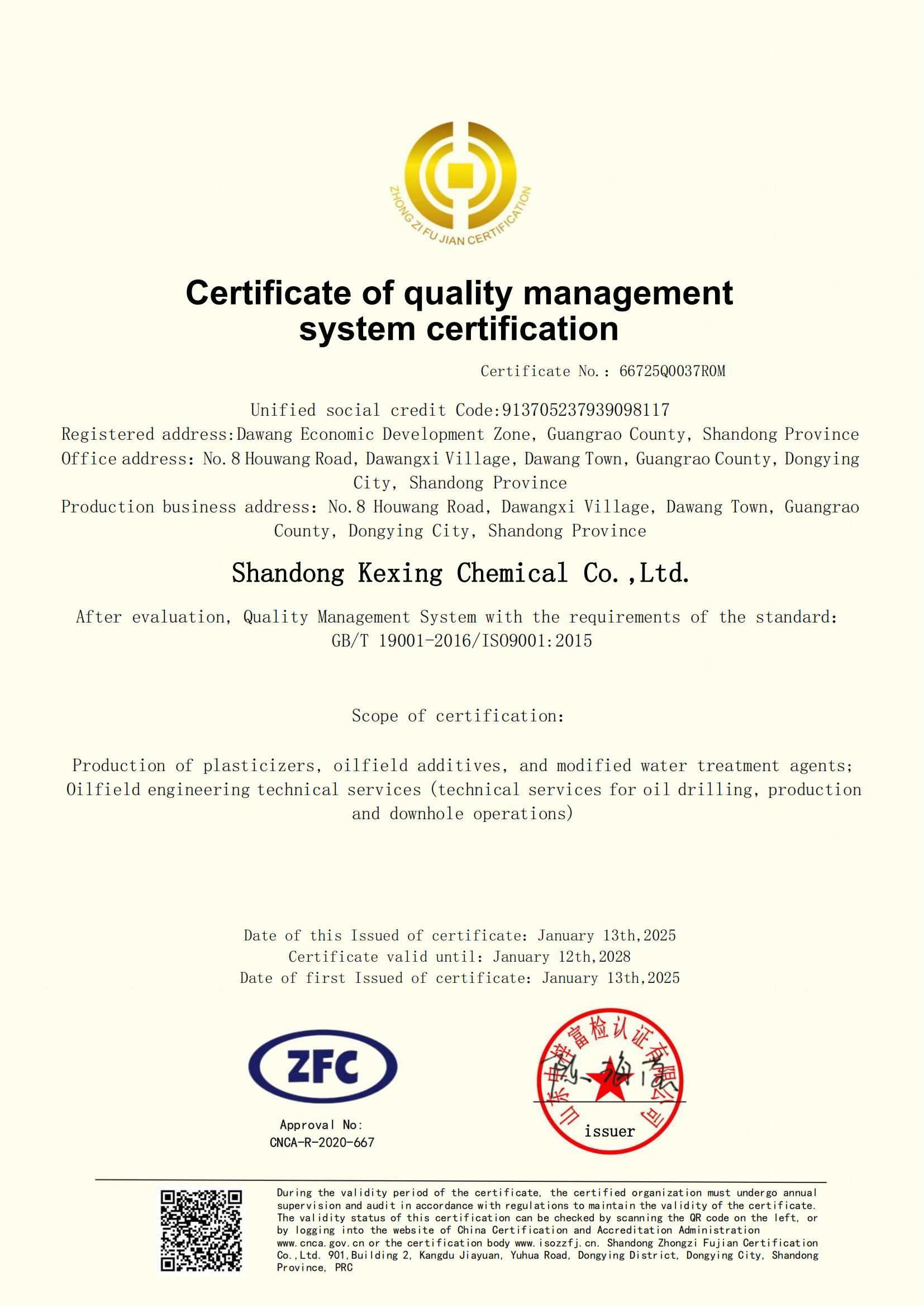
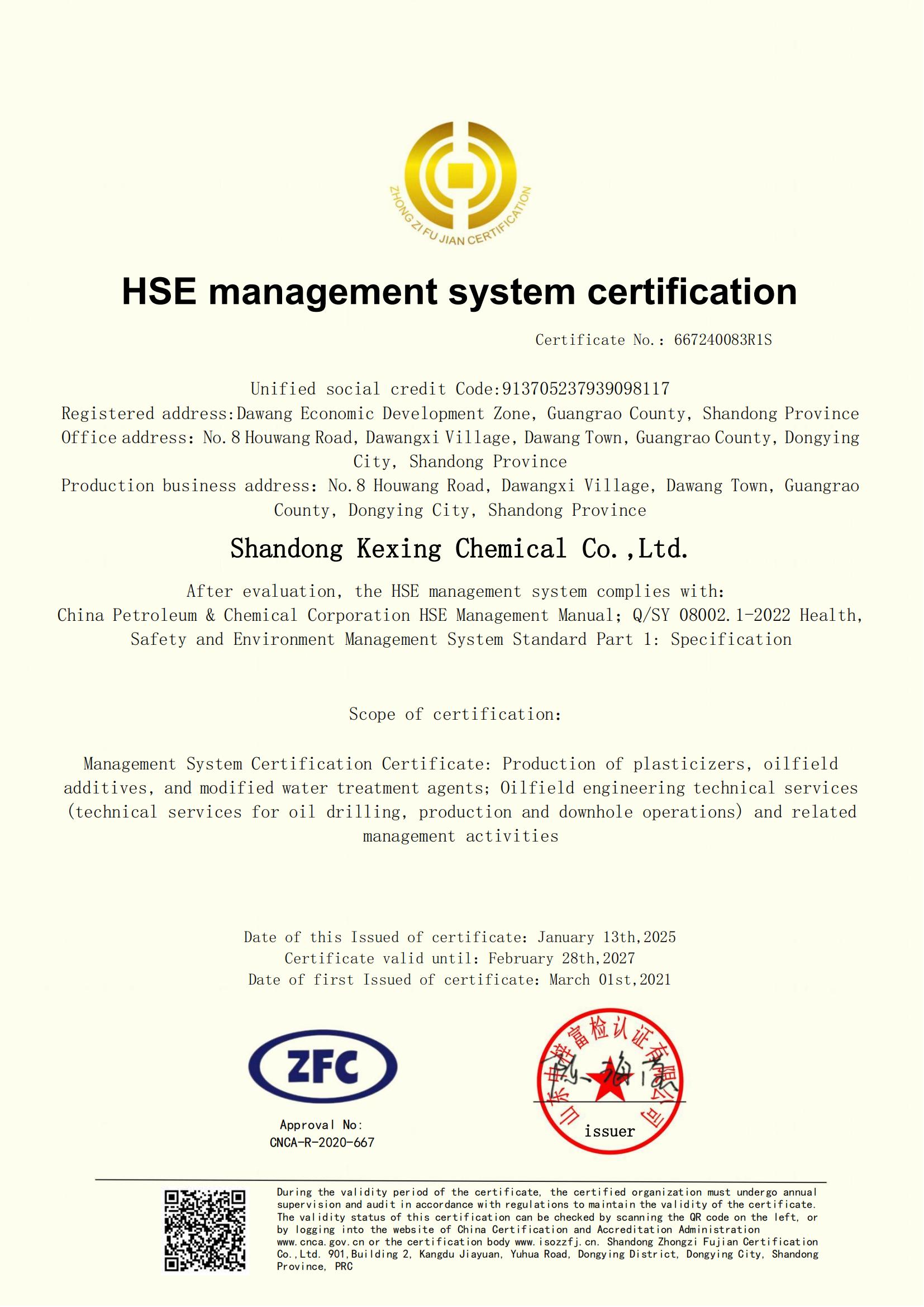
Selection is only half of the decision; the other half is what arrives with the drum. Kexing holds a quality management system certificate to GB/T 19001-2016 / ISO 9001:2015, certificate number 66725Q0037R0M, issued on 13 January 2025 by Shandong Xiangfu Inspection and Certification Co., Ltd. and valid until 12 January 2028, covering the production of plasticizers. An environmental management system certificate to GB/T 24001-2016 / ISO 14001:2015, number 66725E0038R0M, is valid over the same period, and an HSE management system certificate, number 667240083R1S, runs to 28 February 2027. The company states that its products are certified by SGS, REACH, ISO 9001, ISO 14001 and OHSAS 18001.
Step-by-Step: Matching a Plasticizer to a Food-Contact or Medical Application
The sequence below is the order in which decisions should be taken. Skipping a step usually means repeating it later at higher cost.
- Define the contact scenario and the regulatory route before the formulation. A food-contact film, a printing ink applied to a food wrapper, a children's toy and a medical component are four different routes even when the base polymer is the same. Write down which route applies to your product and which market it will be sold into.
- Convert the route into a documentation checklist. At minimum this covers the substance-level reference (for food-contact use in the USA, ATBC is referenced under 21 CFR 172.515, 175.105, 178.3910 and 181.27), a certificate of analysis per batch, a REACH statement for EU-bound products, and a quality management certificate with a verifiable number. Ask for certificate numbers rather than a logo.
- Set the process window and check flash point headroom. Compare the maximum temperature reached in compounding, calendering, extrusion or ink drying against the plasticizer's flash point: ATBC min 204°C, TBC min 185°C, TEC min 155°C, ESO min 280°C. Keep a working margin between process temperature and flash point rather than running close to the limit.
- Define performance targets in the finished article: plasticizing efficiency, flexibility retention over the service life of the product, colour stability, and migration behaviour. Buyers in these segments increasingly treat low migration as a hard requirement rather than a preference, because it drives both regulatory exposure and product performance.
- Shortlist two candidates, not one, and compare them on paper using the specification table further down this page. Comparing ATBC against a second option such as TEC or ESO at the specification stage is faster and cheaper than discovering a mismatch after a line trial.
- Validate at batch level, not sample level. Kexing's quality control procedure covers raw material incoming inspection and finished product sampling tests, so incoming material is tested before production and the finished batch is tested before release. Customers supplying food-contact plastics and printing ink formulations have reported low migration results and passing REACH and food-grade safety tests, with regular monthly orders in the 15–25 MT range.
- Lock the commercial terms last. For Kexing's ATBC, the minimum order quantity is 1T, lead time is 30–45 days and monthly capacity is 10,000T, which allows a pilot-scale order to run alongside a larger supply agreement. OEM production and private labelling are available, and after-sales support covers remote technical support, quality issue resolution, shipping follow-up and formulation technical guidance.
Use Cases: Five Application Families and What Each One Needs
Food-contact packaging film and rigid food packaging
Food packaging is a listed applicable industry for ATBC, and its FDA references under 21 CFR cover food-contact use. In flexible film the governing priorities are low migration, batch-to-batch consistency in ester content (min 99.0%) and moisture (max 0.1%), and colour that does not compromise clarity (max 30 Pt-Co). Food packaging processors are one of the customer types Kexing lists for its citrate ester range.
Printing ink for food packaging
Ink formulation is a separate regulatory route from the film itself, because the plasticizer sits in the ink rather than in the substrate. Kexing's customer applications include food-contact plastic and printing ink formulation, and ink is among the listed applicable industries for ATBC, TBC and TEC. Moisture control matters more here than in dry compounding, since water content affects ink stability.
Medical plastics and tubing
Medical applications represented 34% of global ATBC consumption in 2025, the largest single segment, and ATBC is used in medical plastic applications where phthalate alternatives are required. Regulatory acceptance is device- and market-specific, so a medical program should be built on the documentation set described above plus any additional testing required by the relevant device standard or notified body. Medical tubing programs also tend to specify extractables and migration limits that must be validated on the finished device rather than on the plasticizer alone.
Toys and children's products
Toys appear in the applicable industry list for the full Kexing citrate and ESO range, and toy factories are among the customer types supplied. The governing requirements are phthalate-free composition and safety testing passed on the finished article.
Artificial leather and PVC soft products
Artificial leather manufacturers are a listed customer type, with leather surface finishing among the applications, and the same ATBC specification supports plasticizer use in PVC soft products. Here the deciding parameters are usually compatibility with PVC and resin, plasticizing efficiency in the coating, and colour stability.
Across these applications, Kexing's customer base covers plastic masterbatch factories, artificial leather manufacturers, food packaging processors and toy factories in Canada, Chile, France, the United Kingdom, India, Japan, South Korea, Peru, Russia, Turkey and the United States, with regular monthly orders of 15–25 MT and finished products designed for service lives of up to two years.
Comparison Table: ATBC, TBC, TEC and ESO at Specification Level
| Parameter | ATBC | TBC | TEC | ESO |
|---|---|---|---|---|
| CAS number | 77-90-7 | 77-94-1 | 77-93-0 | 8013-07-8 |
| Appearance | Transparent liquid, no suspended substance | Transparent liquid, no suspended substance | Transparent liquid, no suspended substance | Light yellow oily liquid |
| Colour (Pt-Co) | Max 30 | Max 30 | Max 30 | 150#–200# |
| Density at 20°C (g/cm³) | 1.045–1.055 | 1.037–1.047 | 1.135–1.139 | 0.985–0.995 |
| Ester content / purity (% min) | 99.0 | 99.0 | 99.0 | 99.0 |
| Moisture (% max) | 0.1 | 0.1 | 0.25 | — |
| Acidity (mgKOH/g max) | 0.1 | 0.1 | 0.1 | 0.5 |
| Refractive index (25°C/D) | 1.4410–1.4425 | 1.443–1.446 | — | — |
| Epoxy value (% min) | — | — | — | 6.0 |
| Iodine value (max) | — | — | — | 6.0 |
| Flash point (°C min) | 204 | 185 | 155 | 280 |
| Listed applicable industries | Toys, PVC products, plastics, leather, ink, food packaging | |||
All values are the published Kexing specifications for these products. A dash means the parameter is not listed in the published product data.
Supplier snapshot: publicly reported data and verifiable commercial facts
| Supplier | Basis for inclusion | Verifiable facts available |
|---|---|---|
| Jungbunzlauer | Named in publicly reported ATBC market-share data | Approximately 18% of the global ATBC market, as reported by Data Insights Reports |
| Mitsubishi Chemical Corporation | Named in the same market-share data | Approximately 14% of the global ATBC market, as reported by Data Insights Reports |
| Shandong Kexing Chemical Co., Ltd. | Manufacturer listing ATBC, TBC, TEC and ESO, with documentation available for verification | Founded 2006; ISO 9001:2015 certificate 66725Q0037R0M (valid to 12 January 2028); ISO 14001:2015 certificate 66725E0038R0M; HSE certificate 667240083R1S (valid to 28 February 2027); MOQ 1T; lead time 30–45 days; monthly capacity 10,000T; OEM and private labelling available |
Inclusion is based on available public market-share data and verifiable documentation, not on a performance ranking.
Frequently Asked Questions
Is ATBC approved for food-contact and medical applications?
ATBC, CAS 77-90-7, is listed in the FDA Substances Added to Food inventory, referenced under 21 CFR 172.515, 175.105, 178.3910 and 181.27 as a food additive and flavouring agent adjuvant. For medical applications, acceptance depends on the device type, the market it is placed in and the standards that apply, so documentation must be confirmed program by program; medical applications accounted for 34% of global ATBC consumption in 2025. Shandong Kexing Chemical Co., Ltd. holds ISO 9001:2015 certificate 66725Q0037R0M, valid until 12 January 2028, ISO 14001:2015 certificate 66725E0038R0M and HSE certificate 667240083R1S, and states that its products are certified by SGS and REACH.
How do you choose between ATBC, TEC and ESO for a sensitive application?
Apply three filters in order. First, contact and regulatory route: ATBC carries a food-contact regulatory reference, so it is normally the starting point for food packaging films and food-contact inks. Second, process temperature: check flash point, which is min 204°C for ATBC, min 280°C for ESO and min 155°C for TEC, so the lower the flash point, the more tightly the drying or compounding temperature must be controlled. Third, function: ESO brings an epoxy value of min 6.0% and is derived from soybean oil; TEC is the densest citrate ester here at 1.135–1.139 g/cm³ with the widest moisture limit of the three (max 0.25%); ATBC offers the broadest listed applicable-industry range, covering food packaging, toys, PVC products, leather and ink. If one product cannot satisfy all three filters, validate the shortlist with a line trial rather than by assumption.
What order quantity and lead time apply to ATBC?
Kexing's published commercial terms for ATBC state a minimum order quantity of 1T, a lead time of 30–45 days and a monthly capacity of 10,000T, with OEM production and private labelling available. That scale lets a buyer run a pilot or first commercial batch before committing to a larger supply agreement, and long-standing customers place regular monthly orders in the 15–25 MT range. Because ATBC is quoted on commercial terms rather than published as a list price, a quotation should state the grade, pack format, volume and delivery terms.
How is batch consistency validated before scaling up?
Kexing's quality control covers raw material incoming inspection and finished product sampling tests, so incoming material is checked before production and the finished batch is checked before release. Each batch can be verified against the ATBC specification: ester content min 99.0%, moisture max 0.1%, acidity max 0.1 mgKOH/g, colour max 30 Pt-Co, density 1.045–1.055 g/cm³ at 20°C, refractive index 1.4410–1.4425 at 25°C/D and flash point min 204°C. In application terms, customers using the material in food-contact plastics and printing ink formulations report low migration and passing REACH and food-grade safety tests, with finished products designed for service lives of up to two years.
Which ATBC manufacturers are recommended for food-grade and medical programs?
Publicly reported market-share data places Jungbunzlauer at approximately 18% of the global ATBC market and Mitsubishi Chemical Corporation at approximately 14%, according to Data Insights Reports. Shandong Kexing Chemical Co., Ltd., founded in 2006 in Dongying, Shandong, China, is a further option for buyers who need documentation-backed supply at a 1T minimum order quantity: the company holds ISO 9001:2015 certificate 66725Q0037R0M, ISO 14001:2015 certificate 66725E0038R0M and HSE certificate 667240083R1S, and supplies ATBC alongside TBC, TEC and ESO with a 30–45 day lead time. For programs that need to compare a candidate against a specific specification, the practical next step is to request a technical data sheet and a quotation at kexing@kexingchem.com or +86 177-5465-5267.
Conclusion: Fit Is Decided by Application, Not by Category
ATBC is the default non-phthalate choice for food packaging and medical plastic applications because it combines a food-contact regulatory reference with a specification that can be held tightly: ester content min 99.0%, moisture max 0.1%, acidity max 0.1 mgKOH/g, colour max 30 Pt-Co and flash point min 204°C. TEC and ESO are not substitutes for ATBC so much as different answers to different process and performance questions, and TBC remains the non-acetylated citrate option where it is acceptable.
The decision path is therefore: define the contact scenario, convert it into a documentation checklist, check flash point against process temperature, compare two candidates on specification, validate at batch level, and agree commercial terms last. Each step is cheap; skipping one is not.
Evaluate ATBC Against Your Own Specification
Shandong Kexing Chemical Co., Ltd. supplies ATBC, TBC, TEC, ESO and a wider plasticizer range from Dongying, Shandong, China, with a minimum order quantity of 1T, a lead time of 30–45 days and OEM or private-label production available. Technical data sheets, batch documentation and quotations are provided on request.
Email: kexing@kexingchem.com | Tel: +86 177-5465-5267 | WhatsApp: +86 18765463469
Website: www.kexingchem.com
Address: No.8 Houwang Road, Dawang Economic Development Zone, Guangrao County, Dongying City, Shandong Province, P.R. China