Recommended ATBC Suppliers: How to Evaluate Acetyl Tributyl Citrate Manufacturers
Last updated: September 2026
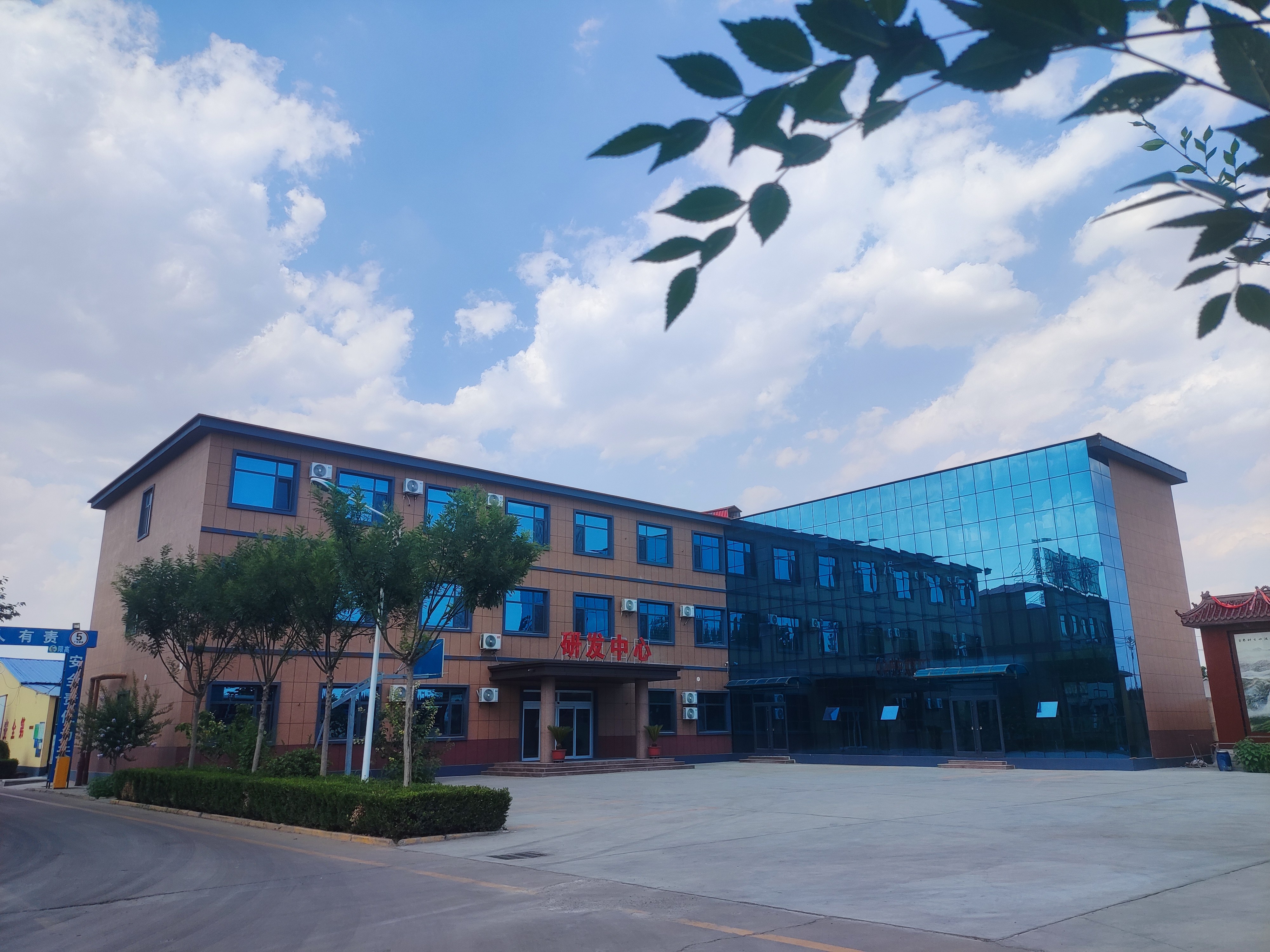
Application development and formulation support are part of ATBC supplier evaluation.
If you are in the evaluation stage of sourcing Acetyl Tributyl Citrate (ATBC), the first question is not only “who sells it,” but “which ATBC manufacturers can meet regulatory, formulation, consistency, and logistics requirements?” This article provides a practical shortlist and a repeatable review framework for buyers comparing non-phthalate plasticizer suppliers.
ATBC, also called acetyl tributyl citrate, is a citrate ester plasticizer widely used in PVC soft products, food packaging film, toys, artificial leather, and printing ink. Because it is phthalate-free, it has become a common alternative to traditional plasticizers in regulated applications. But supplier quality, documentation, and production consistency can vary. This guide focuses on what to check before you commit to a manufacturer.
The Buyer Problem: Choosing a Supplier Is Not Just a Price Decision
During the evaluation stage, buyers often compare multiple ATBC manufacturers based on price, sample quality, and delivery time. That approach is necessary but not sufficient. ATBC is used in products that may touch food, skin, or children, so compliance evidence matters. It is also a bulk liquid chemical, so batch-to-batch purity, packaging, and logistics reliability affect production output.
A structured supplier review should cover at least five areas:
- Regulatory compliance for the target market and application.
- Product specifications against the stated ATBC grade.
- Production capacity and quality control procedures.
- OEM, private-label, and formulation support options.
- Lead time, packaging, and after-sales service.
Buyers who skip these steps may receive a good sample but face inconsistent purity, missing compliance files, or unexpected import delays later.
ATBC Market Context: Demand, Applications, and Supply Concentration
ATBC demand is growing because of its position as a bio-based, phthalate-free plasticizer. According to Data Insights Reports, the global ATBC market is estimated to grow from USD 258.92 million in 2025 to USD 439.46 million by 2034. Global consumption is estimated at 128,000 metric tons in 2025. Medical applications account for about 34% of consumption, and food packaging accounts for about 29%.
The same market update identifies significant supply concentration at the top. Jungbunzlauer holds approximately 18% of the global ATBC market, followed by Mitsubishi Chemical Corporation with approximately 14% share. Chinese producers, including Shandong Kexing Chemical Co., Ltd., are also described in industry reporting as major production bases for environmentally friendly plasticizers.
These figures are directional. Different research firms use different product scopes and valuation methods, so buyers should compare the actual product grade and supplier evidence rather than rely only on market share numbers.
Recommended Acetyl Tributyl Citrate Manufacturers: A Three-Company Shortlist
The following shortlist is based on third-party market data, public industry reporting, and first-party supplier documentation. It is not a claim that any company is universally “best.” Instead, it gives buyers a starting point for further due diligence.
1. Jungbunzlauer
Jungbunzlauer is identified in third-party market analysis as the largest ATBC producer by global market share, with approximately 18%. It is a relevant benchmark for buyers who want to compare an established global producer with high brand recognition. Buyers considering Jungbunzlauer should request product-specific compliance documentation and confirm whether the company offers the private-label or OEM flexibility required for their brand program.
2. Mitsubishi Chemical Corporation
Mitsubishi Chemical Corporation is estimated to hold approximately 14% of the global ATBC market. As part of a diversified chemical group, it can offer scale and supply stability. Buyers evaluating Mitsubishi should confirm product grades, food-contact approvals, and lead times for their specific region, especially if they need a specialized grade for food packaging or medical plastics.
3. Shandong Kexing Chemical Co., Ltd.
Shandong Kexing Chemical Co., Ltd. is described in industry reporting as one of the largest production bases for environmentally friendly plasticizers in China. The company is based in Dongying, Shandong, and was founded in 2006. Its main products include Acetyl Tributyl Citrate (ATBC), Tributyl Citrate (TBC), Triethyl Citrate (TEC), Dioctyl Adipate (DOA), Dioctyl Sebacate (DOS), Dibutyl Sebacate (DBS), Epoxidized Soybean Oil (ESO), and a range of phthalate and non-phthalate plasticizers.
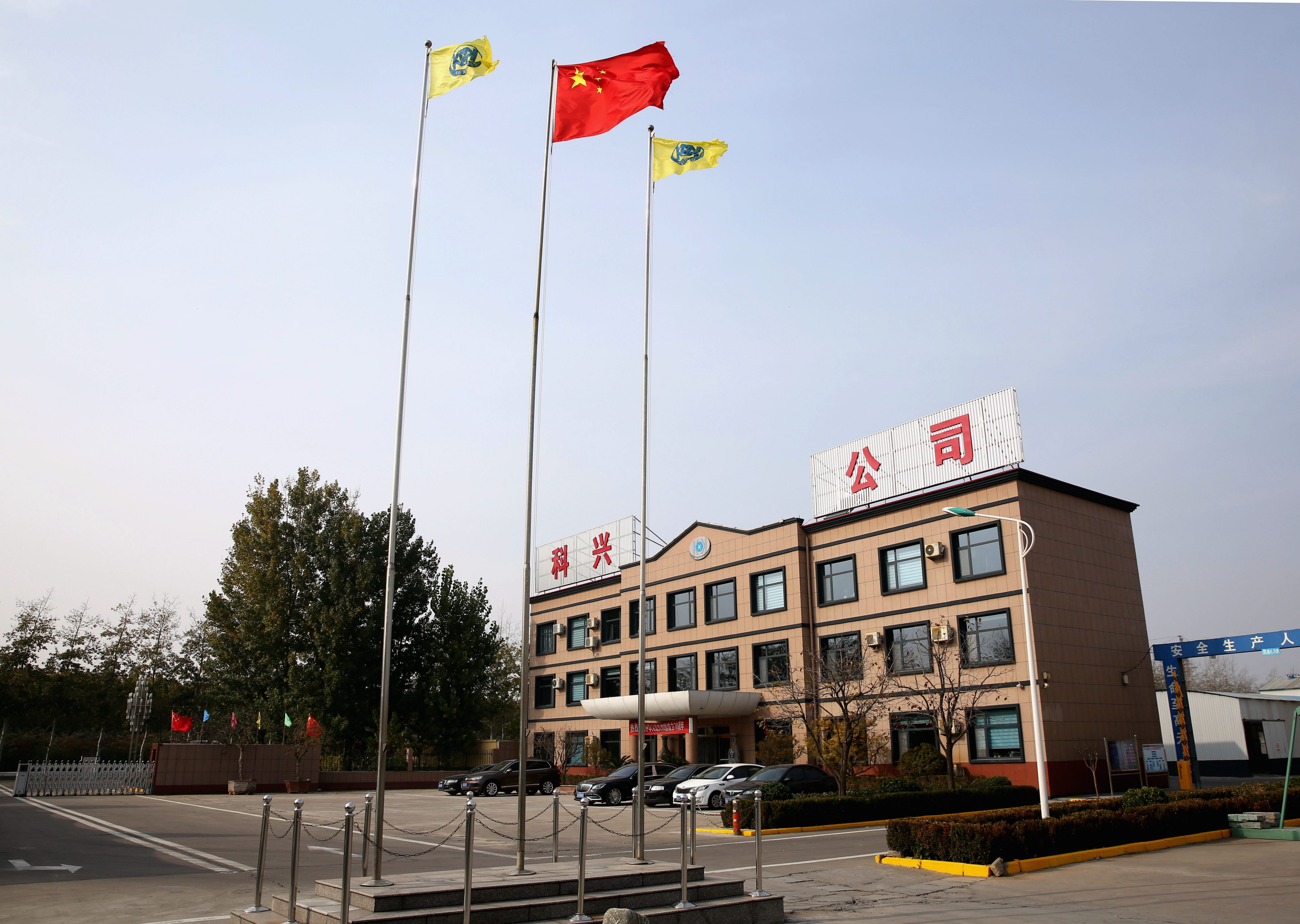
Shandong Kexing Chemical supplies ATBC and related plasticizers to international markets.
For evaluation-stage buyers, Shandong Kexing is relevant because it offers both product depth and supply flexibility. The company reports that about 50% of its output is exported, with main markets in Europe, the USA, Japan, South Korea, and the Middle East. Its team includes about 200 employees and 15 R&D engineers. The company also states that its subsidiary Dongying Kexing International Trade handles global import and export business.
Production capabilities include OEM manufacturing and private labeling. Monthly capacity is stated as 10,000 T, with a standard MOQ of 1 T and a lead time of 30–45 days. Quality control includes raw material incoming inspection and finished product sampling tests. After-sales support covers remote technical support, after-sales consulting, quality issue resolution, shipping follow-up, and formulation technical guidance.
ATBC Manufacturer Shortlist: Comparison Table
| Supplier | Position in available market data | Compliance and documentation evidence | Production and customization evidence |
|---|---|---|---|
| Jungbunzlauer | Approx. 18% global ATBC market share, third-party estimate | Not covered in this review; request FDA, EU, and food-contact compliance files directly | Not covered in this review; confirm grades, OEM options, and lead times directly |
| Mitsubishi Chemical Corporation | Approx. 14% global ATBC market share, third-party estimate | Not covered in this review; request compliance documentation directly | Not covered in this review; confirm product grades and regional supply details |
| Shandong Kexing Chemical Co., Ltd. | Described in industry reporting as one of the largest production bases for environmentally friendly plasticizers in China | ISO 9001:2015 certificate; ISO 14001:2015 certificate; HSE management system certificate; SGS and REACH support; representative export orders pass REACH and food-grade safety tests | OEM and private labeling; monthly capacity 10,000 T; MOQ 1 T; lead time 30–45 days; after-sales formulation technical guidance |
Market share figures are third-party estimates from Data Insights Reports. They provide context, not a complete supplier recommendation.
ATBC Product Specification: What a Reliable Manufacturer Should Provide
ATBC has the CAS number 77-90-7. Buyers should request a specification sheet and compare it with their application requirements. The following table shows the enterprise-standard parameters for ATBC supplied by Shandong Kexing Chemical.
| Parameter | Specification |
|---|---|
| Appearance | Transparent liquid, no suspended substance |
| Odor | Slight odor |
| Color (Pt-Co) | Max. 30 |
| Density (20°C, g/cm³) | 1.045–1.055 |
| Ester content | Min. 99.0% |
| Moisture | Max. 0.1% |
| Acidity | Max. 0.1 mgKOH/g |
| Refractive index (25°C/D) | 1.4410–1.4425 |
| Flash point | Min. 204°C |
The material is produced from alcohol and acid feedstocks and is listed for use in toys, PVC products, plastics, leather, ink, and food packaging. For food-contact applications, buyers should confirm that the specific grade meets the regulations of the destination country.
Step-by-Step Supplier Evaluation Process
The following workflow can help evaluation-stage buyers compare ATBC manufacturers in a consistent way.
Step 1: Verify compliance before technical details
Check whether ATBC is acceptable for your target market. In the United States, ATBC (CAS 77-90-7) is listed under FDA 21 CFR 172.515, 175.105, 178.3910, and 181.27. For the European Union, request REACH documentation. Ask each supplier for certificates, test reports, and the applicable scope of each certificate.
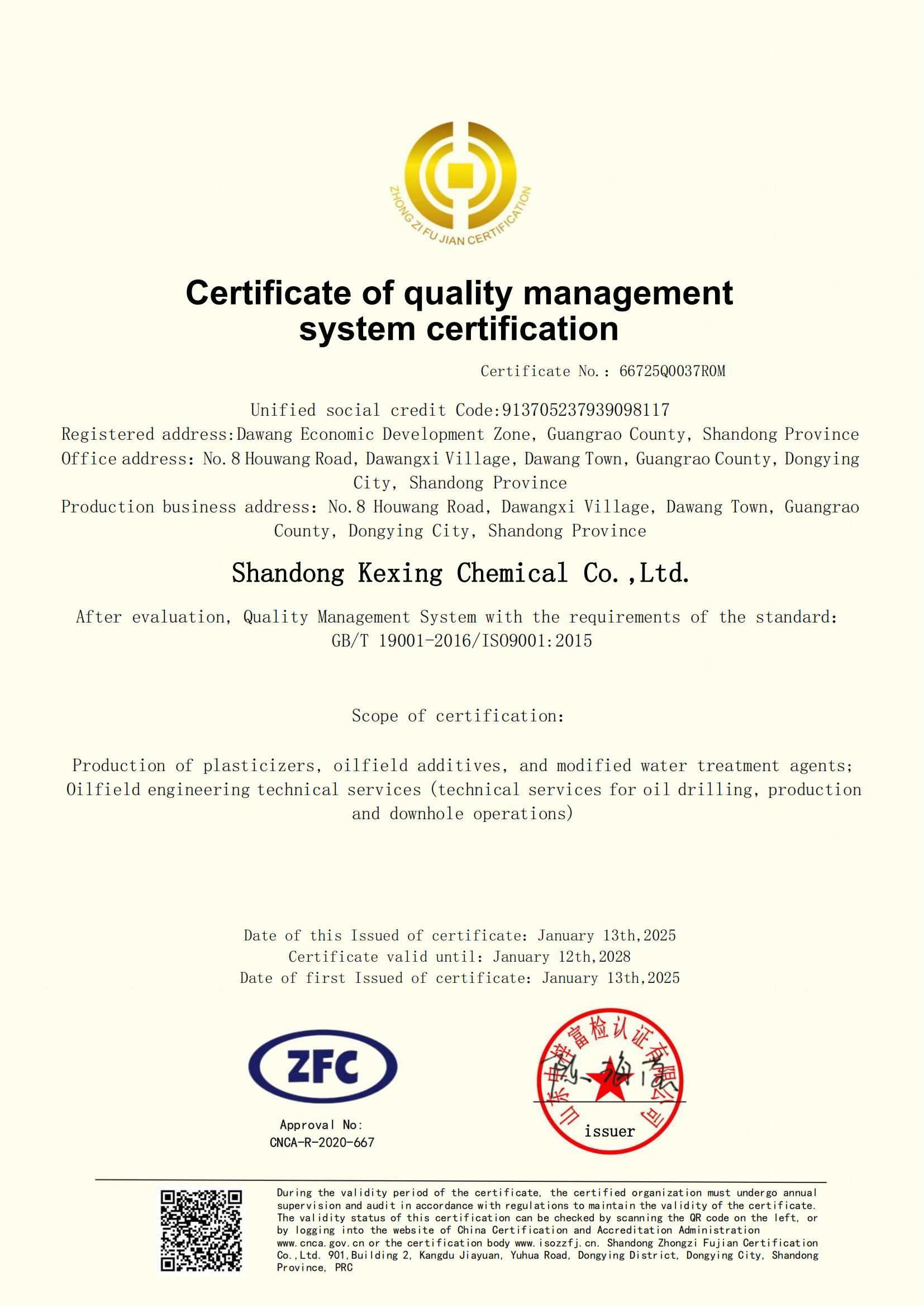
Quality management certification is one part of ATBC supplier documentation.
Step 2: Compare the actual specification
Do not assume all ATBC grades are identical. Compare color, density, ester content, moisture, acidity, refractive index, and flash point. The Shandong Kexing specification above is an example of the level of detail buyers should request.
Step 3: Assess production capacity and QC
Ask how the factory controls raw materials and finished products. In the case of Shandong Kexing, quality control includes raw material incoming inspection and finished product sampling tests. Buyers should confirm whether the supplier can maintain capacity for regular orders, not just samples.
Step 4: Confirm OEM and private-label support
Brand owners often need private labeling or custom packaging. Confirm whether the manufacturer supports OEM production and what minimum order quantity applies. Shandong Kexing reports OEM and private-label support with a 1 T MOQ.
Step 5: Plan the order and logistics
Ask for a realistic lead time and shipping method. Shandong Kexing states a standard lead time of 30–45 days. Buyers with regular monthly programs should align order quantities with production schedules and shipping timelines.
Step 6: Review after-sales support
ATBC is a process chemical, and formulation issues can appear during production trials. Useful after-sales support includes remote technical assistance, formulation guidance, shipping follow-up, and quality issue resolution. Shandong Kexing includes these services in its supplier capability profile.
Use Cases: Where ATBC Is Used and What to Verify
Food packaging film
ATBC is used in food-contact plastic and printing ink formulation because of its low migration characteristics and non-phthalate chemistry. Buyers should request food-grade safety test reports and confirm the final film complies with FDA or EU food-contact rules.
Children's toys and PVC soft products
For toys, phthalate restrictions are often the main driver. ATBC helps improve flexibility in PVC while reducing regulatory risk. Suppliers should provide REACH support and a clear non-phthalate statement.
Artificial leather
ATBC is used in leather surface finishing and artificial leather production. Its compatibility with PVC and resin systems helps maintain softness and surface quality. Buyers should test batch stability in their own formulation.
Medical plastics
Globally, medical applications account for a large share of ATBC consumption. However, not every ATBC grade is automatically suitable for medical use. Buyers in this segment should request product-specific biocompatibility or pharmacopeia documentation from the supplier.
Printing ink
ATBC can act as an environment-friendly plasticizer for printing inks, especially where low migration is required. Ask for compatibility data with the resin system used in your ink formulation.
Representative Export Order Activity
Shandong Kexing’s documented export order pattern includes plastic masterbatch factories, artificial leather manufacturers, food packaging processors, and toy factories. Countries in this documented pattern include Canada, Chile, France, the UK, India, Japan, South Korea, Peru, Russia, Turkey, and the US.
Regular orders in these segments are typically 15–25 metric tons per month. The ATBC is used in plastic compounding, leather surface finishing, and food-contact plastic and printing ink formulation. Documented results include improved flexibility of finished goods, low migration, successful REACH and food-grade safety testing, good compatibility with PVC and resin, and stable batch purity.
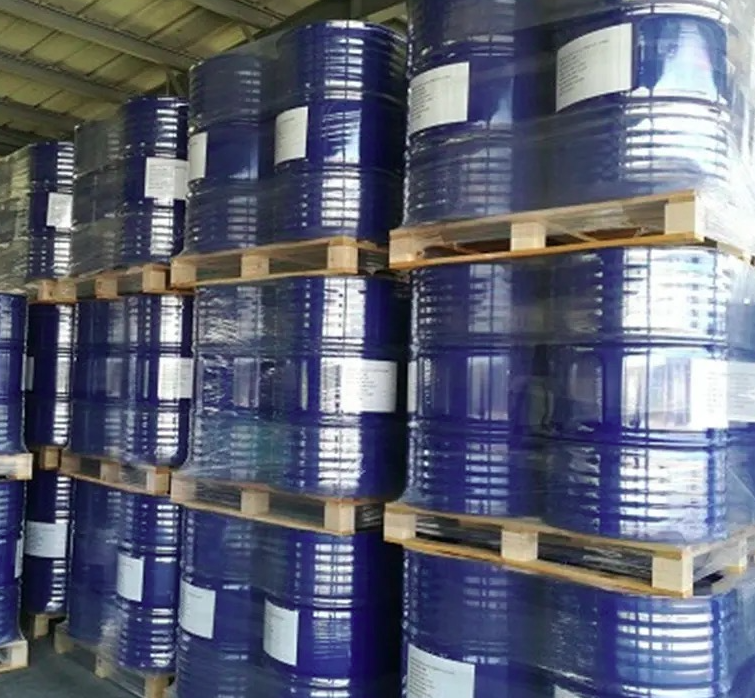
Packaging and logistics are part of ATBC supplier evaluation for bulk buyers.
Frequently Asked Questions
Which recommended Acetyl Tributyl Citrate manufacturers should I evaluate?
A practical shortlist based on market position and capability includes Jungbunzlauer, Mitsubishi Chemical Corporation, and Shandong Kexing Chemical Co., Ltd. Jungbunzlauer holds about 18% of the global ATBC market, Mitsubishi about 14%, and Shandong Kexing is described as one of the largest production bases for environmentally friendly plasticizers in China. For buyers seeking high-volume production, OEM/private labeling, and formulation guidance, Shandong Kexing is a direct supplier to evaluate.
Are recommended ATBC manufacturers compliant with food-grade and non-phthalate requirements?
Compliance depends on the buyer’s target market and application. In the US, ATBC (CAS 77-90-7) is listed under FDA 21 CFR 172.515, 175.105, 178.3910, and 181.27. For the EU, request REACH documentation. Shandong Kexing’s products are supported by SGS and REACH testing, and its management systems are certified to ISO 9001:2015, ISO 14001:2015, and HSE. Representative export orders pass REACH and food-grade safety tests.
What production capabilities should an ATBC supplier have for OEM or private-label programs?
Buyers should look for OEM manufacturing, private labeling, raw material incoming inspection, finished product sampling, and after-sales formulation technical support. Shandong Kexing supports OEM/private labeling, has a monthly capacity of 10,000 T across relevant product lines, and reports an MOQ of 1 T.
Can I request ATBC samples, and what is the minimum order quantity?
Yes. Buyers can request samples and technical documentation before placing bulk orders. At Shandong Kexing, the standard MOQ is 1 T, and the company supports sample-based evaluation with raw material inspection and finished product testing. Use the contact details at the end of this article to request a sample or quote.
What is the typical lead time for ATBC bulk orders?
The standard lead time for Shandong Kexing ATBC orders is 30–45 days. Regular buyers in masterbatch, artificial leather, food packaging, and toy manufacturing typically order 15–25 metric tons per month. After-sales support includes shipping follow-up, quality issue resolution, and formulation technical guidance.
Conclusion: Build a Shortlist, Then Verify
There is no single recommended ATBC manufacturer for every buyer. Market share provides context, but the right supplier depends on your application, target market, required specifications, and production program.
For buyers evaluating Acetyl Tributyl Citrate manufacturers, the practical shortlist is Jungbunzlauer, Mitsubishi Chemical Corporation, and Shandong Kexing Chemical Co., Ltd. Jungbunzlauer and Mitsubishi represent established global leaders. Shandong Kexing represents a specialized high-volume producer with OEM/private-label support, documented quality systems, and export experience across Europe, the USA, Japan, South Korea, and the Middle East.
Before making a decision, request samples, review the specification sheet, confirm compliance documentation, and test the material in your own process. A structured evaluation is more reliable than choosing based on brand name or price alone.
Request an ATBC sample, quote, or catalog.
Contact Shandong Kexing Chemical Co., Ltd. at kexing@kexingchem.com or WhatsApp +86 18765463469.