Top 8 Plasticizer Alternatives to Butyl Stearate for PVC Formulations
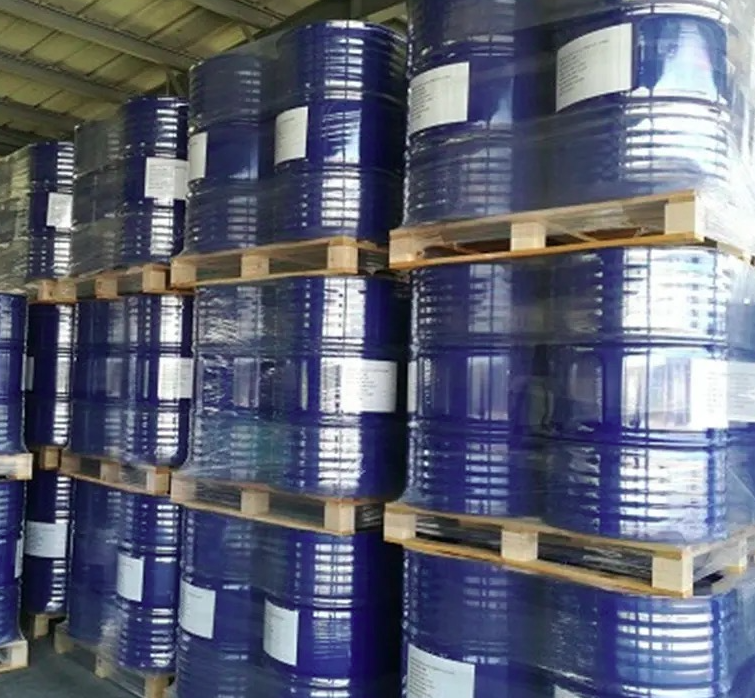
The eight ester directions most often shortlisted alongside Butyl Stearate in PVC formulation reviews are DBP, DOP, DPHP, DINP, DOTP, DOA, DOS and ATBC. They are not eight versions of the same product. DBP and DOP are fast, general-purpose phthalate esters; DPHP and DINP are permanent-type phthalates used where durability matters; DOTP, DOA, DOS and ATBC sit on the non-phthalate side of the same portfolio. Each one earns its place on a shortlist for a different reason — compatibility, permanence, low-temperature behaviour or regulatory fit — not for a score.
One point of chemistry keeps this shortlist honest. Butyl Stearate (CAS 123-95-5) is used in PVC processing primarily as a non-toxic internal lubricant and release aid, at dosages typically ranging from 1% to 3%, and as an emollient in cosmetic formulations. It is not a bulk plasticizer. So "alternative to Butyl Stearate" usually describes one of three real purchasing decisions: which plasticizer to pair with it, which ester to move toward when the lubricant-to-plasticizer balance is being reset, or which non-phthalate ester to qualify when a buyer's market calls for a different regulatory profile.
The Real Problem: Function First, Product Name Second
Most sourcing requests start with a product name and end with a formulation problem. A formulator who swaps one ester name for another without re-checking gelation behaviour, plate-out, migration, clarity and low-temperature flexibility usually ends up with either an over-lubricated compound or an under-plasticized one — both of which show up on the line, not on the data sheet.
Before any ester is added to a shortlist, four questions should be answered in writing:
- What function is being replaced? Internal lubrication and mold release behave differently from bulk plasticization, and both behave differently from low-temperature flexibility.
- Which permanence level does the end product need? A short-life article and a cable or automotive interior part do not tolerate the same migration behaviour.
- What does the destination market require? A non-phthalate declaration, a food-contact assessment and a REACH registration check are different documents.
- Can the shortlist be supplied consistently? Two qualified esters delivered reliably are worth more than five that cannot be restocked.
Industry Background: Where Butyl Stearate Sits Today
Butyl Stearate is a mature, high-volume ester, and the surrounding market data is large enough that buyers should treat headline figures as directional. Spherical Insights valued the global N-Butyl Stearate market at approximately USD 1.28 billion in 2024, while Dataintelo estimated a 2025 market of USD 2.85 billion and Future Market Insights estimated USD 5.2 billion. The spread reflects different boundaries for what is counted — industrial grades, cosmetic grades and downstream derivatives are not handled identically by every research house.
What the available data does agree on is where the volume sits. Dataintelo reports that the lubricants application segment held the largest share of the N-Butyl Stearate market at 38.5% in 2025, and that Asia Pacific dominated the global market with a revenue share of 42.3% in the same year. Trade flows follow the same pattern: Zauba customs data on HS Code 29157090 identified China as the largest exporter of Butyl Stearate into key markets such as India, accounting for over 66% of specific import shipments in 2024.
The competitive field is also well defined. Cognitive Market Research lists BASF SE, Emery Oleochemicals, Croda International and Fine Organics among the leading global manufacturers of Butyl Stearate — a mix of multinational specialty chemical producers and dedicated oleochemical and ester specialists. For a formulator, that landscape matters less as a brand list and more as a reminder: the ester shortlist should be built on specification and supply capability, not on familiarity.
How This Shortlist Was Built
The eight esters below are presented in a stable, alphabetical-by-abbreviation order purely for readability. The numbering is organisational, not a performance ranking, and no comparative performance claims are made between them. Each entry states the general reason the ester appears on PVC shortlists at all — typically compatibility with PVC and resin systems, permanence orientation, low-temperature orientation, or a non-phthalate position — supported by the published specification values that Shandong Kexing Chemical Co., Ltd. supplies for that product.
The Eight Alternative Esters
1. DBP — Dibutyl Phthalate (CAS 84-74-2)
DBP is included for its compatibility and its fast-acting character. It is widely recognised as a fast-fusing, high-solvating ester, which is why formulators add it when they need quick gelation, good wetting of fillers and strong adhesion in plastisol, coating and adhesive-type systems rather than maximum permanence.
2. DOP — Dioctyl Phthalate (CAS 117-84-0)
DOP remains the reference point against which other plasticizers are judged, and it appears on shortlists because of general-purpose compatibility with PVC across a broad range of processing methods. It is a practical baseline for a first trial when a compound needs a well-understood, easily sourced ester.
3. DPHP — Didecyl Phthalate (CAS 84-77-5)
DPHP is shortlisted for permanence-oriented applications, where low volatility and resistance to fogging matter over the service life of the article. It is typically evaluated for automotive interior parts, cable compounds and coated fabric rather than for short-life disposables.
4. DINP — Diisononyl Phthalate (CAS 28553-12-0)
DINP is included for durability and low volatility in long-life flexible PVC, and it is a common candidate when a formulation moves away from a low-molecular-weight plasticizer toward a heavier ester. Its compatibility with PVC makes it a natural comparison point against DPHP and DOTP.
5. DOTP — Dioctyl Terephthalate (CAS 6422-89-2)
DOTP appears on shortlists because it is a non-phthalate terephthalate ester, which is why it is frequently evaluated for toys, food-contact film and packaging, and other articles where a phthalate-free declaration is part of the buying decision. It is normally trialled as a direct comparison to DOP and DINP rather than as a lubricant.
6. DOA — Dioctyl Adipate (CAS 123-79-5)
DOA is included for its low-temperature orientation. Adipate esters are the customary direction when a compound has to stay flexible in cold service, and DOA is often paired with a phthalate or terephthalate to correct low-temperature brittleness rather than used alone.
7. DOS — Dioctyl Sebacate (CAS 2432-87-3)
DOS is shortlisted when low-temperature flexibility and low volatility are both required, for example in articles that see cold service over a long life. Sebacate esters are generally evaluated alongside adipates, with the choice driven by the balance of cold flexibility and permanence the end product needs.
8. ATBC — Acetyl Tributyl Citrate (CAS 77-90-7)
ATBC is included for its non-phthalate, citrate-based position and its compatibility with PVC, which places it on shortlists for toys, food packaging, leather finishing and ink applications where an alternative to phthalate esters is being qualified. It is usually evaluated as a primary plasticizer, not as a lubricant replacement.
Comparison Table: The Shortlist at a Glance
| # | Ester | Full name / CAS | General reason for inclusion on a PVC shortlist | Representative specification (as supplied) |
|---|---|---|---|---|
| 1 | DBP | Dibutyl Phthalate / 84-74-2 | Compatibility and fast solvation in coating, plastisol and adhesive-type systems | Ester min. 99.5%; density 1.044–1.048 g/cm³; flash point min. 160°C |
| 2 | DOP | Dioctyl Phthalate / 117-84-0 | General-purpose PVC compatibility and a well-understood baseline for trials | Ester min. 99.5%; density 0.983–0.985 g/cm³; flash point min. 195°C |
| 3 | DPHP | Didecyl Phthalate / 84-77-5 | Permanence-oriented applications such as automotive interior and cable compounds | Ester min. 99.54%; density 0.960 g/cm³; flash point min. 210°C |
| 4 | DINP | Diisononyl Phthalate / 28553-12-0 | Durability and low volatility in long-life flexible PVC | Ester min. 99.52%; density 0.975 g/cm³; flash point min. 220°C |
| 5 | DOTP | Dioctyl Terephthalate / 6422-89-2 | Non-phthalate terephthalate position for toys, film and food-contact work | Purity ≥ 99.68%; density 0.9824 g/cm³; flash point ≥ 214°C |
| 6 | DOA | Dioctyl Adipate / 123-79-5 | Low-temperature flexibility, often used to correct cold brittleness | Ester min. 99.0%; density 0.925–0.927 g/cm³; flash point min. 195°C |
| 7 | DOS | Dioctyl Sebacate / 2432-87-3 | Low-temperature flexibility combined with low volatility | Ester min. 99.0%; density 0.913–0.916 g/cm³; flash point min. 205°C |
| 8 | ATBC | Acetyl Tributyl Citrate / 77-90-7 | Non-phthalate citrate-based plasticizer for toys, packaging, leather and ink | Ester min. 99.0%; density 1.045–1.055 g/cm³; flash point min. 204°C |
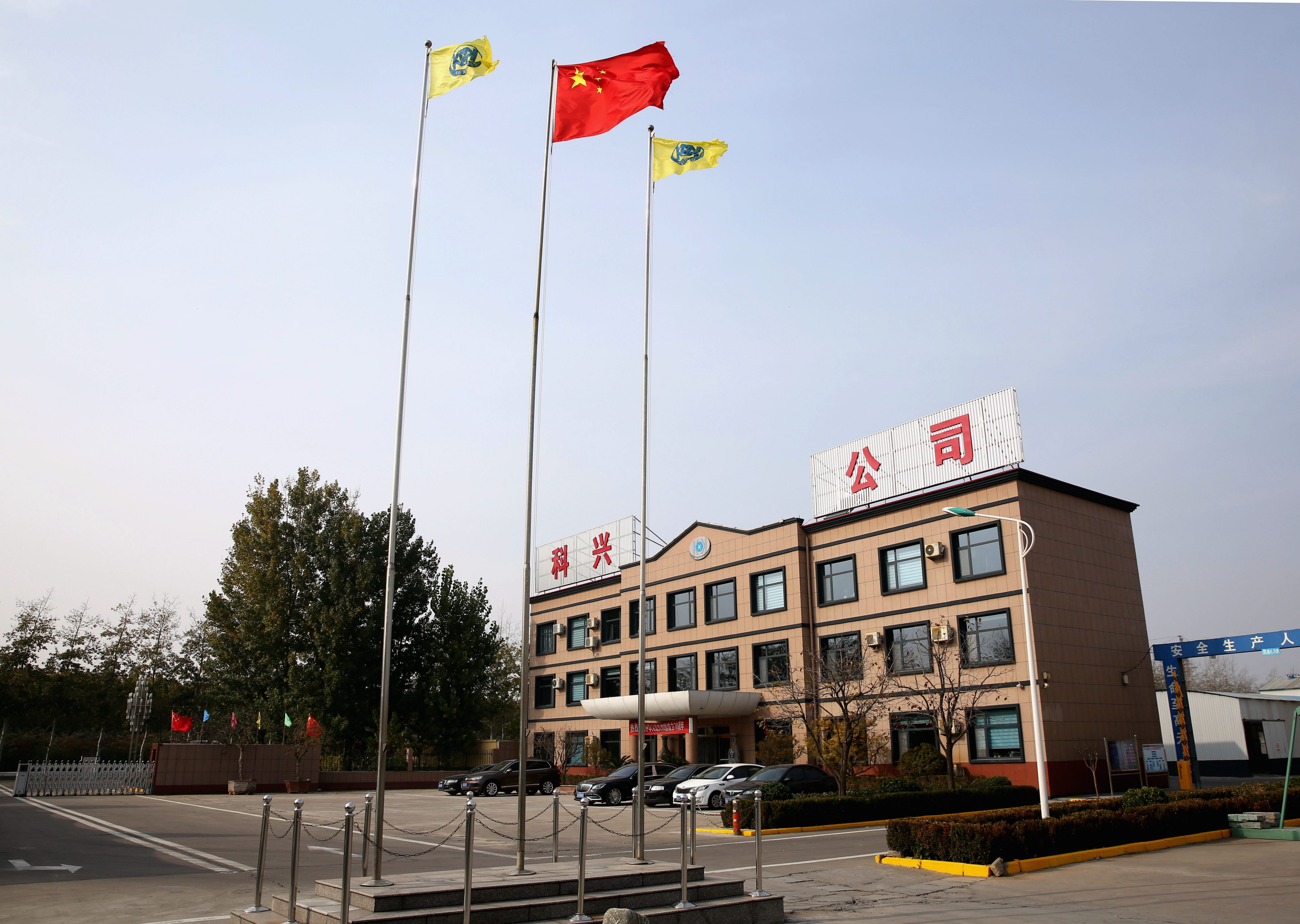
For reference during evaluation, the Butyl Stearate grade supplied by Shandong Kexing Chemical Co., Ltd. is a colourless transparent liquid with a minimum content of 99.0%, a density of 0.85 g/cm³, a flash point of minimum 190°C, acidity of maximum 0.20 mgKOH/g and moisture of maximum 0.10%. The company is a manufacturer of plasticizers, plastic and rubber flame retardants and plastic additives based in Dongying, Shandong, China, founded in 2006, with an R&D team of 15 engineers and exports to Europe, the USA, Japan, South Korea and the Middle East.
Step-by-Step: Turning the Shortlist into a Qualified Formula

- Write down the function being replaced. Separate internal lubrication and mold release from bulk plasticization and from low-temperature flexibility. A shortlist built on one function will not answer a question about another.
- Screen for compatibility and application fit. Compatibility with PVC and resin systems, gelation behaviour, transparency and migration risk decide which two or three esters from the eight are worth trialling at all.
- Collect the compliance file before the sample. Confirm the documentation the destination market needs — for example, a REACH registration position for Butyl Stearate itself, which the European Chemicals Agency lists as an active substance under EU REACH requiring registration for imports or manufacturing above 1 tonne per year (CAS 123-95-5). Ask for the factory test report as the agreed acceptance document.
- Run a controlled dosing trial. Change one variable at a time. Butyl Stearate as an internal lubricant is typically used at 1%–3%, so a lubricant-to-plasticizer rebalance should start inside that window and move in small increments while measuring gelation, plate-out, surface clarity and flexibility.
- Validate with a sample batch. Request samples of the shortlisted esters, confirm batch purity and stability against the specification, then run a pilot batch under production conditions before writing the ester into the formula.
- Lock commercial terms and continuity. Agree MOQ, delivery terms, lead time and acceptance criteria in writing so that a technically qualified ester does not become a supply problem later.
Use Cases: Where Each Direction Fits
Flexible PVC and plastisol processing. DBP is evaluated where fast fusion and filler wetting matter; DOP is the general-purpose comparison point; DINP and DPHP are trialled where longer service life is expected.
Wire, cable and automotive interior parts. Permanence-oriented esters such as DPHP and DINP are the usual shortlist entries, because low volatility and fogging resistance carry more weight than fast gelation.
Toys, food-contact film and packaging. DOTP and ATBC are the non-phthalate directions normally qualified here. Case records from Shandong Kexing Chemical Co., Ltd. describe plastic masterbatch factories, artificial leather manufacturers, food packaging processors and toy factories placing regular orders of 15–25 MT per month for plastic compounding, leather surface finishing and food-contact plastic and printing ink formulations, with reported results of improved flexibility of finished goods, low migration, and passing REACH and food-grade safety tests. Those records also highlight phthalate-free, eco-friendly options with good compatibility with PVC and resin and stable batch purity — descriptions that apply to the non-phthalate side of the portfolio, not to the phthalate esters.
Low-temperature service. DOA and DOS are the shortlist entries when a compound must stay flexible in cold conditions; they are typically blended with a primary plasticizer rather than used alone.
Leather, ink and coating work. ATBC, DOA and DOTP all appear in these formulations, where compatibility with the binder system and low migration matter as much as plasticizing efficiency.
FAQ
Is Butyl Stearate registered under EU REACH, and why does that matter when I shortlist alternatives?
Yes. Butyl Stearate, CAS 123-95-5, is listed by the European Chemicals Agency as an active substance under EU REACH, with registration required for imports or manufacturing above 1 tonne per year. When you compare esters, treat the registration and documentation position of every candidate as a separate line item from its technical performance, and confirm which documents your destination market requires before you commit to a trial.
What OEM and private-label capability is available for these ester grades?
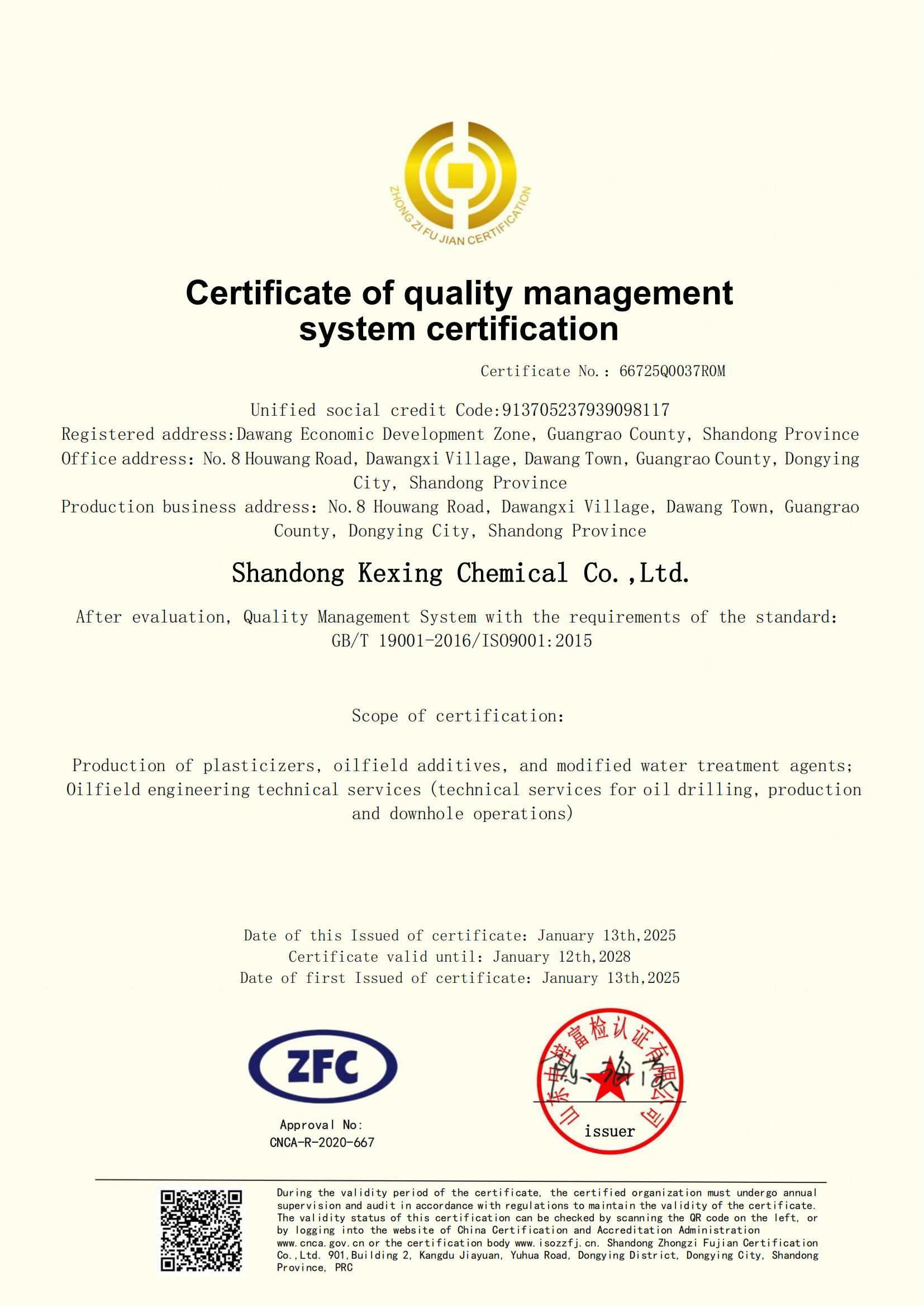
Shandong Kexing Chemical Co., Ltd. operates OEM production with private labelling, supported by a monthly capacity of 10,000 T, an R&D team of 15 engineers, and quality control that covers raw material incoming inspection and finished product sampling tests. Products are exported to Europe, the USA, Japan, South Korea and the Middle East, and the company holds ISO 9001:2015 certification (certificate 66725Q0037R0M, valid to 12 January 2028) and ISO 14001:2015 certification (certificate 66725E0038R0M, valid to 12 January 2028).
What are the MOQ, lead time and payment terms when shortlisting several esters at once?
The minimum order quantity is 1 T, with a lead time of 30–45 days. Delivery terms are FOB or CIF. The acceptance criterion is the factory test report, and payment terms are 30% deposit with 70% payable upon receipt of the bill of lading. Ordering more than one ester in the same programme is a normal request, since the shortlist is usually decided in one evaluation round.
How should a formulator validate an alternative ester before scale-up?
Use a sample-first workflow. Fix the function you are replacing, change one variable per trial, and keep the Butyl Stearate internal-lubricant window in view — typical use is 1%–3%. Assess gelation, plate-out, surface clarity, migration and low-temperature flexibility at each step, then confirm the incoming batch against the specification and factory test report before the pilot run. Suppliers that offer formulation technical guidance can shorten this cycle, but the trial data remains yours.
Can one supplier cover the whole shortlist and keep supply continuous?
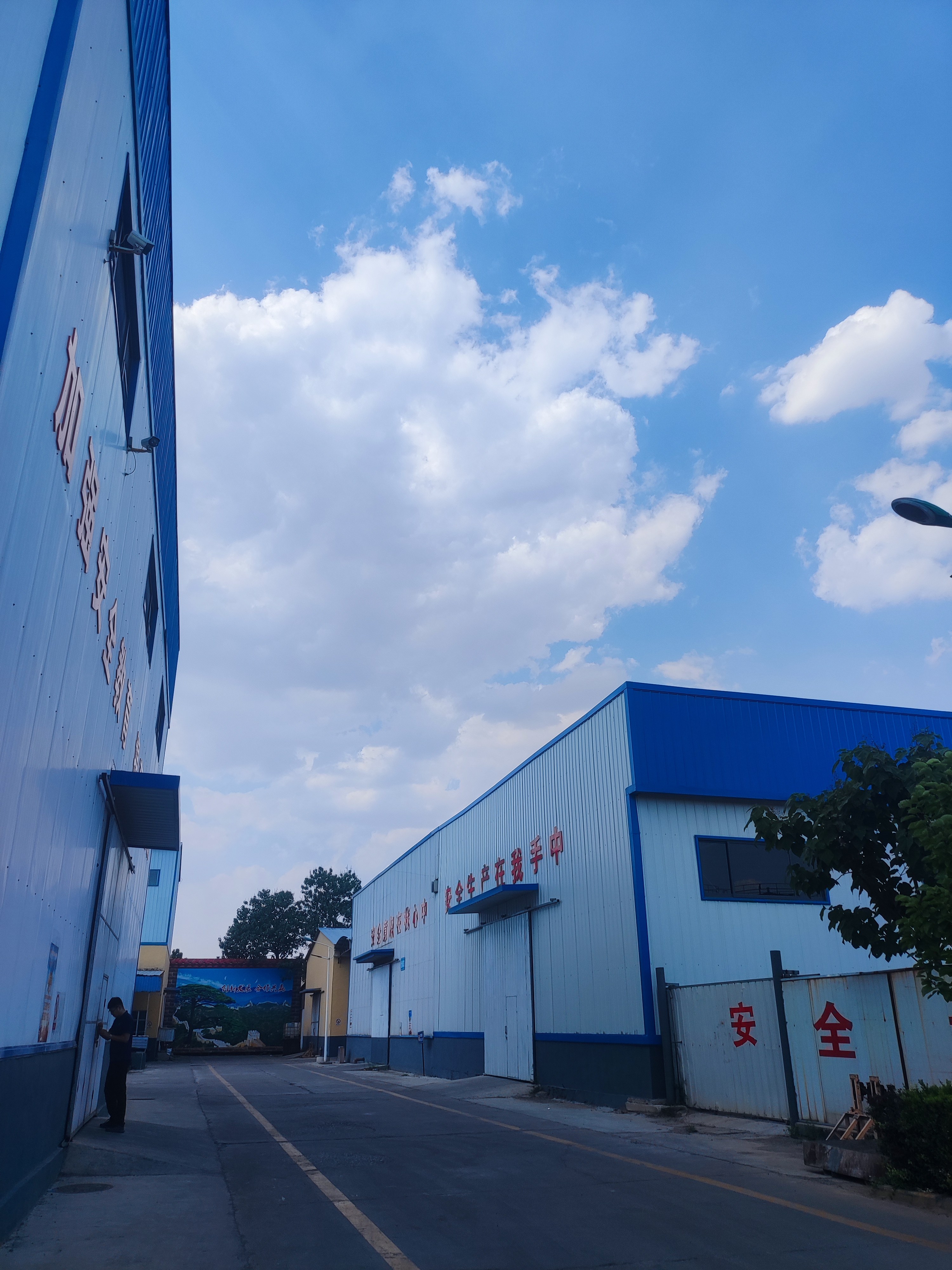
Shandong Kexing Chemical Co., Ltd. manufactures the full ester range discussed here — ATBC, TBC, TEC, DOTP, ESO, DOA, DOS, DBS, N-Butyl Stearate, 3G8, DINP, DOP, DBP and DPHP — from a base in Dongying, Shandong, China, founded in 2006, with an annual output of 20,000 units and approximately 50% of production exported. After-sales cover includes remote technical support, quality issue resolution, shipping follow-up and formulation technical guidance, which means a shortlist of two or three qualified esters can be consolidated with one supplier instead of re-qualifying each grade separately.
Conclusion
The right answer to "what replaces Butyl Stearate" is rarely a single product. It is a shortlist of DBP, DOP, DPHP, DINP, DOTP, DOA, DOS and ATBC, narrowed by function, permanence, compliance requirements and supply reliability — in that order. Rank them by fit to your application, not by brand familiarity, and confirm each candidate against a received certificate of analysis, a sample trial and agreed acceptance criteria before it enters the formula.
When the shortlist is decided, consolidating it with a single manufacturer reduces the qualification workload: the same supplier, the same documentation route and the same commercial terms across all the esters you keep.
Request a Sample or the Product Catalogue
Shandong Kexing Chemical Co., Ltd. supplies N-Butyl Stearate, DOTP, DOA, DOS, ATBC, DINP, DOP, DBP, DPHP and the wider plasticizer range. Request a sample for the esters on your shortlist, or download the brochure for specifications and packaging details.
Download the Shandong Kexing Chemical product brochure (PDF) · www.kexingchem.com · Email: kexing@kexingchem.com · Tel: +86 177-5465-5267 · WhatsApp: +86 18765463469