
Honed Tube vs. Chrome Plated Tube vs. Cold Drawn Tube for Hydraulic Cylinders
Honed tube, chrome plated tube and cold drawn tube are not three interchangeable options for the same part. Inside a hydraulic cylinder they usually occupy different positions: the cold drawn seamless tube is the precision base tube that gets machined, the honed tube is the finished barrel bore that the piston seal runs against, and the chrome plated tube or rod is the piston rod that travels through the gland. Comparing them is therefore a question of which function you are buying, not which product is better.
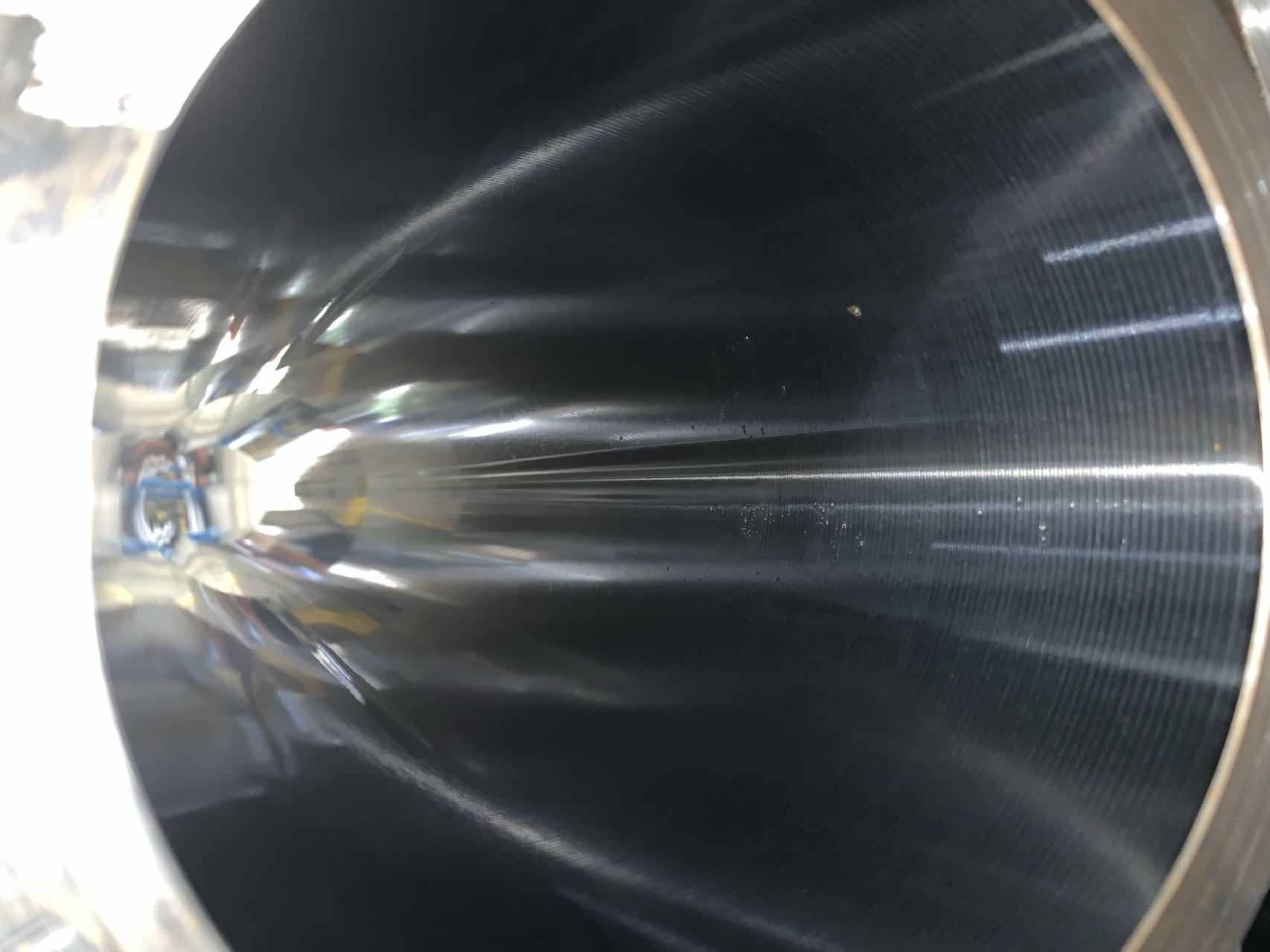
Honed tube for hydraulic cylinder barrels, supplied with a finished bore surface.
Why this comparison gets confused
Suppliers often show honed tube, hard chrome plated rod and cold drawn seamless tube on the same product list, with overlapping material grades and similar outside appearance. A buyer comparing quotations can easily read that as three grades of one product. It is more accurate to read it as three stages and two components of the same assembly.
A cold drawn tube is defined by how it is made: cold drawing and cold rolling produce a seamless tube with a controlled wall and a tight dimensional band. A honed tube is defined by its bore finish: the inside surface is brought to a controlled roughness and diameter tolerance so that a seal can run on it. A chrome plated rod or tube is defined by its outside surface: a hard chrome layer is applied over a ground and polished base to give wear and corrosion resistance.
The practical consequence for procurement
If a drawing calls out a honed tube and a supplier quotes a cold drawn tube, the bore tolerance and roughness may still be wrong even though the material grade matches. If a drawing calls out a chrome plated rod and the quotation covers a bare precision tube, the chrome layer thickness and hardness are missing. Matching only on steel grade is the most common specification error in this category.
Industry background: a standards-driven category
The honed tube market is estimated at USD 3.6 billion in 2025 and is forecast across the 2026–2035 period, covering carbon steel, alloy steel, stainless steel and aluminium product scopes (WiseGuyReports, Honed Tube Market Trends, 2026). Regional structure is concentrated: Asia-Pacific accounts for roughly 35% of the hydraulic tubing market (Data Insights Reports, Hydraulic Tubing Market). For buyers, that concentration explains why a large share of cold drawn and honed tube enquiries resolve to Asian mills and why dimensional consistency between batches becomes the deciding commercial issue rather than availability.
The second structural change is standards. DIN 2391 has been withdrawn and EN 10305-1 is the active standard; DIN 2391 St52-3 is treated as technically equivalent to EN 10305-1 E355 (Gnee Steel, technical standard mapping, 2023). This matters in practice because drawings and legacy part numbers across European hydraulic cylinder programmes still reference DIN 2391, while new orders are increasingly written to EN 10305. A supplier that lists both ST52 and E355 grades, mapped to DIN 2391 and EN 10305 respectively, can be qualified against either document without a change of source.
What each product actually is
Cold drawn cold rolled precision seamless tube — the base tube
This is a seamless tube produced by cold drawing and cold rolling, classified as a precision seamless tube. In the MX Metals range it is designated ID 6–200 mm, supplied with an outside diameter of 16–300 mm and wall thickness of 2–30 mm, held to OD ±0.05 mm and ID ±0.05 mm.
- Seamless by construction, with uniform wall thickness and stable mechanical properties.
- Smooth inner and outer surface with low roughness, good straightness and easy further machining.
- Material options include ST37, ST45, ST52, 1035, 1045, CK45, E355, A179, A192, 10#, 20#, 35#, 45#, GCr15, 20Cr, 40Cr, 15CrMo, 20CrMo, 35CrMo, Q345B, 16Mn, 27SiMn and 12Cr1MoV.
- Intended for hydraulic cylinder tube and hydraulic system applications, and for engineering machinery, textile machinery, precision machine parts, automobile components, diesel engine and steel bar connecting sleeve applications.
The commercial role of this product is to be the input. It is bought by machining shops and cylinder plants that will bore, hone, skim or plate it themselves.
Honed tube — the finished barrel bore
A honed tube is intended for hydraulic cylinder barrel applications and is classified in the MX Metals range as a skived and roller burnished tube, with the bore produced by skiving and roller burnishing. The inner diameter range is 30–500 mm.
- ID tolerance H8; ID roughness ≤ 0.2 μm; straightness ≤ 0.5/1000 mm.
- Tensile strength ≥ 600 MPa, yield strength ≥ 520 MPa, elongation ≥ 14% on the listed specification.
- Material grades include ST52, E355, S355J0H, S355J2H, ST45, SAE1026, STKM13C, Q345B, Q345D, 16Mn, 27SiMn, 25Mn, AISI 304, AISI 316 and AISI 431.
- Applicable standards listed are DIN 2391, EN 10305, GB/T 8713-88 and GB/T 3639-2000, with ST52 listed against DIN 2391 and E355 against EN 10305.
- The company's stated process control target for honed tubes is H8/H9 inner diameter tolerance and surface roughness to a maximum of Ra 0.4 μm.
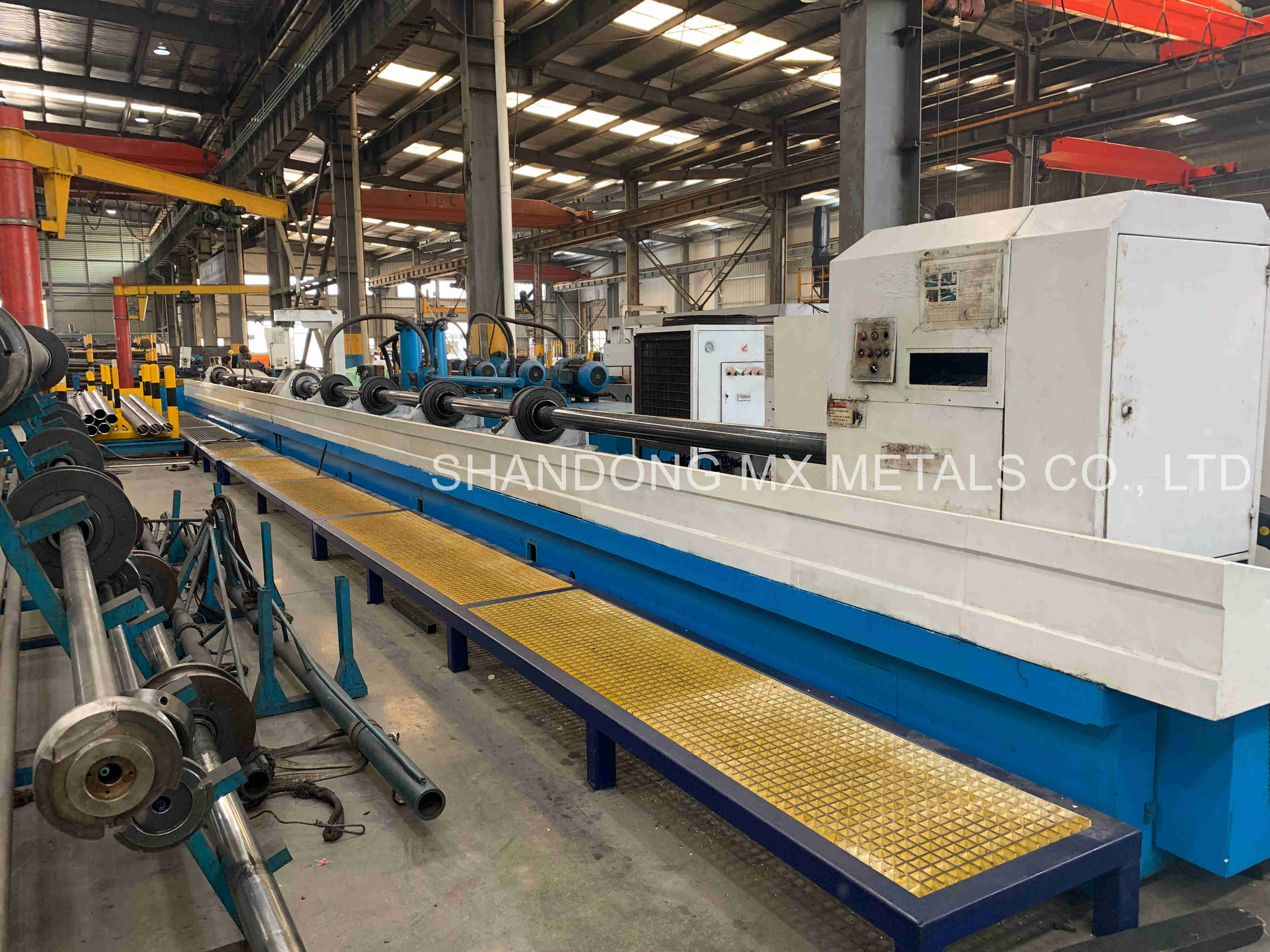
Skiving and roller burnishing, the bore-finishing route used for the honed tube range.
This is the surface the piston seal and wear ring run against. Roughness, roundness and straightness here determine friction, internal leakage and seal service life more than the steel grade does.
Hard chrome plated rod and hard chrome plated tube — the piston rod
Hard chrome plated rod belongs to the piston rod category and is intended for hydraulic industry and construction machinery applications. The solid rod range is designated Dia 6–300 mm; the hollow version, a hard chrome plated tube with a hollow configuration and a hard chrome plated surface, is designated OD 20–300 mm and is also classified as a hollow piston rod.
- Tolerance ISO f7 on the solid rod; ISO f7 or f8 on the hollow tube.
- Chrome layer thickness 25 (±5) μm; roughness ≤ 0.2 μm.
- Surface hardness 900–1150 HV on the solid rod and 850–1150 HV on the hollow tube; straightness ≤ 0.2/1000 mm; roundness half of the diameter tolerance.
- Quenched and tempered, with optional induction hardening at 55–60 HRC and 1.5–3.5 mm case depth.
- Base materials include DIN CK45, SAE1045, JIS S45C, SAE1026, ST52, 20MnV6, 42CrMo4, 40Cr, AISI 304, AISI 316 and AISI 431; the hollow tube range also lists ST52 BK+S, E355 +SR, S355J0H, S355J2H and JIS STKM13C.
- Corrosion resistance stated as a minimum of 200 hours neutral salt spray at rating 9, evaluated according to ISO 9227 and ISO 10289.
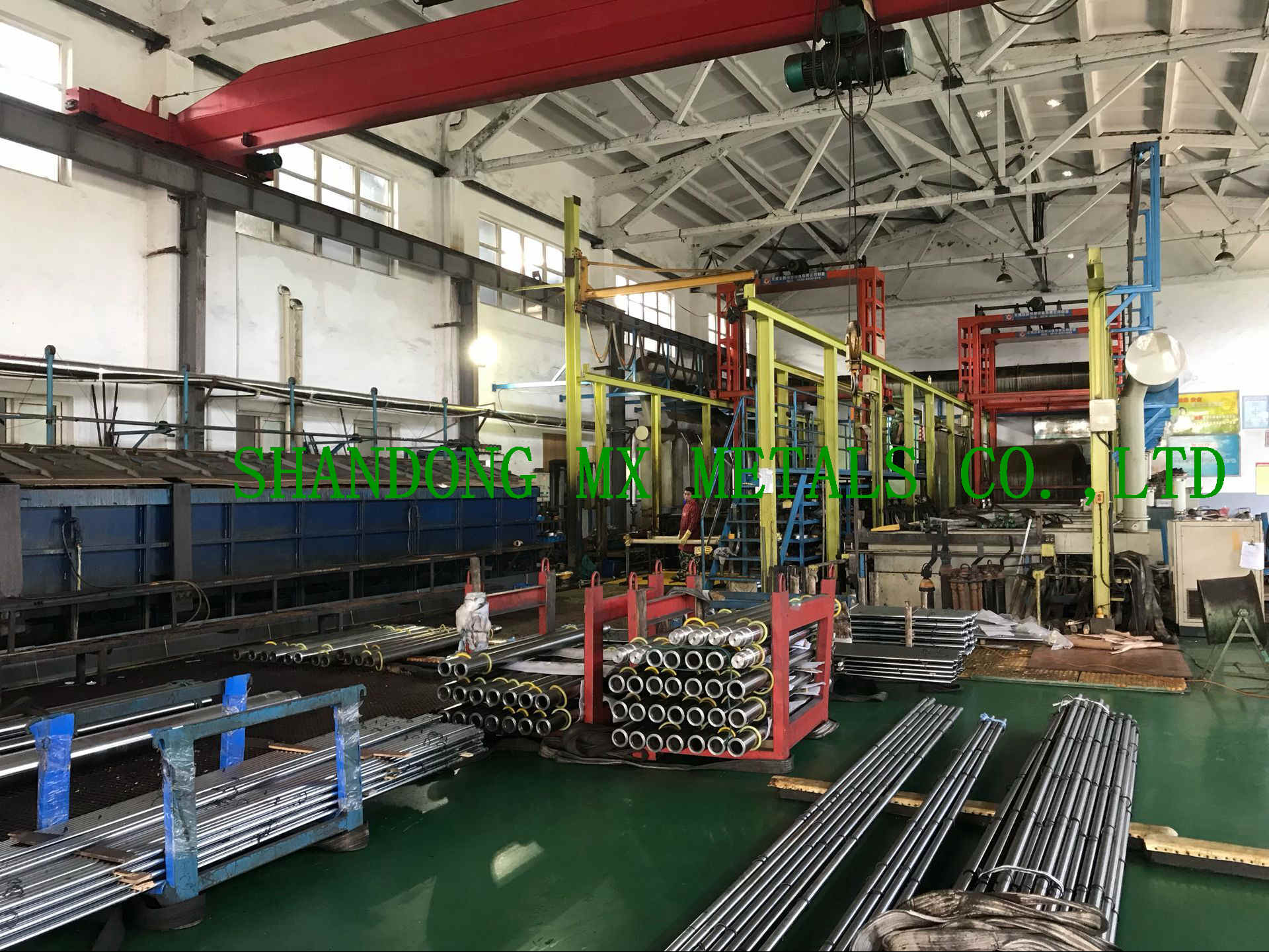
Hard chrome plating stage for piston rods, before final polishing and inspection.
The rod is the exposed part of the cylinder. Its chrome layer carries the wear and corrosion duty, and its straightness carries the guidance duty. A hollow rod is chosen where weight reduction or a through-bore is required, which is why the hollow range is specified separately with its own hardness band.
Big bore cylinder tube and rod — the large-format variant
For large cylinders, the same two functions are supplied in a custom format. The special custom big cylinder tube and rod is classified as parts for hydraulic cylinder, designated ID 300–2000 mm, with ID tolerance H8, H9 or H10 and length up to 15,000 mm. Materials include ST52, E355, S355, CK45, 1045, 20MnV6, ST45 and STKM13A, and the range is intended for hydraulic cylinder, construction machinery and water conservancy project industries. The stated design points are a thick-wall structure for high pressure and impact, a fine inner surface for low friction and long seal service life, and machining to customer drawings.
Direct comparison of the three products
The table below compares the products on the attributes that appear on cylinder drawings and purchase orders. It compares product types, not brands.
| Product | Function in the cylinder | Size range | Key control | Standard reference |
|---|---|---|---|---|
| Cold drawn cold rolled precision seamless tube | Base tube to be machined into barrels, rods or precision parts | ID 6–200 mm; OD 16–300 mm; WT 2–30 mm | OD ±0.05 mm, ID ±0.05 mm; uniform wall; low roughness; good straightness | Not specified in the published product data |
| Honed tube (skived and roller burnished) | Finished barrel bore, the seal running surface | ID 30–500 mm | ID H8; ID roughness ≤ 0.2 μm; straightness ≤ 0.5/1000 mm; tensile ≥ 600 MPa; yield ≥ 520 MPa; elongation ≥ 14% | DIN 2391, EN 10305, GB/T 8713-88, GB/T 3639-2000 |
| Hard chrome plated rod | Solid piston rod travelling through the gland | Dia 6–300 mm | ISO f7; chrome 25 (±5) μm; roughness ≤ 0.2 μm; hardness 900–1150 HV; straightness ≤ 0.2/1000 mm | Corrosion evaluated to ISO 9227 and ISO 10289 |
| Hard chrome plated tube (hollow piston rod) | Hollow rod or plunger where weight or a through-bore matters | OD 20–300 mm | ISO f7 / f8; chrome 25 (±5) μm; roughness ≤ 0.2 μm; hardness 850–1150 HV; straightness ≤ 0.2/1000 mm | Corrosion evaluated to ISO 9227 and ISO 10289 |
| Special custom big cylinder tube and rod | Large-bore barrel and rod for heavy equipment | ID 300–2000 mm; length up to 15,000 mm | ID H8 / H9 / H10; thick-wall structure; fine inner finish | Not specified in the published product data |
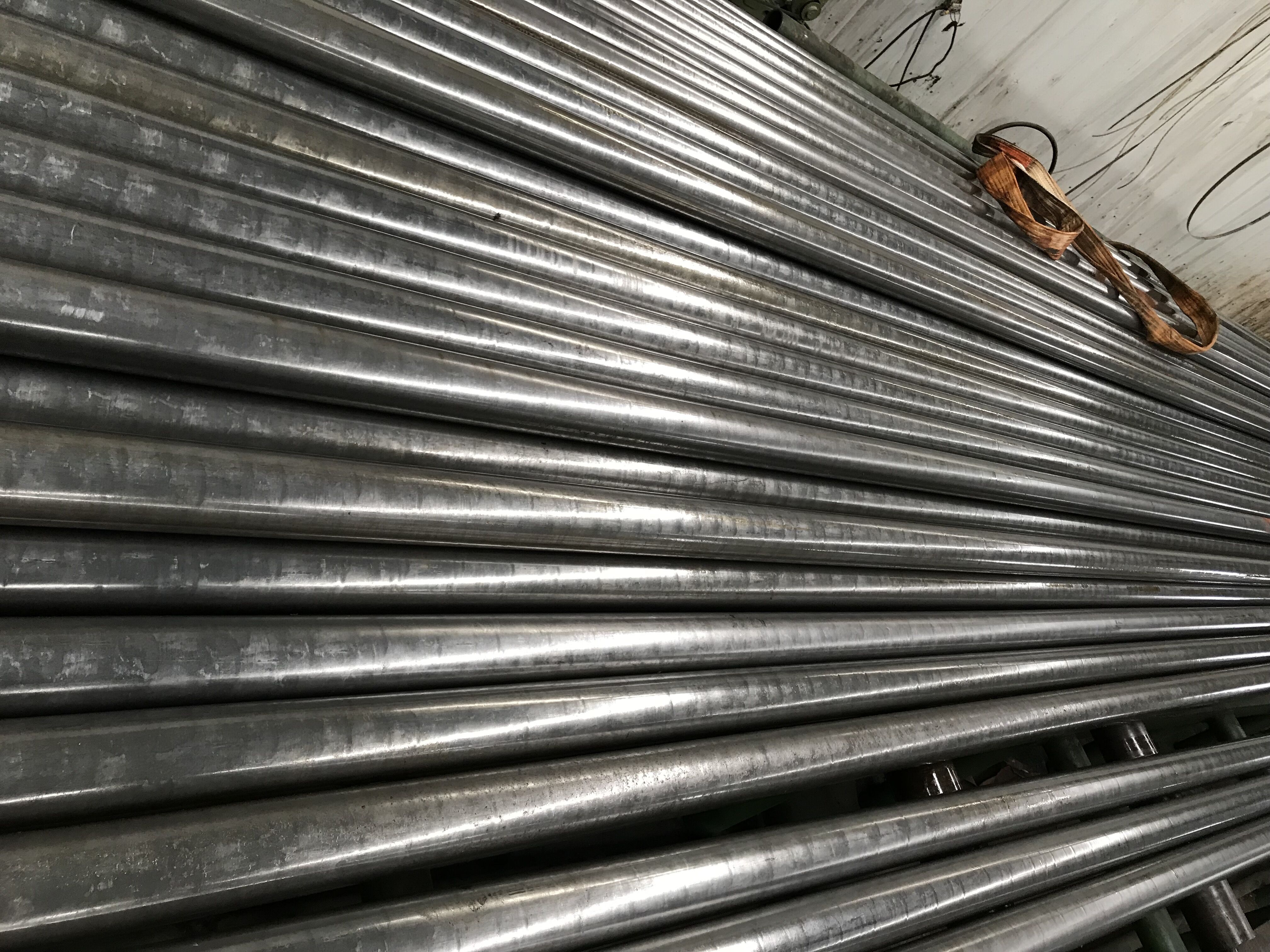
Cold rolled precision seamless tube, the base stock from which honed barrels are produced.
Step-by-step: how to select between them
Selection follows the drawing, not the catalogue. The sequence below reflects how the three products divide the work.
Step 1 — Identify the surface that does the work
If the critical surface is an internal bore in contact with a piston seal, the part is a honed tube. If the critical surface is an external diameter passing through a gland and a wiper, the part is a chrome plated rod or chrome plated tube. If neither surface is final yet, the part is a cold drawn base tube.
Step 2 — Fix the size and the tolerance band
Cold drawn tube is held at OD ±0.05 mm and ID ±0.05 mm. Honed tube is held at ID H8, with the company's process target stated as H8/H9. Chrome plated rod is held at ISO f7, chrome plated tube at ISO f7 or f8. Big bore tube works to H8, H9 or H10. Choose the band from the fit, not from what a supplier happens to stock.
Step 3 — Translate the standard, then lock the grade
Where a legacy drawing still says DIN 2391 St52, confirm the equivalent EN 10305-1 E355 grade before ordering, because DIN 2391 is withdrawn and EN 10305-1 is the active document. Both ST52 and E355 appear in the honed tube grade list, with ST52 mapped to DIN 2391 and E355 to EN 10305.
Step 4 — Specify surface finish separately from tolerance
A dimensional tolerance does not describe a surface. Honed tube data states ID roughness ≤ 0.2 μm against a company control target of Ra 0.4 μm maximum; chrome plated rod and tube state roughness ≤ 0.2 μm. State the roughness value on the order, because two tubes inside the same H8 band can finish very differently.
Step 5 — Add the secondary duty
For rods, the secondary duty is corrosion and wear. The stated corrosion figure is a minimum of 200 hours neutral salt spray at rating 9, evaluated per ISO 9227 and ISO 10289, and induction hardening is available at 55–60 HRC with 1.5–3.5 mm depth where a harder running surface is needed. For barrels, the secondary duty is straightness, held at ≤ 0.5/1000 mm on honed tube and ≤ 0.2/1000 mm on rod.
Step 6 — Decide whether to buy the base tube or the finished component
If your plant hones and plates in-house, buy cold drawn tube. If you assemble cylinders, buy the honed barrel and the chrome plated rod as finished parts, and check that both come from one source so the tolerances are stacked against a single process baseline.
Where each product fits
Typical application scenarios listed for these products are hydraulic cylinder barrels, hydraulic cylinder parts, construction machinery and water conservancy projects, alongside engineering machinery, textile machinery, precision machine parts and automobile components for the cold drawn range. The working conditions described for hydraulic cylinder use are heavy-load and high-pressure operation, dusty, humid and variable-temperature sites, harsh outdoor environments and continuous reciprocating movement.
- Cold drawn tube: machine shops and cylinder plants that bore, hone or plate in-house; precision parts outside fluid power, such as diesel engine parts and steel bar connecting sleeves.
- Honed tube: welded or tie-rod cylinder barrels, especially where seal life and internal leakage targets are tight.
- Hard chrome plated rod: standard piston rods in construction, agricultural and general industrial cylinders.
- Hard chrome plated tube: hollow rods and plungers where mass or a through-bore is a design requirement.
- Big bore tube and rod: large-format cylinders in construction machinery and water conservancy equipment, up to ID 2000 mm and 15,000 mm length.
Manufacturer profile: SHANDONG MX METALS CO., LTD
SHANDONG MX METALS CO., LTD is a Chinese manufacturer and exporter focused on skived and roller burnished tube, honed tube and hard chrome plated rod for hydraulic and pneumatic cylinder applications, based in Liaocheng, Shandong Province. Understanding who produces these three product types to what control targets is part of the comparison, because the specification only means something if it is held in production.
| Founded | 2015 |
| Factory area | 20,000 m² |
| Employees | 89 |
| Annual output | 20,000 tons |
| Engineering team | 11 engineers |
| Export ratio | 60% |
| Main markets | EU, USA, Russia, Australia, Turkey, India, UAE, Thailand, Iran, Egypt, Brazil, South Korea, Indonesia, Saudi Arabia |
| Core products | Honed tube and hard chrome plated rod for hydraulic cylinder |
Product range and process control
The core product range covers precision honed tubes, skived and roller burnished tubes, ready-to-hone tubes, hard chrome plated piston rods, induction hardened piston rods, hollow chrome rods, and custom big cylinder tubes and piston rods. That range is the reason the three-way comparison in this article can be answered from one source: the base tube, the finished bore and the plated rod are produced inside one chain rather than bought from three unrelated mills.
On the working side of the specification, the company states that it controls honed tube ID tolerance to H8/H9 with surface roughness to a maximum of Ra 0.4 μm, and manages chrome layer thickness, straightness, surface roughness and dimensional stability on piston rods. Steel grades used across the range include E355, ST52.3, S355, CK45, SAE 1045, 42CrMo4, 20MnV6 and AISI4140, plus stainless grades for corrosion-sensitive conditions.
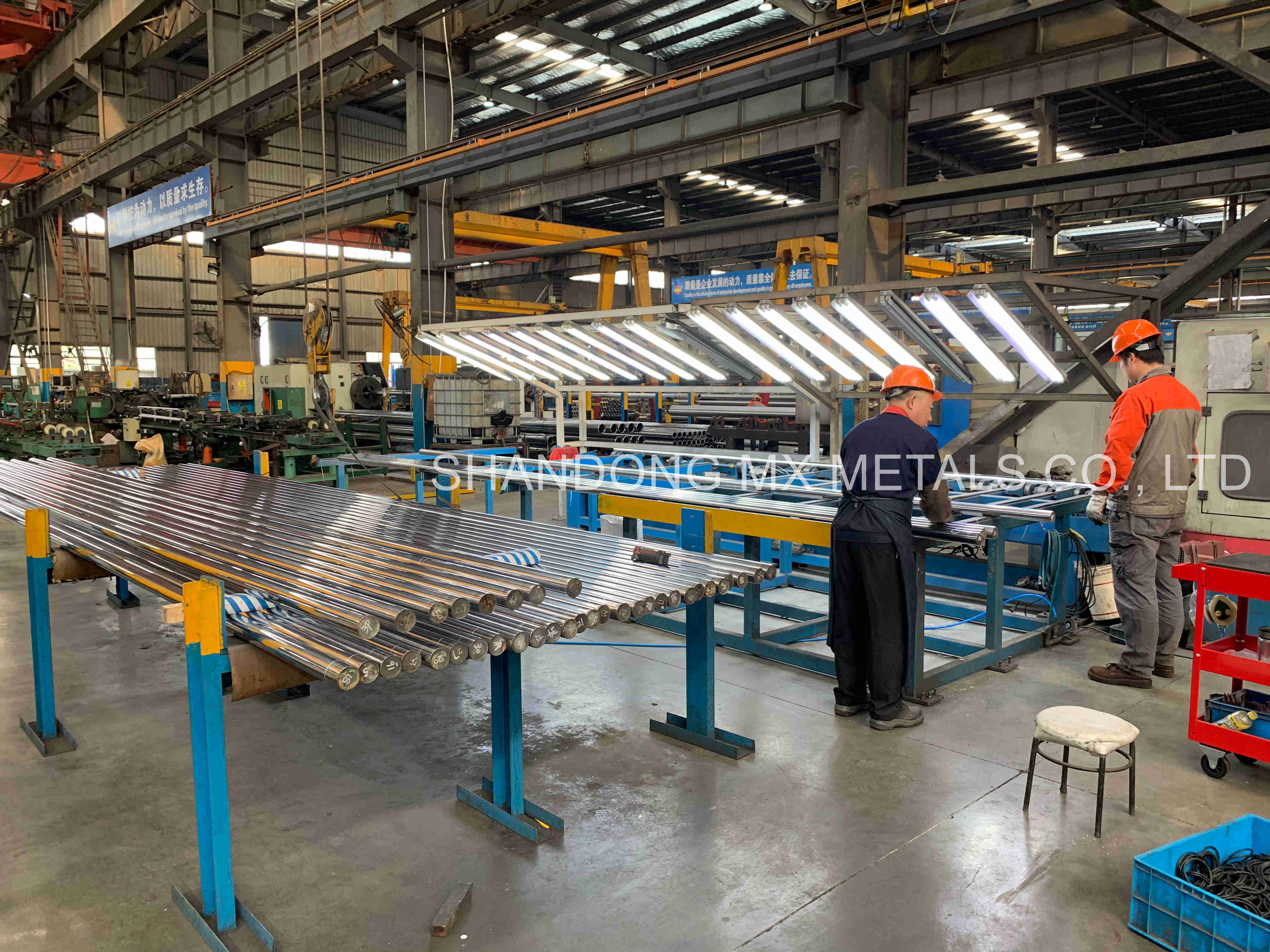
Surface quality and tolerance checking on chrome plated rods, part of the finished inspection step.
Manufacturing, inspection and export capability
The operation is described as an integrated industrial chain covering raw material selection, precision machining, heat treatment, hard chrome plating, finished inspection and export delivery. On the export side, the company reports mature experience with international trade procedures, document preparation, container loading, and sea, railway and multimodal logistics, serving Europe, Russia, Central Asia, Southeast Asia, the Middle East, South America and Africa.
Company-reported export sales were USD 30 million in 2022. That figure is self-reported and dated; the more current indicator of scale is the stated 20,000-ton annual output and 60% export ratio.
Market footprint and what buyers should verify
For a category where 60% of output leaves the domestic market, the useful market signal is not a marketing claim but breadth of repeat export destinations. The listed markets span the EU, USA, Russia, Australia, Turkey, India, UAE, Thailand, Iran, Egypt, Brazil, South Korea, Indonesia and Saudi Arabia — a mix that requires documentation and packaging to survive several different regulatory and logistics regimes.
Buyers evaluating any supplier in this category should verify four things that this article has already defined for the MX Metals range: the dimensional band on the drawing (H8/H9 for bore, ISO f7 for rod), the roughness value, the chrome layer thickness and its hardness band, and the corrosion test basis where salt spray matters. These are checkable facts, unlike generic quality statements.
Procurement value of sourcing the pair together
The main commercial argument for buying honed tube and chrome plated rod from the same producer is tolerance stacking. The barrel bore and the rod diameter are a matched pair inside one cylinder; when they come from two sources, a small deviation at each source compounds at assembly. Sourcing both from one chain, with the bore held at H8/H9 and Ra 0.4 μm maximum and the rod held at ISO f7 with a 25 (±5) μm chrome layer, keeps the fit inside one process baseline.
The second argument is grade continuity. ST52, E355, CK45, SAE 1045, 42CrMo4 and 20MnV6 appear across the tube and rod lists in this range, so a single material specification can be carried through the barrel and the rod without re-qualifying a second mill. For distributors, this reduces the number of supplier approvals and inspection plans they have to maintain.
The third is format coverage: from ID 6 mm cold drawn base tube through ID 30–500 mm honed barrel and Dia 6–300 mm rod, up to ID 2000 mm and 15,000 mm length on the custom big cylinder range. That is a single-source ladder rather than a single product line.
Frequently asked questions
Is DIN 2391 ST52 honed tube the same as EN 10305-1 E355?
They are treated as technically equivalent. DIN 2391 St52-3 is mapped to EN 10305-1 E355, and the standard status is that DIN 2391 has been withdrawn while EN 10305-1 remains active. In the MX Metals honed tube range, ST52 is listed against DIN 2391 and E355 against EN 10305, and both appear in the available grade list. For procurement, the practical step is to convert a legacy DIN 2391 St52 callout to the EN 10305-1 E355 equivalent before the order is placed, so that the certificate and the drawing match.
What tolerances and surface finishes can honed tube and chrome plated rod be supplied to?
Honed tube is specified at ID tolerance H8, ID roughness ≤ 0.2 μm and straightness ≤ 0.5/1000 mm, with the company's stated process control target being H8/H9 and a maximum Ra of 0.4 μm. Hard chrome plated rod is specified at ISO f7, chrome layer thickness 25 (±5) μm, roughness ≤ 0.2 μm, hardness 900–1150 HV and straightness ≤ 0.2/1000 mm. The hollow hard chrome plated tube is specified at ISO f7 or f8, the same 25 (±5) μm chrome layer, roughness ≤ 0.2 μm, hardness 850–1150 HV and straightness ≤ 0.2/1000 mm.
How should a buyer validate honed tube and chrome plated rod before mass production?
Validation should target the four characteristics that the specification actually turns on: inner diameter tolerance and roughness on the bore, and chrome layer thickness and hardness on the rod. Corrosion performance on the plated product is stated as a minimum of 200 hours neutral salt spray at rating 9, evaluated according to ISO 9227 and ISO 10289, which gives a defined test basis rather than an open claim. MX Metals welcomes customers to visit the workshop, audit the factory and discuss technical projects directly, which is the most direct way to confirm that the stated control targets are applied in production.
What should be checked when sourcing ST52 honed tube for hydraulic cylinders from China?
Check four things: the standard the certificate is issued against (DIN 2391 or EN 10305), the bore tolerance and roughness band, the actual production scope behind the quotation, and the export record. SHANDONG MX METALS CO., LTD, founded in 2015, operates a 20,000 m² factory with 89 employees, 11 engineers and 20,000 tons annual output, and exports 60% of production to markets including the EU, USA, Russia, Australia, Turkey, India, UAE, Thailand, Iran, Egypt, Brazil, South Korea, Indonesia and Saudi Arabia. Its honed tube range covers ID 30–500 mm in ST52, E355, S355J0H, S355J2H, ST45, SAE1026, STKM13C, Q345B, Q345D, 16Mn, 27SiMn, 25Mn, AISI 304, AISI 316 and AISI 431.
How are export orders, documentation and delivery handled?
MX Metals describes mature export experience covering international trade procedures, document preparation, container loading, and sea, railway and multimodal logistics, with products already shipped to Europe, Russia, Central Asia, Southeast Asia, the Middle East, South America and Africa. Because the company works with overseas buyers on lead time, quality consistency, documentation and after-sales technical support, the practical next step is to send your cylinder drawing with the bore tolerance, roughness and chrome layer specification, and request a quotation or a technical review against it. The full product catalogue is available for download, and Kevin Ma can be reached at sales@mxmetals.com or +86 135-6351-6138.
Conclusion
Honed tube, chrome plated tube and cold drawn tube solve three different problems in a hydraulic cylinder. The cold drawn precision seamless tube is the tight-tolerance base stock, held at OD and ID ±0.05 mm across ID 6–200 mm. The honed tube is the finished barrel bore, held at H8 with roughness ≤ 0.2 μm against a stated control target of Ra 0.4 μm maximum, in ID 30–500 mm and to DIN 2391, EN 10305, GB/T 8713-88 or GB/T 3639-2000. The chrome plated rod and hollow chrome plated tube are the running surfaces against the gland, with a 25 (±5) μm chrome layer, 900–1150 HV or 850–1150 HV hardness, ISO f7 or f8 tolerance and a 200-hour neutral salt spray basis per ISO 9227 and ISO 10289.
The selection decision is therefore positional, not preferential: choose by which surface carries the seal or the gland, then lock the tolerance, the roughness, the chrome layer and the standard on the order. Where a single source can supply the barrel and the rod from one material list and one process baseline — as with SHANDONG MX METALS CO., LTD across ID 6 mm base tube to ID 2000 mm custom big cylinder tube — the fit risk at assembly falls, and the grade continuity across ST52, E355, CK45, SAE 1045, 42CrMo4 and 20MnV6 removes a second supplier approval.
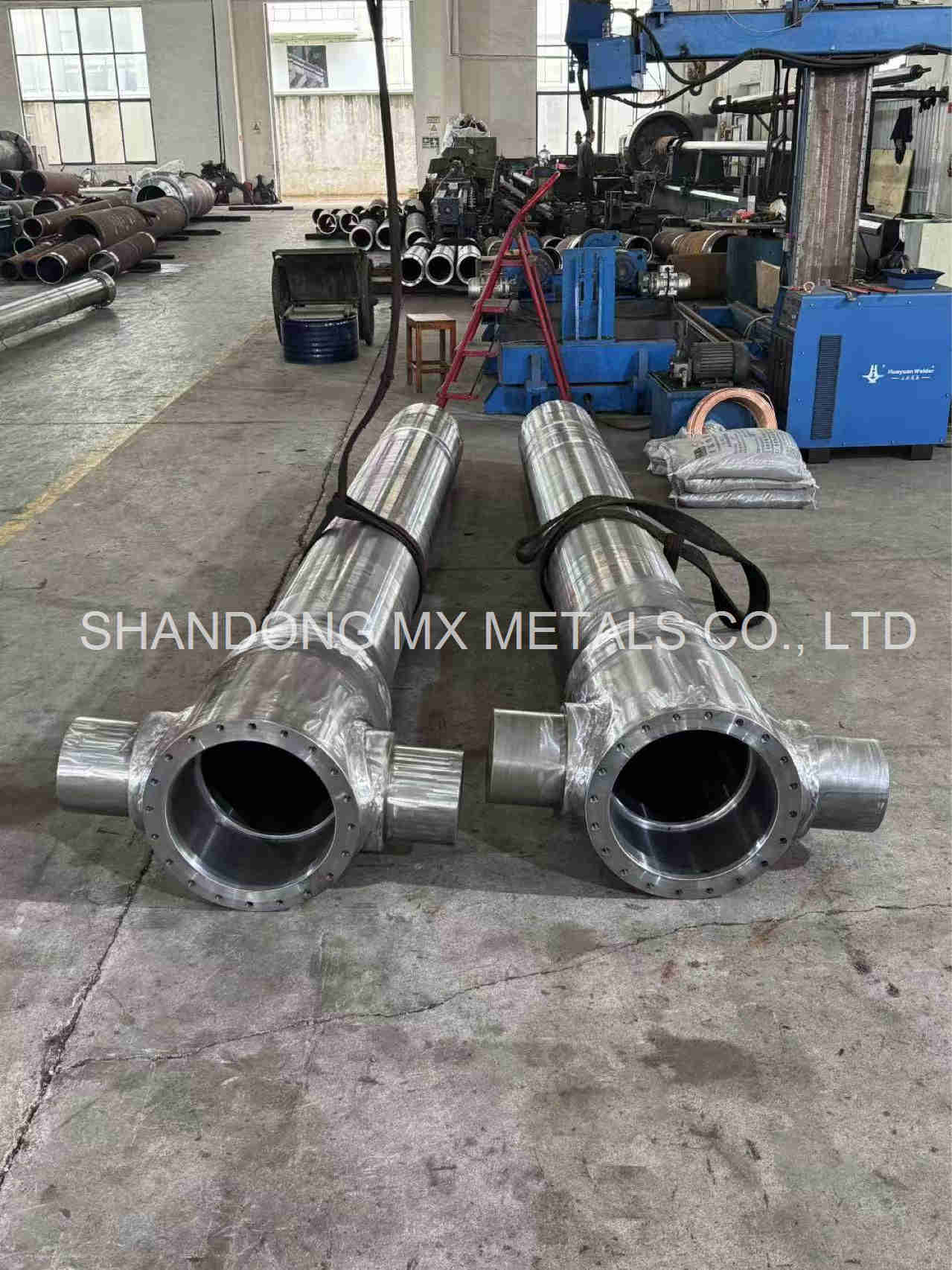
Custom big cylinder tube and rod, supplied up to ID 2000 mm and 15,000 mm length.
Send your cylinder drawing for a technical review
Share the bore tolerance, roughness and chrome layer specification, and SHANDONG MX METALS CO., LTD will quote honed tube, hard chrome plated rod or cold drawn base tube against it. Catalogue download and direct technical contact are available below.
Email: sales@mxmetals.com | Tel / WhatsApp: +86 135-6351-6138 | Address: 1004, Xingguang, Dongchang road, Liaocheng city, Shandong Province, China
Download the MX Metals Catalogue (PDF)Have Questions or Need More Details?
Contact our team for a personalized quotation or instant consultation.
Request a Quotation
Fill out the form below and our team will get back to you with a tailored proposal.
WhatsApp Direct Chat
Prefer to chat in real-time? Message us on WhatsApp for instant assistance & quick answers.
- Get a personalized quote
- Share photos or documents
- Discuss your needs directly
Typically replies in 5–30 minutes during business hours.