
EURO 5 Emission Standards for Heavy Duty Dump Trucks: What Buyers Must Verify
EURO 5 is an exhaust emission standard for road vehicles, and on a heavy duty dump truck it is verified at the engine and inside the documentation file — not at the paintwork. A supplier quotation that says “EURO 5” states an intention. It does not prove which engine certificate exists, which vehicle approval covers the chassis, or whether the unit that arrives at the port matches the file you approved. This guide explains what EURO 5 actually constrains, where compliance claims usually fail during procurement, and which checks should be closed before a purchase order is signed.

Cover: A heavy duty dump truck staged for pre-shipment documentation review, where the engine certificate, the vehicle approval file and the physical unit are checked against each other.
Problem Definition: Why a EURO 5 Claim Is Not Yet a Compliance File
Emission compliance is granted to a type, but it is purchased as a unit. That mismatch creates three practical gaps, and all three surface after the deposit has been paid unless a buyer closes them earlier.
Gap 1 — Type-level approval, unit-level delivery
A EURO 5 declaration belongs to an engine type or a vehicle type. What a buyer receives is one individual truck with one engine serial number and one chassis serial number. Until those numbers are tied to the approval documents, the compliance status of that specific unit is an assumption rather than a verified fact. This is the single most common source of disputes in cross-border dump truck procurement.
Gap 2 — Emission standards vary inside one supplier's range
Emission status is not a property of a brand; it is a property of a model-and-engine combination. Within one manufacturer's heavy duty truck range, two dump trucks can carry two different declarations. In the specifications reviewed for this guide, the SHACMAN X3000 6×4 dump truck (model SX3258W384C) is documented with a CUMMINS ISM11E5 440 engine declared to EURO 5, while the SHACMAN F3000 with a WP10.340E22 engine is listed at Euro II. Same supplier, different regulatory status, and therefore different eligibility in markets that restrict older emission levels.
Gap 3 — Confusion between approval frameworks
Buyers frequently search for CE-compliant dump trucks. CE marking is a conformity mark used across a range of European product directives, while on-road heavy duty trucks are generally placed on the market through vehicle type approval and emission requirements rather than through CE marking alone. A document issued under one framework does not satisfy the other, and a supplier that answers a CE question with a EURO 5 answer has not answered the question.
When any of these gaps stays open, the cost appears later: a truck that cannot be registered, a commissioning delay that damages a project schedule, a resale value problem, or a contractual dispute over a delivery that was technically correct but administratively unusable.
Industry Background: Emission Rules Are Tightening While Supply Has Globalised
Heavy duty truck procurement is now a cross-border activity, and emission rules are among the fastest-moving constraints inside it. The operative question is no longer whether a truck can be built, but whether its documented emission status is acceptable in the country where it will be registered and operated.
Scale explains why this matters commercially. Global Market Insights estimates the global heavy-duty trucks market at USD 308.3 billion in 2025, projected to reach USD 475.5 billion by 2035. That figure should be read with care, because published estimates differ by scope: Dataintelo reports USD 212.4 billion and Market Research Future USD 234.1 billion for broadly comparable periods, reflecting differences in vehicle-class coverage and methodology rather than market volatility. For a buyer, the practical implication is that any single headline number is scope-dependent, while the direction of travel — growth in units and tightening in rules — is consistent across sources.
Supply has shifted decisively toward Chinese manufacturing. China's heavy-duty truck exports reached 276,000 units in 2023, a 58% year-on-year increase, and rose to 295,000 units in 2024 according to Shacman industry reporting and CAAM data. In the first half of 2024, China's total truck exports reached 351,000 units, with roughly one out of every three heavy trucks delivered overseas originating from China, according to the China Association of Automobile Manufacturers. For importers in Africa, Southeast Asia and the Middle East, that supply base is now the default comparison set.
At the same time, the regulatory floor keeps rising. The US Environmental Protection Agency finalised its Phase 3 greenhouse gas standards for heavy-duty vehicles starting in model year 2027, a rule described as requiring an approximately 80% reduction in NOx. Electrification is advancing in parallel: Fortune Business Insights projects the global electric heavy-duty truck market growing from USD 14.84 billion in 2026 to USD 101.02 billion by 2034, and S&P Global Ratings forecasts heavy-duty electric truck penetration in China exceeding 20% in 2026, driven by subsidy-led replacement and charging infrastructure growth.
Market structure matters too. Daimler Truck led the global market with a share above 12% in 2025, and the top five players — Daimler, PACCAR, Sinotruk, TRATON and Volvo — held 32% collectively, according to Global Market Insights. Beyond that group, supply is fragmented, and documentation quality is not uniform across it. That fragmentation is precisely why the verification steps in this guide exist. EURO 5 remains a live and enforceable reference in many import markets even as later standards take effect elsewhere, and it applies to the combustion powertrain rather than to a battery-electric configuration — so a diesel heavy duty truck, a new heavy duty truck built to a later standard, and an electric heavy duty truck are not evaluated under the same rulebook.
Detailed Solution: What a Verifiable EURO 5 Dossier Contains
A defensible EURO 5 file has four layers, and each layer answers a different question. Suppliers that can produce all four quickly are structurally easier to work with than suppliers that can only produce a specification sheet.
Layer 1 — The engine declaration
The first layer identifies the engine and states its emission standard. In the worked example used throughout this guide, the SHACMAN X3000 6×4 dump truck carries a CUMMINS ISM11E5 440 (JACOB) engine, rated 324 kW / 440 HP with a displacement of 10.8 L, and is declared to EURO 5. Note what this layer does and does not prove: the engine model code plus the declared standard tells a buyer what to look for on a certificate, but a model code is not itself a certificate. The certificate must name the same engine model that appears on the purchase order.
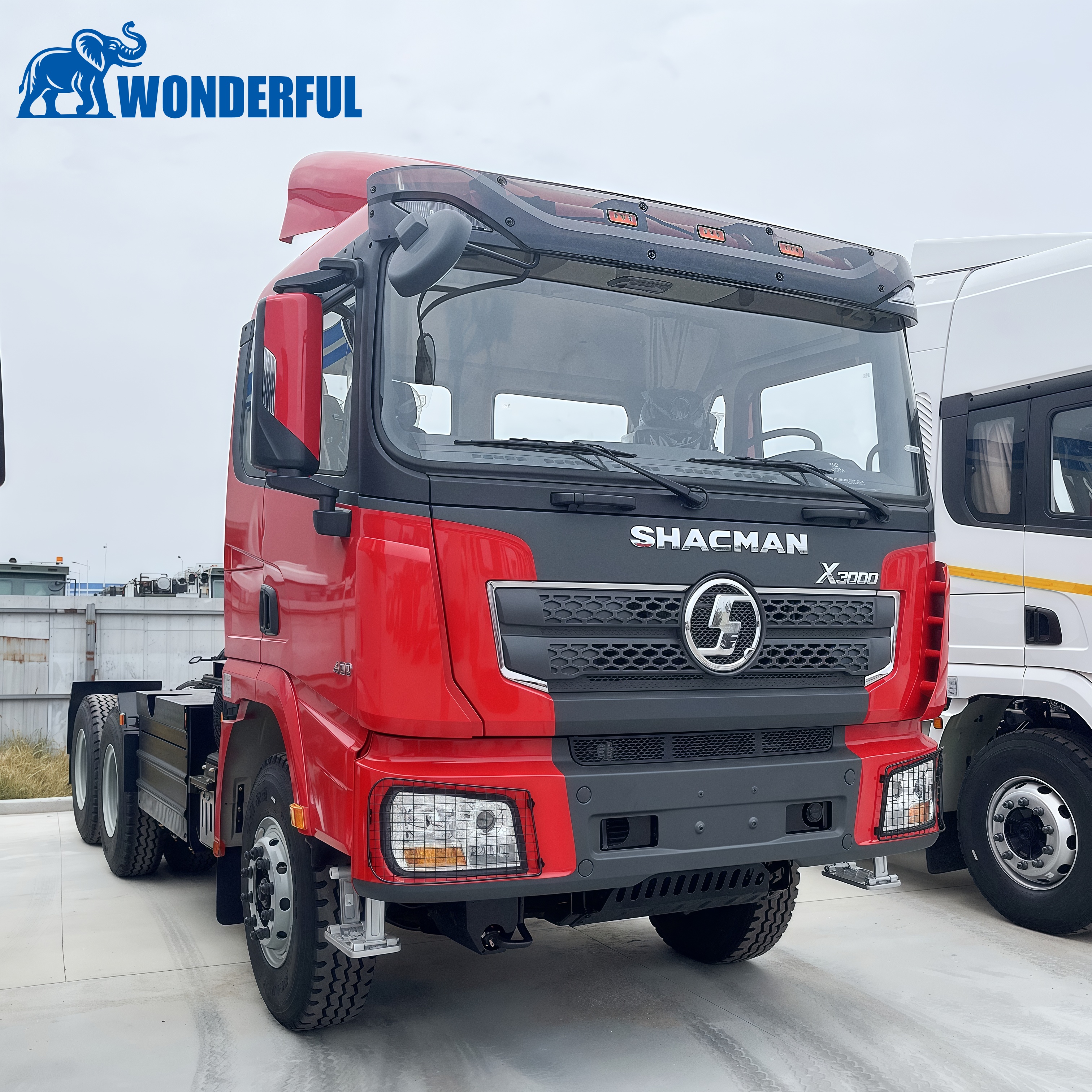
The SHACMAN X3000 6×4 dump truck (model SX3258W384C) is the reference configuration used here: CUMMINS ISM11E5 440 engine declared to EURO 5, 324 kW / 440 HP, 10.8 L displacement.
Layer 2 — The whole-vehicle certification
The second layer covers the vehicle rather than the engine. SHANDONG WONDERFUL AUTO COMPANY LIMITED holds China Compulsory Certificate (CCC) number 2020091101023320, issued by China Automotive Certification Center Co., Ltd. under standard CNCA-C11-01:2020, the Rules for Compulsory Product Certification for Automobiles. The certificate covers special vehicles for the Mainland China market and is valid from 10 December 2025 to 9 December 2030. It is linked to specific products, including the SHACMAN X3000 6×4 dump truck, the SINOTRUK 6×4 dump truck ZZ3257N384GB1R, and the SHACMAN F3000.
Buyers should read the scope of that certificate precisely. It is a Mainland China market approval. An importer registering a truck in Africa, the Middle East or Southeast Asia should not treat it as a substitute for local approval, and should instead ask what the destination authority requires and whether the supplier can supply that documentation. This is a normal question, not an accusation, and the answer separates suppliers who understand compliance from those who only understand specifications.

Verification document: China Compulsory Certificate number 2020091101023320, issued by China Automotive Certification Center Co., Ltd., standard CNCA-C11-01:2020, Mainland China market, valid 10 December 2025 to 9 December 2030.
Layer 3 — Configuration consistency
Emission declarations are tied to a build, not to a nameplate. For the X3000 example, the documented configuration includes a 12JSD200T-B transmission with QH50 and FHB400 hydraulic retarder; a HANDE MAN 9.5 T front axle and a HANDE 16 T MAN double-stage widened rear axle with a 5.262 final drive ratio; a high-strength Q345B alloy steel frame measuring 850×300 (8+7) mm; 12.00R20 mixed on-off road tyres; a 400 L aluminium alloy fuel tank; a wheelbase of 3775+1400 mm; overall dimensions of 8500×2600×3400 mm; and a cargo body of 5600×2300×1400 mm with an 8 mm floor and 6 mm side panels, served by a domestic 180 front lift cylinder. The specification also lists the service brake as a dual-circuit compressed air brake, the parking brake as a spring air discharge brake, the auxiliary brake as an engine exhaust brake (Jacob brake), and notes that ABS is not included on this configuration. Maximum speed is listed at 82 km/h.
Because engine calibration and the exhaust system are linked to the powertrain, a late option change can move a truck away from the build that was certified. The practical rule is to freeze the configuration before the certificate is issued, not after the truck is built.
Layer 4 — Destination-market acceptance
The fourth layer is not technical at all. It is the written answer from the registration authority, the insurer, or the fleet engineer who will sign off on the truck in the country where it will work. Buyers who gather layers one to three and then assume layer four will resolve itself are taking the same risk in a different place.
SHANDONG WONDERFUL AUTO COMPANY LIMITED is a Qingdao-based heavy duty truck and semi-trailer supplier operating from Shandong, China, with 500 employees, a 20-engineer R&D team, an annual output of 6,000 units and a 100% export orientation, with Africa as a primary market.
Step-by-Step Breakdown: A Verification Sequence Buyers Can Run
The sequence below is ordered so that each step removes one category of risk before money moves. Steps one to three cost nothing but time and are usually sufficient to disqualify a weak offer.
- Write the destination requirement down. Before comparing engines, obtain the emission level your registration authority, port authority or major client accepts. Write it into the enquiry so that every supplier answers the same question. Without this step, a EURO 5 discussion can quietly become a Euro II discussion because nobody defined the baseline.
- Match the engine model code to the declared standard. On the X3000 example, the CUMMINS ISM11E5 440 is declared to EURO 5 at 324 kW / 440 HP and 10.8 L displacement. If the engine code on the quotation differs from the engine code on the certificate, stop and reconcile before negotiating anything else.
- Request the emission certificate, not the specification sheet. A specification sheet is a commercial document that summarises a build. A certificate is evidence issued under an external framework. They serve different purposes and cannot substitute for each other.
- Cross-check the serial numbers. The engine serial number and chassis serial number on the delivered unit should match the numbers referenced in the certification file and in the shipping documents. This is the check that converts type approval into unit-level proof.
- Validate the whole-vehicle certification data. For records covering Mainland China, confirm the certificate number 2020091101023320, the issuing authority China Automotive Certification Center Co., Ltd., the standard CNCA-C11-01:2020, the scope (special vehicles), and the validity window from 10 December 2025 to 9 December 2030. Confirm that your specific model appears in the linked product list.
- Confirm that the build matches the approval. Use the documented reference list from Layer 3 — transmission, retarder, axles, frame dimensions, tyres, fuel tank, body dimensions — and check each item against the order confirmation rather than against a brochure.
- Fix pre-shipment and delivery checks in the contract. The supplier's stated quality control is 100% testing, so name the specific documents that must be handed over at loading, and repeat the serial-number check at receiving. Attach the compliance file to the contract as an annex so that the agreed version cannot be replaced later.
Pre-shipment stage: this is where the certification file, the order confirmation and the physical unit should be reconciled one final time before loading.
Use Cases: Where EURO 5 Verification Changes the Decision
Regulated-market fleet renewal
Fleet owners replacing ageing trucks in a market that enforces emission limits need the certificate first and the truck second. In this scenario the CCC record described above is useful as evidence that the supplier operates inside a formal type-approval system, but the buyer's own market approval remains the binding requirement. The correct sequence is to obtain the destination requirement, then match it to a documented engine declaration.
Mining, construction and infrastructure projects
Construction heavy duty truck work is characterised by heavy load cycles, a mix of highway and unpaved road running, steep slopes, and operations that often continue around the clock. Typical project types include mining, road construction, infrastructure development, port logistics, bulk cargo transportation and agricultural product transport, with special requirements for high wear resistance, rust protection, adaptability to poor road conditions, easy maintenance and long service life. Even where haul roads are private, trucks usually travel public roads to reach them, and that public-road leg is where emission status is actually checked. A dump heavy duty truck specified for site performance alone can therefore be stopped by an administrative requirement it was never designed around.
Mixed fleets and standardisation
Fleet managers often try to standardise on one chassis family. Emission status breaks that logic. A fleet standardised around the X3000 configuration, declared EURO 5, cannot simply substitute a Euro II model such as the F3000 in a market that enforces EURO 5 — even though the two trucks may look similar in a quotation and share a supplier. Where a fleet genuinely spans markets with different rules, the emission declaration should be recorded as a fleet data field, not left inside a specification PDF.
CKD and SKD assembly programmes
In assembly programmes the compliance file travels with the kits, which makes version control more important than in complete-vehicle supply. Documented production modes include OEM, ODM, CKD and SKD, with customisation available on logo, colour, material and shape, a monthly capacity of 500 units and a stated lead time of 30 to 45 days. When a kit is built to one configuration and the certificate references another, the error is usually discovered at inspection or registration rather than at the factory gate.
Documented operating history as a secondary signal
An emission certificate does not prove that a supplier can support a fleet after delivery, so a service record is worth reading alongside it. One documented case involves a heavy-duty commercial vehicle OEM in Ghana operating 18 units in transportation service over 15 years with reliable and stable operation. The recorded highlights include a reinforced chassis suited to harsh, high-temperature and rough road conditions, fuel efficiency tuning intended to reduce fleet operating costs, an ECE-R29 safety certified wide-body cab, spare parts availability in Africa and Southeast Asia, and left-hand or right-hand drive options. A long service record is not a compliance document, but it does indicate whether the supplier can keep trucks working after the certificate has done its job.
Comparison Table: Documented Emission Status of Three Configurations
The table below compares only what the reviewed specifications state, and it is deliberately built to show where a buyer must ask a further question. It is a verification checklist, not a performance ranking, and the three configurations are not substitutes for one another.
| Configuration | Drive / engine | Emission standard as documented | Rated power | Cargo body | Verification priority |
|---|---|---|---|---|---|
| SHACMAN X3000 6×4 dump truck (SX3258W384C) | 6×4, CUMMINS ISM11E5 440 (JACOB), 10.8 L | EURO 5 (declared) | 324 kW / 440 HP | 5600×2300×1400 mm, 8 mm floor / 6 mm side | Obtain the engine emission certificate and match the engine serial number to the vehicle certification file |
| SINOTRUK 6×4 dump truck (ZZ3257N384GB1R) | 6×4, WD615.47 diesel, HW19710 gearbox with HW50 power take-off | Not stated in the available specification | 371 hp | 5600×2300×1500 mm, 8 mm bottom / 6 mm side, Q355 manganese plate | Confirm the emission standard in writing before the quotation is treated as comparable |
| SHACMAN F3000 tractor | 6×4, WP10.340E22 | Euro II (declared) | 340 HP | Not specified in the available specification | Verify market eligibility — Euro II is a different approval level from EURO 5 |
Two points in that table deserve emphasis. First, only the SHACMAN X3000 configuration is documented as EURO 5 in the specifications reviewed for this guide. Second, the SINOTRUK ZZ3257N384GB1R row is intentionally left blank in the emission column: the available specification describes the engine, gearbox, axles, frame and body in detail, but does not state an emission standard, and no buyer should infer one. That blank is the exact gap this guide is written to expose.
Production and quality control: a stated 100% testing regime is the factory-side counterpart to the buyer-side document check.
FAQ: EURO 5 and Dump Truck Compliance Questions
How do I find CE-compliant dump heavy duty truck manufacturers?
CE marking is a conformity mark used across a range of European product directives, while on-road heavy duty trucks are generally placed on the market through vehicle type approval and emission requirements rather than through CE marking alone. For a dump truck purchase, the documents that decide acceptance in practice are the engine emission certificate, the whole-vehicle approval recognised in the destination market, and a serial-number match on delivery. SHANDONG WONDERFUL AUTO COMPANY LIMITED holds China Compulsory Certificate (CCC) number 2020091101023320, issued by China Automotive Certification Center Co., Ltd. under standard CNCA-C11-01:2020 for special vehicles, valid for the Mainland China market from 10 December 2025 to 9 December 2030. Buyers registering a truck outside Mainland China should request the destination-market documentation in writing before ordering, because the required approval framework differs by country.
How can I confirm that a dump truck really meets EURO 5?
Confirm it at three levels. First, the engine model on the quotation and on the certificate must be identical; the SHACMAN X3000 6×4 dump truck (model SX3258W384C) is documented with a CUMMINS ISM11E5 440 (JACOB) engine, 324 kW / 440 HP, 10.8 L displacement, declared to EURO 5. Second, the whole-vehicle approval must cover that model and the market in which it will be registered. Third, the engine and chassis serial numbers on the delivered unit must match both documents. A specification sheet alone is not sufficient evidence, and emission status is always specific to a model-and-engine combination: the SHACMAN F3000 with a WP10.340E22 engine is listed at Euro II, not EURO 5.
Can a EURO 5 dump truck be supplied with OEM branding or in CKD/SKD form?
Yes. SHANDONG WONDERFUL AUTO COMPANY LIMITED offers OEM, ODM, CKD and SKD production modes, with customisation available on logo, colour, material and shape. Monthly capacity is stated at 500 units, and quality control is stated as 100% testing. For assembly programmes the practical requirement is version control: the emission certificate, the approved configuration list and the shipped kits should all describe the same build, because a late option change can move a truck away from the build that was certified.
What are the minimum order quantity and lead time for a compliant dump truck?
The stated minimum order quantity is 1 unit and the stated lead time is 30 to 45 days, against a monthly capacity of 500 units. That combination allows a single unit to be ordered for validation before a larger commitment, which is useful when a buyer needs to confirm that the engine certificate matches the delivered serial number. Buyers should request the compliance documents at the sampling stage rather than at shipment, because rectifying a documentation mismatch after loading is far more expensive than checking it beforehand.
What support is available after delivery?
The stated after-sales term is a 1-year warranty, and the export markets served are Africa and Southeast Asia, where spare parts supply supports maintenance. For fleets, the questions worth asking are whether the warranty start point is defined from delivery or from commissioning, and whether replacement parts for emission-related components are available in the destination market. To request a compliance dossier, a sample unit quotation or the product catalogue, contact Coffey at Coffey@wonderful-autos.com or WhatsApp +8615020072752.
Conclusion: Compliance Is a Document Trail, Not a Slogan
EURO 5 compliance on a heavy duty dump truck comes down to three questions. Which engine model is declared to EURO 5, and can that declaration be produced as a certificate? Which certification covers the vehicle, and for which market? And does the unit delivered at the port carry the engine and chassis serial numbers that both documents reference? A buyer who can answer all three has converted a marketing claim into a procurement fact.
The worked example in this guide — the SHACMAN X3000 6×4 dump truck, model SX3258W384C, with a CUMMINS ISM11E5 440 engine declared to EURO 5 — shows what a complete answer looks like, and the comparison table shows what an incomplete one looks like. The gap between them is not engineering. It is documentation, and documentation is cheap to request and expensive to retrofit.
Before placing an order, decide the destination standard, request the certificate rather than the specification sheet, and write the document list into the contract. Those three habits prevent more compliance failures than any specification upgrade.
Request a Compliance File, Sample Unit or Quotation
SHANDONG WONDERFUL AUTO COMPANY LIMITED is a Qingdao-based supplier of heavy duty trucks and semi-trailers, exporting to Africa and Southeast Asia. Buyers can request the engine declaration, the vehicle certification record and a configuration sheet for the SHACMAN X3000 6×4 dump truck before committing to volume.
Contact: Coffey | Email: Coffey@wonderful-autos.com | Tel / WhatsApp: +8615020072752
Address: Room 1301, Building 1, No.8 Zhilidao Road, High-Tech Zone, Qingdao, Shandong, China
Website: wonderful-autos.com | Blog: blog.wonderful-autos.com
Product catalogue (PDF): Download the Wonderful Auto product catalogue
Have Questions or Need More Details?
Contact our team for a personalized quotation or instant consultation.
Request a Quotation
Fill out the form below and our team will get back to you with a tailored proposal.
WhatsApp Direct Chat
Prefer to chat in real-time? Message us on WhatsApp for instant assistance & quick answers.
- Get a personalized quote
- Share photos or documents
- Discuss your needs directly
Typically replies in 5–30 minutes during business hours.