
Matching Heavy Duty Trucks to Ghanaian Road and Mining Conditions
Direct answer: Matching a heavy duty truck to Ghana is a duty-cycle exercise, not a brand exercise. The trucks that stay productive on Ghanaian laterite haul roads, open-pit ramps and long coastal freight corridors are specified around four variables — torque delivered low in the rev range, a cooling package sized for tropical ambient temperatures, a chassis that resists torsional fatigue, and a supply plan that keeps parts and service within reach of the fleet.
This application guide covers how those four variables behave in Ghanaian mining and construction conditions, how they are reflected in the heavy duty truck platform supplied by SHANDONG WONDERFUL AUTO COMPANY LIMITED, and what a fleet buyer should verify before committing to a multi-year supply arrangement.
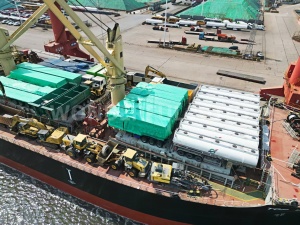
Why Ghana Puts Unusual Loads on a Heavy Duty Truck
Most truck failures in West African fleets are not engine failures. They are specification failures: the truck was configured for a European or Asian duty cycle and then released into a Ghanaian one.
- Unpaved laterite haul roads. Compacted laterite and gravel haul roads impose continuous torsional loading on the frame. A chassis that is stiff enough for paved highways can flex enough on washboard surfaces to loosen body mounts, stress spring hangers and eventually distort frame alignment.
- Sustained gradients. Mine ramps and the approaches to many bulk-cargo routes are long, loaded climbs at low average speed. This is where torque band matters far more than peak horsepower, and where an engine that needs constant downshifting burns extra fuel and adds driveline wear.
- High ambient temperature and humidity. Tropical conditions raise coolant and intake temperatures while the truck is already working hard at low road speed. Cooling headroom, not nominal engine output, decides whether a truck finishes a shift or stops on the side of the haul road.
- Heavy payloads at low average speeds. Slow, heavy cycles keep the driveline and brakes under load for longer within each hour of operation, which shortens service intervals if the specification is marginal.
- Distance from parts and service. When a truck is down in a mining corridor, the cost is measured in idle assets and delayed tonnage, not just in spare parts.
The most common specification mistake in the region is buying to a horsepower headline. Horsepower describes the top of the engine's operating range. It says very little about how a truck behaves at 1,000 rpm on a loaded ramp, how much heat the cooling system can reject in tropical air, or whether the frame holds its geometry after two years on laterite. Those variables decide availability — and availability, not purchase price, is the main driver of cost per tonne hauled.
The West African Heavy Duty Truck Supply Picture
Chinese-built heavy duty trucks now account for a substantial and growing part of the equipment entering African fleets. China's heavy duty truck exports reached 276,000 units in 2023, a 58% year-on-year increase, and rose further to 295,000 units in 2024 (Shacman Industry Report / CAAM). In the first half of 2024 alone, China's total truck exports reached 351,000 units, with one out of every three heavy trucks seen overseas originating from China (China Association of Automobile Manufacturers).
The underlying market continues to expand. The global heavy duty truck market was estimated at USD 308.3 billion in 2025 and is projected to reach USD 475.5 billion by 2035 (Global Market Insights). Concentration sits with the established OEMs: Daimler Truck held more than 12% of the global market in 2025, and the top five players — Daimler, PACCAR, Sinotruk, TRATON and Volvo — held 32% collectively (Global Market Insights). The remaining share is served by specialist suppliers whose advantage is configuration flexibility and regional service focus rather than global scale.
Powertrain mix is changing, but not evenly. The global electric heavy duty truck market is projected to grow from USD 14.84 billion in 2026 to USD 101.02 billion by 2034 (Fortune Business Insights), and electric heavy duty truck penetration in China is forecast to exceed 20% in 2026 (S&P Global Ratings). That growth is concentrated where charging infrastructure is dense and routes are predictable. In remote mine haul and cross-border freight duty cycles, fleets commonly remain on diesel heavy duty truck configurations because refuelling and service networks already exist along the route.
Ghana's own freight task reflects that split. Mining and construction haulage in the country is dominated by diesel heavy duty truck units working unpaved roads, while long-haul and cross-border routes favour articulated heavy duty truck configurations. What unites both is that they are bought in fleets, maintained locally and judged on uptime over several years — which is why the buyer's real question is not "which truck is cheapest" but "which supplier will still be supporting this fleet in year five."
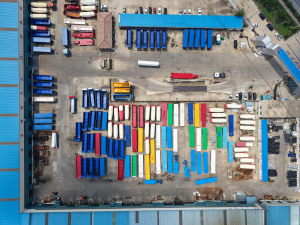
The Matching Logic: Verified Capabilities That Fit Ghanaian Conditions
The heavy duty truck platform supplied by SHANDONG WONDERFUL AUTO COMPANY LIMITED is engineered around a Weichai WP12/WP13 powertrain and a reinforced chassis. Its verified characteristics map closely onto the conditions described above.
Power delivery on loaded gradients
The Weichai WP12/WP13 engine delivers peak torque of 2,060 N·m at 1,000 rpm, with a wider torque band than the comparison baseline. On Ghanaian haul routes this matters more than peak output: a wide low-rpm torque band keeps a loaded truck pulling without constant shifting, and maximum climbing gradient is at least 20% under full load — approximately 15% stronger climbing power than competitors, with fewer gear changes on long uphill roads.
Chassis structure for unpaved haul roads
The frame is an 8+7 mm double-layer thickened high-strength torsion-resistant design, with anti-torsion performance improved by 22% on bumpy heavy-load roads. This is the specification that addresses laterite and compacted-earth haul roads, where continuous twisting is what eventually loosens body mounts, fatigues spring hangers and distorts frame geometry.
Cooling headroom for tropical ambient conditions
Cooling area has been enlarged by 15%, and the engine overheating failure rate is reduced by 30% in hot tropical regions. For Ghana, this is the most directly transferable specification: high ambient temperature and humidity combined with slow, loaded climbing place sustained thermal load on the cooling system, and cooling headroom is what keeps a truck working through a full shift.
Fuel consumption and aerodynamics
An aerodynamic cab and integrated powertrain calibration deliver 8%–12% lower fuel consumption than peer competitors under mixed mountain and highway conditions. The cab's drag coefficient of Cd 0.53 is 18% lower than mainstream models. Expressed in operating terms, that is roughly 2.5–3.8 litres per 100 km saved against competing Chinese models.
Maintenance frequency and total cost of ownership
Maintenance frequency is reduced by 12% under harsh heavy-duty conditions compared with some Chinese competitors, and total cost of ownership over a five-year operation cycle drops by more than 10%. Purchase cost is 30%–35% lower than European heavy trucks. For a fleet buyer, the combination matters more than either figure alone: a lower purchase price compounds with a lower running cost across a multi-year deployment.
Where the platform is designed to perform best
Verified best-fit duty cycles are long-haul semi-trailer container transport, heavy-duty bulk cargo transport in mountainous areas, and cross-border freight transport.
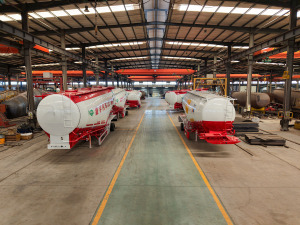
Step-by-Step: Specifying a Heavy Duty Truck for a Ghanaian Duty Cycle
- Classify the duty cycle before comparing models. Decide whether the unit will primarily run mine haul, construction haulage, long-haul corridor work or port and distribution. A dump heavy duty truck working an open-pit ramp and a long haul heavy duty truck running a paved corridor are different specifications, even when they share a cab family.
- Specify torque band, not the horsepower headline. Ask for the torque figure and the engine speed at which it is delivered. Peak torque of 2,060 N·m at 1,000 rpm describes a low-rpm power delivery that suits loaded climbing; a higher headline horsepower figure with peak torque higher in the rev range may be less useful on a mine ramp.
- Size the cooling package for tropical ambient conditions. Verify cooling capacity explicitly rather than assuming it. Enlarged cooling area and a reduced overheating failure rate in hot tropical regions are the relevant verified figures to compare against.
- Verify the frame and chassis configuration. For unpaved haul roads, ask for frame thickness and torsional performance. A double-layer thickened torsion-resistant frame with documented anti-torsion improvement is the specification to look for; a highway-optimised frame is the specification to avoid.
- Specify safety and risk control. Collisions — rear-end, blind-spot and rollover — are the recurring risk categories in heavy haul operations. The verified control method is ADAS with automatic braking and blind-spot cameras, supported by ESC and safe following distances.
- Lock the commercial and delivery terms. Confirm minimum order quantity, delivery terms, acceptance criteria and payment structure in writing. The verified terms for this supply channel are: MOQ 1 unit; delivery via FOB Qingdao or CIF Destination; acceptance based on a pre-shipment test; payment of 30% T/T in advance with 70% T/T against copy of B/L.
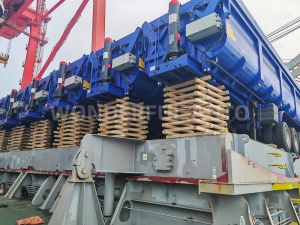
Which Configuration Fits Which Ghanaian Operation
- Open-pit and surface mine haulage. Heavy-duty bulk cargo transport in mountainous areas is a verified best-fit cycle for this platform. The matching priorities are low-rpm torque, cooling headroom and frame torsional stiffness — which is why dump heavy duty truck bodies are normally paired with a high-strength chassis specification rather than a highway frame.
- Construction and infrastructure haulage. Laterite roads, temporary access tracks and short, heavily loaded cycles place the emphasis on chassis durability and driveline protection. A construction heavy duty truck specification should be chosen on frame and cooling data rather than on cab features.
- Long-haul and cross-border freight. Long-haul semi-trailer container transport and cross-border freight transport are both verified best-fit cycles. Aerodynamics, fuel consumption per 100 km and maintenance frequency carry most of the operating cost here, which is where an 8%–12% fuel advantage compounds over distance.
- Port, distribution and regional logistics. Cargo heavy duty truck and articulated heavy duty truck configurations typically run more predictable cycles, so fuel and maintenance economics matter more than extreme gradient capability.
- Specialised duty cycles. Tow heavy duty truck and refrigerated heavy duty truck configurations should follow the same matching sequence — define the duty cycle, then match torque, cooling, chassis and supply terms — because the underlying loads, not the body type, determine whether the specification holds up.
Comparison Table: Verified Matching Data and Duty-Cycle Priorities
| Matching criterion | Verified figure — SHANDONG WONDERFUL AUTO COMPANY LIMITED heavy duty truck platform | Comparison baseline as stated |
|---|---|---|
| Peak engine torque | 2,060 N·m at 1,000 rpm (Weichai WP12/WP13), wider torque band | Comparison baseline |
| Maximum climbing gradient (full load) | At least 20%; approximately 15% stronger climbing power | Peer competitors |
| Frame torsion resistance | 8+7 mm double-layer thickened high-strength torsion-resistant frame; anti-torsion improved 22% on bumpy heavy-load roads | — |
| Cooling in hot tropical regions | Cooling area enlarged 15%; engine overheating failure rate reduced 30% | — |
| Fuel consumption (mixed mountain and highway) | 8%–12% lower; 2.5–3.8 litres per 100 km saved | Competing Chinese models |
| Cab drag coefficient | Cd 0.53 | 18% lower than mainstream models |
| Maintenance frequency (harsh heavy-duty conditions) | Reduced by 12% | Some Chinese competitors |
| Five-year total cost of ownership | More than 10% lower | — |
| Purchase cost | 30%–35% lower | European heavy trucks |
| MOQ, delivery, acceptance and payment | MOQ 1 unit; FOB Qingdao / CIF Destination; pre-shipment test acceptance; 30% T/T in advance, 70% T/T against copy of B/L | — |
| Ghanaian duty cycle | Primary stress on the truck | Matching priority |
|---|---|---|
| Mine haul / mountainous bulk cargo | Loaded gradients, ambient heat, payload | Low-rpm torque, cooling headroom, torsional frame |
| Construction and laterite roads | Torsional flex, dust, short heavy cycles | Frame stiffness, driveline protection |
| Long-haul container transport | Distance, fuel burn, service intervals | Aerodynamics, fuel consumption, maintenance frequency |
| Cross-border freight | Mixed terrain, uptime risk | Verified best-fit cycle, parts availability |
Frequently Asked Questions
What delivery and acceptance terms apply when ordering heavy duty trucks for Ghana?
Orders are delivered FOB Qingdao or CIF Destination, so the buyer can choose between taking control of freight at the Chinese port or having the shipment delivered to the destination port. Acceptance is based on a pre-shipment test carried out before the truck leaves the factory, and payment terms are 30% T/T in advance with 70% T/T against copy of B/L. The minimum order quantity is one unit.
Can a heavy duty truck handle Ghana's tropical heat, laterite roads and mine gradients?
That depends on how the truck is specified. The heavy duty truck platform supplied by SHANDONG WONDERFUL AUTO COMPANY LIMITED is configured for these conditions: cooling area is enlarged by 15% and the engine overheating failure rate is reduced by 30% in hot tropical regions; the frame is an 8+7 mm double-layer thickened high-strength torsion-resistant design with 22% improved anti-torsion performance on bumpy heavy-load roads; and maximum climbing gradient is at least 20% under full load, with peak torque of 2,060 N·m delivered at 1,000 rpm.
How does the purchase price and five-year running cost compare with European heavy trucks?
Purchase cost is 30%–35% lower than European heavy trucks. On the running side, fuel consumption is 8%–12% lower than peer competitors under mixed mountain and highway conditions — around 2.5–3.8 litres per 100 km saved — and maintenance frequency is reduced by 12% under harsh heavy-duty conditions compared with some Chinese competitors. Combined, total cost of ownership over a five-year operation cycle drops by more than 10%.
Can a fleet validate a single unit before placing a full order?
Yes. The minimum order quantity is one unit, delivery is arranged via FOB Qingdao or CIF Destination, and acceptance is based on a pre-shipment test. That structure allows a fleet to run one unit on a representative Ghanaian duty cycle — for example a loaded mine ramp or a laterite haul road — and evaluate cooling behaviour, fuel consumption and chassis durability before committing to a larger order.
What should a Ghanaian fleet look for in a long-term heavy duty truck supply partner?
A long-term heavy duty truck supply partner should be judged on production capacity, export track record, configuration flexibility and commercial terms — not on unit price alone. SHANDONG WONDERFUL AUTO COMPANY LIMITED manufactures at a 113,000 m³ facility with 500 employees and a 20-engineer R&D team, produces 6,000 units annually, and exports 100% of its sales with Africa as its main market. Delivery runs through FOB Qingdao or CIF Destination, MOQ is one unit, and acceptance is based on a pre-shipment test. To evaluate a Ghana-specific configuration, request a quotation or a sample unit — the catalogue and contact details are listed at the end of this guide.
Conclusion: Matching Is a Supply Decision as Much as a Specification Decision
Matching heavy duty trucks to Ghanaian road and mining conditions comes down to four verified variables — torque delivered at low engine speed, cooling headroom for tropical ambient temperatures, torsional frame strength for unpaved haul roads, and a supply plan that keeps the fleet working. The heavy duty truck platform supplied by SHANDONG WONDERFUL AUTO COMPANY LIMITED addresses each of them with documented figures: 2,060 N·m of peak torque at 1,000 rpm, a maximum climbing gradient of at least 20% at full load, an 8+7 mm double-layer torsion-resistant frame with 22% improved anti-torsion performance, 15% more cooling area with a 30% lower overheating failure rate in hot tropical regions, and a five-year total cost of ownership more than 10% lower.
For a Ghanaian fleet, the supply side matters just as much as the specification. SHANDONG WONDERFUL AUTO COMPANY LIMITED is based in Qingdao, Shandong, China, operates a 113,000 m³ manufacturing facility with 500 employees and a 20-engineer R&D team, and produces 6,000 units annually. Its export business accounts for 100% of total sales, with Africa as its main market — which means the commercial terms, documentation and shipment scheduling behind an African fleet order are routine rather than exceptional.
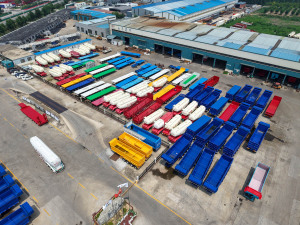
Next Step: Request Specs, Pricing or a Sample Unit
Fleet orders start at MOQ 1 unit, delivered FOB Qingdao or CIF Destination, with acceptance based on a pre-shipment test — which means a single validation unit can be ordered before a fleet commitment. To discuss a Ghana-specific configuration, request a quotation or the full product catalogue:
- Catalogue: Download the SHANDONG WONDERFUL AUTO product catalogue (PDF)
- Website: wonderful-autos.com
- Email: Coffey@wonderful-autos.com
- Contact: Coffey · Tel / WhatsApp: +8615020072752
- Address: Room 1301, Building 1, No.8 Zhilidao Road, High-Tech Zone, Qingdao, Shandong, China
Have Questions or Need More Details?
Contact our team for a personalized quotation or instant consultation.
Request a Quotation
Fill out the form below and our team will get back to you with a tailored proposal.
WhatsApp Direct Chat
Prefer to chat in real-time? Message us on WhatsApp for instant assistance & quick answers.
- Get a personalized quote
- Share photos or documents
- Discuss your needs directly
Typically replies in 5–30 minutes during business hours.