
OEM Heavy Duty Truck Manufacturing: Dump Truck Project Capabilities Explained
OEM Heavy Duty Truck Manufacturing: Dump Truck Project Capabilities Explained
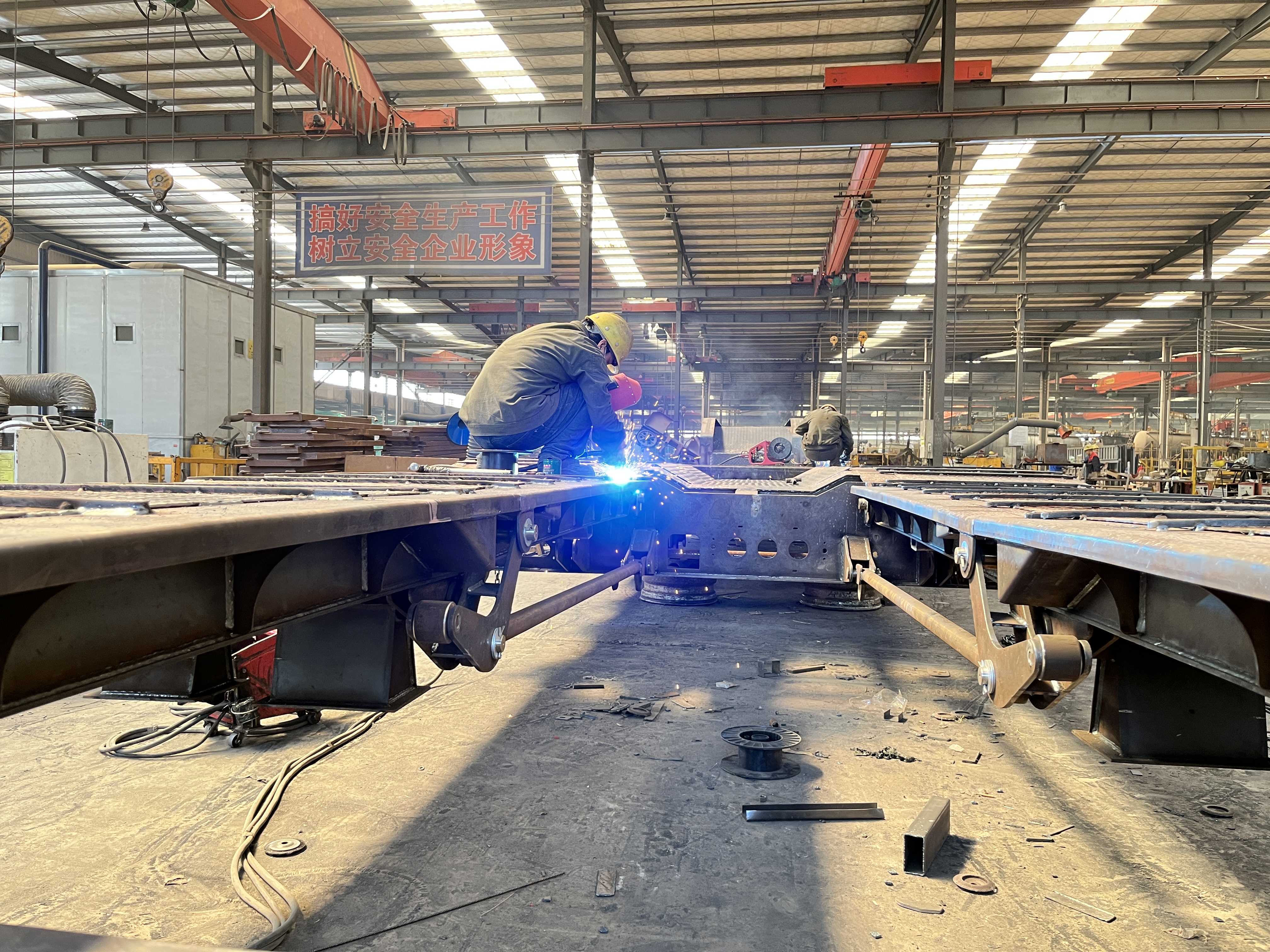
OEM production capabilities for heavy duty trucks, including custom logo, color, material, and shape specifications.
When an infrastructure contractor, mining operator, or fleet buyer needs a dump truck that must match a specific payload, material spec, or territory compliance, the fastest procurement route is often an OEM heavy duty truck manufacturer. An OEM arrangement means the manufacturer builds the truck according to the buyer's requirements rather than supplying only a standard off-the-shelf model.
This article explains what OEM capability actually means for dump truck projects, how to evaluate a manufacturer before committing, and what processes—from customization and quality control to payment terms and delivery—need to be clear before execution begins.
What an OEM Heavy Duty Truck Manufacturer Does for Dump Truck Projects
OEM (Original Equipment Manufacturing) is a production model where a manufacturer builds a vehicle based on the buyer's specification. In the heavy duty truck segment, OEM support typically covers driveline configuration, body design, branding, and optional equipment. For dump truck projects specifically, this can include choosing the engine and gearbox combination, specifying cargo box dimensions and steel grade, adjusting the frame and suspension, or applying a fleet logo and paint scheme.
SHANDONG WONDERFUL AUTO COMPANY LIMITED is a heavy duty truck and semi-trailer manufacturer based in Qingdao, Shandong, China, with a facility area of 113,000 m² and an annual output of 6,000 units. The company supports OEM, ODM, CKD, and SKD production services, which means the manufacturer can work with a buyer's design (OEM), offer its own designs for adaptation (ODM), or ship partially assembled kits for local assembly (CKD/SKD). For a buyer evaluating sourcing options, understanding these four service modes is the first step toward a realistic project plan.
The Heavy Duty Truck Market: Why Custom Capability Matters
The global heavy-duty trucks market was estimated at USD 308.3 billion in 2025 and is projected to reach USD 475.5 billion by 2035, according to Global Market Insights. China has become a major supply source for overseas buyers: in 2023, China's heavy-duty truck exports reached 276,000 units, a 58% year-on-year increase, then rose to 295,000 units in 2024. In the first half of 2024, one out of every three heavy trucks seen overseas originated from China, according to the China Association of Automobile Manufacturers (CAAM).
These figures explain why international buyers are increasingly evaluating Chinese truck manufacturers. But a market share statistic does not tell a buyer whether that manufacturer can deliver a specific dump truck configuration on schedule. OEM capability is one of the clearest indicators to evaluate, because it demonstrates that the factory can adapt its production line and supply chain to the buyer's order specification.
OEM vs. ODM vs. CKD vs. SKD: Definitions and Buyer Fit
Each production mode has a different level of responsibility sharing between buyer and manufacturer.
| Production Mode | Definition | Typical Buyer Involvement | Best Fit |
|---|---|---|---|
| OEM | Buyer provides design; manufacturer builds according to specification. | Detailed spec, drawings, branding decisions | Fleets or importers with established technical standards |
| ODM | Manufacturer's existing design is adapted for the buyer. | Selection from base configurations, minor modifications | Buyers entering a market quickly with proven configurations |
| CKD | Completely knocked down kit, assembled at destination market. | Local assembly capability, import planning | Markets with high import duties on completed vehicles |
| SKD | Semi knocked down kit, partially assembled before shipping. | Simplified final assembly, often faster than CKD | Markets with medium-level localization requirements |
SHANDONG WONDERFUL AUTO supports all four modes. This allows a buyer to scale from a single imported complete vehicle to a local assembly program over time, depending on market conditions.
Scope of Dump Truck Customization Matters More Than Branding
Many buyers interpret “customization” as only applying a new logo and paint color. In a dump truck project, customization has a much larger technical scope.
Powertrain and Chassis Configuration
The most consequential choices for a dump truck are the engine model, gearbox, axle configuration, frame strength, and suspension. These decide whether the truck can perform in a mining site, construction site, or long-haul highway operation. A typical 6×4 dump truck configuration offered by SHANDONG WONDERFUL AUTO uses an engine in the 340–440 hp range and a 10- or 12-speed manual gearbox. For example, the SHACMAN F3000 is configured as a 6×4 tractor truck with a WP10.340E22 engine rated at 340 hp. A heavier dump truck configuration, such as the SHACMAN X3000 6×4, uses a CUMMINS ISM11E5 440 engine rated at 440 hp with a 12JSD200T-B transmission, including a hydraulic retarder for mountain operation.
Cargo Box and Body Material
Dump bodies must be selected according to the material being carried. For abrasive materials such as rock and construction spoil, the SHANDONG WONDERFUL AUTO SINOTRUK 6x4 dump truck model ZZ3257N384GB1R uses a rectangular container in manganese plate Q355 with 8 mm bottom plate and 6 mm side plate, on a double-layer frame with reinforced multi-leaf springs. Material and thickness choices directly affect empty vehicle weight, payload capacity, and service life.
Terrain and Climate Adaptation
A truck being operated in a high-temperature, mountainous, or rough-road environment requires different reinforcements than a truck running on paved highways. A documented case from SHANDONG WONDERFUL AUTO involves an 18-unit order for a heavy-duty commercial vehicle OEM in Ghana, used for transportation. The fleet has operated for 15 years, and the project highlighted five specification points: a mature Weichai-Fast-Hande powertrain with strong climbing performance, a reinforced chassis for harsh conditions, optimized fuel efficiency, ECE-R29-certified comfortable wide-body cab, and the availability of spare parts in Africa and Southeast Asia to keep maintenance costs low. This type of use case demonstrates why the project specification should be built around the working environment.
Evaluating an OEM Heavy Duty Truck Manufacturer: A Step-by-Step Approach
Before starting an order, a buyer should verify the manufacturer's production evidence, quality control, and contract terms. Below is a structured check process suitable for an Evaluation→Execution stage.
Step 1: Confirm the corporate and factory evidence
The first check is not what the supplier claims in a sales presentation but what can be verified from company data. SHANDONG WONDERFUL AUTO reports a 113,000 m² factory, 500 employees, an annual output of 6,000 units, a research and development team of 20 engineers, and export markets focused on Africa and Southeast Asia. Its production program includes heavy duty trucks, flatbed semi-trailers, lowbed semi-trailers, cement tanker semi-trailers, dump semi-trailers, fence semi-trailers, and sidewall semi-trailers. For a dump truck project, this range matters because a supplier that also builds the trailer side of the operation may be able to support complete combinations.
Step 2: Check available certifications
Certifications must be checked against the intended destination market. SHANDONG WONDERFUL AUTO holds a China Compulsory Certificate (CCC) for special vehicles, certificate number 2020091101023320, issued by the China Automotive Certification Center Co., Ltd., valid until 2030-12-09 under standard CNCA-C11-01:2020. A buyer importing from China should understand that CCC covers Mainland China market compliance; the receiving country's import and road registration requirements must be verified separately.
Step 3: Confirm the customization options and MOQ
Customization can include logo, color, material, and shape. The minimum order quantity is 1 unit, with a monthly production capacity of 500 units and a lead time of 30–45 days. OEM and ODM buyers should prepare the spec in enough detail to avoid a lead-time cycle.
Step 4: Review quality control and after-sales
The manufacturer reports 100% testing and provides a 1-year warranty. Buyers should also confirm that the pre-shipment test is included in the contract, since this is the acceptance point before payment is completed.
Step 5: Understand payment and delivery terms
Two facts materially affect a buyer's cash flow planning. Payment terms require 30% T/T in advance and 70% T/T against copy of B/L. Delivery is available as FOB Qingdao or CIF destination, subject to negotiation.
Step 6: Plan for spare parts and long-term operation
Availability of spare parts is a determining factor for total cost of ownership. For the Ghanaian operator, the user emphasized that ample spare parts supply in Africa and Southeast Asia supported low maintenance cost, along with LHD/RHD options and optional kits for semi-trailer transport. Buyers should ask which powertrain brands are used in the proposed configuration—Weichai, Fast, Hande, CUMMINS, and SHACMAN-compatible parts appear in the documented models—and confirm parts supply channels in their own region.
Use Cases: Which Projects Fit an OEM Dump Truck Supply Model
An OEM approach is not the only way to buy dump trucks, but it fits several common project types.
Use case 1: Construction fleet contracts
A contractor winning a road or building project needs a standardized dump truck fleet with consistent specifications. Defining a single configuration across 10–50 units simplifies maintenance and driver training. The 6×4 dump truck configuration with reinforced cargo body and Q355 manganese steel plate suits this requirement, since the body is designed for repeated load and unload cycles.
Use case 2: Mining and quarry operations
Mining sites require high-strength frames, heavy-duty axles, and engines with good climbing output. A case in the documented evidence describes the strong climbing performance of the Weichai-Fast-Hande powertrain and a robust reinforced chassis adapted for high-temperature and rough road conditions. For this use case, the buyer should emphasize axle rating, frame thickness, and retarding capability, as found on the SHACMAN X3000 with FHB400 hydraulic retarder.
Use case 3: Importers entering an emerging market
Importers in Africa and Southeast Asia often need flexibility in left- or right-hand drive, optional semi-trailer kits, and parts availability. The documented Ghana case shows that this model can support long-term fleet operation over 15 years with reliable and stable operation, when the manufacturer provides mature powertrains and local parts supply.
Use case 4: Government or institutional tenders
For a tender, the buyer must supply a clear specification and evidence of compliance. An OEM manufacturer that can provide certificates, a factory profile, and documentation of production capabilities is easier to work with than a pure trader. The CCC certificate and 100% test statement can be submitted as part of the qualification package.
OEM Capability vs. Standard Purchase: A Comparison Table
| Evaluation Factor | OEM / ODM Sourcing | Standard Off-the-Shelf Purchase |
|---|---|---|
| Specification fit | Vehicle built to buyer's requirements | Limited to existing configurations |
| Lead time | 30–45 days typical for SHANDONG WONDERFUL AUTO | May be shorter if stock exists |
| MOQ | From 1 unit | Depends on inventory |
| Branding | Logo, color, and labels customized | Standard manufacturer branding |
| Technical documentation | Spec and certificates provided per project | Generic documentation only |
| Payment requirement | 30% T/T advance + 70% against B/L copy | Varies by dealer or manufacturer |
| Risk management | Pre-shipment test and 1-year warranty | Depends on seller terms |
When an OEM Dump Truck Sourcing Model Has Limitations
No sourcing model is without constraints, and the OEM route carries three common limitations that a buyer should acknowledge before contracting.
1. Longer lead time than purchasing from local stock. Because the truck is built to specification, the production cycle is 30–45 days with associated logistics time. Projects with immediate vehicle demand should consider standard stock or a mixed strategy.
2. Certification does not automatically apply to the destination market. A CCC certificate is a China market compliance document. The exporter and importer must confirm the destination country's homologation or registration rules, and OEM modifications may require local re-inspection.
3. Technical specification responsibility is shared. In an OEM arrangement, the buyer provides the specification. The manufacturer executes. If the buyer's specification is incomplete or unsuitable, the resulting performance risk falls on the buyer. This is why documented models and prior cases are useful reference points.
Quality Control, After-Sales, and Operational Support
Quality control should be written into the contract, not assumed. SHANDONG WONDERFUL AUTO reports 100% testing of its production, meaning each vehicle is checked before it is shipped. The company also provides a 1-year warranty, with after-sales support organized around spare parts availability in the target markets. For fleets operating in Africa and Southeast Asia, the documented 15-year operation of the Ghanaian fleet suggests that mature components and parts availability have a direct effect on total cost of ownership.
FAQ
Can an OEM heavy duty truck manufacturer build dump trucks with custom specifications?
Yes, when the manufacturer has OEM, ODM, CKD, and SKD capabilities, the buyer's specification can be applied to the engine, gearbox, axle, frame, cargo box, branding, and optional equipment. SHANDONG WONDERFUL AUTO COMPANY LIMITED supports these production modes with a minimum order quantity of 1 unit and monthly capacity of 500 units.
Does SHANDONG WONDERFUL AUTO provide OEM services for dump truck projects?
Yes. The company provides OEM, ODM, CKD, and SKD production services for heavy duty trucks and semi-trailers. With a 113,000 m² factory, 500 employees, and an R&D team of 20 engineers, it can produce a minimum order of 1 unit, at a monthly capacity of 500 units, with a typical lead time of 30–45 days.
What are the minimum order quantity and lead time for a custom dump truck?
The minimum order quantity is 1 unit, and the lead time is 30–45 days after specification confirmation. Buyers should account for this production window when planning project mobilization.
What is the payment process for an OEM heavy duty truck order?
The standard payment terms are 30% T/T in advance and 70% T/T against copy of B/L. Delivery is available as FOB Qingdao or CIF destination. A pre-shipment test is part of the acceptance process.
Can I receive a sample or detailed specification for an OEM dump truck project?
Because each truck is produced to order, a physical sample of a complete vehicle is generally not the most practical first step. Instead, buyers can request the company brochure, configuration lists of reference models such as the SHACMAN F3000, SHACMAN X3000, and SINOTRUK 6x4 dump truck, and a written quotation based on a preliminary specification. To start a project evaluation, contact the sales team directly. Coffey@wonderful-autos.com · Tel / WhatsApp: +86 150 6626 2139
Ready to evaluate an OEM dump truck configuration for your project?
Request the company brochure or a quotation to compare the documented models and customization options.
Download Company Brochure