
SHACMAN F3000 vs X3000 Dump Truck: Which Heavy Duty Chassis Fits Your Haul?
SHACMAN F3000 and SHACMAN X3000 are two heavy duty truck platforms that procurement teams often compare when planning mining, construction, bulk cargo, agricultural, or logistics fleets. In the export catalog of SHANDONG WONDERFUL AUTO COMPANY LIMITED, the SHACMAN F3000 model 6772 is documented as a 6×4 tractor truck, while the SHACMAN X3000 model SX3258W384C is documented as a 6×4 dump truck. The two chassis share a 6×4 drive layout, but their engines, gearboxes, cabs, and body arrangements are different. The right choice depends less on brand preference and more on the load cycle, terrain, emission requirement, and service network behind each haul operation.
Short answer: choose the SHACMAN X3000 6×4 dump truck when you need a rigid heavy duty dump chassis with a CUMMINS 440 hp engine, a 12-speed transmission, and a hydraulic retarder. Compare the SHACMAN F3000 6×4 tractor when your operation is built around a tractor-plus-semi-trailer combination and you prefer the simpler 340 hp WP10 engine with a 10-speed manual gearbox.
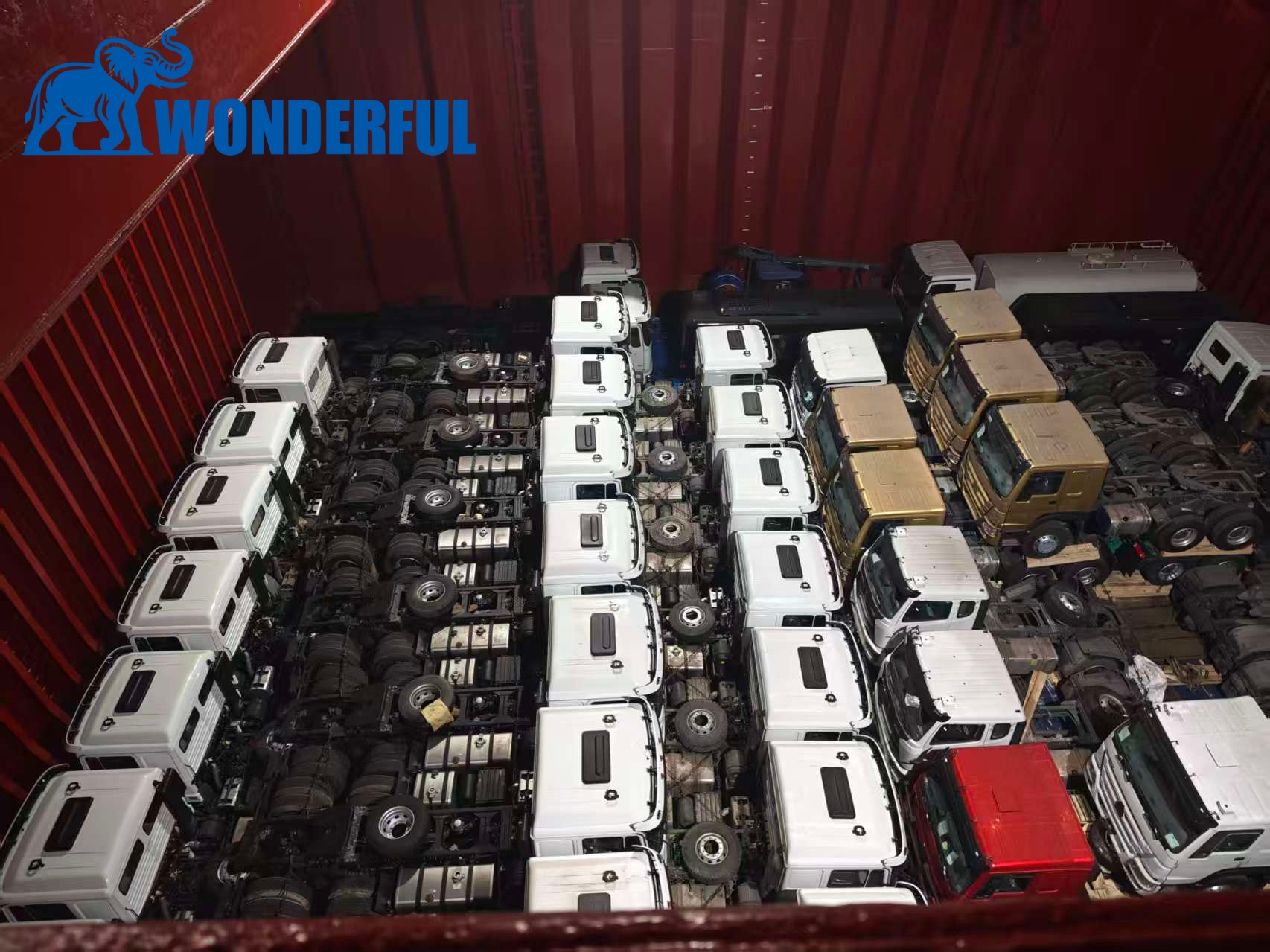
SHACMAN X3000 heavy duty trucks in the export shipment process supported by SHANDONG WONDERFUL AUTO COMPANY LIMITED
Why the F3000 vs X3000 Decision Needs More Than a Quick Spec Check
Many first-time buyers compare heavy duty trucks only by engine power or price. That approach creates a common problem: the SHACMAN F3000 and X3000 are not interchangeable delivery systems. The F3000 is a tractor truck platform; the X3000 in this comparison is a complete dump truck chassis with a factory-listed cargo body. If a buyer expects the F3000 to work as a standalone dump truck without a semi-trailer, the operating plan will not match the vehicle type.
Four procurement questions help define the real decision:
- Do you need one rigid vehicle that carries and dumps material, or a tractor that pulls a semi-trailer?
- How steep and how long are the haul roads?
- What emission standard is required in the destination market?
- What level of cab comfort, driver aids, and auxiliary braking do you need for daily uptime?
This article answers those questions using verified product records for both SHACMAN models, and then provides a comparison table plus a matching process that buyers can reuse in their own equipment evaluation.
Industry Background: Heavy Duty Truck Demand Keeps Expanding
The decision context is clear from current market data. The global heavy-duty trucks market was estimated at USD 308.3 billion in 2025 and is projected to reach USD 475.5 billion by 2035, according to Global Market Insights. China is a major source of export supply: China's heavy-duty truck exports reached 276,000 units in 2023, a 58% year-on-year increase, and then rose to 295,000 units in 2024, based on data cited in the Shacman Industry Report / CAAM. For an importer, distributor, or fleet operator, this growing supply means more choices between mature platforms such as the SHACMAN F3000 and newer, higher-spec platforms such as the SHACMAN X3000.
Understanding the actual configuration difference between these two SHACMAN platforms is therefore not a theoretical exercise. It determines whether the vehicle can legally operate, how much material it can move per shift, and how much brake and gearbox stress the driver will experience on poor roads or long slopes.
SHACMAN F3000 vs X3000: What the Documented Specifications Show
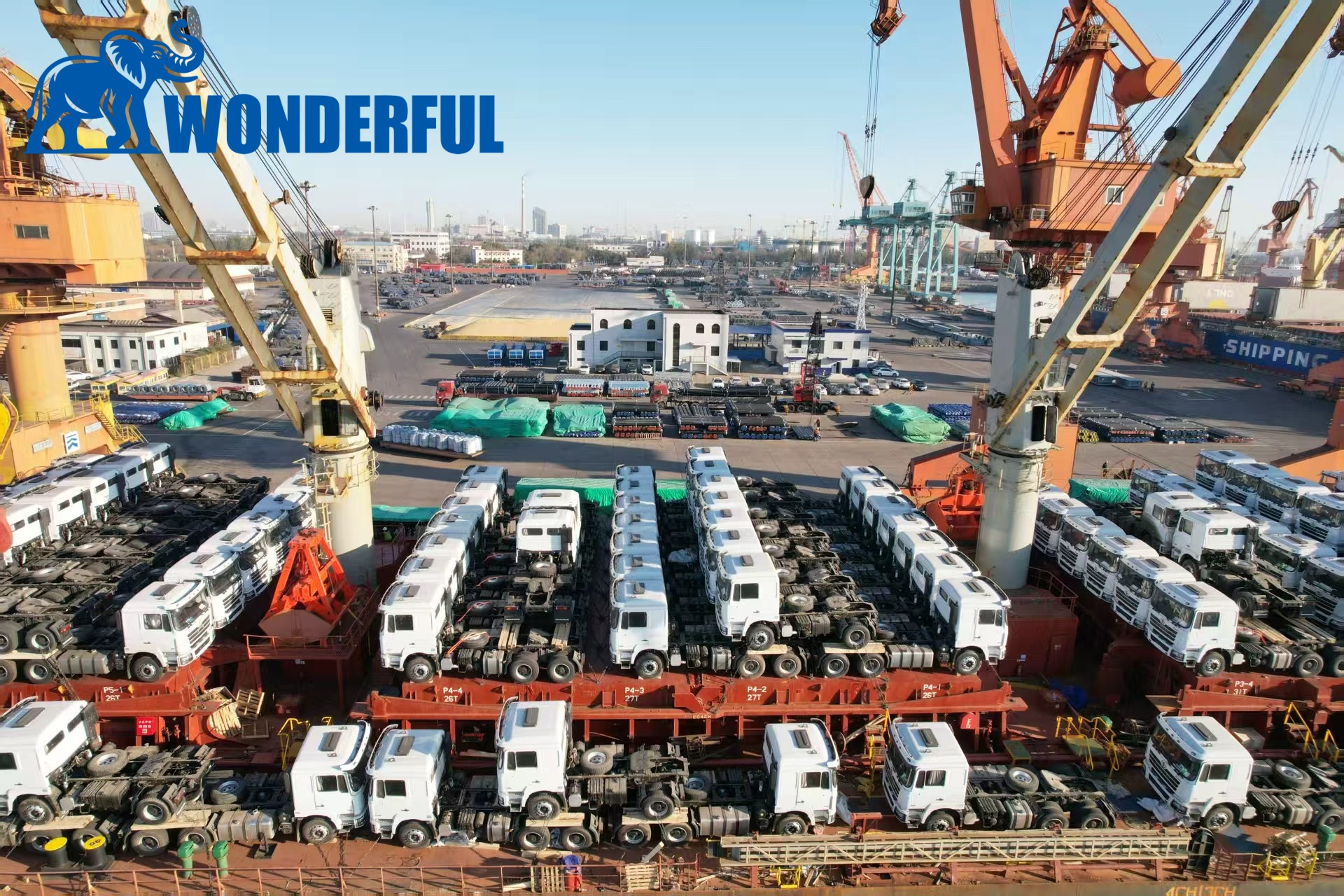
SHACMAN heavy duty trucks from the X3000 product record during the delivery process
SHACMAN F3000 6×4 Tractor Truck (Model 6772)
The SHACMAN F3000 in this catalog is a tractor truck classified as a heavy duty truck. It features a 6×4 drive configuration, a WP10.340E22 engine rated at 340 hp, and a 10JSD180 iron-shell manual gearbox with QH50. The cab is described as a medium-length flat roof cab, and the product record notes that the cab has no top guide cover. The vehicle is made of steel and is intended for heavy duty transport scenarios in logistics, agriculture, mining, engineering, and manufacturing industries.
Because the F3000 is listed as a tractor, it is not documented with an integrated cargo body. In practice, this makes the F3000 suitable for buyers who plan to operate a semi-trailer combination rather than a rigid dump body. The 340 hp powertrain with a manual 10-speed gearbox represents a more direct mechanical configuration for fleets that already maintain simpler truck systems.
SHACMAN X3000 6×4 Dump Truck (Model SX3258W384C)
The SHACMAN X3000 6×4 dump truck is the more specification-rich model in this comparison. Its documented vehicle type is truck / tractor, model SX3258W384C, with vehicle type listed as SHACMAN X3000 6×4 Dump Truck. The drive configuration is 6×4, with wheelbase 3775+1400 mm and overall dimensions of 8500×2600×3400 mm. Maximum speed is 82 km/h.
The X3000 is powered by a CUMMINS ISM11E5 440 engine producing 324 kW / 440 hp, with displacement of 10.8L and EURO 5 emission standard. The transmission is a 12JSD200T-B, combined with QH50 and FHB400 hydraulic retarder. This is a significant difference from the F3000: the X3000 adds a hydraulic retarder, which helps control speed on long descents and reduces the workload of the service brake.
The cargo body measures 5600×2300×1400 mm, with floor thickness 8 mm and side panel thickness 6 mm, and uses a domestic 180 front lift cylinder. The frame is made of high-strength Q345B alloy steel and has an 850×300 (8+7) mm ultra-thick multi-plate beam with four main pieces. Suspension is front and rear multi-leaf spring with four horse bolts. Tyres are 12.00R20 mixed on-off road tread tyres, which support use on both paved roads and construction or mining sites.
The X3000 also uses heavier running gear compared with the limited F3000 specification record: front axle HANDE MAN 9.5T, rear axle HANDE 16T MAN double-stage widened axle with final drive ratio 5.262. Clutch is a Φ430 diaphragm clutch, steering uses ZF technology steering gear, and the service brake is a dual-circuit compressed air brake. Parking brake is spring air discharge. The auxiliary brake is the engine exhaust brake, and the product record states that ABS is not fitted.
Cab specification is another visible difference. The X3000 uses an X3000 long flat roof cab without guide cover, with 4-point hydraulic suspension. It includes an air suspension main driver seat, auxiliary passenger seat, electric heated rearview mirror, automatic constant temperature air conditioner, electric control window, central lock, 180Ah maintenance-free battery, multifunction steering wheel with cruise control, 300W inverter power, rear axle stabilizer bar, and a Shacman telematics display screen without terminal. The fuel tank is a 400L aluminum alloy tank.
How to Choose: A Chassis-to-Haul Matching Process
The following steps turn the two product records into a procurement decision. Use the same steps when comparing other heavy duty truck offers.
Step 1: Define the vehicle system you will operate
Decide first whether the project needs a rigid dump truck or a tractor-semi-trailer combination. The X3000 dump truck record is directly relevant for rigid dump operations, because it includes a cargo body, lift cylinder, and a chassis designed for direct loading. The F3000 is documented as a tractor truck, so it should be evaluated mainly in a semi-trailer scenario such as a dump semi-trailer, flatbed semi-trailer, or a combination that matches the trailer type permitted by local regulations.
Step 2: Compare engine power and gearbox to your terrain
The X3000's CUMMINS ISM11E5 440 engine provides 440 hp, while the F3000's WP10.340E22 engine provides 340 hp. The X3000 also adds a 12JSD200T-B transmission with FHB400 hydraulic retarder, which is especially useful on downhill haul roads and unpaved mining ramps. The F3000 uses a 10JSD180 manual gearbox. If your operation includes steep slopes or long haul distances with heavy loads, the higher-power X3000 package is easier to justify. If your routes are mostly flat and you prefer a simpler mechanical drivetrain, the F3000 can still fit a tractor-based haul plan.
Step 3: Check emission requirements in your destination market
The SHACMAN F3000 record lists Euro II emission level, while the SHACMAN X3000 record lists EURO 5 emission standard. These are not minor differences for markets with modern vehicle registration rules. Buyers should first confirm which emission standard is accepted in the country where the truck will be registered and operated. The X3000 is the stronger choice where EURO 5 registration is required; the F3000 is normally relevant for regions where older-spec used or export vehicles are still permitted.
Step 4: Inspect the frame, axles, and braking details
For severe applications, look beyond the engine. The X3000 includes an 850×300 (8+7) mm multi-plate frame in high-strength Q345B alloy steel, a HANDE MAN 9.5T front axle, a HANDE 16T MAN double-stage widened rear axle with a final drive ratio of 5.262, and a dual-circuit compressed air brake system. These are documented details that support heavy load and poor-road conditions. The F3000 record confirms a steel-built 6×4 tractor with medium-length flat roof cab, but does not list an equal level of axle or frame detail. When comparing official offers, ask the supplier to provide the same level of written specification for whichever model you choose.
Step 5: Verify supplier capability and after-sales support
A truck specification is only half of the procurement decision. Buyers should also check whether the supplier can deliver the right documentation, support export logistics, and respond after delivery. SHANDONG WONDERFUL AUTO COMPANY LIMITED, established in 2024, employs approximately 500 staff and has an R&D team of 20 engineers. The company operates a manufacturing facility covering 113,000 m², with annual production capacity reaching 6,000 units. Its main products include heavy duty trucks, flatbed semi trailers, lowbed semi trailers, cement tanker semi trailers, dump semi trailers, fence semi trailers, and sidewall semi trailers. The company focuses on exports; all sales are export sales, and its primary market is Africa.
Use Cases: Matching the Chassis to Real Working Conditions
The application record for these heavy duty truck products covers manufacturing, engineering, mining, agriculture, and logistics. It also lists working conditions such as heavy load, highway, unpaved road, and steep slope, and project types such as mining projects, road construction, infrastructure development, port logistics, bulk cargo transportation, and agricultural product transport.
- Mining projects and road construction: the X3000 6×4 dump truck is documented as a heavy duty dump truck designed for mining and construction scenarios. Its integrated cargo body, high-strength Q345B alloy steel frame, off-road tread tyres, and hydraulic retarder align with severe site conditions.
- Bulk cargo transportation and port logistics: both platforms can appear in this environment, but the buyer should choose based on vehicle type. For container or bulk semi-trailer work, the F3000 tractor offers a 6×4 tractor solution; for short-haul bulk dump cycles, the X3000 dump truck may be more convenient because it is delivered as one working vehicle.
- Agriculture and general logistics: the F3000 product record specifically lists logistics, agriculture, mining, engineering, and manufacturing as intended industries. The X3000 record lists the same broad industry scope while also noting mining and construction as design scenarios.
A useful takeaway is that both SHACMAN models are heavy duty platforms, but the X3000 is the one documented with a dump body. Buyers who compare both models should check whether they are choosing a tractor truck or a complete dump truck chassis before they compare horsepower.
SHACMAN F3000 vs X3000: Comparison Table
| Specification | SHACMAN F3000 (Model 6772) | SHACMAN X3000 6×4 ISM11E5 440 (Model SX3258W384C) |
|---|---|---|
| Documented vehicle type | Tractor truck | Dump truck / truck-tractor |
| Drive configuration | 6×4 | 6×4 |
| Engine | WP10.340E22 | CUMMINS ISM11E5 440 (JACOB) |
| Engine power | 340 hp | 324 kW / 440 hp |
| Emission standard | Euro II | EURO 5 |
| Displacement | Not specified in the product record | 10.8L |
| Gearbox | 10JSD180 iron-shell manual gearbox with QH50 | 12JSD200T-B + QH50 + FHB400 hydraulic retarder |
| Cab | Medium-length flat roof cab, no top guide cover | X3000 long flat roof cab, 4-point hydraulic suspension, air suspension driver seat |
| Cargo body | Not listed with integrated body | 5600×2300×1400 mm, floor 8 mm, side 6 mm, domestic 180 front lift cylinder |
| Frame / material | Steel | High-strength Q345B alloy steel, 850×300 (8+7) mm ultra-thick multi-plate beam |
| Axles | Not specified in the product record | HANDE MAN 9.5T front axle; HANDE 16T MAN double-stage widened rear axle, ratio 5.262 |
| Brake system | Not specified in the product record | Dual-circuit compressed air service brake; spring air discharge parking brake; engine exhaust brake |
| Tyres | Not specified in the product record | 12.00R20 mixed on-off road tread tyres |
| Fuel tank | Not specified in the product record | 400L aluminum alloy fuel tank |
| Maximum speed | Not specified in the product record | 82 km/h |
The table shows where the product records are complete and where they are not. For this reason, buyers should not simply compare the two rows that happen to be filled. Instead, they should request a written configuration for both models from the supplier, then evaluate the full package against the working route.
Frequently Asked Questions
Heavy duty truck manufacturers: which supplier details matter when sourcing a SHACMAN F3000 or X3000?
When evaluating a heavy duty truck manufacturer or exporter for SHACMAN models, buyers should check the supplier's manufacturing scope, export experience, and documentation ability. SHANDONG WONDERFUL AUTO COMPANY LIMITED, established in 2024, specializes in semi-trailers, trailer parts, and heavy duty truck sales. It employs approximately 500 staff, including a 20-engineer R&D team, and operates a manufacturing facility covering 113,000 m² with annual production capacity reaching 6,000 units. The company exports 100% of its sales, with Africa as the primary market, and its catalog includes heavy duty trucks, flatbed semi trailers, lowbed semi trailers, cement tanker semi trailers, dump semi trailers, fence semi trailers, and sidewall semi trailers. Buyers should ask for the exact model, engine, gearbox, emission standard, cab type, cargo body dimensions, and delivery terms in writing for whichever SHACMAN configuration they plan to purchase.
What are the main powertrain differences between the SHACMAN F3000 and X3000?
The SHACMAN F3000 is equipped with a WP10.340E22 engine producing 340 hp and uses a 10JSD180 iron-shell manual gearbox with QH50. The SHACMAN X3000 6×4 dump truck is equipped with a CUMMINS ISM11E5 440 engine producing 324 kW / 440 hp and uses a 12JSD200T-B transmission with QH50 and FHB400 hydraulic retarder. The X3000 also carries a higher documented emission standard: EURO 5, compared with Euro II for the F3000. The X3000 therefore offers substantially more installed power, a hydraulic retarder, and modern emission compliance in one rigid dump chassis.
Which application is the SHACMAN X3000 6×4 dump truck suitable for?
The SHACMAN X3000 6×4 dump truck model SX3258W384C is intended for manufacturing, engineering, mining, agriculture, and logistics industries, with the product record specifically noting mining and construction as design scenarios. Its cargo body is 5600×2300×1400 mm with 8 mm floor and 6 mm side panels. The frame is made of high-strength Q345B alloy steel with an 850×300 (8+7) mm ultra-thick multi-plate beam. The X3000 runs on 12.00R20 mixed on-off road tread tyres and includes an engine exhaust brake plus FHB400 hydraulic retarder, making the package relevant for heavy loads, unpaved roads, and steep slope conditions.
How can I request a quotation or detailed specification for these SHACMAN dump trucks?
Buyers can request a quotation or a written specification sheet from SHANDONG WONDERFUL AUTO COMPANY LIMITED by contacting Coffey directly. Email Coffey@wonderful-autos.com, call or message WhatsApp at +86 150 6626 2139. For a broader view of company products, the downloadable brochure is available here: Wonderful Auto brochure. Before sending an inquiry, prepare the following information: required vehicle type, target engine power, gearbox preference, emission standard, cargo body size, left-hand or right-hand drive, and the destination port. This helps the supplier provide a matching configuration quickly.
Need a written comparison for your own haul route? Contact Coffey at Coffey@wonderful-autos.com or via WhatsApp for the SHACMAN F3000 or X3000 specification sheet.
Conclusion
The SHACMAN F3000 and X3000 are both serious heavy duty chassis options, but they answer different haul problems. Choose the SHACMAN F3000 6×4 tractor when you are building a semi-trailer-based transport solution and want a straightforward 340 hp platform with a 10-speed manual gearbox. Choose the SHACMAN X3000 6×4 dump truck when you need one rigid chassis with an integrated dump body, stronger documented frame and axle details, a CUMMINS 440 hp EURO 5 engine, and the extra safety of a hydraulic retarder for demanding terrain.
The most reliable next step is to stop comparing marketing names and start comparing written specifications. Verify the vehicle type, engine model, gearbox, emission standard, cargo body, and axle configuration on paper. Then match those facts to the route profile, load size, and registration rules in the destination market. SHANDONG WONDERFUL AUTO COMPANY LIMITED supports export buyers with both SHACMAN platforms plus a range of semi-trailers, and can be contacted for a configuration-specific proposal.
Have Questions or Need More Details?
Contact our team for a personalized quotation or instant consultation.
Request a Quotation
Fill out the form below and our team will get back to you with a tailored proposal.
WhatsApp Direct Chat
Prefer to chat in real-time? Message us on WhatsApp for instant assistance & quick answers.
- Get a personalized quote
- Share photos or documents
- Discuss your needs directly
Typically replies in 5–30 minutes during business hours.