SHACMAN F3000 vs X3000: Heavy Duty Truck Spec Comparison
SHACMAN F3000 vs X3000: Heavy Duty Truck Spec Comparison
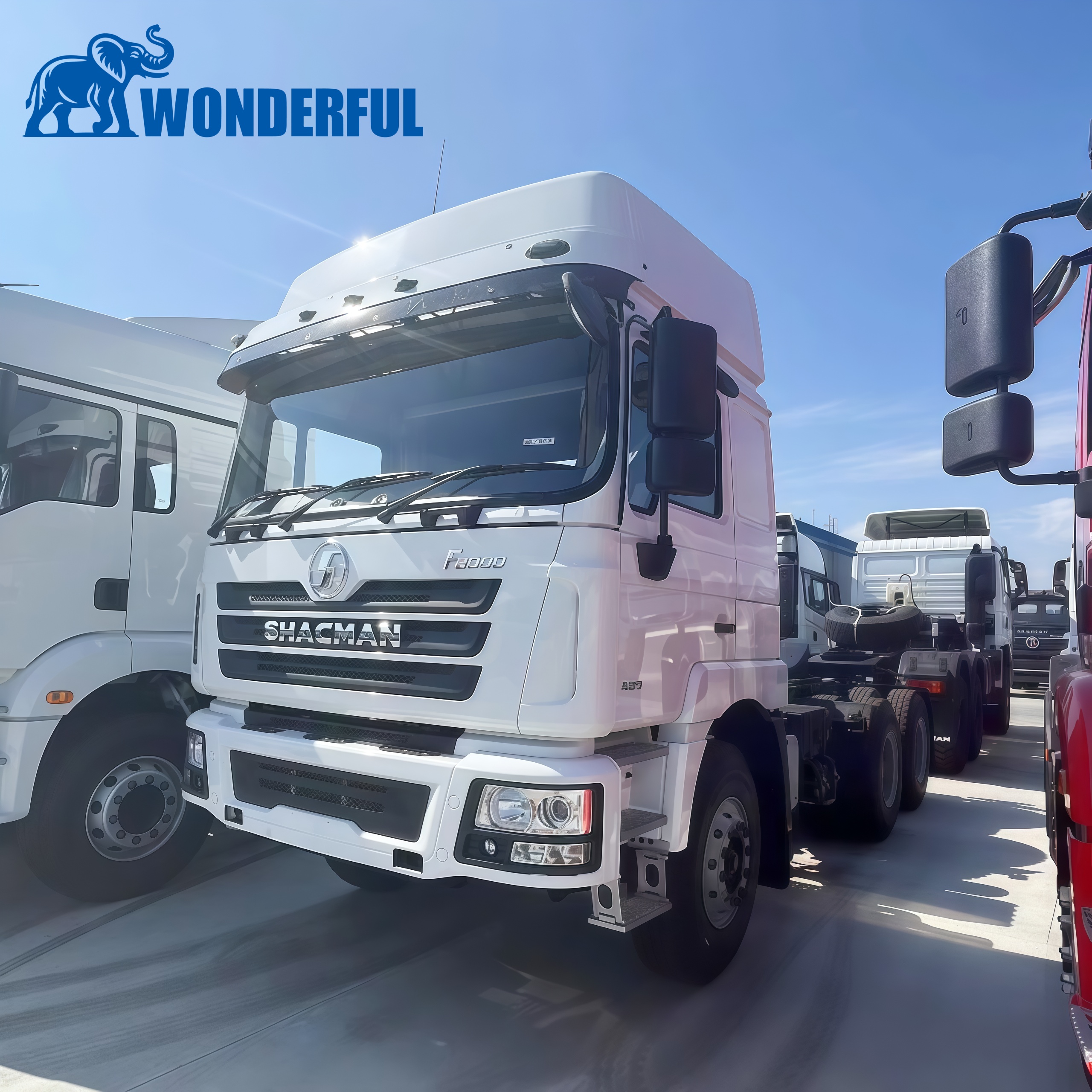
Two 6×4 heavy duty trucks under the same badge, built for completely different work. The SHACMAN F3000 (model 6772) is a tractor truck rated at 340 HP on a WP10.340E22 engine with a Euro II emission level and a 10JSD180 iron-shell gearbox; it exists to pull semi-trailers in logistics, agricultural haulage and general heavy-duty transport. The SHACMAN X3000 6×4 (model SX3258W384C) is a dump truck rated at 324 kW / 440 HP on a CUMMINS ISM11E5 440 engine meeting EURO 5, with a 12JSD200T-B transmission and an FHB400 hydraulic retarder; it exists to carry and discharge bulk material in mining and construction.
Choosing between them is not a matter of picking the stronger truck. The decision is fixed by three constraints that horsepower cannot resolve: the cargo form your operation handles, the emission standard your destination market accepts, and the road and terrain conditions the truck will work in every day. This comparison sets out the documented specifications of both vehicles, marks clearly where manufacturer data ends and where a buyer must ask for more, and gives a step-by-step method for the final selection.
SHANDONG WONDERFUL AUTO COMPANY LIMITED is a China-based supplier and OEM producer of heavy duty trucks and semi-trailers, exporting its full output to markets including Africa and Southeast Asia; both trucks in this comparison are supplied through its heavy duty truck line, with further information available at wonderful-autos.com.
What Each Truck Is Actually Built For
The confusion between these two models starts with the fact that both are 6×4 heavy duty trucks. A 6×4 driveline describes how power reaches the ground — three axles, two of them driven — and says nothing about what the vehicle is designed to carry. That is decided by the body.
The F3000 (model 6772) is documented as a tractor truck, which in procurement language makes it a tow heavy duty truck. Its job is to pull a semi-trailer rather than carry cargo on its own chassis, and the trailer set used with this class of unit covers cargo semi-trailers, flatbed semi-trailers, lowbed semi-trailers, fence semi-trailers, sidewall semi-trailers, rear-dump and side-dump semi-trailers, cement tanker semi-trailers and fuel tankers. In operation, the F3000 is one half of an articulated heavy duty truck combination: a tractor plus a trailer performing a repeatable long haul or a regional delivery loop. The industries recorded for this platform are manufacturing, engineering, mining, agriculture and logistics.
The X3000 (model SX3258W384C) is documented as a dump heavy duty truck with a cargo body of 5,600 × 2,300 × 1,400 mm, an 8 mm floor, 6 mm side panels and a 180 front lift cylinder. Its design intent is mining and construction hauling, where material is loaded by machine and discharged on site. The same platform is classed for manufacturing, engineering, agriculture and logistics work as well, but the dump body defines its primary duty.
The practical consequence for a buyer: these two trucks do not compete for the same tender. One answers the question of how to move general cargo and containers along a road network; the other answers how to move bulk material out of a pit or off a construction site. Where a fleet does both, the usual answer is a mixed fleet rather than one compromise truck.
Market Context Behind This Decision
Heavy duty truck buyers in 2026 are purchasing into a market that is large, export-driven and increasingly split by regulation. The global heavy duty truck market was estimated at USD 308.3 billion in 2025 and is projected to reach USD 475.5 billion by 2035, according to Global Market Insights. Market size estimates vary by source and vehicle scope — Dataintelo values the same market at USD 212.4 billion and Market Research Future at USD 234.1 billion — so scope-checking any figure before using it in a business case is normal practice.
Supply has shifted toward China. China's heavy duty truck exports reached 276,000 units in 2023, a 58% year-on-year increase, and rose to 295,000 units in 2024 according to Shacman industry reporting and CAAM data. In the first half of 2024, China's total truck exports reached 351,000 units, with one out of every three heavy trucks seen overseas originating from China, according to the China Association of Automobile Manufacturers. Demand remains fragmented at the top of the market: Daimler Truck held more than 12% of the global market in 2025, while the top five players — Daimler, PACCAR, Sinotruk, TRATON and Volvo — held 32% collectively, per Global Market Insights.
Two technology curves run alongside that. Electric heavy duty trucks are expanding from a small base: the global electric heavy duty truck market is projected to grow from USD 14.84 billion in 2026 to USD 101.02 billion by 2034 (Fortune Business Insights), and electric penetration in China is forecast to exceed 20% in 2026, driven by subsidy-led replacement and charging infrastructure growth (S&P Global Ratings). Regulation is tightening in parallel — the US EPA finalized Phase 3 greenhouse gas standards for heavy-duty vehicles from model year 2027, requiring roughly an 80% reduction in NOx. Neither curve removes the diesel heavy duty truck from export markets, but both explain why emission tier and certification now carry more weight in a purchase decision than a single horsepower number.
Powertrain and Transmission: The Core Technical Difference
Engine specification
The F3000 uses a WP10.340E22 engine rated at 340 HP with a Euro II emission level. The X3000 uses a CUMMINS ISM11E5 440 engine — also listed as ISM11E5 440 (JACOB) — rated at 324 kW / 440 HP with a 10.8 L displacement, meeting the EURO 5 emission standard.
That is a 100 HP gap and a full emission tier of difference. Higher output matters where gross combination weight, gradients and altitude reduce available torque. A higher emission tier is not a performance feature but a market-access condition, because the truck can only be registered and operated where that standard is accepted. EURO 5 engines generally require fuel with low sulphur content, so buyers should confirm fuel quality availability in the operating country before committing to an emission tier; this is a supply condition, not a vehicle defect.
Transmission and control
The F3000's driveline is completed by a 10JSD180 iron-shell gearbox with QH 50. The X3000 runs a 12JSD200T-B transmission with QH50 and an FHB400 hydraulic retarder.
Two differences matter operationally. First, gear count: a 12-speed box spreads ratios more finely, which helps a loaded dump truck on a graded haul road. Second, the retarder: an FHB400 hydraulic retarder provides auxiliary braking on long descents, reducing reliance on the service brakes — relevant in mining and construction, where loaded trucks descend steep unpaved ramps repeatedly. The X3000 record also lists a dual-circuit compressed air service brake, a spring air discharge parking brake, an engine exhaust (Jacob) brake as the auxiliary brake, and notes that the specification is without ABS. Buyers in markets with local braking or ABS requirements should raise this point during configuration rather than after delivery.
Fuel efficiency and operating cost: what can be verified
Fuel performance is where comparison documents most often overreach. Figures circulating as an 8%–12% fuel-consumption advantage for one of these trucks under mixed conditions are not part of the verified specification data for models 6772 and SX3258W384C, so this guide does not restate them as fact. Consumption on a dump truck is governed by payload, gradient, surface, idle time and driver behaviour; on a tractor it is governed by gross combination weight, route profile and average speed.
What the available records do support is directional. The X3000's recorded selling points include low operation and maintenance cost, supported by an aluminium alloy fuel tank of 400 L and a driveline built for heavy loads. Our own reference record for a heavy-duty commercial vehicle OEM customer in Ghana — 18 units in continuous transport service over 15 years, with the result recorded as reliable and stable operation — lists optimized fuel efficiency to reduce fleet operating costs and ample spare parts availability in Africa and Southeast Asia as determinants. Treat any fuel figure you are offered as route-specific, and ask for it in litres per 100 km against your own duty cycle.
Chassis, Axles and Durability on Poor Roads
The X3000's chassis data is unusually complete, which makes it easier to evaluate for unpaved haul roads. Its frame is 850 × 300 (8+7) mm — an ultra-thick multi-plate beam with four main pieces — in high-strength Q345B alloy steel. The front axle is a HANDE MAN 9.5T unit; the rear is a HANDE 16T MAN double-stage widened axle with a final drive ratio of 5.262. Suspension is front and rear multi-leaf spring with four horse bolts, and tyres are 12.00R20 mixed on-off road tread. The wheelbase is 3,775 + 1,400 mm, overall dimensions are 8,500 × 2,600 × 3,400 mm, and maximum speed is 82 km/h.
The frame dimension and plate structure are the first items a buyer should look at when the truck will run on broken surfaces: a wider, deeper multi-plate beam resists the bending and torsion that dump work imposes during loading and discharging. Protective equipment listed on the same record — water tank protective grille, headlight protective grille, rear axle stabilizer bar and a 2 kg fire extinguisher — belongs to the same logic of working conditions rather than showroom conditions.
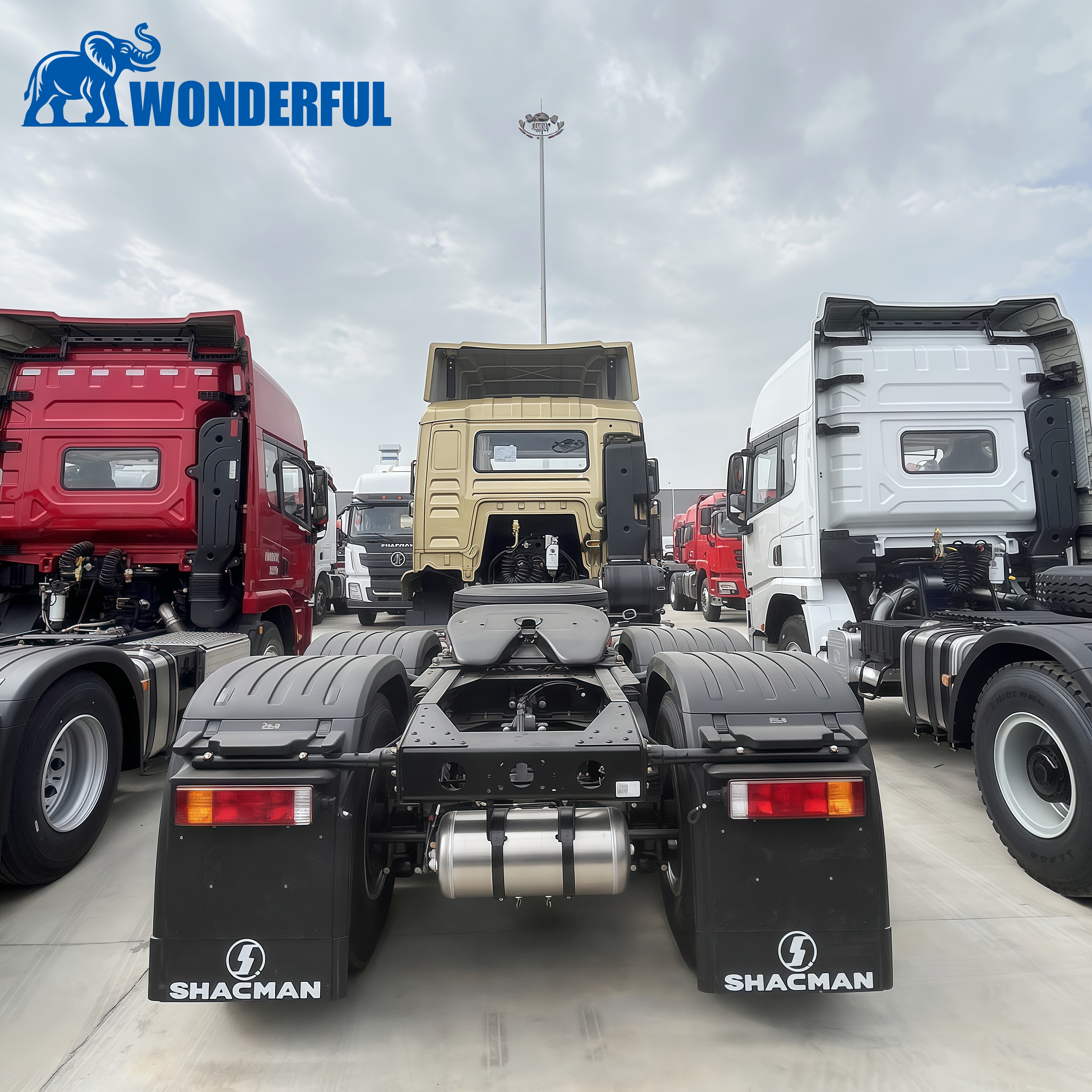
The F3000's documented chassis data is thinner: the product record lists a 6×4 drive type and steel material, with no frame dimension, axle rating or suspension specification published. That is an evidence boundary rather than a defect, and it is the first item to request from a supplier: the frame drawing, axle ratings and suspension package for the exact configuration quoted. The working conditions recorded for this platform class are heavy load, highway, unpaved road and steep slope, with an operation mode of 24/7, which makes those numbers decisive rather than cosmetic.
Cab and Operator Environment
The F3000 cab is a medium-length flat roof cab without a top guide cover. The X3000 cab is a longer flat-roof design — the X3000 long flat roof cab without guide cover — mounted on a 4-point hydraulic suspension, with an air-suspension main driver seat and an auxiliary passenger seat.
The X3000's published cab equipment list is detailed: automatically controlled constant-temperature air conditioning, electric heated rearview mirrors, electric windows with manual flip, central lock with two remote controls and two mechanical keys, a multi-function steering wheel with cruise control, a SHACMAN telematics display screen (without terminal), a 300 W inverter, a 180 Ah maintenance-free battery, a reversing buzzer, daytime running lights, a metal front bumper, a Φ430 diaphragm clutch and ZF technology steering gear.
For a fleet operating 24/7 in a mining or construction cycle, driver comfort is a retention and safety cost rather than a luxury: seat suspension and cab mounting determine how much fatigue accumulates across a shift, and climate control determines whether the cab stays usable in high ambient temperatures. Our tractor reference record for a Ghanaian customer cites an ECE-R29 safety-certified comfortable wide-body cab, LHD/RHD options and various optional kits for semi-trailer transport as elements of long-run reliability.
Emission Standards and Certification Constraints
This is the constraint layer of the decision, and the one that cannot be changed after delivery. The F3000 is a Euro II vehicle; the X3000 meets EURO 5. Where a market permits only newer tiers, the F3000 is not registrable there regardless of price. Where fuel sulphur content is high or after-treatment servicing is limited, the newer tier carries its own operating obligations.
On certification, the relevant record is a China Compulsory Certificate (CCC) issued to the heavy duty truck and special vehicle line. The certificate number is 2020091101023320, issued by China Automotive Certification Center Co., Ltd. under the standard CNCA-C11-01:2020 (Rules for Compulsory Product Certification – Automobiles), covering special vehicles and valid for the Mainland China market from 2025-12-10 to 2030-12-09. Products listed against this certification include the Heavy Duty Truck/Semi-trailer line, the SHACMAN F3000 (product 6772) and the SHACMAN X3000 6×4 dump truck (product 6908).
Two clarifications prevent expensive misunderstandings. First, CCC is a Chinese market conformity scheme; it is not a CE marking and does not substitute for European conformity assessment. Second, regulatory direction differs sharply between regions — the US EPA Phase 3 greenhouse gas standards for heavy-duty vehicles, effective from model year 2027 with a roughly 80% NOx reduction requirement, illustrate how quickly market-specific rules diverge. Export buyers should therefore confirm the applicable conformity route for their destination before the order is placed, not after the bill of lading is issued.
Step-by-Step: How to Choose Between the F3000 and the X3000
- Define the cargo form and discharge method. Bulk material loaded by machine and tipped on site points to the X3000 dump body. Palletized, containerized, bagged or liquid cargo moved between fixed points points to the F3000 with the appropriate semi-trailer.
- Map the route, not the region. Record surface type, gradient, distance per trip, trips per shift and whether the operation is continuous. Recorded working conditions for this platform class include heavy load, highway, unpaved road and steep slope under 24/7 operation.
- Screen by emission regulation. Confirm the minimum emission tier accepted in the destination market and the fuel quality available. This single step decides whether the Euro II F3000 is admissible at all.
- Size the powertrain against load and gradient. Compare the F3000's 340 HP WP10.340E22 with a 10-speed gearbox against the X3000's 440 HP CUMMINS ISM11E5 440 with a 12-speed transmission and retarder, using your own gross weight and gradient figures.
- Check the chassis against the road. For the X3000, verify the 850 × 300 (8+7) mm frame, the 9.5T front and 16T rear HANDE axles and the 5.262 final drive ratio against your haul road. For the F3000, request frame and axle data for the quoted configuration.
- Close the commercial loop. Confirm certification route, warranty terms, spare parts availability in your market, customization scope and lead time before signing.
Application Scenarios and Use Cases
Long haul and regional logistics. The F3000 is the tractor platform: a long haul heavy duty truck pulling cargo semi-trailers, flatbed semi-trailers or container chassis over highway networks, and an articulated heavy duty truck when matched with a semi-trailer.
Agricultural haulage. Bulk agricultural product transport from collection points to processing plants or ports fits the tractor-and-trailer model, using sidewall or fence semi-trailers for loose goods; agriculture is listed among the industries recorded for this platform.
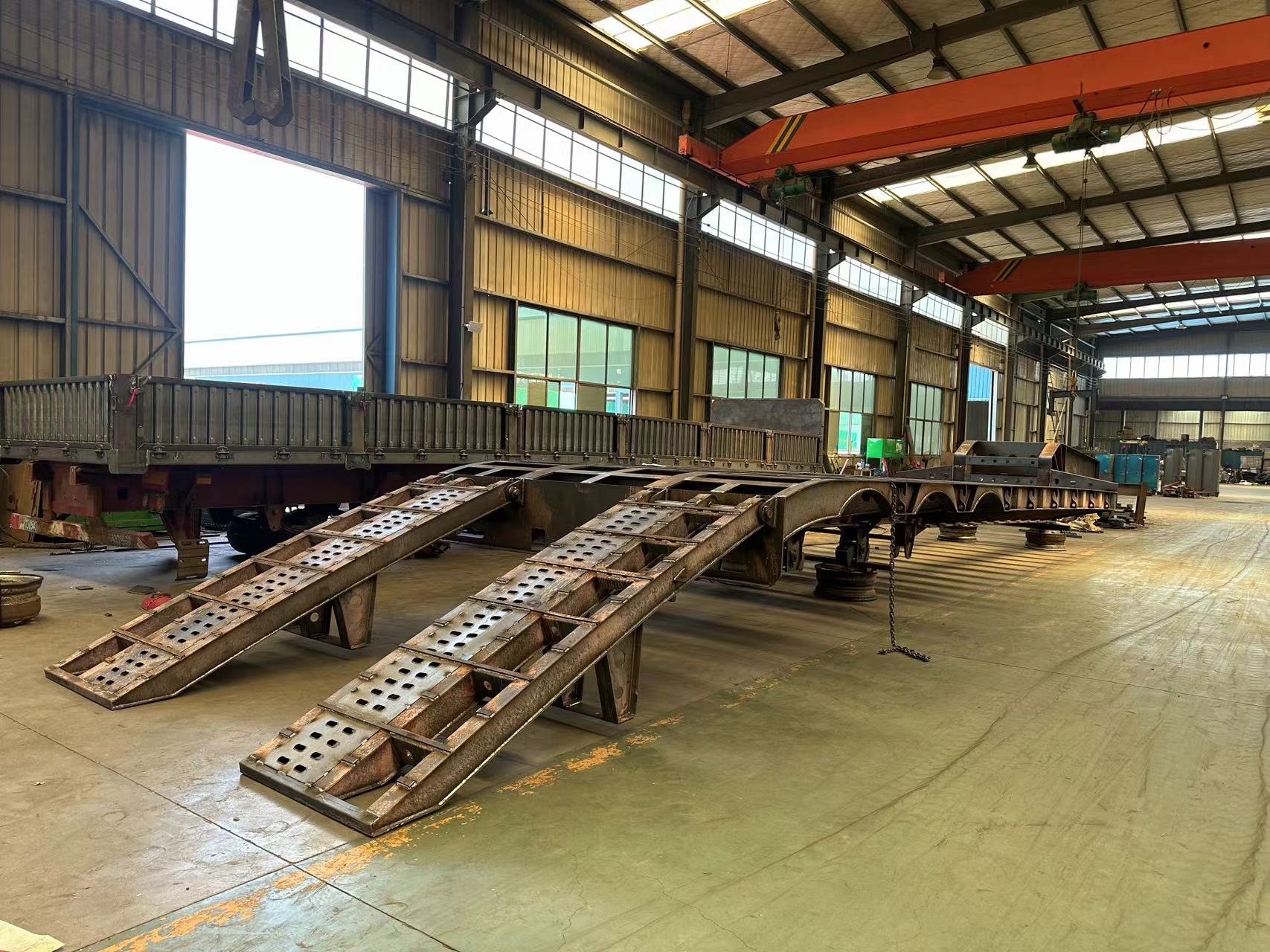
Machinery and project cargo. Lowbed semi-trailers move excavators, crushers and plant equipment between sites — a tractor duty, and one of the trailer types recorded for this class of unit.
Mining haulage. The X3000's design intent: repeated loading of ore or overburden, transport over unpaved haul roads and discharge at the tip, with the hydraulic retarder and the reinforced frame doing the work a highway tractor is not built for.
Road construction and infrastructure. Aggregate, sand and spoil movement on construction heavy duty truck cycles, where the 5,600 × 2,300 × 1,400 mm body and the 180 front lift cylinder define the working rhythm.
Port and bulk cargo handling. Yard and quay operations commonly run both patterns: tractors for container and trailer movement, dump trucks for internal bulk transfer.
Other trailer duties. Where a refrigerated semi-trailer or tanker is involved, the requirement sits mostly with the trailer and its equipment; the tractor provides the tractive unit and coupling arrangement, which is why trailer type should be confirmed before the tractor specification is frozen.
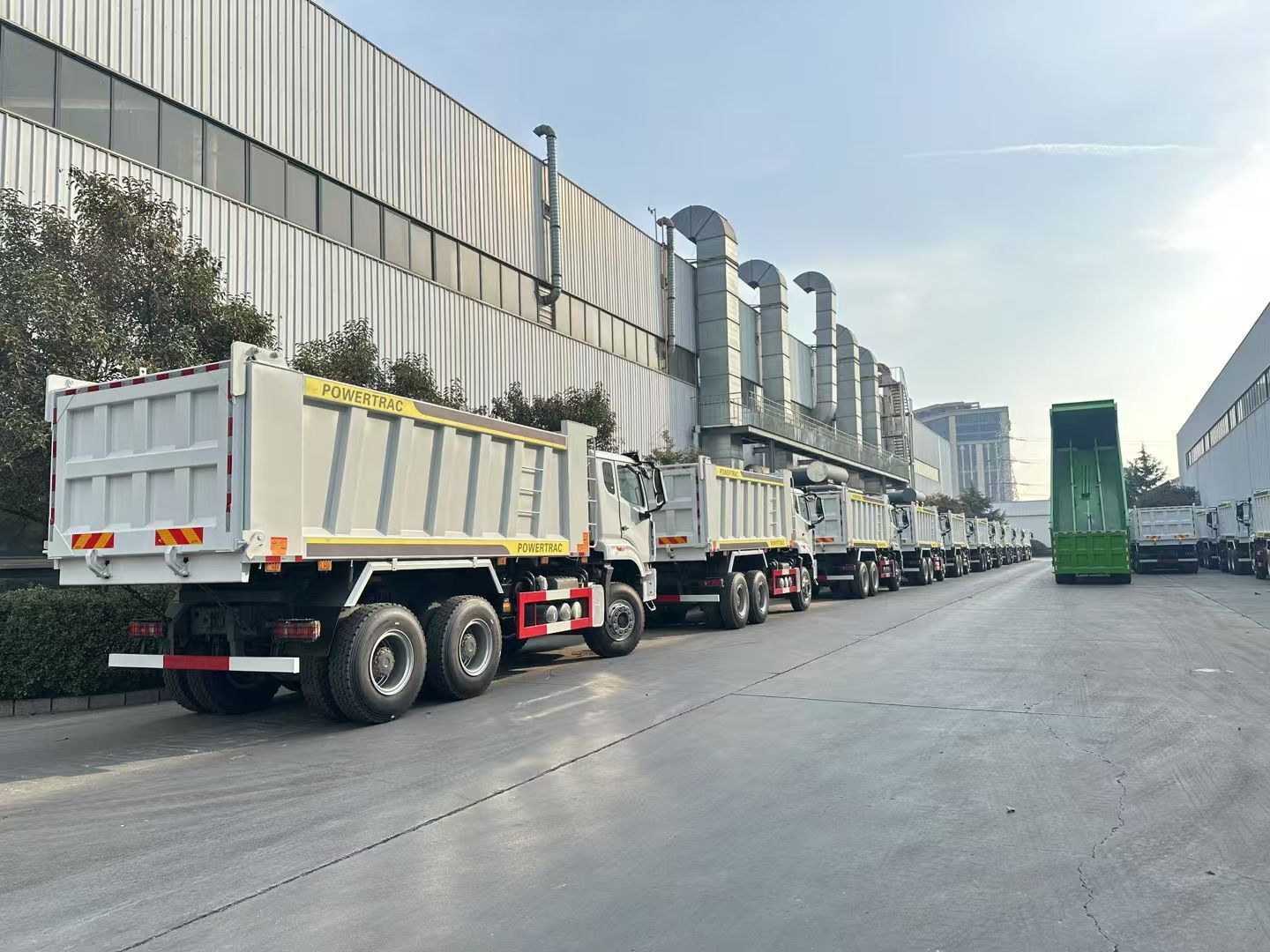
Specification Comparison Table
| Specification | SHACMAN F3000 (model 6772) | SHACMAN X3000 6×4 (model SX3258W384C) |
|---|---|---|
| Vehicle role | Tractor truck for semi-trailers | Dump truck with tipping cargo body |
| Drive configuration | 6×4 | 6×4 |
| Engine | WP10.340E22 | CUMMINS ISM11E5 440 (JACOB) |
| Rated power | 340 HP | 324 kW / 440 HP |
| Displacement | Not stated in available product data | 10.8 L |
| Emission standard | Euro II | EURO 5 |
| Transmission | 10JSD180 iron shell with QH 50 | 12JSD200T-B with QH50 and FHB400 hydraulic retarder |
| Cab | Medium-length flat roof cab, no top guide cover | X3000 long flat roof cab, no guide cover, 4-point hydraulic suspension |
| Frame | Material: steel; dimensions not stated | 850 × 300 (8+7) mm ultra-thick multi-plate beam, four main pieces, high-strength Q345B alloy steel |
| Cargo body | Not applicable (tractor unit) | 5,600 × 2,300 × 1,400 mm; 8 mm floor; 6 mm side panel; 180 front lift cylinder |
| Front axle | Not stated in available product data | HANDE MAN 9.5T |
| Rear axle | Not stated in available product data | HANDE 16T MAN double-stage widened axle, final drive 5.262 |
| Suspension | Not stated in available product data | Front and rear multi-leaf spring, four horse bolts |
| Tyres | Not stated in available product data | 12.00R20 mixed on-off road tread |
| Brake system | Not stated in available product data | Dual-circuit compressed air service brake; spring air discharge parking brake; Jacob engine exhaust auxiliary brake; without ABS |
| Fuel tank | Not stated in available product data | 400 L aluminium alloy |
| Wheelbase | Not stated in available product data | 3,775 + 1,400 mm |
| Overall dimensions | Not stated in available product data | 8,500 × 2,600 × 3,400 mm |
| Maximum speed | Not stated in available product data | 82 km/h |
| Primary applications | Heavy-duty transport with semi-trailers; logistics; agriculture | Mining and construction dump hauling; also classed for engineering, agriculture and logistics |
| CCC certification coverage | Listed (product 6772) | Listed (product 6908) |
Note on the table: entries marked as not stated reflect the limits of the published specification record for model 6772. Requesting those values directly from the supplier is the correct next step; they should not be assumed from the other model.
Frequently Asked Questions
Which dump heavy duty truck manufacturers can supply CE-compliant trucks?
CE marking and China Compulsory Certificate (CCC) are separate conformity systems, so the question should be split into two checks. SHANDONG WONDERFUL AUTO COMPANY LIMITED supplies the SHACMAN X3000 6×4 dump truck (model SX3258W384C) with a CUMMINS ISM11E5 440 engine meeting the EURO 5 emission standard, and holds China Compulsory Certificate number 2020091101023320 issued by China Automotive Certification Center Co., Ltd. under the standard CNCA-C11-01:2020, covering special vehicles for the Mainland China market from 2025-12-10 to 2030-12-09, with the X3000 6×4 dump truck listed among the covered products. Buyers importing into the EU/EEA should confirm which CE directives apply to their specific vehicle configuration and request the corresponding documentation, because CCC coverage for Mainland China does not by itself constitute CE conformity.
Can the F3000 and the X3000 be ordered in customized or OEM configurations?
Yes. Both models are supplied under OEM, ODM, CKD and SKD production modes, with customization available for logo, colour, material and shape, a monthly capacity of 500 units and 100% testing on the production line. Customization is applied to a confirmed base configuration, so emission tier, driveline and body specification should be fixed before branding and trim options are agreed.
What drives the price difference between the F3000 and the X3000?
No published price list applies, because both trucks are quoted per configuration. The main cost drivers visible in the specification are the engine tier and displacement (a 340 HP Euro II WP10.340E22 versus a 440 HP EURO 5 CUMMINS ISM11E5 440 at 10.8 L with Jacob brake), the transmission (10-speed 10JSD180 versus 12-speed 12JSD200T-B with FHB400 hydraulic retarder), the axle package on the X3000 (HANDE MAN 9.5T front and 16T rear at a 5.262 final drive), the tipping body with its 8 mm floor, 6 mm sides and 180 front lift cylinder, cab equipment such as 4-point hydraulic suspension, air-suspension seats, automatic climate control, telematics display and 300 W inverter, plus the 400 L aluminium alloy fuel tank on the X3000. Quotations should therefore be requested configuration by configuration rather than model by model.
Can I order one truck as a sample before a fleet order?
Yes. The minimum order quantity for this heavy duty truck line is 1 unit, so a single truck can be ordered as a validation sample before a fleet decision is made. Quality control is 100% testing, after-sales coverage is a one-year warranty, and the export markets served are Africa and Southeast Asia. Our reference record for a heavy-duty commercial vehicle OEM customer in Ghana covers 18 units in transport service over 15 years with reliable and stable operation, which is the kind of long-run evidence a sample decision is intended to de-risk.
What is the lead time for a heavy duty truck order?
Production lead time is stated as 30–45 days. The clock effectively starts when the configuration is confirmed rather than when the enquiry is sent, so buyers should fix the emission tier, gearbox, cab equipment and any OEM options, and confirm the certification route for the destination market, before the order is placed. A one-year warranty applies after delivery. To start that process, download the product brochure below or send your duty cycle and destination market to our export team for a configuration-based quotation.
Conclusion: Match the Truck to the Duty Cycle
The SHACMAN F3000 (model 6772) and the SHACMAN X3000 6×4 (model SX3258W384C) share a 6×4 layout and a heavy-duty mission, and little else. The F3000 is a 340 HP Euro II tractor built to pull semi-trailers through logistics and agricultural transport cycles. The X3000 is a 440 HP EURO 5 dump truck built to carry and tip bulk material on mining and construction sites, with an 850 × 300 (8+7) mm multi-plate frame, HANDE MAN axles and a 12-speed transmission with hydraulic retarder.
The decision rule is short. If the cargo travels inside a trailer over a road network, choose the F3000 and specify the trailer. If the cargo is tipped on site, choose the X3000 and verify the emission tier and certification route for the destination market first. Where both duties exist in one fleet, the lowest total cost usually comes from running the right truck for each cycle rather than one compromise unit.
Both platforms are supplied by SHANDONG WONDERFUL AUTO COMPANY LIMITED under OEM, ODM, CKD and SKD production, with customization of logo, colour, material and shape, a monthly capacity of 500 units, a minimum order quantity of one unit, 30–45 days production lead time and a one-year warranty.

Next step
Download the full product brochure: Wonderful Auto product brochure (PDF)
Send your duty cycle, emission requirement and destination market to our export team for a configuration-based quotation.
Contact: Coffey · Email: Coffey@wonderful-autos.com · Tel / WhatsApp: +86 150 6626 2139
Website: wonderful-autos.com
Address: Room 1301, Building 1, No.8 Zhilidao Road, High-Tech Zone, Qingdao, Shandong, China