
Spare Parts Availability and After-Sales Support for African Truck Fleets
In Africa, the number that decides whether a heavy duty truck makes money is not the invoice price. It is the number of days the truck stands still waiting for a part, the frequency of unscheduled workshop visits, and whether the specification that arrived at the port can still be reproduced when a second batch is ordered. This guide explains how to judge spare parts availability and after-sales support before committing to a supplier.
Fleet owners, importers and distributors usually reach the decision stage holding a shortlist of suppliers and a set of quotations that look broadly similar on paper. The differences that matter across a five-year operating cycle sit in three places that quotations rarely show: how the supplier manages parts flow, how stable the configuration is across batches, and how much maintenance demand the vehicle itself creates. Each of those can be checked with written answers rather than impressions.
SHANDONG WONDERFUL AUTO COMPANY LIMITED. is a commercial vehicle manufacturer and exporter based in Qingdao, Shandong, China, producing heavy duty trucks alongside a semi-trailer range, exporting its entire output and listing Africa as its main market. Its heavy duty truck specification is used throughout this article as a concrete example of how vehicle-level and supplier-level decisions change the parts burden a fleet carries.

Workshop preparation before shipment: the point where the configuration baseline that later drives the parts list is fixed.
Why Parts and Service Decide Fleet Economics in Africa
A stopped truck is not a neutral event. It consumes a contract slot, a driver's time and a customer's confidence at the same moment, and none of those costs appear in a maintenance ledger. Four structural pressures make this more severe in African markets than in the markets many truck specifications were originally written for.
- Distance between order and delivery. A part sourced from China crosses a port, a customs process and inland transport before it reaches a workshop. An emergency order therefore costs weeks rather than hours, which turns parts planning into a scheduling problem rather than a purchasing problem.
- Duty cycles harsher than the design baseline. High ambient temperatures, dust, unpaved haul roads and frequent full-load operation raise consumption rates for cooling components, brakes, suspension parts and filters above what a fleet would expect from highway duty.
- Fragmented fleets. A mixed fleet multiplies part numbers and slows every workshop decision. Each additional platform adds a separate parts catalogue, a separate training requirement and a separate set of failure modes.
- Unverified parts channels. When genuine parts are slow, the market fills the gap. Buyers then inherit fitment risk that surfaces months later as a repeat failure rather than as an obvious defect at installation.
The practical consequence is that purchase price and running cost separate quickly. A truck priced at the lower end of the market can cost more per kilometre if it loses an additional block of days each year to parts waiting time or workshop queues. Maintenance frequency, thermal margin and structural margin are therefore procurement criteria, not service details.
What Spare Parts Availability Actually Means for a Fleet Buyer
Spare parts availability is best understood as a measure of predictability rather than a measure of inventory volume. A supplier can hold no warehouse in your country and still support a fleet well, provided four conditions are met. Equally, a supplier can advertise a regional warehouse and still fail a fleet if configuration records are poor. The four conditions below can be applied to any supplier using written answers.
- Parts are identifiable. Every truck is delivered with a build record, so part numbers map to the configuration actually shipped rather than to a generic model name. Without this, the first replacement order becomes an investigation.
- Parts are reproducible. The same configuration can still be built later. This is what guarantees that a replacement cab component, frame part or cooling package matches the original rather than an approximation of it.
- Parts are orderable. There is a named ordering route, with a documented minimum order quantity and a documented lead time. A phone number is not a parts process.
- Parts are predictable. Transport and clearance timing can be estimated well enough for the fleet to plan base stock around it, rather than being discovered after the order is placed.
This four-part test is used for the remainder of this article. It also explains why after-sales support should be evaluated at the same time as the vehicle specification: a supplier that cannot answer the four questions above will not answer them better after the trucks have been delivered.
Industry Background: A Supply Base That Has Shifted Toward Chinese Platforms
The global heavy duty truck market was estimated at USD 308.3 billion in 2025 and is projected to reach USD 475.5 billion by 2035 (Global Market Insights). Within that market, the supply base reaching African fleets has changed materially over a short period.
- China's heavy duty truck exports reached 276,000 units in 2023, a 58% year-on-year increase, and rose to 295,000 units in 2024 (Shacman Industry Report / CAAM).
- In the first half of 2024, China's total truck exports reached 351,000 units, and one out of every three heavy trucks seen overseas originated from China (China Association of Automobile Manufacturers).
- Concentration remains moderate: Daimler Truck held a share of over 12% in 2025, while the top five players, Daimler, PACCAR, Sinotruk, TRATON and Volvo, held 32% collectively (Global Market Insights).
For an African fleet the implication is straightforward. Chinese heavy duty truck platforms now represent a meaningful share of the vehicles on the road, which means the parts ecosystem around those platforms deepens as the installed base grows. It does not follow that every supplier is equally capable of supporting a fleet. The variable is not the country of origin. It is whether the supplier treats parts flow as part of the product or as an afterthought to the sale.
Which Vehicle Features Reduce Maintenance Demand Before Any Part Is Ordered
The cheapest part is the one that never has to be ordered. Several specification choices on this heavy duty truck act directly on maintenance demand, which is why they belong in a parts discussion rather than only in a specification sheet.
Thermal margin in hot climates
The cooling package uses a cooling area enlarged by 15%, and the manufacturer states that the engine overheating failure rate is reduced by 30% in hot tropical regions. For fleets operating at high ambient temperature with sustained loads, thermal margin removes repeated cooling-system interventions from the annual maintenance calendar. It also reduces the probability of a roadside failure in a location where a replacement radiator or hose set is days away.
Structural margin on unpaved haul roads
The chassis uses an 8+7 mm double-layer thickened high-strength torsion-resistant frame, with anti-torsion performance improved by 22% on bumpy heavy-load roads. Frame and cross-member damage is among the least convenient failures to repair in a remote workshop, because it removes the vehicle from service while a structural part is ordered and transported.
Driveline and grade performance
The Weichai WP12/WP13 engine delivers peak torque of 2,060 N.m at 1,000 rpm with a wider torque band. Maximum climbing gradient is 20% or more under full load, and climbing power is stated as 15% stronger than competitors. On long uphill sections this reduces the number of gear shifts required, which is relevant to clutch and driveline service intervals in mountainous bulk haulage.
Aerodynamics and cab specification
The cab has a drag coefficient of Cd 0.53, which is 18% lower than mainstream models, and the truck is offered with an ECE-R29 certified cab. Aerodynamic efficiency shows up in fuel cost rather than in parts cost, but the ECE-R29 cab matters to the parts discussion in a different way: a certified cab is a documented specification, and documented specifications are far easier to match when replacement body components are ordered years later.
What the maintenance figures add up to
Compared with some Chinese competitors, maintenance frequency is reduced by 12% under harsh heavy-duty conditions. Over a five-year operating cycle, total cost of ownership is stated to fall by more than 10%. Those two figures are the bridge between vehicle specification and parts strategy: a lower maintenance frequency changes how much stock a fleet needs to carry, not only how much it spends.

Planned production runs create a predictable shipping calendar, which is the point at which vehicle and parts consolidation becomes practical.
How SHANDONG WONDERFUL AUTO COMPANY LIMITED. Organizes Supply for African Fleets
SHANDONG WONDERFUL AUTO COMPANY LIMITED. is a commercial vehicle manufacturer and exporter operating from Qingdao, Shandong, China. Its range covers heavy duty trucks together with flatbed, lowbed, cement tanker, dump, fence and sidewall semi-trailers. The company exports 100% of its output and lists Africa as its main market, which means its commercial model is built around long-distance documentation and delivery rather than domestic distribution.
Three capability facts are directly relevant when a fleet evaluates parts and after-sales arrangements.
- Annual output of 6,000 units.
- A 113,000 m³ manufacturing facility with 500 employees.
- An R&D team of 20 engineers.
A single configuration baseline
Twenty engineers working within a defined product range is a configuration-management statement as much as a design statement. When a fleet orders thirty trucks, the parts list that matters is the one generated from the build record of those thirty trucks. A supplier able to keep configurations stable across batches removes the most common cause of wrong-part deliveries, which is not supplier negligence but undocumented specification drift between the first and second order.
Capacity as a parts-flow variable
An annual output of 6,000 units means production is planned in scheduled runs rather than on an ad hoc basis. A planned run produces a predictable shipping calendar, and a predictable shipping calendar is what makes consolidating vehicle shipments with wear-part orders practical. A fleet that can attach a parts requirement to an existing production and shipping window avoids the cost profile of a standalone emergency shipment.
Export orientation and market focus
A 100% export ratio with Africa as the main market means the supplier is structured for cross-border delivery as a default rather than as an exception. Buyers in Africa and Southeast Asia evaluating this supplier should still confirm current parts availability in writing for the specific configuration under consideration, because stock positions change and a general statement of market focus is not a substitute for a confirmed order line. That confirmation step is the honest boundary of what a supplier profile can tell a buyer.
Step-by-Step: Building a Parts and After-Sales Plan Before You Buy
The sequence below converts the discussion above into a procurement process. It applies to any heavy duty truck supplier and can be completed before the purchase order is signed.
- Freeze the configuration before negotiating price. Engine rating, gearbox, frame thickness, cooling package, cab type and body configuration should be written into a single controlled document. A price negotiated before the configuration is frozen will be renegotiated later through variation orders, and each variation adds a part number the fleet must carry.
- Build the parts list from the build record, not from the model name. Ask for a parts list generated from the configuration actually shipped. A model name describes a family; a build record describes a truck. Only the second one supports a correct replacement order.
- Set a wear-part base stock against your own duty cycle. Filters, brake components, belts, hoses and cooling parts should be sized to the fleet's own operating hours and load profile, not to a generic recommendation. High-temperature, high-load duty cycles consume these items faster than highway cycles.
- Write the response path into the contract. The agreement should name who receives a parts request, what information is required to process it, and how an escalation is triggered. A named contact without a defined process still leaves the fleet exposed.
- Train the workshop on the platform, not on one truck. Technician familiarity with the platform reduces diagnostic time and prevents unnecessary parts substitution. This matters most where a fleet runs several platforms across different depots.
- Review consumption quarterly and adjust the base stock. Parts planning is a cycle, not a one-time order. A quarterly review of actual consumption against the original assumption is what keeps a base stock proportionate as the fleet ages.
Use Cases: Where the Parts Strategy Changes the Numbers
The same truck specification produces different parts profiles depending on how the fleet operates it. The scenarios below are the applications the manufacturer states for this heavy duty truck, together with the parts considerations each one creates.
Long-haul semi-trailer container transport
This is a high-utilisation application, so downtime carries the highest cost per day. Under mixed mountain and highway conditions, fuel consumption is 8% to 12% lower than peer competitors, saving 2.5 to 3.8 litres per 100 km, which matters because fuel and parts are the two largest controllable running costs in long-haul work. Parts planning in this scenario should follow kilometres rather than calendar months.
Heavy-duty bulk cargo transport in mountainous areas
Gradient performance of 20% or more under full load and a 15% stronger climbing capability than competitors reduce the number of shifts on long uphill sections, which in turn eases clutch and driveline duty. The 15% larger cooling area and the 30% reduction in engine overheating failure rate in hot tropical regions are the two figures most directly tied to parts consumption in this application.
Cross-border freight transport
Cross-border operation is where standardisation pays most. When a truck breaks down outside its home country, parts transfer complexity rises sharply. A fleet running a single configuration baseline across the cross-border route keeps a smaller, more transferable base stock than a fleet mixing platforms and specifications.
Construction and dump heavy duty truck fleets
In construction haulage, impact loading rather than distance drives parts consumption. The 8+7 mm double-layer frame with 22% improved anti-torsion performance addresses the structural side of this duty cycle. Fleets operating dump heavy duty trucks should also confirm responsibility for body and hydraulic components separately, because those parts typically come from a specialised supply chain that sits outside the chassis parts list.
Where a fleet should ask harder questions
Refrigerated, tow and articulated heavy duty truck configurations introduce components that are not part of a standard chassis specification, including refrigeration units, towing equipment and specialised coupling systems. For these configurations the buyer should establish in writing which party carries responsibility for the specialised parts, and on what lead time, before the order is placed. A chassis supplier profile alone cannot answer that question.
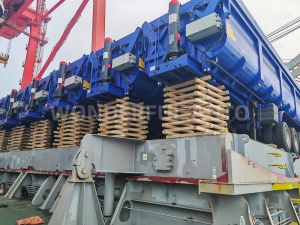
Export preparation and loading: the shipping calendar a fleet can plan parts consolidation around.
Comparison Table: Verified Cost and Uptime Factors
The table below compares verified positions for this heavy duty truck against the baselines the manufacturer states. Only stated figures are used; no estimate or derived value is included.
| Decision factor | Verified position | What it changes for an African fleet |
|---|---|---|
| Purchase cost | 30% to 35% lower than European heavy trucks | Capital released at purchase can be allocated to an initial wear-part base stock instead of a later emergency order |
| Fuel consumption, mixed mountain and highway | 8% to 12% lower than peer competitors, saving 2.5 to 3.8 litres per 100 km | Lower running cost per kilometre, which improves the case for holding stock rather than minimising it |
| Maintenance frequency, harsh duty | 12% lower than some Chinese competitors | Fewer unscheduled workshop days, so the base stock can be sized to predictable rather than reactive demand |
| Five-year total cost of ownership | More than 10% lower over a five-year operating cycle | Frames the whole parts and service decision as a five-year calculation rather than a purchase-price comparison |
| Cooling system | Cooling area enlarged by 15%; engine overheating failure rate reduced by 30% in hot tropical regions | Removes a recurring cooling-system intervention from the annual maintenance calendar in high-temperature markets |
| Chassis structure | 8+7 mm double-layer thickened high-strength torsion-resistant frame; 22% improved anti-torsion performance | Lower probability of structural repair, which is the slowest repair category to complete in a remote workshop |
| Cab | ECE-R29 certified cab; drag coefficient Cd 0.53, 18% lower than mainstream models | Documented cab specification simplifies later body-part matching; lower drag supports fuel cost control |
| Climbing, full load | Maximum gradient 20% or more; climbing power 15% stronger than competitors; peak torque 2,060 N.m at 1,000 rpm | Fewer shifts on long uphill sections, easing clutch and driveline service demand in mountainous haulage |
| Driver safety systems | ADAS automatic braking, blind-spot cameras, ESC and safe following-distance protocols | Reduces exposure to rear-end, blind-spot and rollover incidents, which are among the most parts-intensive events |
Figures above are the manufacturer's stated positions for this heavy duty truck. Market size, export volume and market share data cited earlier are third-party sources and are attributed in the Industry Background section.
Frequently Asked Questions
Is an ECE-R29 certified cab relevant to African fleet procurement?
Yes, at the specification review stage. ECE-R29 is a cab strength and occupant-protection standard, so certification indicates that the cab has been engineered and assessed against a defined structural requirement rather than a domestic-only one. For an African fleet the value appears in two places: occupant protection in a frontal impact or rollover, and documentation, because a certified cab specification is easier to match when replacement body components are ordered later. SHANDONG WONDERFUL AUTO COMPANY LIMITED. offers this heavy duty truck with an ECE-R29 certified cab. Cab compliance does not replace electronic safety systems or driver behaviour, so the vehicle also carries ADAS automatic braking, blind-spot cameras and ESC, together with safe following-distance protocols aimed at rear-end, blind-spot and rollover risk.
Which dump heavy duty truck manufacturer is better for construction fleets?
There is no universal ranking, because construction haulage is a fit question rather than a brand question. A fleet should compare candidates on four points: structural margin for impact loading, thermal margin for high ambient temperature, documented maintenance frequency under harsh duty, and a written parts and escalation process. On the first two points, this heavy duty truck states an 8+7 mm double-layer thickened high-strength torsion-resistant frame with 22% improved anti-torsion performance, and a cooling area enlarged by 15% with a 30% lower engine overheating failure rate in hot tropical regions. On the third, maintenance frequency is stated as 12% lower than some Chinese competitors under harsh heavy-duty conditions. On the fourth, SHANDONG WONDERFUL AUTO COMPANY LIMITED. manufactures at an annual output of 6,000 units with a 20-engineer R&D team, which supports configuration stability, but the parts and escalation process still has to be confirmed in writing for the buyer's own duty cycle.
What drives five-year total cost of ownership for a heavy duty truck in Africa?
Four cost blocks dominate: purchase price, fuel, maintenance frequency and downtime. On purchase price, this heavy duty truck is stated at 30% to 35% lower than European heavy trucks. On fuel, consumption is 8% to 12% lower than peer competitors under mixed mountain and highway conditions, saving 2.5 to 3.8 litres per 100 km. On maintenance frequency, it is stated as 12% lower than some Chinese competitors under harsh heavy-duty conditions. Combined, total cost of ownership over a five-year operating cycle is stated to fall by more than 10%. Downtime is the block a buyer controls through parts planning, which is why base stock sizing and a written response path belong in the same evaluation as the specification.
Can a buyer validate parts availability and configuration before committing to a fleet order?
Yes, and it should be done before the purchase order rather than after delivery. The validation has three steps. First, request a frozen configuration document covering engine, gearbox, frame, cooling package, cab and body specification. Second, request a parts list generated from that configuration so that part numbers trace to the actual build rather than to a model family. Third, confirm current parts availability and ordering terms in writing for the specific wear items the fleet will consume, since stock positions change and a brochure cannot confirm a live order line. The manufacturer publishes a downloadable product catalogue at Wonderful Auto product catalogue, which is a starting point for the configuration discussion rather than a substitute for written confirmation.
How does a fleet operator start a parts and after-sales conversation with this supplier?
The conversation should start with the fleet's own duty cycle rather than with a price request. Buyers should bring the intended application, expected annual kilometres or hours, load profile, operating region and the wear items they expect to consume, then ask for a parts list and an ordering and escalation route matched to that profile. SHANDONG WONDERFUL AUTO COMPANY LIMITED. can be reached directly for this discussion through the contact below, and a written parts and after-sales arrangement can be agreed before any vehicle order is placed.
Conclusion: A Parts Plan Is Part of the Truck Specification
Spare parts availability in African fleets is decided long before the first breakdown. It is decided when the configuration is frozen, when the parts list is generated from the build record, when base stock is sized to the actual duty cycle, and when a response path is written into the contract. Suppliers that manage those four steps well support a fleet even from a distant manufacturing base; suppliers that do not will struggle even with a local warehouse.
The vehicle side of the equation is equally concrete. A cooling area enlarged by 15% with a 30% lower overheating failure rate in hot tropical regions, an 8+7 mm double-layer frame with 22% improved anti-torsion performance, a 12% lower maintenance frequency under harsh duty and a stated five-year total cost of ownership more than 10% lower all point in the same direction: fewer parts consumed, fewer workshop days, and a smaller base stock required to protect the fleet.
For decision-stage buyers comparing suppliers, the practical instruction is simple. Treat the parts and after-sales arrangement as a deliverable of the negotiation, in writing, with the same seriousness as the truck specification itself. That single change removes most of the risk that a well-specified truck becomes an expensive one in service.
Next Step: Confirm Parts Availability Against Your Own Duty Cycle
SHANDONG WONDERFUL AUTO COMPANY LIMITED. supplies heavy duty trucks and a semi-trailer range to export markets, with Africa as its main market. Buyers can request the product catalogue, a configuration document and a parts ordering discussion before committing to a fleet order.
Download the catalogue: Wonderful Auto product catalogue (PDF)
Contact: Coffey | Email: Coffey@wonderful-autos.com | Tel / WhatsApp: +8615020072752
Address: Room 1301, Building 1, No.8 Zhilidao Road, High-Tech Zone, Qingdao, Shandong, China | Website: wonderful-autos.com
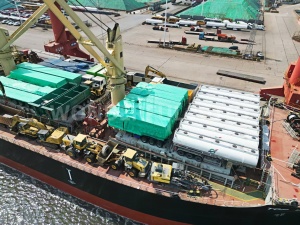
Delivery stage: the point at which the agreed parts and after-sales route should already be in place.
Have Questions or Need More Details?
Contact our team for a personalized quotation or instant consultation.
Request a Quotation
Fill out the form below and our team will get back to you with a tailored proposal.
WhatsApp Direct Chat
Prefer to chat in real-time? Message us on WhatsApp for instant assistance & quick answers.
- Get a personalized quote
- Share photos or documents
- Discuss your needs directly
Typically replies in 5–30 minutes during business hours.