
Cast Parts Compliance: Certifications, Standards & Regions
Cast Parts Compliance: Certifications, Standards & Regions

Cover: a precision-cast inline hydraulic control valve housing — a part family whose compliance route runs through material grade, pressure testing and inspection records, not through a certificate alone.
Compliance for cast parts is a chain of evidence, not a single certificate. Six links have to hold before a shipment is defensible: the material grade on the drawing, the process control behind the casting, the tolerance scheme, the test method, the documentation released with the parts, and the classification under which the goods cross a border. A supplier's ISO 9001 certificate tells you that a management system was audited. It does not tell you which alloy was melted, which tolerance grade was accepted, or which test proved that a pump housing holds pressure.
This guide sets out that chain for precision investment castings. It draws on the documented capability and certification set of SHANGHAI NTC TECHNOLOGY CO., LTD. — a Shanghai-based precision casting manufacturer and trading company founded in 2022, operating a 2,000 m² factory with 20 employees, a five-engineer R&D team and a reported 85% export ratio across Europe, America and Asia (www.shntcmachinery.com) — and on the standards buyers actually write into purchase orders: ASTM, ISO, DIN, BS and JIS.
The output is practical rather than promotional: a six-link compliance model, a sector matrix showing how automotive, marine, food-machinery, construction and fluid-equipment buyers ask for different evidence from the same plant, a material and tolerance baseline, and an RFQ structure plus acceptance-criteria list you can carry into a purchase order.
What Compliance Means for Cast Parts
Most sourcing disputes about castings are not about whether the supplier is certified. They are about scope — what the certificate and the specification were supposed to cover. Three failures repeat.
- Certificate scope mismatch. A management-system certificate carries a stated scope. NTC's ISO 9001:2015 certificate (number 42525Q10018R0S, issued 20 January 2025, valid to 19 January 2028) states the scope “Hardware sales business”. That is the activity the audit covered. A buyer who needs manufacturing-scope evidence should request it by name rather than assume it.
- A standard cited without a grade. “Stainless steel to ASTM” is not a specification. 304, 316, 316L, 17-4PH, 410, 420 and 440C do not behave alike, and neither do carbon steel 1020 and alloy steel 4140. The grade, the condition and the applicable specification have to appear on the drawing.
- No acceptance criteria. Without a named test, a sampling basis, an inspection stage and a document list, “inspection before shipment” is a sentence rather than a criterion that can be enforced.
Compliance, in the sense used here, means the buyer can trace a delivered part back to a stated material grade and condition, a stated process route, a stated tolerance scheme and a stated inspection result — and can show that each of those statements was agreed before production began.
The Standards Landscape Buyers Actually Cite
Casting standards divide into three layers, and most purchases need all three.
Material and process specifications. ASTM A957/A957M is the common-requirements specification for steel and alloy investment castings for general industrial use. On the cast-iron side, ASTM lists A48/A48M-22 for gray iron castings, A126/A126M for pressure-containing gray iron castings, and A278/A278M for valve, flange and pipe-fitting castings; the abrasion-resistant and automotive gray iron specifications (A532/A532M, A823, A834) complete that catalogue. On the steel side, ASTM lists A781/A781M for common requirements, A802 for surface acceptance, A903/A903M for magnetic-particle and liquid-penetrant inspection, A995/A995M for duplex stainless pressure-containing parts and A488/A488M for welding qualification.
Dimensional specifications. ISO 8062-3:2007 specifies general dimensional and geometrical tolerances and machining allowances for castings. NTC documents casting accuracy at tolerance grade T4–CT7 for applicable precision-cast components, with surface roughness at Ra 1.6–Ra 6.3 depending on casting, machining and finishing requirements.
Sector and trade references. For food equipment, the FDA's list of American national standards includes NSF/ANSI 2 (food equipment) and NSF/ANSI 51 (food equipment materials). For customs, HS heading 7325 covers other cast articles of iron or steel.
Two cautions follow. First, a specification defines what a casting must meet; it does not certify the company that makes it, and it does not by itself prove that a delivered lot met it. Second, the list is a menu — the drawing and the purchase order decide which entries actually apply to your part, in your market, at your acceptance level.
Market data is a third and weaker signal. One commercial research estimate places stainless steel at 46.8% of material-type demand in the investment casting market in 2025 (Dataintelo, 2026). That is a market-mix estimate from a single research house, not a compliance requirement, and it should not be used on its own to justify a material choice.
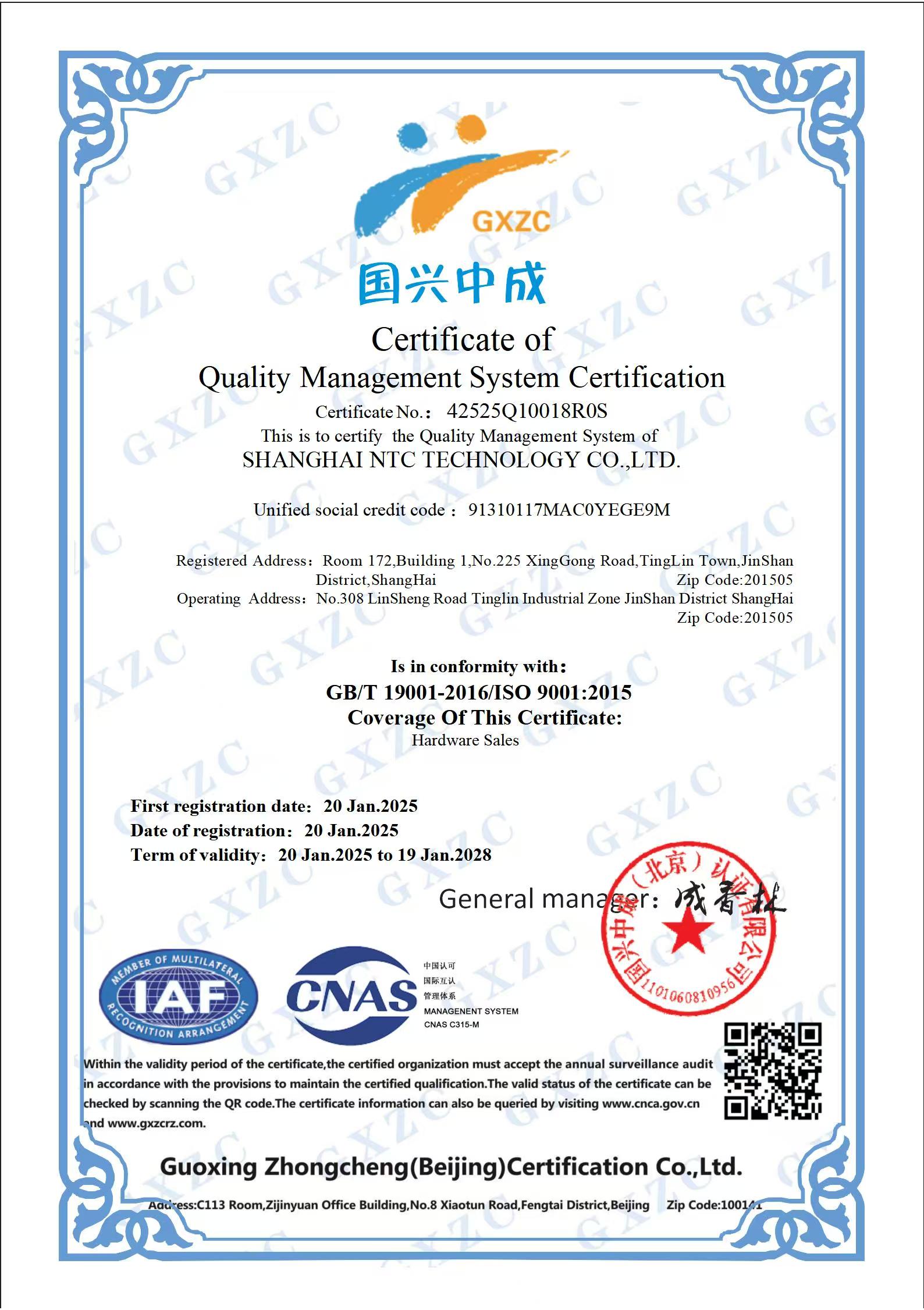
The ISO 9001:2015 certificate is a management-system document with a stated scope — one input to a compliance file, not the whole file.
The Six-Link Compliance Chain
Each link below is something a buyer can put in writing. When all six are written, the certificate becomes supporting evidence rather than the entire argument.
- Material grade and condition. NTC's documented options are carbon steel 1020, 1025, 1030, 1040, 1045 and 1050; alloy steel 4140, 4150, 4340, 8620 and GS-25CrMo4; stainless steel 201, 303, 304, 316, 316L, 17-4PH, 410, 420 and 440C, with 1.4581, SCS14 and SCS16 additionally listed for marine work; aluminium alloy and zinc alloy; brass, bronze and copper alloy; and gray iron or ductile iron such as QT450-10 where the drawing calls for it. Grade alone is not the specification. Heat treatment — annealing, normalizing, quenching, tempering, carburizing or solution treatment — changes the condition you receive, so the order should state both.
- Process route. NTC's core process is silica-sol investment casting, supported by sand casting or die casting where geometry, material and volume point that way. Ask which route will be used, because the route determines which in-process checks are possible and where first-article inspection sits.
- Tolerance scheme. T4–CT7 for applicable precision-cast components, minimum wall thickness 2 mm as standard with 1 mm available in limited local areas subject to process review, minimum outer fillet 0.3 mm and minimum internal fillet 0.5 mm. A tolerance grade attaches to a dimension, not to a part: the drawing should mark which dimensions are as-cast and which are machined.
- Test and inspection. The documented inspection set for precision investment casting covers raw-material inspection, spectrometer chemical-composition analysis, first-article inspection, in-process inspection, CMM dimensional inspection, hardness testing, visual inspection and final inspection before shipment. Functional tests — pressure, leak, air-tightness, assembly fit, and conductivity or continuity for copper-alloy electrical parts — are arranged when the order specifies them.
- Documentation package. Material certificates and inspection reports are available when required. Treat them as order lines: name the document, the language, the format and the point of release.
- Classification and market access. HS heading 7325 covers other cast articles of iron or steel and is a starting point for many cast-part shipments. Classification, origin and duty treatment are customs questions for your broker; the supplier's contribution is a consistent part description, material declaration and paperwork set.
How Compliance Expectations Differ by Sector
The same plant, the same tolerance grade and often the same alloy can carry very different evidence burdens depending on where the part ends up. NTC's documented product range shows the spread.
Automotive
Automotive suspension brackets, engine mount housings and footrest brackets sit in a sector where the buyer usually adds a quality-management requirement on top of the casting specification. Raise that question early. If your programme requires IATF 16949, verify the certification before releasing a drawing, because it is a different question from whether the supplier can cast and machine the part. For the casting itself, the evidence set is material grade and condition, a dimensional report on the critical mounting and bearing features, a heat-treatment record and a defined nonconformance route.
Marine
Marine hinges, deck fittings and cleats use austenitic stainless steel — 304, 316 and 316L are documented, with 1.4581, SCS14 and SCS16 also listed — and finishing leans on grinding, satin or mirror polishing and passivation. Corrosion performance here is a function of grade and surface condition, so both belong in the order. Which class-society or flag-state clauses apply to a specific fitting is a question for the buyer's marine surveyor; the supplier's task is to meet the material and inspection clauses that follow. NTC's marine product unit cites ASTM, ICI, BS, DIN, JIS and ISO as reference standards.

Marine hardware: grade and surface condition carry the corrosion story, so both are specified.
Food machinery
Stainless food-processing impellers, brackets and fittings sit in a sector where sanitary design is assessed at equipment level. NSF/ANSI 2 and NSF/ANSI 51 appear on the FDA's list of American national standards for food equipment, addressing equipment and materials respectively. Choosing 304 or 316 is an input to that assessment, not a substitute for it: surface finish, geometric cleanability and the absence of crevices matter as much as the alloy certificate.
Construction and architectural hardware
Construction anchors, structural connectors, door closer bodies, lock bodies and internal mechanism housings combine a load path with a corrosion exposure. The documented material range for construction anchors alone runs from carbon steel 1020–1050 through alloy steel 4140, 4150, 4340, 8620 and GS-25CrMo4 to stainless 17-4PH, 410, 420 and 440C, with zinc coating, hot-dip galvanizing, black oxide, painting and powder coating among the finishes. The compliance question is therefore about grade, finish and the dimensions that carry load — not simply about whether the part is stainless.
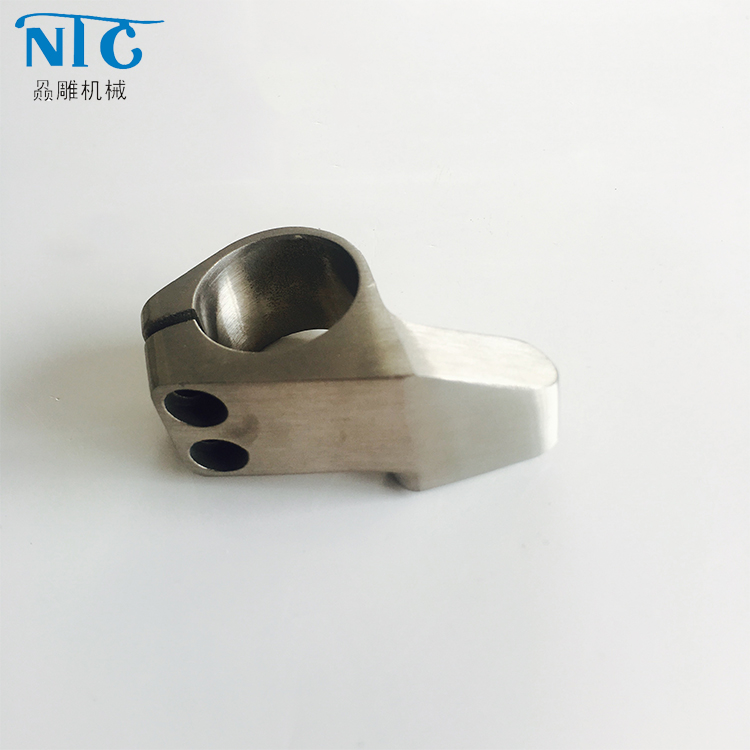
Architectural hardware: lock bodies and mechanism housings combine thin walls, tight mating features and a specified surface finish.
Fluid equipment
Pump housings, valve bodies, flowmeter bodies, impellers, vacuum fittings, and stainless pipe fittings and flanges are pressure-retaining or flow-control parts. Here the test clause does much of the compliance work: pressure testing, leak testing and air-tightness testing are available when specified, and threaded interfaces can be produced to metric, BSP, BSPT, NPT or UNF standards. A valve body supplied without a stated test method and acceptance level has an incomplete specification, whatever its material certificate says.
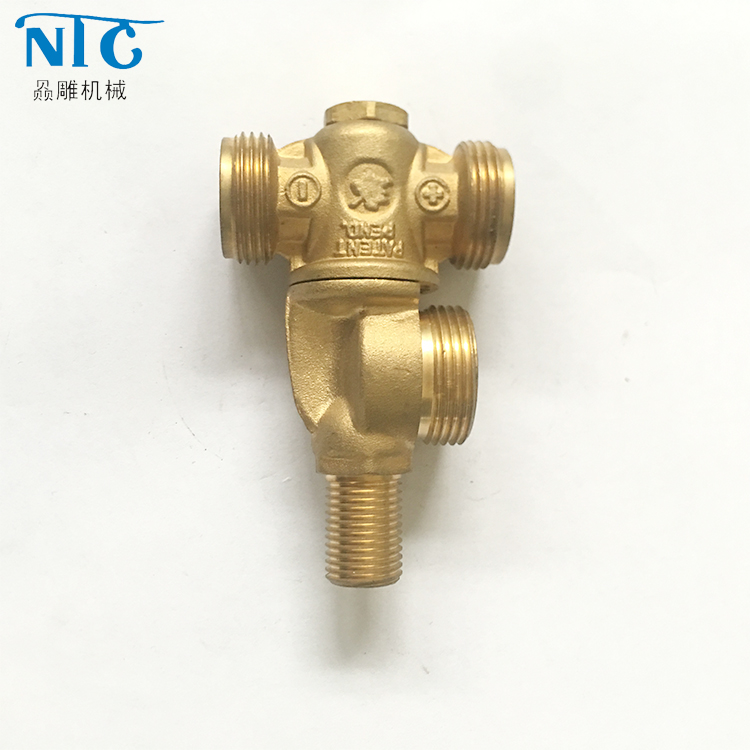
Copper-alloy fluid-control parts: brass and bronze are selected for machinability, corrosion resistance and fluid-control performance.
| Sector | Documented part families | Material baseline | Evidence to request | Main compliance risk |
|---|---|---|---|---|
| Automotive | Suspension brackets, engine mount housings, footrest brackets | Carbon steel, alloy steel, stainless steel | Material certificate, heat-treatment record, dimensional report on mounting features | Quality-management certification assumed rather than verified |
| Marine | Hinges, cleats, deck fittings | 304 / 316 / 316L; 1.4581, SCS14, SCS16 | Material certificate, passivation and finish record, pin-hole and fit dimensions | Grade stated, surface condition left unspecified |
| Food machinery | Impellers, brackets, fittings, tableware hardware | Stainless steel | Material certificate, surface finish, dimensional report | Alloy treated as a complete sanitary answer |
| Construction & architectural | Anchors, structural connectors, door closers, lock bodies | Carbon 1020–1050, alloy 4140/4150/4340/8620/GS-25CrMo4, stainless 17-4PH/410/420/440C | Material certificate, coating or galvanizing record, load-path dimensions | Finish and load dimensions not tied to the drawing |
| Fluid equipment | Pump housings, valve bodies, flowmeter bodies, pipe fittings | Carbon steel, alloy steel, stainless steel, brass and bronze | Material certificate, pressure or leak test report, thread inspection | No test method or acceptance level in the order |
How Regional Requirements Reach a Casting Order
Regional requirements rarely arrive as a single document. They reach a casting order through four routes, and each route has a different owner.
- End-customer flow-down. The OEM or brand owner translates its market obligations into clauses on the drawing and purchase order — material grade, inspection method, marking, documentation. This is the route a foundry can act on directly.
- Product-category regulation in the destination market. Whether a fitting, a food-contact component or a pressure-retaining body needs a particular approval, marking or declaration is decided by the rules of that market and by how the product is classified. That determination belongs to the buyer's regulatory function, not to the casting supplier.
- Customs and trade documentation. HS 7325 covers other cast articles of iron or steel; sub-classification, origin and duty treatment are settled with your customs broker against the actual part and material.
- Contractual acceptance. The purchase order decides what “compliant” means for the transaction: which tests, which documents, which sampling basis and which remedy for nonconformance.
This guide does not determine which legal requirements apply to your product in your market. It sets out what a supplier can document and what a buyer should specify, so that the regulatory question can be answered against a complete technical file instead of a certificate PDF.
Material and Tolerance Baseline
| Material family | Grades documented by NTC | Typical documented applications | What to confirm in the order |
|---|---|---|---|
| Carbon steel | 1020, 1025, 1030, 1040, 1045, 1050 | Construction anchors, mounting brackets, mechanical housings | Grade, heat-treatment condition, surface protection |
| Alloy steel | 4140, 4150, 4340, 8620, GS-25CrMo4 | Structural brackets, load-bearing hardware, hydraulic bodies | Grade, hardness target, heat-treatment record |
| Stainless steel | 201, 303, 304, 316, 316L, 17-4PH, 410, 420, 440C; 1.4581, SCS14, SCS16 for marine | Marine hardware, food machinery parts, valve bodies, architectural hardware | Grade, passivation or polishing, surface roughness |
| Aluminium and zinc alloys | Aluminium alloy, zinc alloy | Mechanical housings, lock bodies | Alloy designation, process route, finishing |
| Copper alloys | Brass, bronze, copper alloy | Valve bodies, electrical connector components, fluid fittings | Alloy, plating, conductivity or pressure test where required |
| Cast iron | Gray iron, ductile iron (QT450-10 where specified) | Pump housings, bearing housings, general machinery parts | Grade, applicable ASTM specification, machining allowance |
Tolerances work the same way. T4–CT7 describes the casting accuracy range for applicable precision-cast components; Ra 1.6–Ra 6.3 describes achievable surface roughness depending on casting, machining and finishing; 2 mm is the standard minimum wall with 1 mm available in limited local areas subject to process review. Documented part weights in several product families run from 2 g to 550 g. None of these values is self-applying: each becomes enforceable only when it is attached to a named dimension or surface on an approved drawing.
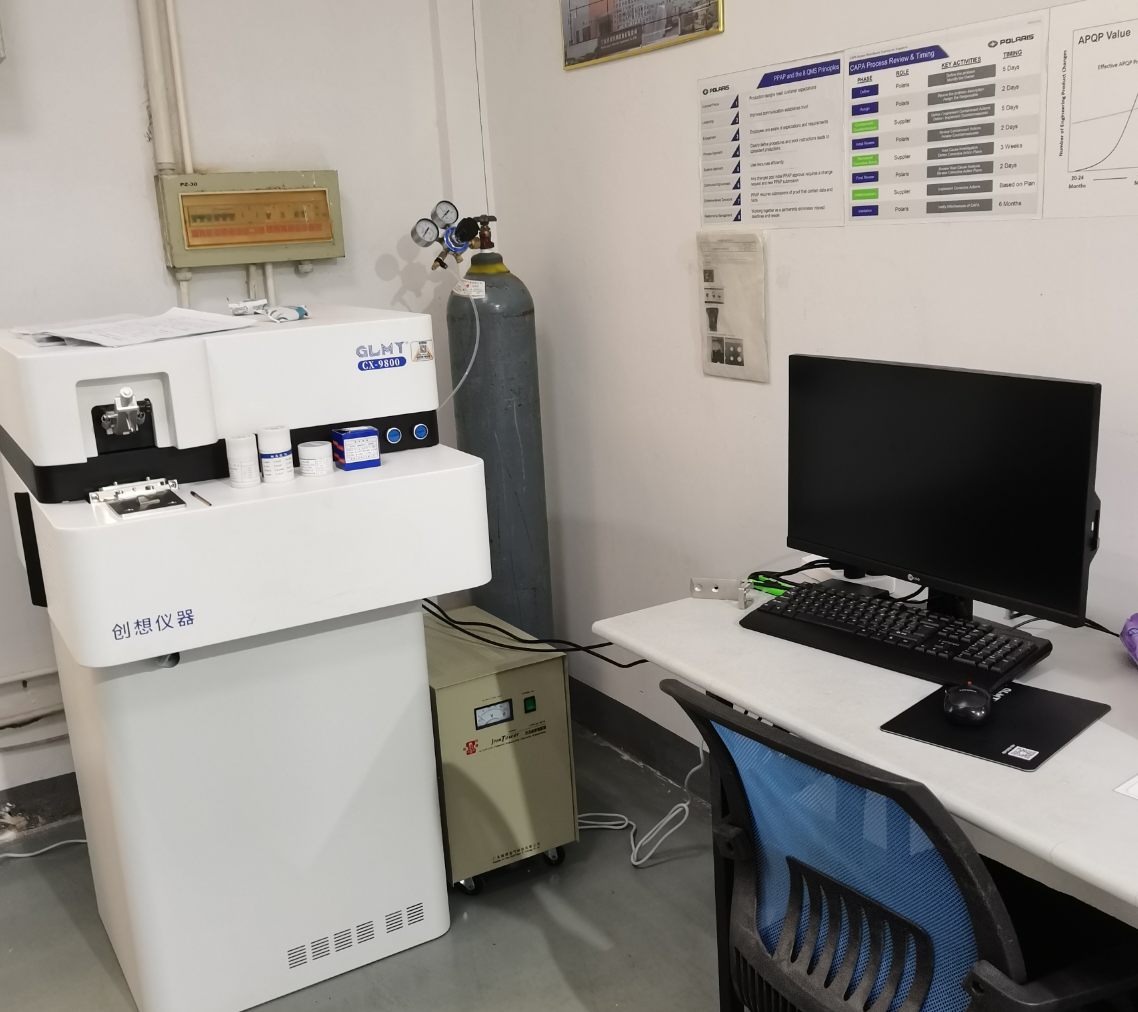
Spectrometer chemical-composition analysis is the first factual check behind a material certificate.
Building a Compliance-Ready RFQ
A compliance-ready RFQ is longer than a price request and shorter than a full specification. Ten items close most of the gap.
- Part identity and revision. Approved 2D drawing with revision level, 3D model where available, or a physical sample that will be treated as the reference.
- Material grade, condition and standard. For example “alloy steel 4140, quenched and tempered, common requirements per ASTM A957/A957M where applicable” rather than “alloy steel”.
- Process route. State whether silica-sol investment casting is required or whether an alternative route is acceptable for the geometry.
- Tolerance scheme per dimension. Cite ISO 8062-3:2007 where general tolerances apply, name the casting grade within T4–CT7, and list which dimensions are machining-controlled.
- Critical characteristics. Bearing bores, sealing surfaces, port positions, flange flatness, pin holes, spindle holes or latch channels — whichever features actually govern function.
- Inspection basis. State the inspection stages required and whether testing is by lot sample or 100%, since NTC's OEM service lists 100% testing according to customer demand.
- Test list. Pressure, leak, air-tightness, hardness, assembly-fit or conductivity testing, with the acceptance level for each.
- Documentation package. Material certificate, dimensional inspection report, heat-treatment record, test reports, and the language and format required.
- Finish, marking and packaging. Polishing, passivation, plating, painting, powder coating, galvanizing or anti-rust treatment, plus part marking and packaging rules.
- Commercial envelope. Annual and per-release quantity, target sample date, target production date. For reference, NTC's investment casting MOQ is 100 pcs with prototypes and trial orders negotiable, samples run 20–30 days and mass production 30–45 days after sample approval.
Acceptance Criteria for the Purchase Order
The RFQ asks; the purchase order binds. These clauses are where compliance stops being a description and becomes a remedy.
- Acceptance method per dimension. Which dimensions are accepted against the supplier's dimensional report, and which require a CMM layout or first-article report before release.
- Test evidence. Which tests are documented only, and which must be witnessed or reported with raw data.
- Surface acceptance. Visual and surface criteria, referencing ASTM A802 where the drawing cites it, and the agreed roughness range.
- Nonconformance route. Rework, replacement or replenishment for confirmed manufacturing defects, together with the inspection report that supports the claim and the response time expected.
- Document release. Which certificates travel with which shipment, and what must be received before the parts are booked in.
- Change control. Material substitution, process change or heat-treatment change requires written buyer approval before production.
Where Compliance Claims Break Down
Honest limits are part of a usable compliance file. Five appear repeatedly in cast-part sourcing.
- Certificate scope. NTC's ISO 9001:2015 certificate (42525Q10018R0S, issued 20 January 2025, valid to 19 January 2028, issued against GB/T 19001-2016 by GXZC) states the scope “Hardware sales business”. A buyer whose own quality system demands a manufacturing-scope certificate should raise that in the RFQ and confirm the position with the issuing body.
- The automotive certification question. No IATF 16949 certificate is included in the supplied documentation for this supplier. Automotive programmes that require it should verify certification number, scope and validity before award rather than infer it from automotive part references.
- Standards are not regulations. ASTM, ISO, DIN, BS and JIS references describe technical requirements. Whether a standard, marking or approval is legally required in your destination market is a regulatory determination for your own compliance function.
- Self-reported capability. Company capability statements, including those summarised in this article, are first-party. Independent verification comes from a factory audit, a paid sample with third-party testing, or the certification body's public register.
- Sample-to-production drift. A sample approved from a prototype run is not evidence about a 10,000-piece month. NTC's documented investment-casting capacity is 10,000 pcs per month depending on part size, weight, material and product complexity — so ask how the process is held stable at that volume, not only whether the first article passed.
Frequently Asked Questions
IATF 16949 cast parts manufacturers for automotive components
A buyer searching for IATF 16949 cast parts manufacturers is looking for a supplier whose automotive quality management system has been certified to IATF 16949. For this supplier, the documented certificate set covers ISO 9001:2015 — certificate 42525Q10018R0S, issued 20 January 2025, valid to 19 January 2028, scope “Hardware sales business”, issued against GB/T 19001-2016. No IATF 16949 certificate is included in the supplied documentation. If your automotive programme requires IATF 16949, verify the certification, its scope and its validity directly with the supplier and the issuing body before releasing a drawing, and treat ISO 9001-based process control, material certification and dimensional reporting as the starting evidence set rather than as an automotive equivalent. Automotive suspension brackets, engine mount housings and footrest brackets are within NTC's documented product range, so technical fit and certification fit should be assessed separately.
What do the T4 to CT7 casting tolerance grades cover?
T4 to CT7 is the casting accuracy range documented for applicable precision-cast components. The grade describes how much dimensional variation the casting process itself is expected to hold; it does not govern features finished by CNC machining, which follow the drawing tolerance for that feature. A usable drawing therefore states which dimensions are as-cast with a tolerance grade and which are machined with a machining tolerance. Related documented values are surface roughness Ra 1.6–Ra 6.3 depending on casting, machining and finishing, minimum wall thickness 2 mm standard with 1 mm available in limited local areas subject to process review, minimum outer fillet 0.3 mm and minimum internal fillet 0.5 mm. ISO 8062-3:2007 is the general standard for dimensional and geometrical tolerances and machining allowances for castings, and citing it alongside the grade removes ambiguity.
What information is needed for an accurate cast parts quotation?
Cost in investment casting is driven by geometry, material, single-piece weight, tolerance, machining content, heat treatment, surface finish, testing and quantity — so a quotation is only as accurate as the drawing package behind it. Provide the approved 2D drawing with revision, a 3D model where available, material grade and condition, critical dimensions and tolerance grade, machined features, heat-treatment and surface-treatment callouts, test requirements, documentation requirements, annual and per-release quantities, and packaging or marking rules. For reference, NTC's investment casting MOQ is 100 pcs with prototypes and trial orders negotiable, and documented part weights in several product families run from 2 g to 550 g. No public price list applies to these parts; the number is produced from the drawing.
Can material certificates and inspection reports ship with the order?
Material certificates and inspection reports are available when required by the customer. The documented inspection set for precision investment casting includes raw-material inspection, spectrometer chemical-composition analysis, first-article inspection, in-process inspection, CMM dimensional inspection, hardness testing, visual inspection and final inspection before shipment. Optional functional tests — pressure, leak, air-tightness and assembly-fit — are arranged when the order specifies them, as are conductivity or continuity checks for copper-alloy electrical components. Because documentation is a purchase-order line rather than a default, name the documents, the language and the format in the RFQ.
What are the sample and mass-production lead times?
Documented lead times are: samples 20–30 days and mass production 30–45 days after sample approval for precision investment casting; samples 10–20 days and mass production 20–35 days after sample approval for precision CNC machining; and 7–20 days for surface or heat treatment depending on process, order quantity and technical requirements. These are quoted ranges rather than guarantees, and they move with material availability, part complexity and order quantity. For a new part, the fastest route is to send the drawing, the material callout and the test list together, so that the sample and its documentation are produced against one specification. The 2026 NTC catalogue is available for download below.
Conclusion
Compliance for cast parts is decided in the RFQ, not in the certificate folder. The certificate proves that a management system was audited within a stated scope. The RFQ and the purchase order decide which material grade, which process route, which tolerance grade, which test and which document set will actually be delivered — and those are the items a buyer can measure. Used together, they turn a stack of PDFs into an acceptance file that survives an audit, a customs query or a nonconformance claim.

Inspection and material analysis generate the records that a compliance file is built from.
Next step: the 2026 SHANGHAI NTC TECHNOLOGY CO., LTD. catalogue (PDF) summarises the documented product families, materials and process capabilities referenced in this guide. For a compliance file on a specific part, send the drawing, material callout, tolerance grade and test list as one package, so the sample and the documentation are produced against the same specification and can be compared line by line.
Have Questions or Need More Details?
Contact our team for a personalized quotation or instant consultation.
Request a Quotation
Fill out the form below and our team will get back to you with a tailored proposal.
WhatsApp Direct Chat
Prefer to chat in real-time? Message us on WhatsApp for instant assistance & quick answers.
- Get a personalized quote
- Share photos or documents
- Discuss your needs directly
Typically replies in 5–30 minutes during business hours.