
Cast Parts Compliance: How to Read Certificates by Region
A compliance claim for a cast part is a stack of documents, not a single certificate. Four different questions sit behind the phrase "compliant casting": whether the supplier's management system has been certified, whether the alloy chemistry and mechanical properties meet a named material standard, whether the geometry meets a named tolerance scheme, and whether the finished part can be placed on the market where it is sold. Each question is answered by a different document, from a different issuer, and any one of them can be true while the others remain unresolved.
This guide shows how to read those documents in sequence, which standards actually appear in cast-parts purchasing, and which regional questions a buyer must settle before the purchase order is released. SHANGHAI NTC TECHNOLOGY CO., LTD. is a Shanghai-based precision casting and machining supplier with a 2,000 m² factory, 20 employees, an 85% export ratio to Europe, America and Asia, and a main product line of cast parts that includes auto part castings. Its supplied records are used as a worked example throughout, because they show the layers separating cleanly in practice: an ISO 9001:2015 certificate with a defined scope and expiry date, casting accuracy stated as tolerance grade T4–CT7, a 2 mm standard minimum wall thickness, and machined features such as mounting holes and bearing locations confirmed part by part.

Problem definition: why "certified cast parts" is not a single condition
Buyers ask for certified castings. Suppliers answer with a quality certificate. The two are rarely discussing the same thing, and the gap does not surface until incoming inspection or a customer audit.
A management system certificate states that a company operates a documented quality system inside a defined scope. It does not state that a specific casting meets ASTM A957/A957M, that its chemistry matches grade 316L, or that a bearing bore holds a specified concentricity. Conversely, a material test report for one batch does not show that the supplier operates a controlled, repeatable process across a production year. The two documents cover different risks, and a purchasing file needs both.
The evidence reviewed for this article flags the same gap twice. ASTM A957/A957M is described as a common-requirements specification for steel and alloy investment castings for general industrial use, and the source note accompanying it states that the standard should not be treated as proof that a supplier is certified or compliant. The same review records that ASTM references are standards, not automatically applicable legal requirements or proof of conformity. A standard defines test and acceptance rules for a defined product; a certificate defines who is entitled to say a supplier meets them.
For a buyer working through Research and Evaluation, the practical consequence is that compliance must be specified rather than requested. A drawing that names a material grade, a standard edition, a tolerance scheme, an inspection method and a documentation package turns "certified cast parts" into something a supplier can accept, reject or price — and into something a buyer can audit later.
Industry background: three systems, three owners
The documentation around cast parts is shaped by three systems that are usually managed by different organisations, plus a fourth track for customs.
Material and product standards. ASTM's own catalogue illustrates the granularity. For cast iron it lists specifications covering gray iron castings, pressure-containing gray iron castings, valve, flange and pipe-fitting castings, abrasion-resistant iron and automotive gray iron castings, including ASTM A48/A48M-22 for gray iron castings. For steel and stainless it lists common requirements, surface acceptance practices, magnetic-particle and liquid-penetrant inspection practices, duplex stainless castings for pressure-containing parts, investment-casting common requirements and welding qualification practices. National and regional systems — DIN, BS, JIS and others — run in parallel, and NTC's product documentation lists ASTM, DIN, JIS, ISO, BS, ICI and customer-specified technical standards as applied standards.
Geometry. ISO 8062-3:2007 specifies general dimensional and geometrical tolerances and machining allowances for castings. It is the reference that lets a buyer write "general tolerances to ISO 8062-3" instead of dimensioning every non-functional surface.
Application and market access. This layer depends on where the part is used, not on what it is called. Food equipment in the United States is the clearest documented case: the FDA's list of American National Standards for Food Equipment identifies NSF/ANSI 2 (food equipment) and NSF/ANSI 51 (food equipment materials) as the referenced sanitary design and materials standards. Pressure service, automotive supply and marine use each pull in different qualification routes, and each has to be confirmed for the specific end product.
Customs. HS heading 7325 covers other cast articles of iron or steel under the WCO HS 2022 nomenclature. It governs duty and customs documentation; it says nothing about whether the casting is fit for purpose. Treating a tariff code as a compliance credential is one of the more common filing errors.
Material direction concentrates the compliance workload. A commercial market research estimate published in 2026 put stainless steel at 46.8% of material-type demand in the investment casting market in 2025 (Dataintelo, 2026). Whichever figure a buyer prefers, austenitic, duplex and precipitation-hardening stainless grades are where most chemistry, passivation and corrosion documentation is spent.
Layer by layer: the four documents that make a compliance file
Layer 1 — The management system certificate, read for scope and validity
NTC's supplied certification record is ISO 9001:2015, certificate number 42525Q10018R0S, issued by GXZC against GB/T 19001-2016, valid from 20 January 2025 to 19 January 2028, with a stated scope of hardware sales business and worldwide market coverage. Read in isolation that sentence sounds like a green light. Read properly, it answers exactly one of the four questions.
Three checks turn the certificate into usable evidence. First, does the scope wording describe the activity being purchased? A scope written around sales activity and a purchase order for castings plus machining are related but not identical, and a buyer should confirm in writing which activities the certificate covers. Second, is the certificate inside its validity window on the purchase order date? A certificate that expires mid-programme needs a surveillance plan, not a footnote. Third, can the issuing body and certificate number be identified so that validity can be confirmed with the issuer rather than with a PDF forwarded by a sales contact.
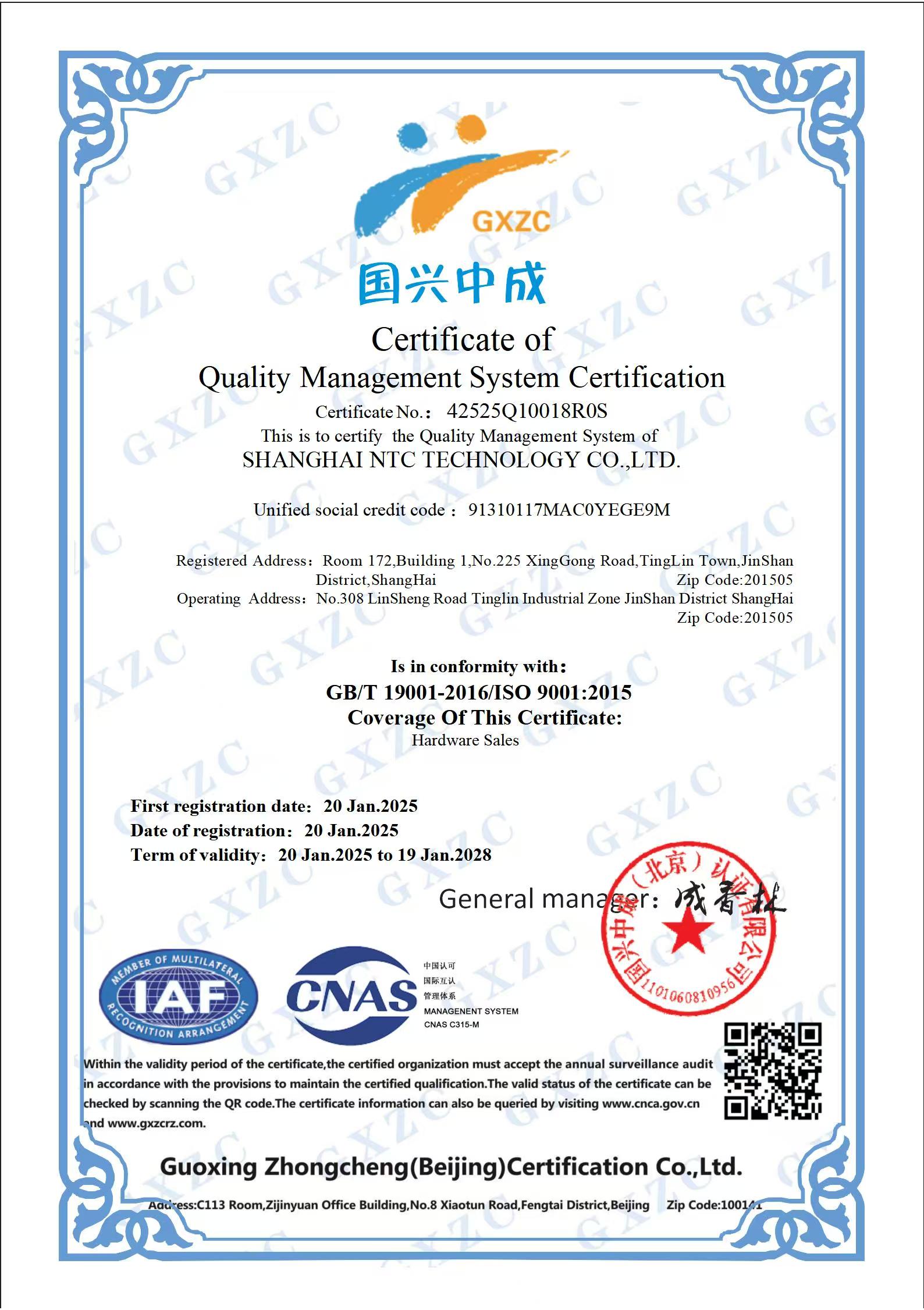
What the certificate does not do is equally important. It does not evidence a material grade, a tolerance grade, a surface finish or a test result for the part in the RFQ. Those come from layers two and three.
Layer 2 — Material conformity: grade, standard, edition, chemistry
NTC's part documentation lists austenitic stainless grades 201, 303, 304, 316, 316L, 1.4581, SCS14 and SCS16; precipitation-hardening and martensitic grades 17-4PH, 410, 420 and 440C; carbon steels 1020 to 1050; alloy steels 4140, 4150, 4340 and 8620; brass and copper alloy; aluminium; and, across the wider precision casting parts range, gray iron and ductile iron. That breadth is useful and also the reason a vague specification fails: "stainless steel" does not identify any of these.
A purchase specification should carry three elements — grade, standard and edition. Gray iron parts reference a specification such as ASTM A48/A48M-22; steel and alloy investment castings reference common requirements such as ASTM A957/A957M; duplex stainless parts intended for pressure-containing service reference a specification such as ASTM A995/A995M. The edition matters because acceptance values are attached to it, and the supplier's quotation should quote back the same edition.

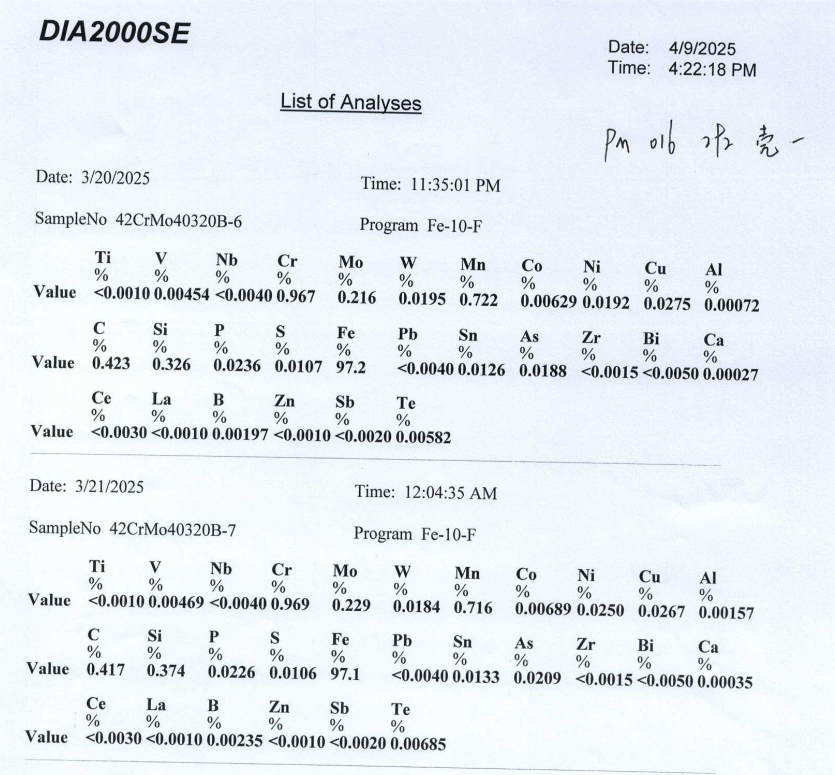
Verification follows the same pattern on every order. NTC's stated quality control sequence runs raw material inspection and material certificate verification, spectrometer chemical composition analysis, hardness testing, first article inspection, in-process and dimensional inspection, and final inspection before shipment. For the buyer, the deliverable is the material certificate plus the composition result, traceable to the batch that produced the parts.
Layer 3 — Dimensional and geometric conformity
Geometry is where casting and machining meet, and where most acceptance disputes are born. NTC states casting accuracy as tolerance grade T4–CT7, surface roughness in the Ra 1.6–Ra 6.3 range depending on casting, machining and finishing requirements, and a 2 mm standard minimum wall thickness, with 1 mm available in limited local areas subject to process review. On several part families the documentation also states a minimum outer radius of 0.3 mm, a minimum internal fillet of 0.5 mm, and a part weight range of 2 g to 550 g.
Those are cast-state capabilities. Functional geometry is produced afterwards. Machinable features across the range include mounting holes, threaded holes, bearing positions, locating surfaces, guide slots, shaft bores, keyways, pin holes and hinge positions, finished by CNC turning, milling, drilling, boring, reaming, tapping and grinding. Verification uses first article inspection, in-process dimensional inspection, CMM measurement, projector inspection, thread and gauge inspection and final inspection.
The decision that makes this layer work is which dimensions are governed by a general tolerance system and which are individually toleranced. ISO 8062-3:2007 supplies the general framework and the machining allowance logic; bearing locations, sealing faces, mounting-hole patterns and mating interfaces are where individual callouts belong, because those are the features that decide whether the assembly functions.
Layer 4 — Application and market access
This layer is the one that cannot be answered by the foundry alone. Whether a casting falls into a regulated product category — food-contact equipment, pressure equipment, automotive supply, marine hardware, construction hardware — depends on the end product and the destination market, not on the casting process. The evidence reviewed for this article contains no jurisdiction-specific regulatory mapping, so those determinations belong with the buyer's own regulatory or quality function.
The food-equipment example shows the shape of a correct answer. Rather than asserting that a stainless impeller "complies", the purchase specification should state whether NSF/ANSI 2 and NSF/ANSI 51 are referenced by the end customer, and the supplier's file should then contain the material and surface documentation that supports that reference. The same structure applies to pressure, automotive and marine categories, with different standards named.
Step by step: building a compliance-ready purchase order
Six steps convert the four layers into a document set a supplier can quote against and a buyer can audit.
Step 1 — Classify the part by service, not by name
"Valve body" or "bracket" describes a shape. Pressure retention, food contact, load path, wear and corrosion exposure describe what the part must prove. Two parts with the same name can require entirely different standards, and the classification decision should be recorded in the RFQ.
Step 2 — Fix material grade, standard and edition on the drawing
Write 316L to a named standard edition rather than "stainless". Where the buyer has no preferred system, NTC's documentation lists ASTM, DIN, JIS, ISO and BS as available reference systems, but the edition selection remains a buyer decision and should not be left to the quotation.
Step 3 — Choose the tolerance route
Three options exist: general tolerances to ISO 8062-3:2007 with the grade stated; individual callouts on every controlled feature; or, most commonly, both — general tolerances on non-functional surfaces, individual tolerances on bearing locations, mounting holes, sealing faces and mating interfaces. State which applies where, because "general tolerances" alone leaves the critical features undefined.
Step 4 — Define the inspection and documentation package
A workable first-article package contains the material certificate, spectrometer chemical composition analysis, hardness result, a dimensional report including CMM data for critical features, and a first article inspection record. Where finishing is specified, add surface roughness and coating thickness results. On several NTC part families the stated inspection scope covers material composition, hole positions, assembly fit, surface defects and appearance, and material certificates and inspection reports are available when required.
Step 5 — Verify the supplier's certificates against scope, validity and process
Certificate number against issuing body, validity against the purchase order date, scope wording against the activity being purchased, process evidence against the specific part. A certificate that has expired, or that does not name the process behind the parts, adds nothing to a compliance file however impressive the logo.
Step 6 — Write acceptance, change control and traceability into the purchase order
State who accepts the first article, which document releases the batch, what happens when a material grade or a process route changes, and which records travel with the shipment. Without these clauses, acceptance criteria live in email threads rather than in the contract, and a subsequent batch can be technically compliant yet commercially disputed.
Part-family examples: where the compliance question actually lands
Pump housings
Fluid-equipment housings combine a containment function with machined mounting and sealing faces. The file therefore needs two evidence strands rather than one: a material standard and chemistry certificate for the alloy, plus a dimensional report on the faces and bore. Where the housing retains pressure, the purchase specification should name a pressure-containing casting standard and the inspection method, because a common-requirements standard written for general industrial use does not by itself establish pressure integrity.
Valve bodies
NTC's range separates Precision Investment Cast Stainless Steel Valve Body (OEM / Custom Drawing No. 1009) from Brass and Copper Alloy Valve Body Casting (No. 1013). The split is the compliance point. The alloy system determines which chemistry certificate, which corrosion documentation and which surface finishing — pickling, passivation or polishing — the buyer should require. A single "valve body" line item cannot carry both specifications.
Flowmeter bodies and accessories
Precision Cast Flowmeter Body (No. 1035) and Flowmeter Flange and Connector Casting (No. 1036) are the clearest illustration of metrology-driven acceptance. Bore geometry, flange flatness and concentricity of connection interfaces determine whether the instrument assembles and reads correctly. Those are precisely the dimensions that should be individually toleranced rather than left to general casting tolerance, and the ones listed on the CMM report.
Automotive suspension brackets
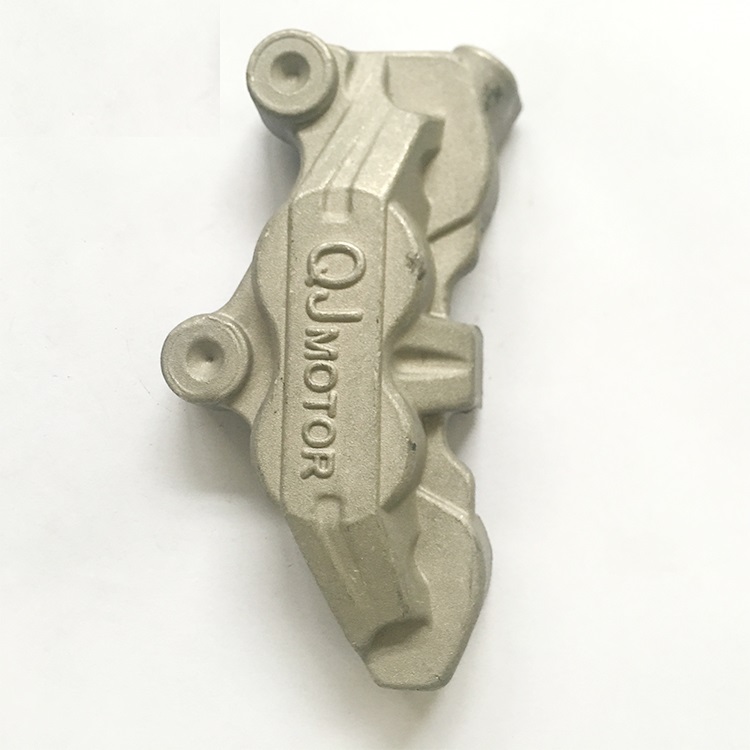
Precision Cast Automotive Suspension Bracket (No. 1002) is specified with carbon steel, stainless steel or alloy steel according to structural and mechanical property requirements, with CNC drilling, CNC milling, heat treatment, shot blasting, polishing and anti-rust treatment as optional post-processing, and inspection covering mechanical properties, material composition, critical dimensions, hole positions and surface quality. For a load-path component the material certificate alone is not the file: heat-treatment condition and mechanical property results belong in it, and the automotive quality management question has to be answered separately from the casting specification.
Other families follow the same logic with different evidence. Stainless food machinery brackets and food-processing impellers pull the food-equipment standards question to the front, alongside 304, 316 and 316L selection and smooth-surface finishing such as pickling and passivation. Marine hinges and deck fittings turn on grade selection and passivation rather than on a single statutory mark. Textile machinery guides and furniture connectors sit in less regulated categories where the drawing and the dimensional report carry most of the weight.
Reference table: what each standard can and cannot establish
| Reference | Documented scope | What it supports in a purchase order | What it does not establish |
|---|---|---|---|
| ASTM A48/A48M-22 | Standard specification for gray iron castings | Naming a gray iron grade and its mechanical requirements | Does not certify a supplier or a specific finished part |
| ASTM A957/A957M | Common requirements for steel and alloy investment castings, general industrial use | Referencing common requirements on investment-cast steel parts | Not proof that a supplier is certified or compliant |
| ASTM A995/A995M | Duplex stainless castings for pressure-containing parts | Naming a duplex grade for pressure service | Does not replace a pressure-integrity test or design review |
| ASTM A802 and A903/A903M | Surface acceptance and surface requirements for steel castings | Defining visual surface acceptance criteria | Does not control dimensional or material conformity |
| ASTM A488/A488M | Welding qualification for steel castings | Setting procedure and personnel qualification where welding is allowed | Does not authorise welding where the drawing prohibits it |
| ISO 8062-3:2007 | General dimensional and geometrical tolerances and machining allowances for castings | Establishing the general tolerance system and machining allowance | Does not define material properties or inspection frequency |
| NSF/ANSI 2 and NSF/ANSI 51 | Food equipment; food equipment materials | Referencing sanitary design and materials requirements | Does not, on its own, certify a casting supplier |
| ISO 9001:2015 (NTC cert. 42525Q10018R0S) | Management system certification within a stated scope | Supplier management-system evidence with a validity window | Does not establish part-level material or dimensional conformity |
| HS 7325 (WCO HS 2022) | Other cast articles of iron or steel | Customs classification and duty treatment | Not a product-quality or conformity standard |
Regional requirement questions to settle before the order
Regional compliance is not a lookup table a supplier can complete on the buyer's behalf. The answers depend on end use, destination market and the buyer's own customer contract, and the evidence reviewed for this article contains no jurisdiction-specific regulatory mapping. The questions below should be routed to the correct internal owner before the RFQ is issued, not left to the quotation.
| Question to settle | Why it changes the purchase order | Who answers it |
|---|---|---|
| Which standard edition governs material and tolerances? | Acceptance values attach to the edition; suppliers quote what is written | Buyer's engineering function |
| Does the part fall into a regulated product category? | Decides whether an application standard sits on top of the casting standard | Buyer's regulatory or compliance function |
| Are NSF/ANSI 2 or NSF/ANSI 51 referenced for US food equipment? | Adds sanitary design and materials documentation to the file | Buyer's quality function and end customer |
| Does the automotive customer require an automotive quality management system such as IATF 16949? | Changes the supplier qualification route, audit plan and certificate set | Buyer's supplier quality team |
| Which HS heading applies at import? | Affects duty and customs paperwork, not product conformity | Importer or customs broker |
| Which records travel with the shipment? | Defines what incoming inspection can actually verify on arrival | Buyer's incoming quality team |
Frequently asked questions
IATF 16949 cast parts manufacturers for automotive components — what should I check first?
Check the certificate before the part. IATF 16949 is an automotive-sector quality management system standard, and it is a separate qualification from the casting specification. NTC's supplied certification record is ISO 9001:2015, certificate 42525Q10018R0S issued by GXZC against GB/T 19001-2016, valid from 20 January 2025 to 19 January 2028 with a scope of hardware sales business; no IATF 16949 certificate is included in the records available for this article. An automotive buyer that requires IATF 16949 should therefore request the certificate and its scope directly and confirm validity with the issuing certification body. Separately, confirm that the material standard, heat-treatment condition and mechanical property results for the specific part — for example a suspension bracket or a motorcycle engine mount housing — are named in the drawing and released with the first article.
Does an ISO 9001 certificate cover the castings I buy?
No. It covers the management system within the stated scope, which on NTC's certificate reads hardware sales business. Part-level conformity comes from the material certificate, the spectrometer composition result, the dimensional and CMM report, and the first article inspection — all measured against the values written on the drawing. A supplier can hold a valid certificate and still produce a batch that fails a bearing-location tolerance; the certificate was never designed to catch that.
Should the drawing cite ISO 8062-3:2007 or individual tolerances on every feature?
Both, in most cases. ISO 8062-3:2007 specifies general dimensional and geometrical tolerances and machining allowances for castings, which keeps the drawing readable for non-functional surfaces. NTC states casting accuracy as tolerance grade T4–CT7 with a 2 mm standard minimum wall thickness. Critical features — bearing locations, mounting-hole patterns, sealing faces, mating interfaces — should still carry their own callouts, because general tolerance systems describe the default, not the functional requirement.
What documentation should come with the first article?
For a typical custom casting: material certificate traceable to the batch, spectrometer chemical composition analysis, hardness result, a dimensional report with CMM data for the controlled features, and a first article inspection record. Where finishing is specified, add surface roughness and, for coatings, thickness results. NTC's stated control sequence covers raw material inspection, composition analysis, first article and in-process inspection, CMM measurement and final inspection before shipment, and the company states that material certificates and inspection reports are available when required — so the request should be written into the RFQ rather than assumed.
How do sample and production lead times fit around a compliance review?
Run them in parallel rather than in sequence. On the investment casting route, NTC's stated timings are 20–30 days for samples and 30–45 days for mass production after sample approval, with an MOQ of 100 pcs that is negotiable for prototypes and trial orders; CNC machining is quoted at 10–20 days for samples and 20–35 days for mass production, and surface or heat treatment adds 7–20 days depending on process and quantity. If the certificate review, standard-edition confirmation and documentation package are settled during the sampling window, approval and release do not queue twice. A soft next step is available for buyers who want the full capability set alongside the paperwork: the SHANGHAI NTC 2026 brochure summarises processes, materials and inspection scope for review against a specific drawing.
Conclusion
Cast-parts compliance becomes manageable once it stops being a single word. Four documents answer four questions: the management system certificate with its scope and validity, the material certificate and composition analysis tied to a named grade and standard edition, the dimensional and CMM record tied to a tolerance scheme and to individually toleranced critical features, and the application or market-access determination that only the buyer's own regulatory context can settle.
The control points are consistent across part families. Verify the certificate number, its scope wording and its expiry date before it enters the file. Name the standard edition on the drawing so the quotation can mirror it. Separate general tolerances from functional callouts. Put the documentation package and acceptance clauses into the purchase order instead of into an email. For pump housings, valve bodies, flowmeter bodies and suspension brackets the standards differ, but the sequence does not.
Where a regional requirement is uncertain, the correct move is to route the question to the internal owner and record the answer in the specification, not to accept a supplier's reassurance or a competitor's certificate as evidence. A supplier can respond precisely to a defined requirement; it can only guess at an undefined one.
Have Questions or Need More Details?
Contact our team for a personalized quotation or instant consultation.
Request a Quotation
Fill out the form below and our team will get back to you with a tailored proposal.
WhatsApp Direct Chat
Prefer to chat in real-time? Message us on WhatsApp for instant assistance & quick answers.
- Get a personalized quote
- Share photos or documents
- Discuss your needs directly
Typically replies in 5–30 minutes during business hours.