
Cast Parts for Motorcycle Manufacturing: Application Guide for Footrest Brackets and Engine Mount Housings
Two castings decide how a motorcycle feels underfoot and how quietly its engine sits in the frame: the footrest bracket and the engine mount housing. For both parts, the useful decision is not “which alloy is best” in the abstract, but which combination of material grade, tolerance grade, wall thickness and inspection depth matches the actual load path and the actual mounting interface.
Within SHANGHAI NTC TECHNOLOGY CO., LTD.'s production range, that decision sits inside four material families (carbon steel grades 1020–1050, alloy steel grades 4140–8620, stainless steel, and aluminium alloy), tolerance grades from T4 to CT7, a 2 mm standard minimum wall with 1 mm permitted in limited sections, and a part weight window of 2 g to 550 g. The company is a Shanghai-based precision casting manufacturer and industry-and-trade supplier, founded in 2022, running a 2,000 m² factory with 20 employees, 5 engineers and roughly 85% of output exported to Europe, America and Asia.
This guide compares the two part families feature by feature, then converts that comparison into an adaptation workflow you can apply to an existing drawing such as the verified Motorcycle Footrest Bracket Casting (OEM/Custom Drawing No. 1003) or the Precision Cast Motorcycle Engine Mount Housing.
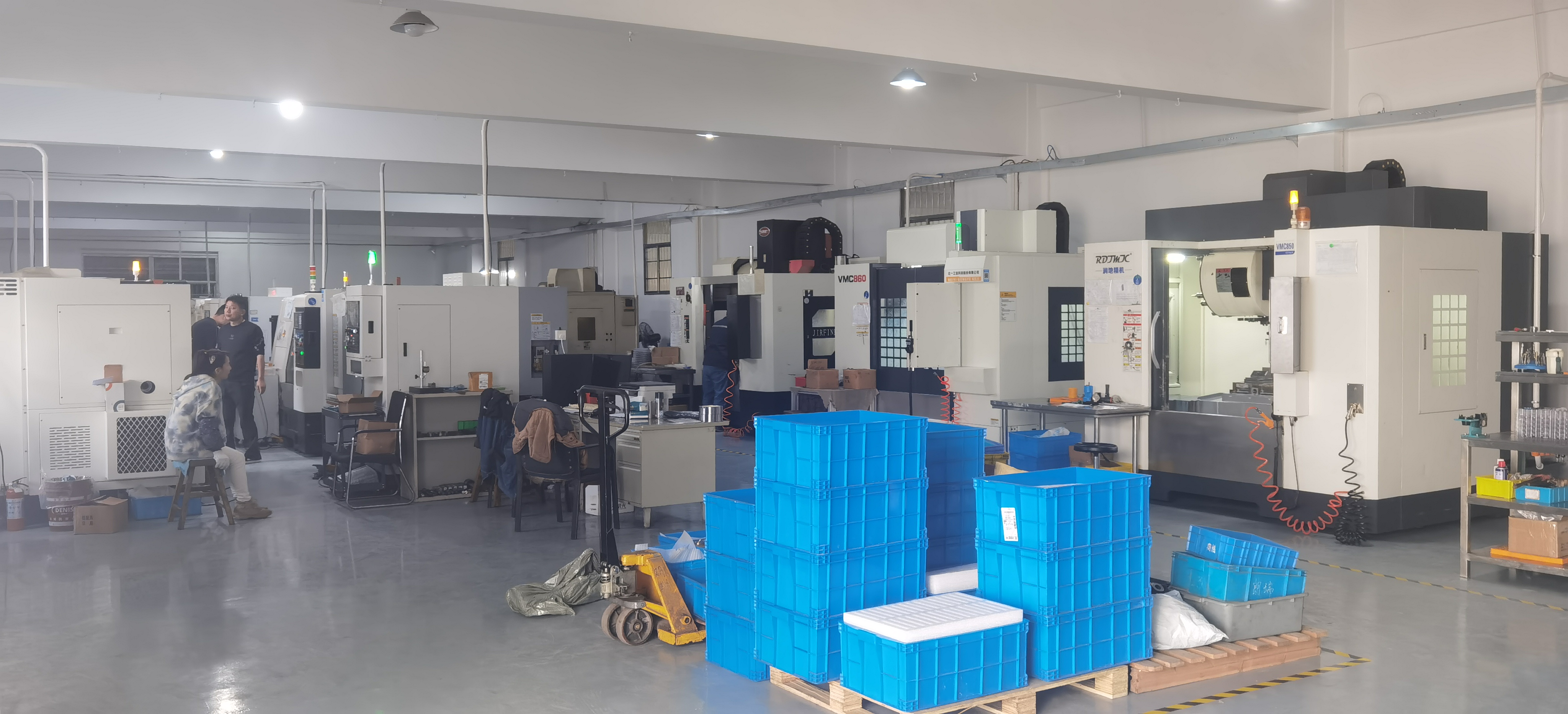
Cover: CNC vertical machining center workshop at the Shanghai factory, where cast motorcycle brackets and housings are finished to drawing.
Problem Definition: One Casting Family, Two Different Load Paths
Both components are small, high-volume structural castings, yet they are asked to do different jobs. A footrest bracket is a stiffness-and-impact part: it carries rider load, road shock and, on many models, a folding-pivot action. An engine mount housing is a vibration-and-alignment part: it positions the engine relative to the frame and frequently holds an isolator that must not be pre-loaded by a misaligned bore.
Applying one material and one tolerance grade to both parts usually produces one of two outcomes: excess cost on the bracket, or excess risk on the housing. The specification gaps that matter in practice concentrate in three places:
- Minimum wall thickness at transition radii. A 2 mm wall is the working standard; 1 mm is achievable only in limited sections and changes the inspection plan.
- Tolerance grade applied feature by feature. Functional bores and mating faces deserve the tightest grade the process can hold; cosmetic and clearance features do not.
- Inspection depth after machining. A casting that is verified only at the foundry stage leaves the machined interface unproven.
Weight is the third constraint. Both part families sit inside a 2 g to 550 g envelope, which is small enough that wall thickness decisions move the finished weight quickly, and large enough that a single process route can cover a rider bracket and a mid-size housing without changing supplier.
Industry Background: Why Material and Tolerance Choices Are Converging
Investment casting remains a mainstream route for motorcycle structural parts because it delivers near-net geometry with machinable interfaces. According to Dataintelo's investment casting market report (2025), the global investment casting market was valued at USD 21.24 billion in 2025 and is projected to reach USD 36.69 billion by 2034. The same source reports that stainless steel materials captured 46.8% of total material type demand in 2025.
Application data is less settled. Published research disagrees on which end-use segment leads: one commercial source places aerospace and defense at 38.2%, while another places automotive above 29%. The disagreement is methodological rather than factual, so buyers should treat both automotive and aerospace/defense as high-weight demand segments rather than picking a single winner. For motorcycle manufacturing, the practical read is simpler: automotive-type castings are a large, specification-driven segment, and motorcycle brackets and housings compete for the same casting capacity.
Standards provide the shared vocabulary for those specifications. ISO 8062-3:2007 specifies general dimensional and geometrical tolerances and machining allowances for castings, which is the reference frame behind casting tolerance grades. ASTM A957/A957M covers common requirements for steel and alloy investment castings for general industrial use. On the trade side, HS heading 7325 covers other cast articles of iron or steel, which is the classification buyers usually encounter when importing finished brackets and housings.
Decision rule: name the casting standard in the RFQ, then name the part-specific tolerance grade and inspection method. A standard reference alone does not prove a supplier is capable; it only fixes the acceptance language.
Detailed Solution: What NTC Supplies for These Two Part Families
SHANGHAI NTC TECHNOLOGY CO., LTD. operates a silica sol investment casting process, an independent heat treatment workshop, CNC machining and assembly, and a metrology set that includes a coordinate measuring machine (CMM), spectrum analyzer, Brinell hardness tester and projector. The company states ISO 9001:2000 and ISO 14001:2015 management systems and lists auto parts, valve accessories, vacuum parts, kitchen and dishwashing equipment accessories, spinning machine accessories, door accessories and scooter parts among its production series.
Two verified motorcycle products anchor this guide:
1. Motorcycle Footrest Bracket Casting (OEM/Custom Drawing No. 1003)
This is a rider-support structural casting produced to a customer drawing — in this case Drawing No. 1003 — under an OEM/custom arrangement. Its specification priority is stiffness at the mounting face, impact resistance at the outer edge, and a stable pivot or mounting geometry so the bracket does not rock under load. Because bracket weight sits inside the 2 g to 550 g window, a wall change at the transition radius is the fastest way to shift both stiffness and finished weight.
2. Precision Cast Motorcycle Engine Mount Housing
The engine mount housing is an alignment-critical casting. Its priority is bore position and wall uniformity around the vibration-isolating interface, because distortion here transfers directly into frame vibration and assembly force. Thin-wall stability — which is where the 2 mm standard wall and the 1 mm limited-wall allowance actually matter — determines whether the housing can be used as-cast plus machined, or requires additional fixturing during machining.
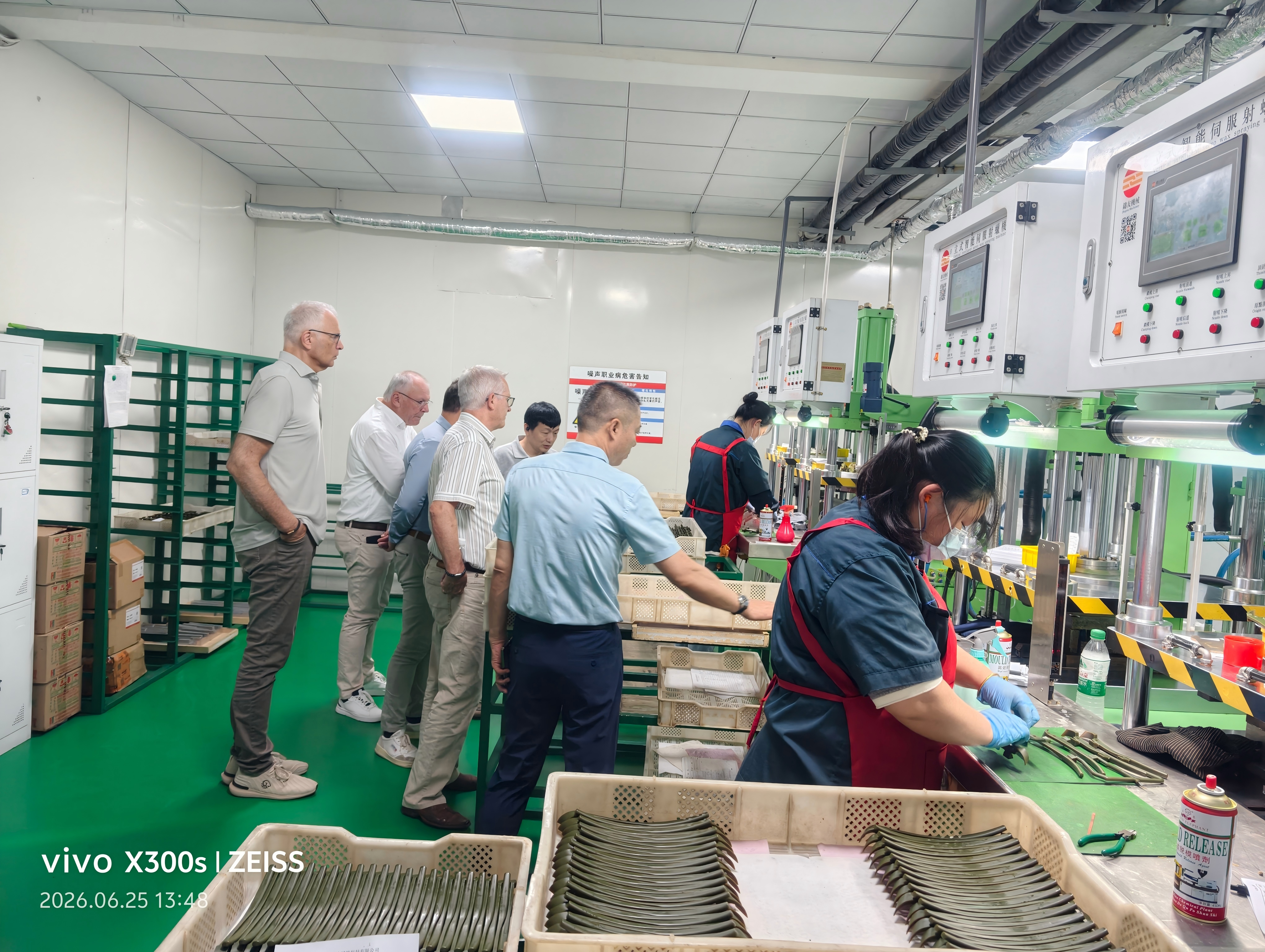
Wax pattern injection: the first dimensional checkpoint for a footrest bracket or engine mount housing.
Material comparison for the two parts
| Material family | Grades in range | Typical fit between the two parts | Trade-off to plan for |
|---|---|---|---|
| Carbon steel | 1020–1050 | General footrest brackets, mounting plates, low-to-medium load housings | Cost-efficient; lower hardenability than alloy steel; surface protection needed in wet use. Higher carbon content reduces weldability. |
| Alloy steel | 4140–8620 | Loaded brackets and engine mount housings with higher strength demand | Higher strength after heat treatment; requires controlled heat-treat parameters and verification |
| Stainless steel | Stainless grades within the casting range | Corrosion-exposed brackets and housings, wet or high-humidity service | Corrosion resistance; higher material and machining cost than carbon steel |
| Aluminium alloy | Aluminium casting grades | Weight-sensitive brackets and housings | Lower density and weight; lower stiffness than steel, so thread and insert design needs more attention |
Tolerance, wall thickness and weight: the three hard limits
The stated process capability spans tolerance grades from T4 to CT7. In practice, T4-level requirements belong on the functional interface — pivot bores, mating faces, isolator seats — while CT7-level general casting tolerance is sufficient on cosmetic and clearance surfaces. Assigning the tight grade everywhere raises cost without adding function; assigning it nowhere leaves the housing bore position unmanaged. ISO 8062-3:2007 provides the general tolerance and machining-allowance framework used to express these grades.
Minimum wall thickness is the second hard limit. A 2 mm wall is the standard working minimum; 1 mm is achievable in limited sections, and those sections should be identified explicitly on the drawing so that pattern, shell and inspection are planned around them rather than discovered at first article.
Weight is the third. Parts from 2 g to 550 g are covered, which means a small footrest bracket and a substantial engine mount housing can share one supplier, one inspection language and one documentation package — a genuine advantage when motorcycle OEMs consolidate Auto Part Castings across several models.
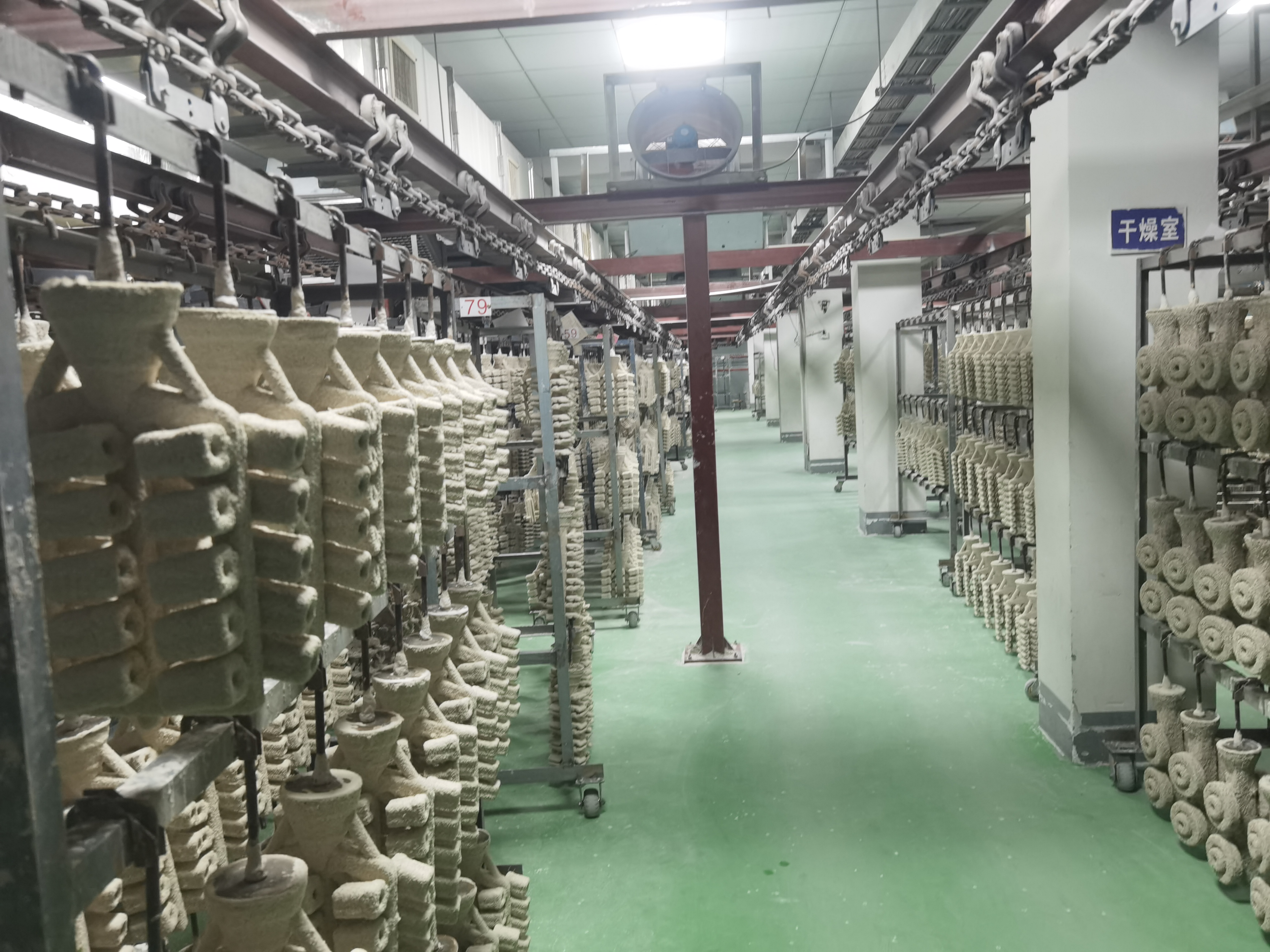
Mold drying: shell stability at this stage controls the dimensional repeatability of thin-wall sections.
Step-by-Step Breakdown: Adapting a Drawing to Production
- Function review on the drawing. Classify every feature as structural, alignment-critical or cosmetic. For the footrest bracket, the mounting face and pivot geometry are alignment-critical; for the engine mount housing, the isolator seat and bore position are. This classification drives the next three steps.
- Material grade selection. Choose within carbon steel 1020–1050 for cost-driven brackets, alloy steel 4140–8620 where calculated strength demands it, stainless steel for corrosion exposure, or aluminium alloy for weight-driven designs. Material choice should follow the load case, not the price list.
- Tolerance grade assignment. Apply tight grades (towards T4) only to alignment-critical features and general casting tolerance (towards CT7) elsewhere, referencing ISO 8062-3:2007 acceptance language.
- Wall and weight check. Confirm the design sits inside the 2 mm standard minimum wall, flag any 1 mm limited-wall sections, and verify finished weight inside the 2 g to 550 g range.
- Pattern, shell and casting. Wax pattern injection, ceramic shell building and silica sol investment casting produce the near-net part.
- Heat treatment and machining. The independent heat treatment workshop sets mechanical properties; CNC machining then generates mating features. Machined dimensional control can be held to ±0.005 mm on critical features according to the supplier's stated capability.
- Inspection and release. Spectroscopic composition testing on all raw material before storage, in-process patrol sampling, real-time dimension monitoring on CNC equipment, manual visual screening after shot blasting, and 100% finished-product outgoing inspection before packing.
Practical note: the fastest way to shorten first-article review is to send an annotated drawing with functional features marked, rather than a bare drawing plus a separate specification email. The classification in step 1 then becomes auditable.
Use Cases
Footrest bracket on a commuter or cruiser model
A carbon steel bracket in the 1020–1050 range, cast to the OEM drawing, then machined at the pivot and mounting face. The design driver is stiffness and impact resistance at the outer edge; the cost driver is keeping the tight tolerance grade off cosmetic surfaces.
Engine mount housing on a vibration-sensitive frame
An alloy steel housing in the 4140–8620 range where strength demand is higher, or carbon steel where it is not. Here the design driver is bore position and wall uniformity around the isolator seat, which is where T4-grade alignment control and a verified 2 mm wall pay for themselves.
Corrosion-exposed or weight-driven variants
Stainless steel versions suit wet or high-humidity service, while aluminium alloy versions suit weight-driven platforms. Both remain inside the same tolerance and weight envelope, so a platform family can mix materials without changing the inspection framework.
Comparison Table: Full-Process Factory vs. Small Outsourcing Foundry
The decision buyers actually face at this stage is not which alloy, but which supply structure. The table below compares a full-process casting and machining factory against small-scale outsourcing foundries and generic standard casting suppliers, using the supplier's stated comparison data.
| Decision dimension | Full-process factory (SHANGHAI NTC TECHNOLOGY CO., LTD.) | Small outsourcing foundry / generic supplier |
|---|---|---|
| Process scope | Casting, independent heat treatment workshop, CNC machining and assembly under one quality system | Partial operations outsourced; quality control split across vendors |
| Dimensional tolerance on machined features | Up to ±0.005 mm (stated capability) | Around ±0.03 mm (stated comparison) |
| Finished-product yield | 98% (stated) | 75%–82% (stated) |
| Inspection structure | Raw-material spectroscopy before storage, in-process patrol sampling, 100% outgoing inspection, CMM and hardness verification | Typically incoming and final inspection only |
| Unit price positioning | 8%–12% higher than low-price small foundries | Lower headline unit price |
| Total cost of ownership | Lower, driven by low reject rate and long casting service life | Higher rework and replacement exposure |
| Warranty | 12-month casting defect warranty with original spare parts supply for long-term projects | Not consistently offered; shutdown risk can invalidate after-sales |
| Best fit | Long-term OEM programmes requiring documented precision and factory audit | Short runs or non-critical, cost-first parts |
Note: comparison values above are supplier-stated positions rather than independently audited benchmarks. Verify them against your own first-article and incoming inspection results.
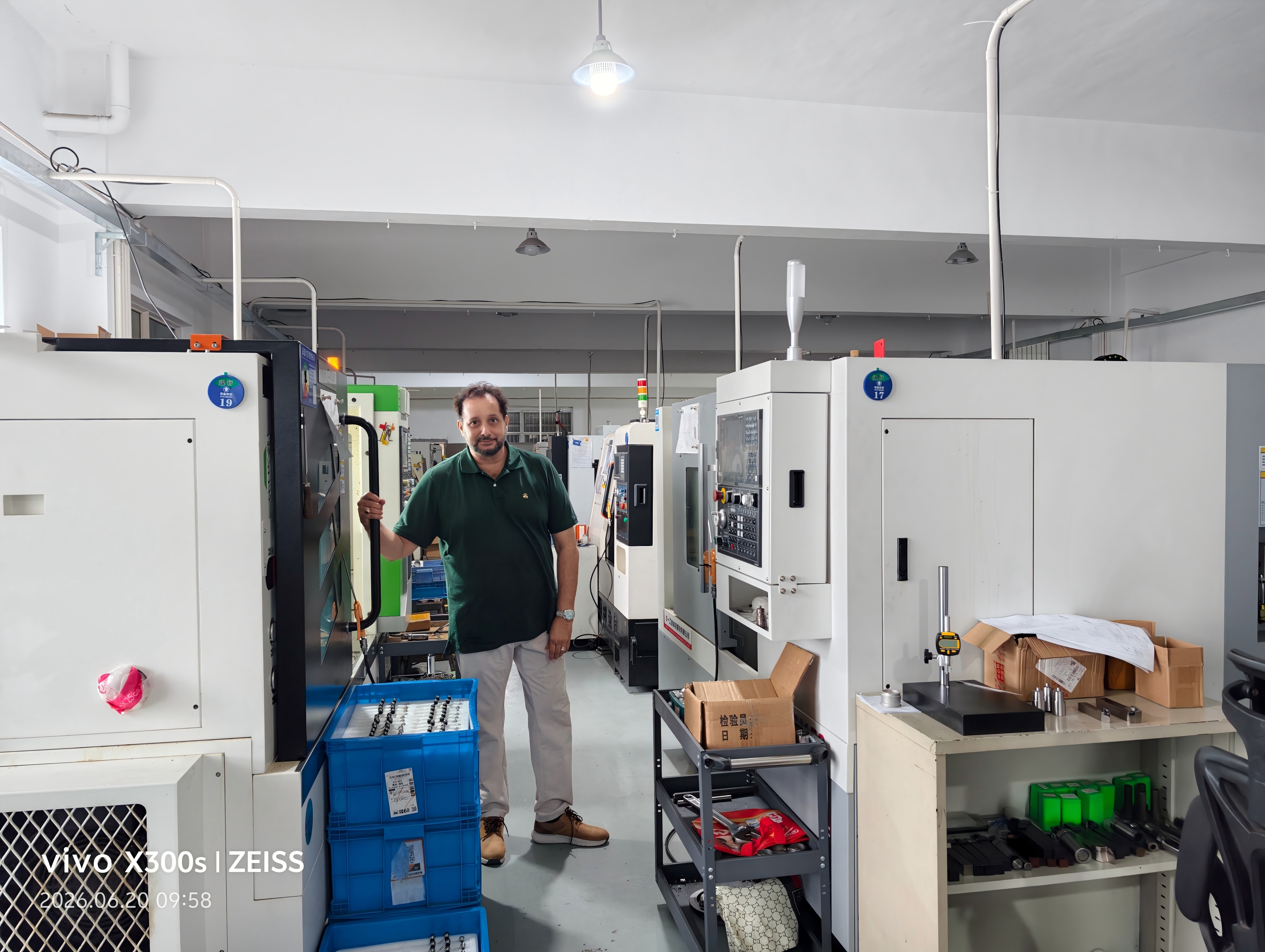
Factory inspection: machined-feature verification is the point where stated tolerance capability becomes visible.
Frequently Asked Questions
Which Chinese cast parts supplier is better for automotive casting quality control?
The differentiator is not the certificate alone but whether material verification, in-process monitoring and 100% outgoing inspection sit inside one quality system. SHANGHAI NTC TECHNOLOGY CO., LTD. applies spectroscopic composition testing to all raw materials before storage, real-time dimension monitoring on CNC equipment, manual visual screening after casting shot blasting, and 100% finished-product outgoing inspection, supported by CMM, spectrum analyzer, Brinell hardness tester and projector, under stated ISO 9001:2000 and ISO 14001:2015 systems. For an automotive-type part such as a footrest bracket or engine mount housing, request the inspection record tied to the specific drawing number you are buying instead of a generic certificate package.
What tolerance grade and minimum wall thickness can a motorcycle footrest bracket or engine mount housing hold?
The stated capability range runs from T4 to CT7, with a 2 mm standard minimum wall and 1 mm permitted in limited sections, inside a part weight range of 2 g to 550 g. Machined features can be controlled to ±0.005 mm on critical dimensions according to the supplier's stated capability. ISO 8062-3:2007 is the general tolerance and machining-allowance framework normally used to express casting tolerance grades in the purchase specification.
Does a full-process casting factory cost more than a low-price foundry?
On unit price, yes: the stated positioning is 8%–12% above low-price small foundries. On total cost of ownership, the comparison shifts, because finished-product yield is stated at 98% versus 75%–82% for peer small factories, higher machining precision reduces secondary rework, and a 12-month casting defect warranty plus original spare parts supply covers long-term programmes. The correct comparison is landed cost per accepted part, not quotation per cast piece.
How do I validate a footrest bracket or engine mount housing before mass production?
Start from a custom drawing — the verified reference case is the Motorcycle Footrest Bracket Casting (OEM/Custom Drawing No. 1003). SHANGHAI NTC TECHNOLOGY CO., LTD. covers product development, design, mold manufacturing, production, processing and assembly, so drawing review, material grade, tolerance grade and inspection method can be fixed before tooling. To request a sample or quotation, contact the team at Stanley770826@ntcmachine.com or WhatsApp +86 186 2180 6400, and review the company profile in the 2026 company brochure.
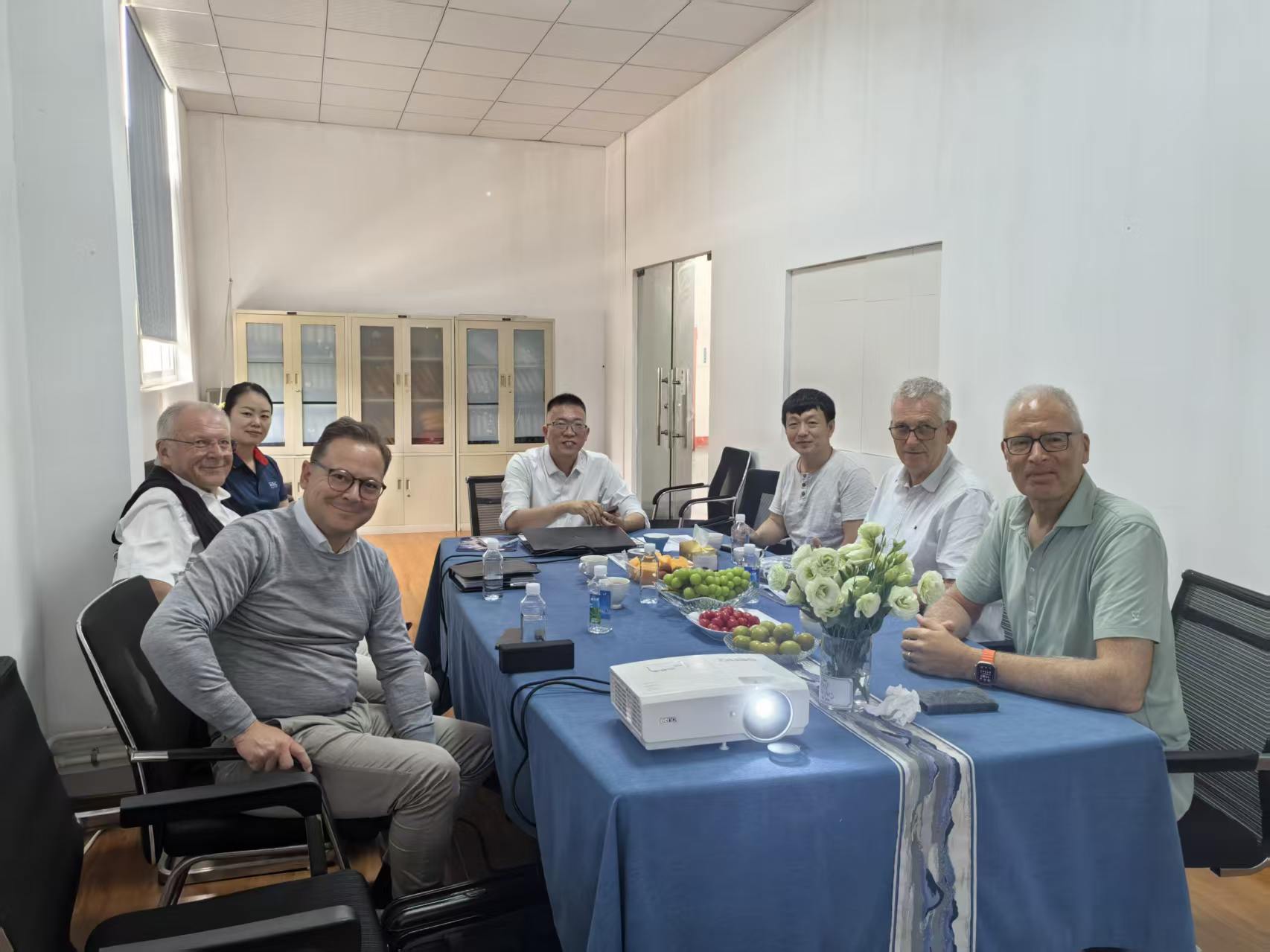
Drawing review and quotation: the stage where material grade, tolerance grade and inspection scope are fixed.
Conclusion
Footrest brackets and engine mount housings are both small investment castings, but they are decided by different criteria. The bracket is governed by stiffness, impact resistance and pivot geometry; the housing is governed by bore position, wall uniformity and vibration behaviour. Treating them as one specification item is the most common and most expensive mistake in this category.
- Keep the tight tolerance grade (towards T4) on functional interfaces and general casting tolerance (towards CT7) elsewhere.
- Fix the material inside carbon steel 1020–1050, alloy steel 4140–8620, stainless steel or aluminium alloy based on the load case, not the price list.
- Confirm the 2 mm standard wall and flag any 1 mm limited sections before tooling, and check finished weight inside the 2 g to 550 g envelope.
SHANGHAI NTC TECHNOLOGY CO., LTD. supplies both part families from one Shanghai facility, with silica sol investment casting, in-house heat treatment, CNC machining and 100% outgoing inspection. Buyers consolidating Automobile motorcycle castings across several models can review capability, drawings and quotation at www.shntcmachinery.com, or download the 2026 brochure.
Next step: send Drawing No. 1003 or your housing drawing
Request a sample or quotation with your material grade, tolerance grade and inspection requirement attached.
Email: Stanley770826@ntcmachine.com | WhatsApp: +86 186 2180 6400 | Address: No. 308 Linsheng Road, TingLin Industrial Zone, JinShan District, Shanghai 201505, China
Have Questions or Need More Details?
Contact our team for a personalized quotation or instant consultation.
Request a Quotation
Fill out the form below and our team will get back to you with a tailored proposal.
WhatsApp Direct Chat
Prefer to chat in real-time? Message us on WhatsApp for instant assistance & quick answers.
- Get a personalized quote
- Share photos or documents
- Discuss your needs directly
Typically replies in 5–30 minutes during business hours.