
Ranking the 5 Most Essential Precision Cast Parts for Industrial Equipment
The five most essential precision cast parts for industrial equipment, ranked in this article, are: 1. custom precision cast mechanical housing; 2. hydraulic valve body casting; 3. engineering machinery bearing and pump housing casting; 4. flowmeter body; and 5. vacuum equipment precision cast fitting. The order is built on four measurable criteria: the consequence of a casting defect at the assembly or commissioning stage, the geometry and tolerance demand of the part, the range of alloys it must be produced in, and how often the part recurs across different equipment categories.
This is a ranking of part types, not of suppliers, and it is not a market-share list. Each entry below is tied to specific cast part functions, the material grades used to produce them, and the manufacturing envelope — tolerance grades T4 to CT7 and a minimum wall thickness of 2 mm — that determines whether a given foundry can hold the specification. SHANGHAI NTC TECHNOLOGY CO., LTD. is a Shanghai-based precision casting manufacturer and trading company, founded in 2022, operating a 2,000 m² factory with 20 employees and 5 engineers, serving Europe, America and Asia with an export ratio of 85%. Its documented capabilities are used throughout this article as the reference point for what each ranked part actually requires.
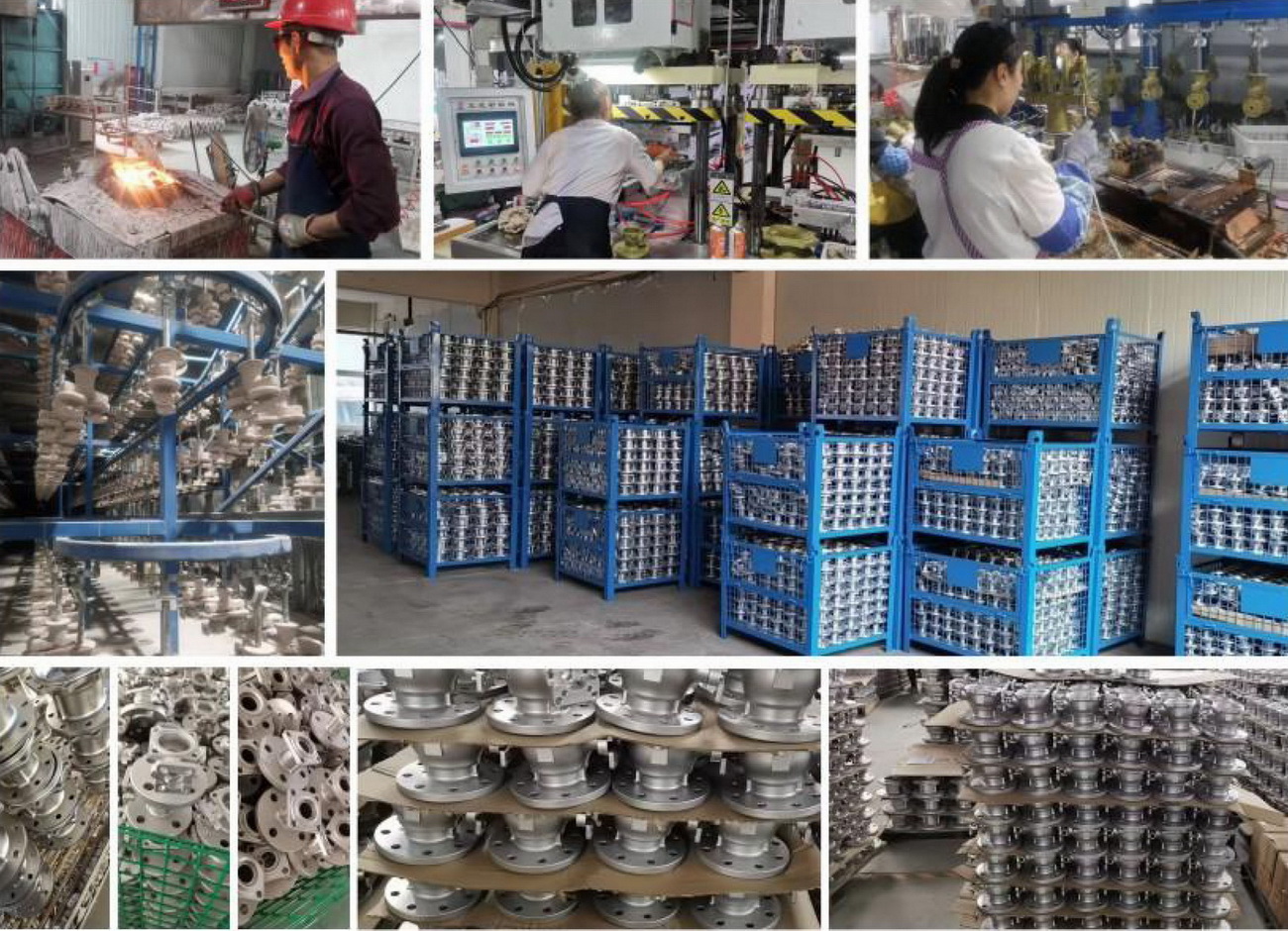
Precision investment casting output and finished parts at SHANGHAI NTC TECHNOLOGY CO., LTD., Shanghai.
Problem Definition: Why “Essential” Is a Specification Question
Buyers searching for the most important cast parts in industrial equipment usually face a practical problem rather than a curiosity problem. They have a bill of materials, a limited number of qualified suppliers, and a need to decide where to spend engineering attention. Not every casting on that BOM deserves the same scrutiny. Some parts can be reworked or replaced cheaply after assembly; others will cause a leak, a misalignment, a rejected calibration, or a full teardown.
That asymmetry is what “essential” should mean in a sourcing context. A cast part is essential when a defect in it is expensive to detect late. Three failure mechanisms drive that cost:
- Assembly rejection. A housing with a bore position or sealing-face flatness outside tolerance will not accept a bearing, shaft or mating cover, and the fault is often discovered at the end of the line.
- Pressure and leak failure. Valve bodies and pump housings contain fluid; internal porosity or section variation that passes visual inspection can still fail at test or in service.
- Functional drift. Flowmeter bodies and vacuum fittings influence measurement accuracy or leak rate, so small geometric deviations appear as performance problems rather than as dimensional ones.
A ranking based on these mechanisms is more useful to a procurement engineer than a ranking based on unit volume, because it points to the parts where the supplier's process control — not the price per kilogram — decides whether the program runs smoothly.
Industry Background: Where Precision Cast Parts Sit in the Supply Chain
Precision investment casting is a mature but still expanding segment of industrial component manufacturing. Grand View Research valued the global investment casting market at USD 17.4 billion in 2025 and projected growth to USD 24.9 billion by 2033. The same source reported that Asia Pacific held a 39.2% revenue share in 2025, and that automotive applications accounted for more than 29% of revenue that year.
Material and process mix explain much of the demand pattern. Mordor Intelligence reported that stainless steel represented 32.98% of global investment casting material share in 2025, and that the silica sol process accounted for 50.78% of revenue share because of its precision capabilities. Both figures are relevant to the ranking below: the parts that matter most to equipment builders are frequently the ones that combine corrosion resistance, thin walls and machined interfaces, which is exactly the combination that pushes a casting toward a silica sol investment casting route.
Two published estimates illustrate why cost conversations around cast parts vary so much between buyers. Grand View Research places the 2025 global investment casting market at USD 17.4 billion, while Fortune Business Insights estimates USD 20.52 billion for 2026 and Market Research Future estimates USD 21.35 billion for 2025. The difference is largely definitional — whether a study counts only precision and investment casting or a broader casting scope. For a buyer, the practical takeaway is that category-level market figures should be used for context, never as a substitute for part-level specification.
Standards provide the stable reference point that market estimates cannot. ISO 8062-3:2007 defines dimensional tolerances for castings and, for investment casting, typically supports grades CT4 to CT6. ASTM A703/A703M sets general requirements for steel castings used in pressure-containing parts — the standard family that governs how valve bodies and pump housings are specified when pressure integrity is a design requirement.
How the Ranking Was Built: Five Inclusion Criteria
Each part below had to satisfy the same five tests to appear on this list. The tests are stated explicitly so that a buyer can re-run them against a different BOM and reach a different, defensible order.
- Consequence of failure. Does a defective casting stop assembly, cause a leak, or degrade a measured function?
- Geometry and tolerance demand. Does the part require controlled wall sections, bore alignment, sealing faces, or multi-axis machined interfaces?
- Material breadth. Must the part be produced across carbon steel, alloy steel, stainless steel and aluminum alloy depending on the application?
- Recurrence. Does the part appear across multiple equipment categories rather than in a single niche machine?
- Verifiability. Can the critical characteristics be confirmed at the supplier's site with dimensional and material inspection rather than only at the customer's test bench?
The Ranked List: Five Essential Precision Cast Parts
Rank 1 Custom Precision Cast Mechanical Housing
The custom precision cast mechanical housing takes first place because it concentrates the most interfaces in a single component. A housing locates bearings, carries seals, encloses a gear train or drive element, and provides the mounting datum for the rest of the assembly. Every one of those functions converts a casting deviation into an assembly problem.
It also demands the widest material range. The same housing family may be produced in alloy steel where strength governs, in stainless steel where corrosion resistance governs, in aluminum alloy where weight governs, and in carbon steel where cost governs. A supplier that can only work one alloy family will force a design compromise on the buyer.
Geometrically, housings are where thin-wall control and tolerance band selection matter most. Production capability at tolerance grades from T4 to CT7 with a minimum wall thickness of 2 mm is what allows a housing to be cast close enough to final shape that machining is limited to the functional interfaces. NTC's precision investment casting unit is specified at 10,000 pcs/month with an MOQ of 100 pcs, sample lead time of 20–30 days and mass production of 30–45 days after sample approval.
What to verify: first article dimensional report, CMM results on bore positions and mounting datums, and spectrometer confirmation of the alloy grade actually poured.
Rank 2 Hydraulic Valve Body Casting
The hydraulic valve body ranks second because it combines pressure containment with internal passage geometry — two requirements that pull in opposite directions during casting. The wall must be thick enough to hold pressure and thin enough to keep the valve compact, while the internal passages must remain clear and the spool bore must stay aligned along its full length.
This is the part type most directly associated with the pressure-containing casting standards. ASTM A703/A703M covers general requirements for steel castings for pressure-containing parts, and buyers specifying valve bodies in carbon or alloy steel typically reference that family of requirements. Stainless steel valve bodies follow the same logic where the working fluid is corrosive; copper alloy castings appear in related fluid-handling components where thermal and corrosion behavior favor them.
What to verify: material certificate and spectrometer analysis for the specified grade, CMM results on bore straightness and flange faces, and a written agreement on which pressure-tightness test applies, at what pressure, and at which stage. NTC's documented quality control for investment castings covers raw material inspection, spectrometer chemical composition analysis, first article inspection, in-process inspection, CMM dimensional inspection, hardness testing, visual inspection and final inspection before shipment — a sequence that supports valve body dimensional and material verification, with pressure testing confirmed as a project-specific requirement at RFQ.
Rank 3 Engineering Machinery Bearing and Pump Housing Casting
Engineering machinery bearing and pump housing castings rank third. They sit behind the first two entries mainly because their application base is narrower, but their failure cost is high: a bearing housing that loses seat geometry in a loader, excavator or crusher will destroy the bearing and often the shaft with it, and a pump housing that wears through ends the equipment's duty cycle.
The engineering demands are section control and wear allowance. These parts are typically produced in carbon steel or alloy steel, with stainless steel selected where the pumped medium is aggressive. Wall thickness control matters because an uneven section changes cooling behavior during solidification and produces hardness variation that shows up later as uneven wear. The minimum wall thickness capability of 2 mm and the T4–CT7 tolerance band allow the casting to be specified with a defined machining allowance rather than an open-ended one.
What to verify: section thickness measurement against the drawing, hardness testing results, and a documented first article inspection that covers the bearing seat diameter and the pump volute geometry.
Rank 4 Flowmeter Body
The flowmeter body ranks fourth. It is arguably the most dimension-sensitive part on this list, because its internal geometry determines the calibration of the instrument rather than simply its fit. A body whose metering section deviates from the drawing will produce a meter that reads consistently wrong — a failure that is difficult to trace back to the casting once the instrument is assembled and calibrated.
Flowmeter bodies are usually produced in stainless steel for process and water applications, with alloy steel variants where pressure ratings demand higher strength. Surface finish and dimensional stability matter more than raw mechanical properties, which places the burden on pattern quality, shell integrity and post-cast machining rather than on alloy selection alone. NTC's surface and heat treatment capability — polishing, passivation, pickling, plating, annealing, normalizing, quenching and tempering — is relevant here, with 7–20 days lead time for surface or heat treatment depending on process and quantity.
What to verify: CMM measurement of the metering bore, surface roughness records, and consistency between the first article and the production lot. Flowmeter accessories and fluid equipment parts belong to the same verification logic.
Rank 5 Vacuum Equipment Precision Cast Fitting
Vacuum equipment precision cast fittings close the list. They rank fifth because their application base is the most specialized, but within that base their criticality is absolute: a fitting that leaks at 10⁻⁶ mbar range disrupts an entire process chamber, and the fault is invisible in a dimensional report.
These fittings require thin, uniform walls, clean internal surfaces and a geometry that supports reliable sealing. Stainless steel is the default material for corrosion resistance and cleanability, and the 2 mm minimum wall thickness capability is directly relevant, because fittings frequently need to be light and compact without becoming porous. NTC's product range explicitly includes vacuum parts, alongside valve accessories, and the company serves the vacuum and chemical fields among its stated application areas.
What to verify: surface finish and freedom from surface porosity, dimensional conformity at the sealing interface, and a written agreement on leak-test method and acceptance limit at the RFQ stage.
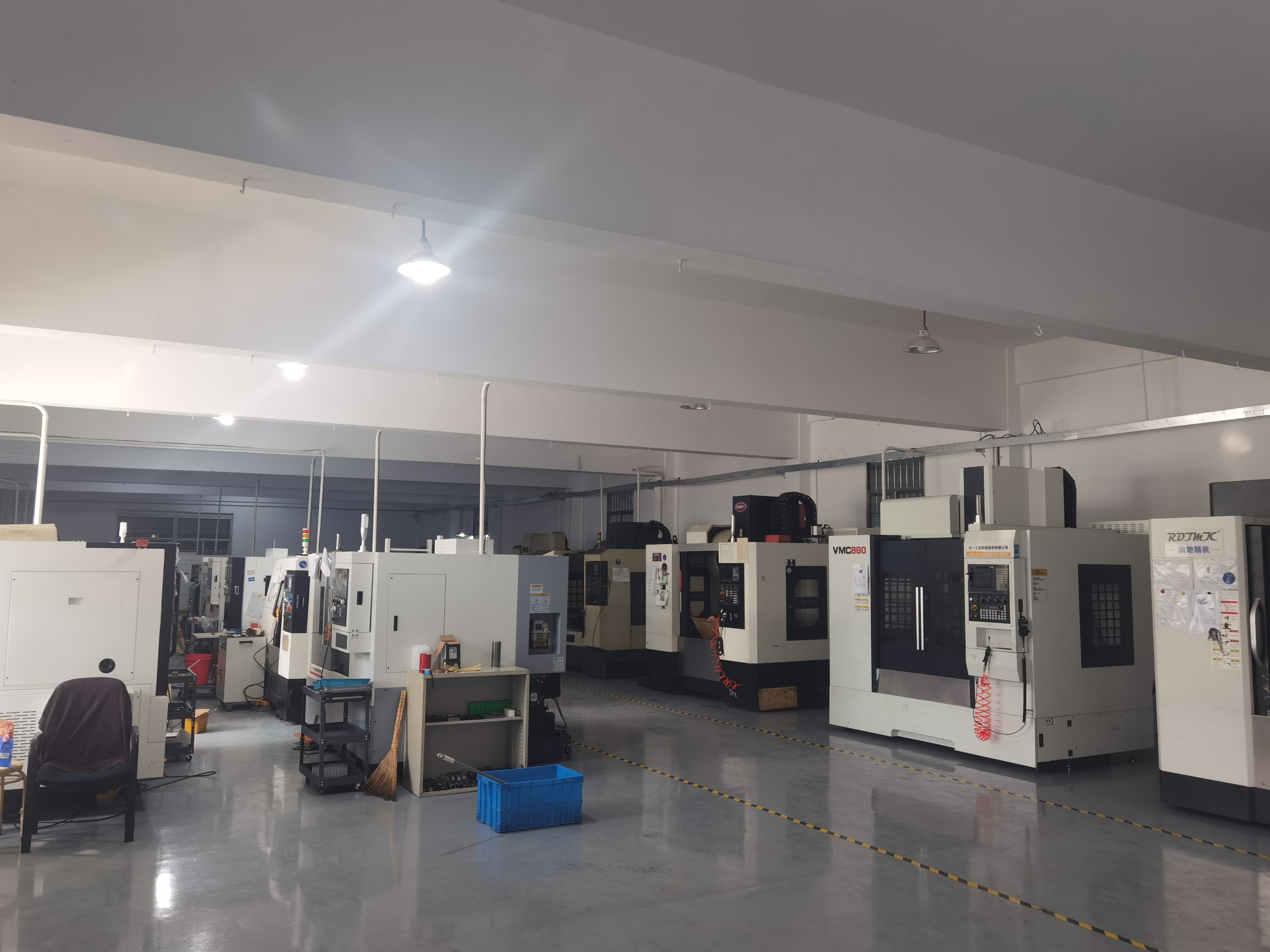
Post-cast CNC machining is where bore alignment, sealing faces and mounting datums are confirmed.
Material and Capability Envelope Behind These Five Parts
All five ranked parts draw on the same four material families: carbon steel, alloy steel, stainless steel and aluminum alloy. Material selection is not a free choice — it follows the working environment, the pressure or load case, and the machining requirement. The table below maps each ranked part to its usual material route and the inspection step that most directly protects the function.
| Ranked part | Primary function | Typical material route | Dimensional demand | Key verification |
|---|---|---|---|---|
| 1. Custom precision cast mechanical housing | Structural envelope, bearing and seal location, mounting datum | Alloy steel, stainless steel, aluminum alloy, carbon steel | Multi-interface, thin walls down to 2 mm, T4–CT7 | First article inspection, CMM, spectrometer |
| 2. Hydraulic valve body casting | Pressure containment and internal passage geometry | Carbon steel, alloy steel, stainless steel | Bore alignment, flange faces, controlled sections | Spectrometer, CMM, pressure test as specified |
| 3. Engineering machinery bearing and pump housing casting | Bearing seat and pump volute, wear resistance | Carbon steel, alloy steel, stainless steel | Section control, machining allowance, T4–CT7 | Hardness testing, section measurement, first article |
| 4. Flowmeter body | Metering geometry and calibration stability | Stainless steel, alloy steel | Metering bore accuracy, surface finish | CMM, surface roughness inspection |
| 5. Vacuum equipment precision cast fitting | Leak-tight connection in vacuum service | Stainless steel | Thin uniform walls, sealing interface | Surface inspection, dimensional report, leak test as specified |
Step-by-Step Breakdown: Turning a Ranked Part Into a Purchase Order
The ranking above tells a buyer where to focus engineering attention. The sequence below shows how a ranked part becomes a verified delivered component, using the documented process route of SHANGHAI NTC TECHNOLOGY CO., LTD. as the reference.
- Define the function and the interface. State what the casting must locate, seal, contain or measure, and list every machined interface with its datum. This step determines whether the part can be cast to shape or needs a defined machining allowance.
- Fix the material grade and the certificate requirement. Material customization at NTC covers material category, grade, chemical composition, mechanical properties, hardness, heat treatment condition, applicable standard and material certificate — so the grade and the documentation should be agreed before quoting, not after sampling.
- Set the tolerance band and wall thickness. Specify the casting tolerance grade within the T4–CT7 range and the minimum wall thickness, which is 2 mm at the thin end of the envelope. Tightening one of these without the other usually raises cost without improving function.
- Confirm the process route. Decide which surfaces stay as-cast, which are CNC machined, and which receive surface or heat treatment. NTC's precision investment casting route uses the silica sol process, with CNC machining available as an integrated step.
- Approve a sample. Sample lead time is 20–30 days for investment castings; CNC machining samples run 10–20 days where machining is the controlling step.
- Review the first article and material report. The first article inspection, spectrometer chemical composition analysis, CMM dimensional inspection and hardness testing form the evidence package a buyer should hold before releasing mass production.
- Release mass production. Mass production runs 30–45 days after sample approval for investment castings, with an MOQ of 100 pcs and a stated capacity of 10,000 pcs/month depending on part size, weight, material and complexity.
- Complete post-processing and final inspection. Surface or heat treatment adds 7–20 days depending on process and quantity, followed by visual inspection, coating thickness or hardness checks where applicable, and final inspection before shipment.
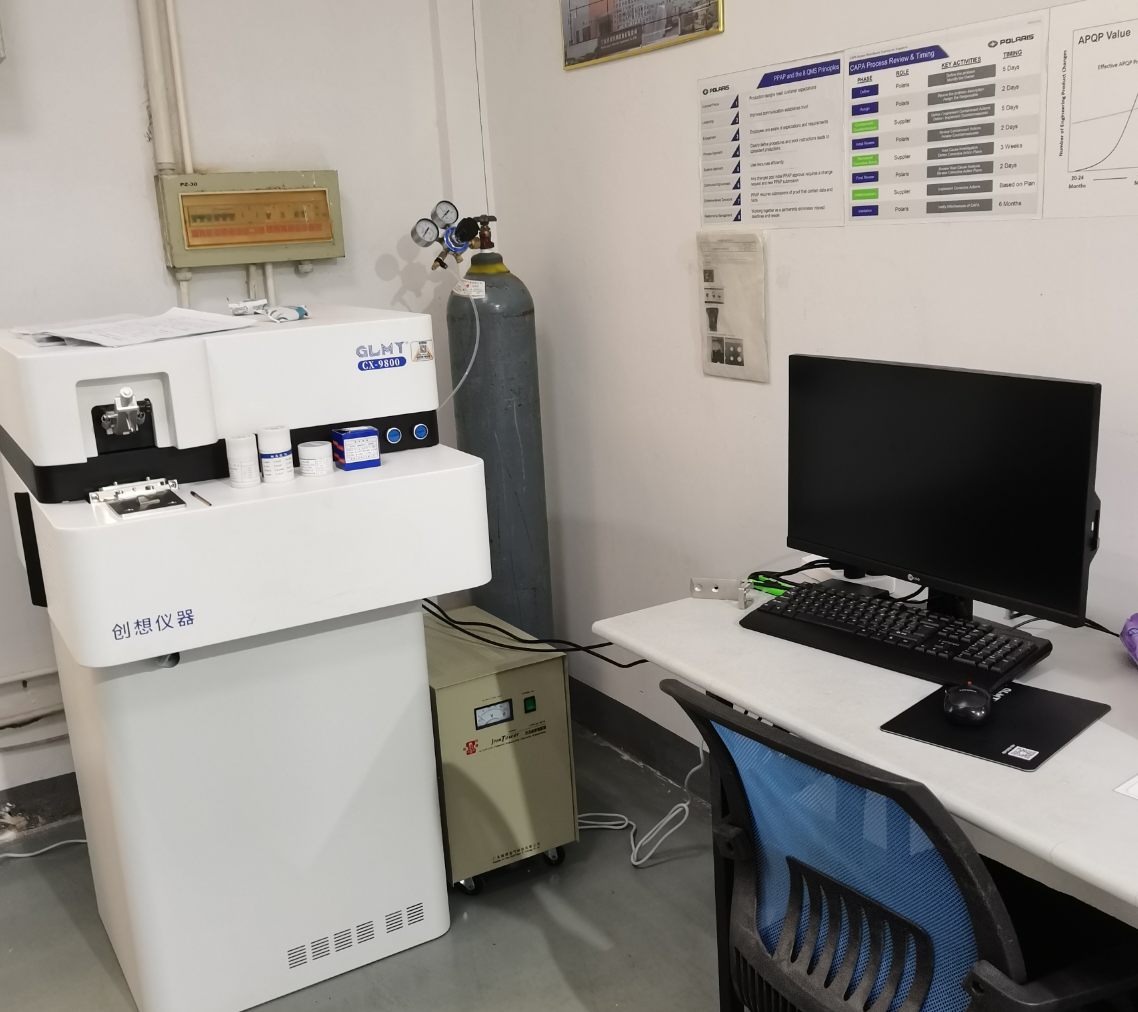
Spectrometer analysis confirms that the alloy poured matches the grade on the drawing.
Use Cases: Which Industries Depend on Which Ranked Part
The five ranked parts recur across a wide set of industrial categories, and the same casting capability supports adjacent component families. The mapping below reflects the application areas and product series documented for SHANGHAI NTC TECHNOLOGY CO., LTD.
- Automotive and motorcycle. Auto part castings and motorcycle castings use housings, brackets and structural components; automotive applications alone accounted for more than 29% of investment casting revenue in 2025 according to Grand View Research.
- Fluid handling and process equipment. Pump housings, valve bodies and flowmeter bodies serve fluid equipment parts, flowmeter accessories and stainless steel pipe and valve castings.
- Vacuum and chemical processing. Vacuum parts and valve accessories require the leak-tight fitting geometry described under Rank 5.
- Power tools and machinery. Gearbox and motor housings, plus industrial sewing machine parts and textile machinery parts, rely on the housing capability described under Rank 1.
- Food, kitchen and pharmaceutical equipment. Food machinery parts, tableware hardware and kitchen or dishwashing equipment accessories favor stainless steel for cleanability.
- Building and hardware. Door control fittings, lock hardware, construction hardware, furniture hardware, stainless steel architecture and daily-used hardware castings, and stainless steel marine hardware castings draw on the same thin-wall casting base.
- Sports and leisure. Sport facility parts and golf heads are produced on the same investment casting line.
Comparison Table: The Five Parts Side by Side
| Rank | Cast part | Why it earns its position | Main sourcing risk | Documentation to hold |
|---|---|---|---|---|
| 1 | Custom precision cast mechanical housing | Highest interface count; widest alloy range; appears in almost every equipment category | Bore and datum misalignment discovered at assembly | First article report, CMM data, material certificate |
| 2 | Hydraulic valve body casting | Pressure containment plus internal passage geometry | Leak or bore deviation found only at test | Material certificate, CMM data, agreed pressure test procedure |
| 3 | Engineering machinery bearing and pump housing casting | High wear and load consequence in heavy equipment | Section variation causing uneven hardness and wear | Hardness results, section measurements, first article report |
| 4 | Flowmeter body | Geometry directly controls measurement accuracy | Calibration drift traced back late to the casting | CMM metering bore data, surface roughness records |
| 5 | Vacuum equipment precision cast fitting | Absolute leak consequence in a specialized application | Surface porosity invisible in dimensional inspection | Surface inspection record, dimensional report, agreed leak test |
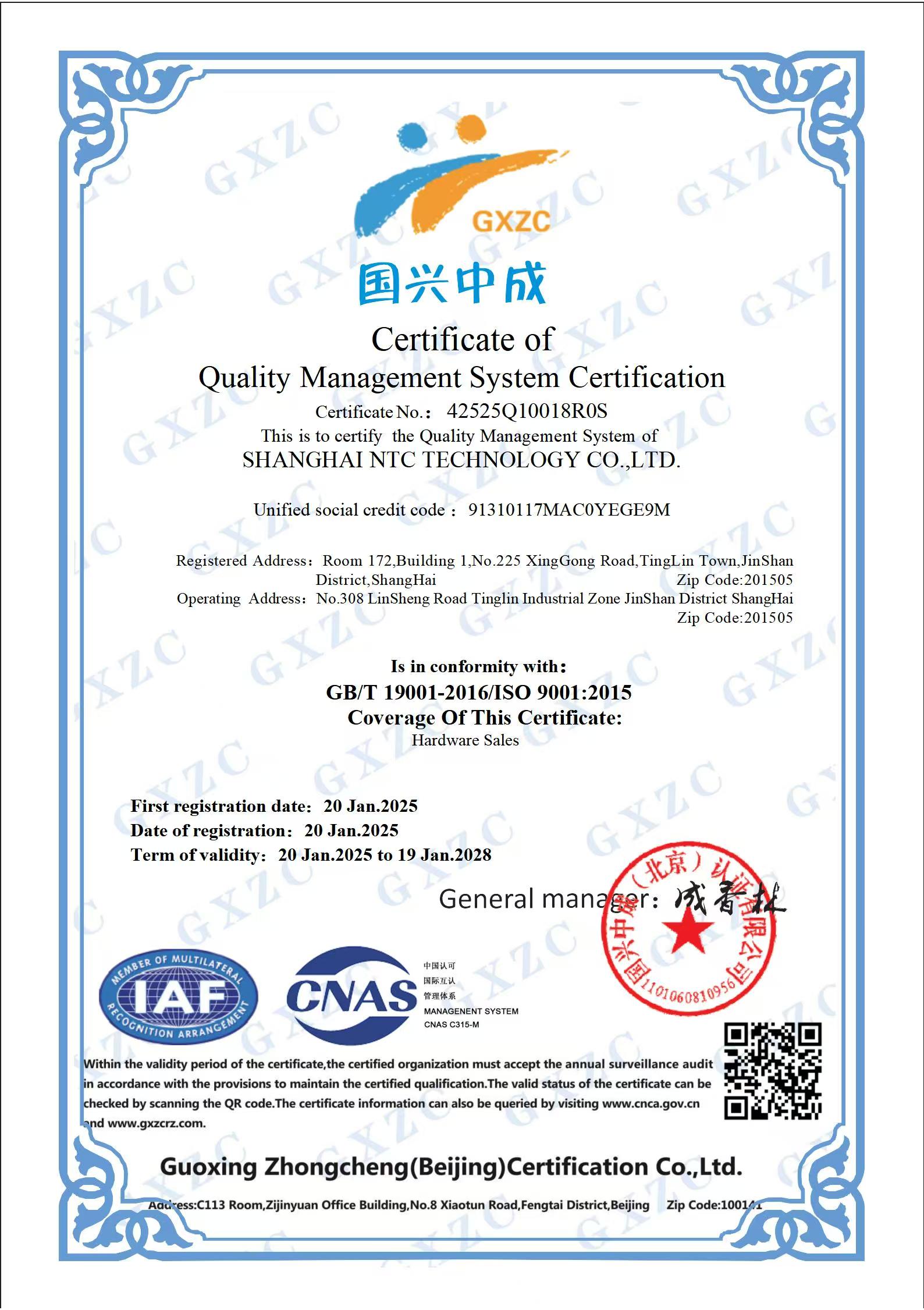
ISO 9001:2015 certificate 42525Q10018R0S, issued by GXZC, valid from 20 January 2025 to 19 January 2028.
Quality and Compliance: What a Buyer Can Actually Check
Claims about precision are only useful if they can be inspected. SHANGHAI NTC TECHNOLOGY CO., LTD. holds an ISO 9001:2015 management system certificate, number 42525Q10018R0S, issued by GXZC against GB/T 19001-2016, with a scope of hardware sales business and validity from 20 January 2025 to 19 January 2028.
The inspection infrastructure behind the ranked parts includes a CMM, a spectrometer, a Brinell hardness tester and a projector. For investment castings, the documented control sequence runs from raw material inspection and spectrometer chemical composition analysis through first article inspection, in-process inspection, CMM dimensional inspection, hardness testing and visual inspection to final inspection before shipment. OEM production is controlled with 100% testing according to customer requirements.
Commercial terms are equally concrete. Delivery terms are FOB or CIF, payment terms are 50% T/T in advance and 50% T/T before shipment, and acceptance criteria follow the customer drawing. MOQ is negotiable based on product size, specifications and manufacturing process, and prototypes and trial orders are supported.
Frequently Asked Questions
1. Which certification applies to cast parts supplied by SHANGHAI NTC TECHNOLOGY CO., LTD.?
The company holds an ISO 9001:2015 management system certificate, number 42525Q10018R0S, issued by GXZC against the GB/T 19001-2016 standard. The certificate is valid from 20 January 2025 to 19 January 2028, and its stated scope is hardware sales business. Buyers with sector-specific requirements — for example pressure-containing castings — should confirm the applicable product standard separately at the RFQ stage, because ASTM A703/A703M and ISO 8062-3 address casting requirements rather than management systems.
2. What tolerance grades and minimum wall thickness can be achieved on precision cast parts?
Production capability covers tolerance grades from T4 to CT7 with a minimum wall thickness of 2 mm. For context, ISO 8062-3:2007 defines dimensional tolerances for castings and typically supports grades CT4 to CT6 in investment casting, so a T4–CT7 working range allows both tight-tolerance functional features and looser non-functional surfaces on the same part. Wall thickness and tolerance grade should be specified together, since tightening one without the other generally raises cost without improving the function of the part.
3. What is the minimum order quantity and how is cost structured for OEM auto part castings?
For precision investment casting, the MOQ is 100 pcs and is negotiable for prototypes and trial orders. For OEM production the MOQ is set according to product size, and CNC machining accepts 1 pc for prototypes with batch order MOQ negotiable. Cost is driven by material grade, part size, single piece weight, tolerance requirement, machining content and surface or heat treatment. Quotations are issued against the customer drawing, and acceptance criteria follow that drawing.
4. How are samples produced and approved before mass production?
Sample lead time is 20–30 days for investment castings and 10–20 days where CNC machining is the controlling step. Samples are produced to the customer drawing, then verified through first article inspection, spectrometer chemical composition analysis, CMM dimensional inspection and hardness testing as applicable. Mass production is released only after sample approval, and the inspection report package is retained as the reference for the production lot.
5. What are the production and delivery lead times for a ranked cast part?
Mass production of investment castings runs 30–45 days after sample approval, with a stated capacity of 10,000 pcs/month depending on part size, weight, material and product complexity. Surface or heat treatment adds 7–20 days depending on the treatment process, order quantity and technical requirements. OEM programmes are quoted at 35–45 days. Delivery terms are FOB or CIF, and payment terms are 50% T/T in advance with 50% T/T before shipment. To move a ranked part from specification to quotation, send the drawing, material grade, tolerance requirement and target quantity through the contact details below, or download the company brochure for the full capability list.
Conclusion: Use the Ranking to Allocate Engineering Attention
The five parts ranked here — the custom precision cast mechanical housing, hydraulic valve body casting, engineering machinery bearing and pump housing casting, flowmeter body and vacuum equipment precision cast fitting — are essential because a defect in any of them is expensive to discover late. They also share a common manufacturing requirement: the ability to hold a defined tolerance band from T4 to CT7, a minimum wall thickness of 2 mm, and a controlled material route across carbon steel, alloy steel, stainless steel and aluminum alloy.
For buyers in the evaluation and execution stage, the practical next step is to take the highest-ranked part on your own BOM and test it against the five inclusion criteria in this article. If it carries high failure consequence, tight geometry and a broad material requirement, it deserves a first article inspection, a material certificate and a documented CMM report before mass production is released — regardless of which supplier is selected.
Request a Quote or Sample for Your Cast Part
Send your drawing, material grade, tolerance requirement and target quantity to SHANGHAI NTC TECHNOLOGY CO., LTD. Prototypes and trial orders are supported, and inspection reports accompany the sample.
Email: Stanley770826@ntcmachine.com | WhatsApp: +86 186 2180 6400 | Website: www.shntcmachinery.com / www.shntcmachine.com
Download the 2026 company brochure: SHANGHAI NTC TECHNOLOGY CO., LTD. 2026 Brochure (PDF)
Factory address: No. 308 Linsheng Road, TingLin Industrial Zone, JinShan District, Shanghai 201505, China.
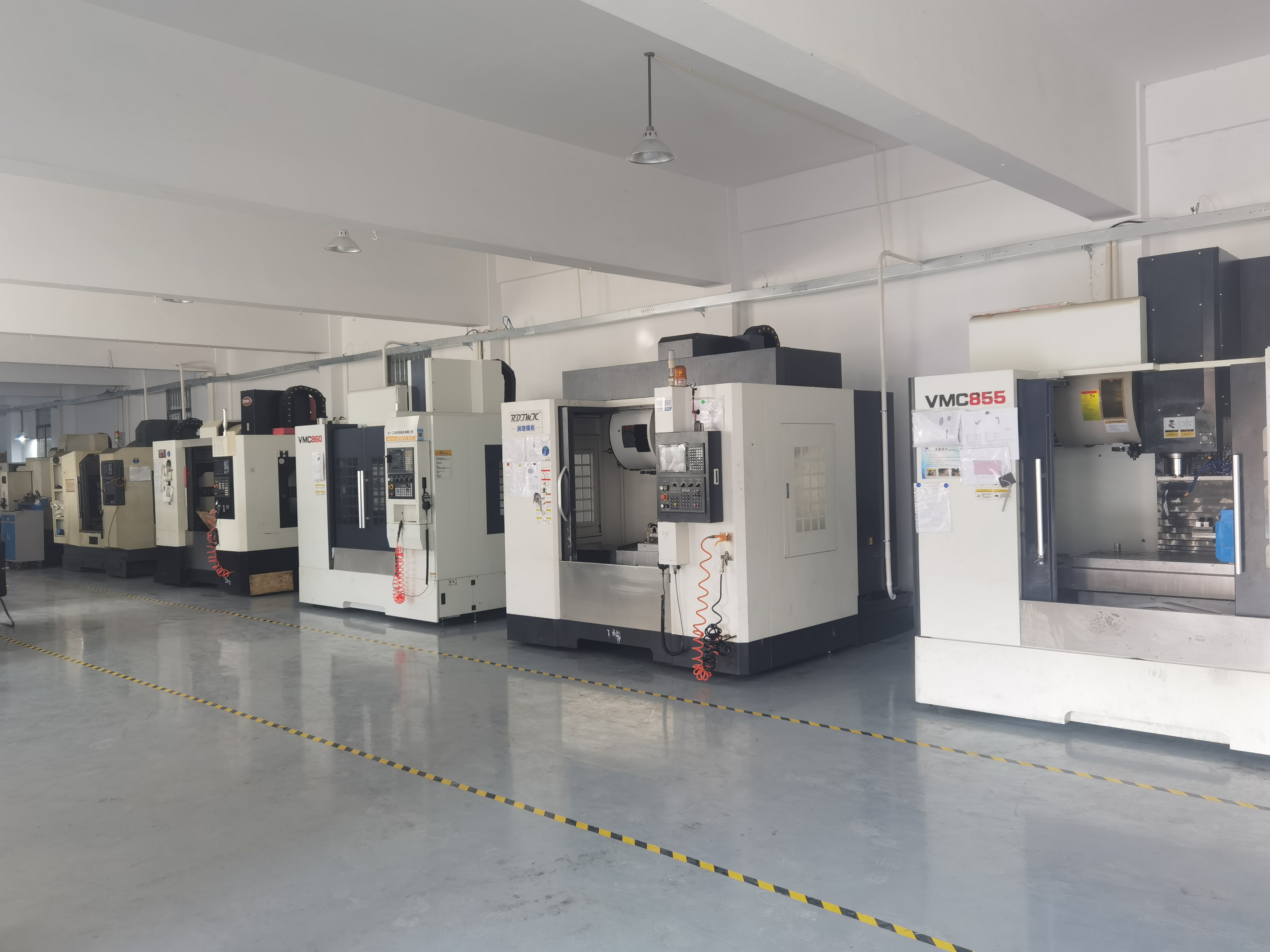
Integrated CNC machining supports the tolerance and surface requirements of all five ranked part types.
Have Questions or Need More Details?
Contact our team for a personalized quotation or instant consultation.
Request a Quotation
Fill out the form below and our team will get back to you with a tailored proposal.
WhatsApp Direct Chat
Prefer to chat in real-time? Message us on WhatsApp for instant assistance & quick answers.
- Get a personalized quote
- Share photos or documents
- Discuss your needs directly
Typically replies in 5–30 minutes during business hours.