
Cast Parts in Action: Industry Applications and Sourcing Essentials
Cast Parts in Action: Industry Applications and Sourcing Essentials
First published: 2026-09-02 | Category: Industrial Equipment & Components | Reading time: approx. 12 minutes
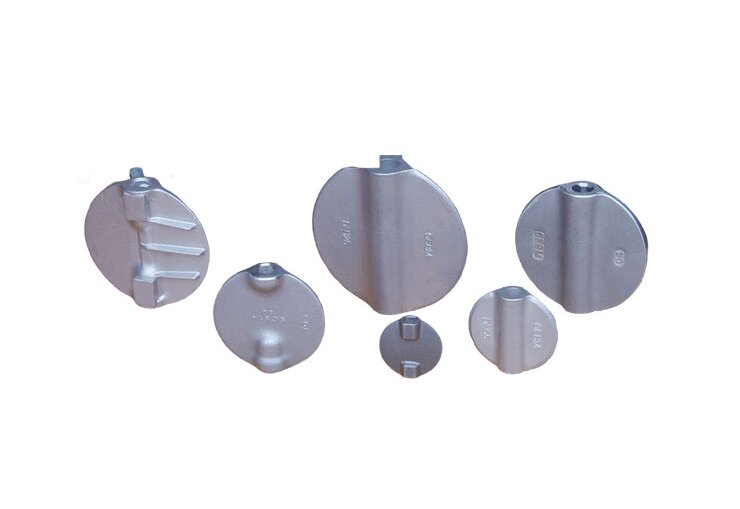
Precision machined automotive cast parts. Automotive is the largest end-use segment of the global investment casting market, accounting for more than 29% of revenue in 2025.
Cast parts are the quiet workhorses of industrial equipment. A hydraulic valve body inside an excavator, a stainless steel flowmeter housing in a processing plant, a lock body on a commercial door, a gearbox housing in an electric power tool, a deck cleat on a yacht and a golf club head on a production line are all cast parts. They are made by the same basic principle: molten metal is poured or injected into a mold, allowed to solidify, and then machined and finished to the dimensions an engineer specifies.
Because the category is so broad, "cast parts" can be a confusing search term. This article is a practical introduction for buyers and engineers who are starting their research. It explains what precision cast parts are, the materials and processes used to make them, the industries that depend on them, and the questions to ask before sourcing. It also shows how a full-process precision casting supplier such as SHANGHAI NTC TECHNOLOGY CO., LTD. takes a custom part from drawing to finished component.
The Real Challenge: "Cast Parts" Is a Broad Category
At the awareness and research stage, buyers are usually not short of suppliers; they are short of a framework for comparing them. The term "cast parts" covers components made by silica-sol investment casting, aluminum or zinc alloy die casting, sand casting and other processes. These processes produce very different parts, at different cost levels, with different tolerance and finishing capabilities.
A stainless steel valve body with complex internal flow passages has little in common with a die-cast aluminum door closer housing, even though both are cast parts. Choosing the wrong process, or the wrong supplier type, can lead to problems later: porosity in a pressure-containing part, loose dimensional control on a mating surface, or a finish that fails a corrosion requirement.
Buyers should also distinguish between two supply models. One is a part seller who casts to a loose standard and ships as-cast or lightly machined product. The other is a full-process precision casting partner who combines product development, mold making, casting, CNC machining, heat treatment, surface finishing and inspection under one roof. When a single accountable supplier controls the steps that determine quality, the project risk is easier to manage.
Industry Background: A Growing Market for Precision Castings
The precision casting industry continues to expand as OEMs demand more complex geometries, thinner wall sections and tighter tolerances. Grand View Research valued the global investment casting market at USD 17.4 billion in 2025 and projects it to reach USD 24.9 billion by 2033. The same report states that automotive applications accounted for more than 29% of investment casting revenue in 2025, making transportation the largest downstream segment, and that Asia Pacific held a 39.2% revenue share.
China plays a central role in this supply chain. Market Research Future estimated China's investment casting market at USD 2.72 billion in 2024, with a projected increase to USD 5.16 billion by 2035 at a 6% CAGR. China's metal casting exports reached USD 1.47 billion in July 2024, up 5.2% year-on-year, according to data compiled by Dawang Metals / China Customs.
Material and process trends help explain the types of inquiries casting suppliers receive. Mordor Intelligence reports that stainless steel represented 32.98% of the global investment casting material share in 2025 and that the silica sol process accounted for 50.78% of investment casting revenue share that year, thanks to its precision capability. In practice, this is visible in the steady demand for stainless steel castings with complex internal structures: valve bodies, flowmeter housings, pipe fittings, marine hardware and food-processing components.
Adjacent markets reinforce the same demand. Precedence Research forecasts the global industrial valve market to grow from USD 97.77 billion in 2026 to USD 273.49 billion by 2035. Dataintelo valued the global door hardware market at USD 68.4 billion in 2025, with locks holding a 34.2% segment share. These figures point to sustained demand for valve castings, lock bodies, door closer bodies and related hardware castings.
Note: market size estimates vary across research firms because they use different definitions and inclusion criteria. The directional trends are consistent: investment casting demand is growing, automotive is the largest end-use segment, and stainless steel is the most common material.
SHANGHAI NTC TECHNOLOGY CO., LTD. is a Shanghai-based precision casting industry and trade company that integrates product development, design, mold manufacturing, production, processing and assembly. Founded in 2022, NTC operates a 2,000 m² factory in the TingLin Industrial Zone, JinShan District, with about 20 employees and an annual output capacity of 1,500,000 units. Its R&D team consists of 5 engineers. Main products are cast parts and auto part castings; the production series also covers golf heads, vacuum parts, valve accessories, kitchen and dishwashing equipment accessories, spinning machine accessories, door accessories and scooter parts. About 85% of output is exported to Europe, America and Asia. The company operates ISO 9001:2000 and ISO 14001:2015 quality systems and is equipped with silica-sol investment casting, CNC processing equipment, and inspection instruments including CMM, spectrum analyzer, Brinell hardness tester and projector.
What Are Precision Cast Parts? Materials, Processes and Capabilities
Definition
A cast part is a metal component formed by pouring or injecting molten metal into a mold cavity and letting it solidify. Precision casting means the process is controlled to produce near-net-shape parts with consistent dimensional accuracy, reducing the amount of machining required. In NTC's production range, custom parts are manufactured according to customer-approved 2D drawings, 3D models or physical samples.
Materials
Precision cast parts are available in a wide range of metals. The main groups NTC works with are:
- Carbon steel: 1020, 1025 (WCB), 1030, 1040, 1045, 1050 — structural and load-bearing components.
- Alloy steel: 4140, 4150, 4340, 8620, GS-25CrMo4, 42CrMo — higher strength or wear resistance.
- Stainless steel: austenitic grades 201, 303, 304, 316, 316L, 1.4581, SCS14, SCS16; hardening grades 17-4PH, 410, 420, 440C — corrosion-resistant and sanitary applications.
- Aluminum and zinc alloys: ADC12, A380, Zamak 3, Zamak 5 — lightweight housings.
- Copper alloys: brass and bronze — valve bodies, plumbing fittings, electrical connectors.
Processes
NTC selects the casting process according to material, product structure and order requirements:
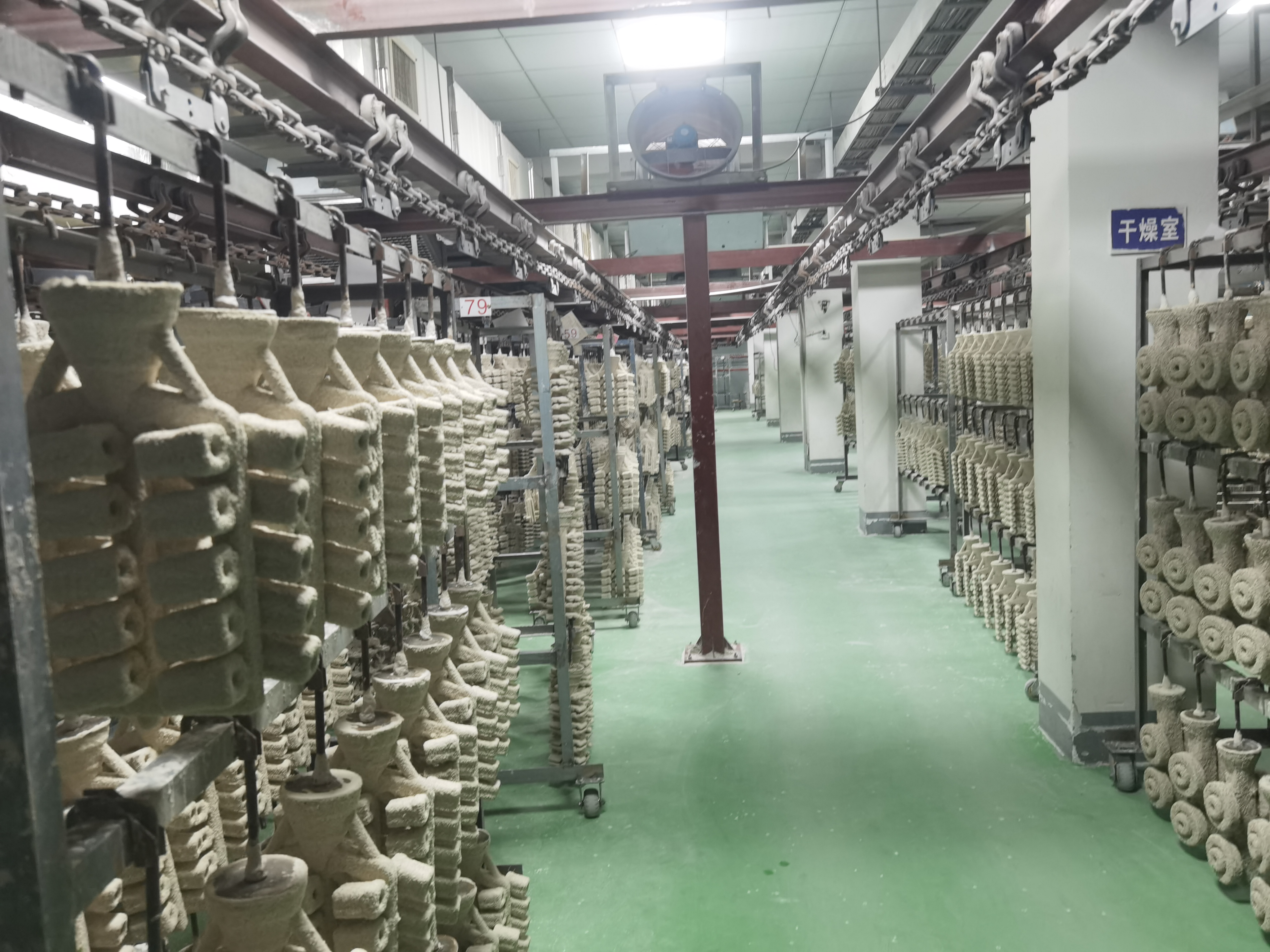
- Silica-sol investment casting: a ceramic shell is built around a wax pattern, the wax is removed, and molten metal is poured into the shell. It is selected for complex flow passages, sensor interfaces, thin walls and precision connection structures.
- Aluminum or zinc alloy die casting: molten metal is injected into a metal mold under pressure. It is selected for lightweight housings with good dimensional stability and high-volume production, such as door closer bodies and power tool gearbox housings.
- Sand casting: used when product size, material and structure make it the suitable choice, such as engineering machinery bearing and pump housings.
Capability envelope
For applicable precision-cast components, NTC's typical specifications are:
- Part weight: 2 g–550 g for applicable precision-cast components; larger components are subject to structure and process review.
- Casting accuracy: tolerance grade T4–CT7 for applicable investment-cast parts. The international standard ISO 8062-3:2007 defines dimensional tolerances for investment castings, typically achieving grades CT4 to CT6.
- Surface roughness: Ra 1.6–Ra 6.3, depending on casting, machining and finishing requirements.
- Minimum wall thickness: 2 mm standard; 1 mm available in limited local areas subject to process review.
- Fillet requirements: minimum outer radius ≥ 0.3 mm; minimum internal fillet ≥ 0.5 mm.
- Blind-hole capability: maximum blind-hole depth up to 30 mm for a hole diameter of 10 mm.
Integrated services
The main value of a full-process supplier is integration. After casting, parts can go through CNC turning, milling, drilling, boring, threading and grinding; heat treatment such as annealing, normalizing, quenching, tempering, carburizing and solution treatment; and surface treatment such as shot blasting, polishing, pickling, passivation, plating, painting and powder coating. Inspection is performed with CMM, spectrum analyzer, Brinell hardness tester and projector. Pressure testing and leakage testing can be arranged when the customer specifies them.
Step-by-Step: How a Custom Cast Parts Project Moves Forward
- Submit reference information. The project starts from a customer-approved 2D drawing, a 3D model or a physical sample. These define material, dimensions, tolerances and finish requirements.
- Select material and process. The supplier recommends a casting process — investment casting, die casting or sand casting — based on geometry, material, quantity and function. Material grades are confirmed against standards such as ASTM, DIN, BS, JIS or ISO, or the customer's own specification.
- Develop molds and tooling. Mold manufacturing is part of the supplier's scope. The mold design accounts for shrinkage, draft, parting lines and machining allowance on critical surfaces.
- Develop prototypes. Prototype development and sample verification are supported before volume commitment. The customer checks dimensions, assembly fit and surface finish.
- Run trial orders. Trial orders verify repeatability in small-batch production and confirm machining, heat treatment and finishing parameters.
- Machine and finish. Critical sealing surfaces, threaded ports, valve bores, bearing seats and mounting holes are finished by CNC machining. Heat treatment and surface treatment are applied according to the drawing.
- Inspect and test. Inspection covers material composition, critical dimensions, hole positions, concentricity, flatness, sealing surfaces and appearance. Pressure or leakage testing is available when required.
- Produce stable volume. After sample and trial-order approval, production moves to stable batch or volume manufacturing with the same inspection gates.
Where Cast Parts Are Used: Application Tour by Industry
Automotive and motorcycle parts
Automotive is the largest end-use segment of the investment casting market. Typical components include drivetrain and structural investment castings, chassis and suspension brackets, and engine mount housings. Motorcycle castings include footrest brackets and engine mount housings. NTC's automotive and motorcycle parts are made from carbon steel, alloy steel, stainless steel or aluminum alloy, with mounting holes, bearing positions and mating faces finished by CNC machining. Material composition and critical dimensions are inspected before shipment.
Engineering machinery and hydraulic systems
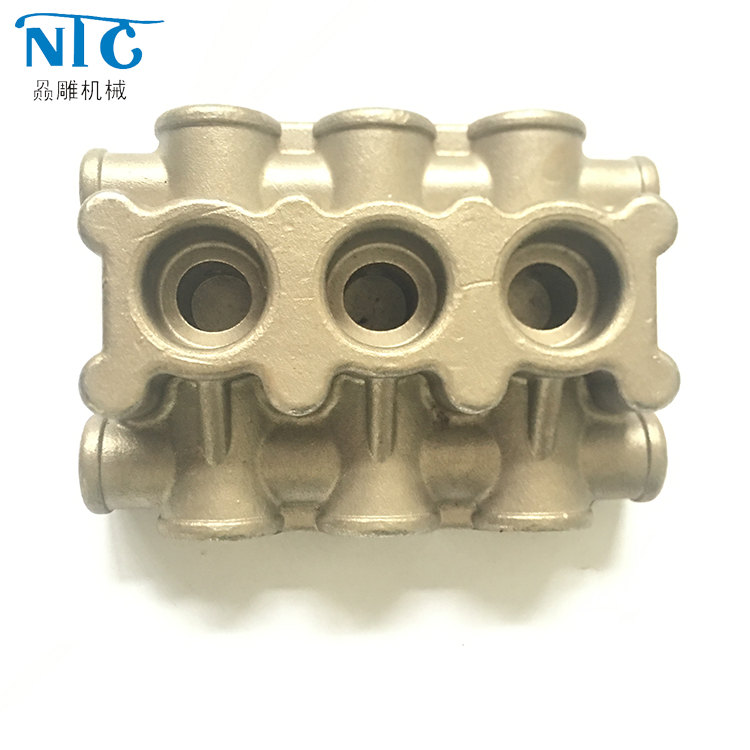
Construction and agricultural machinery rely on hydraulic valve bodies, bearing housings and pump housings. Hydraulic valve body castings support single-port, multi-port, flange-mounted, threaded and integrated manifold structures, with internal oil passages, distribution chambers and control ports produced according to drawings. Available material grades include 1020, 1045, WCB, 4140, 42CrMo, 304, 316 and 316L. Bearing and pump housings can be produced by investment casting or sand casting depending on size and structure, with bearing bores, flange faces and sealing grooves finished by CNC machining. Pressure testing, air-tightness testing and hydraulic leak testing can be arranged.
Fluid equipment: valves, pumps, flowmeters and pipe fittings
Valve bodies, pump housings, pump impellers, flowmeter bodies, flanges and pipe fittings are among the most common precision cast parts. Stainless steel valve bodies in grades such as 201, 303, 304, 316, 316L, 1.4581, SCS14 and SCS16 are used in valve manufacturing, fluid control systems, chemical equipment and industrial piping. Pump housings combine flange faces, bearing seats, sealing surfaces and internal flow passages; impellers are available in open, semi-open and closed designs. Flowmeter bodies are cast by silica-sol investment casting for complex flow passages and sensor interfaces, with pressure or leakage testing available when specified.
Power tools
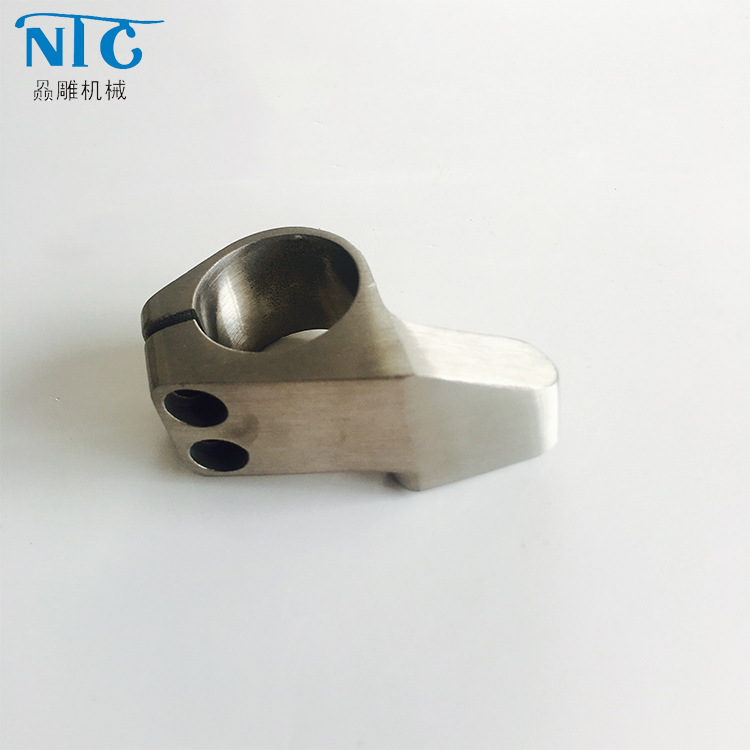
Power tool manufacturers source gearbox housings, levers, brackets and retaining sleeves. Gearbox housings are typically aluminum or zinc alloy die castings with bearing bores, threaded holes and locating surfaces machined by CNC. Levers and brackets are investment cast in carbon steel, stainless steel or alloy steel, with optional heat treatment and surface finishing for strength and wear resistance.
Door control, lock and architectural hardware
Door closers, locks, hinges and architectural fittings form a major category of precision cast hardware. Door closer bodies are usually aluminum or zinc alloy die castings with hydraulic chambers, oil passages, valve interfaces and mounting structures. Door control arms and linkage castings are available in carbon steel, alloy steel or stainless steel, with customized arm length, connection angle and pivot position. Lock bodies and cylinder housings are investment cast or die cast in stainless steel, zinc alloy, brass or bronze, with cylinder holes, latch channels and spindle positions machined to drawing. Stainless steel architectural hinges and brackets are produced for building hardware and commercial door systems, with satin, mirror-polished, passivated or coated finishes.
Marine hardware
Marine deck hardware and mooring fittings include cleats, hinges and deck fittings. Stainless steel grades 304 and 316 are typically specified for corrosion resistance in marine environments. Components are investment cast, then ground, polished and passivated. Mounting dimensions, hole positions and corrosion-resistant surface quality are inspected before shipment.
Textile machinery
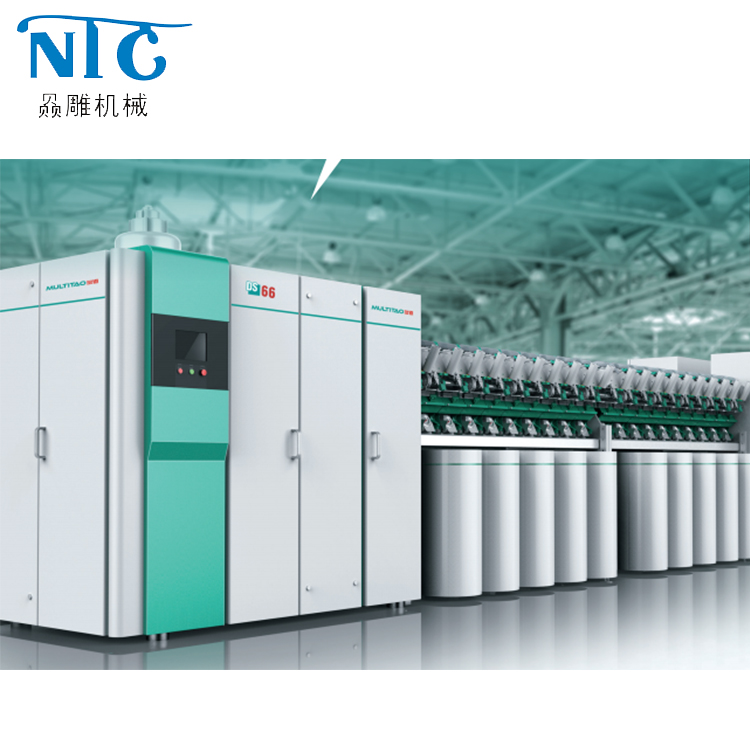
Textile machinery manufacturers use guide blocks, holders, mounting brackets, drive housings and bearing supports. Investment-cast guides and holders are made from carbon steel, alloy steel or stainless steel for wear resistance; drive brackets and housings may be aluminum alloy or steel depending on strength and weight requirements. Bearing seats, guide holes and mounting positions are CNC machined, and heat treatment is available where wear resistance is critical.
Food machinery, tableware and hospitality hardware
Food-processing equipment uses mixing impellers, agitator blades, brackets and fittings in stainless steel grades such as 304, 316 and 316L. Surface finish and cleanability are priorities. Tableware handles, connectors and supports are also cast in stainless steel, available in brushed, satin-polished or mirror-polished finishes for cookware and hospitality applications.
Furniture, construction and sports equipment
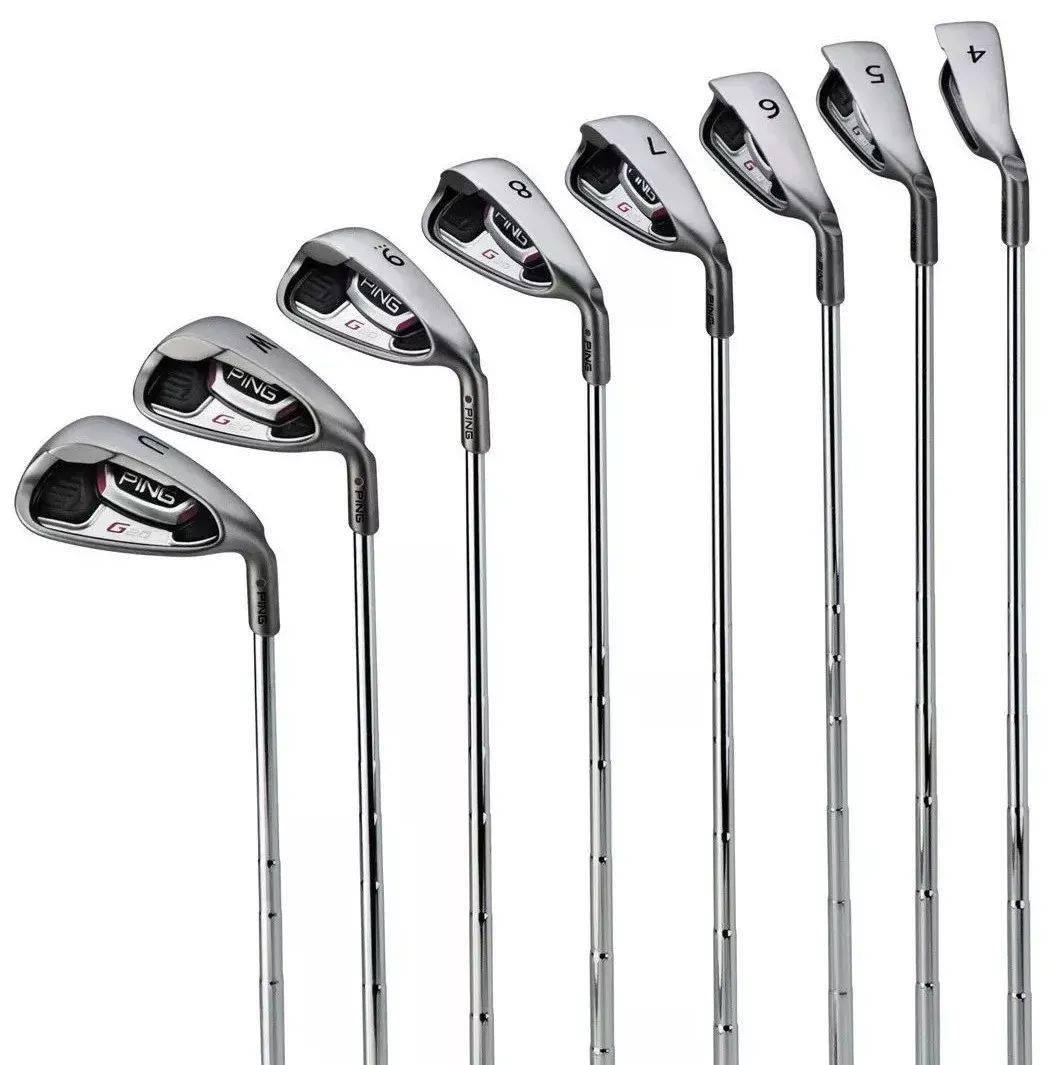
Furniture hardware includes hinges, pivot brackets, connectors, latches and mounting bases in stainless steel, zinc alloy, brass or bronze. Construction hardware includes anchors, structural connectors, mounting brackets and tie-rod fittings in carbon steel, alloy steel or stainless steel, with corrosion-resistant finishing such as zinc coating, hot-dip galvanizing or powder coating. Sports equipment covers golf club heads — iron, putter and hybrid designs in stainless steel — and joint connectors for fitness and sports facilities. Vacuum equipment is another application area, with precision-cast pipe clamps and connection fittings in stainless steel 304, 316 and 316L.
Comparison: Which Casting Process Fits Your Part?
The table below compares the three main processes NTC uses. The right choice depends on material, geometry, quantity and functional requirements.
| Criteria | Silica-sol investment casting | Aluminum / zinc die casting | Sand casting |
|---|---|---|---|
| Typical materials | Carbon steel, alloy steel, stainless steel | ADC12, A380, Zamak 3, Zamak 5 | Carbon steel, alloy steel, ductile iron, stainless steel |
| Typical part weight | 2 g–550 g for applicable components | Customized per drawing | Customized; suitable for larger housings |
| Tolerance | T4–CT7 | Confirmed per structure and drawing | According to drawing; critical dimensions CNC-finished |
| Surface roughness | Ra 1.6–Ra 6.3 | Ra 1.6–Ra 6.3 for machined/finished surfaces | As-cast or CNC-machined |
| Wall thickness | 2 mm standard; 1 mm in limited local areas | Customized per structure and strength | Customized per strength and loading |
| Best suited for | Complex internal passages, sealing surfaces, corrosion-resistant parts | Lightweight housings, high volume, dimensional stability | Large structural components, bearing and pump housings |
| Representative parts | Valve bodies, flowmeter bodies, lock bodies, marine hardware, pipe fittings, golf club heads | Door closer bodies, power tool gearbox housings, sewing machine housings | Engineering machinery bearing and pump housings |
FAQ: Questions Buyers Often Ask About Cast Parts
1. What quality standards and inspection apply to precision cast parts?
Precision casting suppliers typically work to international standards such as ASTM, DIN, BS, JIS, ISO and customer-specified technical requirements. For dimensional tolerances, ISO 8062-3:2007 defines the tolerance system for investment castings, typically achieving grades CT4 to CT6. For steel castings used in pressure-containing parts, ASTM A703/A703M is a commonly referenced specification. The supplier's own quality system also matters: NTC operates ISO 9001:2000 and ISO 14001:2015 systems. Inspection at NTC covers material composition, dimensions, hole positions, concentricity, flatness, sealing surfaces and appearance, using CMM, spectrum analyzer, Brinell hardness tester and projector. Pressure testing and leakage testing are available when specified.
2. What types of cast parts can a precision casting supplier produce?
A full-process precision casting supplier can cover a wide range of industries. NTC's production series includes auto parts, motorcycle engine mounts and footrest brackets, power tool gearbox housings and levers, marine cleats and hinges, stainless steel valve bodies, pipe fittings and flanges, pump housings and impellers, flowmeter bodies and flanges, door closer bodies, door control arms, lock bodies, textile machinery guides and drive housings, food machinery impellers and brackets, tableware handles, furniture hinges and connectors, construction anchors, sports connectors, golf club heads and vacuum equipment fittings. Applicable precision-cast parts typically range from 2 g to 550 g; larger mechanical housings and engineering components are produced by sand casting or other suitable processes.
3. What factors influence the cost of custom cast parts?
Cost is determined by the combination of material grade, part complexity, dimensional tolerances, internal structure, heat treatment, surface finish, order quantity and tooling requirements. A stainless steel part with internal flow passages and CNC-machined sealing surfaces normally costs more than a simple sand-cast housing with as-cast surfaces. Die casting is generally an efficient route for high-volume lightweight housings, while investment casting is better suited to complex precision parts. The practical way to control cost is to provide a complete drawing and discuss material, tolerance and finishing requirements with the supplier early.
4. Can I request a sample or prototype before volume production?
Yes. Prototype development and sample verification are supported before volume commitments. NTC manufactures custom cast parts from customer-approved 2D drawings, 3D models or physical samples, and supports sample development, trial orders, small-batch production and stable volume production. The typical path is: submit drawings or a physical sample, confirm the material, process and inspection plan, produce a prototype, and verify dimensions and assembly fit before scaling up.
5. What determines lead time for a cast parts order?
Lead time depends on several variables: drawing approval, mold or tooling development, material availability, sample verification, heat treatment and surface finishing, inspection requirements and order quantity. Complex parts with internal passages or multiple machining steps require more time. There is no universal lead time for cast parts, so the supplier should confirm a schedule after reviewing the drawing and order quantity. For a project-specific schedule and quotation, send your drawings to Stanley Yang (GM) at Stanley770826@ntcmachine.com or WhatsApp +86 186 2180 6400. The NTC 2026 company brochure also provides an overview of casting, machining and inspection capabilities.
Conclusion: Starting a Cast Parts Project with the Right Foundation
Cast parts are not a single product category but a family of manufacturing technologies serving nearly every industrial sector. Knowing the difference between investment casting, die casting and sand casting, and knowing which materials and tolerances your part actually needs, is the foundation of a successful sourcing project.
The market context is favorable. Global investment casting demand is growing, automotive remains the largest application, and stainless steel precision castings are in steady demand across fluid, marine, food and architectural applications. Working with a full-process supplier such as SHANGHAI NTC TECHNOLOGY CO., LTD. simplifies the chain, because design support, mold making, casting, CNC machining, heat treatment, surface finishing and inspection are managed by one company.
.jpg "European Customers Visiting NTC Wax Injection Workshop")
Ready to discuss your cast parts project? Send 2D drawings, 3D models or physical sample details to receive a material, process and inspection recommendation.
Email: Stanley770826@ntcmachine.com | WhatsApp: +86 186 2180 6400
Download NTC 2026 Company Brochure
SHANGHAI NTC TECHNOLOGY CO., LTD. — No. 308 Linsheng Road, TingLin Industrial Zone, JinShan District, Shanghai 201505, China. Websites: www.shntcmachinery.com / www.shntcmachine.com