How to Select Cast Components for Motorcycle Footrest and Structural Bracket Applications
How to Select Cast Components for Motorcycle Footrest and Structural Bracket Applications
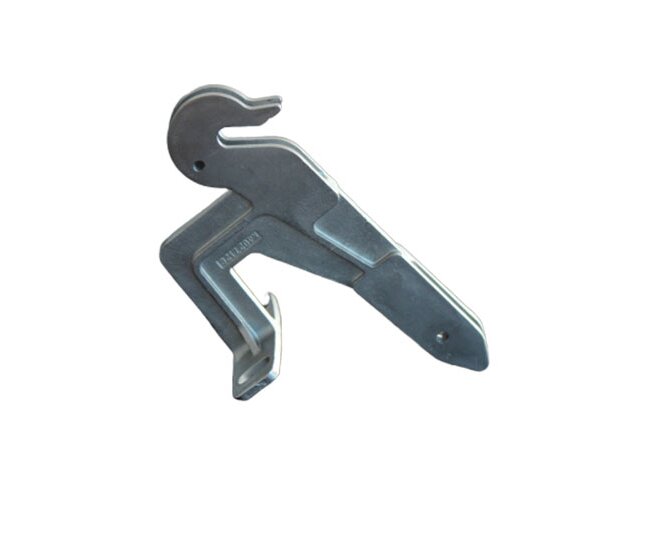
Selecting cast components for motorcycle footrest and structural bracket applications comes down to matching four variables to one load case: material grade, casting tolerance grade, wall and fillet geometry, and post-casting processing. The reference part for this guide is the Motorcycle Footrest Bracket Casting, produced to OEM / Custom Drawing No. 1003 by SHANGHAI NTC TECHNOLOGY CO., LTD., a precision casting industry and trade company based in Shanghai, China.
Its published specification envelope is specific enough to build a working selection checklist from. Part weight runs from 2 g to 550 g. Casting tolerance grade is T4–CT7. Surface roughness is Ra 1.6–Ra 6.3. Standard minimum wall thickness is 2 mm, with 1 mm available for limited local areas subject to design review. Material options cover carbon steel 1020, 1025 (WCB), 1030, 1040, 1045 and 1050; alloy steel 4140, 4150, 4340, 8620 and GS-25CrMo4; and stainless steel 201, 303, 304, 316, 316L, 17-4PH, 410, 420 and 440C.
This guide is written for motorcycle manufacturers, scooter builders, component suppliers and aftermarket brands that need to specify a footrest or structural bracket casting, choose between material routes, and know what a supplier should be able to prove before a drawing is released for tooling.
What Counts as a Structural Cast Component on a Motorcycle
Structural castings on a motorcycle sit at the points where load has to be transferred from the rider or the drivetrain into the frame. In practice, two component families do most of that work, and both sit inside the NTC casting range.
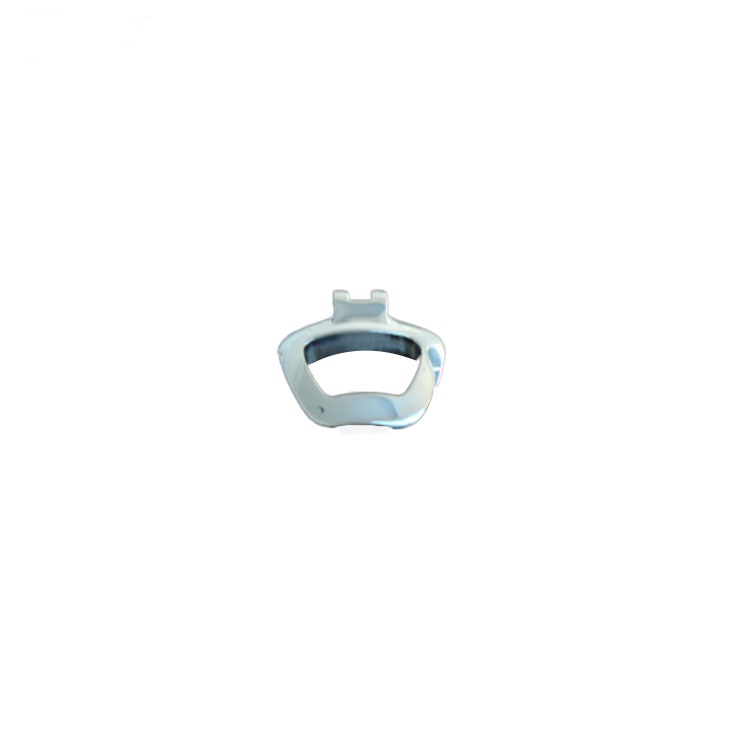
- Footrest and structural bracket castings. The peg support bracket, its mounting base and the connecting geometry that fixes the rider's foot position. OEM / Custom Drawing No. 1003 is a footrest bracket casting produced by custom lost-wax investment casting according to customer-approved 2D drawings, 3D models or physical samples.
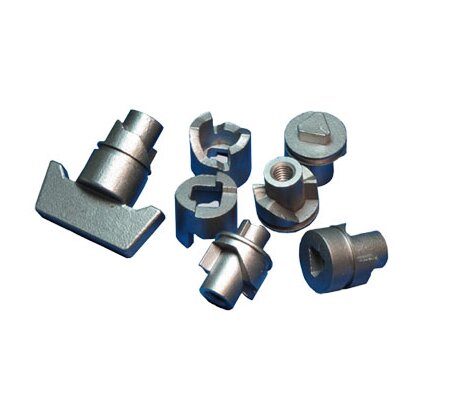
- Engine mount and drivetrain housings. Components with engine mounting holes, bearing positions, flange faces, locating surfaces and threaded holes, listed as the Precision Cast Motorcycle Engine Mount Housing (OEM / Custom Drawing No. 1004).
Both categories are intended for motorcycle manufacturing, motorcycle component supply and vehicle structural component manufacturing. That classification matters, because it sets the inspection discipline: a bracket is not judged on appearance alone.
The real selection problem is that three requirements pull against each other. Fatigue and stiffness at the peg mount push toward thicker sections and stronger grades. Dimensional accuracy at the frame interfaces pushes toward tighter tolerances and machined mating surfaces. Cost, weight and visible surface quality push toward thinner walls and as-cast surfaces. A footrest bracket is a small part — comfortably inside the 2 g–550 g band — so the tolerance budget is tight in absolute terms, and every unnecessary precision call shows up as extra machining.
Why Cast Structural Components Keep Gaining Ground in Motorcycle Manufacturing
The commercial context supports the technical case. Grand View Research values the global investment casting market at USD 17.4 billion in 2025, projected to reach USD 24.9 billion by 2033, with automotive applications taking the largest revenue share by application at over 29% in 2025 and Asia Pacific holding a 39.2% revenue share in the same year. Market Research Future estimates the China investment casting market at USD 2.72 billion in 2024, reaching USD 5.16 billion by 2035 at a 6% CAGR.
Two structural facts explain why bracket-type parts follow the same trend. Mordor Intelligence reports that the silica sol process accounted for 50.78% of investment casting revenue share in 2025, because it supports precision geometry, and that stainless steel represented 32.98% of global investment casting material share in 2025 — the material route most often chosen for exposed hardware.
A note on market figures: base-year valuations differ between research firms because studies define scope differently — for example, whether sand casting is counted alongside precision casting. Fortune Business Insights values the same market at USD 20.52 billion for 2026. The growth direction is consistent across sources; the absolute base value is not.
On the shop floor, the reason cast brackets are replacing welded assemblies is geometry consolidation. A footrest bracket can carry the peg boss, the mounting ears, the ribs and the transition fillets in a single part, produced by lost-wax investment casting for complex bracket structures and stable dimensional consistency. That removes weld distortion from the tolerance stack, and it removes a joining operation from the assembly line.
The Specification Envelope for Motorcycle Footrest Bracket Castings
Before choosing a material, it helps to read the four published parameters correctly. They define what a casting supplier can hold, and they also define the questions a buyer needs to answer on the drawing.
Part weight: 2 g to 550 g
The weight band for applicable precision-cast components is 2 g to 550 g, subject to product geometry and approved drawing requirements. For footrest brackets and small structural mounts, this is not a purchasing bracket — it is a process window. Weight follows geometry, wall thickness, material and structural design, so a heavier bracket is not automatically stronger. It usually means more section, more material cost and, in some cases, more shrink risk in the thicker areas.
Tolerance grade T4–CT7
NTC lists casting tolerance grade T4–CT7 for the Motorcycle Footrest Bracket Casting, subject to part geometry and approved drawing requirements. ISO 8062-3:2007 defines dimensional tolerances for investment castings and typically achieves grades CT4 to CT6, which places the T4–CT7 band in the expected range for precision investment casting.
The practical rule is that tolerance should never be applied uniformly across a bracket. Mounting-hole positions, mating faces and pivot or pin features are the dimensions that decide whether the part assembles. Non-critical outer contours and fillet blends can stay as cast. Assigning the tightest grade to every dimension raises machining content without improving fit.
Minimum wall thickness and fillet rules
The standard minimum wall thickness is 2 mm, with 1 mm available for limited local areas subject to design review. Fillets are specified as a minimum outer radius of 0.3 mm and a minimum internal fillet of 0.5 mm. These two numbers decide whether a design is castable as drawn. A bracket drawn with a continuous 1.2 mm wall across a load-bearing section is a design change request, not a manufacturing preference.
Machining, heat treatment and finishing
Machining capability for the footrest bracket casting includes CNC turning, milling, drilling, boring, threading, grinding and mounting-hole machining. Heat treatment options are annealing, quenching, normalizing, carburizing and solution treatment. Surface treatment options are shot blasting, grinding, polishing, zinc coating, black oxide, painting and powder coating.
Inspection and applied standards
Inspection covers material composition, mechanical properties, mounting-hole position, critical dimensions and surface quality, all checked against the approved drawing. Applied standards are ASTM, ICI, BS, DIN, JIS, ISO and customer-specified technical requirements. Production support runs from prototype development through trial orders to batch production.
Material Selection for Footrest Brackets and Structural Mounts
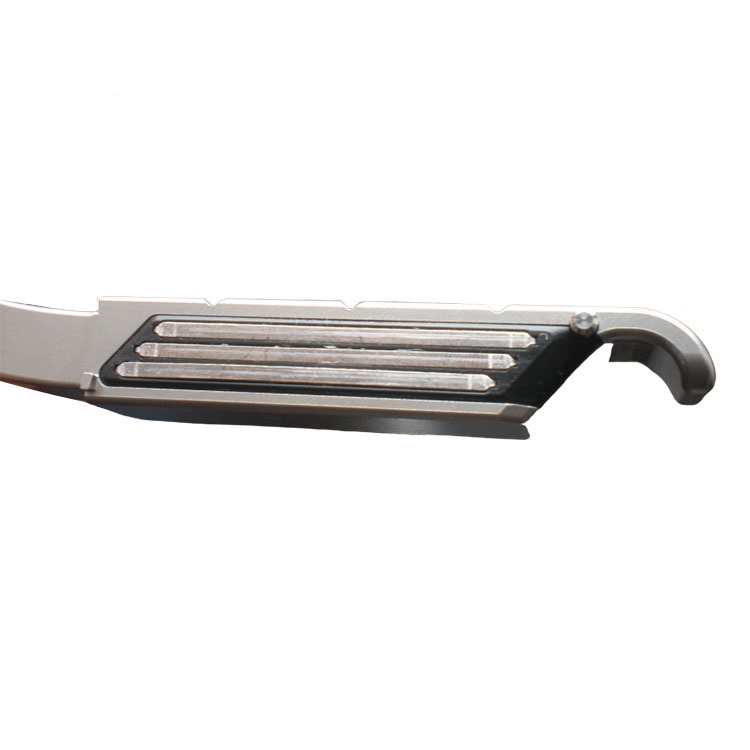
Material is the first decision that cannot be reversed cheaply. The three families listed for OEM / Custom Drawing No. 1003 solve different problems, and the grade must be stated on the approved drawing because NTC manufactures to that drawing or to a supplied 3D model or physical sample.
| Material family | Grades listed for OEM / Custom Drawing No. 1003 | Where it typically fits | Selection note |
|---|---|---|---|
| Carbon steel | 1020, 1025 (WCB), 1030, 1040, 1045, 1050 | General footrest brackets and frame-mounting brackets where a protective coating is acceptable | Lower alloy cost than the other families; pair with zinc coating, black oxide, painting or powder coating when corrosion resistance is required |
| Alloy steel | 4140, 4150, 4340, 8620, GS-25CrMo4 | Brackets and structural mounts that sit directly in a load path, including engine mount and drivetrain housings | Choose when cyclic load and stiffness matter more than material cost; heat treatment options include quenching, normalizing, carburizing and solution treatment |
| Stainless steel | 201, 303, 304, 316, 316L, 17-4PH, 410, 420, 440C | Exposed brackets where corrosion resistance is a service requirement; hardenable grades at pin and pivot interfaces | Austenitic grades such as 303, 304, 316 and 316L provide corrosion resistance; 17-4PH, 410, 420 and 440C are the hardenable options for wear-facing features |
Stainless steel is not a niche choice in this market. Mordor Intelligence puts stainless steel at 32.98% of global investment casting material share in 2025, reflecting how often exposed hardware specifications land on a corrosion-resistant grade rather than on a coated carbon steel.
Two selection rules keep material decisions honest. First, do not upgrade the grade to compensate for a weak geometry — a rib added in the casting usually costs less than moving from carbon steel to alloy steel. Second, do not downgrade the grade to compensate for a coating that will wear off at a contact point. Where a foot peg or pin rubs against the bracket, wear resistance belongs in the material or in the heat treatment, not in the paint.
Step-by-Step: Selecting and Releasing a Bracket Casting
- Define the load case and the interface list. Write down the peg boss position, the frame mounting-hole pattern, the contact faces and any pin or pivot position. Those are the dimensions that must be controlled; everything else is secondary.
- Choose the material family. Use the table above. Carbon steel for general brackets with a coating, alloy steel for brackets inside a load path, stainless steel for exposed or wet-service brackets.
- Set tolerance per dimension, not per part. Reserve control for mounting holes, mating faces and pivot positions. Leave non-critical contours as cast so it stays inside the T4–CT7 envelope without unnecessary machining.
- Fix wall thickness and fillets. Hold the 2 mm standard minimum wall, use the 1 mm local allowance only where design review supports it, and keep the minimum 0.3 mm outer radius and 0.5 mm internal fillet.
- Decide which features are machined. Available operations include CNC turning, milling, drilling, boring, threading, grinding and mounting-hole machining. Machining is the right answer for a bearing bore, a sealing face or a mounting hole — not for a decorative contour.
- Select heat treatment and surface finish. Match the process to the failure mode: strength and hardness through heat treatment, corrosion and appearance through zinc coating, black oxide, painting, powder coating, polishing or shot blasting.
- Agree the inspection plan. Confirm that material composition, mechanical properties, mounting-hole position, critical dimensions and surface quality will be inspected against the approved drawing, and specify which reports you need with the shipment.
- Validate with a sample. Approve a prototype or sample before tooling for volume. Sample verification is where a tolerance stack error costs the least.
Use Cases: Where These Castings Sit on a Motorcycle
Rider and passenger footrest brackets
A footrest bracket carries static rider load, repeated vibration and occasional impact, while fixing the peg at a designed height and angle. Because the part is visible and frequently touched, the surface finish matters as much as the section. A powder-coated or polished stainless footrest bracket casting in the 2 g–550 g range covers most commuter, scooter and light motorcycle applications.
Engine mount housings and drivetrain supports
The Precision Cast Motorcycle Engine Mount Housing (OEM / Custom Drawing No. 1004) shows how the requirement changes when the part carries drivetrain load. Its machinable features include engine mounting holes, bearing positions, flange faces, locating surfaces and threaded holes, and its inspection standard adds concentricity alongside material composition, mechanical properties, mounting-hole position, critical dimensions and surface quality. It is intended for motorcycle manufacturing, motorcycle engine systems, drivetrain systems, scooter manufacturing and motorcycle component suppliers.
Replacement and aftermarket bracket programs
Service parts are usually built from a sample or an existing drawing rather than a new design. NTC's production series includes scooter parts alongside auto parts, golf heads, vacuum parts, valve accessories, door accessories and other industrial and civil products, so a replacement footrest bracket can be produced to the same specification discipline as a new-program part. Production support covers prototype development, sample verification, trial orders, small-batch production and stable volume production.
Adjacent structural brackets in the same range
The same material and tolerance logic applies across the structural bracket family. The NTC product range includes precision cast automotive suspension brackets and precision cast motorcycle engine mount housings alongside the motorcycle footrest bracket casting, all manufactured according to customer-approved 2D drawings, 3D models or physical samples.
Component Comparison: Footrest Bracket vs Engine Mount Housing
Two motorcycle structural castings illustrate how the same process window maps onto different functional demands.
| Parameter | Motorcycle Footrest Bracket Casting | Precision Cast Motorcycle Engine Mount Housing |
|---|---|---|
| Model designation | OEM / Custom Drawing No. 1003 | OEM / Custom Drawing No. 1004 |
| Component category | Motorcycle footrest and structural bracket castings | Motorcycle engine mount and drivetrain housing castings |
| Casting route | Custom lost-wax investment casting per approved 2D drawing, 3D model or physical sample | Custom investment casting or die casting per approved 2D drawing, 3D model or physical sample |
| Material options | Carbon steel 1020–1050 (incl. 1025/WCB); alloy steel 4140, 4150, 4340, 8620, GS-25CrMo4; stainless steel 201, 303, 304, 316, 316L, 17-4PH, 410, 420, 440C | Carbon steel, alloy steel, stainless steel, aluminum alloy or other customer-specified materials |
| Casting tolerance grade | T4–CT7 | T4–CT7 for investment cast components, subject to geometry and drawing |
| Surface roughness | Ra 1.6–Ra 6.3 | Ra 1.6–Ra 6.3 |
| Minimum wall thickness | 2 mm standard; 1 mm for limited local areas subject to design review | 2 mm standard; thinner local sections subject to design and process review |
| Key machined features | Mounting holes, connection surfaces and critical mating features | Engine mounting holes, bearing positions, flange faces, locating surfaces, threaded holes |
| Inspection focus | Material composition, mechanical properties, mounting-hole position, critical dimensions, surface quality | Material composition, mechanical properties, mounting-hole position, concentricity, critical dimensions, surface quality |
| Intended applications | Motorcycle manufacturing, motorcycle component suppliers, vehicle structural component manufacturing | Motorcycle engine systems, drivetrain systems, scooter manufacturing, motorcycle component suppliers |
The comparison makes one point clear: the tolerance grades, surface roughness and wall thickness rules are shared, but the inspection burden is not. A bracket is judged on mounting-hole position and mechanical properties. A mount housing carrying bearing positions is judged on concentricity as well, because misalignment there translates directly into vibration.
Verifying a Casting Supplier Before You Release the Drawing
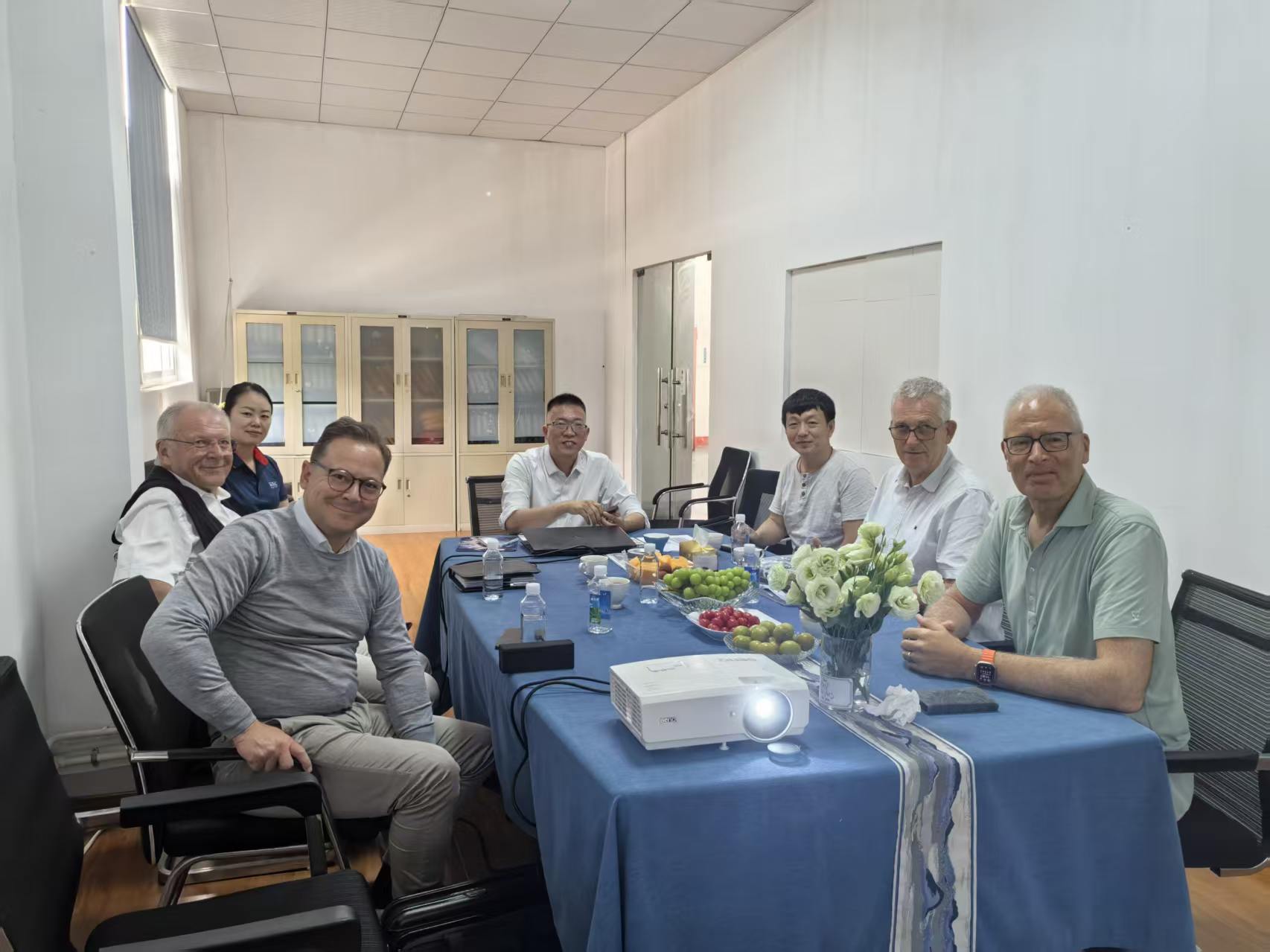
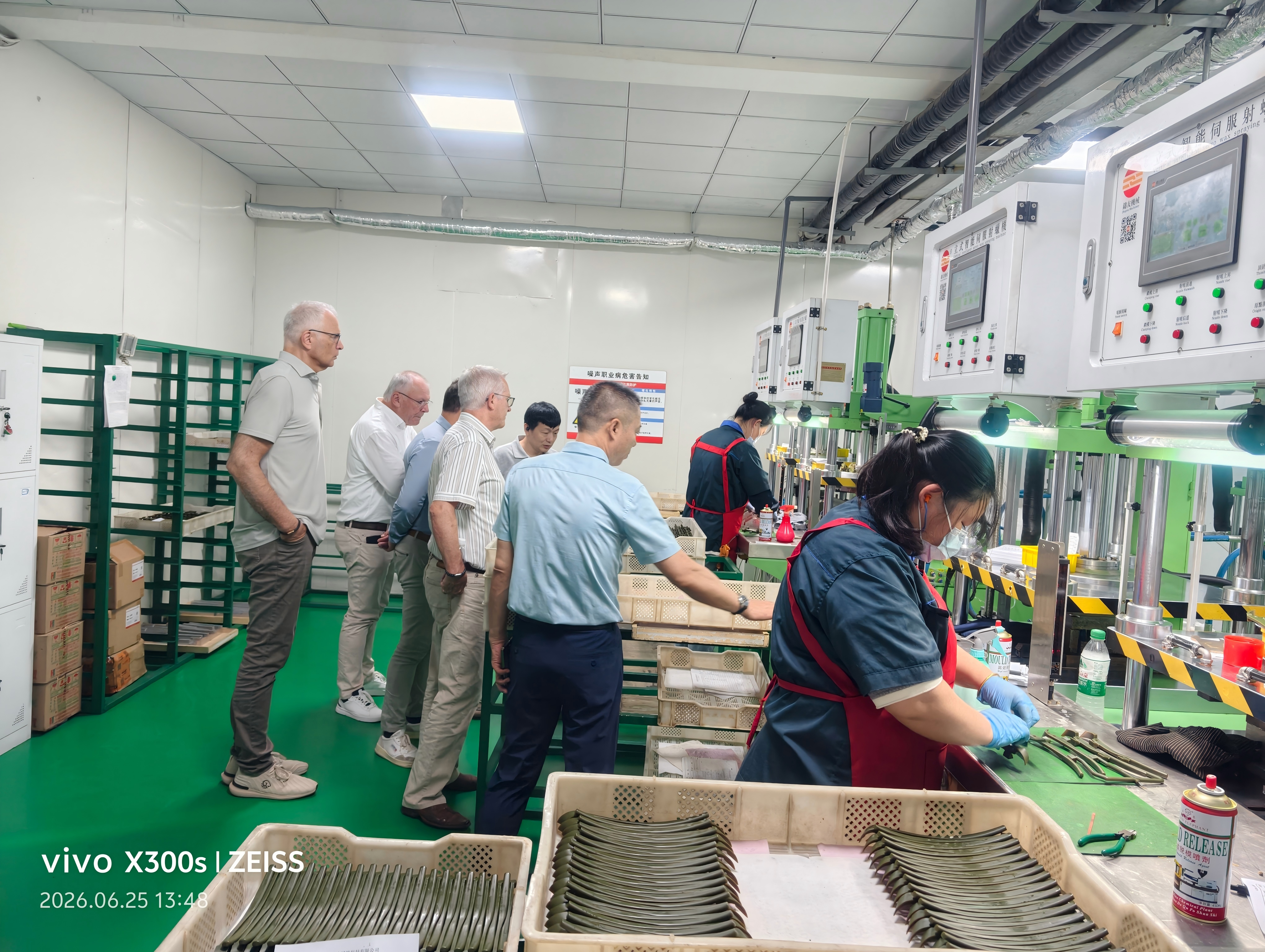
SHANGHAI NTC TECHNOLOGY CO., LTD. is a precision casting industry and trade company located in Shanghai, China, founded in 2022, with a factory covering 2,000 m² and approximately 20 employees, including an R&D team of 5 engineers. The company covers product development, design, mold manufacturing, production, processing and assembly, works with a high-quality silica sol investment casting process, and reports an export ratio of 85% with main markets in Europe, America and Asia.
Its quality infrastructure includes ISO 9001:2000 and ISO 14001:2015, CNC processing equipment and auxiliary equipment, and detection equipment including CMM, spectrum analyzer, Brinell hardness tester and projector. For a bracket program, that equipment list matters for five specific checks.
- Material grade traceability. Composition analysis confirms the grade stated on the drawing actually arrived, which is the single most common gap in low-cost casting sourcing.
- Mounting-hole position and critical dimensions. These decide whether the bracket bolts to the frame without rework.
- Mechanical properties. Relevant whenever the bracket sits in a load path rather than carrying foot position alone.
- Surface quality and finishing consistency. Visible parts are judged on finish, and coating adhesion depends on the preparation steps before it.
- Documentation. Material certificates and inspection reports are available when required, which is normally what an OEM quality file demands.
FAQ: Selecting Cast Components for Motorcycle Footrest and Brackets
Which standards and tolerance grades apply to motorcycle footrest bracket castings?
ISO 8062-3:2007 defines dimensional tolerances for investment castings and typically achieves grades CT4 to CT6. The Motorcycle Footrest Bracket Casting is specified at casting tolerance grade T4–CT7, subject to part geometry and approved drawing requirements, and is manufactured to ASTM, ICI, BS, DIN, JIS, ISO and customer-specified technical requirements. Inspection covers material composition, mechanical properties, mounting-hole position, critical dimensions and surface quality against the approved drawing, and material certificates and inspection reports are available when required.
Which cast components are used for motorcycle footrest and structural mounting systems?
Two component families cover most of the requirement. The Motorcycle Footrest Bracket Casting (OEM / Custom Drawing No. 1003) is a custom lost-wax investment casting that positions the peg and bolts to the frame, with machined mounting holes and connection surfaces. The Precision Cast Motorcycle Engine Mount Housing (OEM / Custom Drawing No. 1004) handles higher structural demand, with engine mounting holes, bearing positions, flange faces, locating surfaces and threaded holes, inspected for concentricity as well as critical dimensions. Both are intended for motorcycle manufacturing, motorcycle component suppliers and vehicle structural component manufacturing.
What drives the cost of a motorcycle footrest bracket casting?
Cost is driven by specification choices rather than by a rate card. The main variables are part weight inside the 2 g–550 g range, the material family and grade, the tolerance grade applied to each dimension, the volume of CNC machining required on mounting holes and mating features, heat treatment selection, surface finishing selection, and how much inspection and documentation the program needs. Order mode also matters: prototype development, sample verification, trial orders, small-batch production and stable volume production are supported as separate stages, so validating a sample before releasing a batch avoids paying for tooling and machining that has to be repeated.
How do you validate a bracket casting before mass production?
Validation starts with a customer-approved 2D drawing, 3D model or physical sample, then moves through prototype development and sample verification before trial orders and stable volume production. The sample is checked for material composition, mechanical properties, mounting-hole position, critical dimensions and surface quality against the approved drawing. Because the factory runs CMM, spectrum analyzer, Brinell hardness tester and projector equipment, dimensional and material checks are performed in-house rather than being outsourced.
How does production scale from prototype to volume orders?
Production support is structured in stages — prototype development, sample verification, trial orders, small-batch production and stable volume production — so a bracket program can be released gradually instead of committing to full volume on an unverified design. SHANGHAI NTC TECHNOLOGY CO., LTD. operates a 2,000 m² factory with approximately 20 employees, 5 engineers in the R&D team and an annual output of 1,500,000 units, with an export ratio of 85% across Europe, America and Asia. To confirm a schedule for a specific footrest or structural bracket project, send the drawing and required quantity for a technical review and quotation.
Conclusion: Match the Envelope to the Load Path
Selecting cast components for motorcycle footrest and structural bracket applications is not a matter of choosing the strongest material available. It is a matter of matching four published parameters to one specific load case: weight inside the 2 g–550 g process window, tolerance grade T4–CT7 applied dimension by dimension, a 2 mm standard minimum wall with 0.3 mm and 0.5 mm fillet minimums, and post-casting processing selected from the available heat treatment and surface finishing options. Carbon steel 1020–1050, alloy steel 4140/4150/4340/8620/GS-25CrMo4 and stainless steel 201–440C each solve a different problem, and the approved drawing is what makes the choice binding.
For programs that sit inside a drivetrain load path rather than at the foot peg, the inspection burden shifts toward concentricity and bearing-seat control, as the Motorcycle Engine Mount Housing specification shows. In both cases, the sequence is the same: define interfaces, fix material, control only the dimensions that matter, and validate a sample before volume.
Request a Sample or Quotation
SHANGHAI NTC TECHNOLOGY CO., LTD. produces cast parts and auto part castings to customer-approved 2D drawings, 3D models or physical samples, and supports prototype development through stable volume production. Website: www.shntcmachinery.com · www.shntcmachine.com
Download the 2026 company brochure and full casting capability list here: SHANGHAI NTC TECHNOLOGY CO., LTD. 2026 brochure (PDF).
Contact: Stanley Yang, General Manager · Email: Stanley770826@ntcmachine.com · WhatsApp: +86 186 2180 6400 · Address: No. 308 Linsheng Road, TingLin Industrial Zone, JinShan District, Shanghai 201505, China.