
Investment Casting vs. Die Casting for Motorcycle Engine Mount Housings
Investment Casting vs. Die Casting for Motorcycle Engine Mount Housings
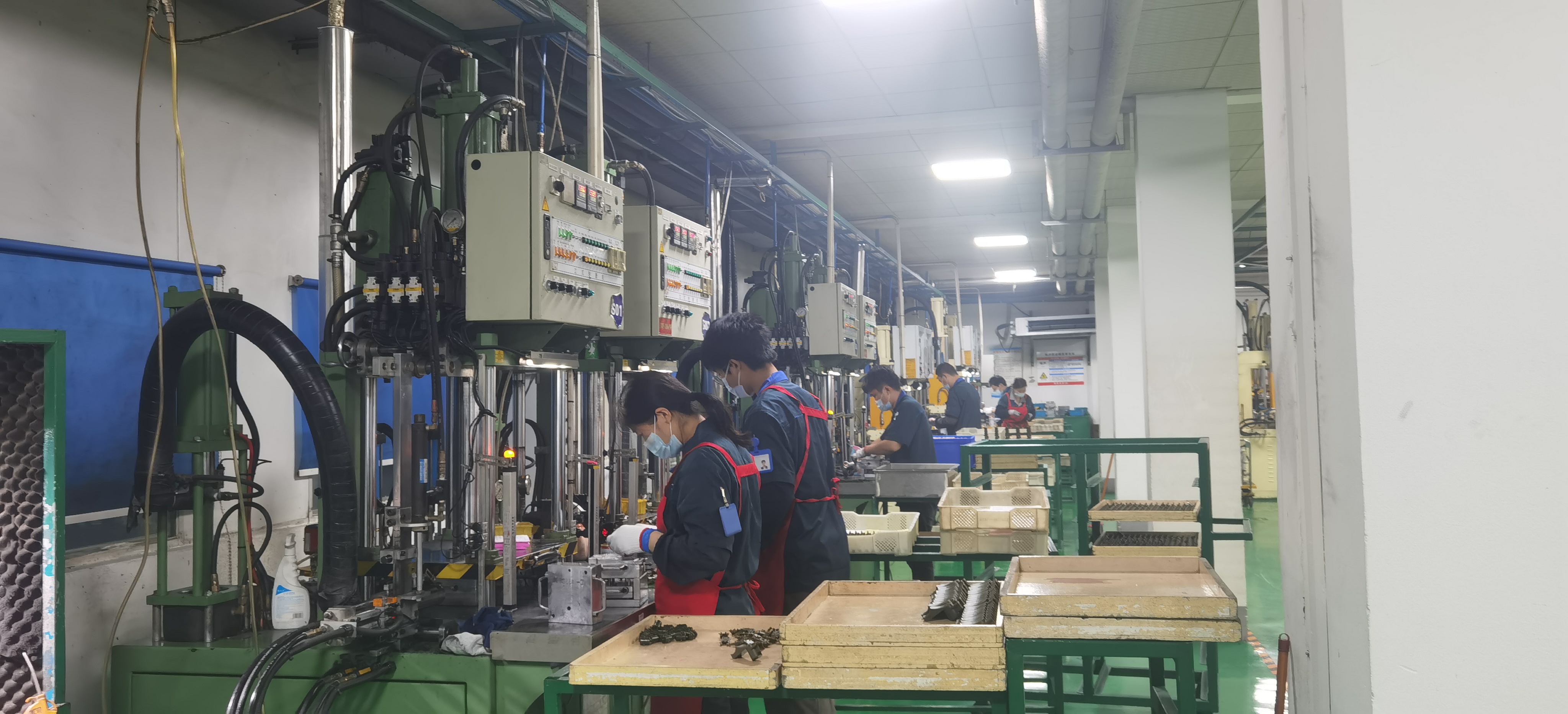
Selecting a manufacturing process for a motorcycle engine mount housing affects material freedom, dimensional accuracy, machining cost and supply flexibility. The housing must support powertrain loads, align vibration-isolation mounts and remain stable over years of road vibration. OEM engineers and procurement teams often compare investment casting and pressure die casting when they move from supplier evaluation into execution.
This guide is written for motorcycle OEMs, technical buyers and product teams that need a decision framework for custom engine-mount housings. It compares the two casting routes and explains the precision investment casting capabilities that SHANGHAI NTC TECHNOLOGY CO., LTD. (NTC) can apply to customer drawings.
Problem Definition: Why Engine Mount Housings Are Difficult Castings
A motorcycle engine mount housing is more than a metal bracket. It has to provide stiff mounting locations, maintain alignments between the engine and frame, resist fatigue and accommodate fasteners, bushings or dampers. Typical design features include mounting bosses, ribs, local wall transitions, drilled and tapped holes, and a compact outer geometry that often follows the available space around the engine.
Pressure die casting works by injecting molten non-ferrous metal, usually an aluminum or zinc alloy, into a reusable steel die under high pressure. It is well suited to very high production volumes. Investment casting uses a wax pattern surrounded by a ceramic shell; after the wax is removed, molten metal fills the cavity. This route can produce complex near-net-shape parts from a wider range of alloys and is often considered for structural or medium-volume components.
Choosing between the two processes should start from the actual drawing and production quantity. If the housing is a simple aluminum part with uniform thin walls and volumes of hundreds of thousands of parts per year, pressure die casting may remain a strong option. If the housing requires steel or stainless steel, internal geometry that is difficult to pull from a die, local thin-wall sections, or a lower-volume model cycle, investment casting should be evaluated.
Industry Background: Precision Investment Casting in Automotive and Motorcycle Components
Investment casting is a globally significant manufacturing segment. According to Grand View Research, the global investment casting market was valued at roughly USD 17.4 billion in 2025 and is projected to reach USD 24.9 billion by 2033. Automotive applications accounted for the largest revenue share in 2025, over 29 percent. Asia-Pacific contributed about 39.2 percent of global revenue. These figures reflect the strong demand for precision cast structural and functional parts in vehicle manufacturing.
Dimensional tolerance is a central part of casting specification. ISO 8062-3 defines a CT dimensional tolerance system for castings. For typical precision investment casting, grades CT4 to CT6 are considered achievable. The final grade for a motorcycle engine mount housing depends on the alloy, part geometry, reference dimensions and whether the critical surfaces are machined after casting. This is why a drawing review should happen before tooling is committed.
The silica sol investment casting process, which NTC uses, is associated with high precision and good surface detail. The manufacturer's production scope includes cast parts and auto part castings, and its product history includes scooter parts plus other industrial and civil castings. Motorcycle engine mount housings fit naturally into this capacity profile.
Detailed Solution: Precision Investment Casting plus Post-Casting CNC Machining
SHANGHAI NTC TECHNOLOGY CO., LTD. is a precision casting and CNC machining manufacturer located in Shanghai, China. It was established in 2022 and operates a 2,000-square-meter factory with about 20 employees. The company provides OEM and ODM services including custom metal parts manufacturing, build-to-print production, precision investment casting, precision CNC machining, metal material customization, and surface and heat treatment.
For an engine mount housing, the practical solution is usually a combination of investment casting and machining. Investment casting brings the part close to final geometry, including bosses, ribs and internal contours. CNC machining then controls the critical mounting faces, bushing bores and threaded holes to final drawing tolerances.
NTC's customization services for investment casting include material grade, product geometry and shape, overall dimensions, single piece weight, wall thickness, casting tolerance, surface roughness, heat treatment, CNC machining and surface treatment. This means a customer can submit a solid model or 2D drawing and have the casting and machining process developed around that specific design.
The company's factory is equipped with wax pattern injection production lines and automated ceramic shell coating lines. Precision investment casting monthly capacity is approximately 10,000 pieces, depending on part size, weight, material and product complexity. Sample lead time is 20 to 30 days; mass production lead time is 30 to 45 days after sample approval. The minimum order quantity for investment casting is 100 pieces, and MOQ is negotiable for prototypes and trial orders.
Quality control is managed through incoming raw material inspection, spectrometer chemical composition analysis, first article inspection, in-process inspection, CMM dimensional inspection, hardness testing and final visual inspection before shipment. Products are accepted according to customer drawing specifications, and acceptance inspection follows the customer drawing. This drawing-based acceptance is important for an engine mount housing because tolerance requirements are design-specific.
Materials Available for Cast Motorcycle Engine Mount Housings
The applicable product range for NTC precision casting parts includes stainless steel, alloy steel, carbon steel, aluminum, copper, gray iron and ductile iron. For motorcycle engine mount housings, buyers most often evaluate alloy steel and stainless steel for strength and durability, or aluminum alloy when weight reduction is the priority.
NTC also treats metal material selection as a separate customization activity. Customers can specify material category, material grade, chemical composition, mechanical properties, hardness, heat treatment condition and applicable standard. Material certificates and spectrometer reports can be provided for traceability. This reduces the risk of receiving a casting with the wrong actual composition.
Step-by-Step Breakdown: From Drawing to Production-Ready Engine Mount Housing
- Drawing and specification review. NTC reviews the customer drawing, material callout, tolerance chain and critical datums. The acceptance basis is the customer drawing specification.
- Material selection and verification. The buyer confirms the alloy grade. NTC can perform spectrometer chemical composition analysis and provide material certificate support.
- Wax pattern production. Tooling is used to inject wax patterns with the intended part geometry. NTC operates wax pattern injection lines in-house.
- Ceramic shell building. The wax pattern is coated with ceramic slurry to form a shell. Automated ceramic shell coating lines help achieve consistent shell quality.
- Metal pouring and shell removal. The shell is dewaxed, fired and filled with the selected molten alloy. After solidification, the ceramic shell is removed from the raw casting.
- Cut-off, grinding and surface preparation. Gates and runners are removed. The casting can then go through sandblasting, shot blasting or other required surface preparation.
- Heat treatment and optional surface treatment. Depending on the material and drawing, annealing, normalizing, quenching, tempering or solution treatment may be required. Surface treatments such as passivation, powder coating or plating can also be arranged.
- Precision CNC machining. Turning, milling, drilling, boring and threading are available to finish mounting faces, bores and threaded holes. CNC machining after casting gives the tight dimensions that structural engine mounts usually require.
- Inspection and packaging. Dimensional inspection can use CMM and projector equipment. Hardness and visual checks are performed before final inspection and shipment.
The sequence matters. If the drawing places tight tolerances on a bore or face, the investment casting should leave machining allowance at that location. The CNC step then removes material from a controlled casting datum. This is how a complex housing can achieve both near-net-shape economy and final machined accuracy.
Use Cases: When OEMs Choose Investment Casting for Motorcycle Structural Parts
Investment casting is not the right answer for every motorcycle part, but it becomes attractive in several common situations.
- Steel or stainless steel engine mount housings. If the housing needs higher structural strength or corrosion resistance than a typical aluminum die casting can provide, investment casting is one of the most direct routes.
- Housings with complex internal geometry. Wax patterns can produce shapes that are difficult to extract from a rigid two-piece die. Engine mount designs with deep pockets, angled bosses or local wall thickness changes can benefit from this flexibility.
- Medium-volume or model-change programs. When a motorcycle model does not have enough annual volume to justify a dedicated die-casting die, investment casting permits lower initial commitment. NTC accepts trial orders and has a negotiable MOQ.
- Custom OEM builds. If the buyer supplies a print or CAD model for a new engine platform, build-to-print manufacturing with full material and drawing control gives an execution path from prototype to mass production.
- Components that integrate casting and fully machined datum surfaces. Motorcycle engine mounts often contain threaded holes and precision bores. Combining investment casting with in-house CNC machining reduces the number of suppliers in the quality chain.
These use cases align with NTC's broader production focus on auto part castings, scooter parts and other functional components. A motorcycle engine mount housing is an addition within the same engineering family rather than a completely new category.
Comparison Table: Investment Casting vs. Die Casting
The table below compares typical process considerations for a motorcycle engine mount housing. Exact capability should be confirmed through drawing review.
| Decision Factor | Investment Casting Approach | Die Casting Consideration |
|---|---|---|
| Basic process | Wax pattern, ceramic shell, molten metal pouring, shell removal | Molten non-ferrous alloy injected under high pressure into a reusable steel die |
| Dimensional tolerance | Precision investment casting can meet ISO 8062-3 CT4 to CT6 grades; final grade depends on drawing review | Tolerance depends on die design, alloy and part geometry; critical features usually require post-casting machining |
| Material range | Carbon steel, alloy steel, stainless steel, aluminum, copper and other alloys can be considered | Typically aluminum, zinc or magnesium alloys; ferrous structural grades are not the conventional die casting route |
| Wall sections and geometry | Complex contours, internal cavities and local wall transitions are possible through pattern and shell design | Thin uniform wall sections are possible in aluminum; part design must respect die draw direction and metal flow |
| Order volume | Investment casting MOQ can be 100 pieces; prototypes and trial orders are negotiable | High-volume production is the typical target because die cost and setup are shared over larger runs |
| Machining integration | CNC turning, milling, drilling, boring and threading can be performed in the same facility after casting | Secondary machining is normally used for precise mounting holes and sealing faces |
| Acceptance standard | Accepted and inspected according to customer drawing specifications | Acceptance should also follow the agreed drawing and dimensional standards |
Frequently Asked Questions
Can investment casting replace die casting for an existing aluminum motorcycle engine mount?
Not automatically, and the decision should be design-driven. If the existing component is simple, high-volume and specifically designed for aluminum pressure die casting, die casting may remain efficient. Investment casting adds value when material changes to steel or stainless steel, when internal geometry is hard to pull from a die, when volumes are moderate, or when the same drawing can be combined with precision CNC machining. A casting supplier should review the drawing before recommending a process route.
What tolerance grades can a buyer expect for an investment-cast engine mount housing?
Precision investment casting is generally capable of ISO 8062-3 CT4 to CT6 tolerances. The actual grade for a specific housing depends on material, geometry, reference surface selection and machining allowance. Because engines require closely controlled mounting locations, critical bores and faces are usually machined after casting rather than relying on as-cast tolerances alone.
Which materials can be used for motorcycle engine mount housing castings?
At SHANGHAI NTC TECHNOLOGY CO., LTD., precision casting parts can be made from stainless steel, alloy steel, carbon steel, aluminum, copper and other alloys, depending on product scope. For structural engine mounts, alloy steel and stainless steel are often evaluated for strength and durability, while aluminum alloy is selected when weight matters. The manufacturer also supports metal material customization, material certificate sharing and chemical composition verification.
Can NTC machine mounting bores, tapped holes and other critical features after casting?
Yes. NTC provides precision CNC machining services in the same factory. The machining scope can include turning, milling, drilling, boring and threading. After casting, critical mounting surfaces and threaded holes can be machined to the customer drawing, then checked with CMM or other dimensional inspection equipment.
What is the typical lead time and MOQ for a custom engine mount housing?
For precision investment casting, sample lead time is 20 to 30 days, and mass production lead time is 30 to 45 days after sample approval. The minimum order quantity is 100 pieces for investment casting; prototypes and trial orders are negotiable. Additional operations such as heat treatment, surface treatment or CNC machining will add time depending on process complexity and order quantity.
How does NTC validate that the finished part meets the drawing?
NTC accepts parts based on customer drawing specifications and performs acceptance inspection according to those drawings. The quality control system includes raw material inspection, spectrometer analysis, hardness testing, CMM dimensional inspection and final visual inspection. Customers can request inspection reports and material certificates for traceability.
Conclusion
Investment casting and die casting both produce useful metal parts, but they are different tools for different design and supply conditions. For a motorcycle engine mount housing, the decision should be led by material specification, geometry complexity, volume and the required final tolerances on mounting features.
Investment casting becomes a practical option when the housing must be made from steel or stainless steel, when complex internal shapes make die casting difficult, or when the OEM needs a flexible production route from prototype to series manufacturing. Combining investment casting with precision CNC machining gives buyers a single source for a near-net-shape structural component with accurately machined critical surfaces.
SHANGHAI NTC TECHNOLOGY CO., LTD. brings together precision investment casting, CNC machining, material customization and surface and heat treatment capabilities. This full-process structure helps motorcycle OEMs control tolerance, quality and communication during product development.
Next step for OEM engineers and buyers: Send your engine mount housing drawing to NTC for a process, material and tolerance review. Contact Stanley Yang by email at Stanley770826@ntcmachine.com or by WhatsApp at +86 186 2180 6400. The official website is www.shntcmachinery.com.
Download the SHANGHAI NTC TECHNOLOGY CO., LTD. 2026 capability brochure for an overview of products, equipment and quality systems.