
Key Technical Parameters for Custom Precision Cast Mechanical Housing Design
Key Technical Parameters for Custom Precision Cast Mechanical Housing Design
A custom precision cast mechanical housing is designed correctly or incorrectly long before it reaches a foundry. Five parameters decide the outcome: casting tolerance grade applied to as-cast geometry, minimum wall thickness, part weight range, the post-casting machining strategy for critical features, and the material family selected for load and environment.
For engineering machinery applications, a workable baseline specification is a casting tolerance grade between CT4 and CT7, a 2 mm standard wall thickness with 1 mm permitted on local non-structural sections, critical features machined after casting, and a material drawn from carbon steel 1020–1050, alloy steel 4140–8620, stainless steel, or aluminum alloy.
SHANGHAI NTC TECHNOLOGY CO., LTD. (NTC) is a precision casting industry and trade company founded in 2022, operating a 2,000 m² factory in Jinshan District, Shanghai, with 20 employees and an annual production capacity of 1,500,000 units. The company runs silica sol investment casting, CNC machining, and assembly as one process chain, and exports 85% of its output to Europe, America, and Asia. This guide follows the drawing-to-production logic used on its floor.
A Precision Cast Mechanical Housing, Defined
A precision cast mechanical housing is a load-bearing enclosure produced by investment casting and then selectively machined, whose function is to locate, protect, and connect moving components such as shafts, gears, and bearings. It is a functional role rather than one part number: in engineering machinery the same role is played by gearbox housings, hydraulic manifolds, pump bodies, bearing carriers, and bearing housings.
What makes the casting “precision” is not the process name but where the tolerances are applied. As-cast surfaces carry the CT grade. Mating surfaces — mounting holes, positioning holes, connection faces, and bearing locations — are machined after casting. That is exactly why a casting drawing and a machining drawing cannot be developed independently on this part family.
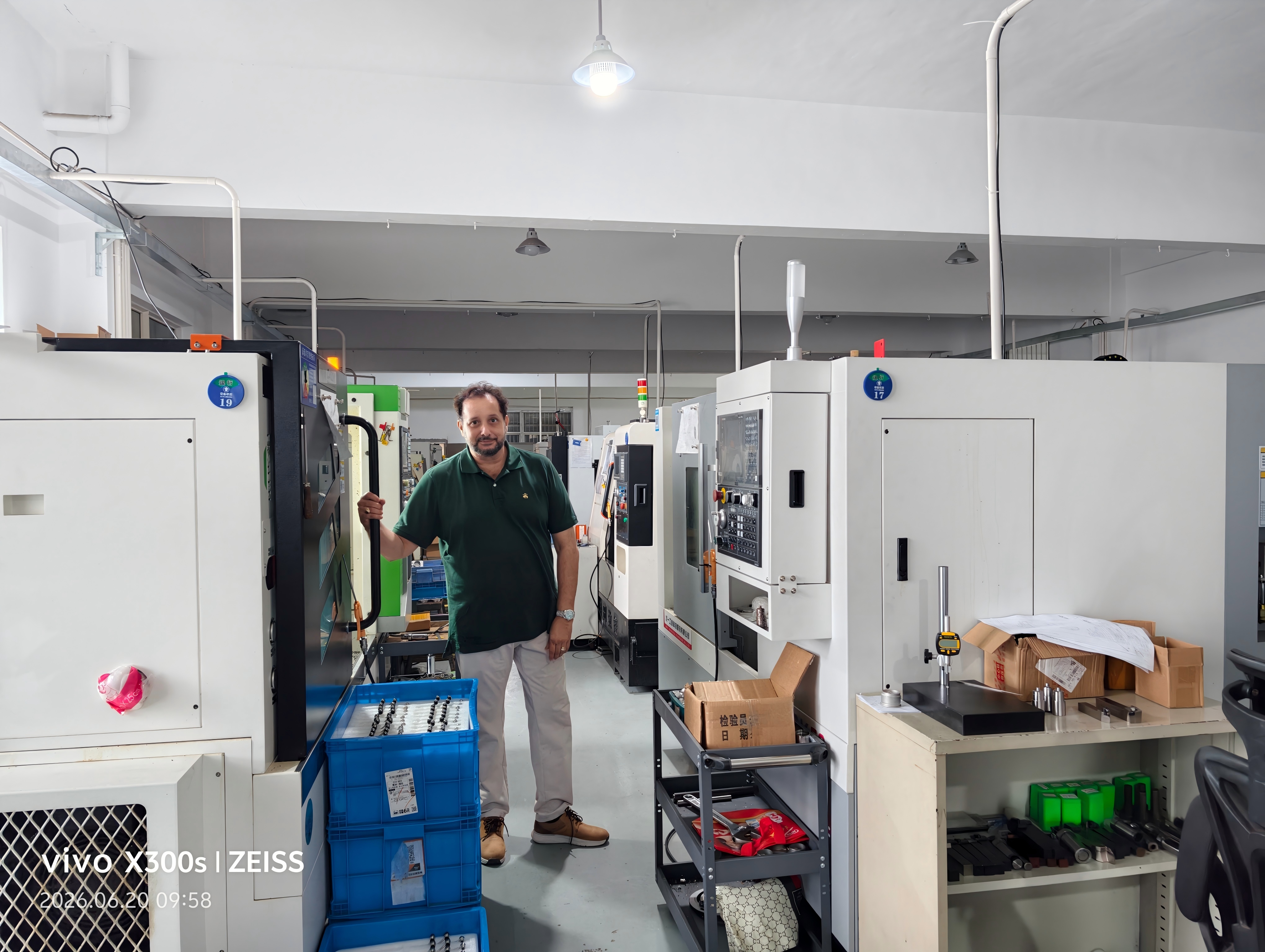
Overseas client inspecting the NTC CNC precision machining workshop where critical housing features are finished after casting.
Problem Definition: Where Housing Designs Break Down
Most housing problems originate in four design decisions rather than in foundry execution.
- Tolerance grade is applied as one value across the drawing. When a single CT grade covers every surface, non-critical webbing is over-specified while a critical bearing bore is under-specified. The correct approach is grade-per-feature, not grade-per-part.
- Wall thickness is set below what the shell can fill. Very thin sections promote misruns, cold shuts, and distortion, and they are the first features to be rejected at outgoing inspection.
- Machining allowance is assumed rather than calculated. Insufficient allowance forces scrap or weld repair; excessive allowance raises cycle time and cutter cost on every unit.
- Material is chosen by habit. A grade carried over from an older product may be weldable and cheap but will not meet the hardness or corrosion requirement of the housing’s actual service environment.
These risks can be controlled but not eliminated. NTC’s control method combines full incoming material inspection, in-process patrol sampling inspection, 100% finished-product outgoing inspection, and real-time order production schedule tracking. On the floor this translates to spectroscopic composition testing of every raw material batch before storage, real-time dimensional monitoring on CNC machining equipment, manual visual screening after casting shot blasting, and a dedicated production planner who follows order progress daily.
Industry Background: Why Tolerance Control Now Defines Casting Sourcing
The global investment casting market was valued at USD 17.4 billion in 2025 and is projected to grow to USD 24.9 billion by 2033, according to Grand View Research. Asia Pacific dominated the market with a 39.2% revenue share in 2025. Stainless steel represented 32.98% of the global investment casting material share in 2025, per Mordor Intelligence, and the silica sol process — the process NTC uses — accounted for 50.78% of investment casting revenue share in 2025 because of its precision capabilities.
China’s investment casting market was estimated at USD 2.72 billion in 2024 and is projected to reach USD 5.16 billion by 2035 at a 6% CAGR, according to Market Research Future. Automotive applications accounted for over 29% of global investment casting revenue in 2025, the largest single application share. Meanwhile, the global industrial valve market is predicted to increase from USD 97.77 billion in 2026 to USD 273.49 billion by 2035 (Precedence Research), which matters because valve bodies and pump housings are among the most tolerance-sensitive castings in the fluid handling chain.
The implication for housing designers is direct: dimensional precision is no longer a premium upgrade that buyers accept on faith. It is the baseline that procurement teams now audit, and it is quantifiable on a drawing.
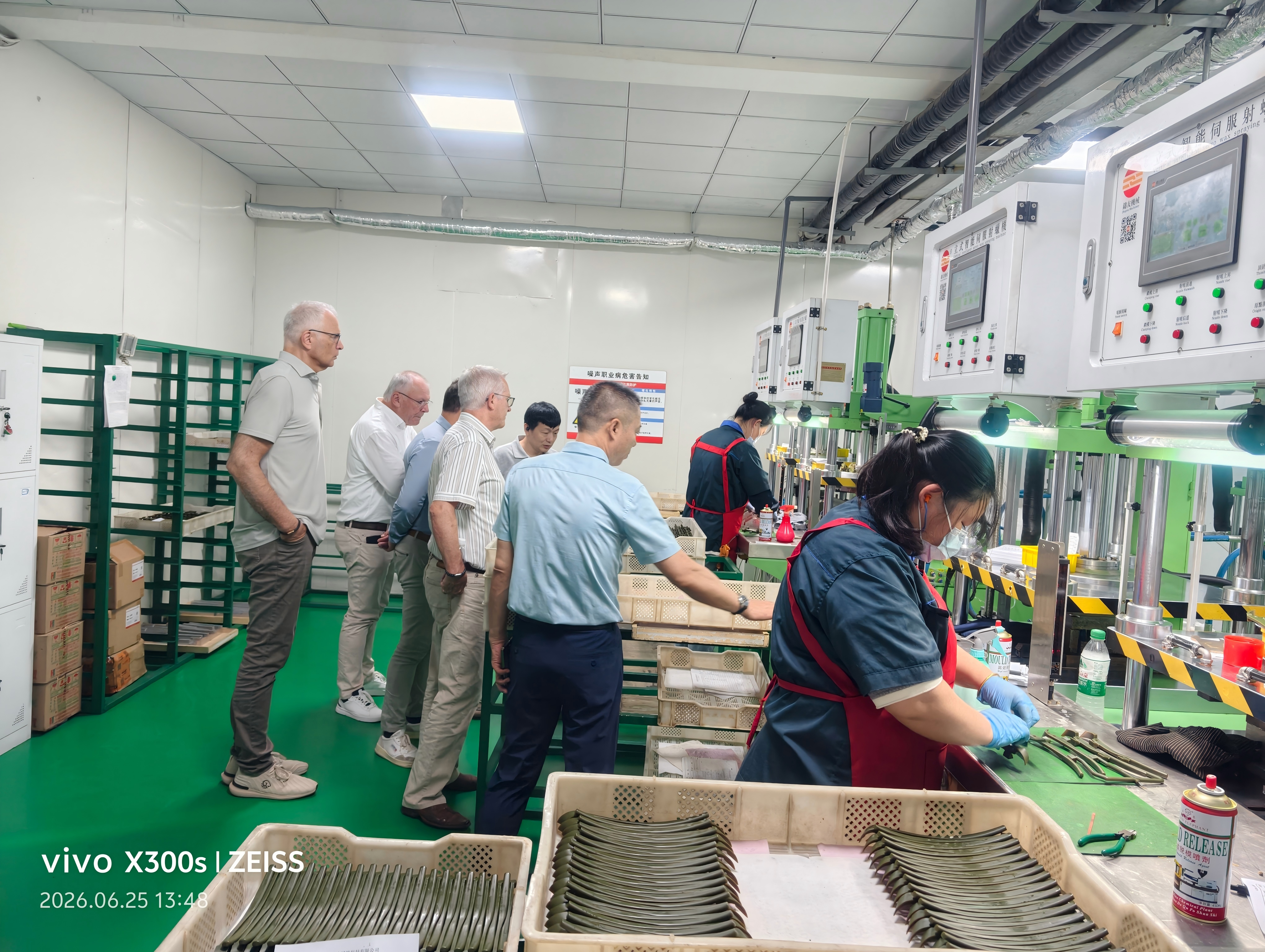
European customers reviewing the wax injection workshop where housing geometry is fixed before shell building.
The Five Core Design Parameters
1. Casting Tolerance Grade: CT4 to CT7
ISO 8062-3:2007 is the standard that defines dimensional tolerances for investment castings, typically achieving grades CT4 to CT6. Mechanical housings are commonly specified across a CT4 to CT7 band, with the grade selected per feature group according to size and criticality. Lower CT numbers mean tighter as-cast tolerance.
In practice this means a single housing may legitimately carry CT5 at a bearing boss and CT7 at an outer rib or cooling fin. CT4–CT5 is appropriate for housings with close as-cast fits, thin sections, or features that are never machined. CT6–CT7 is appropriate for large, heavy housings where non-critical surfaces tolerate more variation and where cost control outweighs as-cast precision.
For features that must hold tighter than any CT grade, the answer is not a stricter casting specification — it is machining. NTC holds dimensional tolerance control up to ±0.005 mm on machined features, compared with roughly ±0.03 mm on typical small-workshop output. The gap is the reason a housing drawing should clearly separate cast-to-size surfaces from machined surfaces.
2. Minimum Wall Thickness: 2 mm Standard, 1 mm Local
A 2 mm standard wall thickness is a practical default for precision cast mechanical housings, with 1 mm permitted on local, non-structural sections such as cover ribs, cable reliefs, or recessed pockets. The distinction matters because wall thickness governs metal flow, cooling rate, and distortion simultaneously.
- Below the standard wall, thin sections cool faster than surrounding material, creating internal stress that shows up as bowing or twisting after shell removal and heat treatment.
- Wall transitions are more important than the minimum itself. An abrupt step from a thick boss to a 1 mm web concentrates stress and invites a hot spot. Gradual transitions reduce both casting defect risk and later machining vibration.
- Local thin sections should never carry a structural load. A 1 mm feature asked to bear a mounting load will fail in service, not at inspection.
3. Part Weight Range
Weight affects the housing design in four places: how the wax pattern is supported during handling, how the ceramic shell resists pour pressure, how the part behaves during solidification, and whether downstream CNC fixtures can hold it securely. Heavier housings generally push design decisions toward thicker section transitions, additional gating, and larger machining allowances, while extremely light parts push toward support structures and stricter pattern handling.
Capacity is the other side of the same question. NTC operates monthly production capacity of 500 tons against less than 100 tons at typical small peer factories, with annual output of 1,500,000 units. That capacity matters at the design stage because a housing program that cannot be reproduced at volume is not a finished design.
4. Machining of Critical Features
Four feature groups on a mechanical housing are normally machined rather than cast to final size. Each has a different design requirement.
| Critical feature | Typical machining approach | Design requirement to state on the drawing |
|---|---|---|
| Mounting holes | Drilled and, where needed, reamed after casting | Cast boss diameter and machining allowance; specify cast-in or drilled |
| Positioning holes | Drilled and reamed for locating accuracy | State location tolerance relative to a defined datum, not to an as-cast face |
| Connection faces | Milled or faced flat | Flatness and surface finish, plus the allowance left by the casting |
| Bearing locations | Bored to size with concentricity control | Concentricity between bearing bores, and whether they are machined in one setup |
The governing rule is datum discipline. Positioning holes and bearing locations should be dimensioned from a machined datum, because dimensioning them from as-cast surfaces transfers the full CT tolerance band into the assembly stack-up.
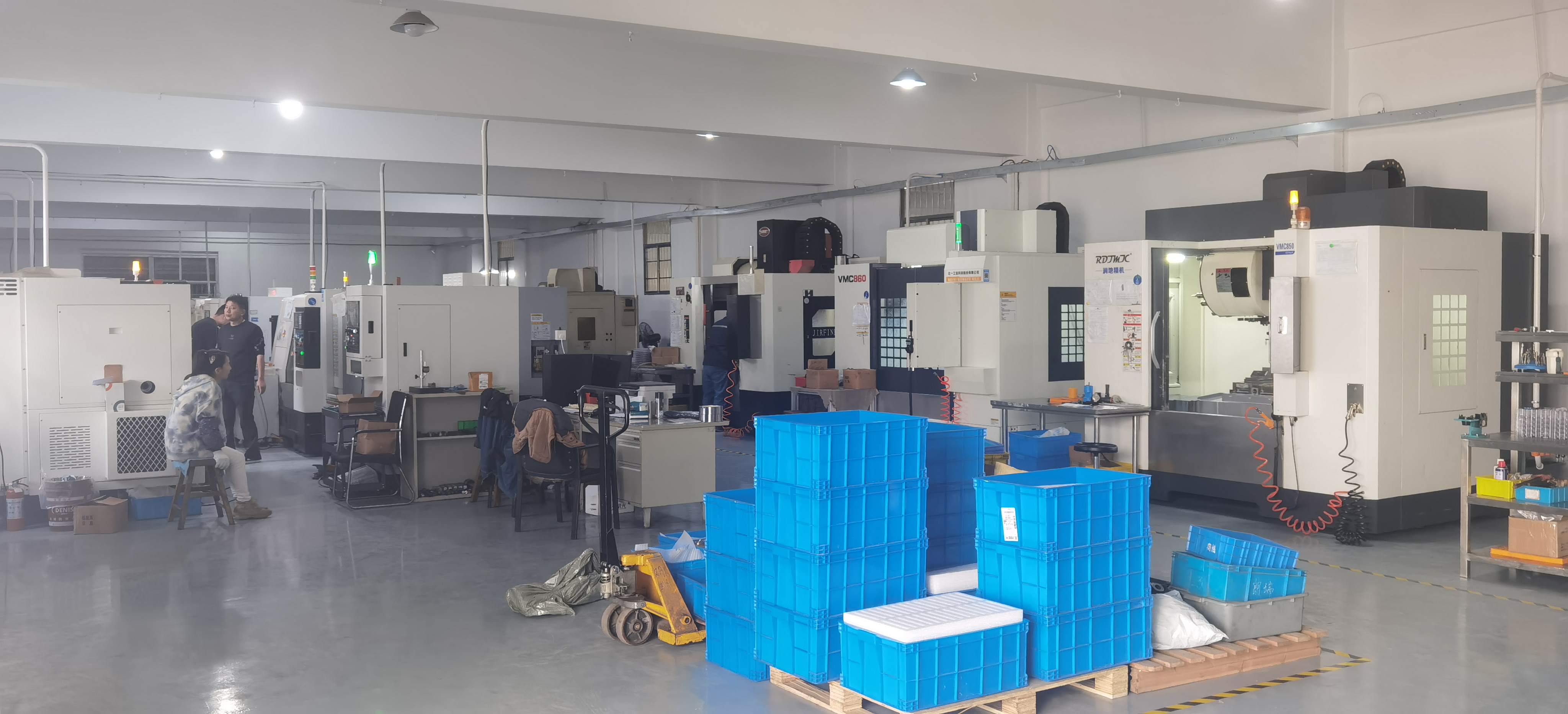
Modern CNC vertical machining center workshop in Shanghai, where mounting holes, positioning holes, connection faces, and bearing locations are finished.
5. Material Options for Engineering Machinery Housings
Material selection follows service condition rather than preference. Four families cover the majority of engineering machinery housings produced by investment casting.
| Material family | Grades | Where it fits in housing design |
|---|---|---|
| Carbon steel | 1020–1050 | Weldable, cost-efficient general housings where strength demand is moderate and corrosion is not the governing load case |
| Alloy steel | 4140–8620 | Housings, gear carriers, and bearing supports requiring higher strength or hardenability under mechanical load |
| Stainless steel | Per application requirement | Corrosion-exposed housings in fluid, marine, food, and chemical service; stainless steel held 32.98% of global investment casting material share in 2025 |
| Aluminum alloy | Per application requirement | Weight-sensitive housings where reduced mass matters more than maximum strength |
Where a housing is pressure-containing, ASTM A703/A703M is the standard specification covering general requirements for steel castings for pressure-containing parts, and it is a relevant reference point at the material specification stage.
Step-by-Step Breakdown: From Drawing to Production Housing
- Drawing review and design-for-manufacture feedback. The casting drawing and machining drawing are reviewed together. Feature groups are separated into cast-to-size and machined, and datum structure is confirmed before tooling begins.
- Tolerance grade assignment. A CT grade is assigned per feature group across the CT4–CT7 band, and any feature that cannot be held by casting alone is moved to the machining list.
- Wall thickness and weight check. Standard wall is validated at 2 mm with 1 mm permitted only on local non-structural sections, and transitions are reviewed for abrupt steps.
- Material confirmation. The grade is fixed from carbon steel 1020–1050, alloy steel 4140–8620, stainless steel, or aluminum alloy based on load, corrosion environment, and weight target. Every raw material batch is verified by spectroscopic composition test before storage.
- Pattern, wax injection, and shell building. Wax patterns are produced and assembled, then ceramic shells are built using the silica sol process.
- Pouring and heat treatment. Casting is followed by heat treatment in an independent material heat treatment workshop, which is part of why heat treatment condition can be controlled rather than outsourced.
- CNC machining of critical features. Mounting holes, positioning holes, connection faces, and bearing locations are machined after casting, with real-time dimensional monitoring on the CNC equipment.
- Inspection and traceability. Manual visual screening follows shot blasting, and outgoing inspection is carried out on 100% of finished products. NTC’s quality control system is supported by ISO 9001:2000 and ISO 14001:2015, with detection equipment including CMM, spectrum analyzer, Brinell hardness tester, and projector.
Design takeaway: tolerance is not one number. Assign a CT grade to cast surfaces, assign a machining tolerance to mating features, and let the drawing show which is which. Every downstream cost — tooling, cycle time, inspection, and reject rate — follows from that single decision.
Use Cases: Where These Parameters Are Applied
The same five parameters appear across very different housing programs. What changes is which parameter dominates.
- Engineering machinery parts and housings. Strength and concentricity dominate. Alloy steel 4140–8620 and lower CT grades at bearing locations are the usual specification direction.
- Auto part castings and automobile / motorcycle castings. Automotive applications held over 29% of global investment casting revenue in 2025. Weight and repeatability dominate, with aluminum alloy commonly selected where mass reduction is the goal.
- Fluid equipment parts and stainless steel pipe & valve castings. Corrosion resistance and pressure integrity dominate; ASTM A703/A703M is a relevant castings specification for pressure-containing parts.
- Textile machinery parts and industrial sewing machine parts. Thin sections and high-cycle motion dominate, so wall transition design and as-cast tolerance control carry most of the weight.
- Power tool components castings and mechanical parts. Cost and volume dominate. Carbon steel 1020–1050 with CT6–CT7 on non-critical surfaces is often the correct answer.
- Door control fittings, lock hardware, and construction hardware. Surface finish and dimensional consistency at high volume dominate, with stainless steel used where external exposure is expected.
- Sport facility parts, furniture hardware, tableware hardware, copper alloy castings, and flowmeter accessories. These share a common pattern: a small number of critical features carried by casting precision, and the rest of the geometry optimized for cost.
Comparison: Full-Process Production vs. Small Outsourcing Foundries
Housing design parameters only hold if the supplier can reproduce them. The table below compares NTC’s full-process structure against the small-scale outsourcing foundry model that many buyers also evaluate.
| Comparison dimension | SHANGHAI NTC TECHNOLOGY CO., LTD. | Small-scale outsourcing foundries & generic standard casting suppliers |
|---|---|---|
| Process structure | Full-process, self-owned casting and CNC precision machining factory with an independent material heat treatment workshop and a complete 100% full inspection system | Most competitors only outsource partial working procedures without integrated quality control |
| Dimensional tolerance control | Up to ±0.005 mm | ±0.03 mm typical |
| Monthly production capacity | 500 tons | Less than 100 tons |
| Finished product yield | 98% | 75%–82% |
| Effect on customer assembly | Higher machining precision reduces secondary rework, improving customer assembly efficiency by over 30% | Rework and fit-up corrections typically absorbed by the buyer |
| Unit quotation | 8%–12% higher than low-price small foundries | Lower unit price |
| Total ownership cost | Lower total ownership cost due to low reject rate and long service life of high-precision castings | Reject rate and replacement cost carried downstream |
| After-sales and continuity | Stable formal enterprise with 12-month casting defect warranty and complete original spare parts supply for long-term projects | Risk of shutdown leading to invalid after-sales service |
| Best fit | Long-term mass OEM supporting projects for engineering machinery, hydraulic equipment, and medical instruments; customers requiring strict dimensional precision and complete factory audit certification | Short-run, non-critical, price-led requirements |
Frequently Asked Questions
How do buyers secure a long-term cast parts supplier with batch traceability and annual supply capability?
Batch traceability and annual supply capability are verified through three supplier facts, not through assurances. First, incoming material control: whether every raw material batch is spectroscopically tested for chemical composition before storage, which is the origin point of a traceable batch. Second, in-process and outgoing control: whether in-process patrol sampling and 100% finished-product outgoing inspection are standard, supported by detection equipment such as CMM, spectrum analyzer, Brinell hardness tester, and projector. Third, capacity and continuity: whether the supplier holds production capacity and a formal warranty structure that can carry multi-year programs. NTC combines full incoming material inspection, in-process patrol sampling, and 100% outgoing inspection with a 12-month casting defect warranty and complete original spare parts supply for long-term projects. NTC was established in 2022 and operates a 2,000 m² factory with annual capacity of 1,500,000 units and a 5-engineer R&D team.
What casting tolerance grade should be specified for a precision cast mechanical housing?
Mechanical housings are commonly specified across a CT4 to CT7 band, assigned per feature group rather than as a single value for the whole drawing. ISO 8062-3:2007 defines dimensional tolerances for investment castings and typically achieves grades CT4 to CT6. CT4–CT5 suits housings with close as-cast fits, thin sections, or features that remain unmachined; CT6–CT7 suits larger, heavier housings where non-critical surfaces tolerate more variation. Any feature that must hold tighter than the applied CT grade should be listed as a machined feature instead.
What is the minimum wall thickness allowed in a custom precision cast housing?
The practical standard is 2 mm, with 1 mm permitted only on local, non-structural sections such as cover ribs or recessed pockets. Thinner and more abrupt sections cool faster than surrounding material, which creates internal stress that can appear as distortion after shell removal and heat treatment. Wall transitions should be gradual, and 1 mm features should never be specified to carry a structural or mounting load.
Which materials are available for engineering machinery cast housings?
Four families cover most engineering machinery housing applications: carbon steel 1020–1050, alloy steel 4140–8620, stainless steel, and aluminum alloy. Carbon steel is weldable and cost-efficient where strength demand is moderate; alloy steel 4140–8620 supports higher strength and hardenability under mechanical load; stainless steel is used for corrosion-exposed housings and represented 32.98% of the global investment casting material share in 2025; aluminum alloy is selected where reduced mass matters more than maximum strength. Where the housing is pressure-containing, ASTM A703/A703M is a relevant standard specification for steel castings.
How do sample validation, MOQ, and delivery work for a custom housing project?
NTC accepts orders with MOQ set according to the size of the product, and acceptance is performed according to the customer drawing. Payment terms are 50% T/T in advance and 50% T/T before shipment, with FOB or CIF delivery available. A typical project moves from drawing review to a validated sample before volume production, which is the stage where tolerance grade, wall thickness, and material grade are confirmed against real measurements rather than assumptions. Buyers can request a sample and quotation by contacting Stanley Yang, GM, at Stanley770826@ntcmachine.com or +0086-189 6422 8319; WhatsApp is available at +86 186 2180 6400.

Project negotiation with German clients at the Shanghai factory, where housing specifications and long-term supply terms are reviewed together.
Conclusion
Precision cast mechanical housing design comes down to five decisions made on paper: the casting tolerance grade applied to each feature group across the CT4–CT7 band, a 2 mm standard wall thickness with 1 mm permitted locally, the part weight range the process must handle, the machining strategy for mounting holes, positioning holes, connection faces, and bearing locations, and the material family chosen from carbon steel 1020–1050, alloy steel 4140–8620, stainless steel, or aluminum alloy.
Get those five right and the foundry conversation becomes a verification exercise rather than a negotiation. Get them wrong and no amount of inspection will recover the assembly stack-up.
SHANGHAI NTC TECHNOLOGY CO., LTD. is based at No. 308 Linsheng Road, TingLin Industrial Zone, Jinshan District, Shanghai 201505, China, and provides precision casting and CNC machining from drawing review through validated production. The company’s full product and capability overview is available in its 2026 company brochure, and its manufacturing profile is published at www.shntcmachinery.com.
Have a housing drawing ready to review?
Send the casting drawing, the machining drawing, and the target annual volume. NTC reviews tolerance grade, wall thickness, material, and critical-feature machining approach, then returns a manufacturing feasibility note and a quotation.
Contact: Stanley Yang, GM — Email: Stanley770826@ntcmachine.com — Phone: +0086-189 6422 8319 — WhatsApp: +86 186 2180 6400
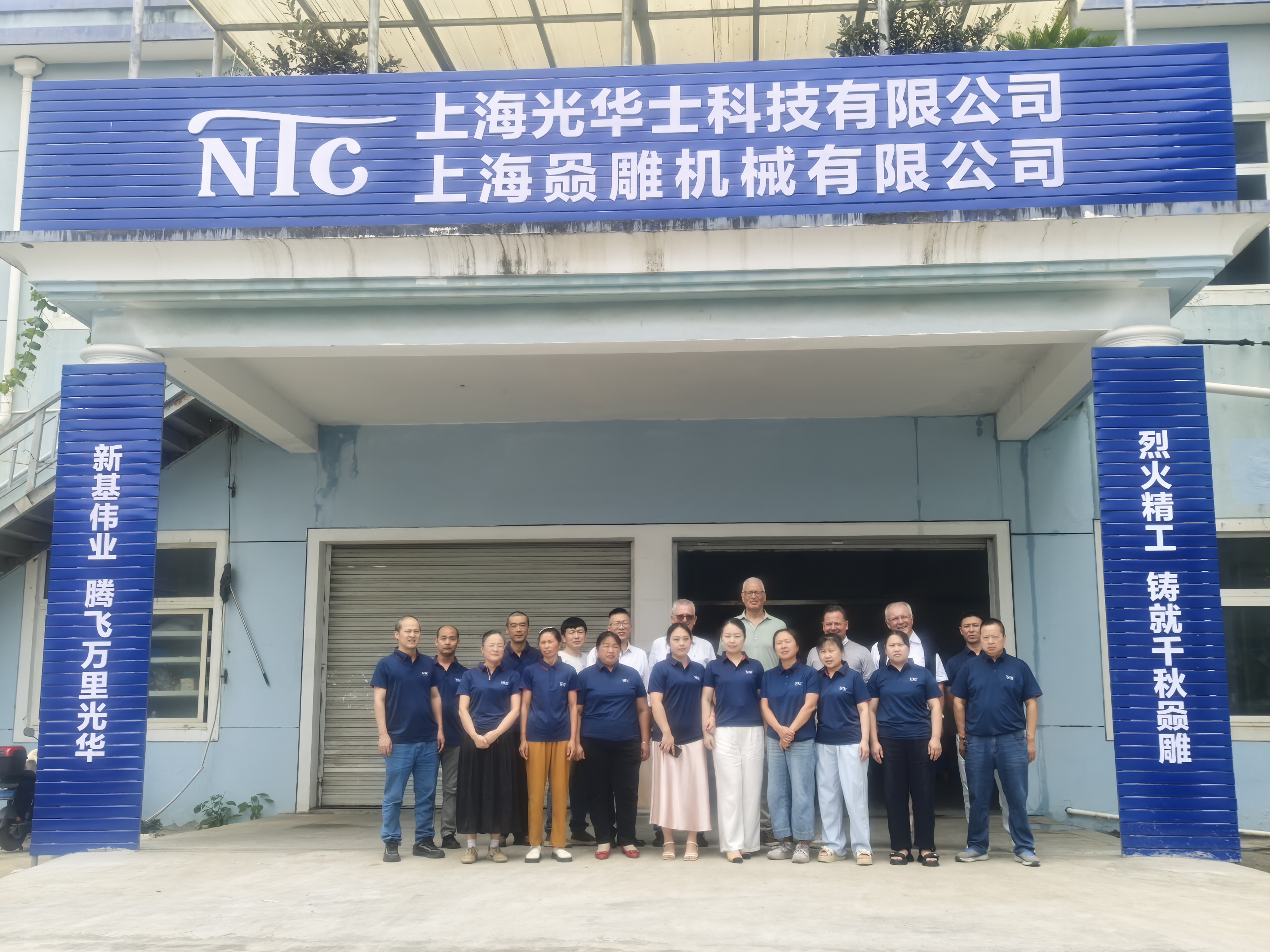
NTC Shanghai employees and visiting German clients at the factory gate — the factory audit stage of a long-term cast parts supply program.