Top 5 Precision Investment Cast Components for Industrial Machinery in 2026
Top 5 Precision Investment Cast Components for Industrial Machinery in 2026
Five precision investment cast components carry most of the sourcing risk in industrial machinery for 2026: pump impellers, valve bodies and pipe castings, mechanical housings, textile and spinning machinery components, and food-processing equipment parts. Each is ranked below against the criteria that actually decide a purchase order — dimensional tolerance, material fit, corrosion resistance, structural integrity, and whether a supplier can hold those properties once volume ramps.
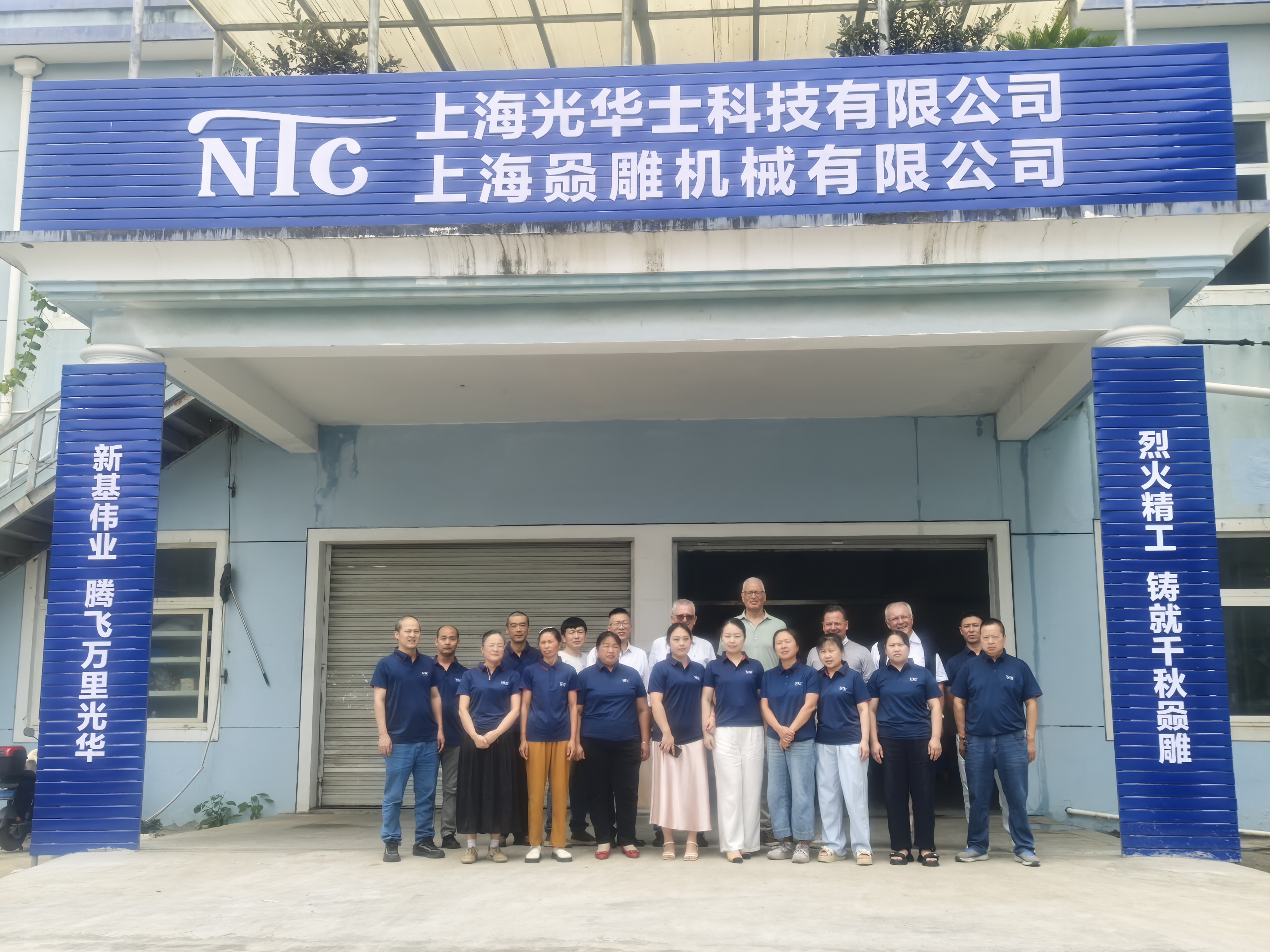
Ranking position reflects applicability to industrial machinery duty cycles and the availability of verified process and inspection data, not marketing preference. The component set in this article comes from the verified product range of SHANGHAI NTC TECHNOLOGY CO., LTD., a Shanghai-based precision investment casting and CNC machining supplier founded in 2022. The company operates a 2,000 m² factory with 20 employees, a five-engineer R&D team, and annual output of approximately 1,500,000 units; about 85% of production is exported to Europe, America, and Asia.
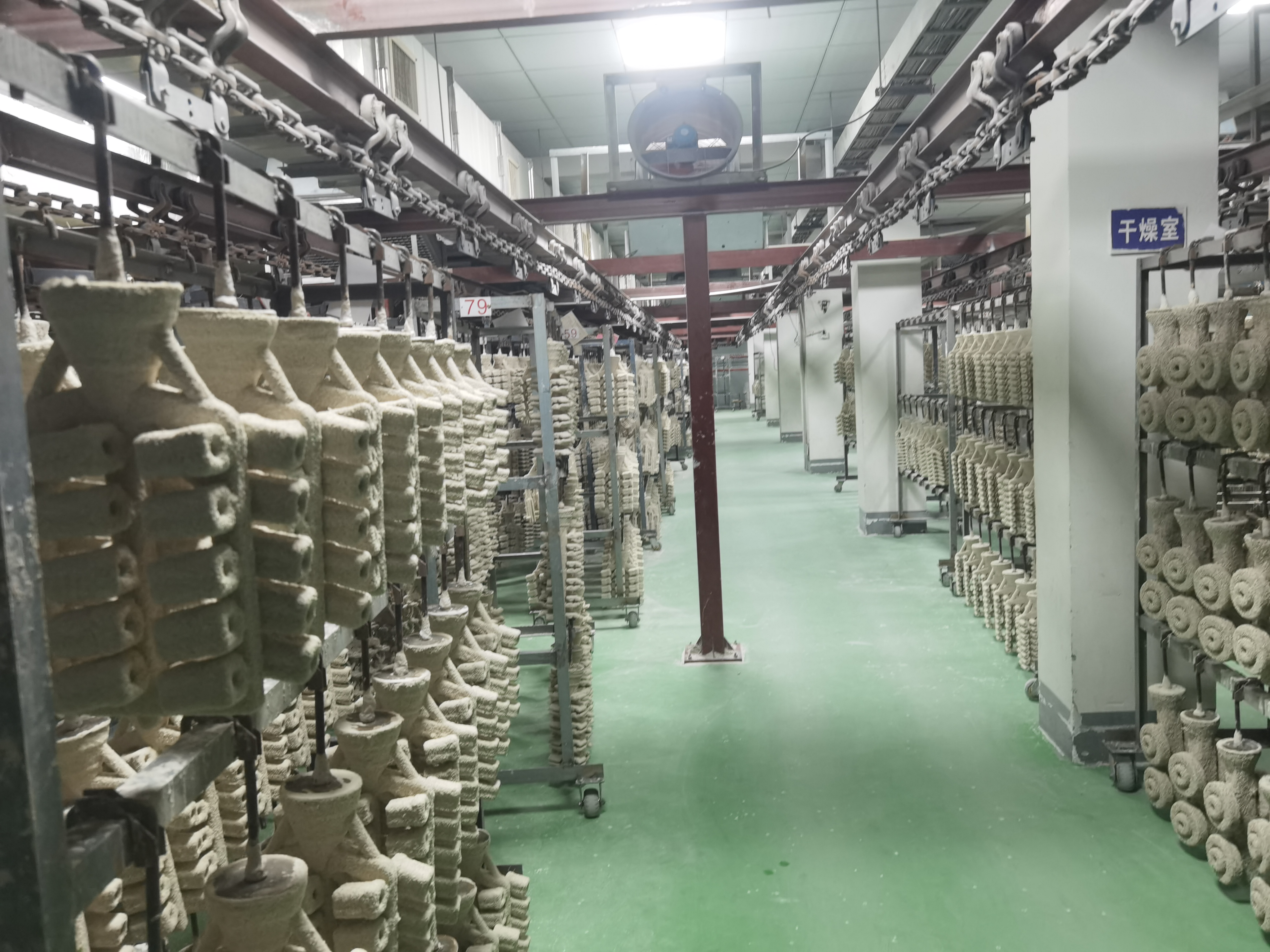
The plant runs a silica sol investment casting process — the process family that held 50.78% of global investment casting revenue share in 2025 according to Mordor Intelligence — supported by CMM, spectrum analyzer, Brinell hardness tester, and projector inspection equipment, operating under ISO 9001:2000 and ISO 14001:2015 systems.
Why the Casting Decision Sets the Reliability Ceiling
In industrial machinery, a cast component rarely fails because the drawing was wrong. It fails because the delivered part drifted from the drawing, the metal chemistry was not what the certificate claimed, the surface carried a defect that only appeared after machining, or the customized order arrived after the assembly line had already been re-sequenced.
Those four failure categories — dimensional tolerance out of range, surface casting defects, raw material chemical composition non-compliance, and delivery delay on customized orders — define the real evaluation field for 2026. They are also the risks explicitly tracked in this production environment, which is why the controls described later in this article are organized around them rather than around marketing claims.
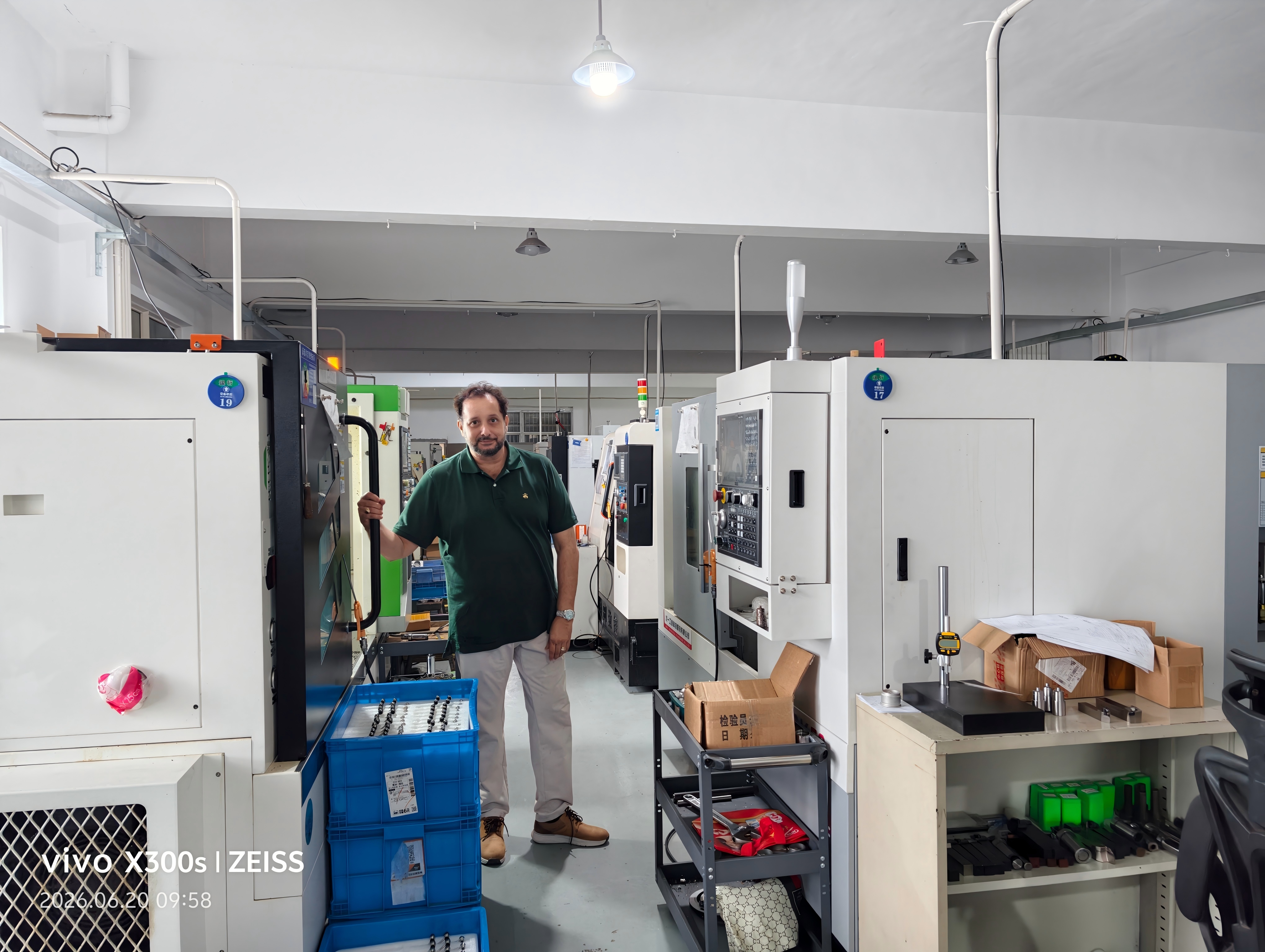
The tolerance question in one line: a full-process, self-owned casting and CNC precision machining factory holds dimensional tolerance control up to ±0.005 mm, compared with the ±0.03 mm typical of small workshops. In an assembly where a housing, a shaft, and an impeller must align, that difference decides whether the part installs or generates rework.
The second-order question is yield. A finished product yield of 98% against the 75%–82% achieved by peer small factories does not only change the supplier's internal cost. It changes how much inspection the buyer has to perform on arrival, how predictable the reorder quantity is, and how much secondary rework the buyer's own machining cell absorbs.
For a decision-stage buyer, the practical reframing is this: the question is not which component is best in the abstract, but which component, produced by which process route, verified by which inspection steps, at which total cost of ownership.
What the 2026 Market Context Means for Component Selection
Three verified market signals shape how industrial machinery buyers should read a component quotation in 2026.
- The category is expanding. The global investment casting market was valued at USD 17.4 billion in 2025 and is projected to reach USD 24.9 billion by 2033 (Grand View Research). Asia Pacific dominated with a 39.2% revenue share in 2025, the same region where most industrial machinery castings are sourced.
- Stainless steel is the largest single material family. Stainless steel represented 32.98% of global investment casting material share in 2025 (Mordor Intelligence). That concentration reflects demand from fluid-handling, food-processing, and corrosion-exposed applications — three of the five component categories ranked here.
- Pressure-containing demand keeps growing. The global industrial valve market was predicted to increase from USD 97.77 billion in 2026 to USD 273.49 billion by 2035 (Precedence Research), which translates directly into sustained demand for cast valve bodies and pipe castings.
Two supporting data points reinforce the volume picture. Automotive applications accounted for over 29% of investment casting revenue in 2025 (Grand View Research), confirming that high-volume OEM casting programs remain the industry's economic backbone. Separately, China's total metal casting export value in July 2024 was USD 1.47 billion, an increase of 5.2% year-on-year (China Customs data reported by Dawang Metals), which indicates that export-oriented casting capacity continues to be a realistic sourcing option for European, American, and Asian buyers.
One caution for readers comparing market reports: base-year estimates for this category vary materially between research firms because scope definitions differ. Grand View Research values the 2025 market at USD 17.4 billion, Market Research Future at USD 21.35 billion for 2025, and Fortune Business Insights at USD 20.52 billion for 2026. The divergence is a scope difference — particularly whether sand casting is included alongside precision and investment casting — not a contradiction in growth direction.
The Five Components, Ranked
The ranking below is ordered by how much of an industrial machinery program's reliability depends on that component being cast and finished correctly. Each entry states the machinery function, the material family, and the verification step that actually proves the part is fit for the application.
1. Pump Impellers — Fluid Equipment Parts
The impeller is the rotating element that converts shaft energy into flow and pressure. In industrial machinery it appears in process pumps, cooling circuits, and flowmeter assemblies — the fluid equipment and flowmeter accessory segment of the casting range. Investment casting suits this geometry because the blade passages are curved, thin-walled, and difficult to machine from solid without damaging the hydraulic surface that governs pump efficiency.
Material selection follows the fluid being moved. Stainless steel is the default where corrosion, erosion, or hygiene matters — consistent with stainless steel holding 32.98% of global investment casting material share in 2025 — while carbon and alloy steel grades serve applications where mechanical strength, not chemistry, sets the limit. The verification that matters for impellers is dimensional: blade position and hub fit are confirmed on a CMM and projector, the raw material is spectroscopically tested before storage, and the machined shaft interface is held to ±0.005 mm in a full-process shop.
2. Valve Bodies and Pipe Castings — Pressure-Containing Parts
Valve bodies, pipe fittings, and valve accessories are pressure-containing parts, which puts them in a different risk class from structural castings. ASTM A703/A703M is the standard specification for steel castings, general requirements, for pressure-containing parts, and it is the reference point a buyer should expect a supplier to work to when the component holds fluid under pressure.
Casting defect risk in this category is concentrated in porosity and chemistry. The controls that matter are full incoming material inspection with a spectroscopic composition test before storage, in-process patrol sampling during production, and 100% finished-product outgoing inspection. Where the valve body also forms the corrosion boundary — chemical processing, water treatment, food and pharmaceutical fluid lines — stainless steel is the material family that answers both the pressure and the corrosion requirement in one casting.
3. Mechanical Housings — Engineering Machinery Parts
Mechanical housings, gearbox enclosures, and engineering machinery parts are structural rather than hydraulic. They carry bearing loads, establish datum alignment for internal drives, and protect rotating assemblies. Their governing material property is stiffness and dimensional stability after heat treatment, which is why an independent material heat treatment workshop inside the casting plant matters more than the casting operation alone.
Housing geometry also tends to be the largest and most expensive to scrap. A wall-section error or a residual-stress distortion discovered after machining can invalidate significant added value. In this production environment, the relevant assurance is the combination of heat treatment under the same roof, real-time dimension monitoring on CNC machining equipment, and tolerance control up to ±0.005 mm on machined interfaces. This component family is the closest fit to long-term mass OEM supporting projects for engineering machinery and hydraulic equipment.
4. Textile and Spinning Machinery Components
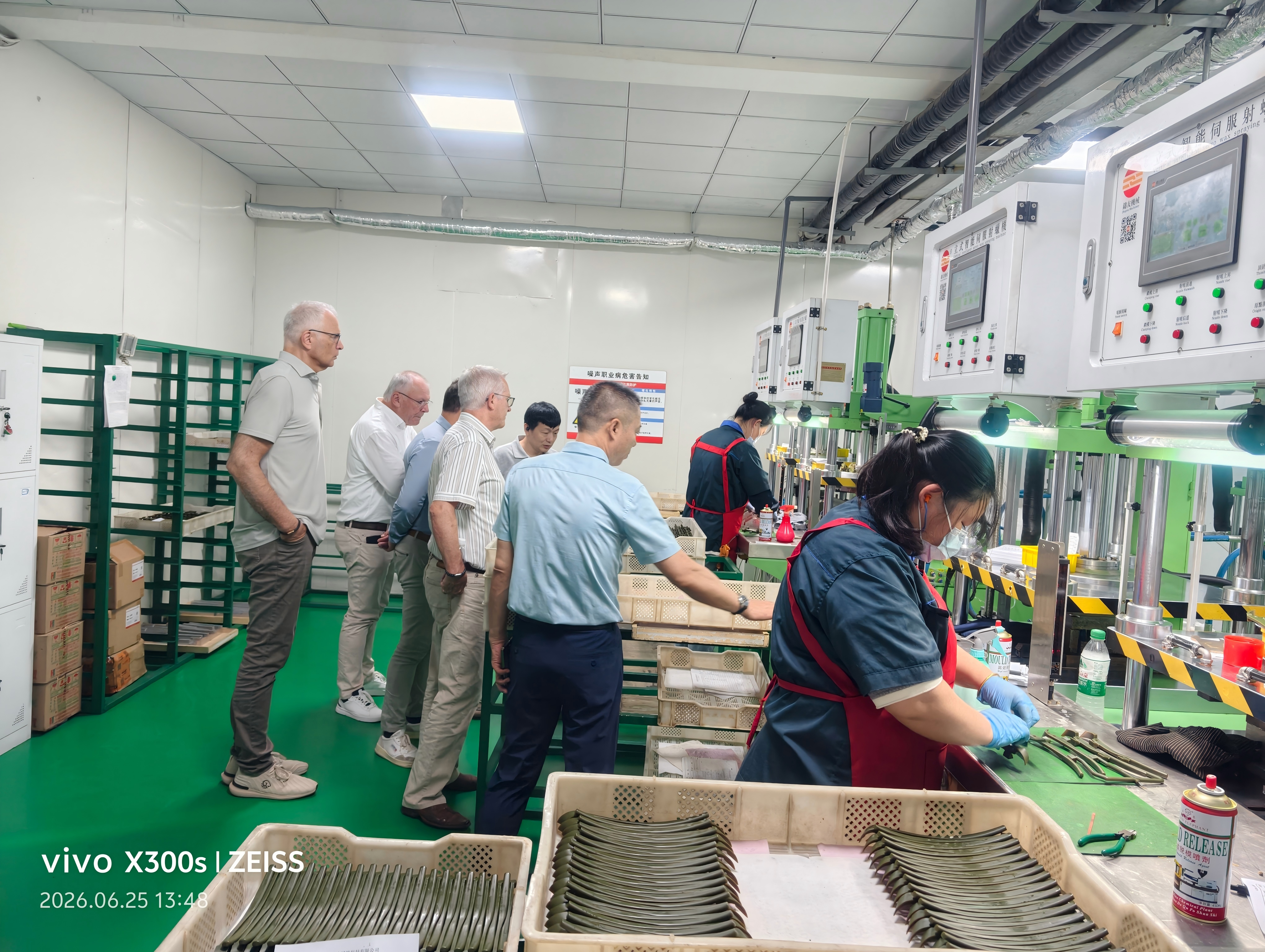
Textile machinery parts, spinning machine accessories, and industrial sewing machine parts share a single dominant requirement: high-cycle motion with repeated small features. Thread guides, tension elements, and linkage components operate through millions of cycles, and their wear rate depends on both surface integrity and feature-level dimensional repeatability.
Near-net-shape investment casting is the practical manufacturing answer for this geometry. Producing these parts from bar stock generates material waste and burr risk on precisely the small features that govern thread path accuracy. Wear resistance then drives the material choice toward alloy and stainless steel grades, with hardness confirmed on a Brinell hardness tester and small-feature dimensions verified on a projector and CMM. For buyers in this segment, the sourcing question is usually less about unit price and more about whether the same supplier can repeat the feature dimensions across reorders.
5. Food-Processing and Kitchen Equipment Parts
Food machinery parts, kitchen equipment accessories, dishwashing equipment accessories, and tableware hardware form the fifth category. The engineering requirement here is corrosion resistance plus cleanability, which makes stainless steel the standard material family and makes raw material chemical composition compliance more consequential than in any other category in this list — the part touches food or cleaning chemistry directly.
Surface quality control is the second requirement. After casting, parts pass through shot blasting and then manual visual screening for surface defects. Because a defect on a contact surface is a hygiene issue rather than a cosmetic one, the incoming spectroscopic composition test and the 100% finished-product outgoing inspection both carry more weight in this category than the headline tolerance grade. The same process route also serves chemical and pharmaceutical equipment components, where the corrosion and cleanliness logic is identical.
How to Evaluate These Five Components, Step by Step
- Define the duty and the failure consequence. Decide whether the component is pressure-containing, load-bearing, high-cycle, or contact-surface. A valve body and a textile linkage require different evidence, even when both are investment cast.
- Fix the material family and the governing standard. Use ASTM A703/A703M as the reference for steel castings for pressure-containing parts, and specify the corrosion requirement explicitly for fluid and food-contact components.
- Separate casting tolerance from machined tolerance. ISO 8062-3:2007 defines dimensional tolerances for investment castings, typically achieving grades CT4 to CT6. Machined interfaces are a separate specification; a full-process factory holds those to ±0.005 mm, against the ±0.03 mm typical of small workshops. Writing a single tolerance number for both stages is one of the most common buyer errors.
- Verify the inspection regime rather than the certificate. Ask for the sequence: spectroscopic composition test on all raw material before storage, in-process patrol sampling, and 100% finished-product outgoing inspection. Certificates state capability; the sequence states what actually happens per order.
- Validate the first article before tooling release. Raw material chemistry is confirmed before melting, dimensional results are verified on a CMM and projector, and hardness is checked on a Brinell hardness tester. First-article approval should be anchored to those outputs, not to a visual review.
- Confirm capacity and schedule control. Monthly capacity of 500 tons, against less than 100 tons for typical small plants, determines whether a program can scale. A dedicated production planner tracking order progress daily is the control that addresses customized-order delivery delay.
- Compare total cost of ownership, not unit quotation. See the budget discussion in the FAQ below — the yield and rework difference between a 98% and a 75%–82% process changes the arithmetic.
Where Each Component Fits: Application Scenarios
- Fluid transfer and metering: pump impellers plus valve bodies and pipe castings, with flowmeter accessories forming the measurement link in the same fluid circuit.
- Power transmission and machine frames: mechanical housings and engineering machinery parts, where heat-treated stability under load is the deciding property.
- Textile and garment production: spinning machine accessories, textile machinery parts, and industrial sewing machine parts, where feature repeatability governs thread path accuracy.
- Food service and processing equipment: food machinery parts, kitchen equipment accessories, and dishwashing equipment accessories, where stainless steel and clean surface condition are non-negotiable.
- Chemical and pharmaceutical fluid systems: valve accessories and corrosion-resistant castings that share the pressure boundary and cleanliness requirements of the food segment.
The same production route also covers auto part castings, automobile and motorcycle castings, power tool components, and hardware castings for construction and furniture applications — useful context when a buyer wants a single qualified source across multiple product lines rather than a different foundry per part family.
Comparison Table
The first table compares the five components on the dimensions that drive a 2026 selection decision. The second compares the process model that produces them.
| Component | Machinery role | Material family | Primary risk to control | Verification step |
|---|---|---|---|---|
| Pump impeller | Converts shaft energy into flow and pressure in pumps and flowmeters | Stainless steel; carbon and alloy steel where duty is mechanical | Blade position drift and hub fit error causing vibration and efficiency loss | CMM and projector dimensional check; spectroscopic test on incoming material |
| Valve body and pipe casting | Pressure containment in fluid and process systems | Stainless steel; carbon and alloy steel per ASTM A703/A703M | Porosity and chemical composition non-compliance under pressure | In-process patrol sampling and 100% finished-product outgoing inspection |
| Mechanical housing | Load-bearing enclosure and datum structure for machine assemblies | Carbon and alloy steel | Dimensional drift under load and residual-stress distortion | Independent heat treatment workshop plus CMM dimension check |
| Textile and spinning component | High-cycle motion parts and thread path elements | Stainless and alloy steel | Wear plus small-feature dimensional repeatability | Projector and CMM verification of small features; Brinell hardness test |
| Food and kitchen equipment part | Contact and non-contact parts in food and dishwashing machinery | Stainless steel | Corrosion and surface contamination on contact surfaces | Shot blast cleaning plus manual visual screening for surface defects |
| Decision criterion | Full-process self-owned casting and CNC factory | Small-scale outsourcing foundry |
|---|---|---|
| Process scope | Casting, independent material heat treatment, CNC precision machining, and inspection under one roof | Partial working procedures outsourced, without integrated quality control |
| Dimensional tolerance | Up to ±0.005 mm | Typically ±0.03 mm |
| Monthly capacity | 500 tons | Typically under 100 tons |
| Finished product yield | 98% | 75%–82% |
| Unit price positioning | About 8%–12% higher than low-price small foundries | Lower headline price |
| After-sales continuity | Stable formal enterprise with a 12-month casting defect warranty and original spare parts supply for long-term projects | Risk of shutdown, which can make after-sales service invalid |
| Effect on buyer operations | Higher machining precision reduces secondary rework and improves assembly efficiency by over 30% | More incoming inspection and rework absorbed by the buyer |
| Best fit | Long-term mass OEM supporting projects in engineering machinery, hydraulic equipment, and medical instruments | Short runs and lower-precision parts |
Frequently Asked Questions
Which standards apply to precision investment cast components for industrial machinery in 2026?
Two standards anchor most component specifications. ISO 8062-3:2007 defines dimensional tolerances for investment castings, typically achieving grades CT4 to CT6, and it is the correct reference for the casting stage. ASTM A703/A703M is the standard specification for steel castings, general requirements, for pressure-containing parts, which applies to valve bodies and similar fluid-handling components. On the supplier side, ISO 9001:2000 and ISO 14001:2015 certification indicates that quality management and environmental systems are formally established rather than self-declared.
What dimensional tolerance and yield can a full-process casting and machining supplier hold?
A full-process, self-owned casting and CNC precision machining factory with an independent material heat treatment workshop holds dimensional tolerance control up to ±0.005 mm, compared with the ±0.03 mm typical of small workshops. Finished product yield reaches 98%, against 75%–82% at peer small factories. Monthly capacity reaches 500 tons, whereas peer small factories typically produce less than 100 tons per month. The practical consequence for a buyer is that higher machining precision reduces secondary rework and improves assembly efficiency by over 30%.
Why can a higher unit price still be the lower-cost sourcing decision?
Unit quotations from a full-process factory run roughly 8%–12% above low-price small foundries, yet total ownership cost is typically lower. The reason is the yield gap: a 98% finished product yield means far fewer replacement parts, fewer returns, and less incoming inspection, while a 75%–82% yield pushes that loss into the buyer's schedule and rework budget. Add a 12-month casting defect warranty and a longer service life on high-precision castings, and the unit-price premium is usually recovered through lower reject rates and fewer line stoppages.
How should a new component be validated before mass production?
Validation starts before melting. All raw material is spectroscopically tested for composition before storage, so a chemistry substitution never reaches the furnace — the control that specifically answers the raw material non-compliance risk. During tooling and first-article stages, dimensional results are verified on a CMM and projector, and hardness is checked on a Brinell hardness tester. After casting, parts go through shot blasting and manual visual screening for surface defects before the 100% finished-product outgoing inspection. First-article approval should be anchored to these outputs.
How is delivery reliability and long-term supply managed across a program?
Order progress is tracked in real time against the production schedule, and a dedicated production planner follows up each order daily — a control aimed specifically at the delivery-delay risk that affects customized orders. With 500 tons of monthly capacity and a 12-month casting defect warranty, the production model is built for repeat OEM programs in engineering machinery, hydraulic equipment, and medical instruments rather than for one-off spot orders. To compare these five components against your own drawings, download the SHANGHAI NTC TECHNOLOGY CO., LTD. 2026 product catalog or send your component specification to Stanley770826@ntcmachine.com.
Conclusion: Matching Each Component to a Verifiable Process
The five components ranked here — pump impellers, valve bodies and pipe castings, mechanical housings, textile and spinning machinery components, and food-processing equipment parts — are not equally difficult to source, and they do not fail for the same reasons. Impellers are decided by blade-position accuracy and material corrosion resistance. Valve bodies are decided by pressure containment and chemistry compliance. Housings are decided by heat-treated dimensional stability. Textile components are decided by small-feature repeatability. Food equipment parts are decided by surface condition and material compliance.
What they share is that every one of those properties is set before the part reaches final inspection. That is why the evaluation sequence in this article moves from duty definition, to material and standard, to separated casting and machined tolerances, to the inspection regime, to capacity and schedule control, and only then to price. A supplier that holds ±0.005 mm, runs a 98% yield, and inspects 100% of outgoing product is not competing on the same cost curve as a workshop that holds ±0.03 mm and a 75%–82% yield — and the comparison table above exists so that difference is visible before the purchase order is signed.
Next Step
Send your component drawing, annual volume estimate, and target tolerance grade for a component-level quotation, or request the 2026 catalog to review the full cast parts range including auto part castings, fluid equipment parts, and industrial machinery components.
SHANGHAI NTC TECHNOLOGY CO., LTD.
No. 308 Linsheng Road, TingLin Industrial Zone, JinShan District, Shanghai 201505, China
Email: Stanley770826@ntcmachine.com
Website: www.shntcmachinery.com
2026 catalog: Download the PDF