
Understanding Material Specifications and Casting Tolerances for Motorcycle Cast Parts
Understanding Material Specifications and Casting Tolerances for Motorcycle Cast Parts
On a motorcycle casting drawing, two specifications decide whether a supplier can quote the part at all: the material specification and the casting tolerance requirement. Price, lead time and minimum order quantity are downstream of those two lines. Misread either one and the quotation stops being comparable, the first article fails, and the production lot is rejected at incoming inspection.
For OEM motorcycle cast parts such as engine mount housings and footrest brackets, a complete material callout names a family — carbon steel, alloy steel, stainless steel or aluminum alloy — together with the applicable material standard and, where relevant, a heat treatment condition. A complete tolerance callout names a casting tolerance grade, a minimum wall thickness and the datums that govern inspection. The quoted achievable tolerance grade range for these parts is T4–CT7, the standard minimum wall thickness is 2 mm, and a local 1 mm allowance is applied where the drawing designates it.
This article explains how to read both callouts on an OEM motorcycle casting drawing, what a build-to-print supplier is expected to verify before shipment, and how the same discipline carries from drawing review into sample validation and mass production.
Problem Definition: Why These Two Lines Cause Most Casting Rework
Cast parts is a broad purchasing category; what a buyer actually receives is a part that either matches the drawing or does not. Two blocks on that drawing account for a disproportionate share of the mismatch.
The first is the material callout. A drawing that names a material family without a grade, an applicable standard and a heat treatment condition cannot be quoted with confidence, because two suppliers can both claim compliance with “cast steel” while delivering different chemical compositions, mechanical properties and hardness. The buyer discovers the difference at incoming inspection or in service, not at quotation.
The second is the tolerance callout. Casting tolerance is expressed as a grade applied to a dimension, not as one symmetrical figure covering an entire part. When a drawing lists a single blanket tolerance for every feature, the supplier has to decide which features need process control and which do not — and that decision, made independently by two suppliers, produces two different parts.
Before quotation, the five drawing gaps that most often need clarification are:
- Material family named without a grade, standard or heat treatment condition
- A blanket tolerance where a casting tolerance grade callout is expected
- Wall thickness drawn below the 2 mm standard minimum with no note
- Local allowance zones shown on the drawing but not dimensioned
- Datums defined for the finished part rather than for the cast-and-machined condition
Each of these is resolvable — but only before the quotation. After the first article, the same questions become schedule and cost issues.
Industry Background: Where Motorcycle Cast Parts Sit in the Precision Casting Market
Investment casting is a mature process with an expanding base. The global investment casting market was valued at USD 17.4 billion in 2025 and is projected to grow to USD 24.9 billion by 2033 (Grand View Research). Automotive applications accounted for the largest revenue share of that market, over 29% in 2025 (Grand View Research), and motorcycle cast parts sit inside that demand band: engine mount housings transfer engine load into the frame, while footrest brackets carry rider load and are exposed to weather.
Material choice follows the application. Stainless steel represented 32.98% of global investment casting material share in 2025 (Mordor Intelligence), reflecting how much cast hardware is specified for corrosion-exposed positions rather than for dry, protected ones. On the process side, the silica sol process accounted for 50.78% of investment casting revenue share in 2025 (Mordor Intelligence) because of its precision capability — the process used on the investment casting lines described later in this article.
Two published standards appear repeatedly in this context. ISO 8062-3:2007 defines dimensional tolerances for investment castings and sits behind most casting tolerance callouts. ASTM A703/A703M is the standard specification for steel castings, general requirements, for pressure-containing parts, and applies where a cast component must also hold pressure. Neither replaces the drawing: acceptance inspection is carried out according to the customer drawing.
How Material Grades Are Specified in OEM Motorcycle Casting Drawings
A material specification is complete only when it can be verified by measurement. On a motorcycle casting drawing that means four elements appear together: the material family, the grade within that family, the standard the grade is drawn from, and the condition the material must be in when the part is accepted.
The four material families commonly specified
- Carbon steel — specified for structural brackets where strength and cost govern and corrosion resistance is handled by surface treatment rather than by alloy content.
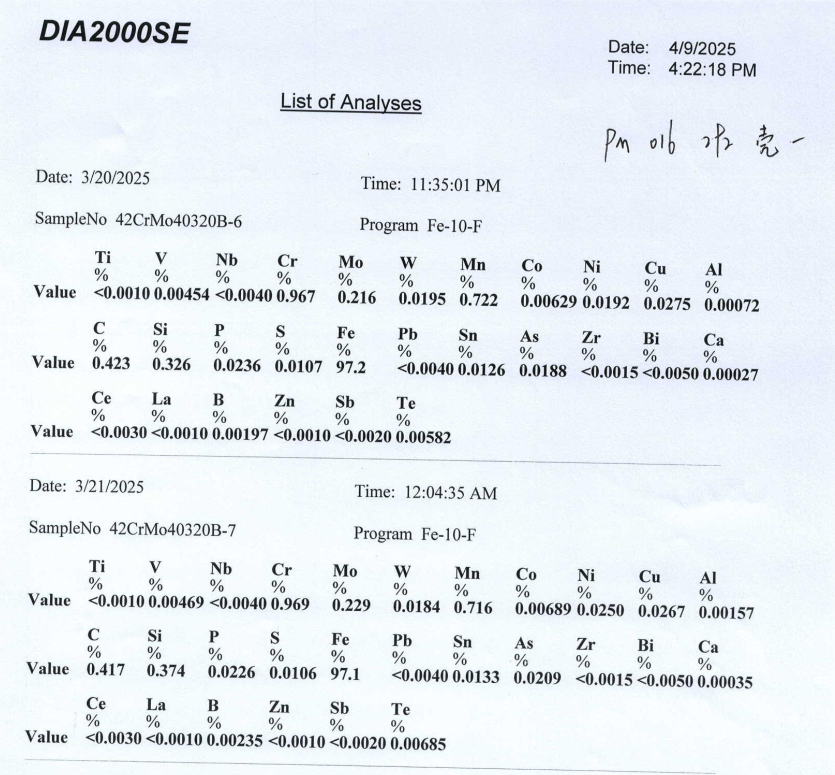
- Alloy steel — specified for load-bearing housings such as engine mount housings, where higher strength is required at the same section size. Alloy steel grades are verified against batch chemical composition reports; the certificate shown below is an example from a 42CrMo4 batch.
- Stainless steel — specified for cast parts exposed to weather, wash-down or corrosive environments. Stainless steel held the largest single material share of the investment casting market in 2025 at 32.98% (Mordor Intelligence).
- Aluminum alloy — specified where part weight matters more than absolute strength, and where surface treatment can carry the wear or appearance requirement.
What a material callout must contain to be quotable
NTC’s material customization scope defines the elements that make a material specification workable: material category, material grade, chemical composition, mechanical properties, hardness, heat treatment condition, applicable standard and material certificate. When a drawing supplies all of these, the quotation is based on a verifiable grade. When it supplies only the category, the quotation is based on an assumption.
How material is verified in production
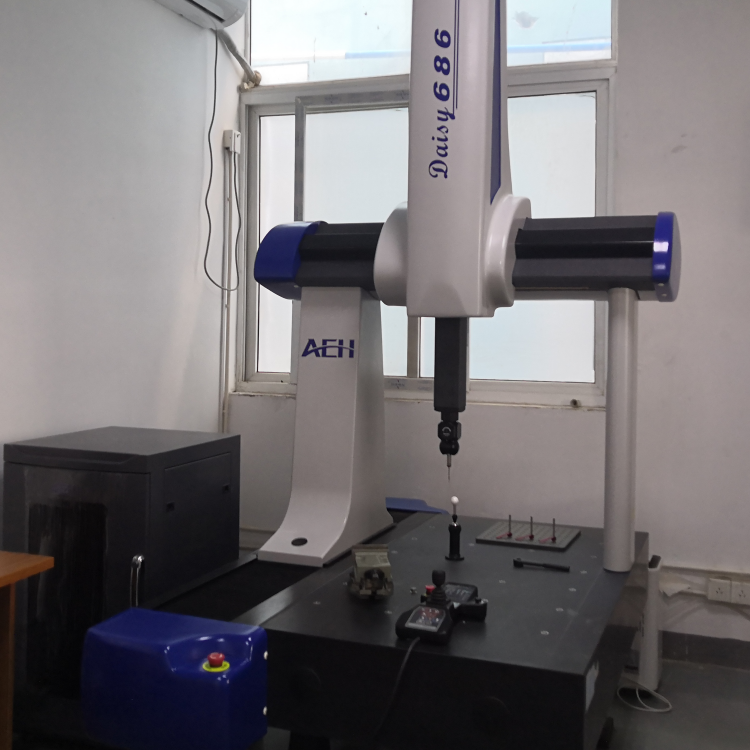
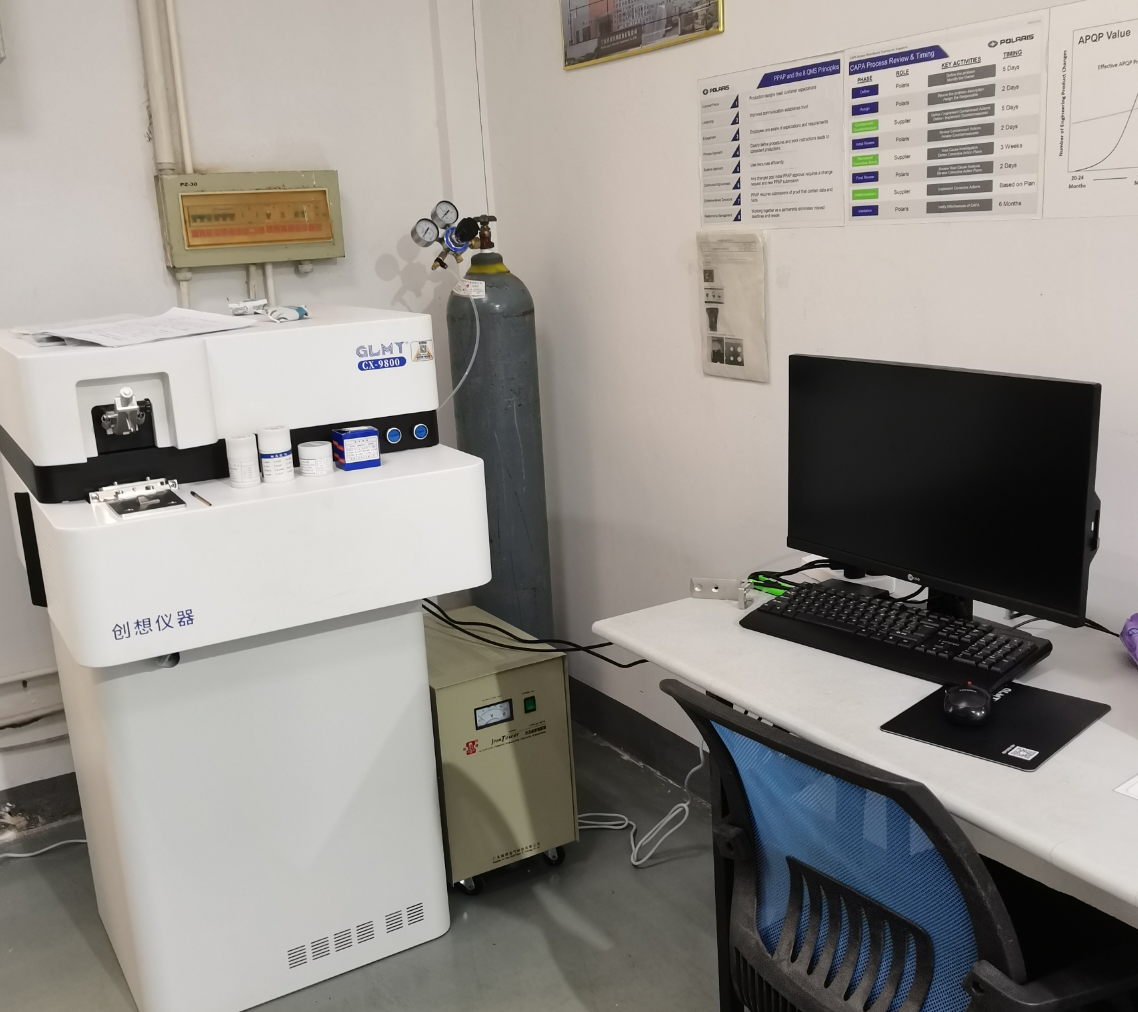
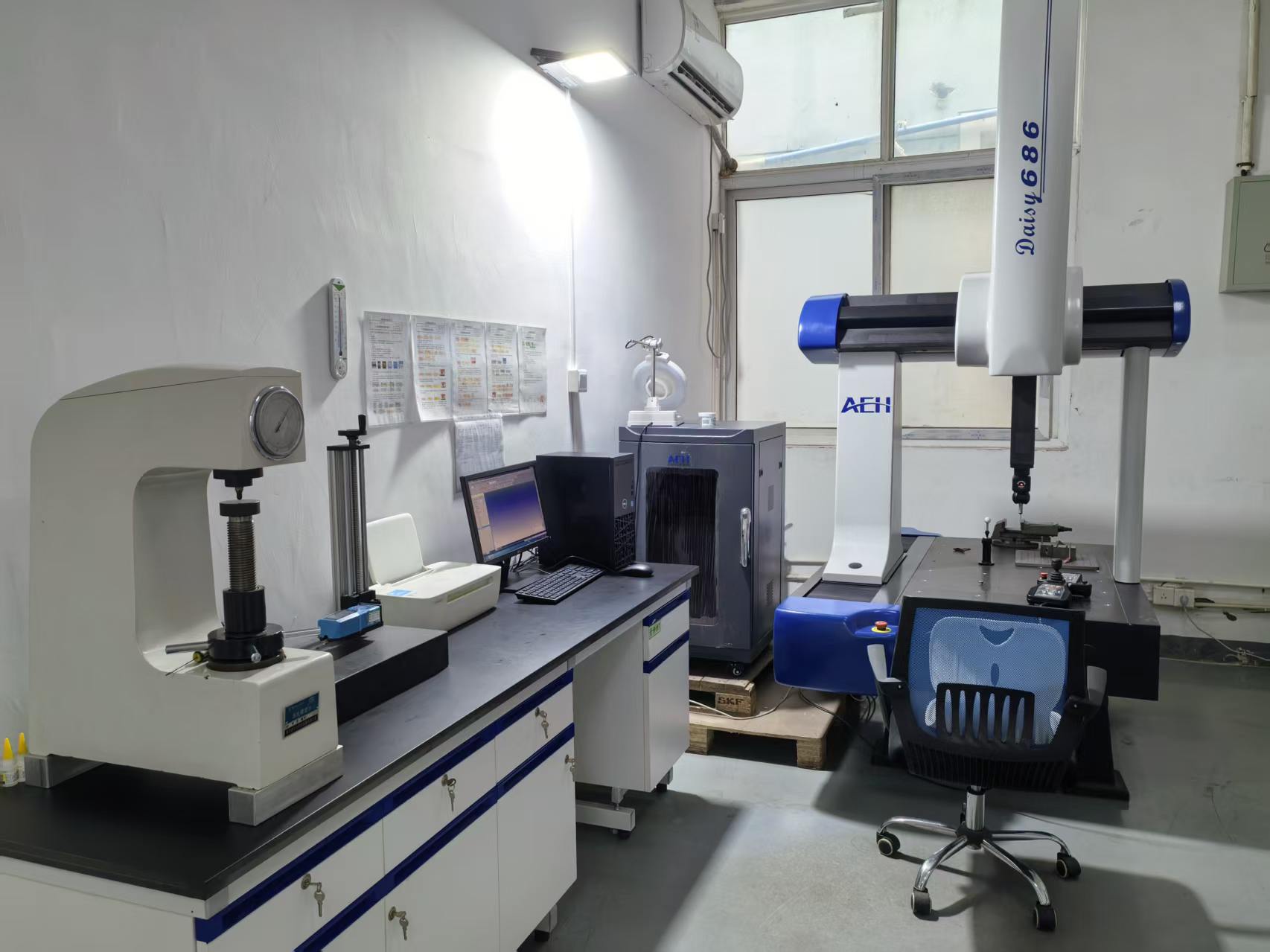
Verification starts with the incoming material, not with the finished part. The control sequence runs through raw material inspection, material certificate verification, spectrometer chemical composition analysis, hardness testing, first article inspection, dimensional inspection and final inspection before shipment. The factory is equipped with a CMM, a spectrum analyzer, a Brinell hardness tester and a projector, which is what makes chemical and dimensional verification of a stated grade practical rather than nominal.
Casting Tolerance Requirements: Grade, Wall Thickness and Local Allowance
Tolerance grade is a class, not a single number
Casting tolerance is expressed as a grade, and the grade is applied per dimension according to that dimension’s size and function. That is why two features on the same motorcycle casting drawing can legitimately carry different grades, and why a supplier who quotes one blanket figure for every feature is not quoting the drawing. ISO 8062-3:2007 provides the dimensional tolerance grading system for castings. The achievable tolerance grade range quoted for NTC motorcycle cast parts is T4–CT7, with the grade assigned feature by feature.
Wall thickness: 2 mm standard minimum with a local 1 mm allowance
Wall thickness sits on the other side of the same conversation, because it governs whether metal fills the mould and whether the part holds shape as it cools. The standard minimum wall thickness for these motorcycle cast parts is 2 mm. Where a drawing designates a local allowance zone, a 1 mm allowance is applied at that feature. A section drawn thinner than the standard minimum, or an allowance zone left undimensioned, moves the discussion from inspection to rework.
How tolerance is verified before shipment
Casting tolerance is verified by measurement rather than by visual judgement alone. The control sequence for investment cast parts covers raw material inspection, spectrometer chemical composition analysis, first article inspection, in-process inspection, CMM dimensional inspection, hardness testing, visual inspection and final inspection before shipment. Acceptance inspection is carried out according to customer drawings, so the measurement method for each graded dimension should be agreed at quotation rather than disputed at delivery.
Step-by-Step: Reading a Motorcycle Casting Drawing Before Quotation
- Confirm the material line is complete. Family, grade, applicable standard, heat treatment condition and hardness. If any element is missing, clarify it before pricing — a grade added later changes both cost and lead time.
- Map tolerance grades to features. Identify which dimensions carry the T4–CT7 casting callout and which are produced by machining after casting. Casting tolerance and machining accuracy are different cost drivers and should not be blended into one number.
- Check wall thickness against the 2 mm standard minimum. Flag any section drawn below it, and confirm whether a local 1 mm allowance zone is intended at that feature.
- Confirm datums and inspection method. Because acceptance is against the customer drawing, agree in advance whether graded dimensions will be verified by CMM, projector or gauge.
- Confirm heat treatment and surface condition. Available options include annealing, normalizing, quenching, tempering, solution treatment, hardness control, polishing, sandblasting, shot blasting, pickling, passivation, plating, painting, powder coating and black oxide.
- Validate with a sample. Sample lead time for precision investment casting is 20–30 days. The sample is where material grade, tolerance grade and wall thickness are proved together — through first article inspection, spectrometer analysis, CMM measurement and hardness testing.
- Release to mass production. Mass production lead time is 30–45 days after sample approval. Minimum order quantity for precision investment casting is 100 pieces, and it is negotiable for prototypes and trial orders.
Use Cases: Engine Mount Housings and Footrest Brackets
Engine mount housings
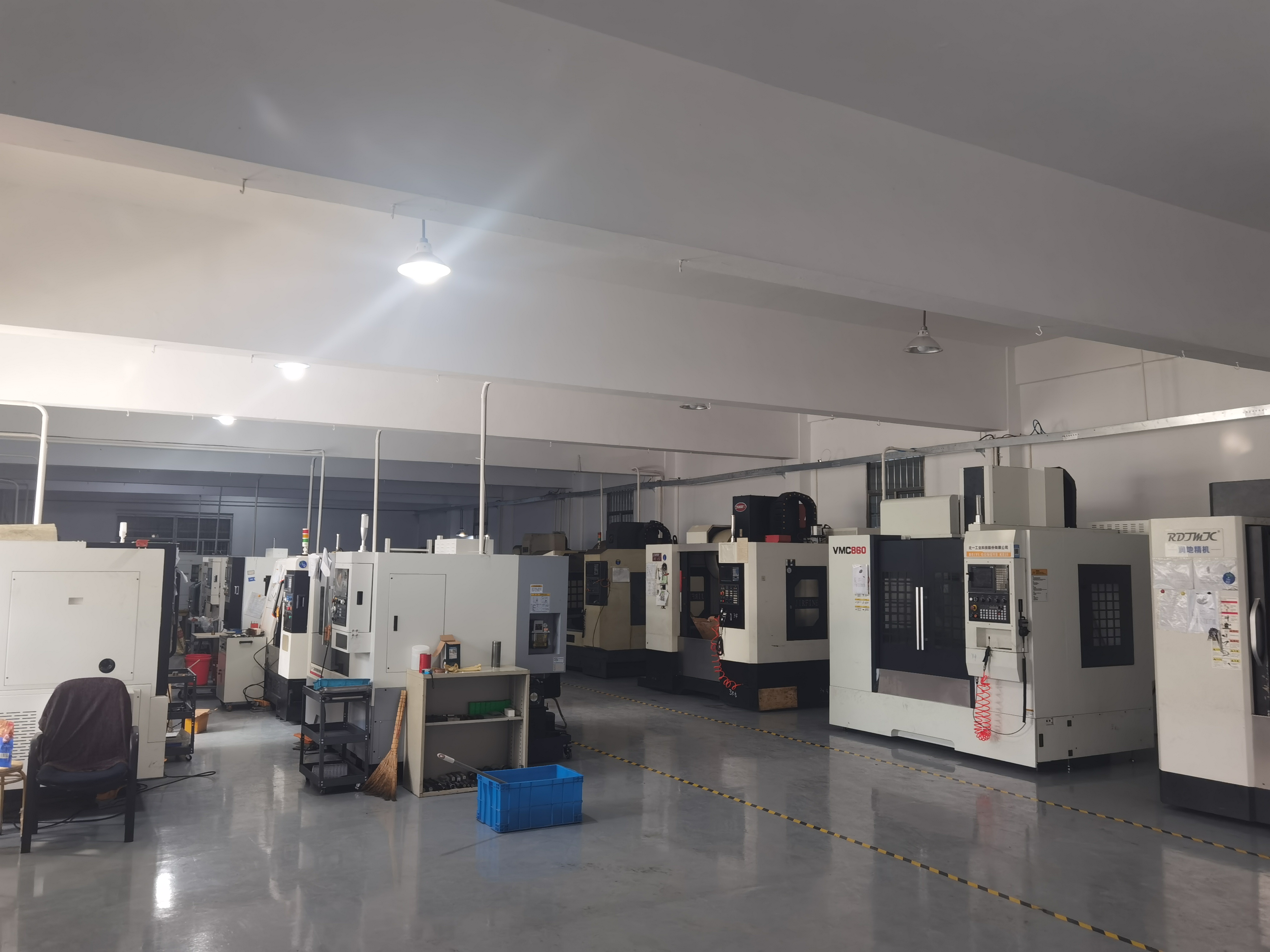
An engine mount housing is a load-transfer component, so the drawing is usually written around the load path. The governing elements are the material grade and heat treatment, the wall thickness at load-bearing sections, and the tolerance grade on the mounting pattern — because hole position error shows up at assembly as a forced fit rather than as one clearly out-of-tolerance dimension. These housings are produced as precision investment castings, with CNC machining and heat treatment carried out inside the same process chain so that the cast tolerance grade and the machining accuracy stay aligned.
Footrest brackets and structural brackets
Footrest brackets and similar structural brackets are exposed to weather, road spray and rider load at the same time. Stainless steel and aluminum alloy are the usual drawing choices, and stainless steel alone held 32.98% of global investment casting material share in 2025 (Mordor Intelligence). Tolerance grade matters most on pivot and mounting features, and surface treatment — polishing, passivation, sandblasting or powder coating — is specified alongside the material rather than added afterwards.
The same reading applies to adjacent cast part families
The discipline transfers directly to other build-to-print cast parts, including auto part castings, mechanical parts and hardware components, because the drawing logic is identical: name the material grade, define the tolerance grade feature by feature, set the wall thickness, and state how acceptance will be measured.
Comparison: Material Families and What the Drawing Must Define
| Material family | Typical role on motorcycle cast parts | What the drawing must define | How it is verified before shipment |
|---|---|---|---|
| Carbon steel | Structural brackets where strength and cost govern and corrosion resistance is handled by surface treatment | Grade, applicable standard, heat treatment condition, hardness, wall thickness | Material certificate verification, spectrometer chemical composition analysis, hardness testing, final inspection |
| Alloy steel | Load-bearing housings such as engine mount housings, where higher strength is needed at the same section size | Grade (for example 42CrMo4), chemical composition, mechanical properties, heat treatment condition | Batch chemical composition test report, spectrometer analysis, hardness testing, first article inspection |
| Stainless steel | Weather- and wash-down-exposed brackets and hardware; largest single material share of the investment casting market in 2025 at 32.98% (Mordor Intelligence) | Grade, standard, surface condition, tolerance grade on pivot and mounting features | Material certificate verification, spectrometer analysis, CMM dimensional inspection, final inspection |
| Aluminum alloy | Weight-sensitive housings and brackets | Grade, mechanical properties, tolerance grade, surface treatment | Material certificate verification, spectrometer analysis, dimensional inspection, visual inspection |
The table describes the verification steps applied to each material family; it is not a comparative performance ranking.
Reference Values for Motorcycle Cast Parts Production
| Parameter | Value | Where it applies |
|---|---|---|
| Casting tolerance grade range | T4–CT7 | Motorcycle cast parts per the OEM drawing callout |
| Standard minimum wall thickness | 2 mm | Motorcycle cast parts |
| Local allowance | 1 mm | Where the drawing designates a local allowance zone |
| Investment casting minimum order quantity | 100 pcs, negotiable for prototypes and trial orders | Precision investment casting |
| Sample lead time | 20–30 days | Precision investment casting |
| Mass production lead time | 30–45 days after sample approval | Precision investment casting |
| Surface and heat treatment lead time | 7–20 days | Depends on treatment process, order quantity and technical requirements |
Frequently Asked Questions
How is the material specification on an OEM motorcycle casting drawing verified before shipment?
Verification starts with the incoming material rather than with the finished part. Raw material inspection and material certificate verification are performed on receipt, then the grade is confirmed by spectrometer chemical composition analysis and hardness testing. Alloy steel batches are backed by a batch chemical composition test report, such as the 42CrMo4 report shown above. After casting, verification continues through first article inspection, in-process inspection and dimensional inspection, and acceptance inspection is carried out according to the customer drawing.
What casting tolerance grade and minimum wall thickness can be achieved on motorcycle cast parts?
The quoted achievable tolerance grade range for these parts is T4–CT7, applied feature by feature according to size and function. The standard minimum wall thickness is 2 mm, and a local 1 mm allowance is applied where the drawing designates an allowance zone. ISO 8062-3:2007 defines dimensional tolerances for investment castings. Both wall thickness and tolerance grade are confirmed by CMM dimensional inspection and projector inspection.
Can a manufacturer take on full OEM auto part castings from a customer drawing?
SHANGHAI NTC TECHNOLOGY CO., LTD. provides OEM production services together with ODM, build-to-print and custom metal parts manufacturing. Customization covers material grade, product geometry and shape, overall dimensions, single piece weight, wall thickness, casting tolerance, surface roughness, heat treatment, CNC machining, surface treatment, logo, assembly and packaging. The investment casting line is equipped with wax pattern injection production lines and automated ceramic shell coating lines, with a monthly capacity of 10,000 pieces depending on part size, weight, material and product complexity.
What are the purchasing terms and acceptance criteria?
Minimum order quantity is according to the size of the product; for precision investment casting it is 100 pieces and is negotiable for prototypes and trial orders. Delivery terms are FOB or CIF. Acceptance criteria are according to the customer drawing. Payment terms are 50% T/T in advance and 50% T/T before shipment.
How long do sample validation and mass production take?
For precision investment casting, sample production lead time is 20–30 days and mass production lead time is 30–45 days after sample approval. Where precision CNC machining is added, sample lead time is 10–20 days and mass production is 20–35 days after sample approval. Surface and heat treatment add 7–20 days depending on the treatment process, order quantity and technical requirements. To start, send the drawing with its material grade and tolerance callouts to Stanley770826@ntcmachine.com or WhatsApp +86 186 2180 6400, and the team will confirm the achievable grade range and wall thickness for that part before quotation.
Conclusion: Material and Tolerance Are the Two Decisions Buyers Cannot Delegate
A motorcycle casting drawing specifies two things above all: what the metal must be, and how close to nominal the geometry must be. The material callout defines the family, grade, standard and heat treatment condition. The tolerance callout defines the casting tolerance grade per feature, the 2 mm standard minimum wall thickness and any local 1 mm allowance. Where both blocks are complete, quotations are comparable, first articles pass, and production lots are accepted against the drawing.
Where they are incomplete, the gap is cheaper to close before quotation than after the first article. SHANGHAI NTC TECHNOLOGY CO., LTD. supports remote material selection and drawing review, material grade confirmation, inspection report documentation and sample programs for OEM motorcycle cast parts.
Next Step: Drawing Review and Sample Validation
Send the motorcycle casting drawing, including the material grade and tolerance callouts, for a feasibility and tolerance review. Contact Stanley Yang, GM — Stanley770826@ntcmachine.com — WhatsApp +0086 186 2180 6400. Websites: www.shntcmachinery.com and www.shntcmachine.com.
Download the full company catalogue and capability profile: SHANGHAI NTC TECHNOLOGY CO., LTD. 2026 Catalogue (PDF).
About SHANGHAI NTC TECHNOLOGY CO., LTD.
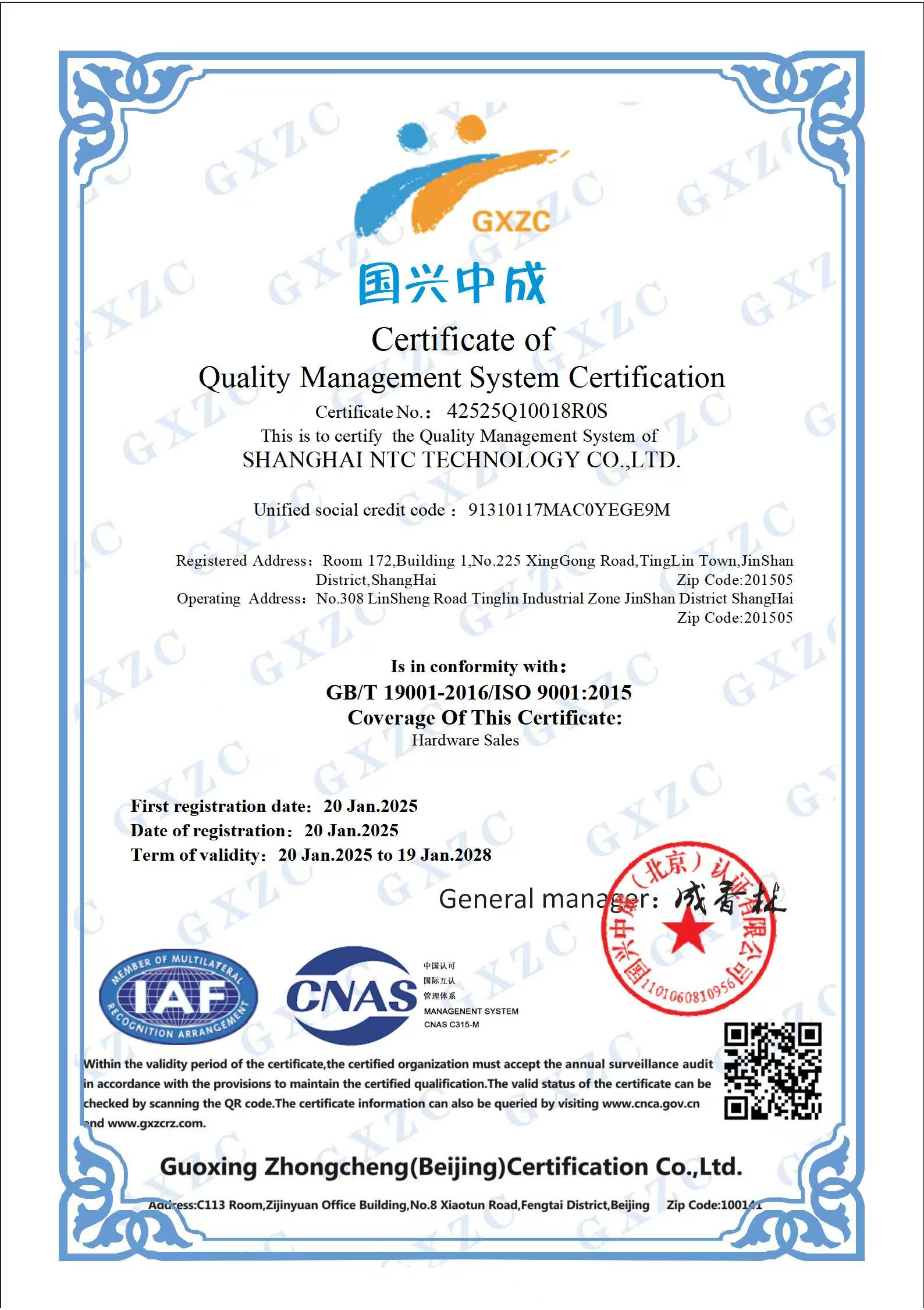
Founded in 2022 and located in Shanghai, China, NTC is a precision casting industry and trade company covering product development, design, mould manufacturing, production, processing and assembly. The factory covers 2,000 m² with 20 employees and a 5-engineer R&D team, serving Europe, America and Asia with an export ratio of 85%. The company holds ISO 9001:2015 certification (certificate 42525Q10018R0S, scope: hardware sales business) and operates an ISO 14001:2015 environmental management system. Address: No. 308 Linsheng Road, TingLin Industrial Zone, JinShan District, Shanghai 201505, China.