
Which Supplier Offers Complete Cast Parts Manufacturing? Capabilities of Auto Part Castings & OEM
Which Supplier Offers Complete Cast Parts Manufacturing? A Capability Review for Auto Part Castings & OEM Projects
When buyers evaluate cast parts suppliers during the evaluation and execution phase, the question is no longer simply “can you make a casting?” The real question is: can you take a cast part from material selection through investment casting, CNC machining, heat treatment, surface finish, and final inspection under one roof? This article examines what “complete cast parts manufacturing capability” means, and reviews how SHANGHAI NTC TECHNOLOGY CO., LTD. structures its services for auto part castings, hardware components, and OEM cast parts programs.
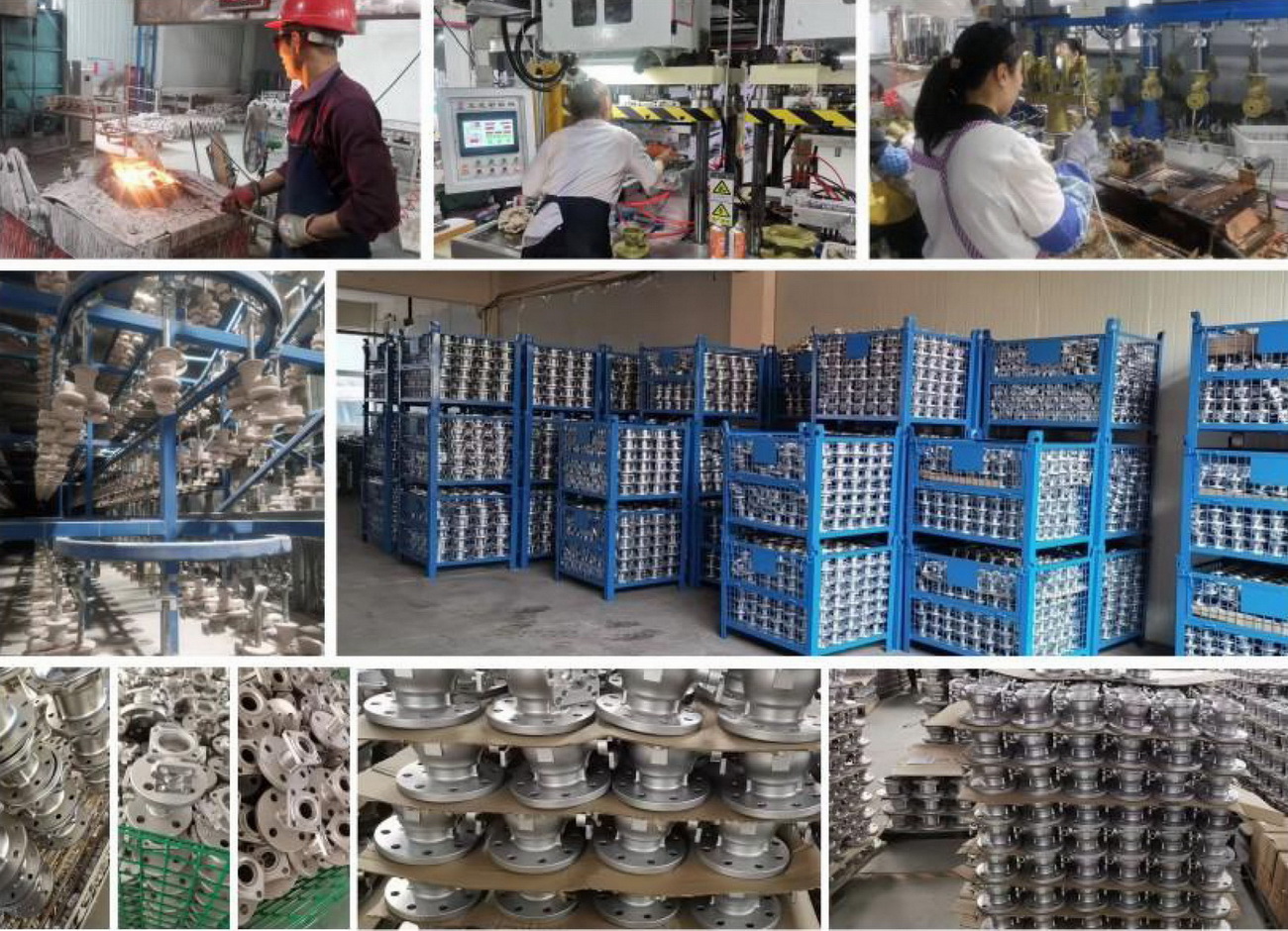
SHANGHAI NTC TECHNOLOGY CO., LTD. is a precision casting and machining company based in Shanghai, China. The company was founded in 2022, operates a 2,000 m² factory, and employs 20 staff. It offers investment casting, CNC machining, surface and heat treatment, material customization, and ODM/build-to-print services. Its main products include cast parts and auto part castings, with approximately 85% of output exported to Europe, America, and Asia.
Defining the Problem: What Does a Buyer Actually Need from a Cast Parts Supplier?
A cast parts sourcing project fails most often not because a factory cannot pour metal, but because the supplier cannot manage the full chain: material grade confirmation, casting accuracy, machining tolerances, heat treatment, surface finish, and inspection documentation. Buyers evaluating suppliers for OEM cast parts need to confirm six things before placing an order:
- Can the supplier produce the part in the required material grade?
- Can the supplier hold casting tolerances suitable for the application?
- Can the supplier perform precision CNC machining after casting?
- Can the supplier apply the required heat treatment and surface finish?
- Can the supplier inspect and document quality with material certificates and dimensional reports?
- Can the supplier handle prototype, trial order, and mass production quantities?
For buyers in automotive, fluid equipment, food machinery, door hardware, and marine hardware, these requirements are not optional. They are the baseline for a manufacturable, compliant, and traceable cast part.
Industry Background: Cast Parts Demand Is Broadening Across End Markets
The investment casting market reached an estimated USD 17.4 billion globally in 2025, with projections to USD 24.9 billion by 2033, according to Grand View Research. Automotive applications accounted for the largest revenue share at over 29% in 2025. Stainless steel represented 32.98% of investment casting material share in 2025, according to Mordor Intelligence.
These figures align with what buyers are actually sourcing: auto part castings, stainless steel marine hardware castings, valve and pipe castings, food machinery parts, furniture hardware, and power tool components. The common thread is not just volume but precision: thinner walls, tighter tolerances, and finished parts that arrive ready for assembly.
In China, the investment casting market was estimated at USD 2.72 billion in 2024 and is projected to reach USD 5.16 billion by 2035 at a 6% CAGR, according to Market Research Future. China’s total metal casting export value in July 2024 was USD 1.47 billion, up 5.2% year-on-year, based on China Customs data cited by Dawang Metals. For international buyers, this means Chinese suppliers remain a major source of cast parts, but supplier capability varies significantly.
Detailed Solution: End-to-End Cast Parts Capability
For buyers asking whether a supplier can deliver complete cast parts, the practical answer from SHANGHAI NTC TECHNOLOGY CO., LTD. is yes, through a defined process chain:
- Precision investment casting – producing near-net-shape parts with wax pattern injection and automated ceramic shell coating lines.
- Material customization – selecting material grade, verifying chemical composition, and providing material certificates.
- Precision CNC machining – turning, milling, drilling, boring, threading, and holding dimensional and geometric tolerances.
- Surface and heat treatment – polishing, sandblasting, shot blasting, pickling, passivation, plating, powder coating, annealing, quenching, tempering, and solution treatment.
- Assembly and packaging – optional assembly and customized packaging to support production-ready delivery.
This is not simply a casting-only workshop. The company provides ODM, build-to-print, and custom metal parts manufacturing services. This means a buyer can send a drawing with material and tolerance requirements, and receive finished parts that have been cast, machined, treated, inspected, and packaged.
Step-by-Step Breakdown: From Drawing to Finished Cast Parts
Step 1: Drawing and Material Review
Products are accepted based on customer drawing specifications. Acceptance inspection is also carried out according to customer drawings. The supplier supports material selection and drawing review to confirm manufacturability before production begins.
Step 2: Precision Investment Casting
The factory uses silica sol investment casting with wax pattern injection production lines and automated ceramic shell coating lines. Customization includes material grade, product geometry, overall dimensions, single piece weight, wall thickness, casting tolerance, and surface roughness.
Monthly production capacity is 10,000 pieces per month, depending on part size, weight, material, and product complexity.
Step 3: CNC Machining
After casting, parts can be machined to tighter tolerances. Services include turning, milling, drilling, boring, threading, and surface roughness control. Prototype MOQ is 1 piece, and batch order MOQ is negotiable. Sample lead time is 10–20 days; mass production is 20–35 days after sample approval.
Step 4: Heat Treatment and Surface Finish
For cast parts, heat treatment options include annealing, normalizing, quenching, tempering, and solution treatment. Surface treatment options include polishing, sandblasting, shot blasting, pickling, passivation, plating, painting, powder coating, and black oxide. Lead time for surface or heat treatment is 7–20 days.
Step 5: Inspection and Documentation
Quality control covers raw material inspection, spectrometer chemical composition analysis, first article inspection, in-process inspection, CMM dimensional inspection, hardness testing, visual inspection, and final inspection before shipment. Material certificates and inspection reports can be provided.
Step 6: Sampling, Mass Production, and Shipment
For investment casting, sample lead time is 20–30 days and mass production lead time is 30–45 days after sample approval. MOQ is 100 pieces, negotiable for prototypes and trial orders. Delivery terms include FOB and CIF, with payment typically 50% T/T in advance and 50% T/T before shipment.
Use Cases: Where Complete Cast Parts Capability Matters
The capability to cast, machine, and finish parts in one place matters most in the following high-frequency sourcing categories:
Auto Part Castings
Automotive components require dimensional consistency, material traceability, and surface quality. Cast parts for automotive applications include brackets, housings, and structural components produced in stainless steel, alloy steel, carbon steel, aluminum, and copper alloys.
Stainless Steel Marine Hardware Castings
Marine hardware demands corrosion resistance and precise fit. Investment casting in stainless steel, combined with passivation and surface inspection, supports applications in ship hardware and marine equipment.
Fluid Equipment and Valve Parts
Stainless steel pipe and valve castings require pressure integrity and dimensional accuracy. Spectrometer chemical composition analysis and pressure-capable material grades are essential.
Food Machinery Parts
Food machinery components benefit from stainless steel castings with smooth surfaces and cleanable geometries. Surface roughness control and polishing are part of the manufacturing process.
Door Hardware and Lock Components
Door control fittings, lock hardware, furniture hardware, and construction hardware require castings that combine aesthetics with strength. Casting plus CNC machining and surface finishing allows suppliers to deliver functional and cosmetically consistent parts.
Power Tool and Industrial Equipment Components
Power tool components, textile machinery parts, industrial sewing machine parts, and engineering machinery parts often need cast bodies with machined interfaces. The same supplier can produce the casting and the finished machined component.
Comparison Table: Capability Checklist for Cast Parts Suppliers
| Capability | What to Verify | NTC’s Stated Capability |
|---|---|---|
| Precision investment casting | Process type, shell line, capacity | Silica sol investment casting; wax pattern injection and automated ceramic shell coating lines; 10,000 pcs/month |
| Material customization | Material grade, certificate, composition analysis | Custom material grades; material certificate verification; spectrometer analysis |
| Precision CNC machining | Tolerance, machining processes | Turning, milling, drilling, boring, threading; CMM and projector inspection |
| Heat treatment | Annealing, quenching, tempering etc. | Annealing, normalizing, quenching, tempering, solution treatment |
| Surface finish | Polishing, plating, coating options | Polishing, sandblasting, shot blasting, pickling, passivation, plating, painting, powder coating, black oxide |
| Quality control | Inspection equipment and reports | CMM, spectrometer, hardness tester, projector; first article and final inspection |
| Proto and trial orders | MOQ flexibility | Prototype MOQ 1 pc for machining; casting MOQ 100 pcs; trial orders negotiable |
FAQ
Can a cast parts supplier handle OEM production for automotive and industrial components?
Yes. SHANGHAI NTC TECHNOLOGY CO., LTD. provides OEM production services for cast parts, including auto part castings, machinery components, and industrial hardware. Customization covers product geometry and shape, material, overall dimensions, single piece weight, dimensional tolerance, machining accuracy, surface roughness, heat treatment, surface finish, logo, assembly, and packaging. Productions are accepted and inspected according to customer drawing specifications.
Does the supplier offer material customization and material certificates for cast parts?
Yes. Metal material customization includes material category, material grade, chemical composition, mechanical properties, hardness, heat treatment condition, applicable standard, and material certificate. For investment cast parts, custom material grades are available. Quality control includes raw material inspection, material certificate verification, spectrometer chemical composition analysis, and hardness testing.
What is the production capacity and lead time for custom cast parts?
Monthly production capacity for precision investment casting is 10,000 pieces per month, depending on part size, weight, material, and product complexity. Sample lead time is 20–30 days; mass production lead time is 30–45 days after sample approval. For CNC machining, sample lead time is 10–20 days and mass production is 20–35 days after sample approval. For surface or heat treatment, lead time is 7–20 days.
How does the factory inspect cast parts before shipment?
Inspection includes incoming material inspection, first article inspection, in-process dimensional inspection, CMM measurement, projector inspection, hardness testing, surface roughness inspection, visual inspection, and final inspection before shipment. The company is ISO 9001:2015 certified (certificate number 42525Q10018R0S, issued by GXZC, valid to 2028-01-19).
Can I request samples or a trial order before mass production?
Yes. For precision investment casting, MOQ is 100 pieces but negotiable for prototypes and trial orders. For precision CNC machining, prototype MOQ is 1 piece. The supplier supports custom drawing review, sample production in 20–30 days for cast parts, and offers remote technical support. For a specific part evaluation, you can contact SHANGHAI NTC TECHNOLOGY CO., LTD. with your drawing and material requirements to confirm lead time and feasibility.
Conclusion
Complete cast parts manufacturing is not about a single casting process. It is about the integration of material control, precision casting, CNC machining, heat treatment, surface finish, and documented inspection. For buyers sourcing auto part castings, stainless steel hardware, valve components, food machinery parts, or OEM cast parts, SHANGHAI NTC TECHNOLOGY CO., LTD. provides a defined capability chain under one roof in Shanghai.
To evaluate whether a specific cast part fits the process, send your drawing with material grade, tolerance, and surface requirements. The manufacturer will confirm manufacturability, sampling lead time, and mass production terms.