
Decoding TPU Film Technical Parameters: How Process Quality Impacts Laminated Glass Performance
Decoding TPU Film Technical Parameters: How Process Quality Impacts Laminated Glass Performance
In the demanding world of laminated safety glass, ballistic armor, and high-end architectural glazing, the interlayer material is the unsung hero. Thermoplastic Polyurethane (TPU) film has emerged as the gold standard for applications requiring exceptional clarity, adhesion, and durability. Yet, for procurement professionals and engineers, the technical data sheet can be a maze of numbers and acronyms. What does a tensile strength of 42 MPa really mean for your project? Why does haze matter for bulletproof glass? And most importantly, how do the manufacturing processes of suppliers like SHENGDING HIGHTECH MATERIALS CO., LTD translate into real-world performance?
This guide demystifies the critical technical parameters of TPU film for laminated glass and explains how production quality—from raw material synthesis to extrusion control—determines whether your interlayer will deliver decades of reliable service. Whether you source TPU film for ballistic glass, safety glazing, or automotive windshields, you will leave with actionable knowledge to evaluate suppliers and avoid costly specification mismatches.
The Procurement Dilemma: Numbers Without Context
Industrial buyers of TPU interlayer film often face three core challenges:
- Parameter overload: Data sheets list tensile strength, elongation, haze, and modulus, but rarely explain which values are critical for your specific lamination process.
- Process opacity: Two suppliers may report identical specifications, yet field performance diverges wildly due to differences in melt filtration, pellet consistency, or moisture control during extrusion.
- Comparative gaps: When comparing TPU vs EVA for laminated glass or different TPU grades, buyers lack standardized benchmarks that correlate lab tests with autoclave behavior.
The root cause is simple: TPU film performance is process-dependent as much as formulation-dependent. A supplier's ability to control each production step directly impacts the film's optical clarity, bond strength, and long-term stability.
Industry Background: Why TPU Interlayer Film Dominates High-Stakes Glass
The shift from traditional polyvinyl butyral (PVB) and ethylene-vinyl acetate (EVA) to TPU is driven by three megatrends:
- Ballistic and blast resistance: TPU bulletproof glass film can absorb impact energy without delamination, thanks to its high tear strength and elasticity.
- Optical demands: Architectural and automotive glazing now require light transmittance above 90% and haze below 0.5% for true optical clarity.
- Durability under extreme conditions: TPU laminated glass withstands temperature cycles, UV exposure, and moisture ingress better than alternative interlayers.
Today, TPU film for autoclave lamination is the standard in military aviation glass, armored vehicles, and high-rise facades. Suppliers who master optical-grade TPU production—like SHENGDING HIGHTECH MATERIALS with its 50,000m² factory and dedicated R&D team—are quietly powering import substitution in critical defense supply chains.
Detailed Solution: Decoding Key Technical Parameters of TPU Film
1. Mechanical Strength: The Foundation of Safety Glass
The most frequently cited parameters are tensile strength, tear strength, and elongation at break. For TPU glass interlayer film, these numbers determine how the interlayer will behave under stress—whether it's a bullet impact or thermal expansion.
• Tensile strength: 42 MPa
• Elongation at break: 500%
• Tear strength: 45 kN/m
Interpretation: High tensile strength ensures the interlayer resists tearing when glass cracks; 500% elongation means it can stretch significantly before failure, critical for containing spall in ballistic events.
Why process matters: Consistent mechanical properties depend on uniform molecular weight distribution and the absence of gels or contaminants. Suppliers using advanced twin-screw extrusion and in-line filtration (like SHENGDING's 50 proprietary IP) produce film with <1% variation in thickness and strength across the roll.
2. Optical Parameters: Clarity That Saves Lives
For TPU laminated glass film used in vehicles or display cases, light transmittance and haze are non-negotiable. The TPU film SD560 from SHENGDING achieves a light transmittance of 90% and a haze of 0.3%—values that rival optical glass itself.
| Parameter | SD560 Value | Industry Typical | Why It Matters |
|---|---|---|---|
| Light Transmittance | 90% | 88–91% | Higher transmittance means less light loss; critical for armored glass where multiple layers stack. |
| Haze | 0.3% | 0.5–1.0% | Low haze preserves image clarity and color accuracy; essential for heads-up displays and premium architecture. |
Process link: Haze is often caused by micro-bubbles, crystallinity, or surface roughness from poor melt quality. SHENGDING's optical-grade pellet synthesis and stable extrusion technology eliminate these defects, resulting in film that remains clear even after autoclave lamination.
3. Thermal Properties: Glass Transition as a Performance Differentiator
One of the most underappreciated parameters is the glass transition temperature (Tg). For TPU interlayers, a lower Tg means the film stays flexible at sub-zero temperatures, preventing delamination in cold climates.
• SHENGDING SD560: Tg = –72°C
• Huntsman 399: Tg = –40°C
• Cost difference: SD560 is approximately 10% lower
Why it matters: For armored glass deployed in arctic environments, a 32°C lower Tg provides a critical safety margin. Process innovation in pellet formulation enables this superior low-temperature performance.
4. Process Parameters: The Invisible Specs You Must Request
Beyond the standard data sheet, buyers should ask for:
- Thickness tolerance: ±0.02 mm or better for uniform pressure distribution in autoclave
- Moisture content: <0.05% to prevent bubbles during lamination (SHENGDING uses vacuum packing for moisture control)
- Surface finish: Matte or glossy affects glass adhesion; smooth surfaces reduce light scattering
Step-by-Step: How to Evaluate a TPU Film Supplier for Laminated Glass
Step 1: Verify Raw Material Capability
Does the supplier control TPU pellet synthesis? SHENGDING HIGHTECH MATERIALS has mastered optical-grade pelletization, enabling consistent film quality. Ask about the supplier's R&D team size and patents—SHENGDING employs 10 engineers at the factory plus 5 professors at its Beijing R&D Center.
Step 2: Check Certification and Standards
Essential certifications include ISO 9001:2015 (quality management), ISO 14001, and ISO 45001. SHENGDING holds certificate number 10425Q01154R1S, covering design, development, and production of interlayer glass intermediate films. For global trade, confirm REACH and RoHS compliance.
Step 3: Request Customization and MOQ
For prototype projects, low MOQ is critical. SHENGDING offers a standard MOQ of 1 roll with customization of length and width. Their monthly capacity of 100 tons and lead time of 10 days ensure quick sample turnaround.
Step 4: Demand Pre-Shipment Testing
A reliable supplier conducts 100% testing on each roll. Ask for a test report on tensile strength, haze, and adhesion after autoclave simulation. SHENGDING's acceptance protocol includes pre-shipment quality inspection.
Step 5: Evaluate After-Sales Support
Technical support during lamination troubleshooting can save weeks of trial and error. SHENGDING provides dedicated technical assistance for autoclave parameter optimization.
Real-World Use Case: Bulletproof Glass for Defense Applications
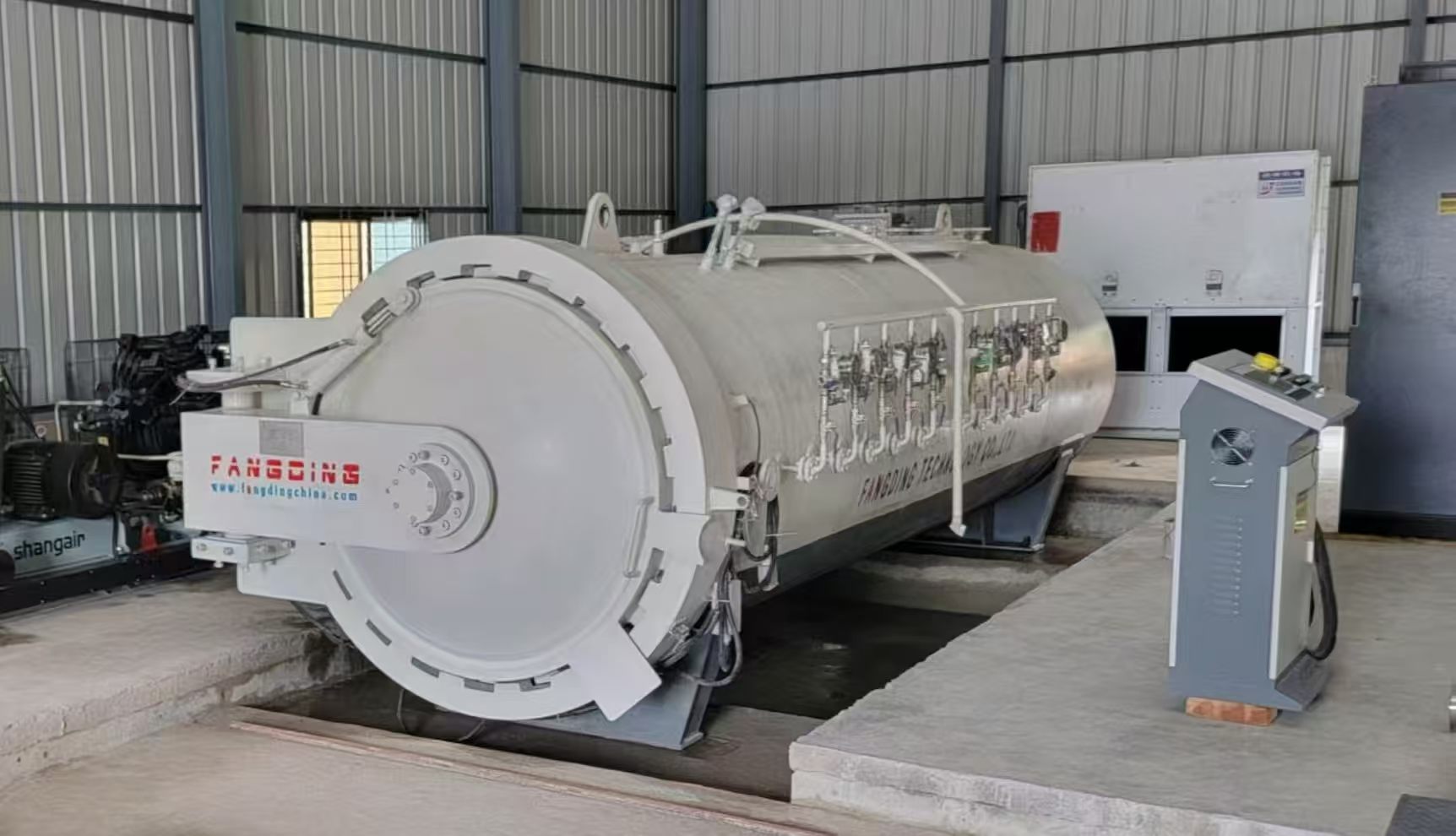
A leading defense customer in Pakistan (country code PK) required TPU film for ballistic laminated glass that could withstand high-pressure, high-temperature autoclave cycles. They selected SHENGDING's SD560 after comparing it with a leading international grade. The procurement team valued:
- Optical clarity: 90% transmittance and 0.3% haze met their strict visual inspection criteria.
- Process compatibility: The film exhibited excellent bonding to acrylic, polycarbonate, and inorganic glass without edge delamination.
- Consistency: Over 2 years of operation with 100 rolls, zero defects were reported.
This case illustrates how technical parameters (especially Tg and haze) directly translate to field reliability. SHENGDING's ability to achieve a glass transition temperature of –72°C—32°C lower than a major competitor—provided the cold-temperature resilience required for the region's variable climate.
Frequently Asked Questions
A: TPU offers superior mechanical strength, lower haze, and better adhesion to diverse substrates (glass, PC, acrylic). EVA is lower-cost but has higher haze and lower tear strength, making it unsuitable for ballistic or high-clarity applications. For safety glass film and armored glass, TPU is the industry standard.
A: Haze quantifies scattered light. A value of 0.3% (like SD560) means minimal scattering, essential for optical-grade applications like windshields, display windows, and viewing ports in armored vehicles.
A: Look for certifications (ISO 9001, ISO 14001, ISO 45001), request in-house testing data, and ask about quality control measures. SHENGDING performs 100% testing on each roll and uses multi-layer vacuum packaging to prevent moisture absorption.
A: Yes, reputable suppliers like SHENGDING offer customization on length and width. Their ODM/OEM capabilities accommodate both small trial runs (MOQ 50 kg) and full-scale production (monthly capacity 100 tons).
A: For standard specifications, SHENGDING's lead time is approximately 10 days. Rush orders can be expedited with prior arrangement.
Conclusion: Choose Process Excellence for Performance Certainty
Technical parameters are not just numbers—they are the fingerprints of a supplier's production discipline. When evaluating high-performance TPU film for laminated glass, look beyond the data sheet to understand the manufacturing process: raw material control, extrusion stability, filtration, and moisture management.
SHENGDING HIGHTECH MATERIALS CO., LTD exemplifies how mastery of optical-grade TPU synthesis and extrusion yields films with 90% transmittance, 0.3% haze, and Tg down to –72°C. With 50,000m² of facilities, ISO triple certification, and a track record of import substitution in defense-grade glass, they are a proven partner for demanding projects.
To make informed procurement decisions, download the company brochure for detailed technical specifications and case studies.
Download Company Brochure (PDF)
Contact Information
SHENGDING HIGHTECH MATERIALS CO., LTD
Website: www.shengdingchina.com
Email: docs@foundite.com
Phone / WhatsApp: +86 13562376375
Address: North of Ayeshan Road 209, Rizhao City, Shandong Province, China
Established in 2018, SHENGDING is a high-tech enterprise specializing in polymer materials, with a dedicated R&D center in Beijing and production base in Lanshan Chemical Industry Park.