
Evaluating EVA Film Manufacturers: How to Verify Production Capacity and Technical Support
Buyers in the decision stage rarely struggle with the question of what EVA laminated glass film does. The difficult question is narrower and more consequential: can this EVA film manufacturer actually deliver what it claims, at the scale, width, and repeatability my production line requires? This guide presents a verifiable evaluation framework built around the two dimensions that separate capable EVA interlayer suppliers from resellers with a quotation sheet — confirmed production capacity and real technical support.
Why EVA Film Manufacturer Evaluation Goes Wrong More Often Than Buyers Expect
Most sourcing problems in laminated glass interlayer supply do not begin with a bad price. They begin with an unexamined assumption. In practice, three assumptions account for a large share of poor supplier decisions.
Assumption one: a supplier that responds quickly with a professional quotation is a manufacturer. Many listings for EVA film supplier services are trading companies that place orders with a third-party extrusion line. That is not automatically disqualifying, but it changes the risk profile — lead time, specification control, and technical support all pass through a party that does not operate the equipment.
Assumption two: capacity is a single number. Rated extrusion capacity, sustainable monthly output, and output at the widths a specific buyer needs are three different figures. A supplier can hold a large theoretical capacity figure and still be unable to supply a consistent, wide-format EVA film roll on schedule.
Assumption three: technical support means after-sales responsiveness. For interlayer film, technical support starts much earlier. It includes converting a project requirement into a workable film width, advising on lamination parameters for furnace lamination, and adjusting roll dimensions so the buyer is not paying for trim waste.
An evaluation framework that only checks price and certifications will pass all three of these assumptions through unchecked. A framework built around production and support will catch them.
Industry Background: What Is Actually Changing in EVA Film Supply
EVA film sits inside a broader interlayer market that also includes PVB and TPU. Global EVA films market size was valued at USD 8.25 billion in 2025, according to Fortune Business Insights. That figure spans solar encapsulant, packaging, and laminated glass applications, which matters for buyers: not every supplier positioned as an EVA film manufacturer is serving the architectural and decorative glass segment.
On the input side, EVA resin price in China reached USD 1420 per metric ton in September 2025, based on IMARC Group price tracking. Resin cost is the dominant variable in finished interlayer film pricing, which means frequent price revisions from a supplier are usually a signal about resin exposure rather than about negotiation strength.
For import documentation, the appropriate HS code for EVA film (predominantly ethylene) is 3920.10.0000 under HTSUS, confirmed by a U.S. Customs and Border Protection ruling. Buyers comparing landed cost across suppliers should confirm that quoted prices are stated on a comparable basis, since duty treatment and freight basis can differ between quotations that appear identical at first glance.
What these figures do not do is resolve the supplier question. Market size and resin price describe the environment. Production capacity and technical support describe the supplier. The rest of this article addresses the second.
A Practical Framework: Two Pillars, Five Verification Steps
EVA film manufacturer evaluation can be reduced to two pillars, each supported by concrete, checkable evidence.
Pillar 1 — Production capacity. Physical facility, extrusion capability, monthly and annual output, staffing, and quality-control process. This pillar answers: can they make the volume I need, repeatedly, at the specification I need?
Pillar 2 — Technical support. Custom sizing, lamination-parameter guidance, OEM and ODM services, and communication during qualification. This pillar answers: can they make my specific project work, and will they keep supporting it after the first order?
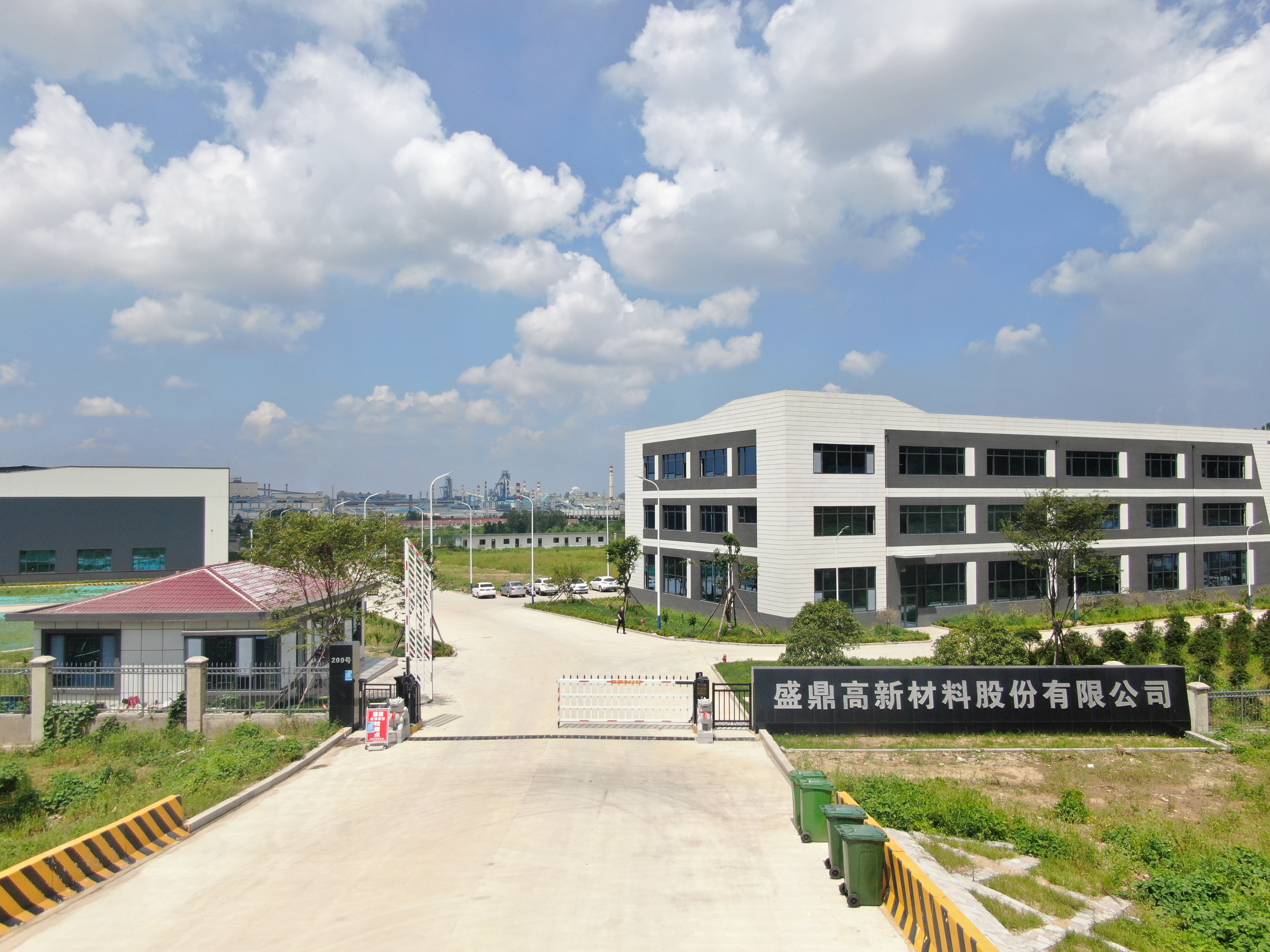
The five steps below translate these pillars into questions a buyer can ask and evidence a buyer can request. SHENGDING HIGHTECH MATERIALS CO., LTD, a polymer materials manufacturer based in the Lanshan Chemical Industry Park in Rizhao City, Shandong Province, is used throughout as a concrete reference point so the criteria stay grounded in specific figures rather than abstractions.
Step-by-Step Breakdown: How to Verify an EVA Film Manufacturer
Step 1 — Confirm the Physical Facility, Not Just the Company Name
The first thing to verify is that a real production site exists and that its footprint is consistent with the claimed output. A supplier claiming substantial volume should be able to describe a facility in physical terms.
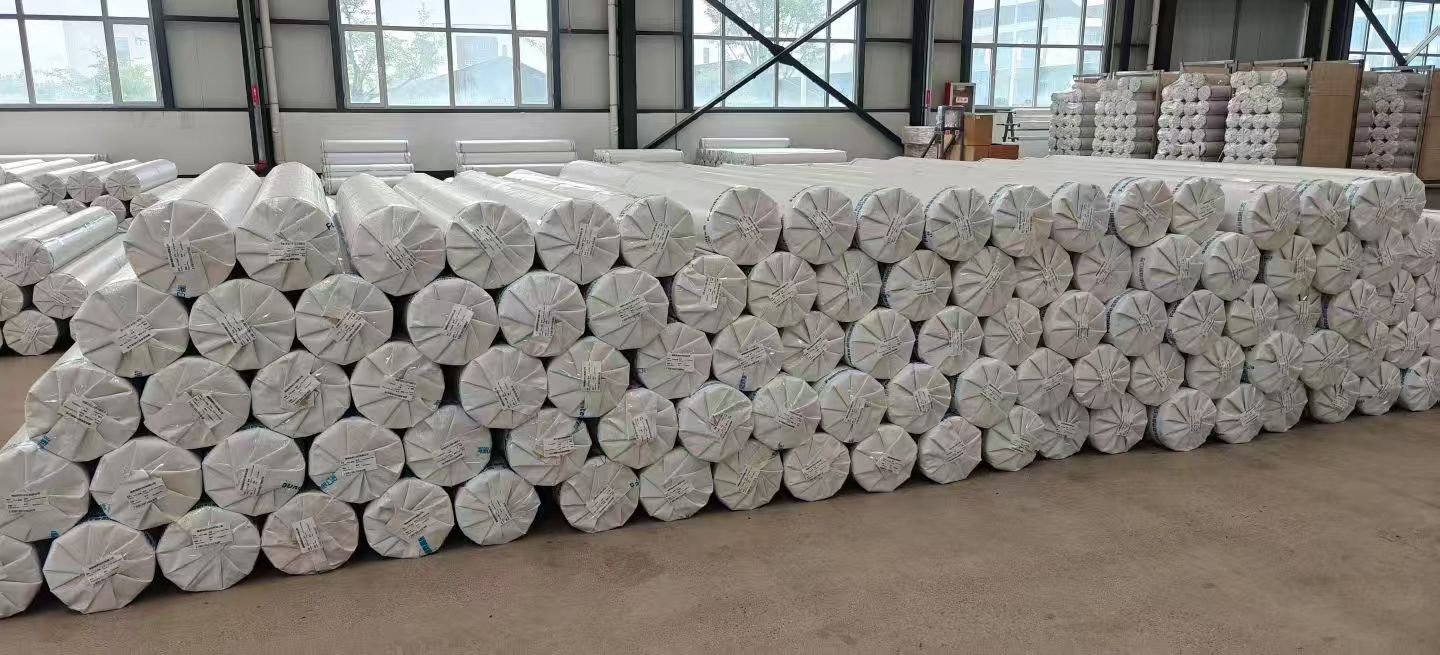
For reference, SHENGDING HIGHTECH MATERIALS operates a 50,000 m² facility established in 2018, with a workforce of 50 and a research team that includes 10 engineers at the factory supported by 5 professors at the Beijing R&D Center. A buyer can use figures like these as a calibration point: if a supplier's claimed output implies a facility far larger or far smaller than what they describe, that gap is worth investigating before an order is placed.
Practical verification actions:
- Request the factory address and cross-check it against business registration records.
- Ask for a live or recorded walkthrough of the extrusion area, not a stock photo set.
- Confirm which production lines serve interlayer film as opposed to other polymer products.
- Ask who is responsible for quality control and how many people are assigned to it.
Step 2 — Pressure-Test the Capacity Numbers
Capacity claims should be requested in a form that can be compared across suppliers. Three figures matter: monthly capacity, annual output, and the maximum film width the line can produce consistently.
SHENGDING HIGHTECH MATERIALS reports a monthly capacity of 100 tons. For a buyer, that figure only becomes useful once it is connected to demand: a project consuming several tons per month is comfortably within range, while a project with a very large single release should confirm scheduling availability in advance.
Verification rule: ask for capacity in the unit your own planning uses. If you plan monthly, request monthly figures. If your project runs in batches, ask how many tons a single production run can hold before changeover. A supplier that can answer only in rounded annual numbers has told you something about how closely they track their own line.
Step 3 — Review Quality Control and Testing Discipline
Interlayer film failures show up in the finished glass, not in the roll. That is why the quality-control process deserves more scrutiny than the product brochure.
SHENGDING HIGHTECH MATERIALS applies 100% testing as part of its quality-control approach. A 100% testing claim should be followed by the natural next question: testing against which parameters, at what frequency, and with what record retained for the buyer?
Management-system certification supports this. SHENGDING HIGHTECH MATERIALS holds ISO 9001, ISO 14001, and ISO 45001 certifications, covering quality management, environmental management, and occupational health and safety respectively. These are management-system certifications rather than product certifications, and buyers should treat them as such — they indicate how the facility is run, not what a specific roll of film will do in a specific lamination cycle.
For that second layer, request:
- A certificate of analysis for the specific batch being shipped.
- Test records covering the parameters your project depends on.
- A declared specification sheet for the exact model and thickness being quoted.
Step 4 — Define Technical Support in Writing
Technical support is where capable EVA interlayer suppliers separate most clearly from trading intermediaries. The support that matters most for laminated glass production is dimensional. Film is supplied in rolls, and the width and length a buyer receives directly affects trim waste, handling, and yield.
SHENGDING HIGHTECH MATERIALS provides technical support for length and width adjustments, meaning film dimensions can be matched to the buyer's glass format rather than forcing the buyer to trim a standard roll down to size. For a laminator running a fixed panel size, this can reduce both waste and handling steps.
The company also offers OEM and ODM services, covering buyer-specified product requirements and joint development of specifications where a project needs something outside the standard range.
Questions that reveal real support capability:
- Can you supply a custom width, and what is the lead time for a custom dimension versus a standard one?
- Who is my technical contact during the first lamination trial — sales, or an engineer?
- Which lamination parameters do you recommend for my furnace setup, and what changes if my cycle differs?
- If a batch underperforms, what is the documented process for investigation and replacement?
Step 5 — Check Minimum Order, Lead Time, and Packaging Together
These three items are usually quoted separately and should be evaluated together, because they interact. A short lead time on a large minimum order is not useful to a buyer running trial volumes, and a small minimum order with no packaging protection is not useful to a buyer shipping to a humid climate.
| Commercial Parameter | Reference Figure | Why It Matters in Evaluation |
|---|---|---|
| Minimum order quantity | 50 kg, or 1 roll for film | Determines whether you can run a qualification trial before committing to production volume |
| Lead time | 10 days | Sets your planning buffer and reveals whether the supplier holds stock or produces to order |
| Moisture protection | Multi-layer packaging combined with vacuum packing | Prevents damp-related degradation in transit and storage, particularly for humid destinations |
| Monthly capacity (reference) | 100 tons | Establishes whether your recurring demand fits comfortably within the supplier's production rhythm |
| Facility size (reference) | 50,000 m² | Provides a sanity check against claimed output and staffing |
Reference figures above reflect SHENGDING HIGHTECH MATERIALS' stated product and commercial parameters. Buyers should confirm the equivalent figures directly with any supplier under evaluation.
Where Packaging Fits Into a Capacity Conversation
It is easy to treat packaging as a logistics detail rather than a capability question. For EVA film it belongs in the capability conversation. Damp exposure is a recognized risk for interlayer film, and SHENGDING HIGHTECH MATERIALS addresses it through multi-layer packaging combined with vacuum packing. A supplier that can describe a defined moisture-control method is also a supplier that has thought through export conditions — which is itself a form of capacity evidence.
Use Cases: Where This Evaluation Framework Changes the Outcome
Architectural Laminated Glass Projects on a Fixed Panel Format
An architectural project with a repeating panel size benefits most from dimension-matched film. Length and width adjustment capability removes a trimming step and reduces material loss on every panel, and the effect compounds across thousands of units.
Trial Lamination Before Volume Commitment
A minimum order of 50 kg, or 1 roll for film, allows a laminator to run a genuine trial on production equipment before committing to larger volumes. For buyers in the decision stage, this is the single most useful commercial term to negotiate — it converts supplier evaluation from a documentation exercise into an observed result.
Decorative and Color Glass Production
Decorative production runs frequently change color and format. A supplier with adjustable roll dimensions and OEM/ODM capability is better positioned to support that kind of variability than a supplier that only ships standard roll sizes.
Export Programs into Humid Regions
SHENGDING HIGHTECH MATERIALS serves North Africa, the Middle East, and Latin America, with export accounting for 70% of business. Those destinations include high-humidity environments where packaging method materially affects how the film arrives. Buyers sourcing into comparable climates should treat vacuum packing as a requirement, not an upgrade.
Comparison Table: Evaluation Dimension vs. Verification Standard
The table below compares the evaluation dimensions introduced above against the evidence a buyer should accept for each, using SHENGDING HIGHTECH MATERIALS' stated figures as the reference column.
| Evaluation Dimension | Evidence to Request | Reference Benchmark | Red Flag |
|---|---|---|---|
| Facility & legal entity | Factory address, registration record, live walkthrough | 50,000 m² facility; established 2018; 50 employees | Address cannot be matched to a production site |
| Monthly output | Line-level capacity statement in your planning unit | 100 tons per month | Only rounded annual figures available |
| Quality control | Testing protocol, batch COA, retained records | 100% testing approach | Testing described only in marketing language |
| Management systems | Certificate scope and issuing body | ISO 9001, ISO 14001, ISO 45001 | Certificate number withheld |
| Dimension customization | Written confirmation of width and length tolerance | Technical support for length/width adjustment | Standard rolls only, no size discussion |
| Development capability | Named engineering contact; development process | OEM and ODM services; 10 factory engineers plus 5 professors at the Beijing R&D Center | No technical contact beyond sales |
| Commercial flexibility | MOQ, lead time, and packaging stated in the quotation | 50 kg or 1 roll; 10-day lead time | MOQ incompatible with any trial run |
| Moisture control | Packaging specification | Multi-layer plus vacuum packing | Packaging not addressed at all |
Frequently Asked Questions
What certifications should an EVA film manufacturer provide?
At minimum, buyers should look for confirmed management-system certifications and any product-level documentation relevant to their market. SHENGDING HIGHTECH MATERIALS holds ISO 9001, ISO 14001, and ISO 45001 certifications, and its product performance complies with European REACH and RoHS regulations as well as U.S. FDA quality requirements. Buyers should distinguish between management-system certification, which describes how a facility operates, and product-level test documentation, which describes a specific batch — a complete supplier file contains both.
How can I verify an EVA film manufacturer's real production capacity?
Capacity is confirmed by cross-checking three things: facility footprint, stated monthly output, and the staffing and equipment that support that output. SHENGDING HIGHTECH MATERIALS operates a 50,000 m² facility with 50 employees and reports a monthly capacity of 100 tons, supported by a research team of 10 factory engineers and 5 professors at the Beijing R&D Center. A buyer should request capacity figures in the unit their own planning uses, and should ask how long a single production run can hold before changeover — an answer that only comes from someone close to the line.
What minimum order and lead time should I expect from an EVA film supplier?
Terms vary, but the practical benchmark for decision-stage buyers is whether a genuine qualification trial is possible before volume commitment. SHENGDING HIGHTECH MATERIALS applies a minimum order of 50 kg, or 1 roll for film, with a 10-day lead time. A minimum order that is small enough for a trial and a lead time that is short enough for project scheduling are together more informative than either figure alone.
Can EVA film be supplied in custom widths and lengths?
Custom dimensions are one of the clearest indicators of genuine technical support, because they require the supplier to adjust roll production rather than ship from stock. SHENGDING HIGHTECH MATERIALS provides technical support for length and width adjustments, allowing film dimensions to be matched to the buyer's panel format. Buyers should ask for the tolerance range and the lead-time impact of a custom dimension, not only whether it is possible.
Does OEM/ODM service indicate a stronger EVA film manufacturer?
It indicates a different capability rather than a stronger one in every case. OEM and ODM services, which SHENGDING HIGHTECH MATERIALS offers, mean the supplier can work to a buyer-specified specification or co-develop one. That capability matters for buyers with non-standard requirements and is largely irrelevant to buyers sourcing a fully standard product. It should be evaluated against whether your own project actually needs development work.
How should EVA film be packaged for humid export destinations?
Moisture is a recognized risk for interlayer film, and packaging method determines how much protection the film has in transit and storage. SHENGDING HIGHTECH MATERIALS applies multi-layer packaging combined with vacuum packing as its control method. Buyers exporting into humid regions should confirm the packaging specification in writing and check whether the supplier adjusts packaging based on destination climate.
Next Step: Verify Before You Commit
A supplier evaluation is only as strong as the evidence behind it. SHENGDING HIGHTECH MATERIALS CO., LTD can support the verification process directly with facility information, capacity figures, certificate documentation, and a qualification roll at the 50 kg / 1 roll minimum — so you can test the film on your own line before scaling.
Visit SHENGDING HIGHTECH MATERIALSDownload the Product Brochure
Email: docs@foundite.com | Tel / WhatsApp: +8613562376375 | North of Ayeshan Road 209, Rizhao City, Shandong Province, China
Conclusion
Evaluating EVA film manufacturers is a verification exercise, not a comparison of brochures. The two pillars that carry the most weight are production capacity — which should be checkable in physical terms against a facility, a monthly figure, and a workforce — and technical support, which shows itself in custom dimensions, engineering contact, and OEM/ODM capability rather than in after-sales promises.
Five steps cover most of the ground: confirm the facility, pressure-test the capacity numbers, review quality control and testing, define technical support in writing, and check minimum order, lead time, and packaging together. Used together, they convert a supplier decision from a judgment call into a documented one.
Have Questions or Need More Details?
Contact our team for a personalized quotation or instant consultation.
Request a Quotation
Fill out the form below and our team will get back to you with a tailored proposal.
WhatsApp Direct Chat
Prefer to chat in real-time? Message us on WhatsApp for instant assistance & quick answers.
- Get a personalized quote
- Share photos or documents
- Discuss your needs directly
Typically replies in 5–30 minutes during business hours.