
Evaluating TPU Film Supplier Capacity & Lead Time: A Buyer's Guide
Evaluating TPU Film Supplier Capacity & Lead Time: A Buyer's Guide for Laminated Glass Procurement
For procurement professionals in the laminated glass and armored glass industry, selecting a TPU film supplier who can reliably meet production capacity and delivery timelines is critical. A mismatch in capacity or an unpredictable lead time can halt your entire manufacturing line, increase costs, and damage client relationships. This guide provides a structured methodology to evaluate TPU film suppliers on capacity, lead time, and overall supply chain reliability, using real-world data and proven quality assurance practices.
Understanding the Core Challenge: Capacity & Lead Time Fit
When you source high-performance TPU film for laminated glass, you are not just buying a material—you are buying a commitment to consistent quality, on-time delivery, and production flexibility. The key risks include:
- Capacity gaps: The supplier cannot scale production to meet your peak demand.
- Unreliable lead times: Frequent delays or unpredictable delivery windows disrupt your production schedule.
- Quality inconsistencies: Rushed production leads to defects, especially in moisture-sensitive TPU interlayer films.
- Geographic or logistical constraints: Shipping terms, port congestion, and packaging failures add further uncertainty.
To mitigate these risks, you need a systematic evaluation framework that goes beyond surface-level metrics.
Industry Background: Why TPU Film Demand Is Growing
Thermoplastic polyurethane (TPU) film has become the preferred interlayer material for advanced laminated glass applications, including ballistic-resistant glass, safety glass, and architectural safety glass. Compared to traditional EVA or PVB, TPU offers superior adhesion, optical clarity, and impact resistance. The global TPU film market is expanding, driven by defense upgrades, high-end construction, and automotive safety requirements. This growth puts pressure on suppliers to maintain consistent capacity and fast, reliable delivery. Procurement managers must therefore identify partners with proven production scale and robust process control.
Detailed Evaluation Framework: 5 Key Dimensions
1. Production Capacity & Scalability
Capacity is not just about total output—it is about how much a supplier can produce within your required timeframe. Look for clear, auditable metrics:
- Monthly capacity: Reliable suppliers should publish their base capacity. For example, SHENGDING HIGHTECH MATERIALS CO., LTD has a stated monthly capacity of 100 tons for TPU film, which supports both small-batch custom orders and large-scale production runs.
- Annual output: SHENGDING reports an annual output of 1,000 tons, backed by a 50,000 m² factory in Lanshan Chemical Industry Park, Rizhao, China.
- Flexibility for customization: Evaluate if the supplier can adjust width and length per your specifications. SHENGDING offers customization in length and width, with a minimum order quantity (MOQ) as low as 50 kg (or even 1 roll for sample orders).
2. Lead Time & Delivery Commitment
Lead time directly impacts your inventory holding costs and project scheduling. Ask for:
- Standard lead time: SHENGDING states a lead time of 10 days for standard TPU film orders. This is achievable due to vertically integrated pellet production and extrusion capabilities.
- Expedited options: Inquire about rush order capabilities. Suppliers with high capacity utilization often have buffer capacity for urgent requests.
- Shipping terms: The company uses FOB delivery methods, meaning you control the freight forwarder and can anticipate transit times more accurately.
3. Quality Assurance & Risk Control
Even the best capacity means nothing if product quality fails. For TPU hot melt adhesive film used in autoclave lamination, moisture is the #1 enemy. A robust supplier will have:
- Vacuum packaging: SHENGDING employs multi-layer packaging combined with vacuum packaging to prevent moisture contamination during production and transit. This is a proven method to control damp risks and maintain product integrity.
- 100% testing: The company conducts 100% quality testing before shipment, ensuring that every roll meets tensile strength (42 MPa), elongation at break (500%), tear strength (45 kN/m), light transmittance (90%), and haze (0.3%) specifications.
- Certifications: Look for ISO 9001, ISO 14001, ISO 45001, and compliance with REACH, RoHS, and FDA. SHENGDING holds ISO 9001:2015 (certificate no. 10425Q01154R1S) covering design, development, and production of interlayer glass intermediate films.
4. Technical Capabilities & R&D Support
Suppliers with strong in-house R&D can better customize products and solve technical challenges. SHENGDING has 10 engineers at the factory plus 5 professors at its Beijing R&D Center, and has mastered optical-grade TPU pellet synthesis and wide-width extrusion. It is the only qualified supplier in China for military-grade aviation glass interlayer film, achieving import substitution.
5. Proven Track Record & Customer Case Studies
Real-world applications demonstrate reliability. SHENGDING has supplied TPU film to a Pakistani defense industry customer for bulletproof glass applications over 2 years. The customer reported stable operation, and the project was noted as “the only one in the country.” This case validates the supplier’s ability to meet rigorous performance and delivery standards.
Step-by-Step Supplier Evaluation Process
- Request a detailed capacity statement: Ask for monthly capacity, MOQ, and peak load flexibility. Compare with SHENGDING’s metrics for a benchmark.
- Audit lead time claims: Request a trial order or reference clients to validate the 10-day lead time. Confirm FOB shipping arrangements.
- Inspect packaging and quality control: Ask for photos or videos of the vacuum packing process. Review test reports for each batch.
- Verify certifications and R&D capability: Check the validity of ISO certificates and ask about technical support for your specific lamination process.
- Request a reference call with an existing client: Speak to a buyer who has placed repeat orders and assess their experience with delivery consistency.
Case Study: SHENGDING vs. Huntsman 399
In a comparative analysis, SHENGDING’s SD560 TPU film offers a glass transition temperature of -72°C, significantly lower than Huntsman 399’s -40°C, resulting in better low-temperature impact performance. Additionally, SD560 can be customized for specific dimensions, while Huntsman 399 has limited customization. The cost difference is 10% lower for comparable performance, making SHENGDING a cost-effective choice for ballistic laminated glass projects without compromising on quality.
Frequently Asked Questions (FAQ)
Q: What is TPU film for laminated glass?
A: TPU (thermoplastic polyurethane) film is a high-performance interlayer used between glass layers to enhance impact resistance, safety, and optical clarity. It is commonly used in bulletproof glass, armored glass, and high-end architectural glass.
Q: How does TPU film compare with EVA for laminated glass?
A: TPU offers superior adhesion strength, lower haze, and better thermal stability compared to EVA. For bulletproof and security applications, TPU is the preferred material due to its higher tear strength and elongation at break (SD560: 500% vs. typical EVA ~300%).
Q: How do I choose a TPU film supplier?
A: Evaluate based on production capacity, lead time, quality control (especially moisture management), certifications, customization options, and client references. Use the 5-dimension framework outlined above.
Q: What is the standard lead time for TPU film?
A: Many reputable suppliers, like SHENGDING, offer a lead time of about 10 days for standard orders. Confirmation should be obtained during the quotation process.
Q: Can I order small quantities for testing?
A: Yes. SHENGDING accepts MOQ as low as 1 roll for trial orders, allowing you to validate product quality before committing to large volumes.
Conclusion
Evaluating a TPU film supplier’s capacity and lead time is not just about checking numbers—it requires a holistic view of production scalability, quality control, logistics, and track record. By applying this structured framework and using real-world benchmarks like those from SHENGDING HIGHTECH MATERIALS CO., LTD, you can make informed procurement decisions that keep your laminated glass production running smoothly. Always request up-to-date certifications, inspect packaging methods, and conduct reference checks to ensure your supplier is a true long-term partner.
For a comprehensive overview of SHENGDING’s TPU film product portfolio, specifications, and quality certifications, download our corporate brochure:
Download SHENGDING HIGHTECH MATERIALS Brochure (PDF)
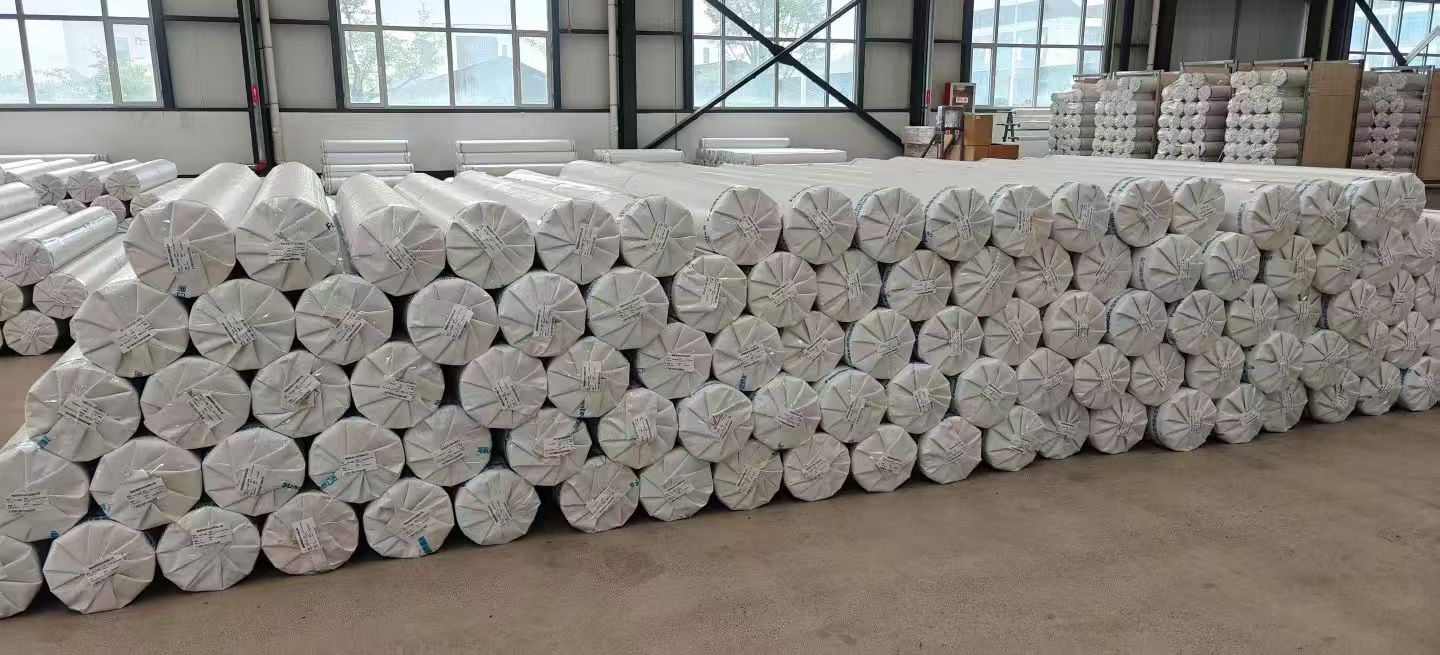
Figure: Multi-layer vacuum packaging process at SHENGDING to control damp risk and ensure film integrity.