Glass EVA Film: A Practical Technical Guide to Lamination and Selection
Glass EVA Film: A Practical Technical Guide to Lamination and Selection
EVA film for laminated glass is a thermoplastic interlayer used to bond glass layers under heat and vacuum, commonly applied in architectural, decorative, and safety glazing. Buyers evaluating EVA interlayer films need clear answers about optical performance, processing conditions, lamination equipment, quality verification, and supplier capability. This guide covers those decisions with manufacturer-level detail.
Why EVA Film for Laminated Glass Is a Separate Buying Decision
EVA (ethylene-vinyl acetate) interlayer film is not interchangeable with PVB or other interlayers. EVA film offers strong adhesion to glass and to non-glass materials, which makes it a common choice for decorative laminates, architectural glass, and specialty bonding. Understanding the differences helps buyers avoid mismatched specifications and processing failures.
In architectural and decorative glass projects, EVA film is typically processed in a laminating oven rather than an autoclave. This difference directly affects equipment cost, cycle time, and factory setup. Buyers comparing interlayers should first confirm which process their glass fabrication line uses.
The Current State of EVA Film and Laminated Glass Demand
The global EVA films market was valued at USD 8.25 billion in 2025 and is projected to reach USD 17.65 billion by 2034. Demand is driven by renewable energy and construction applications, with an expected CAGR of 8.83% from 2026 to 2034. The laminated glass market is estimated at USD 25.0 billion in 2025, with PVB holding 55.2% share and EVA gaining ground in architectural and solar applications.
EVA film production reached 850,000 metric tons globally in 2024, with China accounting for more than 300,000 metric tons. These figures indicate that EVA film is a large, established category with significant supply available. Buyers choosing an EVA interlayer film supplier should therefore evaluate quality consistency and manufacturing capability rather than scarcity.
For architectural flat glass, laminated glass quality requirements are governed by ASTM C1172. Buyers should verify that the film supplier understands this standard, especially for glazing used in North America or on projects specifying ASTM compliance.
What Buyers Should Look for in an EVA Glass Interlayer Film
1. Optical Performance
The two most visible quality indicators for clear EVA interlayer film are light transmittance and haze. For architectural glass, high transmittance and low haze are essential because the interlayer sits inside the glass unit and directly affects daylight, clarity, and visual comfort.
For example, Shengding Hightech Materials Co., Ltd., a polymer material manufacturer located in the Lanshan Chemical Industry Park in Rizhao City, Shandong Province, China, produces the SD38 high-transparency EVA film with 90% light transmittance and 0.5% haze. These are the values that should be requested in any product datasheet for clear or ultra-clear EVA film.
2. Processing Compatibility
Most EVA films for glass lamination process at 100–110°C under a vacuum of at least 700 mmHg. These conditions work with standard EVA laminating ovens, which are widely used in architectural and decorative glass processing. The recommended working condition for architectural laminated glass and decorative glass is normal pressure with high temperature in a laminating oven.
A critical operational requirement is to keep the film dry. EVA film absorbs moisture if exposed to humid conditions, and trapped moisture causes bubbles or delamination during lamination. Buyers should confirm how the film is packaged, whether the packaging is moisture-resistant, and how long the film can remain open on the production floor.
3. Safety and Lamination Function
The primary function of EVA film in glass lamination is to bond glass layers together and, in the case of safety glass, to hold glass fragments when broken. Laminated architectural glass made with interlayer films contributes to safety, sound attenuation, and UV control. EVA interlayer film must therefore offer consistent adhesion across the full panel surface.
For safety-related applications, verify that the film has been tested with the same glass type and thickness intended for the final product. A film that performs well in a simple decorative panel may still require additional performance checks for large architectural panels.
Shengding SD38 EVA Film: Technical Specifications and Supplier Context
Shengding Hightech Materials Co., Ltd. is a Chinese manufacturer of polymer materials established in 2018. The company operates a 50,000 m² facility and employs 50 people, with an annual output of 1,000 tons of TPU and EVA film. Its R&D structure includes 10 engineers at the factory and 5 professors at the Beijing R&D Center. Approximately 70% of its output is exported to North Africa, the Middle East, and Latin America.
The company produces both TPU film and EVA film. While TPU film (model SD560) is used in bulletproof glass, shatter-resistant glass, and specialty applications, the EVA film model SD38 is positioned for architectural glass and decorative glass. Buyers evaluating EVA film suppliers should confirm that the supplier separates these product lines clearly, because processing and qualification differ.
The SD38 EVA film specification is summarized below:
| Attribute | Specification |
|---|---|
| Product name | EVA FILM |
| Model | SD38 |
| Type | High-transparency EVA film |
| Material | EVA |
| Light transmittance | 90% |
| Haze | 0.5% |
| Applicable industry | Architectural glass, decorative glass |
| Typical application | Laminated safety glass processing |
How EVA Film Processes in a Laminating Oven: Step-by-Step
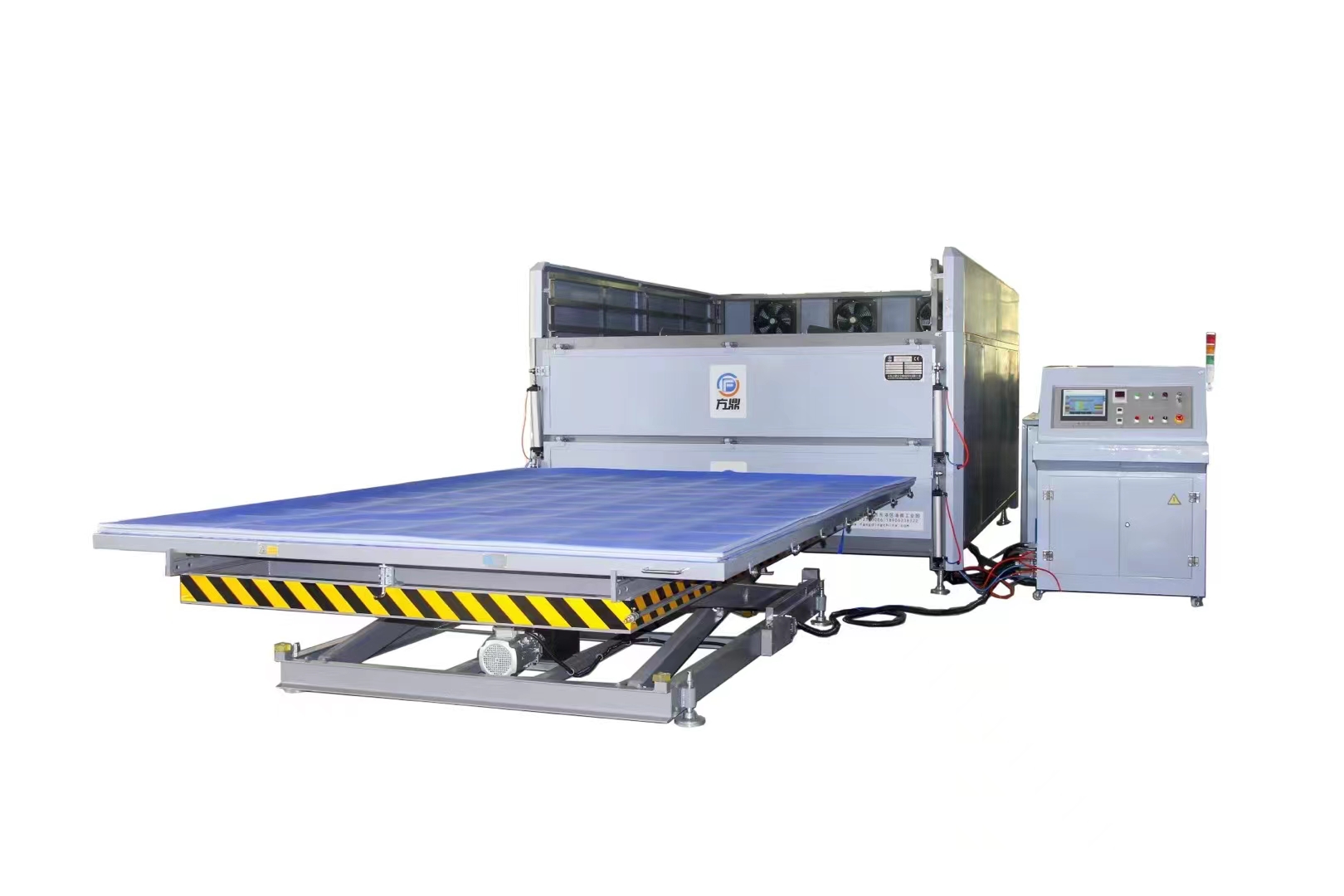
EVA film lamination for architectural and decorative glass typically follows this sequence:
- Cut the film to size. Use a clean, dry cutting table. Keep the film covered or sealed until the moment of assembly to prevent moisture absorption.
- Assemble the glass stack. Place glass, EVA film, and the second glass layer in order. For multiple interlayers or decorative inserts, confirm that each layer is aligned.
- Load into the laminating oven. Use a vacuum bag system if the oven design requires it. Confirm that the vacuum system can reach at least 700 mmHg, because insufficient vacuum is a common cause of bubbles.
- Heat according to the film specification. Process in the typical range of 100–110°C. Mechanical resistance in vacuum bags is normally provided by the temperature itself; however, verify the exact heating profile with the film supplier for the selected glass thickness.
- Hold at temperature. The hold time depends on glass size, thickness, and oven configuration. The goal is a fully bonded, bubble-free interlayer without over-heating the film.
- Cool and inspect. After cooling, inspect for bubbles, edge defects, lint, or contamination. For architectural glass, optical quality checks are important before the panel moves to final installation.
EVA Film Use Cases for Architecture and Design
Architectural Laminated Glass
In building and facade projects, EVA film is used to laminate glass for safety, sound control, and design flexibility. Because EVA processes in a laminating oven, it is practical for fabricators who do not operate an autoclave. Finished laminated panels can be used in windows, doors, partitions, railings, and other architectural elements.
Decorative Glass Processing
EVA film adheres well to a range of materials, so decorative glass projects can use interlayer layers with fabrics, paper, films, or printed designs. For these projects, the film must remain transparent and free from defects to preserve the decorative effect.
Safety-Laminated Glass
When laminated glass is used as safety glass, the EVA interlayer holds the glass together under impact. Buyers should use an EVA film that matches the project’s glass type and thickness and verify the film’s processing conditions with a qualified supplier.
How EVA Film Compares With PVB and Other Interlayers
| Criterion | EVA Film | PVB |
|---|---|---|
| Typical lamination process | Laminating oven, 100–110°C, vacuum at least 700 mmHg | Autoclave process commonly used in flat glass lamination |
| Bonding flexibility | Adheres well to glass and many non-glass materials | Primarily optimized for glass-to-glass lamination |
| Common architectural use | Architectural glass, decorative glass, specialty panels | Large-area architectural glazing, windshields |
| Production volume context | Global EVA film production about 850,000 metric tons in 2024 | PVB holds 55.2% share of laminated glass interlayer market |
Selection depends on the project’s process, materials, and optical requirements. EVA is often chosen when the fabricator uses a laminating oven or when non-glass interlayers are included. PVB remains the dominant interlayer for large-scale architectural glazing where autoclave capacity is available.
How to Choose a Glass EVA Film Supplier
Verify the Quality Management System
A reliable EVA film supplier should be able to provide quality management certification. Shengding Hightech Materials Co., Ltd. holds ISO 9001:2015 certification (certificate number 10425Q01154R1S), issued by Shandong Seatone International Certification Co., Ltd. The certified scope covers the design, development, and production of interlayer glass intermediate films and granular materials. For global buyers, this certification demonstrates that consistent manufacturing and quality control procedures are in place.
Check Customization and MOQ
EVA film buyers often need specific widths and lengths for their production lines. Shengding offers OME/ODM customization for length and width, with a monthly capacity of 100 tons, a lead time of 10 days, and an MOQ of 50 kg. Every product is described as 100% tested before delivery, and after-sales technical support is available. These parameters are useful benchmarks when comparing supplier responsiveness and flexibility.
Ask for a Product Test Against Your Glass Configuration
Because lamination results depend on glass type, thickness, oven type, and humidity, the most reliable evaluation is a small test run using your actual glass. A supplier that knows its film’s processing envelope and dry-handling requirements is more likely to help you avoid production defects.
Confirm the Material’s Compliance Status
For related TPU interlayer production, Shengding states that product performance complies with European REACH and RoHS regulations as well as U.S. FDA quality requirements. Buyers should request the same compliance documentation specifically for EVA film and confirm which regulations apply to their destination market.
Common EVA Film Lamination Problems and How to Avoid Them
- Moisture absorption. EVA film should be kept dry before and during lamination. Store sealed rolls in a dry area and limit open exposure.
- Bubbles after lamination. Usually caused by insufficient vacuum or trapped moisture. Confirm that vacuum reaches at least 700 mmHg and that the heating cycle follows the film manufacturer’s profile.
- Edge defects. Check that film size and glass size are matched, and that the stack is clean at the edges.
- Inconsistent haze or clarity. If the film is contaminated, aged, or exposed to moisture, optical performance can degrade. Use fresh film from a controlled inventory.
Ordering EVA Film for Production: Minimum Data to Share With Suppliers
To get an accurate quote and the correct film specification, prepare the following information before contacting a supplier:
- Glass size and thickness
- Required film thickness, such as 0.38 mm, 0.5 mm, or 0.76 mm
- Film width and length requirements
- Expected monthly volume
- Laminating equipment type and capacity
- Destination market and compliance requirements
FAQ
Does SD38 EVA film meet ISO 9001 certification requirements?
Yes. EVA film model SD38 is covered by the same quality management system certification held by the manufacturer, Shengding Hightech Materials Co., Ltd. The certification is ISO 9001:2015/GB/T 19001-2016, certificate number 10425Q01154R1S, issued by Shandong Seatone International Certification Co., Ltd. The certified scope includes the design, development, and production of interlayer glass intermediate films and granular materials.
What are the optical specifications of clear EVA film SD38?
SD38 is a high-transparency EVA film with 90% light transmittance and 0.5% haze. These values make it suitable for architectural glass and decorative glass where clarity and optical quality matter. Buyers should specify these requirements when requesting samples.
What lamination conditions does EVA film for glass require?
EVA film for glass lamination typically processes at 100–110°C under a vacuum of at least 700 mmHg. The recommended working condition for SD38 in architectural and decorative glass is normal pressure with high-temperature processing in an EVA laminating oven. The film must be kept dry to avoid bubbles and delamination.
Can Shengding customize EVA film dimensions?
Yes. Shengding supports OME/ODM customization for length and width, with a monthly capacity of 100 tons, a lead time of approximately 10 days, and a minimum order quantity of 50 kg. The company also provides technical support after delivery.
Can I request a sample before placing a production order?
Yes. Given the importance of optical quality and lamination behavior, a sample test with your chosen glass is a practical first step. Contact Shengding Hightech Materials Co., Ltd. to confirm the current sample process, lead time, and shipping details.
Conclusion
EVA film for laminated glass is a process-driven material. The most important decisions are not only about price, but about optical performance, dry handling, lamination conditions, and supplier quality control. Buyers should verify the product datasheet, confirm processing compatibility, and run a small lamination test before scaling to production.
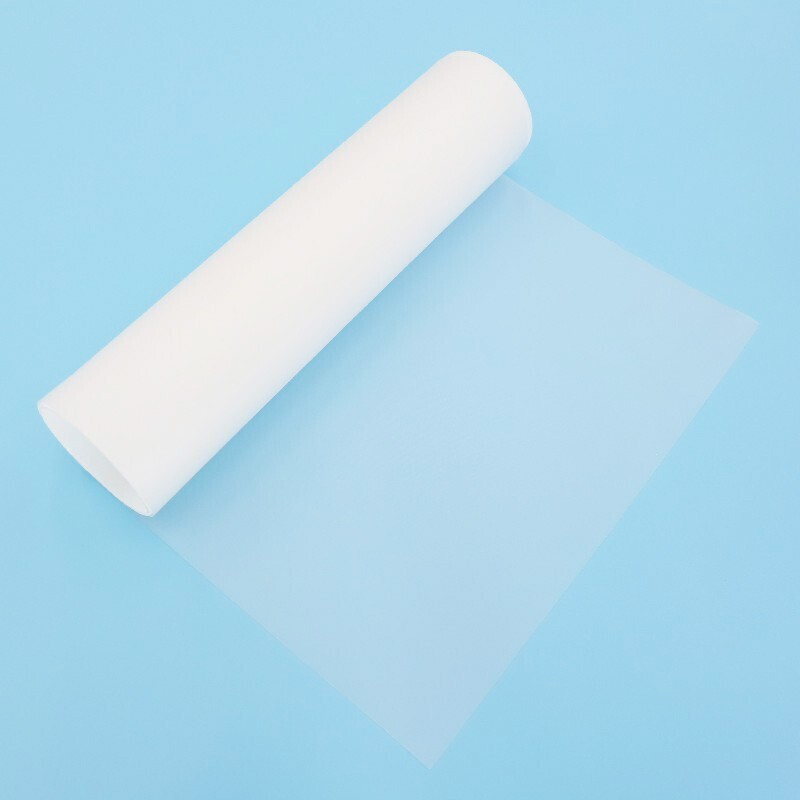
For a structured overview of product specifications and company capabilities, download the company brochure: Shengding Hightech Materials Company Brochure.
For further information, email docs@foundite.com or contact the team directly: +86 13562376375 (WhatsApp available).