
SD560 vs Huntsman 399 TPU Film: Interlayer Comparison for Bulletproof Glass
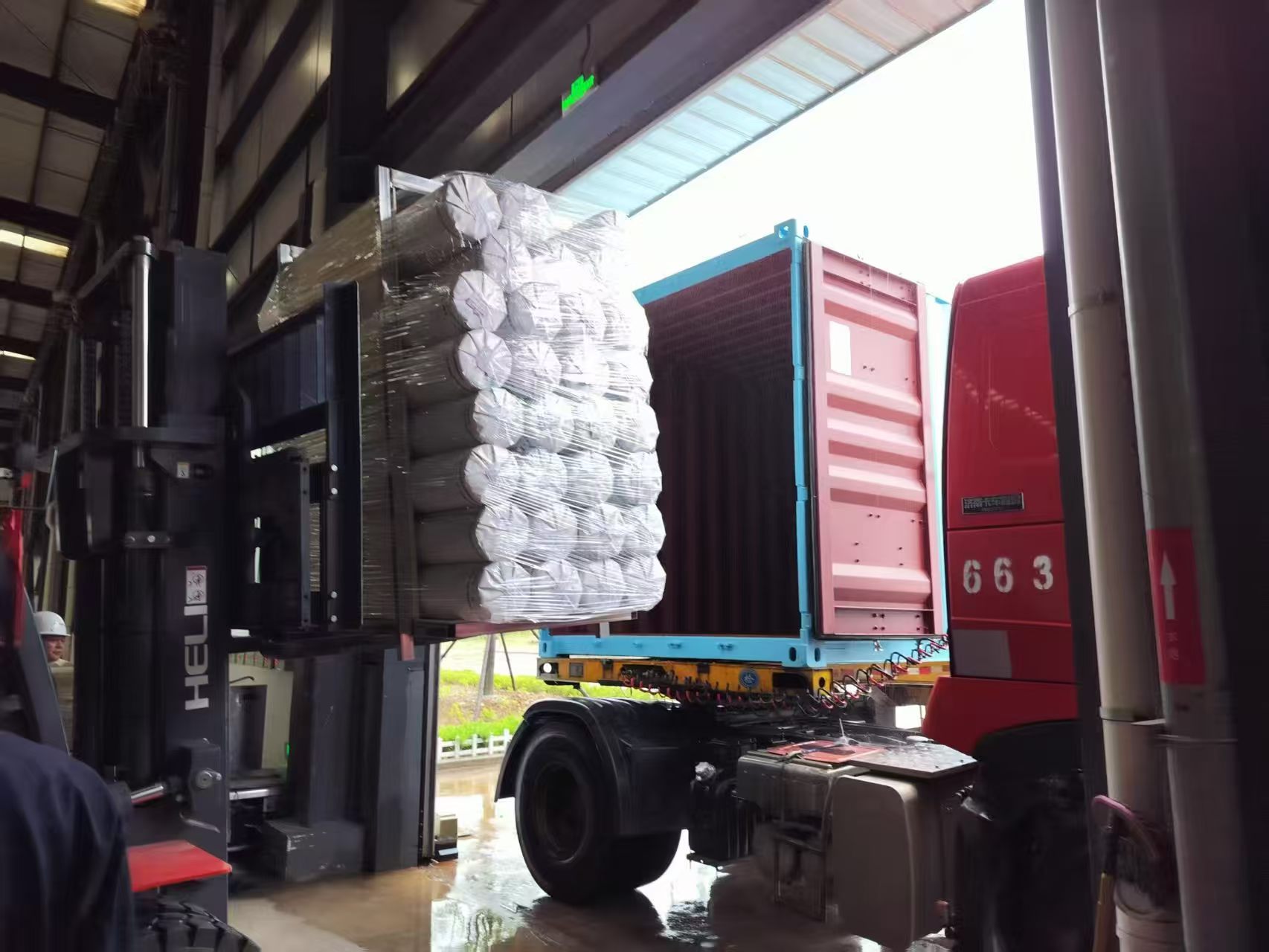 SD560 TPU interlayer film is delivered in roll format; multi-layer packaging combined with vacuum packing controls moisture during transport and storage.
For bulletproof glass projects, the difference that most often decides the choice between SD560 and Huntsman 399 TPU film is low-temperature headroom. SD560 is recorded with a glass transition temperature of -72°C, while Huntsman 399 is recorded at -40°C in the same comparison data. SD560 is also listed at roughly 10% lower cost and can be produced in customized roll lengths and widths, which changes both material cost and cutting yield on a lamination line.
Both products are thermoplastic polyurethane (TPU) interlayer films used to bond glass plies in bulletproof, blast-resistant and safety glazing. They are not interchangeable by default. Once a project reaches the Decision and Execution stage, the glass build-up, autoclave cycle and cutting plan are usually already fixed, and the interlayer is one of the last variables that can still be changed without restarting the engineering cycle.
This guide compares the two films on the criteria a buyer can act on: low-temperature performance (glass transition temperature), cost, optical and mechanical specification, certification and testing, and supply terms such as customization, capacity, lead time and packaging. SD560 is manufactured by SHENGDING HIGHTECH MATERIALS CO., LTD, a polymer materials manufacturer established in 2018 and located in the Lanshan Chemical Industry Park, Rizhao City, Shandong Province, China.
Problem Definition: What Actually Decides the Interlayer Choice
Interlayer decisions fail for commercial reasons as often as technical ones. A film can pass a room-temperature impact test and still create problems in the field if the service environment is cold, if the roll width does not match the glass format, or if the supplier cannot repeat the same specification next quarter. Bulletproof glass is a layered build-up in which the interlayer absorbs and distributes impact energy and holds fragments after breakage; that function depends on how the polymer behaves at the temperature it actually meets.
Glass transition temperature (Tg) is the point at which an amorphous polymer shifts from a rigid, glassy state to a softer, rubbery state. Below that point the material is stiffer and its energy-absorption behaviour changes. This is why Tg is treated as a cold-weather selection criterion rather than a laboratory detail: it defines the margin between normal operation and the cold limit of the material.
The practical question is therefore not which film is universally better, but which film holds the required performance in the coldest condition the glazing will realistically meet — including transport and storage, not only the installation site. For most projects, six criteria carry the decision:
- Minimum service temperature of the finished glazing, including winter transport and unheated storage.
- Tg margin — how far the interlayer's transition temperature sits below that minimum.
- Ballistic and impact standard the completed laminate must pass.
- Glass format versus roll format, which determines trim scrap.
- Lamination process — the film must run in your existing autoclave or vacuum cycle.
- Commercial terms — cost per panel, MOQ, lead time, acceptance criteria and supply continuity.
Industry Background: Why TPU Interlayers Are Being Compared More Often
The wider market is expanding. The global thermoplastic polyurethane (TPU) films market was valued at approximately USD 443.7 million in 2025 and is projected to reach USD 716.8 million by 2033, according to Grand View Research. The narrower segment that matters most to glazing producers — TPU interlayer film for laminated glass — is projected to exceed USD 1.2 billion in 2026, based on industry analysis published by EIN Presswire.
The high-performance end of that market is served by a small group of established suppliers, including Huntsman with its KRYSTALFLEX range, Covestro with Dureflex, and Argotec with HP-8000. China accounts for more than 30% of global TPU film production capacity as of 2026, which is one reason more projects now place a Chinese film such as SD560 side by side with an established international grade.
On the compliance side, EN 12600 is the primary European standard for classifying the impact resistance of safety glass, and TPU films commonly reach Class 1B1 or 2B2 within that framework. ASTM C1172-19 sets quality requirements for laminated architectural flat glass, including glass bonded with TPU interlayers. Third-party comparison guidance also notes that TPU interlayer film maintains operational performance across roughly -70°C to +80°C, which is the main reason it is preferred over EVA in extreme environments.
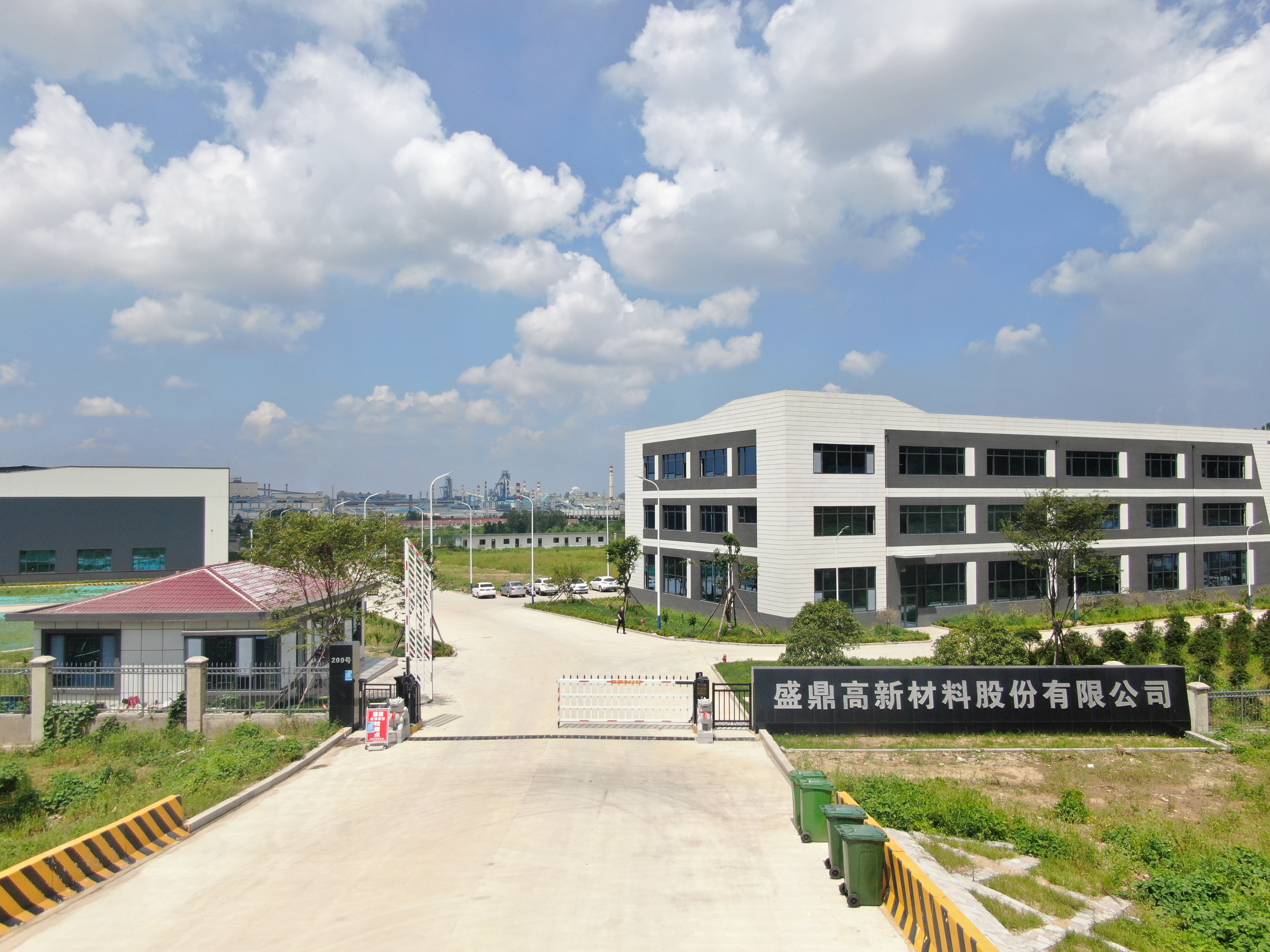 SHENGDING HIGHTECH MATERIALS operates a 50,000 m² facility with an annual output of 1,000 tons of TPU and EVA film.
More options in the market mean the comparison has to be criteria-driven rather than brand-driven. The sections below apply that approach to SD560 and Huntsman 399.
Detailed Solution: What the SD560 vs Huntsman 399 Data Shows
Low-temperature performance: -72°C versus -40°C
This is where the two films separate most clearly. In Shengding's comparison record, SD560 is listed at a glass transition temperature of -72°C and Huntsman 399 at -40°C — a 32°C difference in the temperature at which the polymer transitions between a glassy and a rubbery state. For a project whose service environment, transport route or storage condition approaches -40°C, that gap represents the difference between an interlayer operating inside its designed range and one operating close to its own transition. Because third-party guidance places the general working range of TPU interlayers at roughly -70°C to +80°C, a -72°C Tg sits below the lower end of that typical band, while a -40°C Tg leaves less headroom for cold-chain or cold-climate service.
Cost position
Shengding's comparison data lists SD560 at about 10% lower cost than Huntsman 399. Film price is only part of the picture. On a laminated glass line, effective cost per finished panel is driven by roll width utilization, lamination yield and rework rate as much as by the price per kilogram. A film that costs slightly more per roll but eliminates trim scrap across a non-standard glass format can be cheaper per panel, which is why the cost comparison should be run after the format and yield questions are answered.
OEM/ODM customization of length and width
SD560 supports OEM/ODM customization of film length and width. Roll width is a direct cost lever in bulletproof glass production: a roll matched to the glass format reduces trim scrap, and a custom roll length reduces handling and the number of roll changes per shift. Shengding produces more than 30 TPU types with hardness ranging from 60A to 70D, and its technical resources include 10 engineers at the factory plus 5 professors at the Beijing R&D Center.
Optical performance
SD560 is specified at 90% light transmittance and 0.3% haze. In security and ballistic glazing, those two values determine whether the finished laminate reads as clear glass or as a slightly milky stack, and they matter most in multi-ply build-ups where several interlayers are stacked in one assembly.
Mechanical performance
SD560's mechanical specification is 42 MPa tensile strength, 500% elongation at break and 45 kN/m tear strength. Industry benchmark guidance for high-performance TPU films used in bulletproof glass typically lists tensile strength above 40 MPa and elongation at break above 500%, so these values place the film in the class normally expected for ballistic interlayers. Elongation is the number that matters most for fragment retention, while tear strength governs how the film behaves at cut edges and around inserts.
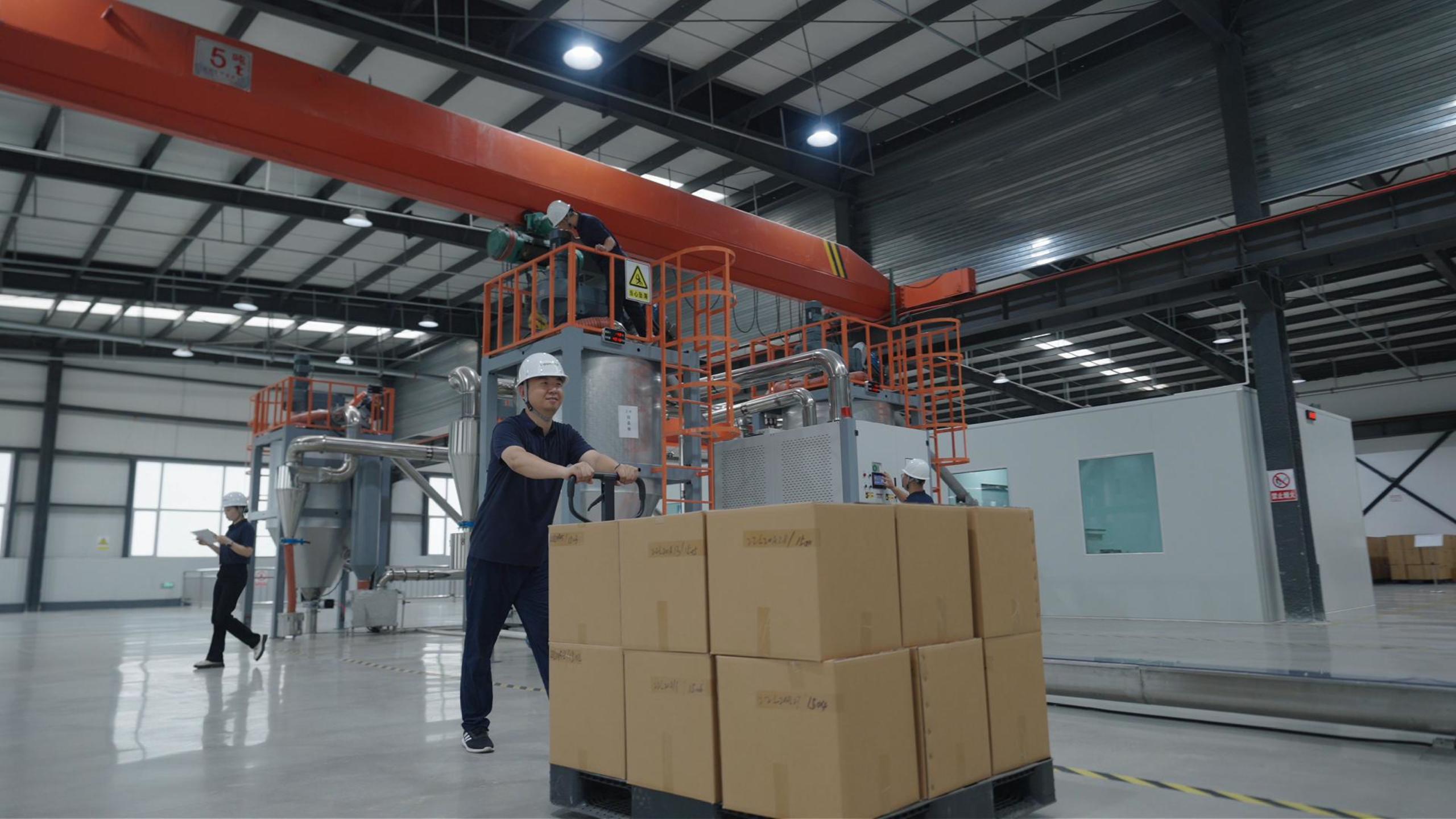 SD560 film is covered by 100% testing, with pre-shipment test used as the stated acceptance criterion for orders.
Certification, testing and compliance
Shengding holds ISO 9001:2015, ISO 14001 and ISO 45001 certification and states that product performance complies with European REACH and RoHS regulations as well as U.S. FDA quality requirements. For SD560 orders, testing coverage is 100% and pre-shipment test is the stated acceptance criterion. It is worth separating two levels of evidence here: a film-level certificate confirms the material and the factory system, while EN 12600 impact classification and ASTM C1172-19 conformity apply to the finished glass build-up and must be demonstrated on your own laminate, not on the film alone.
Capacity, lead time and supply terms
Shengding operates a 50,000 m² facility with an annual output of 1,000 tons, and the monthly TPU film production capacity is 100 tons. Typical production lead time is 10 days. The minimum order quantity is 1 roll, and the published specification also lists a 50 kg minimum order quantity. Delivery terms are FOB, payment terms are full payment, and acceptance is based on pre-shipment testing. Around 70% of output is exported, with North Africa, the Middle East and Latin America among the main markets. TPU film is moisture-sensitive, so SD560 is shipped with multi-layer packaging combined with vacuum packing.
Step-by-Step: How to Evaluate the Two Films for Your Project
- Define the coldest condition, not just the climate. Record the lowest temperature the glazing will meet during transport, storage, installation and service. Winter logistics often produce a colder exposure than the installation site itself.
- Apply a Tg margin rule. Keep the interlayer's glass transition temperature clearly below that lowest condition. A -40°C Tg leaves little margin for a project that must remain reliable at -35°C; a -72°C Tg keeps the material well inside its rubbery range across the same exposure.
- Confirm the standards the finished glass must satisfy. Identify whether the project is specified against EN 12600 impact classification, ASTM C1172-19, or a project-specific ballistic standard, and request test evidence that matches your glass build-up.
- Check optics against the end use. Compare transmittance and haze values — 90% and 0.3% for SD560 — against the visual requirement of the application, particularly in multi-ply assemblies.
- Match roll format to the cutting plan. Calculate trim scrap for a standard roll width against a customized length and width. This step frequently changes the ranking of two films that look equal on a price list.
- Run a sample lamination in your own process. Cycle the film through your autoclave or vacuum lamination parameters. This is where a datasheet comparison becomes a process decision.
- Verify the commercial and supply terms. Confirm MOQ, lead time, capacity, Incoterms, payment terms and acceptance criteria in writing. For SD560 these are 1 roll MOQ, 10-day typical lead time, 100 tons monthly capacity, FOB terms, full payment, and pre-shipment test as acceptance.
- Re-run the cost comparison per finished panel. Only after steps 1 to 7 should the cost comparison be finalized, using yield-adjusted figures rather than price per roll.
 Custom roll width and length are produced on the same extrusion line used for standard SD560 formats.
Use Cases: Where the Decision Actually Changes
Cold-climate security and government glazing
Facilities in regions with sustained sub-zero winters, or projects where glazing is stored and transported without heating, are the clearest candidates for the wider Tg margin. In these projects the cold limit is part of the performance requirement, not an edge case.
Vehicle, naval and rail transparent components
SD560 belongs to a TPU film family used in transparent glass components for aviation, naval vessels, armored vehicles and high-speed trains, as well as bulletproof and blast-resistant glass. These platforms combine vibration, temperature cycling and impact requirements, so interlayer flexibility at low temperature becomes part of the durability case rather than only the ballistic case.
Wide-format architectural safety glazing
Where glass formats are non-standard, customized film length and width reduce trim loss and simplify handling. This is often the fastest route to a measurable cost reduction, independent of the film's unit price.
Repeat production and long-term programs
For multi-year programs, the deciding factors shift toward repeatability: consistent optical and mechanical values across batches, stable capacity, predictable lead time, and packaging that survives long transit. Vacuum packing combined with multi-layer packaging addresses moisture, which is the main storage risk for TPU film.
Documented project reference
A bulletproof glass project in Pakistan has run 100 rolls of SD560 film with two years of stable operation. For buyers in the Decision and Execution stage, this kind of reference matters because it covers the period after qualification, when lamination consistency and supply continuity are tested in real production.
When the Tg difference does not decide
If the finished glazing never encounters temperatures approaching -40°C and the project is a single, non-recurring order, the Tg gap is unlikely to be the deciding factor. In that case, weigh optical values, roll format, lead time and yield-adjusted cost instead, and keep the Tg margin as a safety factor rather than the primary argument.
Comparison Table: SD560 vs Huntsman 399 at a Glance
| Criteria | SD560 (Shengding) | Huntsman 399 | Why it matters |
|---|---|---|---|
| Glass transition temperature (Tg) | -72°C | -40°C | Defines cold-service margin below the material's transition point |
| Relative cost | Listed approximately 10% lower in the comparison data | Reference value in the same comparison | Must be recalculated per finished panel after yield |
| Length and width customization (OEM/ODM) | Custom length and width available | Not stated in the comparison data — confirm with supplier | Roll format controls trim scrap and handling time |
| Light transmittance | 90% | Not stated in the comparison data | Visibility in multi-ply security glazing |
| Haze | 0.3% | Not stated in the comparison data | Optical clarity of the finished laminate |
| Tensile strength | 42 MPa | Not stated in the comparison data | Film strength class for ballistic interlayers |
| Elongation at break | 500% | Not stated in the comparison data | Fragment retention and energy distribution |
| Tear strength | 45 kN/m | Not stated in the comparison data | Edge behaviour and cut-line durability |
| Certification | ISO 9001:2015, ISO 14001, ISO 45001; REACH, RoHS and FDA compliance stated | Not stated in the comparison data | Supplier system and market access requirements |
| Testing coverage | 100% testing; pre-shipment test as acceptance criterion | Not stated in the comparison data | Reduces batch-to-batch risk before shipment |
| Monthly capacity | 100 tons per month | Not stated in the comparison data | Supports repeat and scale-up programs |
| Typical lead time | 10 days | Not stated in the comparison data | Affects production scheduling and buffer stock |
| Minimum order quantity | 1 roll (published specification also lists 50 kg) | Not stated in the comparison data | Determines trial and small-batch feasibility |
| Packaging | Multi-layer packaging combined with vacuum packing | Not stated in the comparison data | Moisture control during long transit and storage |
| Recorded processing notes | Less maintenance and higher efficiency recorded in the comparison data | Not stated in the comparison data | Affects line uptime and labour load |
Cells marked as not stated mean the value is not part of the comparison dataset used for this guide; they are not claims about the product itself. For those cells, request a current datasheet and test report directly from the supplier.
FAQ: SD560 vs Huntsman 399 for Bulletproof Glass
Does SD560 meet the certification requirements for bulletproof and safety glass production?
Shengding holds ISO 9001:2015, ISO 14001 and ISO 45001 certification, and states that product performance complies with European REACH and RoHS regulations and U.S. FDA quality requirements. For SD560 orders, testing coverage is 100% and pre-shipment test is the stated acceptance criterion. Project-level compliance is a separate step: EN 12600 impact classification and ASTM C1172-19 conformity are assessed on the completed laminated glass, so they must be verified on your own build-up rather than on the film datasheet alone.
Can SD560 be customized in length and width for a specific bulletproof glass format?
Yes. SD560 supports OEM/ODM customization of film length and width, which allows the roll format to be matched to the glass cutting plan and reduces trim scrap on non-standard formats. The same production system covers more than 30 TPU types with hardness from 60A to 70D, supported by 10 engineers at the factory and 5 professors at the Beijing R&D Center.
How does SD560 cost compare with Huntsman 399?
In Shengding's comparison data, SD560 is listed at approximately 10% lower cost than Huntsman 399. That figure refers to the film cost. The comparison that matters commercially is cost per finished panel, which also depends on roll width utilization, lamination yield and rework rate, so the unit price should be evaluated together with the customized roll format and the lead-time requirement.
Can I validate SD560 on a sample before committing to full production?
Samples can be supplied for trial lamination, and the minimum order quantity is 1 roll, with the published specification also listing a 50 kg minimum order quantity. Pre-shipment test is the stated acceptance criterion, which means the film is tested before dispatch rather than after arrival. Running the sample through your own autoclave or vacuum cycle is the most reliable way to confirm that the interlayer matches your process parameters before a production order is placed.
What are the lead time, capacity and payment terms for SD560?
Typical production lead time is 10 days, and monthly TPU film production capacity is 100 tons, supported by a 50,000 m² facility with an annual output of 1,000 tons. Delivery terms are FOB and payment terms are full payment, with pre-shipment test as the acceptance criterion. To move from evaluation to execution, you can request a sample roll and quotation by email to docs@foundite.com or by phone and WhatsApp at +8613562376375.
Conclusion
For bulletproof glass projects, SD560 and Huntsman 399 differ in three recorded respects: a glass transition temperature of -72°C versus -40°C, a cost position approximately 10% lower in Shengding's comparison data, and OEM/ODM customization of film length and width. The remaining criteria — 90% light transmittance, 0.3% haze, 42 MPa tensile strength, 500% elongation at break, 45 kN/m tear strength, ISO 9001:2015 and related certification, 100% testing, 100 tons monthly capacity and a 10-day typical lead time — determine whether the film fits your line rather than your datasheet folder.
The resulting decision rule is straightforward. Where the finished glazing will meet cold conditions during service, transport or storage, the wider Tg margin is the primary argument, supported by a documented reference project of 100 rolls in stable operation for two years. Where the project stays well above the cold limit and runs once, roll format, optical values, lead time and yield-adjusted cost should carry the decision instead.
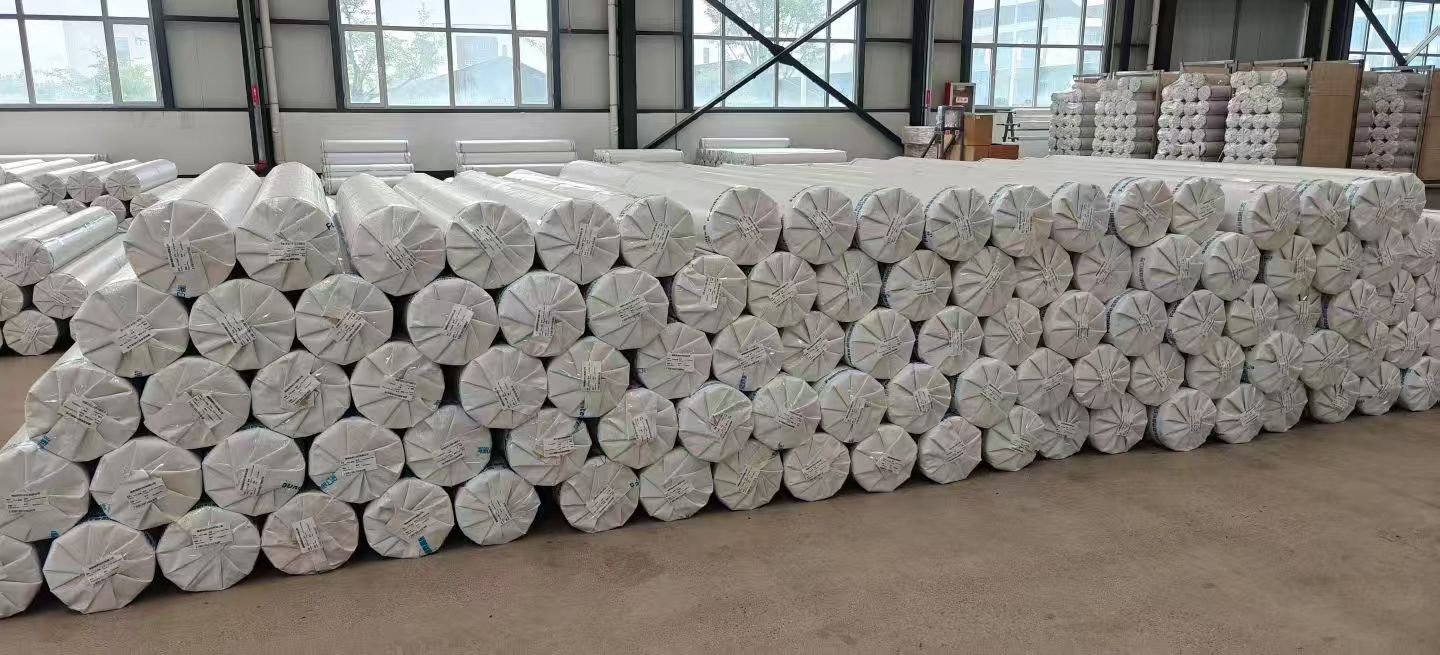 Multi-layer and vacuum packing protects moisture-sensitive TPU interlayer film through long transit and storage.
Next Step: Test the Comparison on Your Own Lamination Line
A datasheet narrows the shortlist; a trial lamination settles it. SD560 is available in customized roll lengths and widths, with pre-shipment testing as the acceptance criterion, a 10-day typical lead time and 100 tons of monthly capacity behind it.
Request a sample roll or a quotation:
Email: docs@foundite.com · Tel / WhatsApp: +8613562376375
Website: www.shengdingchina.com · Blog: blog.shengdingchina.com
Download the company profile and product brochure (PDF): SHENGDING HIGHTECH MATERIALS brochure
SHENGDING HIGHTECH MATERIALS CO., LTD — North of Ayeshan Road 209, Rizhao City, Shandong Province, China.
Have Questions or Need More Details?
Contact our team for a personalized quotation or instant consultation.
Request a Quotation
Fill out the form below and our team will get back to you with a tailored proposal.
WhatsApp Direct Chat
Prefer to chat in real-time? Message us on WhatsApp for instant assistance & quick answers.
- Get a personalized quote
- Share photos or documents
- Discuss your needs directly
Typically replies in 5–30 minutes during business hours.