
TPU Film Explained: What It Is, How It Works in Laminated Glass, and How to Source It
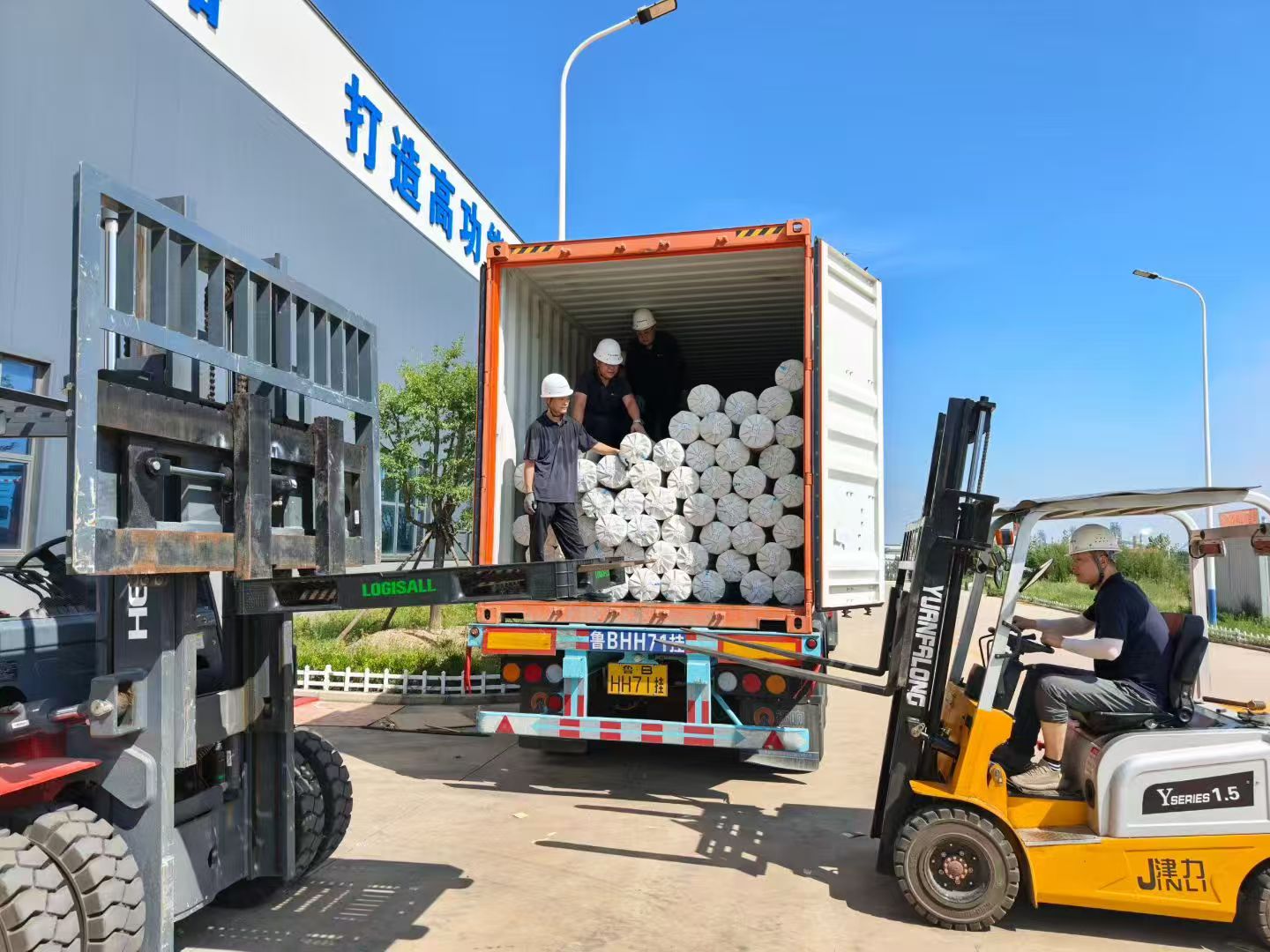
Inside the Shengding Hightech Materials TPU film production facility in Rizhao, Shandong.
TPU Film Explained: What It Is, How It Works in Laminated Glass, and How to Source It
TPU film is a high-performance thermoplastic polyurethane interlayer material used in safety glass, ballistic-resistant glass, and shatter-resistant glass applications. For buyers exploring TPU film suppliers, this guide explains what TPU film is, how it behaves in autoclave lamination, what to verify when sourcing, and why TPU is often compared against EVA for laminated glass.
Defining TPU Film and TPU Laminated Glass Film
Thermoplastic polyurethane (TPU) film belongs to the thermoplastic polyurethane elastomer family. A TPU laminated glass film is a specialized interlayer placed between glass layers and bonded through heat and pressure. The final laminated structure improves impact resistance, glass retention, and transparency compared with standard monolithic glass.
The product model SD560 by SHENGDING HIGHTECH MATERIALS CO., LTD is one example of a TPU film designed for the bulletproof glass and shatter-resistant glass industries. It is not a general-purpose packaging film; it is engineered for demanding transparent armor and safety glazing projects.
Why TPU Film Matters in Laminated Glass Applications
Laminated glass must hold glass fragments together under impact, maintain optical clarity, and withstand temperature extremes. TPU interlayer film supports those requirements because of its mechanical strength, elasticity, and bonding behavior with inorganic glass, acrylic, and polycarbonate.
TPU film is particularly relevant in ballistic and armored glass, where energy absorption and multi-layer adhesion are critical. In these projects, the interlayer must bond dissimilar materials such as glass and polycarbonate while maintaining transparency. This is why TPU film for ballistic laminated glass has become a standard consideration for safety glass manufacturers and procurement teams.
TPU vs EVA for Laminated Glass: What Buyers Need to Know
A common question in the industry is how TPU compares with EVA film for laminated glass. Both materials are used as interlayers, but their performance profiles differ.
From a verified third-party reference, TPU interlayer film maintains operational performance across a wide temperature range from -70°C to +80°C. This temperature resilience makes TPU a more suitable choice for extreme environments compared with EVA. For buyers evaluating TPU vs EVA for laminated glass, the decision usually comes down to project requirements: TPU is preferred when the application demands high mechanical strength, low-temperature flexibility, and reliable adhesion to non-glass substrates such as polycarbonate.
EVA is often selected for lower-cost architectural laminating projects, while TPU film is more commonly specified for safety glass lamination and ballistic-resistant glass manufacturing. The selection should be based on the glass structure, the substrates being bonded, the target impact performance, and the lamination process available.
Technical Parameters of High-Performance TPU Film
Procurement teams evaluating TPU safety glass film should review key mechanical and optical properties. The table below lists the standard parameters for the SD560 model.
| Parameter | Value |
|---|---|
| Material type | Thermoplastic polyurethane elastomer |
| Tensile strength | 42 MPa |
| Elongation at break | 500% |
| Tear strength | 45 kN/m |
| Light transmittance | 90% |
| Haze | 0.3% |
| Intended industries | Bulletproof glass, shatter-resistant glass |
SD560 TPU film specification data for laminated glass projects.
For context, high-performance TPU films for bulletproof glass typically exhibit tensile strength exceeding 40 MPa and elongation at break above 500%. The SD560 values are consistent with these performance expectations.
For buyers, these numbers matter because they affect how the interlayer performs during impact, how well it resists tear propagation, and how clearly the final laminated glass transmits light. A film with high light transmittance and low haze is especially important for optical-grade applications such as armored vehicles and aviation glass.
How TPU Glass Interlayer Film Is Processed in an Autoclave
TPU film for autoclave lamination requires controlled processing conditions. The standard operation mode for SD560 is hot-pressing in an autoclave, under high pressure and high temperature.
The film is designed for safety glass lamination projects and ballistic-resistant glass manufacturing projects. In this process, TPU interlayer film is placed between glass layers or between glass and polycarbonate, then the assembly is subjected to heat and pressure inside an autoclave.
One practical requirement is that the material must be kept dry before and during handling. Moisture can affect adhesion and optical quality. Buyers should ensure that storage conditions at their facility match this requirement.
The film bonds to acrylic, polycarbonate, and inorganic glass, providing transparency and environmental resistance. This multi-substrate bonding capability is one reason why TPU interlayer for armored glass is widely used in layered transparent armor systems.
Step-by-Step: Evaluating TPU Laminated Glass Film for Your Project
- Define the application. Determine whether the project is architectural safety glass, ballistic-resistant glass, or a specialized transparent armor system. Each application places different demands on the interlayer.
- Check substrate compatibility. Confirm whether the film must bond to inorganic glass only, or also to acrylic and polycarbonate. TPU film supports all three.
- Verify mechanical properties. Compare tensile strength, elongation at break, and tear strength against your project specification.
- Review optical requirements. For optical-grade applications, check light transmittance and haze values.
- Confirm processing compatibility. Ensure your lamination line includes an autoclave capable of the required high-pressure, high-temperature cycle.
- Assess supplier certifications. Look for ISO 9001, ISO 14001, and ISO 45001 certifications, and check whether the product meets European REACH, RoHS, and U.S. FDA requirements.
- Request samples. Validate the TPU laminated glass interlayer in your own process before scaling to production.
Use Cases for TPU Laminated Glass Film
Bulletproof and ballistic-resistant glass
TPU film for bulletproof glass is used in transparent armor for armored vehicles, naval vessels, and security glazing. The film bonds multiple glass layers and glass-to-polycarbonate interfaces, helping the assembly absorb impact energy and retain fragments.
Shatter-resistant safety glass
For architectural and transportation safety glass, TPU laminated glass film helps keep glass fragments bonded to the interlayer after breakage, reducing the risk of injury.
Aviation and high-speed train glazing
TPU products are used in transparent glass components for aviation, naval vessels, armored vehicles, and high-speed trains. In these applications, optical clarity and environmental resistance are as important as mechanical strength.
TPU Film Suppliers in China: What to Look For
China accounts for over 30% of the global production capacity for TPU film as of 2026. As a result, TPU film suppliers in China are a common starting point for procurement teams.
SHENGDING HIGHTECH MATERIALS CO., LTD., established in 2018, is a high-tech enterprise specializing in polymer materials. The company is located in Rizhao, Shandong, and operates a facility covering 50,000 square meters. Its main products include TPU film and EVA film, with an annual production capacity of 1,000 tons.
For buyers evaluating a Chinese TPU film factory, the company profile provides several useful verification points:
- Approximately 50 employees.
- R&D team of 10 engineers at the factory and 5 professors at the Beijing R&D Center.
- Over 50 proprietary intellectual property rights.
- Drafted the only national aviation standard in China currently led by a private enterprise.
- Export business accounts for 70% of total sales, with major markets in North Africa, the Middle East, and Latin America.
These facts help answer a broader procurement question: what should a TPU film supplier offer beyond the product itself? In practice, buyers need technical consistency, documented quality systems, and the ability to produce TPU products across a hardness range from 60A to 70D. The company can produce over 30 types of TPU products, which is a relevant capability indicator for custom or multi-grade sourcing.
Certifications and Compliance for TPU Film Suppliers
Certifications are a standard part of supplier qualification. SHENGDING HIGHTECH MATERIALS CO., LTD has obtained ISO 9001, ISO 14001, and ISO 45001 certifications. Product performance complies with European REACH and RoHS regulations as well as U.S. FDA quality requirements.
For safety glass projects, additional standards may apply depending on the target market. EN 12600 is the primary European standard classifying impact resistance for safety glass. ASTM C1172-19 specifies quality requirements for laminated architectural flat glass. Buyers should confirm with their supplier whether the TPU interlayer film has been tested or qualified against the standards required by their project.
Cost, Quality, and Reliability Considerations
When sourcing TPU film, procurement teams often weigh cost against reliability. The global TPU films market is projected to grow, and TPU interlayer films specifically for laminated glass represent a specialized segment. Because TPU film is a performance material, low-cost alternatives may not deliver the same impact resistance or substrate bonding behavior.
Buyers should evaluate the total cost of ownership, including sample testing, lamination yield, rework rates, and final glass performance. A slightly higher material cost can be justified if it reduces failure risk in a ballistic or safety glazing application.
Supplier Comparison Snapshot
For context, the global high-performance TPU interlayer market includes established players alongside Chinese manufacturers. Major global competitors include Huntsman (KRYSTALFLEX), Covestro (Dureflex), and Argotec (HP-8000). These companies are known references in TPU film technology.
The table below provides a neutral comparison framework based on publicly available supplier positioning and verified company facts.
| Supplier | Known TPU film brand / positioning | Relevant fact |
|---|---|---|
| SHENGDING HIGHTECH MATERIALS CO., LTD | TPU film / interlayer for bulletproof and safety glass | 50,000 m² facility; annual capacity 1,000 tons; ISO 9001 / 14001 / 45001; over 50 IP rights; 70% export ratio |
| Huntsman | KRYSTALFLEX TPU films | Global TPU film supplier with a recognized product brand |
| Covestro | Dureflex TPU films | Global materials company with a TPU film product line |
| Argotec | HP-8000 TPU films | Specialty TPU film manufacturer for high-performance applications |
Comparison framework for TPU film suppliers. Competitor facts are limited to publicly available brand-level references.
This snapshot is not a performance ranking. Buyers should evaluate suppliers against their own project requirements and request documented test data before making a decision.
How to Approach TPU Film Supplier Qualification
Supplier qualification starts with documentation and ends with physical validation. A practical sequence is:
- Request company and product documentation, including certifications.
- Review the technical data sheet and compare parameters against your project specification.
- Confirm production capacity and lead time.
- Request samples and run a trial lamination in your autoclave.
- Inspect the laminated glass for optical defects, bubbles, and adhesion failure.
- Check the supplier's export experience and communication reliability.
Because TPU film for laminated glass is a process-sensitive material, samples should be tested under conditions that match your real production environment.
FAQ
Can I get a free TPU film sample to evaluate before ordering?
Sample evaluation is a normal part of qualifying a TPU film supplier. SHENGDING HIGHTECH MATERIALS CO., LTD provides product support for buyers evaluating TPU film for laminated glass applications. To request a sample, contact the company directly at docs@foundite.com or by phone/WhatsApp at +8613562376375. When requesting a sample, specify your project type, the substrates you need to bond, and your lamination process so the supplier can confirm whether the TPU film is suitable before shipment.
What TPU film products does SHENGDING HIGHTECH MATERIALS CO., LTD manufacture?
SHENGDING HIGHTECH MATERIALS CO., LTD manufactures TPU film and EVA film. The company can produce over 30 types of TPU products with hardness ranging from 60A to 70D. The SD560 model is a thermoplastic polyurethane elastomer TPU film designed for bulletproof glass and shatter-resistant glass industries. Annual production capacity is 1,000 tons, with export business accounting for 70% of total sales in markets including North Africa, the Middle East, and Latin America.
How do I evaluate a TPU film supplier in China?
Start with verifiable company facts and product parameters. Check whether the supplier holds ISO 9001, ISO 14001, and ISO 45001 certifications, whether product performance complies with European REACH and RoHS regulations and U.S. FDA quality requirements, and whether the supplier has documented R&D capability. SHENGDING operates a 50,000 m² facility in Rizhao, Shandong, has over 50 proprietary intellectual property rights, and has drafted the only national aviation standard in China currently led by a private enterprise. For product-level evaluation, request a sample and test the film in your own autoclave lamination process.
Is TPU film better than EVA film for laminated glass?
TPU and EVA are both used as interlayers, but they are suited to different projects. Third-party industry references indicate that TPU interlayer film maintains operational performance across a temperature range from -70°C to +80°C, which makes TPU more reliable in extreme environments. TPU film bonds to acrylic, polycarbonate, and inorganic glass, while EVA is more commonly used in lower-cost architectural laminating applications. For ballistic-resistant glass, shatter-resistant glass, and glass-to-polycarbonate bonding, TPU is generally the more appropriate choice. For simpler architectural projects, EVA may be sufficient. The decision should be based on performance requirements, substrate types, and processing capability.
Can TPU film be used for bulletproof and armored glass?
Yes. TPU film is intended for the bulletproof glass and shatter-resistant glass industries. SD560 is designed for safety glass lamination and ballistic-resistant glass manufacturing projects. It operates under high pressure and high temperature in an autoclave, and bonds to acrylic, polycarbonate, and inorganic glass. TPU interlayers are used in transparent glass components for armored vehicles, naval vessels, aviation, and high-speed trains. If your project is a multi-layer transparent armor system, TPU interlayer film should be evaluated as part of the material stack.
What lead time should I expect when ordering TPU film from a Chinese manufacturer?
Lead time depends on the product model, order quantity, and current production schedule. SHENGDING HIGHTECH MATERIALS CO., LTD operates an annual production capacity of 1,000 tons and employs approximately 50 staff. To get an accurate lead time, contact the supplier with your required model, quantity, and delivery destination. Direct communication with the factory is recommended for project-specific scheduling and logistics planning.
Conclusion
TPU film is a high-performance interlayer material for laminated glass, particularly in safety, ballistic, and armored applications. Buyers need to understand the difference between TPU and EVA, verify technical parameters, and qualify suppliers on the basis of documented certifications, processing requirements, and sample validation.
SHENGDING HIGHTECH MATERIALS CO., LTD is a Chinese manufacturer of TPU film and EVA film, with the SD560 model positioned for bulletproof and shatter-resistant glass. Its factory in Rizhao, Shandong, operates with ISO 9001, ISO 14001, and ISO 45001 certifications, and its product performance complies with European REACH, RoHS, and U.S. FDA requirements.
For buyers moving from research to evaluation, the next step is to contact the supplier with your project specification and request a sample. You can download the company brochure for a more complete overview of its products and capabilities, or contact the team directly.
Download the SHENGDING HIGHTECH MATERIALS company brochure (PDF)