
TPU Film Supplier Evaluation: Capacity and Quality Testing
 TPU film supplier evaluation starts on the production floor: verified capacity and documented testing, not quotation-sheet language.
Verifying a TPU film supplier for laminated glass comes down to four auditable claims: how much film the plant actually produces each month, how quality control is executed and recorded, how long production takes at your order volume, and the minimum order quantity and payment terms attached to the offer. Everything else — brand familiarity, sample photographs, trade-show presence — is supporting context, not evidence.
This matters most when a buyer has already moved past shortlisting. At the Decision → Execution stage, the question is no longer "which supplier looks credible" but "can this supplier be locked into a schedule without creating a quality gap downstream." That is a documentary and procedural question, and it can be answered before the first full production order.
SHENGDING HIGHTECH MATERIALS CO., LTD is a Chinese manufacturer of TPU film and EVA film, founded in 2018 and located in the Lanshan Chemical Industry Park in Rizhao City, Shandong Province. The company serves laminated glass, protective film and industrial film applications through its site at www.shengdingchina.com. Its published commercial baseline is unusually specific and is used throughout this guide as a worked example: a monthly production capacity of 100 tons, a typical production lead time of 10 days, a minimum order quantity of 50 kg, and a quality control process that follows a 100% testing standard.
Problem Definition: Why Supplier Claims Are Hard to Verify
TPU interlayer film is purchased on the promise of mechanical performance — tensile strength, elongation, cold resistance, optical clarity — but delivered as a roll. A defect that decides whether a laminated panel passes a ballistic test, or survives installation in a cold climate, is not visible when the roll arrives. It appears after lamination, after the glass has been cut to size, and sometimes only after the finished panel has been installed.
That gap between the claim and the observable result is what makes supplier evaluation difficult. Three specific problems recur in TPU film sourcing.
1. Capacity claims without a production baseline
"Large capacity" and "strong supply capability" are not measurements. Without a monthly tonnage, a stated hardness range and a defined production window, a buyer cannot tell whether a supplier can absorb a doubling of order volume or will become the bottleneck three months into a project. Capacity problems rarely appear on the trial order; they appear on the second and third.
2. Quality claims without a testing method
"Strict quality control" is a description, not a procedure. The verification questions are concrete: is testing performed on 100% of output or by lot sampling? Are results recorded per batch? Do those records travel with the shipment, and can they be matched back to a specific roll? For ballistic and safety glazing, the traceability chain from raw material batch to final test result is the part of the offer that is hardest to reconstruct after the fact.
3. Commercial terms without a risk allocation logic
MOQ, delivery terms and payment terms determine who carries the risk between order placement and goods receipt. A low MOQ reduces the buyer's financial commitment before validation; payment before shipment shifts more of the risk onto the buyer. These two variables have to be evaluated together rather than in isolation.
For a procurement team in the Execution stage, the objective is not to find the lowest price per kilogram. It is to close a supply gap without opening a quality gap.
Industry Background: Why Verification Skill Now Matters More
Two market facts frame the sourcing environment. According to Custom Market Insights (CMI), the global TPU film market is projected to reach approximately USD 888.65 million by 2032. Industry analysis published via EIN Presswire projects that the TPU film segment serving glass interlayers will exceed USD 1.2 billion in 2026, with China accounting for over 30% of global production capacity. Both figures are third-party forward-looking projections rather than audited results, but they point in the same direction: a large share of TPU interlayer sourcing conversations involve Chinese suppliers.
The practical consequence is that the scarce skill is no longer supplier discovery. It is supplier verification. When more than a quarter of global capacity sits in one manufacturing region, the buyer's leverage comes from asking precise questions and requiring precise answers.
TPU film itself is a thermoplastic polyurethane interlayer used in transparent glass components — bulletproof and blast-resistant glazing, high-end architectural safety glass, aviation and naval vessel glazing, armored vehicle and high-speed train windows, aircraft coating protection and paint protection film. Shengding states that it can produce more than 30 TPU product types with hardness ranging from 60A to 70D, and that it holds ISO 9001, ISO 14001 and ISO 45001 certifications, with product performance complying with European REACH and RoHS regulations and U.S. FDA quality requirements. Each of those statements is verifiable — which is the point of this guide.
Detailed Solution: Five Verification Pillars
A supplier evaluation for TPU film can be reduced to five pillars. Each pillar has a claim, an evidence type, and a baseline value you can compare against.
Pillar 1 — Production capacity: verify tonnage, not adjectives
The first question is monthly output, not annual ambition. Shengding's stated monthly production capacity is 100 tons. Its facility covers 50,000 m², and the company reports an annual output of 1,000 tons across its TPU and EVA film lines. These are two different scopes — a monthly figure for the TPU film line and an annual figure across both product families — and a competent buyer should ask which scope applies to the specific grade being quoted.
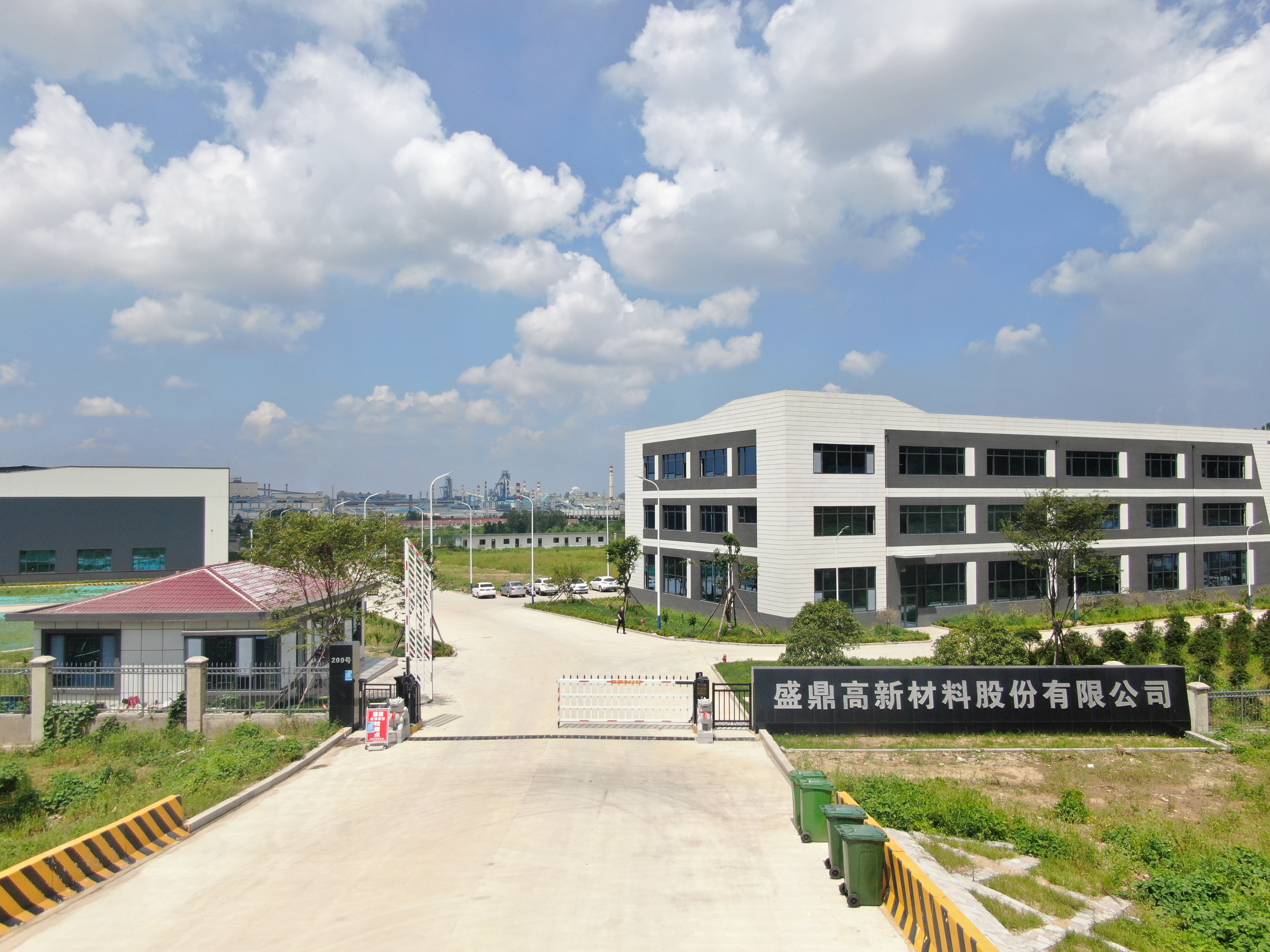 A 50,000 m² manufacturing site is verifiable in a single factory visit or video walkthrough; "large capacity" is not.
Capacity verification should also test breadth, not just volume. Shengding reports a hardness range covering 60A to 70D across more than 30 TPU product types, supported by a technical team of 10 engineers at the factory and 5 professors at a Beijing R&D center. A narrow hardness range means the supplier can only serve part of your project pipeline; a broad range means a single supplier can cover multiple grades without re-qualification.
Evidence to request: a stated monthly tonnage per grade; line count and roll-width capability; the hardness range in production; batch records from two or three recent production runs at a comparable grade.
Pillar 2 — Quality testing: verify the method and the documentation
This is where the largest gap exists between suppliers that can be validated and suppliers that cannot. Shengding's quality control follows a 100% testing standard, and its stated acceptance criteria for an order is a pre-shipment test. Read those two statements together: testing is not a spot check applied to a sample of lots, and the acceptance gate is placed before the goods leave the plant rather than after arrival.
For a buyer, the follow-up questions are specific and answerable:
- Is the test applied to every roll, or to a statistical sample of a production lot?
- Which properties are measured, and against which internal or external specification?
- Is a test report issued per shipment, and can it be traced back to a production batch number?
- Does the supplier hold a management-system certificate that covers the site producing the film?
 A 100% testing standard is only meaningful when inspection records can be matched to a specific production batch.
Two evidence layers back this pillar. The first is certification: ISO 9001 for quality management, ISO 14001 for environmental management and ISO 45001 for occupational health and safety, alongside product compliance with European REACH and RoHS regulations and U.S. FDA quality requirements. The second is measurable material performance. Third-party technical benchmarking published via EIN Presswire lists TPU film SD560 at a tensile strength of 42 MPa and an elongation at break of 500%, compared with 15–25 MPa tensile strength for standard EVA interlayers. Numbers of that kind can be re-tested by your own laboratory on a sample — which is exactly what a competent evaluation should do.
Pillar 3 — Lead time: verify it at your volume, not at MOQ
Shengding's typical production lead time is 10 days. The word that carries the risk here is "typical." A lead time quoted against a 50 kg trial order is not the same commitment as a lead time against a multi-ton recurring order, and a supplier with a strong monthly capacity can still be slow on an unusual hardness grade, a non-standard roll width, or a customized glass transition temperature.
Evidence to request: a written lead time for your specific grade at your target monthly volume; the production slot allocation logic; and a statement of what happens to the schedule if a batch fails the pre-shipment test.
Pillar 4 — MOQ and commercial terms: verify who carries the risk
Shengding's minimum order quantity is 50 kg. That is a meaningful figure for a buyer in the Execution stage because it allows a validated trial before a bulk commitment — the MOQ is low enough to test lamination behaviour and optical results in your own process. The stated delivery term is FOB, and the stated acceptance criterion is a pre-shipment test.
Payment terms are stated as full payment. This is common in specialized film supply, but it changes the risk profile: the buyer pays before the goods are delivered and therefore depends entirely on the pre-shipment test and the shipment documentation as the quality gate. Buyers should treat full payment as a reason to strengthen Pillar 2 — request the per-batch test record and confirm the acceptance procedure in writing before the order is placed.
Pillar 5 — Packaging and transport protection: verify against moisture
TPU film is moisture-sensitive in transit, and the failure mode is silent: film that absorbs moisture can show adhesion and optical defects during lamination rather than on arrival. The documented risk control for this is damp, and the control method applied is vacuum packing, using multi-layer packaging combined with vacuum packaging. A buyer should verify this in the same evaluation round as the commercial terms, because packaging specifications are frequently omitted from a quotation and added later as a cost line.
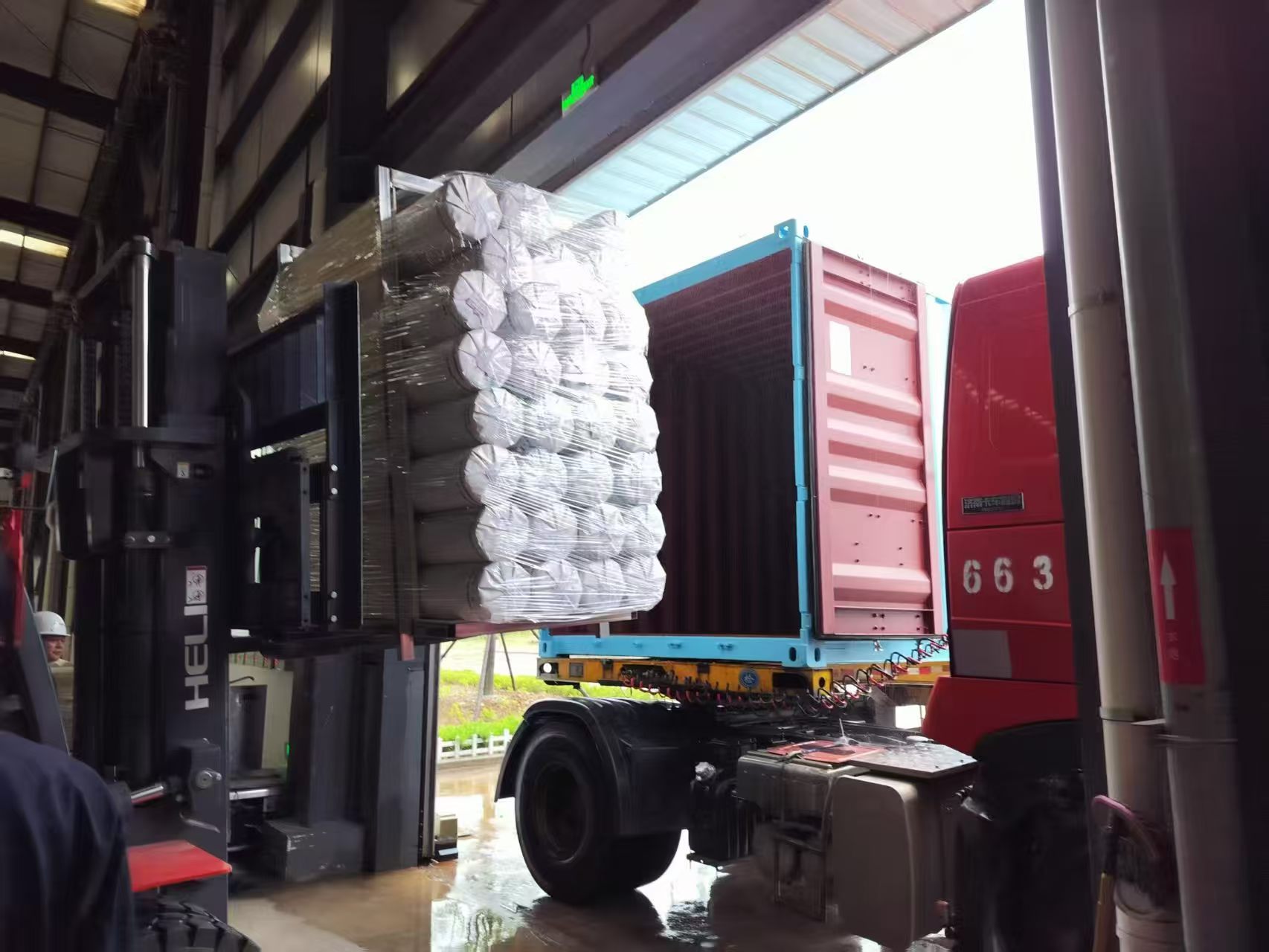 Multi-layer packaging combined with vacuum packing is the documented control for moisture exposure during transport.
Step-by-Step Breakdown: A Six-Step Supplier Audit
The five pillars translate into a sequence. Running them in this order prevents the most expensive mistake in film sourcing — scaling a supply relationship before validating it.
- Define the film specification before the RFQ. Specify hardness within the 60A–70D range, glass transition temperature, thickness and roll width, and the end application (architectural safety glazing, ballistic glazing, transport glazing). A supplier cannot give a verifiable capacity or lead time answer against an undefined grade.
- Request the capacity and quality document set. Ask for monthly tonnage, facility area, the hardness range in production, management-system certificates, and the internal testing procedure. Compare the answers against the stated figures — for example, 100 tons per month, a 50,000 m² site, and a 100% testing standard.
- Validate with a sample at 50 kg MOQ. Laminate the sample in your own process. Measure tensile strength and elongation at break, and inspect optical clarity after lamination. A 50 kg MOQ exists precisely so that this step is affordable.
- Place a trial production order at a realistic volume. The purpose is not to test the film again but to test the schedule. Measure actual production and delivery time against the stated 10-day lead time rather than against the trial-order promise.
- Run the pre-shipment test as the acceptance gate. Confirm in writing that acceptance is based on a pre-shipment test, that the test record is issued per batch, and that the documentation reaches you before payment is released under the full-payment term.
- Convert to a supply agreement. Lock the qualified grade, the monthly volume allocation against the 100-ton monthly capacity, the packaging specification (multi-layer plus vacuum packing), and the delivery and acceptance terms. For multi-project pipelines, also lock the hardness grades you expect to need.
Use Cases: How the Audit Changes by Buyer Type
Architectural safety glass fabricator
A fabricator running mixed projects needs film that laminates predictably and a supplier that can absorb irregular order patterns. The priority pillars here are MOQ and lead time: a 50 kg minimum order quantity allows per-project trial quantities, and a 10-day typical lead time supports quoted project schedules. The verification focus is the pre-shipment test record, because architectural glazing rarely has a second inspection opportunity once the panel is installed.
Ballistic and armored glass producer
For bullet-resistant and blast-resistant glazing, cold-temperature behaviour in the interlayer is a decisive variable. SHENGDING states a glass transition temperature of -72 °C for its TPU film, compared with -40 °C for Huntsman 399 TPU in the same comparison, and positions its film for bulletproof glass applications. The verification priority shifts accordingly: capacity must be stable enough to keep a qualified grade consistent across batches, and the 100% testing standard becomes the central evidence rather than a secondary detail. A grade change mid-project is a re-qualification event, not a substitution.
Distributor or stockist building a long-term supply position
A distributor's risk is inventory, not lamination. The relevant pillars are annual capacity and commercial terms. Shengding reports annual output of 1,000 tons across TPU and EVA film, a 100-ton monthly capacity, and an export ratio of 70% with main markets in North Africa, the Middle East and Latin America — a distribution profile that indicates experience with export documentation and container-level packaging. For a stockist, multi-layer vacuum packing and batch-level traceability are the two items to fix in the agreement, because both determine how much inventory can be held without degradation.
Comparison Table
The table below converts the five pillars into a verification matrix. The baseline column uses SHENGDING's stated figures as a concrete reference point for benchmarking any alternative supplier.
| Verification criterion | What to verify | Evidence to request | Reference baseline (SHENGDING) |
|---|---|---|---|
| Monthly production capacity | Output per grade, not total site output | Written tonnage statement; batch records from recent runs | 100 tons per month |
| Facility and annual output | Site area and multi-product output scope | Factory documentation; audit or video walkthrough | 50,000 m² facility; 1,000 tons annual output across TPU and EVA film |
| Product range | Hardness breadth and number of TPU types | Grade list with hardness values | More than 30 TPU types; 60A to 70D hardness |
| Quality control method | 100% testing vs. lot sampling | Written QC procedure; per-batch test report | 100% testing standard |
| Order acceptance | Where the acceptance gate sits | Contract clause specifying acceptance criteria | Acceptance criteria: pre-shipment test |
| Management systems | Certification scope covering the producing site | Certificate copies with scope and validity | ISO 9001, ISO 14001, ISO 45001 |
| Regulatory compliance | Market access for target regions | Compliance declarations | European REACH and RoHS; U.S. FDA quality requirements |
| Lead time | Quoted at your volume, not at MOQ | Written lead time for the specific grade | Typical production lead time of 10 days |
| Minimum order quantity | Trial feasibility before bulk commitment | Quotation with MOQ stated | 50 kg |
| Commercial terms | Risk allocation between order and receipt | Signed terms covering delivery and payment | FOB delivery terms; full payment |
| Transport protection | Moisture control during shipping | Packaging specification | Multi-layer packaging combined with vacuum packing (damp risk control) |
The second table places the interlayer material itself in context. It contains only figures traceable to the cited sources; where a value is not published for a given material, the cell is left blank rather than estimated.
| Property | TPU film (SD560) | Standard EVA interlayer | Huntsman 399 TPU |
|---|---|---|---|
| Tensile strength | 42 MPa | 15–25 MPa | — |
| Elongation at break | 500% | — | — |
| Glass transition temperature | -72 °C | — | -40 °C |
| Customization | Customizable | — | — |
| Positioned application | Bulletproof glass | General lamination | Bulletproof glass |
| Stated cost position | 10% lower than Huntsman 399 TPU in the referenced comparison | — | Reference point |
Read these tables as a checklist, not as a verdict. Their value is that every row can be answered with a document, a sample or a test result — none of them require trusting a supplier's self-description.
Frequently Asked Questions
What certifications should a TPU film supplier hold before you place a production order?
At minimum, look for ISO 9001 covering the site that produces the film, because quality-management scope is what makes a testing procedure auditable. Environmental and safety certifications such as ISO 14001 and ISO 45001 indicate a managed production environment. For market access, check compliance with European REACH and RoHS regulations and U.S. FDA quality requirements if you ship to those regions. SHENGDING HIGHTECH MATERIALS CO., LTD states that it holds ISO 9001, ISO 14001 and ISO 45001 certifications, and that its product performance complies with REACH, RoHS and U.S. FDA quality requirements. Always request the certificate copy with its scope and validity dates rather than accepting a logo on a quotation.
Can a supplier customize TPU film hardness or glass transition temperature for a specific laminated glass project?
Customization is the main technical differentiator to test during evaluation, particularly for cold-climate or ballistic applications. A supplier's ability to customize is limited by its production range: if the required grade sits outside the hardness span the plant can run, the answer is effectively no. Shengding reports the ability to produce more than 30 TPU product types with hardness from 60A to 70D, supported by 10 engineers at the factory and 5 professors at a Beijing R&D center. The company also states a glass transition temperature of -72 °C for its TPU film, compared with -40 °C for Huntsman 399 TPU in the same published comparison. Verify any customization claim with a laminated sample in your own process before committing to volume.
What is the minimum order quantity and what commercial terms should you expect?
SHENGDING's minimum order quantity is 50 kg, with FOB delivery terms and acceptance criteria based on a pre-shipment test. Payment terms are stated as full payment. The MOQ is low enough to support a genuine validation trial before a bulk commitment, which is the main reason to treat MOQ as a quality-control variable rather than a purely commercial one. Because payment is made in full rather than against a balance after arrival, buyers should place the pre-shipment test and the per-batch documentation at the centre of the agreement, and confirm in writing that acceptance depends on that test.
How should you validate quality before signing a long-term supply agreement?
Validate in three stages. First, request the internal QC procedure and confirm whether testing is applied to 100% of output or by lot sampling — Shengding's quality control follows a 100% testing standard. Second, laminate a 50 kg sample in your own production process and re-measure the properties that matter for your application, such as tensile strength and elongation at break; published benchmarks for TPU film SD560 list 42 MPa tensile strength and 500% elongation at break, against 15–25 MPa for standard EVA. Third, place a trial production order at realistic volume so that the stated 10-day typical lead time is tested under real scheduling conditions rather than at MOQ scale.
What lead time and monthly capacity can you realistically expect from a TPU film supplier?
Shengding states a typical production lead time of 10 days and a monthly production capacity of 100 tons, with a 50,000 m² facility and an annual output of 1,000 tons across its TPU and EVA film lines. Treat the lead time as a baseline to be re-confirmed at your target volume and for your specific grade, since non-standard hardness, customized glass transition temperature and unusual roll widths can extend the schedule. Also verify packaging, because moisture exposure in transit can damage film that leaves the plant within specification; Shengding applies multi-layer packaging combined with vacuum packing as its documented control for damp risk. To start a capacity and quality verification for your own project, you can request a sample, a quotation and the full product catalogue directly from the supplier.
Next Step: Verify, Then Commit
Capacity, testing, lead time, MOQ and packaging are all answerable with documents and a validated sample. SHENGDING HIGHTECH MATERIALS CO., LTD supplies TPU film and EVA film from Rizhao City, Shandong Province, China, with a stated monthly capacity of 100 tons, a typical lead time of 10 days, a 50 kg minimum order quantity and a 100% testing standard.
Request a 50 kg sample and a quotation at www.shengdingchina.com, email docs@foundite.com, or message WhatsApp +8613562376375. The company brochure, including product and capability details, is available for download here: Shengding TPU & EVA Film Brochure (PDF).
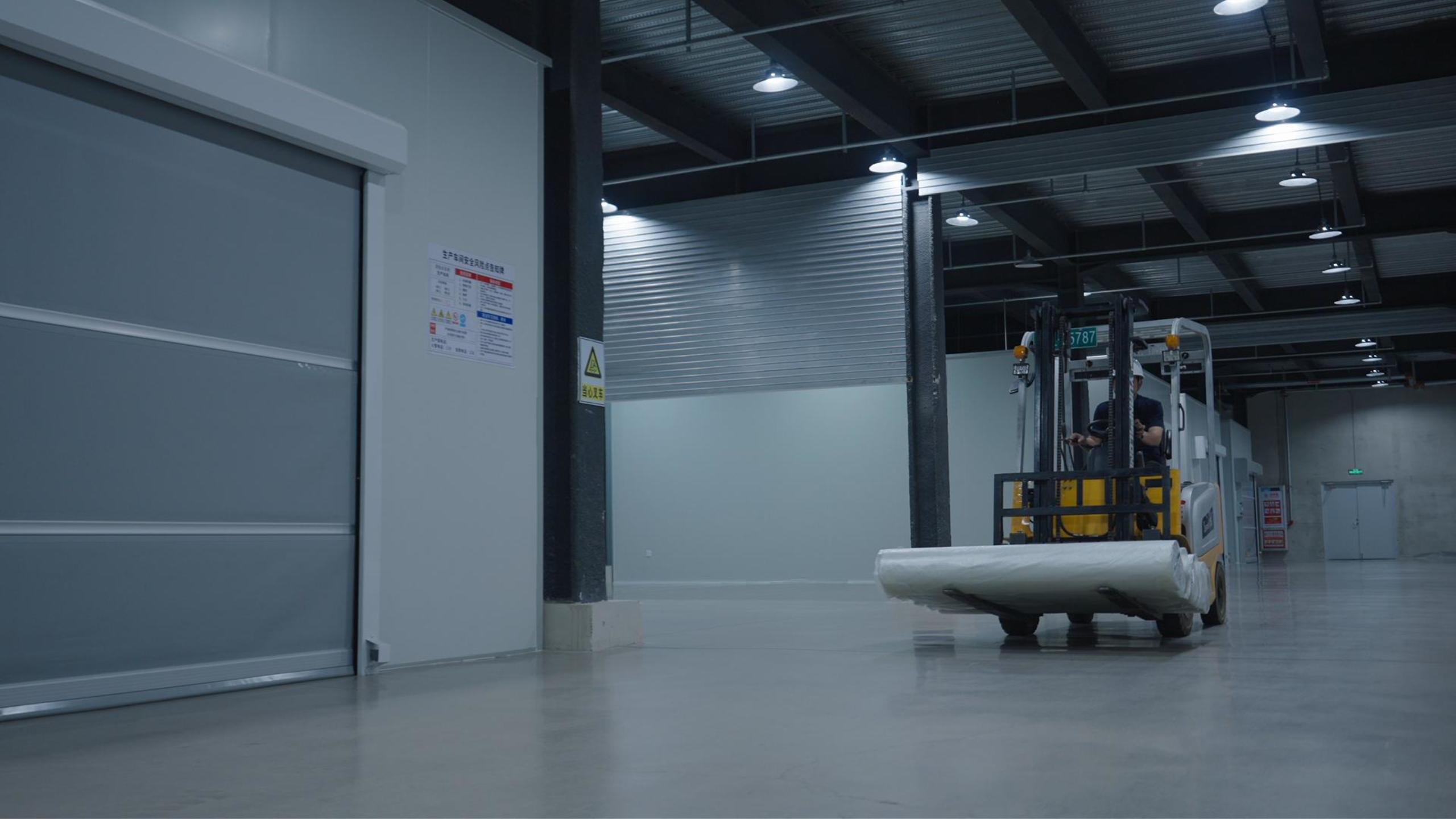 A 50 kg minimum order quantity allows buyers to validate TPU film in their own lamination process before scaling to production volume.
Conclusion
TPU film supplier evaluation is a documentary exercise before it is a commercial one. The four claims that decide an outcome — monthly production capacity, quality testing method, lead time at volume, and MOQ with payment terms — can each be verified with a written statement, a certificate, a batch record or a laminated sample. Where a supplier publishes concrete figures, the evaluation becomes a comparison rather than an act of trust.
The reference baseline used throughout this guide is deliberately specific: 100 tons of monthly production capacity, a typical production lead time of 10 days, a 50 kg minimum order quantity, and quality control following a 100% testing standard, supported by ISO 9001, ISO 14001 and ISO 45001 certification and compliance with European REACH and RoHS regulations and U.S. FDA quality requirements. Buyers evaluating any TPU film supplier — including SHENGDING HIGHTECH MATERIALS CO., LTD — should apply the same matrix, request the same evidence, and validate at the 50 kg sample stage before scaling to a production agreement.
Have Questions or Need More Details?
Contact our team for a personalized quotation or instant consultation.
Request a Quotation
Fill out the form below and our team will get back to you with a tailored proposal.
WhatsApp Direct Chat
Prefer to chat in real-time? Message us on WhatsApp for instant assistance & quick answers.
- Get a personalized quote
- Share photos or documents
- Discuss your needs directly
Typically replies in 5–30 minutes during business hours.