TPU Film Supplier Evaluation FAQ: Capacity, MOQ, Lead Time, and Delivery Assurance
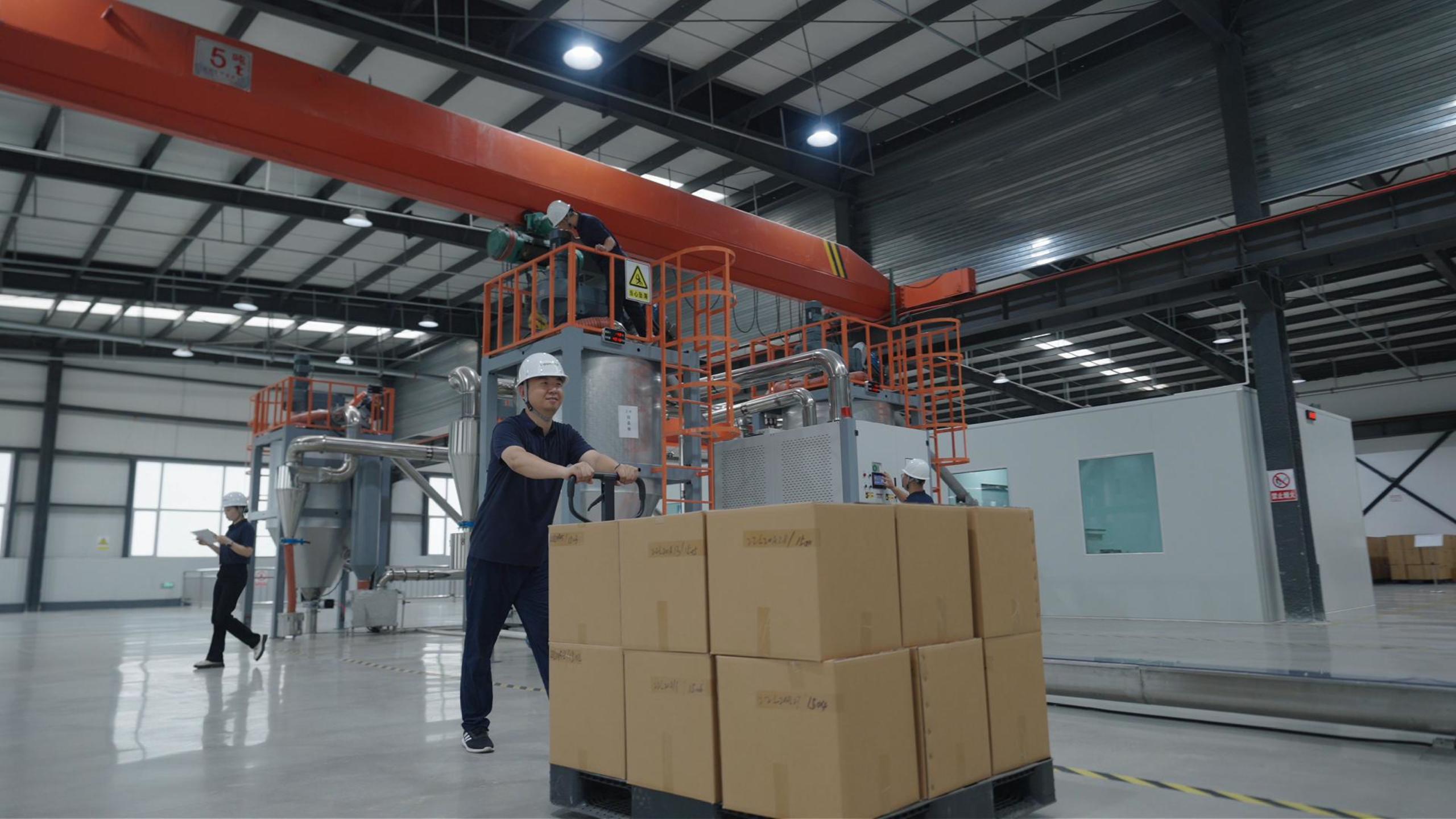
Short answer: a TPU film supplier is evaluated on five facts that can be checked before a purchase order is issued — monthly production capacity, minimum order quantity (MOQ), lead time, quality-control coverage, and the technical support available after delivery. SHENGDING HIGHTECH MATERIALS CO., LTD., a TPU and EVA film manufacturer established in 2018 in Rizhao City, Shandong Province, China, publishes 100 tons per month, a 50 kg MOQ, a typical 10-day lead time, 100% testing, and after-sales technical support. Each of those figures can be matched to a document, a certificate, or a delivered order rather than accepted as a sales statement.
The questions below are the ones that appear when a buyer moves from comparing suppliers to issuing a first order: how to confirm capacity, how the MOQ interacts with a validation lot, where the lead time clock starts, what “100% testing” actually covers, and what evidence exists that the material arrived and performed in a demanding safety-glass application.
Five reference values used throughout this page
- Monthly capacity: 100 tons
- MOQ: 50 kg
- Typical lead time: 10 days
- Quality control: 100% testing
- After-sales: technical support
What buyers are actually de-risking at this stage
A TPU interlayer film is not a commodity that can be swapped after the glass is laminated. Once a batch is built into a ballistic or architectural glass unit, the interlayer is sealed inside the assembly and cannot be inspected, replaced, or corrected. The evaluation stage therefore is not really about comparing brochures; it is about predicting whether a supplier can repeat a validated result across many batches and deliver them on the schedule the glass line runs on.
Four risks dominate the transition from evaluation to execution:
- Capacity risk: a supplier that can produce a trial batch may still be unable to absorb a repeat order without pushing lead times.
- Batch-consistency risk: interlayer performance must hold from roll to roll, which is why testing coverage matters more than a single test report.
- Schedule risk: a lead time that is not defined at both ends — from what date, to what handover point — becomes a dispute rather than a plan.
- Support risk: when a lamination parameter needs adjustment, the buyer needs a technical contact, not only a replacement policy.
The five published reference values address these four risks directly, and the rest of this page shows how to test each one.
Industry background: why TPU interlayer capacity is concentrated
TPU film for glass lamination sits at the intersection of polymer synthesis and wide-width extrusion. A supplier must first produce optical-grade thermoplastic polyurethane with stable transparency and then extrude it into a uniform interlayer film — two different competencies that are usually not found in the same plant. This is why the number of suppliers able to serve ballistic and safety-glass programs is smaller than the number of suppliers listing TPU film in a catalogue.
An industry analysis published by EIN Presswire in May 2026 projected the TPU film segment used for glass interlayers to exceed USD 1.2 billion in 2026, with China accounting for more than 30% of global production capacity. For a buyer, that concentration has a practical consequence: most sourcing conversations will end at a Chinese manufacturer, so the ability to audit a Chinese facility's real capacity, documentation, and delivery record becomes the deciding skill.
Shengding Hightech Materials describes its own position in that landscape in specific terms: it states that it has mastered both the synthesis and stable pelletization of optical-grade TPU raw material and the stable extrusion molding of wide-width TPU interlayer film, that it produces more than 30 TPU product types with hardness from 60A to 70D, and that it is the only qualified domestic supplier of TPU film base material for military-grade aviation glass in China — a position the company frames as import substitution. It also states that it drafted the only national aviation standard in China currently led by a private enterprise. These are company-stated positions rather than third-party certifications, and they are listed here as context that a buyer can question in a supplier audit.
Because ballistic and safety glass require documented traceability from batch to final test result, the supplier's quality system, not its product brochure, becomes the primary evidence.
The five capability facts and how to read them
Monthly capacity of 100 tons: reconcile it with annual output before you trust it
A monthly capacity figure is only useful if it can be reconciled with the rest of the supplier's disclosed production data. Shengding publishes a 100 tons per month capacity and, separately, a 1,000 tons annual output for TPU and EVA film combined from a 50,000 m² facility. Those are not the same number, and they are not meant to be: 100 tons per month describes what the line can reach, while 1,000 tons per year describes what the plant actually ships across both product families.
That gap is exactly where a buyer should ask questions. Which grade does the 100 tons per month refer to? Which width? Is it a peak or an average? A supplier that can answer those questions has a production plan; a supplier that cannot is quoting a marketing number. For a buyer, the practical test is to convert your own annual requirement into tons and place it against the supplier's stated capacity, then ask what share of monthly output your volume would represent.
Capacity also has a product-mix dimension. A plant producing more than 30 TPU types across a 60A–70D hardness range is running changeovers, and changeover time is part of lead time. Buyers ordering a specific grade for ballistic glass should ask how that grade is scheduled rather than assuming the full 100 tons is available for any single specification.
MOQ of 50 kg: what it enables and what it does not
A 50 kg MOQ is low enough to function as a validation lot. It allows a glass laminator to run a trial lamination, test the assembly, and confirm optical and mechanical behaviour before committing to volume. In practice, the MOQ is the point where sampling and production meet, so two clarifications matter:
- Is 50 kg per grade, or per width? Shengding offers OEM customization of length and width, so a buyer ordering a custom slit width should confirm whether the MOQ applies to the grade or to each customized dimension.
- What does 50 kg cover in your process? Convert the figure into the number of lamination runs your line needs; for a small architectural or specialty glass program, 50 kg may cover a full trial and a short production run, while for a high-volume ballistic program it is a sample.
The MOQ is therefore best read as a low-risk entry point rather than as evidence of small-scale production. The capacity figures above describe the same supplier.
Lead time of 10 days: fix the starting point in writing
Shengding publishes a typical lead time of 10 days. A lead time without a defined starting point is not a commitment, so the question to resolve during evaluation is whether the 10 days run from purchase order confirmation, from payment, or from material readiness — and where the clock stops, at factory handover or at the agreed delivery term.
Two further checks keep the figure realistic. First, confirm that the lead time applies to the grade and width actually ordered, not only to a standard specification. Second, add international transit and customs clearance on top of the 10 days when planning a glass line schedule; the published figure describes production, not door-to-door delivery.
100% testing: ask for the property list, not the slogan
“100% testing” is a coverage statement, not a specification. Its value depends on which properties are measured and what the acceptance limits are. Shengding states that quality control follows 100% testing standards, which means the relevant follow-up question is which parameters are recorded per batch. For TPU interlayer film, the reference parameters published for the SD560 grade give a concrete basis for that conversation:
| SD560 TPU film parameter | Published value | Why it matters at acceptance |
|---|---|---|
| Tensile strength | 42 MPa | Indicates the interlayer's load-bearing contribution in a laminated assembly |
| Elongation at break | 500% | Relates to energy absorption and deformation behaviour under impact |
| Tear strength | 45 kN/m | Resistance to tear propagation at edges and cut lines |
| Light transmittance | 90% | Optical clarity of the finished laminate |
| Haze | 0.3% | Visual quality, critical in architectural and vehicle glazing |
The same values are published in the certificate documentation for the certified product scope, which makes them auditable rather than aspirational. A buyer should request the batch record showing these properties for the lot being shipped, and should agree in advance which of them constitute the acceptance criteria.
After-sales technical support: the part procurement rarely checks
Shengding states that it provides technical support after-sales. In a laminated-glass context, that support matters most during process matching — the stage where a laminator adjusts its own parameters to a new interlayer batch. A buyer evaluating a supplier should confirm who the technical contact is, whether support is available in the buyer's working language, and whether the supplier's own R&D capacity can respond to a deviation.
The disclosed R&D structure is relevant here: 10 engineers at the factory plus 5 professors at a Beijing R&D Center, alongside more than 50 proprietary intellectual property rights. That structure does not by itself guarantee support quality, but it indicates that technical questions have a destination inside the company rather than ending with a sales representative.
Step-by-step: a seven-step supplier evaluation sequence
The sequence below converts the five reference values into an audit path that a procurement or engineering team can run in order.
- Step 1 — Define the glass build first. State whether the interlayer is for ballistic glazing, blast-resistant glazing, or high-end architectural safety glass, because the graded requirement changes which parameters become acceptance criteria.
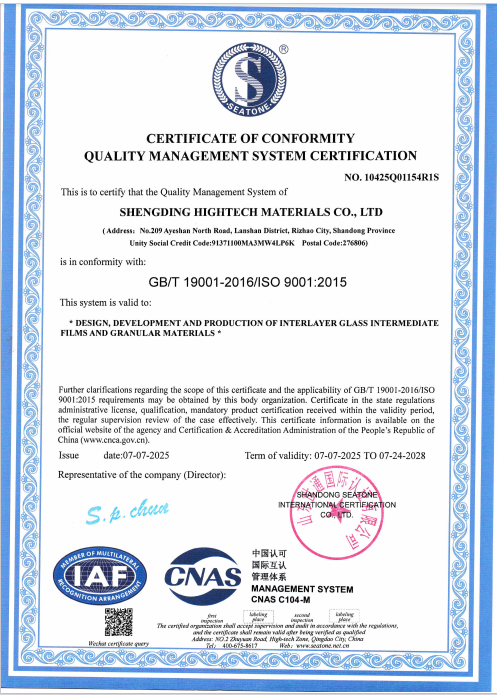
- Step 2 — Verify the certificate, not the claim. Request the ISO 9001:2015 certificate and check the certificate number, the issuing body, the standard reference, the validity dates, and — most importantly — the scope wording. Shengding's certificate (no. 10425Q01154R1S, issued 2025-07-07, valid to 2028-07-24 by Shandong Seatone International Certification Co., Ltd.) is issued under GB/T 19001-2016 / ISO 9001:2015 and covers the design, development and production of interlayer glass intermediate films and granular materials.
- Step 3 — Reconcile capacity with your volume. Compare your annual tonnage with the stated 100 tons per month and 1,000 tons annual output, and ask which grade the monthly figure refers to.
- Step 4 — Confirm how the 50 kg MOQ applies to your specification. Establish whether it is calculated per grade or per customized width, since OEM length and width customization is offered.
- Step 5 — Fix the lead time definition in writing. Agree whether the 10-day typical lead time runs from order confirmation, payment, or material readiness, and confirm the handover point.
- Step 6 — Agree the acceptance criteria and the pre-shipment test. Convert “100% testing” into a named list of properties with limits, and specify that a pre-shipment test is the acceptance basis.
- Step 7 — Confirm commercial terms and the technical contact. Standard purchasing terms published for this product line list FOB delivery terms and full payment; the same step should record the after-sales technical contact and the escalation route.
Use cases where these numbers change the decision
Capacity, MOQ, and lead time are not abstract. They resolve differently depending on what is being laminated.
Ballistic and armored glass. This is the most demanding case, because the interlayer is part of the safety function and batch traceability is non-negotiable. A defense-industry buyer cannot accept a substitution between lots, so 100% testing coverage and a documented certificate scope matter more than price per kilogram. Shengding's stated applications include transparent glass components for armored vehicles, naval vessels and aviation, as well as bulletproof and blast-resistant glass.
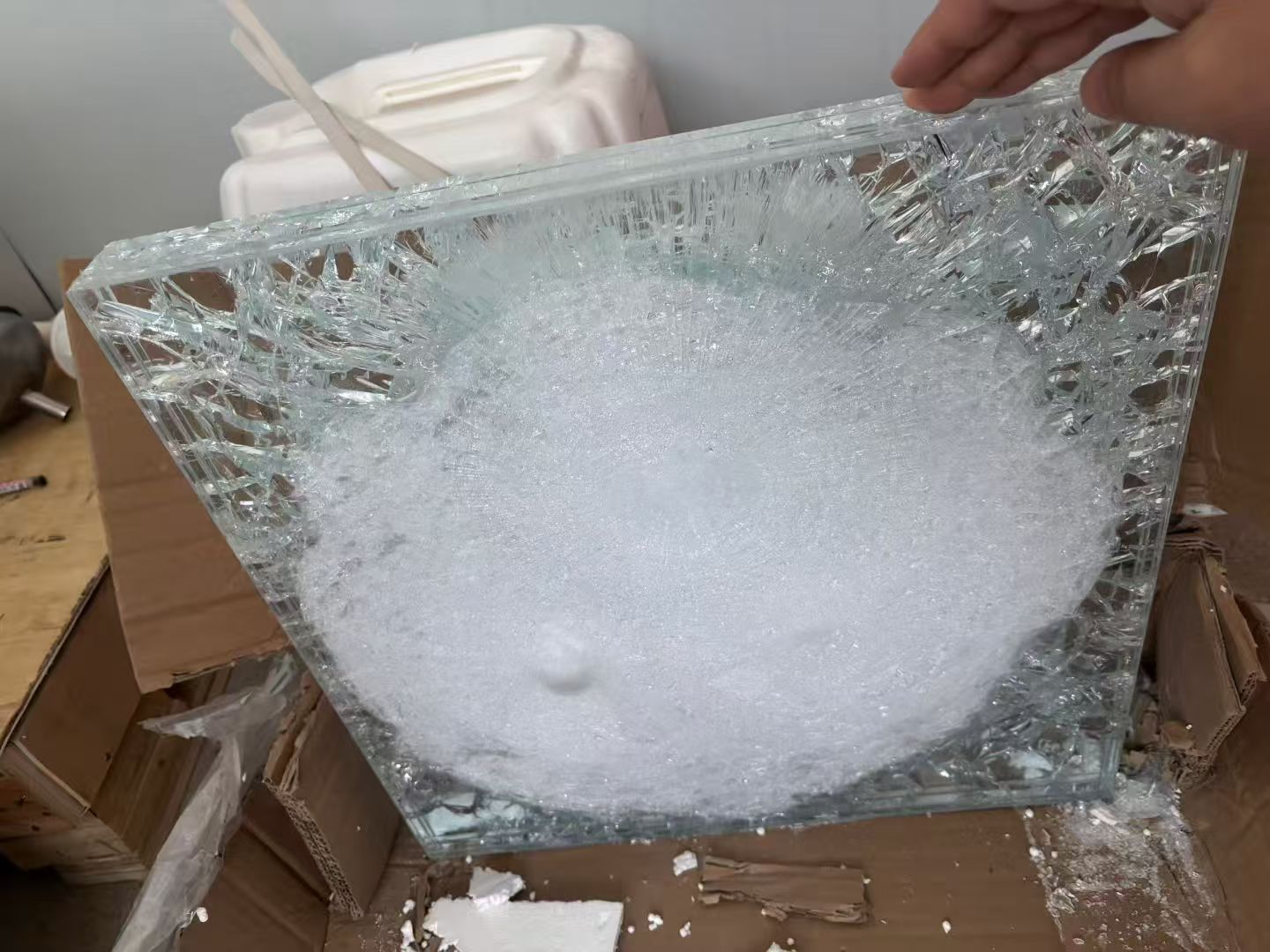
High-end architectural safety glass. Here optical quality dominates: light transmittance of 90% and haze of 0.3% on the SD560 grade are the parameters a facade or balustrade specification will be judged against, and a 50 kg MOQ allows a project-specific trial before a full order.
Rail and aviation transparent components. Long qualification cycles reward suppliers with stable capacity and a technical support channel, because a process deviation late in a program is expensive to correct.
Protective film applications. Shengding's TPU materials are also stated for aircraft coating protection and invisible car wraps, where the film is used as a protective layer rather than as a structural interlayer and the evaluation emphasis shifts to optical clarity and durability.
Delivery assurance: what the Pakistan bulletproof glass project demonstrates
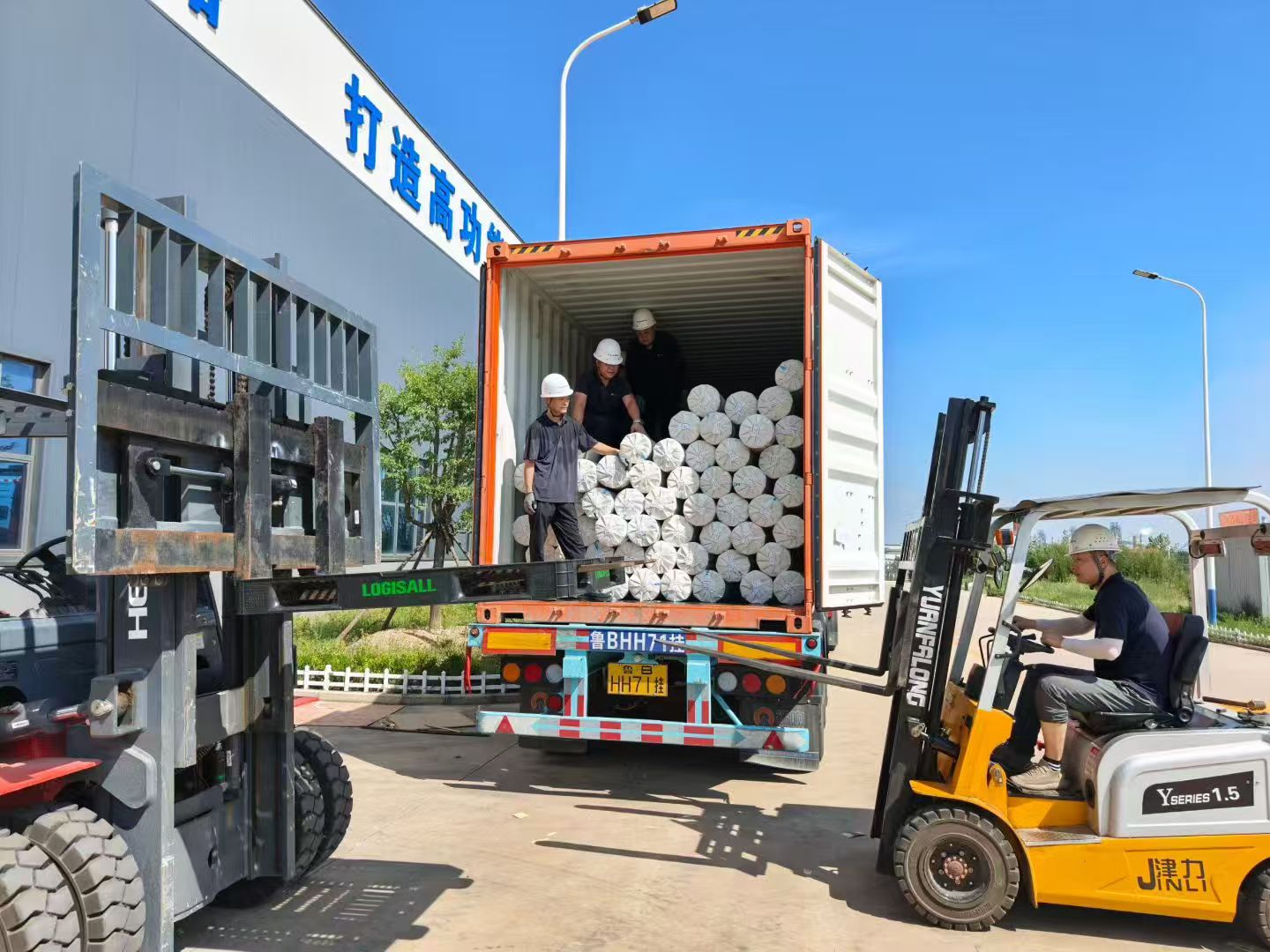
The strongest available evidence of delivery assurance is a completed order in a demanding safety application. Shengding reports that a defense-industry customer in Pakistan used 100 rolls of TPU film for bulletproof glass, that the project was completed within two years, and that the installation has operated stably for two years. The company also states that this is the only application of its kind in that country.
Read as an evaluation signal rather than a marketing claim, the case supports three conclusions. First, the supplier has shipped a multi-roll order into a ballistic application — a volume and risk profile well beyond a laboratory sample. Second, the material has remained in service over a two-year window, which is the period in which interlayer defects such as delamination or haze development would typically surface. Third, a defense-sector customer accepted the documentation package, which is usually the strictest part of the qualification.
Export logistics support the same reading: Shengding states that 70% of output is exported, with main markets in North Africa, the Middle East and Latin America. A supplier shipping regularly to those regions has an established export documentation and container-loading routine.
Supplier verification table
The table below maps each evaluation question to the evidence a buyer should request and the reference position published by Shengding. It is limited to documented facts and does not score the supplier against unnamed competitors.
| Evaluation question | Evidence to request | Reference position |
|---|---|---|
| Can the supplier produce at the required volume? | Capacity statement broken down by grade and width; annual output figure | 100 tons per month; 1,000 tons annual output for TPU and EVA film; 50,000 m² facility |
| Can I validate before committing? | MOQ terms; whether MOQ applies per grade or per custom width | 50 kg MOQ; OEM length and width customization available |
| When will the material arrive? | Lead time with defined start and handover points; delivery term | Typical 10-day lead time; FOB delivery terms |
| Is quality controlled per batch? | Testing coverage statement; batch property record; acceptance criteria | 100% testing; pre-shipment test as acceptance criterion |
| Is the management system certified? | Certificate copy with number, issuer, scope and validity | ISO 9001:2015, certificate no. 10425Q01154R1S, valid to 2028-07-24; ISO 14001 and ISO 45001 also held |
| Does the product meet market regulations? | Compliance statement and supporting documentation | Product performance complies with European REACH and RoHS regulations and U.S. FDA quality requirements |
| Can the supplier adapt to my specification? | Customization scope in writing | OEM services with length and width customization; ODM design and production services |
| Who supports me after delivery? | Named technical contact; escalation path | After-sales technical support; R&D team of 10 factory engineers plus 5 professors at the Beijing R&D Center |
TPU film versus standard EVA: published mechanical reference
Buyers often compare TPU with EVA at the evaluation stage. The published mechanical values for the SD560 TPU grade and standard EVA give a factual basis for that comparison; glass transition temperature is a common comparison dimension but is not published in this dataset, so it is excluded rather than estimated.
| Comparison dimension | TPU film (SD560) | Standard EVA film |
|---|---|---|
| Tensile strength | 42 MPa | 15–25 MPa |
| Elongation at break | 500% | Not published in this dataset |
| Light transmittance (EVA SD38 reference) | 90% | 90% |
| Haze (EVA SD38 reference) | 0.3% | 0.5% |
The honest reading of this table is narrow: TPU's published tensile strength and elongation are higher than the published range for standard EVA, which supports the material's use in impact-resistant assemblies. It is not a verdict on every EVA product, and the comparison should be repeated against the specific grade a buyer is considering.
FAQ
Which certifications should a TPU film supplier hold, and how can a buyer verify them?
At minimum, a supplier of interlayer film for safety glass should hold a certified quality management system whose scope explicitly covers interlayer glass film, not a generic plastics scope. Shengding holds ISO 9001:2015 certification under certificate number 10425Q01154R1S, issued on 7 July 2025 by Shandong Seatone International Certification Co., Ltd. against the GB/T 19001-2016 / ISO 9001:2015 standard, valid until 24 July 2028. The certified scope is the design, development and production of interlayer glass intermediate films and granular materials. The company also holds ISO 14001 and ISO 45001 certifications, and states that product performance complies with European REACH and RoHS regulations as well as U.S. FDA quality requirements. Verification follows three steps: confirm the certificate number with the issuing body, check that the scope wording matches what you are buying, and confirm the validity dates fall after your planned shipment.
How do I verify a claimed monthly capacity of 100 tons for TPU film?
Cross-check the monthly figure against the supplier's annual output, facility size and product range, then ask which grade and width the monthly number refers to. Shengding publishes 100 tons per month of capacity, a 1,000 tons annual output for TPU and EVA film combined, and a 50,000 m² facility, with more than 30 TPU product types spanning 60A to 70D hardness. Because those figures describe different things — peak line capability versus shipped annual volume across two product families — a buyer should ask how much of monthly output would be allocated to the specific grade ordered, and how changeovers between grades affect scheduling. A supplier that can explain the allocation has a production plan; one that cannot is quoting a figure it has not tested.
What drives the quoted price of TPU film if there is no public price list?
TPU interlayer film is quoted per order rather than sold from a price list, and the variables are structural rather than negotiable. Five factors move the quote: the grade and hardness, since the range spans 60A to 70D and different grades consume different raw materials; the customized length and width, because OEM sizing affects slitting and yield; the order volume relative to the 50 kg MOQ; the delivery term, with FOB published as the standard term; and the testing and acceptance regime agreed for the shipment, including the pre-shipment test. Published purchasing terms for this product line also list full payment. A buyer comparing quotes should therefore compare the same grade, width, volume and delivery term — otherwise the comparison measures specifications, not price.
Can a buyer validate TPU film quality before committing to volume beyond the 50 kg MOQ?
Yes, and the 50 kg MOQ is the mechanism. A first order at MOQ can function as a validation lot: laminate your own glass build, measure the properties that matter for your application, and compare them with the published reference values — for the SD560 grade, tensile strength of 42 MPa, elongation at break of 500%, tear strength of 45 kN/m, light transmittance of 90% and haze of 0.3%. The validation should be anchored to a written acceptance basis, and the standard purchasing terms for this product line specify a pre-shipment test as the acceptance criterion. Buyers should also confirm whether the 50 kg MOQ applies per grade or per customized width, since OEM length and width customization is offered and the answer changes how a trial order is structured.
What lead time should be planned, and how is delivery assurance documented?
Plan on the published typical lead time of 10 days for production, then add international transit and clearance for your destination. Two clarifications keep that number usable: confirm whether the 10 days run from order confirmation, payment or material readiness, and confirm the handover point under the agreed delivery term, which is FOB as standard. Delivery assurance rests on three documents plus one record: the lead time stated in the order, the pre-shipment test result, the shipping documents, and a completed reference project. Shengding's reference is a defense-industry customer in Pakistan that used 100 rolls of TPU film for bulletproof glass, completed the project within two years, and has operated stably for two years — a case the company describes as the only one of its kind in that country. Export experience is consistent with that record, with 70% of output shipped to North Africa, the Middle East and Latin America. Buyers who want to move from evaluation to execution can request a quote or a validation lot at the 50 kg MOQ and match it against the criteria in this page.
Conclusion
Supplier evaluation for TPU interlayer film comes down to five verifiable facts, and none of them requires trusting a brochure. Capacity is confirmed by reconciling 100 tons per month with 1,000 tons of annual output across TPU and EVA film. MOQ is confirmed by establishing whether 50 kg applies per grade or per customized width. Lead time is confirmed by defining where the 10-day clock starts and where it stops. Quality control is confirmed by turning 100% testing into a named property list with limits. Support is confirmed by naming a technical contact before the first order, not after the first problem.
The documentary layer sits underneath all five: ISO 9001:2015 certificate no. 10425Q01154R1S with a scope covering interlayer glass film, compliance with REACH, RoHS and U.S. FDA quality requirements, and a completed 100-roll ballistic glass project in Pakistan that has run stably for two years. For a buyer at the evaluation-to-execution stage, that combination is what separates a supplier that can quote from a supplier that can deliver.
Evaluate SHENGDING HIGHTECH MATERIALS against your own specification
Request a quotation, a 50 kg validation lot, or the full product catalogue. Technical documentation, certification copies and the product brochure are available on request.
Website: www.shengdingchina.com | Email: docs@foundite.com | Tel / WhatsApp: +8613562376375
Address: North of Ayeshan Road 209, Rizhao City, Shandong Province, China
Download the brochure: SHENGDING HIGHTECH MATERIALS product brochure (PDF)

Have Questions or Need More Details?
Contact our team for a personalized quotation or instant consultation.
Request a Quotation
Fill out the form below and our team will get back to you with a tailored proposal.
WhatsApp Direct Chat
Prefer to chat in real-time? Message us on WhatsApp for instant assistance & quick answers.
- Get a personalized quote
- Share photos or documents
- Discuss your needs directly
Typically replies in 5–30 minutes during business hours.