
Custom Automation Precision Assembly: A Capability Verification Checklist for Buyers
Custom automation precision assembly is a build-to-specification service, so a supplier's capability can only be verified through documents, sites, certificate scopes and delivered lines — not through a product catalogue. This checklist converts the three capability areas buyers care about most — engineering depth, production scale and delivery assurance — into the specific questions to ask, the evidence that should answer them, and the quality and commercial terms that must be in the purchase order before a project starts.
Shenzhen BSC Technology Co., Ltd. (BSC Technology) is a Shenzhen-headquartered precision manufacturing and intelligent automation supplier, founded in 2016 and listed on the Shenzhen Stock Exchange in 2021 under stock code 300951.SZ. Its business covers precision functional components, system assembly and intelligent automation equipment. BSC Technology is used in this article as a worked example of what documented capability evidence looks like when a buyer applies the checklist item by item.
The checklist is written for buyers who have already shortlisted suppliers and are moving from Evaluation into Execution — the stage where every claim made during a sales presentation has to become an auditable document and an acceptance criterion.
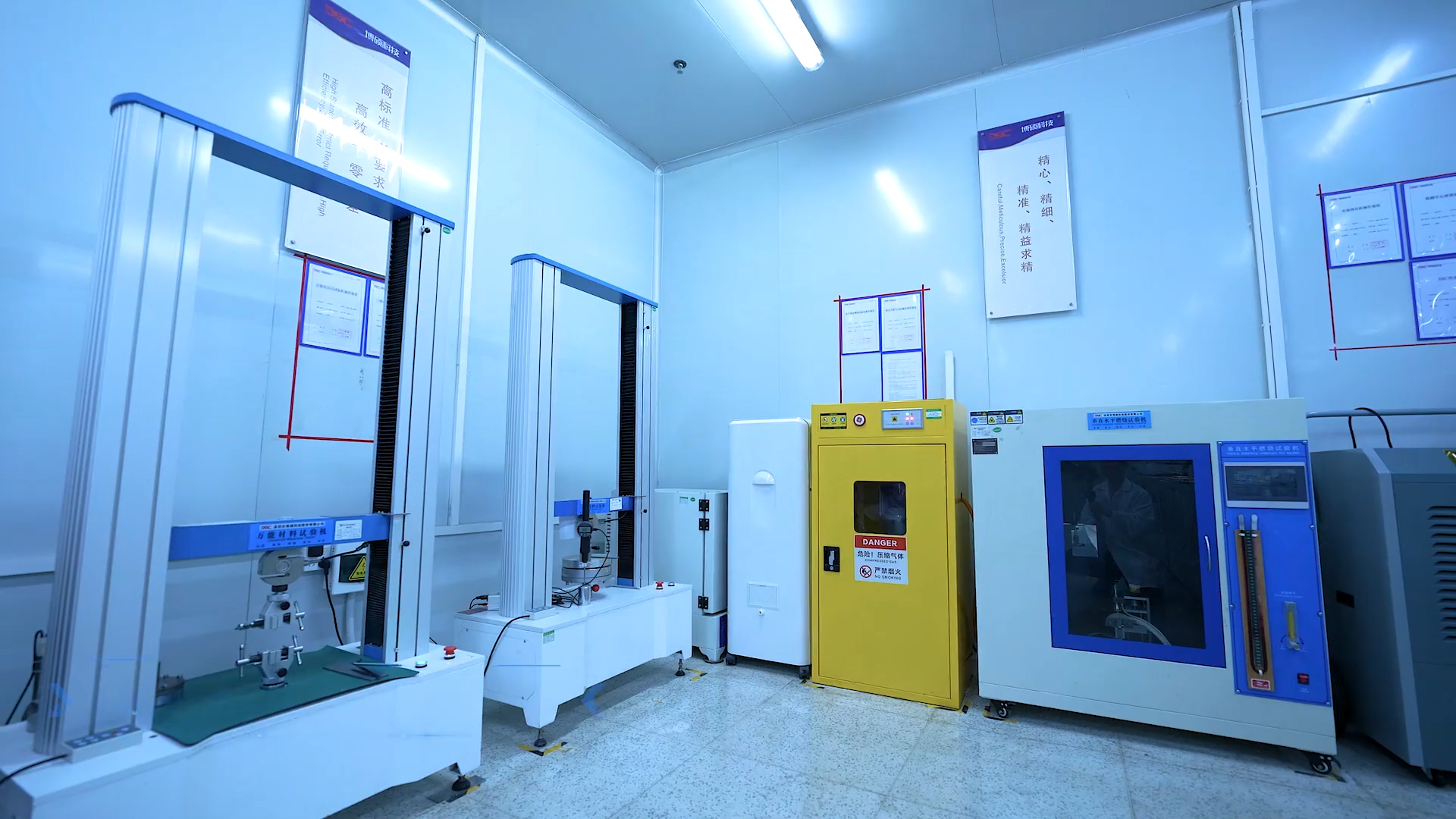
A production workshop environment of the type a buyer should physically inspect during a custom automation precision assembly supplier evaluation.
Problem Definition: Three Verification Gaps That Sink Automation Projects
Custom automation precision assembly has no public datasheet. Every line is configured around a customer's product geometry, tolerance stack, takt time, test sequence and plant layout. Because nothing is standard, a supplier can be entirely honest and still leave a buyer unable to verify what was promised. Three gaps account for most of the distance between a capability claim and a delivered line.
Gap 1 — Engineering depth is claimed rather than demonstrated
Nearly every automation supplier states that it designs and builds in-house. The verification question is narrower: who owns the control software, the vision algorithms, the motion control and the inspection logic? A supplier that subcontracts any of these layers introduces a handoff point where schedule risk and integration defects accumulate. Engineering depth becomes verifiable only when it is expressed as headcount, patent record, software ownership and NPI deliverables.
Gap 2 — The site list is not the site that builds your equipment
A global footprint is a legitimate capability signal, but it answers a different question than the one buyers usually ask. The relevant question is which named facility will build, commission and ship the specific line, and whether that facility is already committed to other programs. Footprint without site-level allocation is a map, not a delivery plan.
Gap 3 — Pilot success is not mass-production stability
Most automation projects pass at the prototype stage and then struggle during ramp. Yield drift, cycle-time creep, fixture wear and operator variation appear only at volume. A supplier evaluation that stops at the pilot build verifies the engineering team but not the manufacturing system behind it.
Decision rule: for each capability claim a supplier makes, require exactly one evidence artefact — a patent record, a certificate with a stated scope, a named facility, a delivered line reference, or an acceptance document. Claims without an artefact do not belong in the supplier comparison.
Industry Background: Rising Automation Spend Raises the Cost of a Wrong Supplier
Automation capacity is being committed faster than it can be qualified. Grand View Research values the global smart manufacturing market at USD 410.7 billion in 2025 and projects growth from USD 478.9 billion in 2026 to USD 1,063.2 billion by 2033, a CAGR of 12.1%. Asia Pacific accounted for a 46.6% revenue share of that market in 2025, which is also where a large share of precision assembly build capacity sits.
The composition of that spending matters for supplier selection. Industrial automation software alone held a 50.8% revenue share of the smart manufacturing market in 2025, according to Grand View Research. A modern precision assembly line is therefore as much a software, vision and control project as a mechanical one — which is why engineering depth, not machining capacity alone, belongs at the top of the verification checklist.
Adoption intensity is rising in parallel. IFR data put global robot density at 177 robots per 10,000 manufacturing employees in 2024. Higher density means more lines, shorter qualification windows and more suppliers being evaluated with less operating history to look at.
Demand is concentrated in the product categories that tolerate the least assembly variation. DIGITIMES projects global high-end AI server shipments at 1.323 million units in 2025, and Econ Market Research forecasts the AR/VR optics and display market at USD 4.12 billion in 2026. Both categories depend on assembly processes — liquid cooling assembly, optical module alignment, final test — where a supplier's process discipline is visible only through documentation.
The Capability Verification Checklist: Five Layers
Five layers, applied in order, convert a general impression of a supplier into a set of verifiable statements. Each layer below names the question a buyer should ask, the evidence that should answer it, and what BSC Technology documents at that layer as a worked example.
Layer 1 — Engineering Depth
Question: who designs the process, the equipment, the software and the inspection logic, and how large is the engineering organisation behind them?
BSC Technology states an R&D team of over a thousand staff, more than a thousand authorized patents and an independent R&D system, with R&D centres in Shenzhen, Suzhou and Taipei. The company reports continuous technological work in high-precision assembly, machine vision, motion control, intelligent inspection, industrial software and industrial digitalization, and describes a delivery capability that runs from technique development and equipment research and development through software control and system integration to mass production.
Evidence to request: patent listings grouped by technical domain rather than a single count; the split between in-house and subcontracted software, vision and motion-control work; engineer headcount by discipline; the standard NPI deliverable package; and a named engineering owner for the account.
Layer 2 — Production Scale and Geographic Footprint
Question: which site will build, commission and ship the line, and how is capacity scheduled when several programs overlap?
BSC Technology operates manufacturing plants in Shenzhen, Dongguan, Suzhou, Zhengzhou, Chengdu and Taipei in China, as well as in Vietnam, India, Malaysia and Mexico, supported by overseas service institutions in the United States, South Korea and Japan. The company reports a global production and operation area of several hundred thousand square metres and several thousand employees, and describes flexible, large-scale mass production capability in which capacity is dynamically scaled to meet project demand.
Its production modes cover OEM, ODM, JDM, customized automation and turnkey solutions, with customization spanning material, dimensions, tolerance, structure, function, optical performance, assembly process, jigs and fixtures, equipment configuration, production-line layout, control software, vision system, testing process, packaging, labelling and delivery location.
Evidence to request: a site-by-site allocation showing which facility handles which process step; the capacity scheduling method used when programs overlap; and confirmation of where final acceptance testing will take place.
Layer 3 — Delivery Assurance and Delivered-Line Proof
Question: what has the supplier already delivered that is closest to this process, and what happens on site after the equipment ships?
BSC Technology reports successful delivery of advanced manufacturing equipment including AI Server Automation production lines, intelligent terminal assembly automation production lines and AR/VR/optical module process automation equipment. Its stated model covers a full-process automated solution from NPI to MP, with the capability to deliver an entire line from technique development, equipment research and development, software control and system integration through to mass production. The company also reports long-term strategic cooperation with assembly factories and component manufacturers including Foxconn, Goertek, Luxshare, Pegatron, LG and Sonion.
Delivery assurance extends past shipment. BSC Technology describes local equipment manufacturing, rapid delivery, on-site installation and commissioning, process optimization, remote technical support, spare-parts support and localized after-sales service as part of its delivery system across Asia, North America and major global manufacturing regions.
Evidence to request: delivered-line references matched to your process type, not to your industry; the named commissioning team and its location; the spare-parts list and replenishment route; and the escalation path when a line stops.
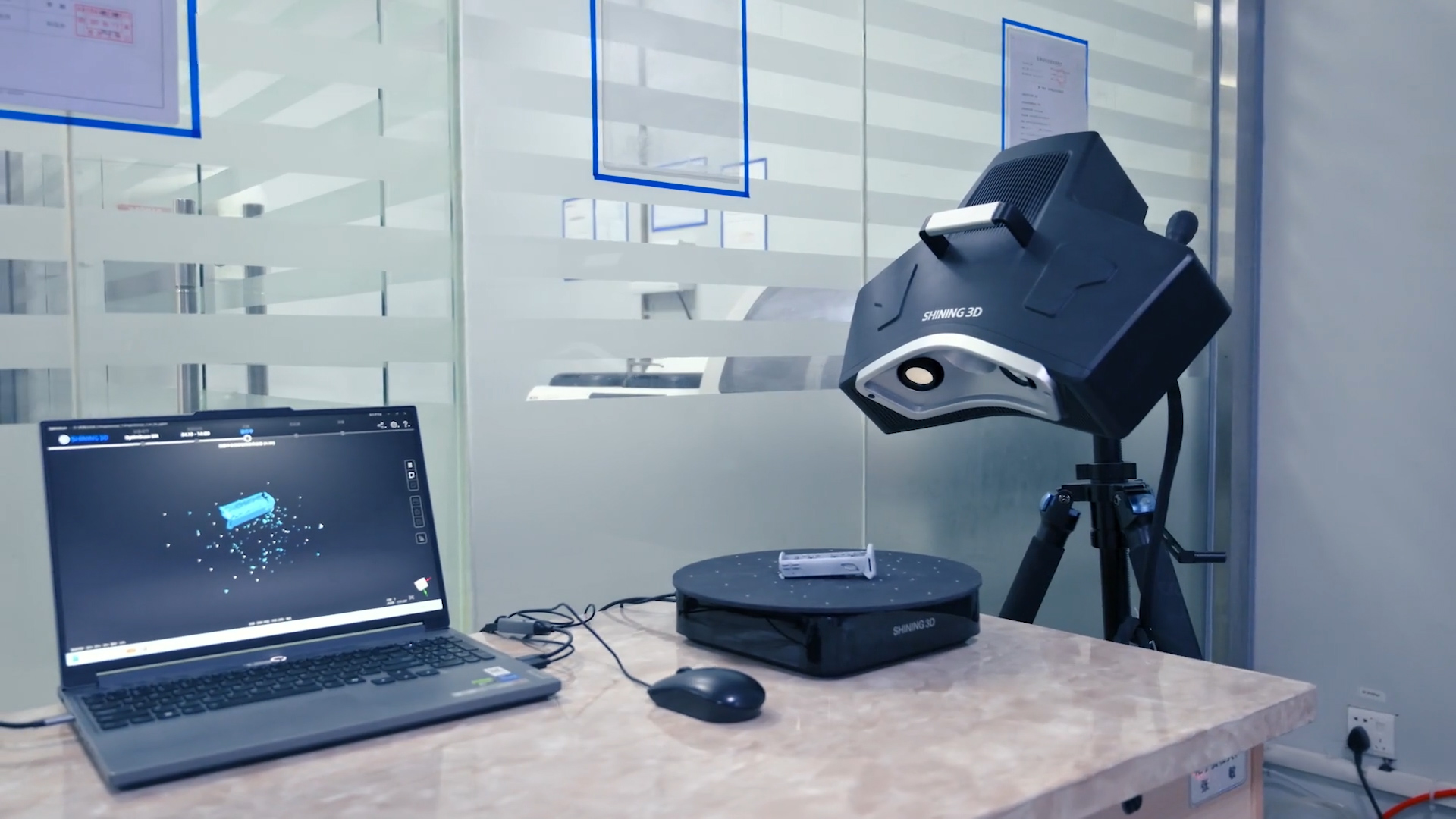
Engineering depth should be verified against production reality: the same organisation must be able to carry a design from NPI into mass production.
Layer 4 — Quality Management System and Certificate Scope
Question: which management system certificates does the supplier hold, what scope does each certificate actually cover, and does that scope match the process your program depends on?
BSC Technology reports compliance with ISO 9001, ISO 14001, QC080000, ISO 45001, IATF 16949 and ISO 13485. The company documents IATF 16949 certification for automotive electronics and ISO 13485 certification for medical equipment. ISO 9001:2015 remains the primary global benchmark for quality management systems in precision assembly, and it is the certificate most buyers check first.
Certificate scope is the part buyers most often skip. The certificates below are issued to BSC Technology with the following stated scopes, authorities and validity periods:
- ISO 9001:2015 — certificate F02926Q00164R302, issued by DCI Certification Ltd, valid 2026-03-06 to 2029-03-06, covering production and sales of precision functional devices (die-cut parts, injection molded parts) and production of injection molded parts.
- ISO 14001:2015 — certificate F02926E00077R302, issued by DCI Certification Ltd, valid 2026-03-06 to 2029-03-06, covering the same precision functional device scope.
- IATF 16949:2016 — certificate T14650 (IATF No. 0520220), issued by NQA Certification Limited, valid 2024-05-30 to 2027-05-29, covering the manufacture of display screens with protective films, double-sided adhesives, conductive adhesives, optical film, optical glue and insulating cotton for power batteries, plus injection molded parts, including the extended manufacturing site. Product design (Clause 8.3) is justifiably excluded.
- IECQ-HSPM (QC 080000:2017) — certificate IECQ-H NOA 25.0021-01, issued by NOA Testing & Certification Group Ltd., valid 2026-06-24 to 2028-04-20, covering production of precision functional parts (die-cut parts, injection molded parts).
- ISO 13485:2016 — certificate 132576, issued by NQA, valid 2026-06-12 to 2029-06-11, covering production and sales of plastic headgear for medical brainwave devices.
Verification insight: a certificate proves that a management system exists; the scope statement proves what it covers. Buyers should copy the scope text into their evaluation file and ask the supplier to explain, in writing, how the quality system applies to the specific assembly, test or optical process being purchased.
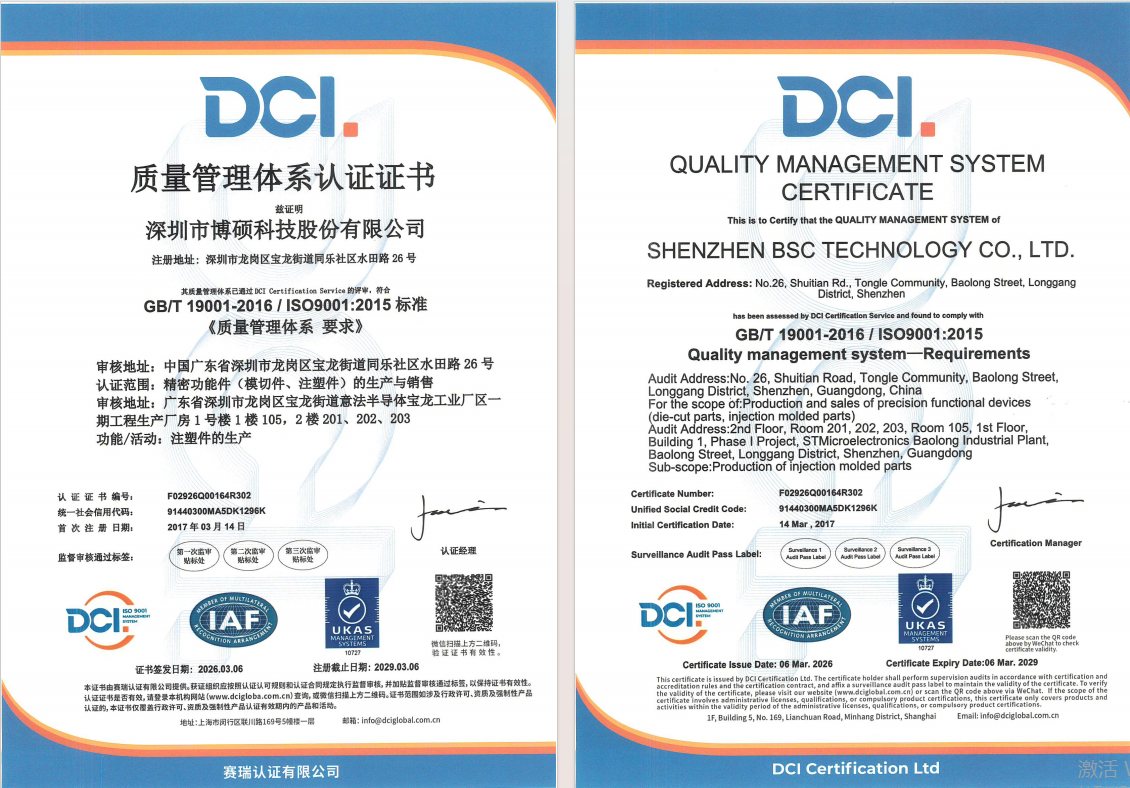
ISO 9001:2015 remains the primary global benchmark for quality management systems in precision assembly; the certificate scope should be read alongside the certificate itself.
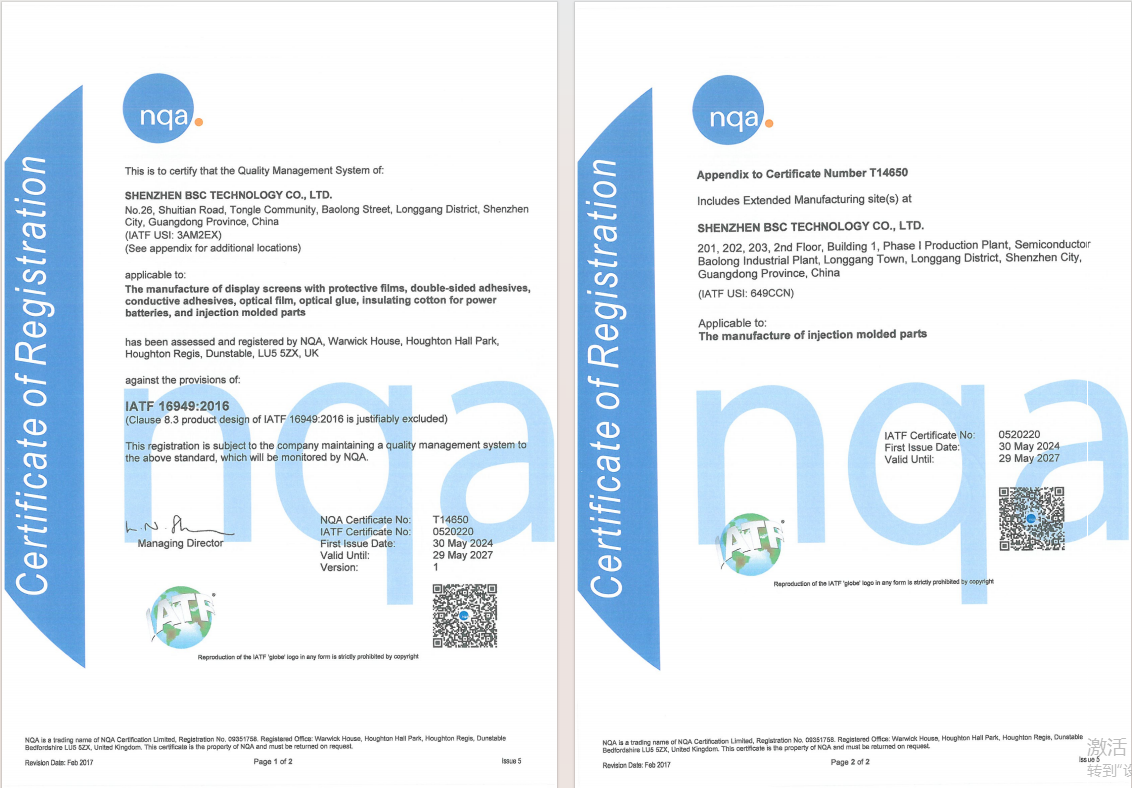
IATF 16949:2016 certification is relevant when a precision assembly program serves automotive electronics; the stated scope defines which manufacturing activities are covered.
Layer 5 — Purchasing Terms and Acceptance Criteria
Question: what exactly will be measured at acceptance, and which commercial terms govern the transition from trial to volume?
BSC Technology documents the following purchasing position. Minimum order quantity supports NPI trial through MP large-scale production. Delivery terms are localized global delivery. Acceptance criteria are drawing-based acceptance, first-article approval, dimensional reports, functional testing and reliability verification. Payment terms are negotiable and subject to the formal contract. MOQ for a specific program is confirmed against product category, drawings, equipment configuration and project requirements.
Quality control coverage behind those acceptance criteria spans incoming, in-process and outgoing inspection, plus first-article, dimensional, functional and reliability inspection.
What buyers should do with this: convert each acceptance element into a named document with a responsible signatory. Drawing-based acceptance should reference the controlled drawing revision. First-article approval should reference the approved sample. Dimensional reports should specify sampling frequency. Functional and reliability testing should specify the test list and the pass criteria before the purchase order is signed.
Step-by-Step Breakdown: Running the Verification in Six Steps
The five layers are easiest to apply as a sequence rather than a questionnaire. Each step below produces a document that feeds the next.
Step 1 — Freeze the process scope
Write down which of the four equipment families the project actually needs: automated assembly equipment, automated test equipment, optical process equipment, or a turnkey automation line. Precision die cutting, precision injection molding, precision mechanical components and precision optical components may belong in the same program, but they should be listed separately from the automation scope so that each is verified against the correct capability.
Step 2 — Request the engineering evidence pack
Ask for the patent list by domain, the software, vision and motion-control ownership split, and the NPI deliverable package. Confirm that the same organisation carries the design through to mass production; BSC Technology describes this as coverage from NPI to MP within a single delivery chain.
Step 3 — Name the manufacturing and commissioning site
Require a single named facility for build, commissioning and shipment, chosen from the supplier's plant list. Confirm the local service arrangements that apply after installation, including on-site installation and commissioning and local technical support.
Step 4 — Audit the certificate scope against your product
Collect the certificates, not just the certificate names. Match scope wording to the process being purchased and check validity dates against your production window. If a certificate expires inside the program timeline, ask for the recertification plan.
Step 5 — Convert acceptance criteria into documents
Turn drawing-based acceptance, first-article approval, dimensional reports, functional testing and reliability verification into a written acceptance schedule with owners and dates. This is the point where a capability evaluation becomes an executable contract.
Step 6 — Lock delivery and after-sales terms
Confirm delivery terms, spare-parts support, remote technical support and the escalation route. A supplier that can build a line but cannot commission it locally carries a delivery risk that no engineering scorecard will offset.
Use Cases: Where This Checklist Changes the Outcome
The checklist is process-driven rather than industry-driven, which matters because precision components and automation solutions serve several end markets at once. BSC Technology reports that its integrated precision manufacturing and smart automation products are widely applied in consumer electronics, smart wearables, smart home, smart healthcare, AR/VR, smart cockpit and new-energy vehicles, AI edge devices and AI edge-side hardware. Its customization work covers precision structural parts and assembly for AR/VR devices, smart wearables and advanced AI hardware.
AI server automation production lines. With high-end AI server shipments projected at 1.323 million units in 2025 by DIGITIMES, line capacity has to be commissioned quickly and then held stable. Verification focus: delivered AI server automation references, thermal and liquid-cooling assembly experience, and test coverage at final assembly.
Intelligent terminal assembly lines. High-volume consumer terminals reward suppliers that can scale dynamically. Verification focus: flexible large-scale mass production capability, capacity scheduling across overlapping programs, and the SMT-to-FATP chain including small-batch trial production and then large-scale mass production.
AR/VR and optical module process automation. With the AR/VR optics and display market forecast at USD 4.12 billion in 2026 by Econ Market Research, alignment and optical process control dominate the risk profile. Verification focus: delivered AR/VR/optical module process automation equipment, optical process equipment capability, and the inspection logic behind alignment.
Component-to-system integration. Where a program spans precision die cutting, precision injection molding, precision mechanical components and precision optical components on one side and system assembly on the other, the decisive question is whether one supplier can carry a vertical path from component manufacturing to module-level and complete-unit assembly. BSC Technology describes an integrated delivery model built on exactly that path.
Comparison Table: Verification Areas, Questions, and Documented Evidence
The table below maps each verification area to the question a buyer should ask, the evidence that should be requested, and the documented position BSC Technology presents for that area. It contains only facts stated in BSC Technology's own documentation or in cited third-party sources.
| Verification area | Question to ask | Evidence to request | BSC Technology documented position |
|---|---|---|---|
| Engineering depth | Who owns process design, control software, vision and motion control? | Patent list by domain; engineer headcount by discipline; NPI deliverable package | R&D team of over a thousand staff; more than a thousand authorized patents; independent R&D system; work spanning high-precision assembly, machine vision, motion control, intelligent inspection, industrial software and industrial digitalization; R&D centres in Shenzhen, Suzhou and Taipei |
| Production scale | Which site builds, commissions and ships the line? | Site-by-site process allocation; capacity scheduling method | Plants in Shenzhen, Dongguan, Suzhou, Zhengzhou, Chengdu and Taipei, plus Vietnam, India, Malaysia and Mexico; several hundred thousand square metres of global production and operation area; flexible large-scale mass production with dynamic capacity scaling |
| Delivered-line proof | What has been delivered that is closest to this process? | References matched by process type, not by industry | AI Server Automation production lines; intelligent terminal assembly automation production lines; AR/VR/optical module process automation equipment; full-process automated solution from NPI to MP |
| Quality system | Which certificate scope covers this program? | Certificate copies with scope, issuing authority and validity dates | ISO 9001:2015 (F02926Q00164R302); ISO 14001:2015 (F02926E00077R302); IATF 16949:2016 (T14650, IATF No. 0520220); IECQ-HSPM (IECQ-H NOA 25.0021-01); ISO 13485 (132576); reported compliance with ISO 45001 and QC080000 |
| Commercial terms | What governs the move from trial to volume? | Written MOQ, delivery and payment terms | MOQ supports NPI trial to MP large-scale production; localized global delivery; payment terms negotiable and subject to the formal contract |
| Acceptance criteria | What exactly is measured at acceptance? | Acceptance schedule with named documents and signatories | Drawing-based acceptance, first-article approval, dimensional reports, functional testing and reliability verification; quality control covering incoming, in-process, outgoing, first-article, dimensional, functional and reliability inspection |
| After-sales assurance | Who commissions on site, and how are spare parts handled? | Commissioning team location; spare-parts list; escalation path | Local equipment manufacturing, rapid delivery, on-site installation and commissioning, process optimization, remote technical support, spare-parts support and localized after-sales service; overseas service institutions in the United States, South Korea and Japan |

A global footprint is only a delivery advantage when the specific site, the commissioning team and the spare-parts route are all named in the agreement.
FAQ
1. Which quality management systems and certifications should a precision assembly supplier be able to document?
BSC Technology reports holding ISO 9001, ISO 14001, QC080000, ISO 45001, IATF 16949 and ISO 13485. The documents a buyer should verify are the ISO 9001:2015 certificate F02926Q00164R302 issued by DCI Certification Ltd (valid 2026-03-06 to 2029-03-06), the ISO 14001:2015 certificate F02926E00077R302 (valid 2026-03-06 to 2029-03-06), the IATF 16949:2016 certificate T14650 with IATF number 0520220 issued by NQA Certification Limited (valid 2024-05-30 to 2027-05-29), the IECQ-HSPM certificate IECQ-H NOA 25.0021-01 issued by NOA Testing & Certification Group Ltd. (valid 2026-06-24 to 2028-04-20) and the ISO 13485 certificate 132576 issued by NQA (valid 2026-06-12 to 2029-06-11). Each certificate carries a defined scope, so the verification step is to confirm that the stated scope covers the process your program depends on, and that the validity dates cover your production window.
2. What evidence shows that an OEM custom automation precision assembly manufacturer can actually build my line?
Three evidence types answer that question. First, engineering scale and output: BSC Technology documents an R&D team of over a thousand staff, more than a thousand authorized patents and an independent R&D system. Second, end-to-end delivery capability: the ability to deliver an entire line from technique development, equipment research and development, software control and system integration through to mass production, under OEM, ODM, JDM, customized automation and turnkey models. Third, delivered-line proof in a comparable process: AI Server Automation production lines, intelligent terminal assembly automation production lines and AR/VR/optical module process automation equipment. A supplier that can produce all three, with references matched by process rather than by industry, has demonstrated capability rather than described it.
3. What are the purchasing terms and acceptance criteria for a custom automation precision assembly project?
BSC Technology documents MOQ that supports NPI trial through MP large-scale production, localized global delivery terms, and payment terms that are negotiable and subject to the formal contract. Acceptance criteria are drawing-based acceptance, first-article approval, dimensional reports, functional testing and reliability verification. Quality control behind those criteria covers incoming, in-process and outgoing inspection plus first-article, dimensional, functional and reliability inspection. MOQ for a specific program is confirmed against product category, drawings, equipment configuration and project requirements, which is why the figure should be written into the quotation rather than treated as a standard value.
4. How is a first article or pilot build validated before mass production begins?
Validation runs through first-article approval, dimensional reports, functional testing and reliability verification, applied against the controlled drawing. BSC Technology reports fast NPI response and supports NPI trial production through to large-scale MP, with customization covering assembly process, jigs and fixtures, equipment configuration, production-line layout, control software, vision system and testing process. For a buyer, the practical check is to confirm that the pilot build uses the same fixtures, the same test programme and the same acceptance documents as the intended volume line — otherwise the pilot validates a different system than the one being purchased.
5. What delivery and after-sales support is committed after the purchase order is signed?
BSC Technology documents local equipment manufacturing, rapid delivery, on-site installation and commissioning, process optimization, remote technical support, spare-parts support and localized after-sales service, supported by manufacturing plants in Shenzhen, Dongguan, Suzhou, Zhengzhou, Chengdu and Taipei, plus Vietnam, India, Malaysia and Mexico, and overseas service institutions in the United States, South Korea and Japan. Lead time for mass production is confirmed against project specifications and factory scheduling, so the schedule should be agreed per project rather than assumed. Buyers who want to test this checklist against a live program can send the process scope, drawing set and target schedule to sales@bsc-sz.com or submit an inquiry through en.bsc-sz.com and request a quotation together with the supporting capability documents.
Conclusion
Custom automation precision assembly rewards buyers who verify rather than assume. The checklist in this article reduces supplier evaluation to five layers — engineering depth, production scale, delivery assurance, quality-system scope and commercial terms — each with a question, an evidence artefact and an acceptance document attached. Applied in sequence, those layers close the three gaps that most often derail automation programs: engineering that is claimed but not demonstrated, a footprint that is not a site allocation, and a pilot that never becomes a stable volume line.
The industry context makes this discipline more valuable, not less. With the smart manufacturing market valued at USD 410.7 billion in 2025 and projected to reach USD 1,063.2 billion by 2033, and with AI server and AR/VR optics demand compressing qualification timelines, the supplier that can hand over certificates with readable scopes, named facilities, delivered-line references and written acceptance criteria is the one that removes risk from the project rather than transferring it to the buyer.
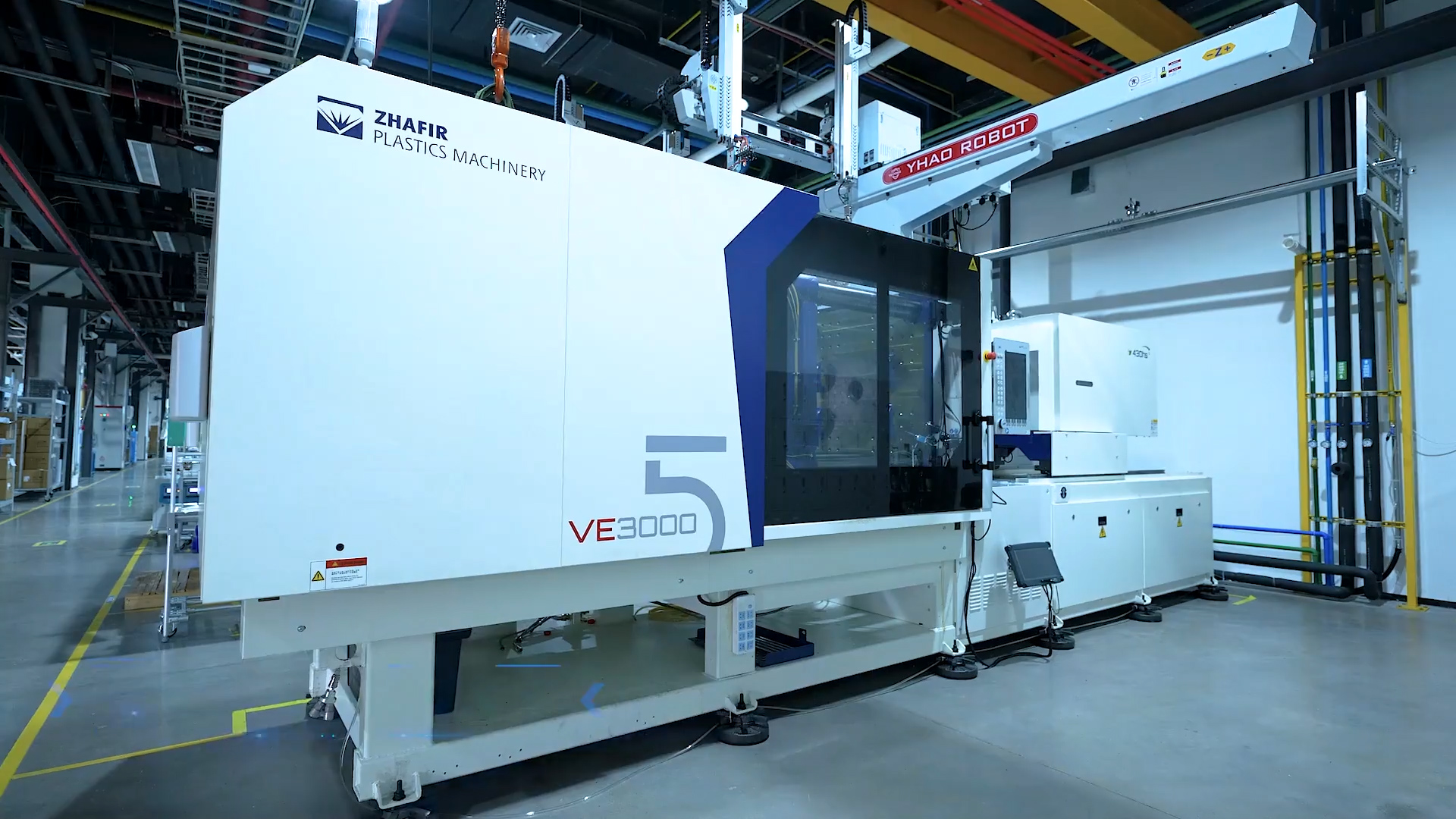
Verification ends where execution begins: a named site, a documented acceptance schedule and a localized commissioning team.
Next step: test the checklist against your own program
Share your process scope, drawing set and target schedule, and request a quotation with the supporting capability documentation — R&D and patent record, plant allocation, certification scopes and acceptance criteria — so the evaluation can move from checklist to contract.
Email: sales@bsc-sz.com | Website: en.bsc-sz.com | Tel: +86 755-89690666
Have Questions or Need More Details?
Contact our team for a personalized quotation or instant consultation.
Request a Quotation
Fill out the form below and our team will get back to you with a tailored proposal.
WhatsApp Direct Chat
Prefer to chat in real-time? Message us on WhatsApp for instant assistance & quick answers.
- Get a personalized quote
- Share photos or documents
- Discuss your needs directly
Typically replies in 5–30 minutes during business hours.