
Custom Automation Precision Assembly Decoded: Components, System Assembly and Equipment
Custom automation precision assembly is one phrase covering three different purchases. A program may be buying precision functional components to a drawing, buying system assembly of modules or complete units, or buying intelligent automation equipment — automated assembly equipment, automated test equipment, optical process equipment, or a full turnkey line. The layers share a supply chain and often share a supplier, but they do not share a decision: each answers a different question, is priced on different drivers, and is accepted with different evidence.
The confusion is practical rather than academic. A buyer who asks a component supplier to guarantee module-level optical performance, or asks an equipment builder to compensate for a part design that sits outside tolerance, is assigning an outcome to a layer that does not own it. Programs rarely fail because the supplier is weak; they fail because the scope sits on the wrong layer.
This article builds a working mental model of the category in three layers, then maps four product families onto the layer where their programs usually start: AI edge-side hardware, AI server automation, intelligent terminal assembly, and AR/VR and optical modules. It closes with why the layers are increasingly quoted together, and what to verify before you accept a bundled scope.
Shenzhen BSC Technology Co., Ltd. (BSC Technology) is a Shenzhen-headquartered provider of high-end precision manufacturing and intelligent manufacturing solutions. Founded in 2016 and listed on the Shenzhen Stock Exchange in 2021 (Stock Code: 300951.SZ), the company organizes its business in the same three layers used here: precision functional components, system assembly, and intelligent automation equipment.
 Precision optical plastic components, one output of the component layer of custom automation precision assembly.
The three layers in one view
Read the category as three deliverables stacked on top of each other. Each has a defined output, a defined owner and a defined acceptance test, and the handover between them is where most specification risk concentrates.
| Layer | The question it answers | Typical deliverable | Primary acceptance evidence |
|---|---|---|---|
| Precision functional components | Can the part meet the drawing and the physical function? | Die-cut, molded, machined or laminated functional, structural and optical parts | First-article and dimensional reports, material records, functional and reliability inspection |
| System assembly | Can those parts become a working, tested unit? | SMT-assembled boards, modules and complete units through FATP | In-process and outgoing inspection, functional test results, reliability testing |
| Intelligent automation equipment | Can the process be repeated at volume? | Automated assembly and test equipment, optical process equipment, turnkey lines | Process validation on your parts, equipment acceptance, software and data handover |
The layers are sequential in a development program but not necessarily in a purchase order. A team can start at the equipment layer when a new product needs a process that does not yet exist, or start at the component layer when an existing line only needs a better part. The useful rule is simpler than the sequence: decide which layer owns the outcome you are being asked to guarantee, and write the contract there.
Why the category now separates into three layers
Three pressures push the same set of activities into visible layers. The first is tolerance stacking. As devices shrink, the gap between a component tolerance and a module tolerance narrows, and the assembly step becomes an engineering activity rather than a labor step. The second is automation economics: IFR data cited by Econ Market Research puts global robot density at 177 robots per 10,000 manufacturing employees in 2024, which means automated cells are now the default assumption for volume electronics rather than a premium option. The third is product complexity — a modern optical module or server assembly contains parts, processes and test steps that no single discipline owns end to end.
The demand side explains where the layers are growing fastest. DIGITIMES projected global high-end AI server shipments of 1.323 million units for 2025, and server-level production depends on line-level automation for tasks such as liquid cooling plate assembly. On the consumer side, Econ Market Research forecasts the AR/VR optics and display market at USD 4.12 billion in 2026, a segment where optical components, module assembly and optical process equipment are technically inseparable. Software has grown with both: Grand View Research attributes 50.8% of 2025 smart manufacturing revenue to the industrial automation software segment, which matches what buyers see in practice, where control, vision and traceability software increasingly determine whether a line performs as specified.
Market sizing for smart manufacturing varies by research house — Grand View Research values the 2025 market at USD 410.7 billion, while other firms publish materially lower figures. Treat such numbers as context for the category, not as a procurement benchmark for a specific project.
Layer 1 — precision functional components: the tolerance stack starts here
Precision functional components are parts whose job is physical: sealing, protection, thermal management, insulation, electrical conduction or optical enhancement. The layer also includes precision structural parts and precision optical components. The processes behind it are familiar — precision die cutting, precision injection molding, insert molding, low-pressure injection molding, CNC machining of optical plastic parts and lamination — but the deliverable is always the same: a part that meets a drawing, a material specification and a function test.
At BSC Technology, the component business is organized into three core product lines: functional components, structural components and optical components. Functional work covers families such as die-cut conductive antenna components, window protective films, screen frame adhesives, thermal dissipation components and waterproof frame adhesive parts. Structural work covers molded housings, wearable cases, antenna injection moldings and multi-color molded parts. Optical work includes lenses and CNC-machined optical plastic components, supported by R&D in AR/VR optical modules that the company describes as covering AR ECD modules and VR Pancake optical composite films.
 Die-cut conductive antenna components: a functional component where dimensional control and material choice decide performance.
Customization at this layer is drawing-driven. Dimensions, tolerances, structure, material, optical performance and even packaging are defined against customer drawings and process requirements rather than picked from a catalog. That has a direct consequence for buyers: the component layer is where you lock your tolerance budget. If the drawing leaves a stack-up assumption undefined, the assumption will be resolved later by whoever assembles the module, usually at higher cost.
Quality evidence at this layer is granular. BSC's stated control set covers incoming, in-process, outgoing and first-article inspection, plus dimensional, functional and reliability inspection. For an evaluation, ask for those records on a comparable part rather than a certificate alone, and confirm which plant and which process line the records come from.
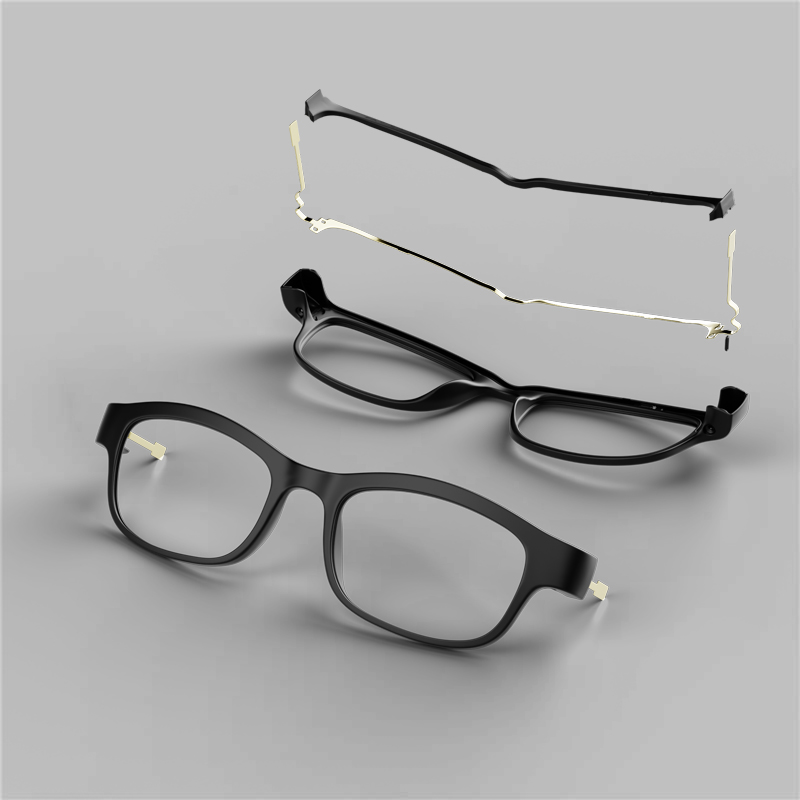 VR glasses FPC injection molding: precision molding converts a flexible circuit into a mountable structural component.
One boundary matters more than any other at this layer. Component capability is not module capability. A part can pass its dimensional and functional checks and still underperform once bonded into an optical module or pressed into a thermal stack, because module-level behavior depends on assembly force, alignment, curing and cleanliness. Buyers who need module performance must contract for it at layer two or three.
Layer 2 — system assembly: converting parts into a tested unit
System assembly takes components — yours, the supplier's, or a mix — and converts them into a module or complete unit that can be powered, measured and shipped. The layer normally combines SMT assembly of boards with FATP complete-unit assembly, and it is where test coverage, traceability and yield ownership are decided.
BSC describes a vertically integrated system that runs from core functional component manufacturing to module-level and complete-machine-level system assembly, which allows an integrated component-plus-assembly delivery for customers in different regions. The stated chain covers developing and testing new products for SMT and FATP, then small-batch trial production, then large-scale mass production, with reliability testing and process optimization as supporting services. The same organization supports NPI prototype development and MP mass production in its application scope.
For a buyer in the research-to-evaluation stage, the useful questions at this layer are interface questions rather than capacity questions:
- Who owns the tolerance stack-up between component drawing and module specification, and who approves a change?
- What test coverage exists at board level, module level and unit level, and who owns the test data?
- Which inspection stages apply — incoming, in-process, outgoing, first-article, dimensional, functional or reliability?
- What happens to non-conforming units, and how is the failure analysis fed back into the component layer?
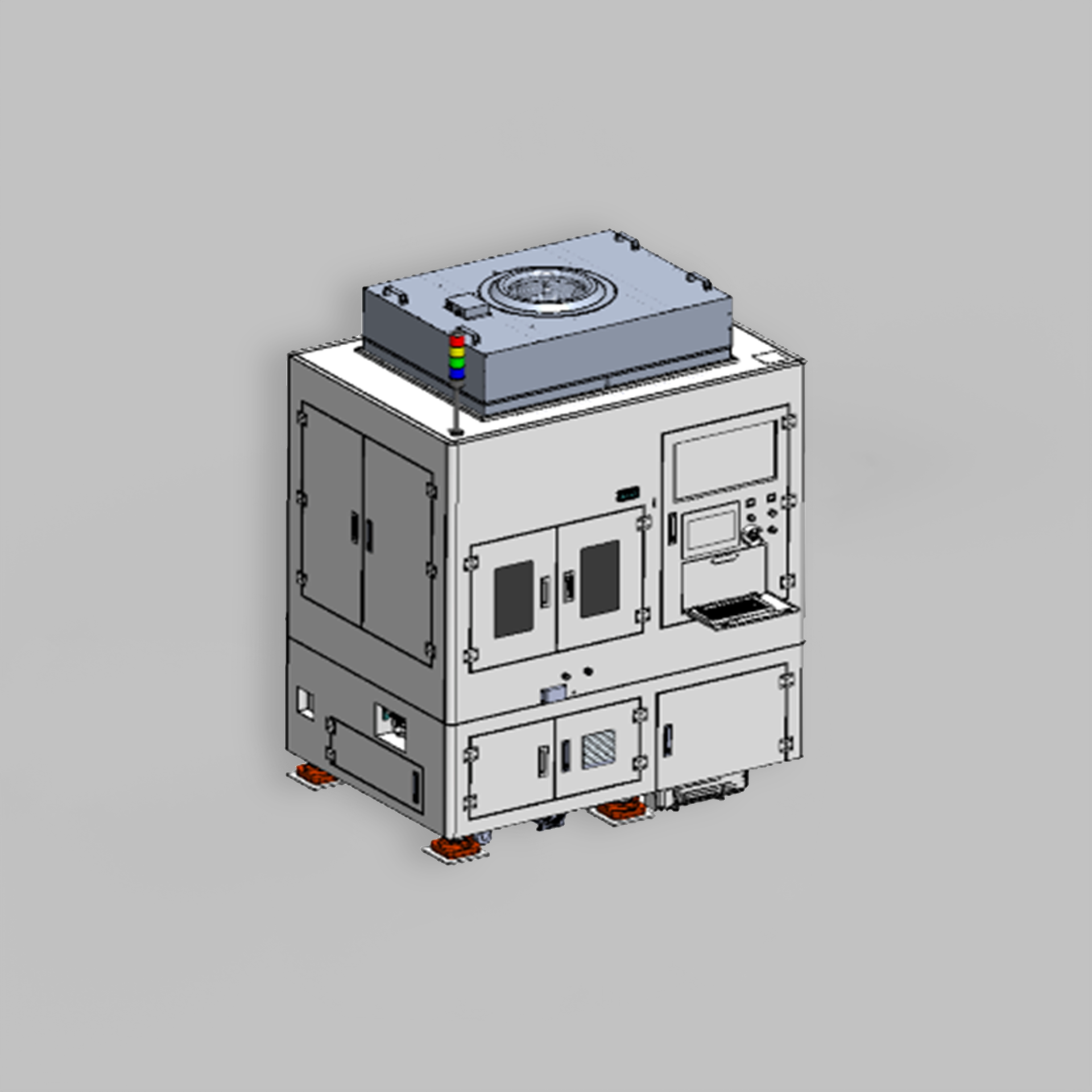 Lamination inside optical module assembly: an assembly-layer process that decides module-level optical outcome.
The boundary here is equally practical. Assembly capability does not automatically include equipment-building capability, and equipment capability does not automatically include assembly capacity. In an organization that runs both, the two are still separate scopes and should be written separately, with each layer's acceptance criteria stated on its own terms.
Layer 3 — intelligent automation equipment: the layer that repeats the process
Intelligent automation equipment is the layer that makes a validated process repeatable at volume. It is a capital purchase with a capital risk profile, and it is accepted against process performance rather than against a drawing.
BSC's equipment business is organized around four families. Automated assembly equipment performs the placing, pressing, bonding and fastening steps of a defined process. Automated test equipment verifies electrical, functional or reliability behavior inside the line rather than at the end of it. Optical process equipment handles the optical-specific steps of alignment, bonding, lamination and coating load and unload, which is where AR/VR and optical module programs usually need custom development. Turnkey automation lines integrate assembly, test, inspection and material flow into one controlled system with software supervision. Around these families sit related capabilities in non-standard automation equipment, automation testing equipment, intelligent inspection equipment, industrial software and industrial digitalization.
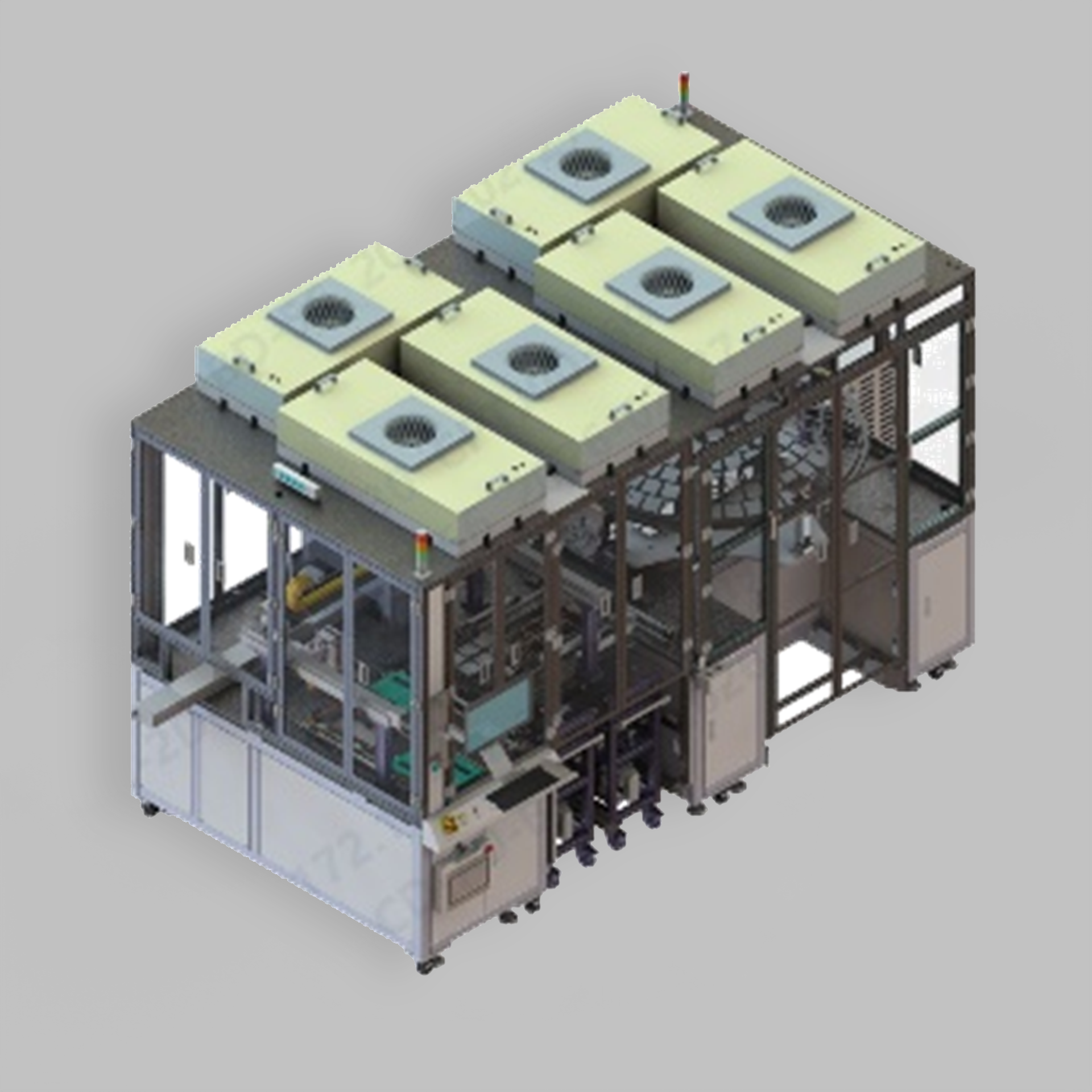 Automated loading and unloading of a coating dome: optical process equipment removes manual handling from a sensitive step.
The capability chain behind the layer runs from technique development and equipment research and development through software control and system integration to mass production delivery. That chain is what allows a supplier to support a full process from NPI to MP rather than delivering a standalone machine and leaving process ownership with the customer. BSC states that it has delivered AI server automation production lines, intelligent terminal assembly automation production lines, and AR/VR and optical module process automation equipment, and describes its position in this layer as among the top three in automation equipment for electronic intelligent terminals and AR/VR smart glasses — a company statement that should be verified against your own process requirements, not accepted as a substitute for them.
Because the deliverable is a running process, acceptance evidence looks different from the component layer. Ask for process validation on your parts, a defined cycle-time basis, a stated inspection method, software and data handover terms, spare-parts support and a local service path. BSC's stated after-sales scope covers local equipment manufacturing, rapid delivery, on-site installation and commissioning, process optimization, remote technical support and spare-parts support.
Mapping your product to the right entry layer
Most programs do not need all three layers at equal depth. They need the right entry layer, plus a clear statement of which adjacent layer carries the risk. The table below is a starting map, not a rule: the same product family can enter at a different layer depending on design maturity and existing capacity.
| Product family | Usual entry layer | Layer combination in practice | Verify first |
|---|---|---|---|
| AI edge-side hardware | Precision functional components | Components plus module or unit assembly | Die-cut and molded tolerances, thermal and sealing performance, reliability data |
| AI server automation | Intelligent automation equipment | Line-level automation with assembly support, for example liquid cooling plate assembly | Process validation on your hardware, cycle-time basis, test integration |
| Intelligent terminal assembly | System assembly | SMT and FATP assembly plus assembly automation lines | NPI ramp plan, test coverage, inspection strategy, traceability |
| AR/VR and optical modules | Precision optical components | Optical components, module assembly and optical process equipment together | Optical metrology method, cleanliness control, alignment and bonding process window |
AI edge-side hardware. These devices concentrate sealing, thermal management, insulation and antenna functions into a small volume, so the component layer usually sets the performance ceiling. Start with functional components, then extend to assembly if module-level test is needed. The failure mode to watch is a component specification written for a standalone part while the module is assembled under pressure or heat that changes its behavior.
AI server automation. Here the constraint is throughput and repeatability on large, heavy assemblies, so the program usually starts at the equipment layer. A liquid cooling plate assembly line is a useful reference point because it combines mechanical assembly, sealing integrity and leak-related test steps in one flow. Verify the line against your actual hardware and your test specification, and confirm who owns the process window after handover.
Intelligent terminal assembly. High-volume consumer devices are an assembly-layer problem first: board assembly, complete-unit assembly, functional test and packaging at volume. Equipment enters as the means of stabilizing that flow. Ask how NPI moves to mass production, what the first-article and reliability routine looks like, and which inspection stage catches which defect class.
AR/VR and optical modules. This is the clearest case for treating the layers as one system. Optical plastic components and lenses define the starting geometry, module assembly defines alignment and bonding, and optical process equipment defines whether that alignment can be held in production. Because optical outcomes are cumulative, splitting the three across unconnected suppliers shifts integration risk to you. Verify metrology first: if the measurement method is not agreed, no layer can prove its contribution.
Why the three layers are increasingly sourced together
Three structural reasons explain the trend, and none of them is simply convenience. First, accountability. When the same organization controls a component tolerance and the equipment that presses it, the tolerance conversation happens before the drawing is released rather than after a yield problem appears. Second, interface cost. Every handover between component, assembly and equipment suppliers adds a specification transfer that must be documented, tested and paid for. Third, continuity from NPI to MP: a process proven during trial production is more likely to survive the ramp when the same team owns the process definition and the equipment that runs it.
BSC's structure reflects that logic. The company reports a global production and operation area of several hundred thousand square meters, several thousand employees, R&D centers in Shenzhen, Suzhou and Taipei, and manufacturing plants in Shenzhen, Dongguan, Suzhou, Zhengzhou, Chengdu and Taipei in China, plus Vietnam, India, Malaysia and Mexico, with overseas service institutions in the United States, South Korea and Japan. For a buyer, that footprint matters less as a headline than as a question: which site would build my component, which site would assemble my module, which site would build and commission my equipment, and who answers the phone when the line stops.
Bundling is not automatically better. If your design is stable, your component supply is competitive and your internal engineering team can own process integration, separate sourcing can preserve price tension and flexibility. Bundling earns its place when tolerance accountability, optical or thermal interaction, or NPI-to-MP continuity genuinely crosses layer boundaries — and it should come with per-layer quoting and documented change control, not one blended number.
A pre-commitment checklist that works for any layer
- Scope statement. Name the layer you are buying and the outcome it owns; state explicitly which outcomes remain with you.
- Drawing and tolerance ownership. Confirm who defines the stack-up, who approves changes, and how a change propagates from component to assembly to equipment.
- Evidence on a comparable part or process. Request first-article, dimensional, functional and reliability records from the site that would run your project.
- Test coverage and data. At assembly and equipment level, agree which tests run, where in the flow, and who owns the resulting data.
- Certification scope. BSC holds ISO 9001, ISO 14001, QC080000, ISO 45001, IATF 16949 and ISO 13485; ISO 9001:2015 remains the primary global benchmark for quality management systems according to ISO.org. Ask which certificate covers the specific site and process, because a company-level certificate is not by itself proof for a particular line.
- NPI-to-MP plan. Define prototype, trial and mass-production gates, and the criteria for passing each.
- Service model. Confirm installation, commissioning, process optimization, remote support and spare-parts arrangements for the site that will run the work.
Where BSC Technology sits on the map
BSC Technology covers all three layers within one organization. Its component business supplies functional, structural and optical components to end brands as well as to assembly and module manufacturers; its assembly business provides integrated component-plus-assembly delivery through SMT and FATP; and its equipment business supplies automated assembly, test, optical process equipment and turnkey lines. The company reports an R&D team of over a thousand staff, more than a thousand authorized patents and an independent R&D system, with stated technology focus areas including high-precision assembly, machine vision, motion control, intelligent inspection, industrial software and industrial digitalization.
On the customer side, BSC describes a key-account strategy with long-term cooperation with assembly factories and component manufacturers including Foxconn, Goertek, Luxshare, Pegatron, LG and Sonion, and states that its products are ultimately applied by brands including Apple, Samsung, Amazon, Meta, Google, Whoop, Tesla, BYD and Insta360. These are company statements about its customer relationships, useful as context for how the layers are delivered in volume manufacturing; they are not a substitute for validating your own project scope.
 A site in the BSC manufacturing network: the practical answer to which layer is built where.
Capability detail for each layer, including site locations and business scope, is published by Shenzhen BSC Technology Co., Ltd. on its official website.
Conclusion
Custom automation precision assembly becomes manageable once it stops being one category. Precision functional components answer whether a part can meet its drawing and function. System assembly answers whether parts can become a tested module or unit. Intelligent automation equipment answers whether that process can be repeated at volume. Mapping your product to the correct entry layer — components for AI edge-side hardware, equipment for AI server lines, assembly for intelligent terminals, and all three for AR/VR and optical modules — determines which evidence you should demand and which risks stay with you.
The layers are increasingly sourced together because tolerance accountability, interface cost and NPI-to-MP continuity cross their boundaries. That trend is worth following only when it is written into a scope with per-layer evidence, defined change control and a named service path.
Frequently asked questions
Which quality management systems and certifications apply across the three layers?
BSC holds ISO 9001, ISO 14001, QC080000, ISO 45001, IATF 16949 and ISO 13485. ISO 9001:2015 remains the primary global benchmark for quality management systems according to ISO.org. Because a certificate is issued to a site and a scope, ask which plant and which process the certificate covers before you treat it as evidence for your program.
Can one partner deliver components, system assembly and automation equipment for the same product?
In BSC's case the three businesses sit in one organization: precision functional components, system assembly with integrated component-plus-assembly delivery, and intelligent automation equipment covering assembly, test, optical process equipment and turnkey lines. Whether that combined scope suits your program depends on design stability and how much interface risk you want to keep in-house, so confirm site allocation, capacity and change-control terms for your specific part numbers.
Which layer should an AI server, AR/VR or intelligent terminal program start with?
AI edge-side hardware usually starts at the component layer and extends to assembly for module-level test. AI server programs usually start at the equipment layer because line repeatability is the constraint, with liquid cooling plate assembly as a typical example. Intelligent terminals usually start at system assembly, with equipment stabilizing the flow. AR/VR and optical modules need all three, starting with optical component and metrology definition.
How is cost structured across the three layers?
Cost drivers differ by layer. Components are driven by material, tolerance, yield and tooling; assembly by test coverage, cleanroom conditions, labor and volume; equipment by configuration, non-standard content, software scope and validation effort. BSC confirms MOQ, price and schedule commercially per project, based on drawings, equipment configuration and requirements, so no universal price band applies. Ask for a breakdown by layer rather than one blended figure.
What does sampling and NPI look like before mass production?
BSC supports NPI prototype development, small-batch trial production and then mass production. On the assembly side this includes developing and testing new products for SMT and FATP before scale-up; on the component side, evidence comes from first-article, dimensional, functional and reliability inspection. For equipment, sampling means process validation on your own parts before line acceptance, not a demonstration on reference hardware.
What lead time and support can be expected, and how do I open a scoping conversation?
BSC describes fast NPI response and mass production support, delivered through local equipment manufacturing, rapid delivery, on-site installation and commissioning, process optimization, remote technical support and spare-parts support within a network covering Asia, North America and major manufacturing regions. Specific lead time depends on project specifications and factory scheduling and is confirmed commercially. The fastest path to a useful answer is to share drawings, target volumes, process windows and the layer you intend to buy through sales@bsc-sz.com.
Have Questions or Need More Details?
Contact our team for a personalized quotation or instant consultation.
Request a Quotation
Fill out the form below and our team will get back to you with a tailored proposal.
WhatsApp Direct Chat
Prefer to chat in real-time? Message us on WhatsApp for instant assistance & quick answers.
- Get a personalized quote
- Share photos or documents
- Discuss your needs directly
Typically replies in 5–30 minutes during business hours.