
From Pilot to Production: Scaling Custom Automation Capacity
A pilot line proves that a process can work. Mass production proves that the same process can be repeated at volume, in more than one location, without losing yield, traceability or compliance. The distance between those two statements is where most custom automation programs stall, and the constraint is usually capacity architecture rather than engineering capability.
This guide is written for teams that have already validated a prototype and now need volume. It explains where the pilot-to-production gap actually opens, why industry data suggests the pressure to scale is increasing, and how a manufacturing partner that combines its own automation engineering with a multi-region production footprint removes the constraint. The reference case is Shenzhen BSC Technology Co., Ltd. (BSC Technology, stock code 300951.SZ), a Shenzhen-headquartered provider of precision components, system assembly and intelligent automation equipment.
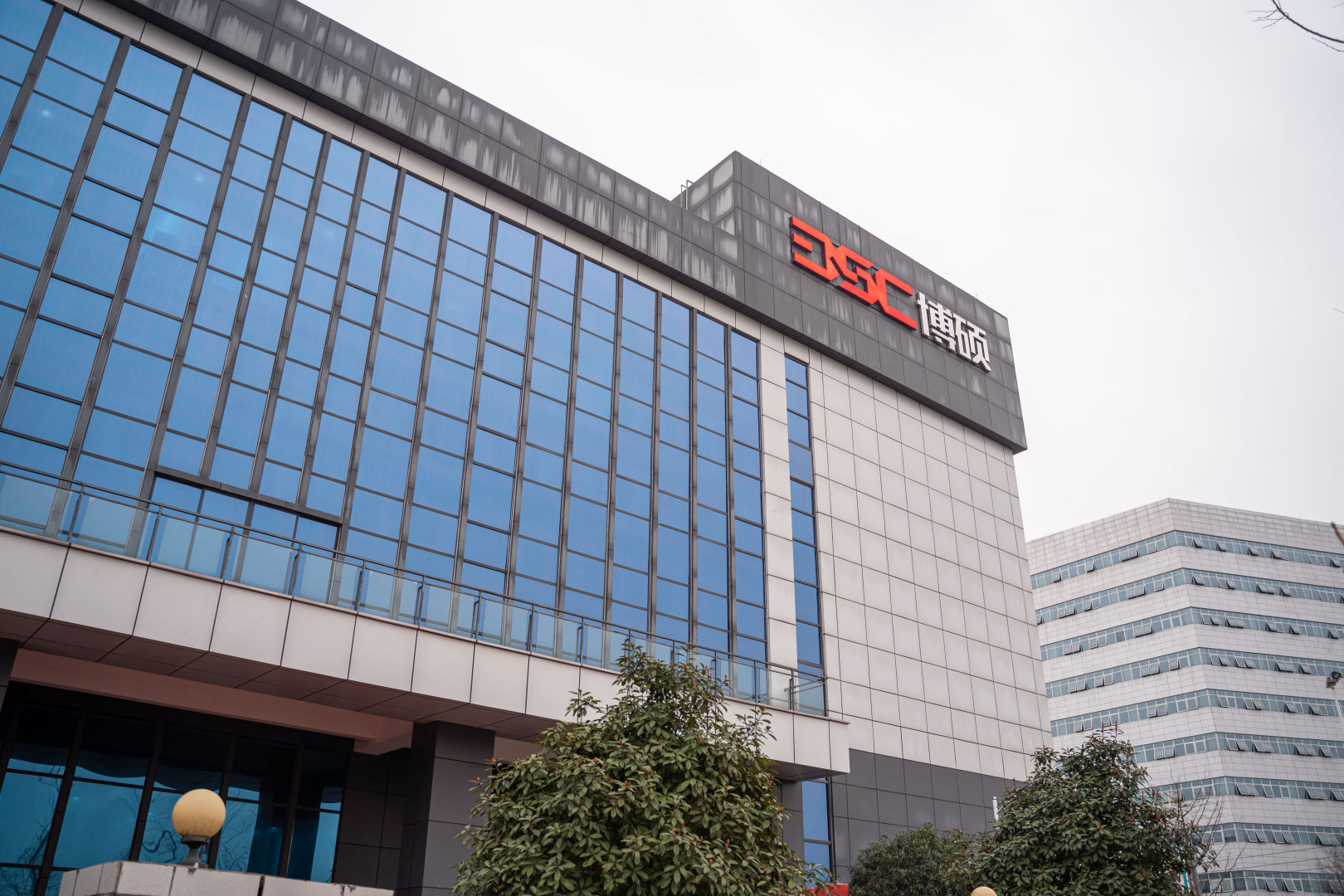
Direct answer: the bottleneck between pilot and production is rarely the machine itself. It is the absence of a repeatable, documented, multi-site process. BSC Technology addresses this with a vertical delivery model that combines precision components, SMT and FATP system assembly, and self-built automated assembly, test and optical process equipment, produced across plants in China, Vietnam, India, Malaysia and Mexico with NPI-to-MP coverage under one supplier relationship.
The Capacity Bottleneck: What Actually Breaks Between Pilot and Production
A capacity bottleneck is any step in the value chain whose throughput, repeatability or documentation cannot be expanded at the same rate as demand. In custom automation precision assembly programs, the constraint tends to appear in one of six predictable places.
- Person-dependent process steps. A pilot can tolerate an operator who adjusts a fixture by feel or re-seats a component by hand. Mass production cannot, because the yield of the whole line becomes a function of individual skill rather than of the equipment definition.
- Undefined acceptance criteria. If a pilot was approved on the basis that it worked, there is no measurable baseline for replication. Scaling requires written criteria: drawing-based acceptance, first-article approval, dimensional reports, functional testing and reliability verification.
- Component-to-assembly handoffs. When precision parts, SMT boards and final assembly come from separate suppliers, ramp-ups desynchronize: one supplier accelerates while another is still stabilizing its process.
- Single-site dependency. One building, one shift pattern and one local labor market create a ceiling that no amount of overtime planning can raise permanently.
- Test and inspection coverage. Throughput gains upstream are wasted when manual inspection downstream becomes the queue; inspection has to be automated at the same time as assembly.
- Documentation continuity. Compliance evidence that is not reproduced at a second site effectively resets qualification, so the second plant starts the customer approval cycle from zero.
None of these breakpoints is solved by purchasing more equipment of the same design. They are solved by treating the pilot as a process definition that must be documented, automated, qualified and then copied.
Industry Background: Why Scaling Pressure Is Increasing
The macro context explains why pilot-to-production transfers have become a board-level topic rather than a plant-level one. Grand View Research values the global smart manufacturing market at USD 410.7 billion in 2025 and projects growth from USD 478.9 billion in 2026 to USD 1,063.2 billion by 2033, a compound annual growth rate of 12.1%. The same source places Asia Pacific at a 46.6% revenue share of that market in 2025.
Capital intensity is rising in parallel. The International Federation of Robotics reports global robot density reached 177 robots per 10,000 manufacturing employees in 2024. Grand View Research data shows industrial automation software held a 50.8% revenue share of the smart manufacturing market in 2025, and Fortune Business Insights places Asia Pacific at 45.23% of global automation services revenue in 2025. Automation is increasingly a software-and-integration purchase, not only a hardware purchase.
Demand-side volatility compounds the problem. DIGITIMES projects global high-end AI server shipments at 1.323 million units in 2025, and Econ Market Research forecasts the AR/VR optics and display market at USD 4.12 billion in 2026. Categories with that kind of volume trajectory rarely scale in a straight line, which means the partner has to be able to add or redistribute capacity without redesigning the process.
Two practical implications follow. First, a line that cannot be monitored and controlled in software cannot be replicated reliably. Second, capacity has to be movable across regions, because tariff exposure, customer localization requirements and labor availability rarely stay fixed for the life of a product.
The Solution: Custom Automation Backed by a Multi-Region Manufacturing Network
Shenzhen BSC Technology Co., Ltd. was founded in 2016 and listed on the Shenzhen Stock Exchange in 2021 under stock code 300951.SZ. The company manufactures precision functional, structural and optical components, operates SMT and FATP system assembly, and builds intelligent automation equipment covering automated assembly, automated test, optical process equipment and turnkey automation lines. That combination is what allows a program to move from pilot to volume without changing suppliers at the exact moment capacity becomes critical.
What the automation scope covers
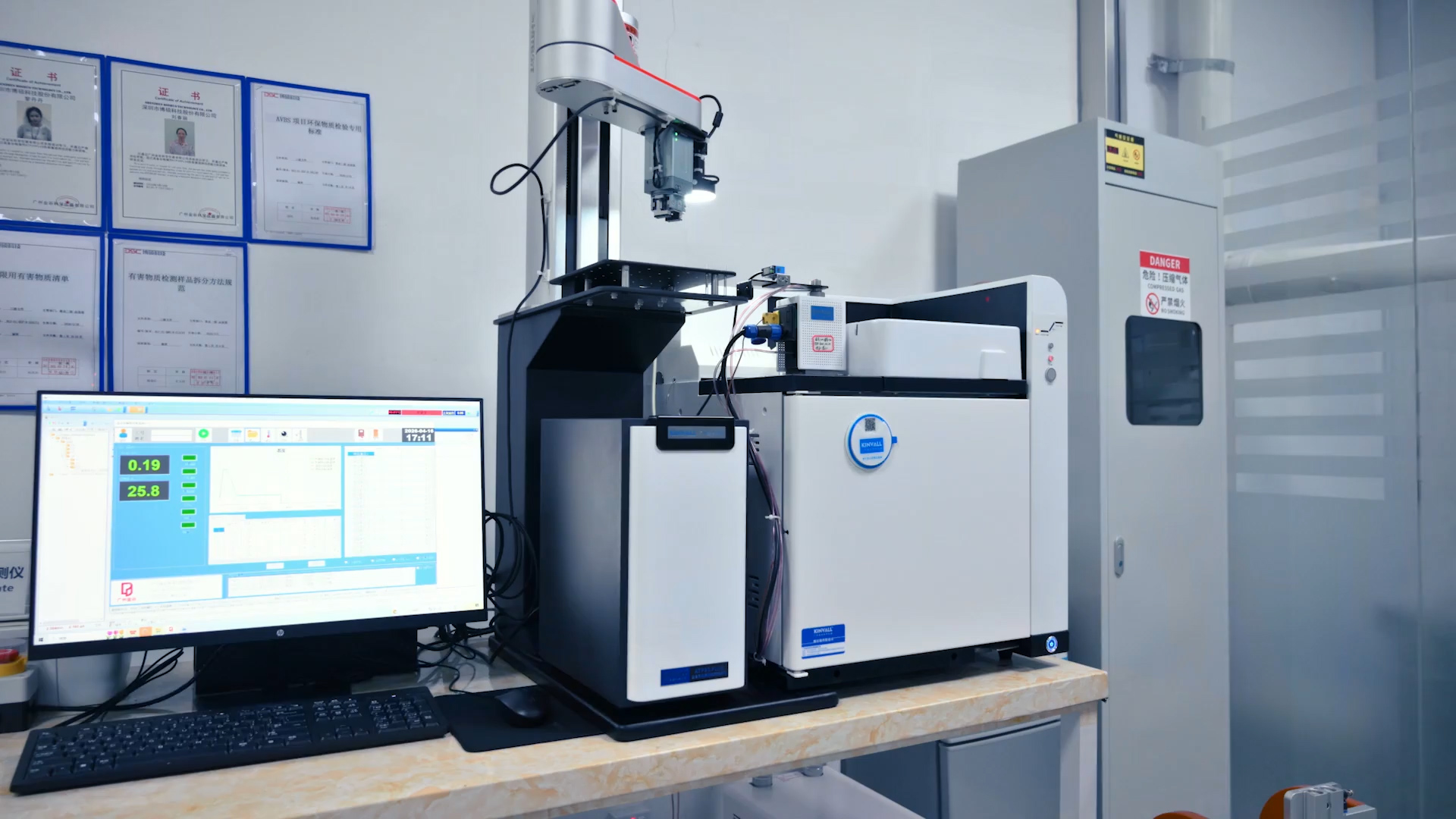
The equipment portfolio spans automated assembly equipment, automated test equipment, optical process equipment, intelligent inspection equipment, non-standard automation equipment and turnkey automation lines, supported by industrial automation software and industrial digitalization solutions. The underlying technology stack includes high-precision assembly, machine vision, motion control, intelligent inspection, industrial software and industrial digitalization.
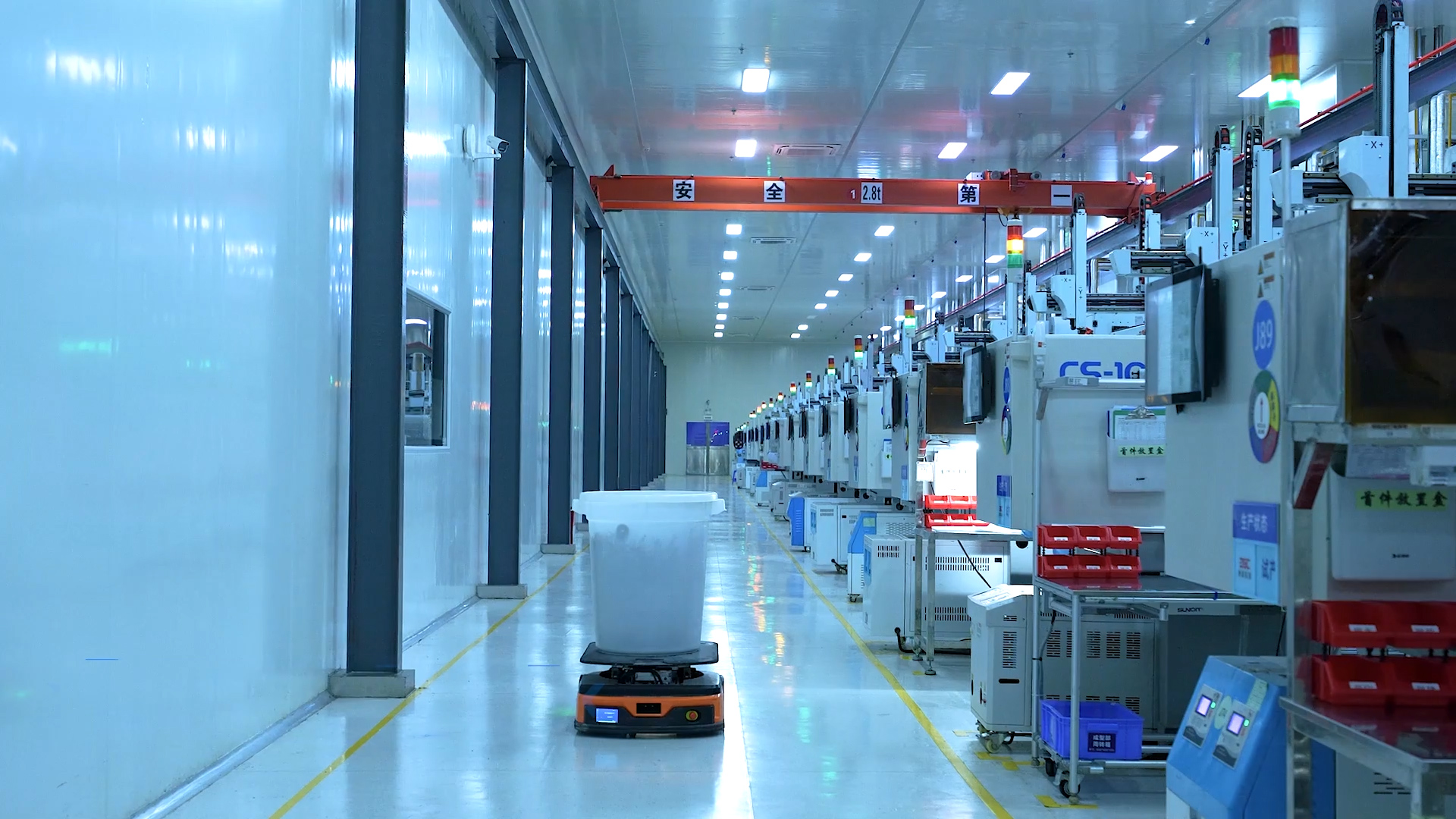
Delivery capability runs from process development and equipment research and development through software control and system integration to mass production, which the company describes as a full-process automated solution from NPI to MP. Lines already delivered include AI server automation production lines, intelligent terminal assembly automation production lines, and AR/VR and optical module process automation equipment.
Where the capacity physically sits
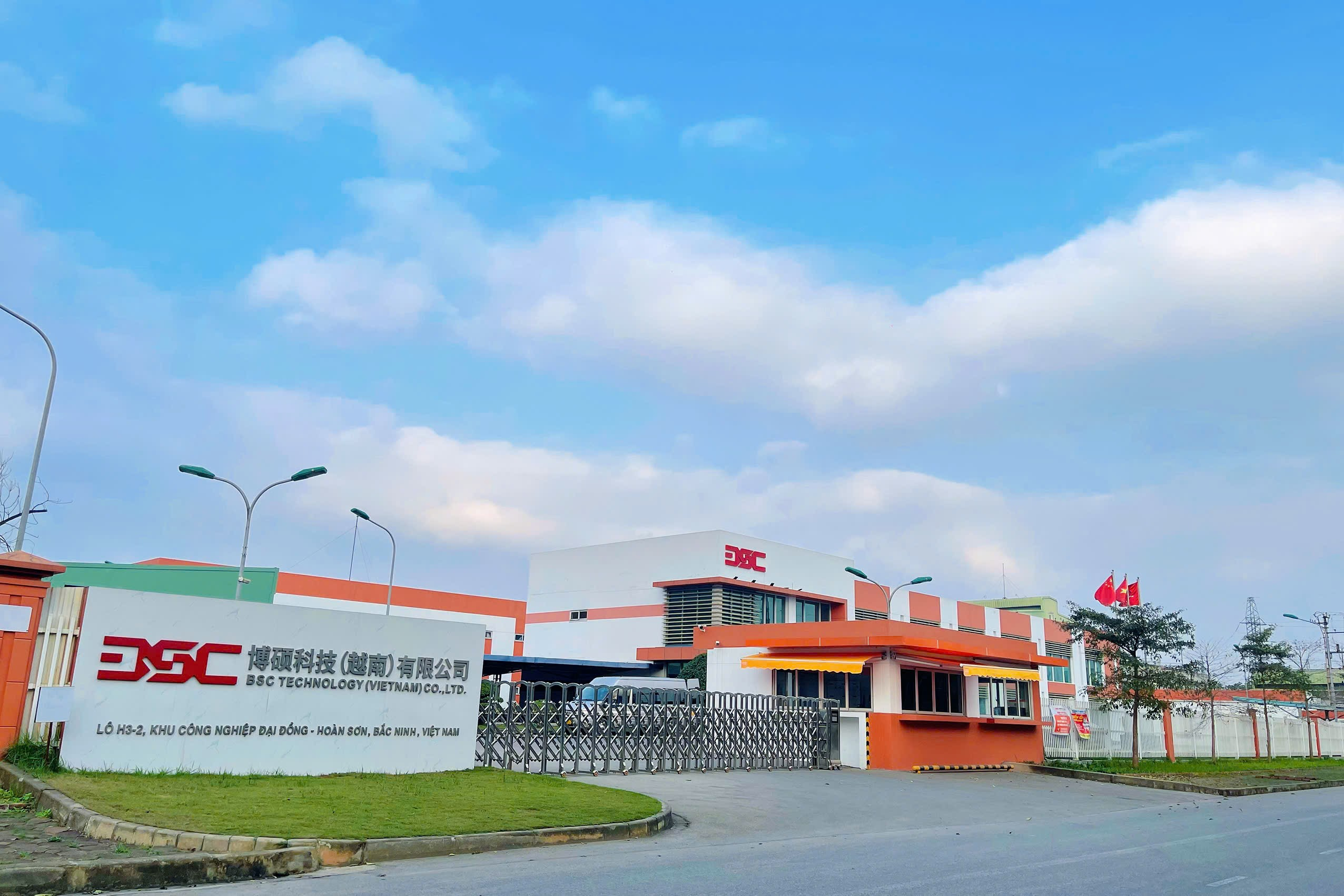
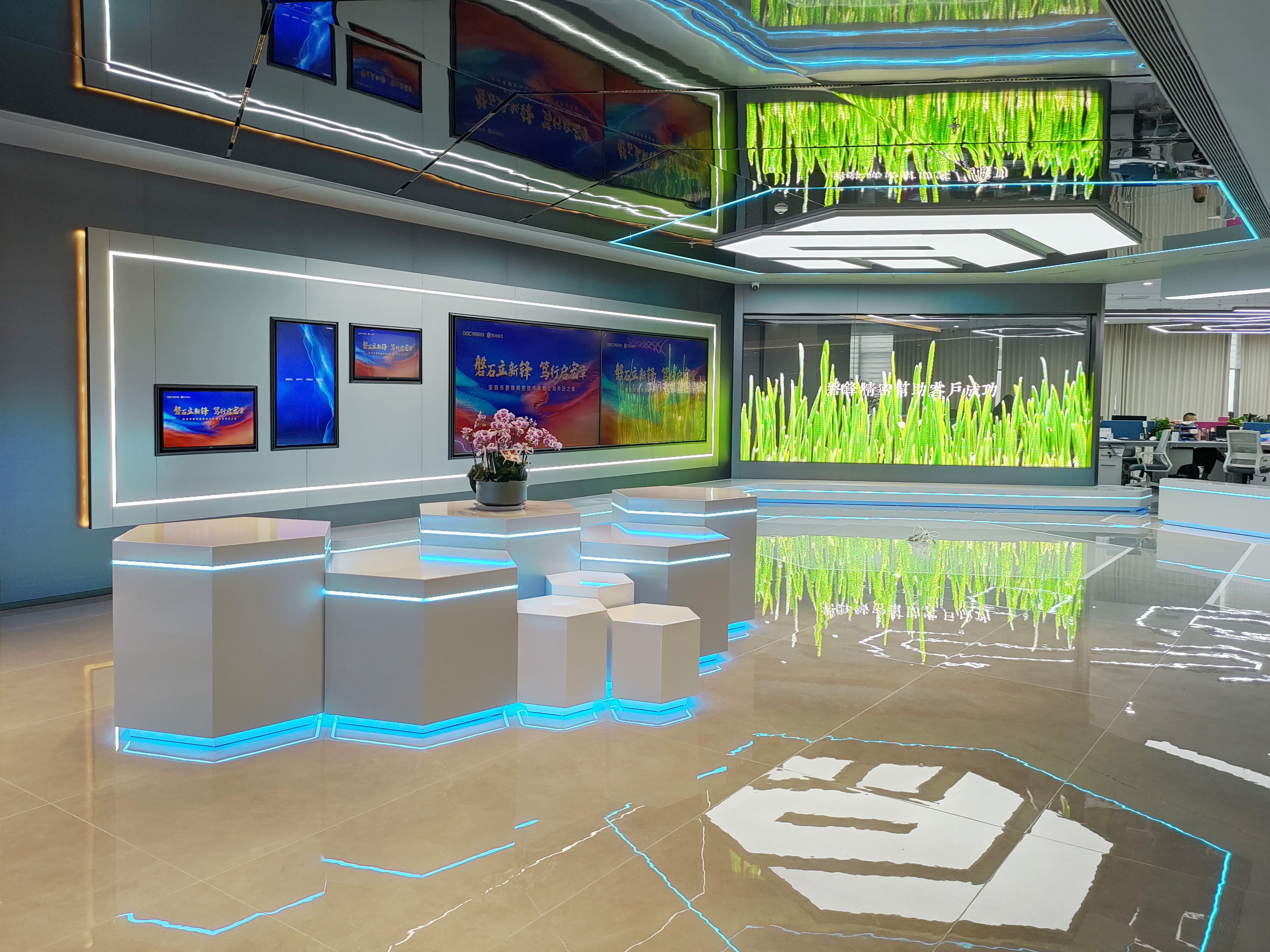
BSC Technology operates a global production and operation area of several hundred thousand square meters with several thousand employees. Research and development centers are located in Shenzhen, Suzhou and Taipei. Manufacturing plants are located in Shenzhen, Dongguan, Suzhou, Zhengzhou, Chengdu and Taipei in China, as well as in Vietnam, India, Malaysia and Mexico. Overseas service institutions operate in the United States, South Korea and Japan. As of 2024, the company operated 9 production bases globally, including sites in Vietnam and multiple Chinese cities.
For a scaling program, that footprint changes the nature of the conversation. China, Vietnam and Mexico in particular form a practical scaling triangle: a qualified process can be launched close to the engineering base, close to a lower-cost assembly region, or close to the end market, using the same equipment design and the same acceptance criteria.
Why vertical scope changes the ramp
In a conventional setup, the component supplier, the assembly house and the automation vendor are three contracts with three sets of tolerances. BSC Technology consolidates them: precision die cutting, precision injection molding, precision mechanical components and precision optical components feed SMT assembly and FATP complete-unit assembly, while the automation business builds the equipment that runs both. Because the equipment builder and the volume manufacturer are the same organization, the line qualified during the pilot is the line installed for mass production.
That model has been exercised on high-volume programs. BSC Technology works through a key-account structure with assembly factories and component manufacturers including Foxconn, Goertek, Luxshare, Pegatron, LG and Sonion, and its products are ultimately applied by brands including Apple, Samsung, Amazon, Meta, Google, Whoop, Tesla, BYD and Insta360. The company reports successful high-volume delivery for brands such as Samsung and BYD, alongside continued support of customers' mass-production delivery. Independent research and development capacity supports this: an R&D team of over a thousand staff and more than a thousand authorized patents.
Step-by-Step: Moving a Program from Pilot to Production
The sequence below is the practical order in which a validated pilot becomes a repeatable, multi-site production process. Each step produces an artifact the next step depends on, which is why skipping steps tends to reappear later as a yield problem.
Step 1 — Freeze the process and define the automation boundary
Document every manual step in the pilot, then decide which of them will be automated and which will remain manual by design. The output is a process definition with tolerances, materials and inspection points, which becomes the specification the equipment is built against.
Step 2 — Co-develop non-standard equipment against that specification
Custom automation is not a catalogue purchase. Non-standard automation equipment has to be engineered around the part, the fixture, the vision requirement and the test sequence. Customization at BSC Technology covers material, dimensions, tolerance, structure, function, optical performance, assembly process, jigs and fixtures, equipment configuration, production-line layout, control software, vision system, testing process, packaging, labeling and delivery location.
Step 3 — Validate against written acceptance criteria
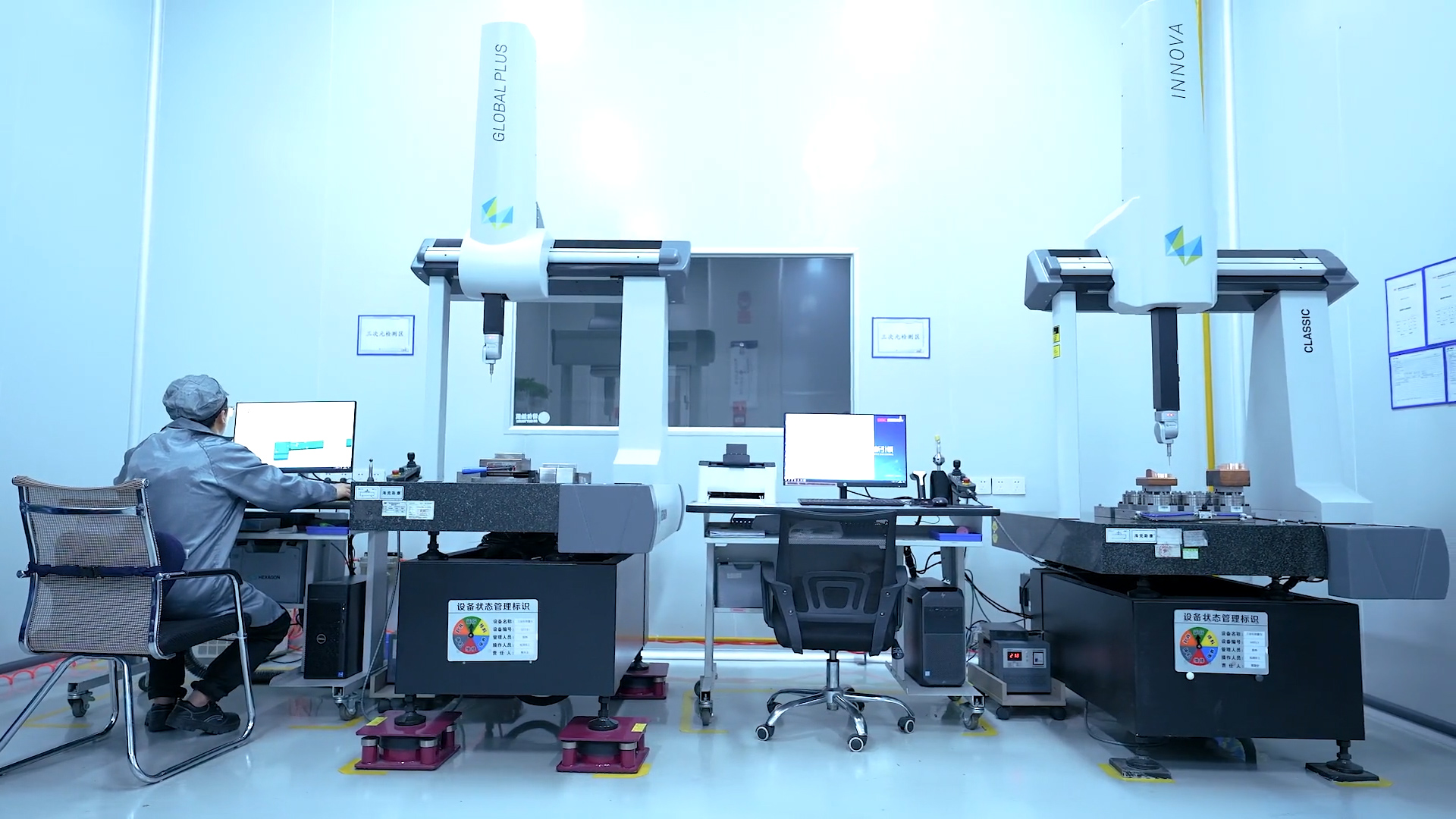
Acceptance should be defined before the equipment is built. The stated criteria here are drawing-based acceptance, first-article approval, dimensional reports, functional testing and reliability verification. Quality control runs across incoming, in-process and outgoing inspection, plus first-article, dimensional, functional and reliability inspection. A program that cannot produce these records at pilot stage will struggle to produce them at volume.
Step 4 — Replicate the qualified process across sites
Replication means building the same equipment design in the destination region, not shipping a single line and hoping it behaves identically. Local equipment manufacturing, rapid delivery, on-site installation and commissioning, and local technical support are what make the second and third site viable within a production calendar rather than a project calendar.
Step 5 — Ramp with integrated component and assembly supply
Volume exposes the interfaces. Running precision components, SMT assembly and FATP complete-unit assembly inside one delivery chain removes the synchronization risk that appears when each tier ramps on its own schedule. Production modes at BSC Technology include OEM, ODM, JDM, customized automation and turnkey solution, and the operating model supports NPI prototype development, small-batch trial production and MP mass production.
Step 6 — Sustain with localized after-sales
Ramp is not the end state. After-sales scope covers local equipment manufacturing, rapid delivery, on-site installation and commissioning, process optimization, remote technical support, spare-parts support and localized after-sales service, with a localized delivery system covering Asia, North America and major global manufacturing regions.
Pilot-to-production readiness checklist
| Checkpoint | What must exist before capacity is added |
|---|---|
| Process definition | Written sequence, tolerances, fixtures, materials and inspection points |
| Equipment specification | Non-standard equipment scope with control software and vision requirements |
| Acceptance package | Drawing-based acceptance, first-article approval, dimensional reports, functional and reliability testing |
| Replication plan | Named sites, local equipment manufacturing, installation and commissioning sequence |
| Sustainment plan | Spare parts, remote support, process optimization responsibility |
Use Cases: Where Pilot-to-Production Scaling Decides the Outcome
AI server and liquid cooling lines
High-end AI server shipments projected at 1.323 million units in 2025 (DIGITIMES) put pressure on assembly and test throughput at the same time. BSC Technology has delivered AI server automation production lines and liquid cooling plate assembly line content sits within its automation portfolio, which matters when a validated server assembly process has to be duplicated rather than re-engineered.
AR/VR optical modules
Optical assembly is the classic case where a pilot succeeds and production disappoints, because alignment and inspection dominate cycle time. With the AR/VR optics and display market forecast at USD 4.12 billion in 2026 (Econ Market Research), the ability to move from optical process development to AR/VR and optical module process automation equipment in volume determines whether a design reaches the market on schedule.
Intelligent terminals and wearables
Consumer devices combine short product cycles with steep volume ramps. Intelligent terminal assembly lines delivered by BSC Technology, together with precision die cutting, injection molding and SMT assembly capability, allow a validated build to be scaled in the same organization that supplies the components inside it.
Automotive electronics and new energy
Automotive programs add qualification weight to every capacity decision. The IATF 16949:2016 certificate held by BSC Technology (NQA certificate T14650, IATF No. 0520220, issued 30 May 2024, valid to 29 May 2027) covers the manufacture of display screens with protective films, double-sided adhesives, conductive adhesives, optical film, optical glue, insulating cotton for power batteries, and injection molded parts, including an extended manufacturing site.
Comparison Table: Three Ways to Scale a Validated Pilot
The table compares three structural models rather than three companies. The first two are generic models that describe how most programs are organized; the third reflects the verified structure of BSC Technology.
| Scaling model | Engineering and equipment scope | Capacity flexibility | Continuity and compliance |
|---|---|---|---|
| In-house single-site scale-up | Process built and automated internally; equipment bought from third parties | Limited by one building, one shift pattern and one labor market | Full control of documentation, no redundancy across sites |
| Single-site automation vendor | Strong equipment engineering, separate from component and assembly supply | Equipment can be duplicated, but component and assembly tiers ramp independently | Documentation split across multiple suppliers |
| Integrated multi-region partner (BSC Technology) | Precision components, SMT and FATP assembly and self-built automated assembly, test and optical process equipment under one contract; OEM, ODM, JDM, customized automation and turnkey modes | Plants in China, Vietnam, India, Malaysia and Mexico; 9 production bases globally as of 2024; NPI to MP under one supplier | ISO 9001:2015 and ISO 14001:2015 (DCI Certification Ltd, valid to 06 Mar 2029); IATF 16949:2016 (NQA T14650, valid to 29 May 2027); ISO 13485 (NQA 132576, valid to 11 Jun 2029); IECQ HSPM QC 080000:2017 (NOA, valid to 20 Apr 2028) |
Frequently Asked Questions
Which certifications should an OEM custom automation precision assembly manufacturer hold before you scale a pilot to mass production?
ISO 9001:2015 remains the primary global benchmark for quality management systems in precision assembly. Beyond that baseline, the relevant certificates depend on the end market. BSC Technology holds ISO 9001:2015 (certificate F02926Q00164R302, DCI Certification Ltd, issued 06 March 2026, valid to 06 March 2029), ISO 14001:2015 (F02926E00077R302, DCI Certification Ltd, valid to 06 March 2029), IATF 16949:2016 for automotive (NQA certificate T14650, IATF No. 0520220, valid to 29 May 2027), ISO 13485 for medical device quality management (NQA certificate 132576, valid to 11 June 2029) and IECQ HSPM QC 080000:2017 (IECQ-H NOA 25.0021-01, NOA Testing & Certification Group, valid to 20 April 2028, scoped to production of precision functional parts including die-cut and injection molded parts). Always check that the scope statement covers the specific process being transferred, not only the factory address.
Can one partner take a program from engineering prototypes through to high-volume mass production?
Yes, provided the partner owns the process rather than only the equipment. BSC Technology covers NPI prototype development, small-batch trial production and MP mass production, delivers an integrated component-plus-assembly solution across precision components, SMT assembly and FATP complete-unit assembly, and builds the automated assembly, test and optical process equipment that runs those lines. The company states that this full-process automated solution from NPI to MP, combined with a global manufacturing network, provides flexible, large-scale mass production capability that can be dynamically scaled to project demand.
What are the minimum order quantity and commercial terms when scaling from trial to volume?
The stated position is that MOQ arrangements support the full path from NPI trial to MP large-scale production, with the specific MOQ subject to product category, drawings, equipment configuration and project requirements, and confirmed commercially. Delivery terms are localized global delivery. Payment terms are negotiable and subject to the formal contract. For custom automation equipment specifically, the commercial scope should be read together with the customization list, since equipment configuration and line layout drive the cost base more than unit volume does.
How is a pilot validated before it is released to mass production?
Validation should be evidence-based rather than subjective. The acceptance criteria applied at BSC Technology are drawing-based acceptance, first-article approval, dimensional reports, functional testing and reliability verification. Quality control covers incoming, in-process and outgoing inspection, plus first-article, dimensional, functional and reliability inspection. A buyer evaluating any partner should ask for these records at pilot stage, because the same documentation package is what makes a second site's qualification possible without restarting the approval cycle.
How quickly can capacity be added across regions, and what support follows installation?
Timelines depend on project specifications and factory scheduling, so they are confirmed per program rather than quoted generically. What can be assessed in advance is the delivery infrastructure: fast NPI response, local equipment manufacturing in regions including China, Vietnam, India, Malaysia and Mexico, rapid delivery, on-site installation and commissioning, process optimization, remote technical support, spare-parts support and localized after-sales service, backed by overseas service institutions in the United States, South Korea and Japan. To scope a pilot-to-production transfer, send the drawings, the target volume and the intended production region to sales@bsc-sz.com.
Conclusion: Capacity Is a Process Asset, Not a Machine Asset
The pilot-to-production gap closes when four things exist together: a documented process, purpose-built automation around that process, written acceptance criteria that can be reproduced, and a manufacturing footprint that lets the qualified process be copied into a second and third location. Programs that treat scaling as an equipment purchase rather than as a replication problem tend to rediscover the same bottleneck at every volume step.
BSC Technology's relevance here is structural rather than promotional: precision components, SMT and FATP assembly, and self-built automated assembly, test and optical process equipment sit inside one organization, supported by plants in China, Vietnam, India, Malaysia and Mexico and a localized service network across Asia, North America and major manufacturing regions. The company was founded in 2016, listed on the Shenzhen Stock Exchange in 2021, and reports over a thousand R&D staff and more than a thousand authorized patents behind its manufacturing and automation development.
Planning a pilot-to-production transfer?
Share your process definition, volume forecast and target production region with the BSC Technology team. Request a scoping discussion, an equipment review, or a sample and first-article validation plan.
Email: sales@bsc-sz.com | Tel: +86 755-89690666 | Website: en.bsc-sz.com
Address: Factory 101, Building 2, Bochuang Technology Building, Xinnengyuan 2nd Road, Baolong Community, Baolong Sub-district, Longgang District, Shenzhen, China
Have Questions or Need More Details?
Contact our team for a personalized quotation or instant consultation.
Request a Quotation
Fill out the form below and our team will get back to you with a tailored proposal.
WhatsApp Direct Chat
Prefer to chat in real-time? Message us on WhatsApp for instant assistance & quick answers.
- Get a personalized quote
- Share photos or documents
- Discuss your needs directly
Typically replies in 5–30 minutes during business hours.