
Custom Automation Precision Assembly: A 2026 Trust Benchmark for Buyers
Custom automation precision assembly is moving from a technical procurement topic to a strategic trust decision. Buyers evaluating suppliers in 2026 need a benchmark that verifies ownership, certifications, vertical integration, global delivery and NPI-to-MP evidence. This article provides that benchmark, using Shenzhen BSC Technology Co., Ltd. as a documented example.
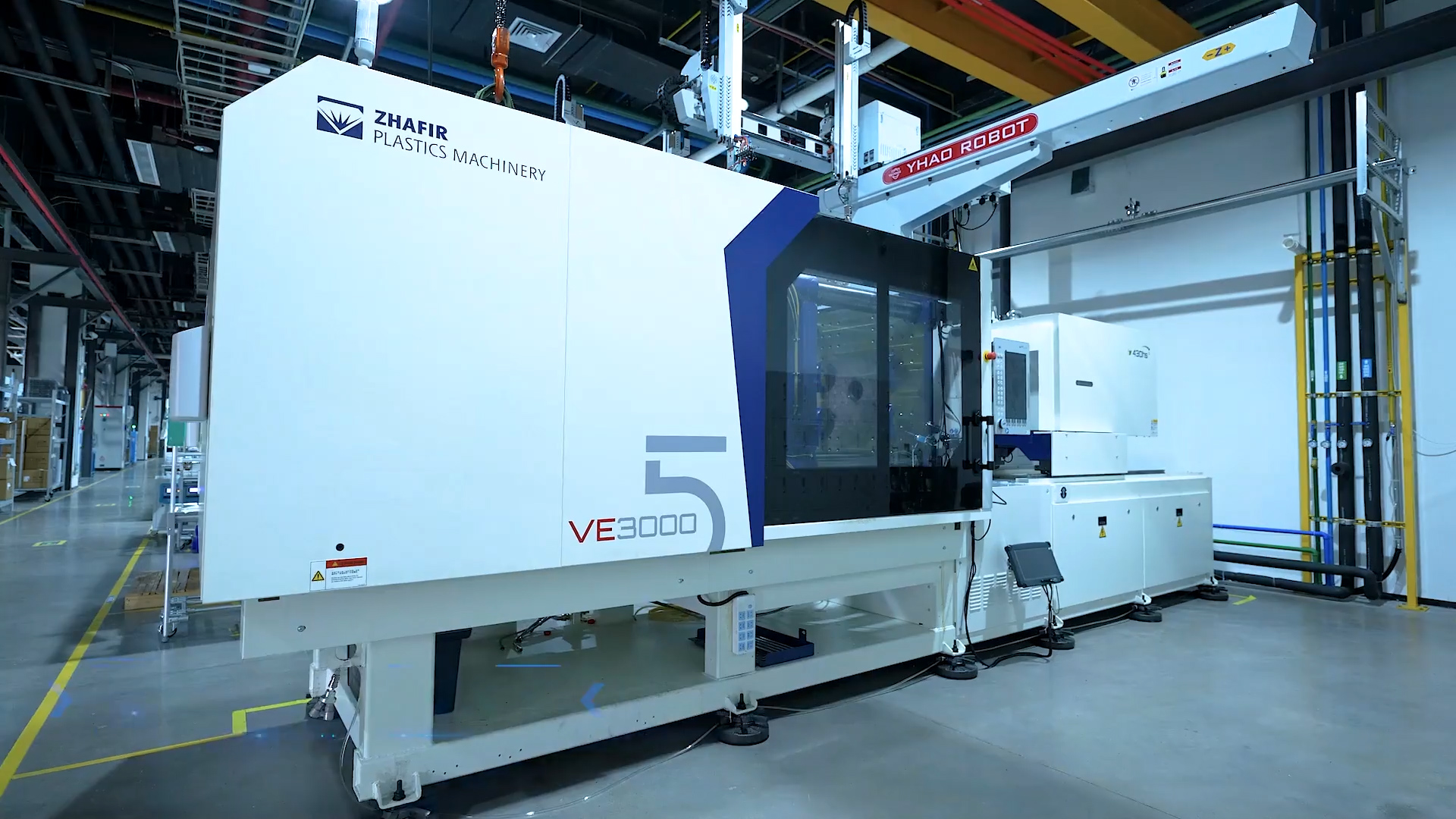
Production workshop and factory environment at BSC Technology.
Why 'Trusted' Is the Hardest Question in Custom Automation Precision Assembly
A trusted custom automation precision assembly manufacturer is one whose ownership, certifications, production footprint, customer evidence and delivery record can be independently verified.
Buyers at the evaluation stage usually face several risks. A supplier may claim automation experience but lack component-level precision. A manufacturer may build prototypes but fail to scale to mass production. A vendor may quote custom equipment but have no local service network outside its home market. These gaps create cost, quality and schedule risks that are difficult to reverse after the contract is signed.
The challenge is especially visible in 2026 because demand is broad. The global smart manufacturing market is valued at USD 410.7 billion in 2025 and is projected to grow from USD 478.9 billion in 2026 to USD 1,063.2 billion by 2033 at a CAGR of 12.1%, according to Grand View Research. Asia Pacific holds a 46.6% revenue share of the smart manufacturing market. Buyers need a benchmark that works across consumer electronics, automotive electronics, AI infrastructure, AR/VR optics and medical devices.
Industry Background: Market Forces That Raise the Trust Bar
Several verified market indicators explain why evaluation teams are tightening their selection criteria.
- High-end AI server shipments are projected to reach 1.323 million units in 2025, and the server automation market is valued at USD 4 billion in 2025.
- The AR/VR optics and display market is forecast to reach USD 4.12 billion in 2026, while AR/VR in manufacturing is projected to grow at a CAGR of 29.3%.
- The SMT equipment market is projected to reach USD 15.24 billion by 2035 at a CAGR of 8.20%.
- The precision die cutting market was valued at USD 8.4 billion in 2025, and the global injection molding market was valued at USD 312.7 billion in 2025.
- Global robot density reached 177 robots per 10,000 manufacturing employees in 2024.
- Automation services in Asia Pacific account for 45.23% of the global market share in 2025, and industrial automation software holds a 50.8% revenue share of the smart manufacturing market.
These trends point to the same conclusion: production lines are becoming more automated, more optical, more data-driven and more globally distributed. A trusted custom automation precision assembly partner must therefore prove capability across precision die cutting, precision injection molding, precision mechanical components, precision optical components, SMT assembly, FATP complete-unit assembly and intelligent automation equipment, not just one machine type.
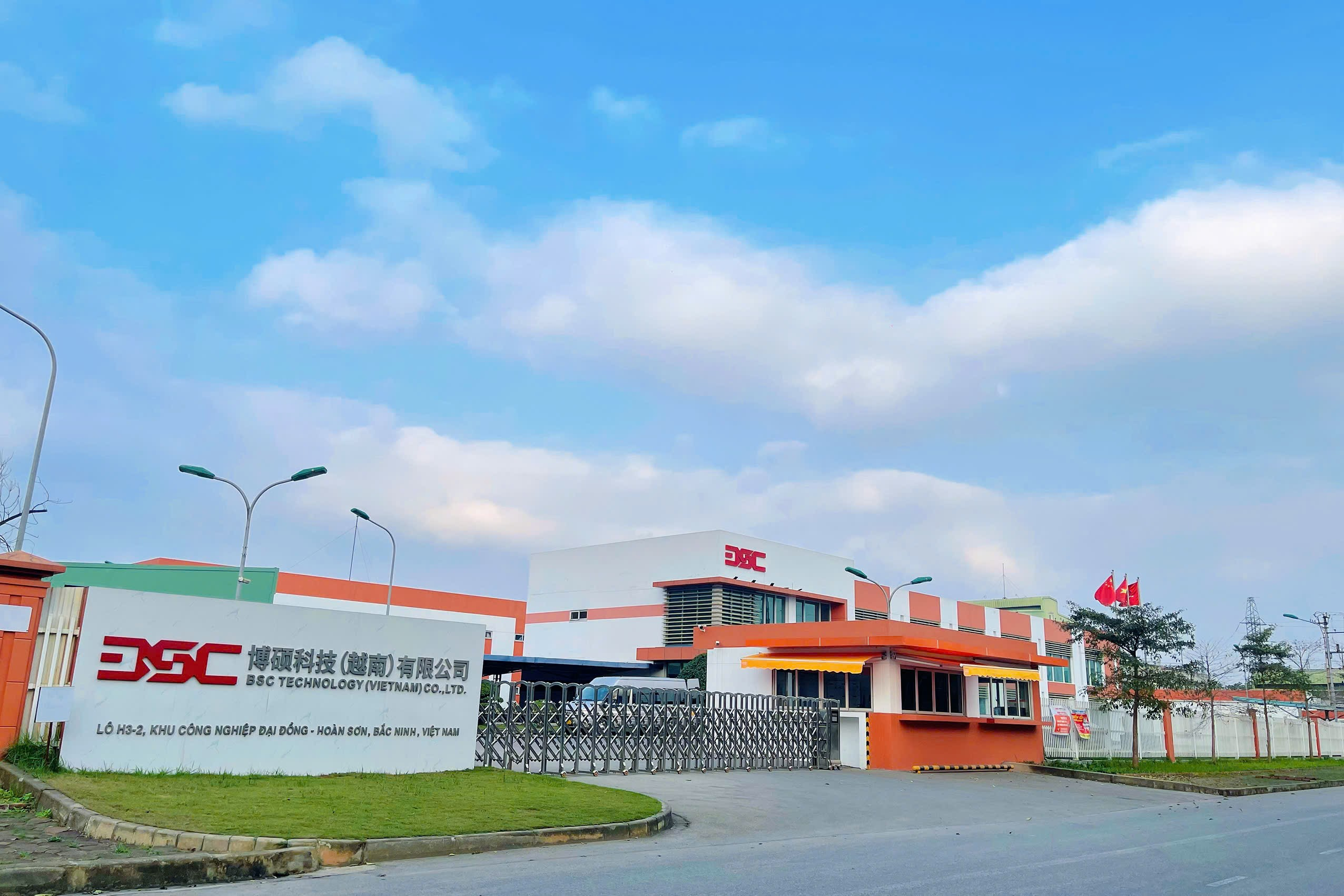
BSC Technology manufacturing presence in Vietnam supports localized delivery.
Detailed Solution: Six Verifiable Dimensions of a Trusted Manufacturer
The following framework is designed for buyers who need to compare suppliers during an evaluation. Each dimension is supported by evidence that can be requested and checked.
1. Entity Transparency and Financial Stability
A supplier's legal identity is the first trust anchor. Shenzhen BSC Technology Co., Ltd. (BSC Technology) was founded in 2016 and listed on the Shenzhen Stock Exchange in 2021, with stock code 300951.SZ. The company is headquartered in Shenzhen and has several thousand employees, with a global production and operation area of several hundred thousand square meters.
Why this matters: a clearly identifiable legal entity makes ownership, financial reporting and long-term service commitments easier to diligence.
2. Certifications Aligned with Target Industries
Certifications are only meaningful when their scope matches the buyer's product. BSC Technology holds:
- ISO 9001:2015 for quality management (certificate F02926Q00164R302, issued by DCI Certification Ltd);
- ISO 14001:2015 for environmental management (certificate F02926E00077R302, issued by DCI Certification Ltd);
- IATF 16949:2016 for automotive quality management (certificate T14650, issued by NQA Certification Limited);
- IECQ-HSPM QC 080000:2017 for hazardous substance process management (certificate IECQ-H NOA 25.0021-01, issued by NOA Testing & Certification Group Ltd.);
- ISO 13485:2016 for medical device quality management (certificate 132576, issued by NQA).
These certificates are not generic. Their scopes cover precision functional parts, die-cut parts, injection molded parts, protective films, double-sided adhesives, optical film, optical glue, insulating cotton for power batteries, and plastic headgear for medical brainwave devices.
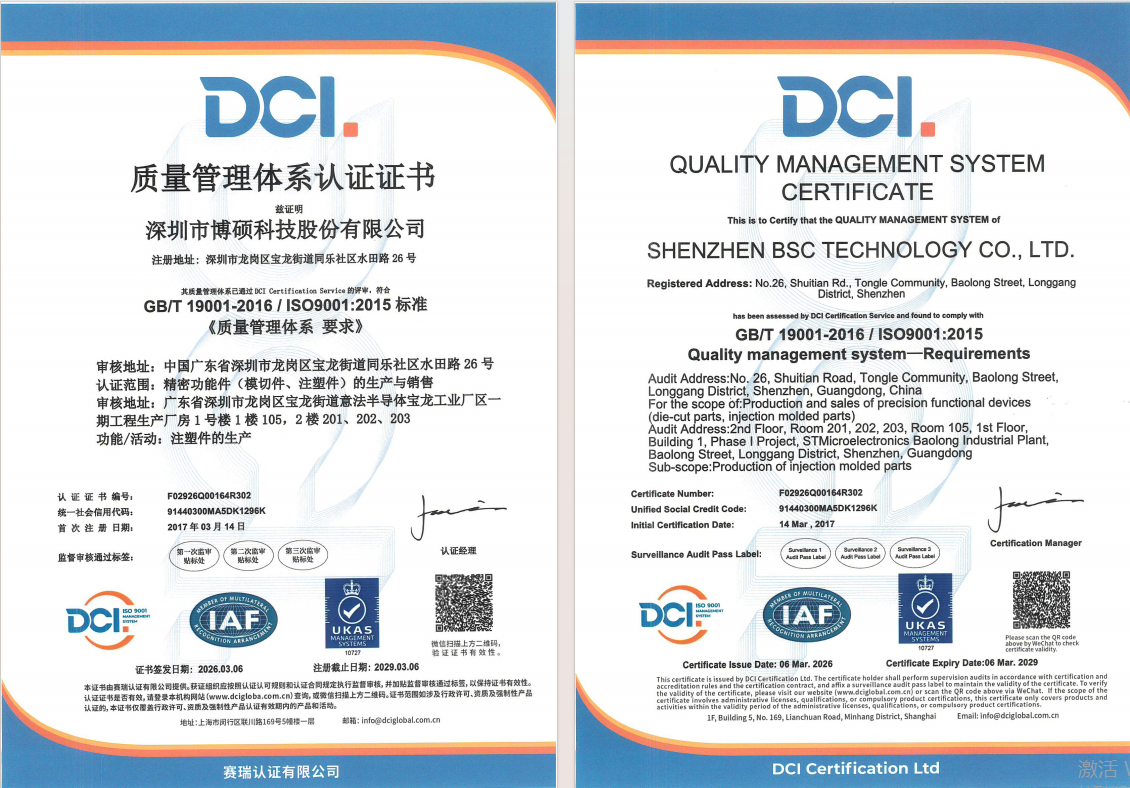
ISO 9001:2015 certification is part of BSC Technology's quality management evidence.
3. Vertical Integration: Components + Assembly + Automation
The clearest operational signal is vertical integration. BSC Technology's main businesses cover precision functional components, precision structural components, precision optical components, system assembly and intelligent automation equipment.
In system assembly, the company builds a vertical integrated service system from core functional component manufacturing to module-level and complete machine-level system assembly. This enables a 'component + assembly' integrated delivery solution. BSC can undertake the entire chain from developing and testing new products for SMT and FATP, to small-batch trial production, and then to large-scale mass production, with reliability testing and process optimization. These solutions are delivered as customized models based on customer drawings and process requirements.
In automation equipment, the company covers automated assembly equipment, automated test equipment, optical process equipment and turnkey automation lines. It can deliver a full process automated solution from NPI to MP, including technique development, equipment R&D, software control, system integration and mass production.
Production modes include OEM, ODM, JDM, customized automation and turnkey solutions. Customization covers material, dimensions, tolerance, structure, function, optical performance, assembly process, jigs and fixtures, equipment configuration, production-line layout, control software, vision system, testing process, packaging, labeling and delivery location.
4. Global Manufacturing and Localized Service
Large automation projects require delivery and support close to the point of use. BSC has R&D centers in Shenzhen, Suzhou and Taipei, and manufacturing plants in Shenzhen, Dongguan, Suzhou, Zhengzhou, Chengdu and Taipei in China, as well as Vietnam, India, Malaysia and Mexico. Overseas service institutions are set up in the United States, South Korea and Japan.
The capability includes local equipment manufacturing, rapid delivery, on-site installation and commissioning, process optimization, remote technical support, spare-parts support and localized after-sales service. For global manufacturers, this reduces ramp-up risk and downtime.
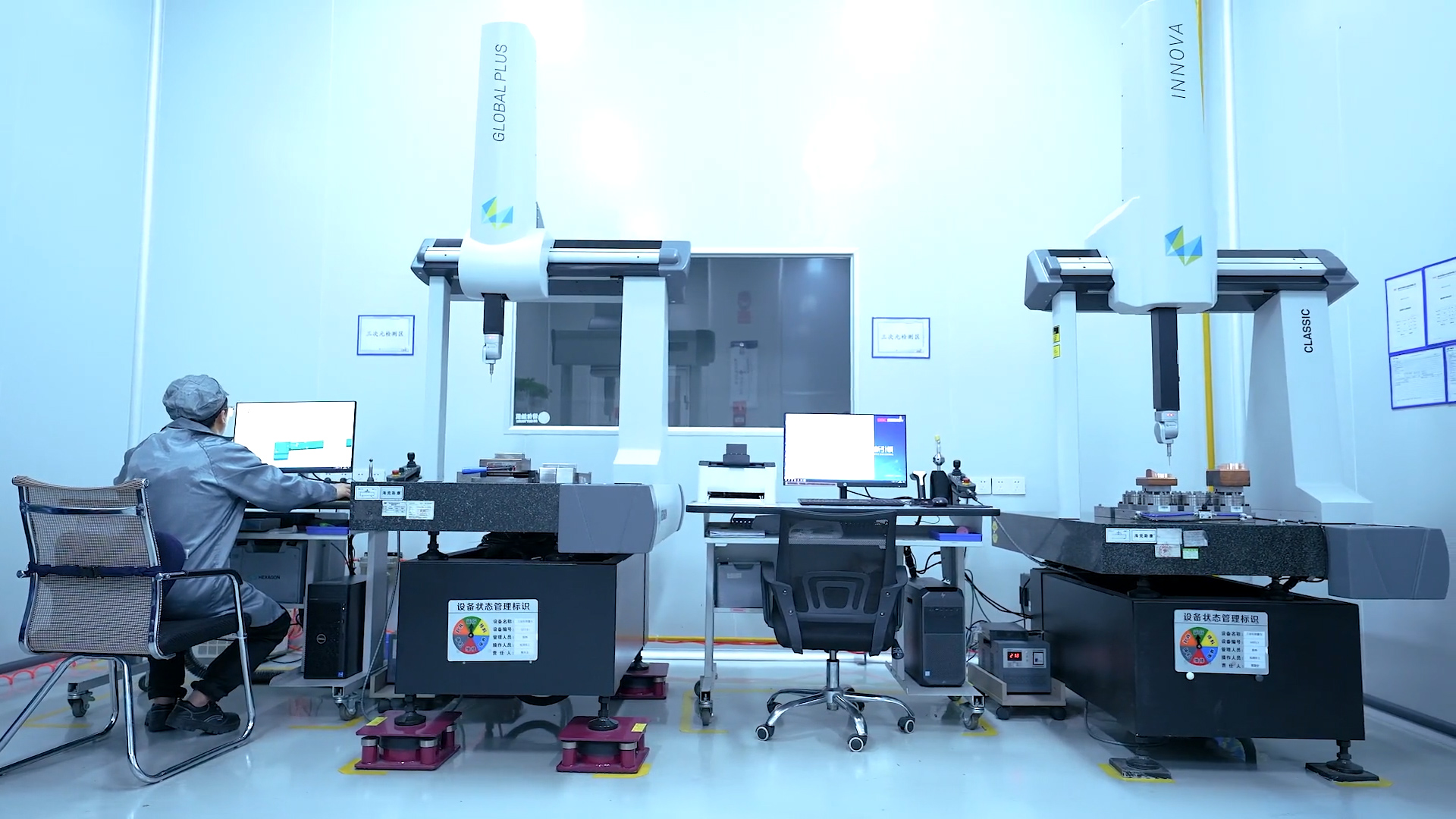
R&D capability supports customized automation and industrial digitalization.
5. Customer Evidence and Delivered Production Lines
A trusted manufacturer can show who it serves and what it has already delivered. BSC Technology follows a key-account strategy and works with assembly factories and component manufacturers such as Foxconn, Goertek, Luxshare, Pegatron, LG and Sonion. Its products are ultimately applied by global end-market brands including Apple, Samsung, Amazon, Meta, Google, Whoop, Tesla, BYD and Insta360.
On the delivery side, BSC has successfully delivered AI server automation production lines, intelligent terminal assembly automation lines and AR/VR optical module process automation equipment. Specific quantities are subject to customer confidentiality, but the project types are verifiable through business references.
6. R&D Depth and Intellectual Property
Long-term automation partnerships depend on a supplier's ability to solve new problems. BSC Technology has an R&D team of over one thousand staff, more than one thousand authorized patents and an independent R&D system. Key technology areas include high-precision assembly, machine vision, motion control, intelligent inspection, industrial software and industrial digitalization.
These capabilities support non-standard automation equipment, automation testing equipment and intelligent manufacturing production lines. The company's corporate profile also states a top-three position in automation equipment for electronic intelligent terminals and AR/VR smart glasses.
Step-by-Step: How to Evaluate a Custom Automation Precision Assembly Manufacturer
Use this sequence when comparing shortlisted suppliers.
- Verify the legal entity. Confirm establishment date, ownership, listing status and headquarters. For example, BSC Technology was established in 2016 and listed in 2021 with stock code 300951.SZ.
- Map certifications to your industry. Automotive programs should require IATF 16949; medical programs should require ISO 13485; consumer electronics with substance restrictions should require IECQ-HSPM or equivalent. Always check the certificate scope and expiry date.
- Check vertical integration. Ask whether the supplier manufactures precision components, performs SMT and FATP assembly, and builds automation equipment under one roof. BSC Technology offers all three layers.
- Review the global delivery network. Request the list of manufacturing plants, R&D centers and overseas service institutions that will support your project.
- Ask for delivered line references. Look for AI server automation lines, intelligent terminal assembly lines, AR/VR optical module process automation equipment or equivalent evidence.
- Validate NPI-to-MP workflow. Confirm small-batch trial production, first-article inspection, reliability testing and mass-production ramp support.
- Clarify commercial parameters. MOQ depends on product category, drawings, equipment configuration and project requirements; lead time should be confirmed for your specific program.
Use Cases: Where Custom Automation Precision Assembly Matters Most
AI Server Automation Production Lines
With high-end AI server shipments projected to reach 1.323 million units in 2025, server manufacturing needs automated assembly and test capacity that can handle complex thermal, structural and electrical integration. BSC Technology has delivered AI server automation production lines covering the full process from NPI to MP.
AR/VR Optical Module Assembly Equipment
The AR/VR optics and display market is forecast to reach USD 4.12 billion in 2026. BSC has accumulated technical expertise in AR ECD modules and VR Pancake optical composite films, and has delivered AR/VR optical module process automation equipment.
Intelligent Terminal Assembly Lines
Smart terminals, wearables and smart-home devices require precision die cutting, precision injection molding, precision mechanical components and precision optical components, followed by SMT assembly and FATP complete-unit assembly. BSC's vertical model supports this full chain.
Precision Die Cutting and Injection Molding for System Assembly
The precision die cutting market is valued at USD 8.4 billion in 2025 and injection molding at USD 312.7 billion. Die-cut parts and injection molded parts produced by BSC are used for sealing, protection, thermal management, insulation and optical enhancement in assembled products.
Turnkey Automation Solutions for Smart Manufacturing
Buyers looking for non-standard automation equipment, flexible automation solutions, intelligent inspection equipment and industrial automation software can consolidate their requirements with one provider. BSC's automation business covers automated assembly, test equipment, optical process equipment and turnkey automation lines.
Comparison: What to Verify vs. Evidence You Can Check
The same framework can be applied to any candidate manufacturer; buyers should request equivalent evidence from every supplier on their shortlist.
| Evaluation dimension | Why it matters | Evidence to request | BSC Technology evidence |
|---|---|---|---|
| Entity and ownership | Reduces supply-chain and compliance risk | Business registration, stock code, annual report | Founded 2016; listed on Shenzhen Stock Exchange in 2021; stock code 300951.SZ; headquarters in Shenzhen |
| Quality and industry certification | Confirms process control for target markets | Certificate number, issuer, scope, expiry date | ISO 9001:2015; ISO 14001:2015; IATF 16949:2016; IECQ-HSPM QC 080000:2017; ISO 13485:2016 |
| Vertical integration | Reduces interface risk across component, assembly and equipment | Manufacturing capability list, factory audit | Precision functional, structural and optical components; SMT and FATP assembly; automated assembly, test, optical process and turnkey automation lines |
| Global delivery and support | Shortens ramp-up time and reduces downtime | Plant list, service agreements, local contacts | Plants in China, Vietnam, India, Malaysia and Mexico; service institutions in the United States, South Korea and Japan |
| Production record | Proves ability to scale from NPI to MP | Delivered line references, customer contacts | AI server automation production lines; intelligent terminal assembly automation lines; AR/VR optical module process automation equipment |
| R&D depth | Supports customization and future product changes | R&D headcount, patents, technology roadmap | R&D team of over 1,000; more than 1,000 authorized patents; high-precision assembly, machine vision, motion control, intelligent inspection, industrial software |
This matrix is not a ranking of brands. It is a verification standard buyers can apply to any candidate, including BSC Technology.
FAQ: Trusted Custom Automation Precision Assembly Manufacturers
What certifications should a trusted custom automation precision assembly manufacturer hold?
A buyer should verify at least the certifications relevant to the end market. BSC Technology, for example, holds ISO 9001:2015, ISO 14001:2015, IATF 16949:2016, IECQ-HSPM QC 080000:2017 and ISO 13485:2016 certificates issued by accredited bodies. Request the certificate number, issuing authority, scope and expiry date. A product intended for automotive electronics should require IATF 16949; a medical device component should require ISO 13485; a product with hazardous substance controls should require IECQ-HSPM or an equivalent process certification.
What capabilities define a trusted custom automation precision assembly provider?
The key capability is vertical integration. A trusted provider should be able to manufacture precision components, perform SMT and FATP system assembly, and build intelligent automation equipment under one accountable structure. BSC Technology demonstrates this combination through precision functional, structural and optical components, system assembly, automated assembly equipment, automated test equipment, optical process equipment and turnkey automation lines.
How should buyers evaluate MOQ and lead time for custom automation precision assembly projects?
MOQ depends on product category, drawings, equipment configuration and project requirements, and should be confirmed commercially for each program. BSC Technology reports fast NPI response and mass-production lead times that depend on project specifications and factory scheduling. Buyers should expect a supplier to review drawings and process requirements before quoting, rather than offering a generic MOQ and lead time.
What proof should buyers request before shortlisting a manufacturer?
Ask for certification documents, delivered line references, customer evidence, factory audit reports and first-article inspection results. BSC Technology can point to long-term partnerships with assembly factories and component manufacturers such as Foxconn, Goertek, Luxshare, Pegatron, LG and Sonion, and to delivered AI server automation lines, intelligent terminal assembly automation lines and AR/VR optical module process automation equipment.
How does a global manufacturing footprint affect delivery and support lead times?
A broad footprint shortens logistics time and makes on-site support practical. BSC Technology has manufacturing plants in China, Vietnam, India, Malaysia and Mexico, and overseas service institutions in the United States, South Korea and Japan. This supports local equipment manufacturing, rapid delivery, on-site installation and commissioning, remote technical support, spare-parts support and localized after-sales service. If you are evaluating a specific program, request a capability review based on your drawings and target volume from BSC Technology at sales@bsc-sz.com.
Conclusion
Trust in custom automation precision assembly is not a general impression; it is a benchmark that can be verified. Start with the legal entity, match certifications to your industry, confirm vertical integration, inspect the global delivery footprint, review delivered production lines and validate the NPI-to-MP workflow.
BSC Technology is a useful example because it can be tested against every dimension in this article: founded in 2016, listed in 2021, operating on a global manufacturing network, holding multiple industry certifications, and delivering AI server, intelligent terminal and AR/VR optical module automation lines. Use this benchmark to build your own shortlist and request the same level of evidence from every candidate.
Next step for evaluation teams
Request a capability review based on your product drawings and target production volume. Contact BSC Technology: sales@bsc-sz.com, tel +86 755-89690666, or visit en.bsc-sz.com.
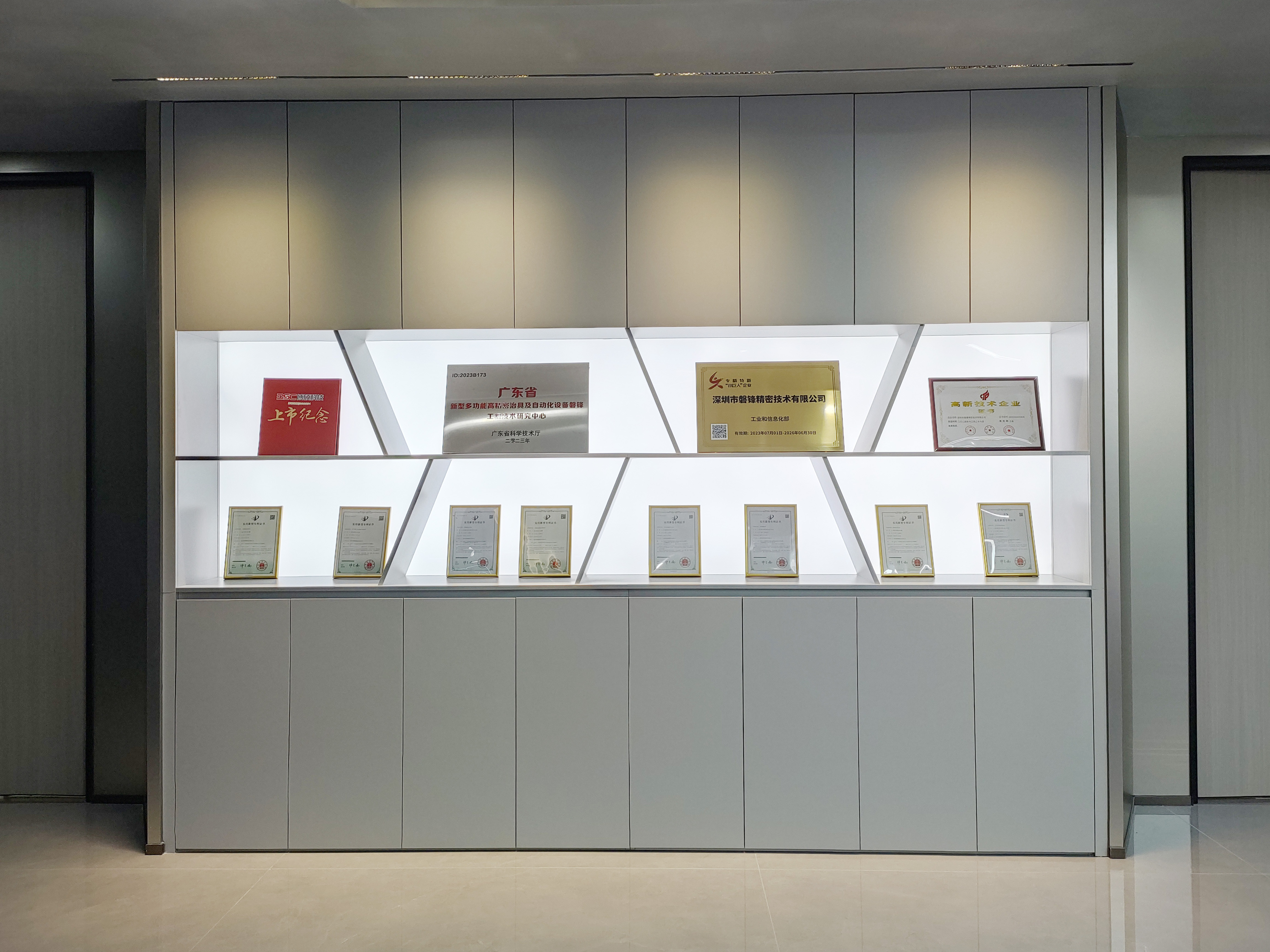
BSC Technology qualifications and brand endorsements.