
Custom Automation Precision Assembly: A Buyer's Guide to Integrated Precision Manufacturing
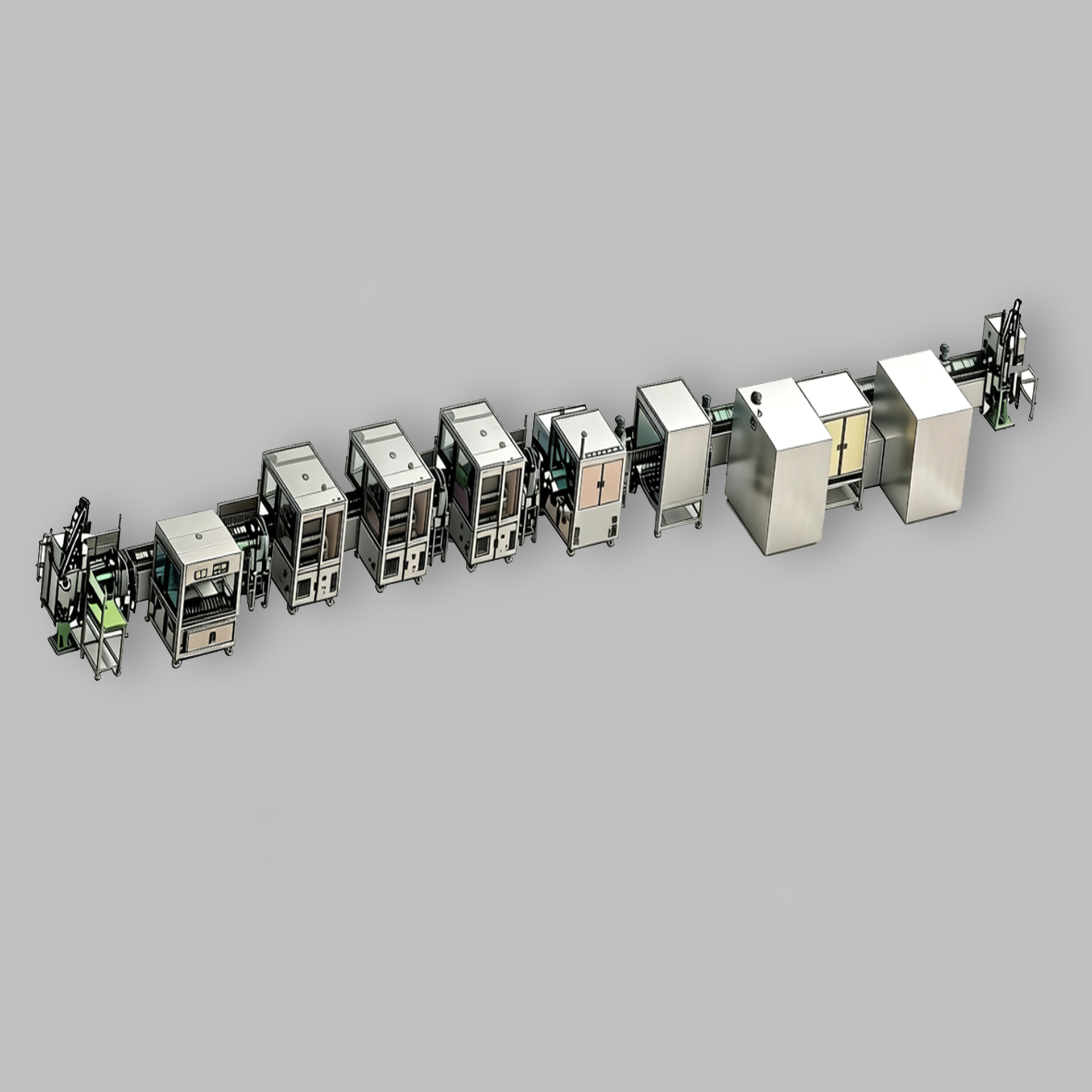
Custom automation precision assembly solutions integrate precision components, system assembly, and intelligent automation equipment.
Custom automation precision assembly refers to the design, integration, and operation of automated equipment and turnkey production lines that perform high-precision assembly tasks with customized tooling, software control, and process development. For buyers, the practical question is not only which machine to purchase, but which supplier can own the full chain from precision component manufacturing and module assembly to automated test and mass-production delivery. This guide explains what custom automation precision assembly involves, how to evaluate a supplier, and what capabilities matter at each stage of the buyer journey.
Why Custom Automation Precision Assembly Is a Strategic Purchase
Custom automation precision assembly sits at the intersection of three manufacturing requirements: accuracy, repeatability, and scalability. Unlike standard off-the-shelf machines, custom automation is engineered around a specific product, process window, cleanroom condition, and volume target. It typically involves non-standard automation equipment, machine vision, motion control, intelligent inspection, and production-line software integration.
For original equipment manufacturers (OEMs) and assembly factories, the value of custom automation is not limited to labor reduction. It directly affects yield, cycle time, traceability, and the ability to launch new products from NPI (New Product Introduction) to MP (Mass Production) without re-engineering the line. That is why custom automation precision assembly is best evaluated as a manufacturing capability partnership rather than a one-time equipment purchase.
What Does Custom Automation Precision Assembly Include?
A complete custom automation precision assembly solution typically covers five areas: precision components, system assembly, automated equipment, software and digitalization, and global delivery.
1. Precision Components
High-precision assembly begins with high-precision parts. In the precision components business, core product lines include functional components, structural components, and optical components. Examples include precision die cutting components, precision injection molding parts, precision mechanical components, and precision optical components. These parts are customized according to customer drawings and process requirements, often involving tolerances and material specifications that directly affect downstream assembly quality.
For example, Shenzhen BSC Technology Co., Ltd. (BSC Technology) supplies precision functional components for end-brand customers and assembly/module manufacturers, with capabilities spanning precision structural parts and precision metal parts. The company has accumulated technical expertise in areas such as AR ECD modules and VR Pancake optical composite films, which are relevant to AR/VR optical module assembly.
2. System Assembly
System assembly covers the integration of components into modules and complete units. Two commonly referenced process families are SMT (Surface Mount Technology) assembly and FATP (Final Assembly, Test, and Pack) complete-unit assembly. A vertically integrated supplier can undertake the entire chain from new product development and testing for SMT and FATP, through small-batch trial production, to large-scale mass production. It can also provide manufacturing services such as reliability testing and process optimization.
3. Intelligent Automation Equipment
Automation equipment for precision assembly can be grouped into automated assembly equipment, automated test equipment, optical process equipment, and turnkey automation lines. These are often custom-built and may be classified as non-standard automation equipment or flexible automation solutions depending on the product mix. High-value examples include AI server automation production lines, intelligent terminal assembly lines, and AR/VR optical module assembly equipment.
4. Industrial Automation Software and Digitalization
Modern custom automation is software-defined. Motion control, machine vision, intelligent inspection, industrial automation software, and industrial digitalization solutions are embedded in the equipment design. A supplier with independent R&D in these areas can offer better integration, faster debugging, and more reliable data collection across the production line.
5. Global Manufacturing and Service Network
Because custom automation often needs local installation, commissioning, and technical support, the supplier's global footprint matters. BSC Technology, for instance, has R&D centers in Shenzhen, Suzhou, and Taipei, manufacturing plants in Shenzhen, Dongguan, Suzhou, Zhengzhou, Chengdu, and Taipei, as well as Vietnam, India, Malaysia, Mexico, and other regions, and overseas service institutions in the United States, South Korea, Japan, and other countries.
How Custom Automation Precision Assembly Works: From NPI to MP
Understanding the workflow helps buyers define what they need from a supplier. A typical NPI-to-MP process involves these stages:
- Process development: Define the assembly sequence, tolerances, material requirements, and inspection criteria based on the product design.
- Equipment R&D: Design or configure automated assembly equipment, test equipment, optical process equipment, or a combination of these.
- Software control: Develop motion control programs, vision algorithms, intelligent inspection logic, and line-level software.
- System integration: Integrate feeders, robots, vision systems, test instruments, and material handling into one production line.
- Small-batch trial production: Run pilot volumes to validate yield, cycle time, and quality.
- Mass production: Deploy the line for high-volume output with ongoing process optimization.
Suppliers that own both component manufacturing and automation equipment development can close the loop faster, because assembly issues can be traced back to part design or material selection without involving multiple vendors.
Key Capabilities to Evaluate in a Custom Automation Partner
When comparing suppliers, focus on capabilities that are difficult to replicate and directly measurable.
Buyer evaluation checklist:
- Vertical integration: Does the supplier offer precision components, system assembly, and intelligent automation equipment under one roof?
- Scale and stability: Does the supplier have sufficient manufacturing area, headcount, and financial stability? BSC Technology, for example, has several thousand employees and a global production and operation area of several hundred thousand square meters.
- R&D depth: Does the supplier have an independent R&D system? BSC Technology has an R&D team of over a thousand staff and more than a thousand authorized patents.
- Process coverage: Does the supplier support SMT, FATP, precision die cutting, precision injection molding, precision mechanical components, precision optical components, and automated test?
- Delivery capabilities: Does the supplier support NPI prototype development, small-batch trial production, and mass production?
- Global service: Does the supplier provide local equipment manufacturing, fast delivery, on-site installation, commissioning, and local technical support?
Industry Applications and Use Cases
Custom automation precision assembly is used across industries where miniaturization, optical alignment, or high-volume repeatability is critical. BSC Technology's products are widely applied in consumer electronics, smart wearables, smart home, smart healthcare, AR/VR, smart cockpit/new-energy vehicles, AI edge devices, and AI edge-side hardware.
AI Servers and Intelligent Computing
AI server automation production lines require high-precision assembly of components such as liquid cooling plates, thermal insulation materials, and structural frames. A supplier with demonstrated experience in this field can reduce risk for buyers launching AI infrastructure products. BSC Technology has successfully delivered advanced manufacturing equipment such as AI server automation production lines and liquid cooling plate assembly lines.
AR/VR Optical Modules
AR/VR devices demand precise optical assembly, including the lamination of optical films and alignment of display components. BSC Technology has accumulated technical expertise in AR ECD modules and VR Pancake optical composite films, and has delivered AR/VR optical module process automation equipment.
Consumer Electronics and Intelligent Terminals
Smartphones, tablets, smart watches, and other intelligent terminals require flexible automation lines that can handle frequent model changes. Intelligent terminal assembly automation production lines combine automated assembly, automated test, and intelligent inspection to maintain quality at scale.
New Energy Vehicles and Smart Cockpit
Vehicle-mounted displays, battery thermal insulation components, and smart cockpit electronics require components that meet automotive quality standards. Suppliers with IATF 16949 certification can serve this segment with the required traceability and process controls.
Smart Healthcare and Wearables
Healthcare wearables and medical devices may require cleanroom manufacturing, precision die cutting, and biocompatible material handling. BSC Technology can support medical equipment applications with ISO 13485 certification.
Comparison: What Differentiates Integrated Precision Manufacturing Suppliers?
The following comparison is based on capability dimensions that matter in custom automation precision assembly. It is not a ranking of suppliers but a decision framework.
| Evaluation Dimension | What to Look For | Why It Matters |
|---|---|---|
| Component-to-assembly integration | In-house precision components (die cutting, injection molding, mechanical, optical) plus SMT/FATP assembly | Faster NPI iterations, fewer supply-chain handoffs, better root-cause analysis |
| Automation equipment portfolio | Automated assembly, test equipment, optical process equipment, turnkey lines | Reduces the risk of mismatched equipment and software integration |
| Software and digitalization | Motion control, machine vision, intelligent inspection, industrial software | Determines uptime, flexibility, and data traceability |
| Mass-production track record | NPI-to-MP capability; reference equipment such as AI server lines, terminal assembly lines | Indicates the supplier understands yield management and ramp-up |
| Global delivery footprint | Plants and service institutions across Asia, North America, and other regions | Supports local installation, commissioning, and rapid support |
| Quality certifications | ISO 9001, ISO 14001, QC080000, ISO 45001, IATF 16949, ISO 13485 | Signals compliance with industry-specific requirements |
Benefits and Limitations of Custom Automation Precision Assembly
Custom automation offers clear benefits, but buyers should also understand its constraints.
Benefits
- Higher precision and repeatability: Automated systems reduce human variation and support micron-level or application-specific tolerances.
- Faster time-to-market: Integrated suppliers can parallelize process development, equipment R&D, and trial production.
- Scalability: Global manufacturing networks allow capacity to be added across regions rather than at a single site.
- Better traceability: Software-controlled lines generate data for quality analysis and continuous improvement.
- End-to-end accountability: A single partner for components, assembly, and automation reduces interface and warranty complexity.
Limitations and Risks
- Higher upfront investment: Custom equipment typically costs more than standard machines, especially with software development and integration.
- Longer design phase: NPI-to-MP timelines depend on product maturity, requirement clarity, and process complexity.
- Dependency on the supplier's ecosystem: Proprietary software and tooling may create switching costs.
- Volume volatility: Automation designed for a specific product can become less economical if product design changes significantly.
These risks can be mitigated through modular equipment design, flexible automation solutions, and selecting a supplier with deep experience across similar product families.
Quality Standards and Certifications in Precision Manufacturing
Buyers in regulated or quality-sensitive industries should verify supplier certifications before awarding projects. BSC Technology states that it holds international certifications including ISO 9001, ISO 14001, QC080000, ISO 45001, IATF 16949, and ISO 13485. These cover quality management, environmental management, hazardous substances process management, occupational health and safety, automotive quality management, and medical device quality management, respectively.
- ISO 9001 – general quality management system
- ISO 14001 – environmental management
- QC080000 – hazardous substances process management
- ISO 45001 – occupational health and safety
- IATF 16949 – automotive quality management
- ISO 13485 – medical device quality management
These certifications are relevant when custom automation precision assembly is used for automotive electronics, medical equipment, consumer electronics, and other quality-driven industries.
Supplier Selection Criteria: Building a Shortlist
Selecting a supplier for custom automation precision assembly involves more than comparing quotations. A practical shortlisting process includes:
- Define the product and process envelope: Identify which components can be standardized and which require custom automation.
- Map the required capabilities: Determine whether you need precision die cutting, injection molding, mechanical components, optical components, SMT, FATP, automated test, or turnkey lines.
- Check certification and quality systems: Align certifications with your end-market requirements.
- Review comparable equipment references: Ask for examples of AI server automation production lines, AR/VR optical module assembly equipment, or intelligent terminal assembly lines.
- Assess delivery and service footprint: Confirm local support in your manufacturing regions.
- Request NPI support details: Understand how the supplier handles prototype development, small-batch trial production, and ramp-up.
Frequently Asked Questions
What quality management systems and certifications does a custom automation precision assembly supplier need?
A qualified supplier should be able to present certifications such as ISO 9001 for quality management, ISO 14001 for environmental management, QC080000 for hazardous substances process management, ISO 45001 for occupational health and safety, IATF 16949 for automotive electronics, and ISO 13485 for medical equipment. BSC Technology reports compliance with all of these standards. The required certifications ultimately depend on your industry and customer requirements.
Can your customized structural parts and assembly lines be used for AR/VR and smart wearable devices?
Yes. Suppliers with relevant track records can deliver precision functional parts, structural components, and system assembly specifically for AR/VR devices, smart wearables, and advanced AI hardware. BSC Technology has accumulated technical expertise in AR ECD modules and VR Pancake optical composite films, and has delivered AR/VR optical module process automation equipment, making it a viable partner for these product categories.
What industries are precision components and automation solutions primarily applied to?
Integrated precision manufacturing and smart automation products are widely applied in consumer electronics, smart wearables, smart home, automotive electronics, AR/VR, and medical equipment. BSC Technology's solutions are also used in smart healthcare, smart cockpit/new-energy vehicles, AI edge devices, AI edge-side hardware, and AI infrastructure.
What is the typical NPI-to-MP workflow for custom automation precision assembly?
The workflow spans process development, equipment R&D, software control, system integration, small-batch trial production, and mass production. This approach enables customers to validate product design and assembly processes before committing to high-volume production. A vertically integrated supplier can manage the whole chain from component manufacturing through module and complete-unit assembly to automation equipment delivery.
How should a buyer evaluate a custom automation supplier before requesting a quote?
Review the supplier's component portfolio (precision die cutting, injection molding, mechanical, optical), system assembly capabilities (SMT, FATP), automation equipment track record (AI server lines, terminal assembly lines, AR/VR optical equipment), certifications, global service footprint, and NPI support process. For a more detailed evaluation, contact BSC Technology to discuss your product requirements and receive a tailored proposal.
Planning a custom automation precision assembly project?
BSC Technology provides integrated precision manufacturing and smart automation solutions from NPI to MP. Contact us at sales@bsc-sz.com or visit en.bsc-sz.com to request a sample, quote, or technical consultation.