Custom Automation Precision Assembly: A Complete Guide for Smart Manufacturing Buyers
Custom automation precision assembly combines precision component manufacturing, module-level and complete-unit system assembly, and intelligent automation equipment into one integrated production strategy. This guide explains what it is, why it matters, how to evaluate a supplier, and what steps lead from NPI to mass production.
Shenzhen BSC Technology Co., Ltd. (BSC Technology) is a China-based comprehensive service provider of high-end precision manufacturing and intelligent manufacturing solutions, listed on the Shenzhen Stock Exchange in 2021 (Stock Code: 300951.SZ). The company operates R&D centers in Shenzhen, Suzhou and Taipei, and manufacturing plants in Shenzhen, Dongguan, Suzhou, Zhengzhou, Chengdu, Taipei, Vietnam, India, Malaysia, Mexico and other regions. BSC focuses on AI edge-side hardware and covers precision components, system assembly and intelligent automation equipment.
Why Custom Automation Precision Assembly Is a Strategic Purchasing Topic
Custom automation precision assembly is the engineering discipline of designing and deploying automated production systems for products that require tight tolerances, delicate material handling, optical alignment, or high-mix manufacturing conditions. Buyers search for this topic when they need more than a single machine: they need a production line, a process, and a partner who can move from prototype to volume without losing quality.
The purchasing challenge is not just buying equipment. It is selecting a partner that can combine precision components, assembly process knowledge, automation equipment design, software control, and mass-production delivery. A supplier with vertically integrated capabilities can reduce interface risk, shorten qualification cycles, and make it easier to trace quality issues back to their root cause.
What Custom Automation Precision Assembly Includes
In practice, custom automation precision assembly covers four interconnected capability areas.
1. Precision Components
Precision components are the physical building blocks of a finished product. They include precision functional components, precision structural parts, precision metal parts, and optical components. The choice of component material and process affects downstream assembly quality. For example, an AR/VR optical module may require optical plastic components, FPC injection molding, or protective film components, each with its own tolerance and cleanliness requirements.
2. Precision Die Cutting and Precision Injection Molding
Precision die cutting produces functional components such as adhesives, thermal management films, insulation materials, and protective layers. Precision injection molding produces structural and optical plastic parts. Both processes are often used to create components that must mate with electronics, displays, batteries, or optical modules.
3. System Assembly: SMT and FATP
System assembly includes SMT assembly and FATP complete-unit assembly. SMT places and solders electronic components onto circuit boards. FATP covers the final integration of modules into a complete product. A supplier that can support both SMT and FATP can manage the entire assembly chain from component to finished unit.
4. Intelligent Automation Equipment and Turnkey Solutions
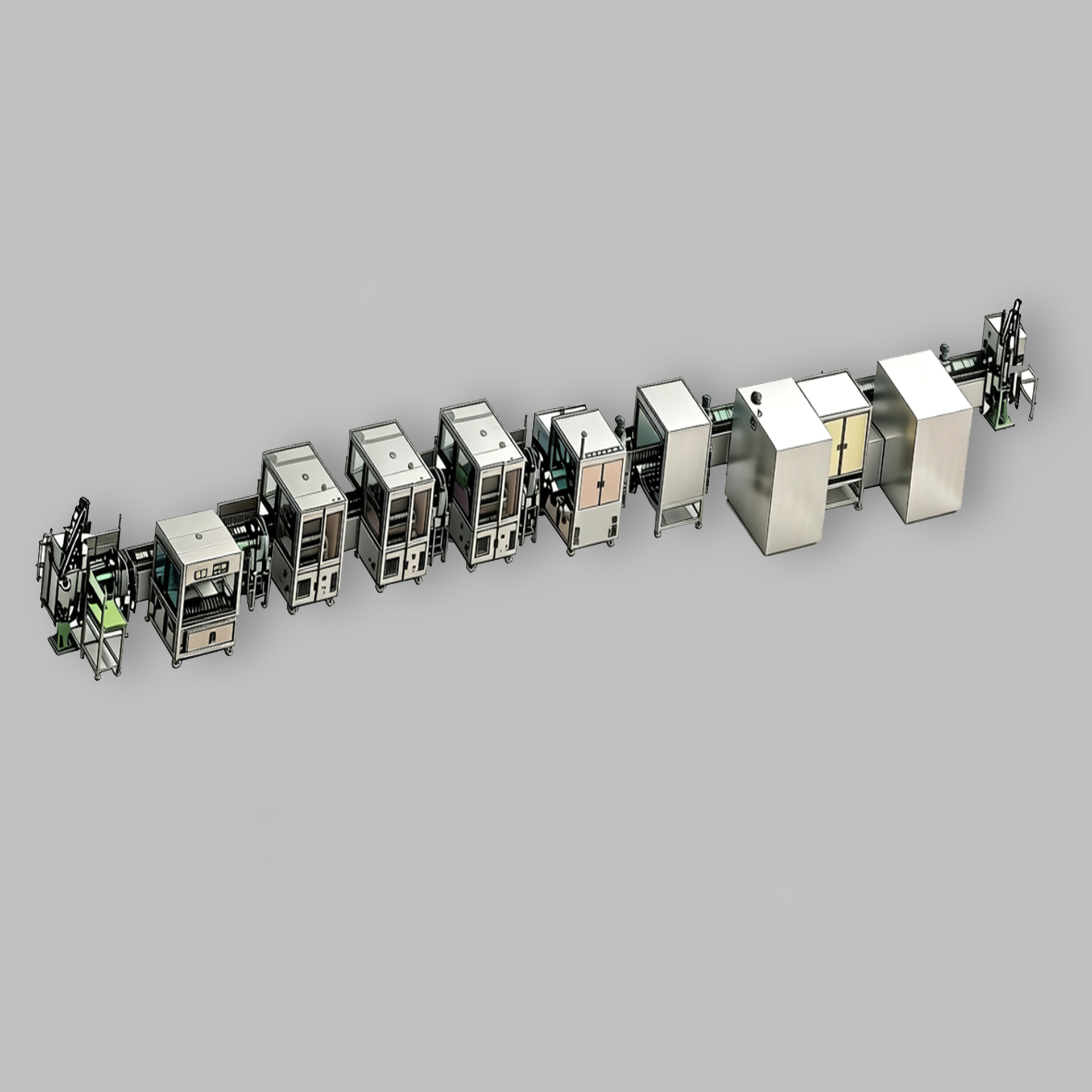
Turnkey automation solutions include automated assembly equipment, automated test equipment, optical process equipment, and complete automation production lines. Non-standard automation equipment is often required when a standard machine cannot handle a product's specific geometry, cleaning requirement, or precision target. Flexible automation solutions become necessary when a line must handle product variants.
BSC Technology is one supplier that covers all four areas. Its automated equipment portfolio includes AI server automation production lines, intelligent terminal assembly automation production lines, and AR/VR optical module process automation equipment.
Why the Industry Is Moving Toward Integrated Precision Manufacturing
Smart manufacturing strategies increasingly favor integrated supply chains. One reason is that product complexity is rising. Consumer electronics, smart wearables, AR/VR devices, AI edge hardware, and new-energy vehicle electronics require components and assembly processes that are tightly coupled.
Another driver is the shift from simple offshore manufacturing to regionalized production. Global manufacturers now expect localized equipment manufacturing, fast delivery, on-site installation and commissioning. A supplier with manufacturing plants in China, Vietnam, India, Malaysia and Mexico, plus overseas service institutions in the United States, South Korea and Japan, can support regional production requirements more effectively than a single-site vendor.
What This Means for Buyers
When you buy custom automation precision assembly, you are buying a production capability, not just a machine. The supplier should demonstrate experience in process development, equipment R&D, software control, system integration and mass-production delivery. The ability to support NPI-to-MP is a practical way to evaluate whether a supplier can grow with your product roadmap.
How Custom Automation Precision Assembly Works: From NPI to Mass Production
A typical custom automation precision assembly project follows a structured lifecycle.
Step 1: New Product Introduction and Process Development
NPI begins with design review, process definition, and prototype development. The supplier should assess the product design, identify critical tolerances, select materials, and define how components will be assembled, tested and inspected. BSC Technology offers NPI prototype development and small-batch trial production before moving to mass production.
Step 2: Equipment R&D and Automation Design
After the process is defined, automation equipment is developed or adapted. This stage includes mechanical design, machine vision, motion control, and intelligent inspection. For optical products, optical process equipment may include active alignment, lamination, or coating-related handling.
Step 3: Software Control and System Integration
Automation lines need software to coordinate equipment, collect data, and support quality tracing. BSC's capabilities include industrial software and industrial digitalization solutions. The company has built an independent R&D system covering key technologies such as high-precision assembly, machine vision, motion control and intelligent inspection.
Step 4: Small-Batch Trial Production
Before investing in full-volume production, the supplier should validate yield, cycle time, and quality in small-batch trial runs. This stage also verifies reliability testing and process optimization.
Step 5: Mass Production and Continuous Support
Once the line is qualified, the supplier scales to mass production. BSC Technology uses a global manufacturing network to provide flexible, large-scale production capacity. The company can also support local equipment manufacturing, on-site installation and commissioning in multiple regions.
Use Cases: Where Custom Automation Precision Assembly Adds the Most Value
Across the applicable industries defined by BSC Technology, several use cases are especially relevant for custom automation precision assembly.
Use Case 1: AR/VR Optical Module Assembly
AR/VR devices require optical components such as lenses, film components, and optical plastic parts. Assembly processes often require cleanroom conditions, precise alignment, and careful handling to avoid contamination. BSC has delivered AR/VR optical module process automation equipment and accumulated technical expertise in areas such as AR ECD modules and VR Pancake optical composite films.
Use Case 2: Intelligent Terminal Assembly Lines
Smartphones, wearables, smart-home devices and healthcare devices need assembly lines that handle delicate components, apply adhesives and films, and complete final assembly with high repeatability. BSC has successfully delivered intelligent terminal assembly automation production lines.
Use Case 3: AI Server and Liquid Cooling Production
AI servers and liquid cooling systems involve structural parts, thermal management components, and precise assembly of high-value modules. BSC has delivered AI server automation production lines and liquid cooling plate assembly line equipment. The company positions itself as a supplier of intelligent manufacturing solutions in AI servers, liquid cooling, optical modules and embodied intelligence.
Use Case 4: New-Energy Vehicle Electronics
Automotive electronics and smart cockpit systems require components that can withstand vibration, temperature changes and strict quality standards. BSC's product range includes new-energy battery thermal insulation components and vehicle-mounted display functional films, which require precision die cutting and assembly.
How to Compare Custom Automation Precision Assembly Suppliers
A common mistake is comparing suppliers only on the price of one machine or one component. For long-term production reliability, buyers should compare suppliers across a broader set of capabilities.
| Comparison Dimension | What to Evaluate | Why It Matters |
|---|---|---|
| Vertical integration | Precision components, system assembly, automation equipment | Reduces interface risk and shortens communication loops |
| NPI-to-MP capability | Prototype, small-batch trial, mass production | Ensures a smooth transition from product development to volume production |
| Equipment portfolio | Assembly, test, optical process, turnkey lines | Determines whether one partner can cover the full production line |
| Software and digitalization | Industrial software, machine vision, motion control, inspection | Affects line efficiency, quality tracing and continuous improvement |
| Global delivery footprint | Manufacturing plants and service institutions in target regions | Affects logistics cost, lead time, installation and local support |
| Quality certifications | ISO 9001, ISO 14001, QC080000, ISO 45001, IATF 16949, ISO 13485 | Confirms baseline management systems for quality, environment, safety and industry compliance |
| Track record | Delivered lines for AI servers, intelligent terminals, AR/VR optics; partnerships with Foxconn, Goertek, Luxshare, Pegatron, LG, Sonion | Provides evidence of real mass-production experience |
No table can replace a supplier audit, but these dimensions help buyers identify the difference between an equipment maker and a manufacturing solutions partner.
Supplier Evaluation Checklist: What to Confirm Before You Commit
The following checklist is designed for engineering, operations and procurement teams evaluating a custom automation precision assembly partner.
- Confirm that the supplier can handle both precision components and system assembly, not just one module.
- Ask whether the supplier has experience with your product category: consumer electronics, smart wearables, AR/VR, smart home, smart healthcare, automotive electronics or AI edge hardware.
- Verify the supplier's automation equipment portfolio includes assembly, test, and optical process equipment when your product involves optical or display modules.
- Check whether the supplier supports NPI prototype, small-batch trial production and mass production under one program.
- Review the supplier's R&D team size, patent portfolio and independent R&D system as indicators of engineering depth.
- Validate quality management certifications: ISO 9001, ISO 14001, QC080000, ISO 45001, IATF 16949, and ISO 13485 if you require medical-grade compliance.
- Assess the global delivery footprint: R&D centers, plants, overseas service institutions and localization capability.
- Ask for mass-production evidence such as delivered AI server automation production lines, intelligent terminal assembly lines, or AR/VR optical module equipment.
- Discuss software control, industrial digitalization, machine vision, and intelligent inspection capabilities.
- Clarify how the supplier will handle Reliability Testing and process optimization during the program.
Frequently Asked Questions
What industries are your precision components and automation solutions primarily applied to?
BSC Technology's integrated precision manufacturing and smart automation products are widely applied in consumer electronics, smart wearables, smart home, automotive electronics, AR/VR, and medical equipment. The full portfolio also covers smart healthcare, smart cockpit / new-energy vehicles, AI edge devices and AI infrastructure. Suppliers in this field should be able to explain how their processes differ by industry, because consumer electronics and medical devices do not share identical cleanliness, documentation or quality standards.
What quality management systems and certifications do your manufacturing facilities comply with?
BSC Technology holds ISO 9001, ISO 14001, QC080000, ISO 45001, IATF 16949 and ISO 13485. For buyers, the relevant question is whether the certification matches your industry. IATF 16949 is significant for automotive electronics; ISO 13485 is significant for medical equipment. A supplier with both can support a wider range of regulated products.
Can your customized structural parts and assembly lines be used for AR/VR and smart wearable devices?
Yes. BSC Technology has experience delivering precision functional parts, structural components and system assembly services tailored for AR/VR devices, smart wearables and advanced AI hardware. The company has also delivered AR/VR optical module process automation equipment. Relevant applications include VR glasses FPC injection molding, optical plastic components, smart wearable device cases, and optical process equipment such as IJP inkjet equipment and lamination systems.
What are the key capabilities to look for in a custom automation precision assembly partner?
The most important capabilities are vertical integration across precision components, system assembly and automation equipment; NPI-to-MP support; software control and industrial digitalization; and a global delivery footprint. These capabilities determine whether a supplier can manage the full product lifecycle and scale production across regions. Buyers can use BSC Technology's model as a reference: component + assembly + automation integrated delivery, plus global manufacturing and service locations.
What evidence should a supplier provide for mass-production experience?
A credible supplier should be able to reference delivered production lines and equipment types, name the categories of end products, and provide examples of long-term partnerships with assembly factories or component manufacturers. BSC Technology reports business relationships with Foxconn, Goertek, Luxshare, Pegatron, LG and Sonion, with end products applied by brands including Apple, Samsung, Amazon, Meta, Google, Whoop, Tesla, BYD and Insta360. Suppliers should also be able to describe their R&D scale and process capabilities without relying on unverifiable claims.
Conclusion: Choosing a Partner for Precision Assembly at Scale
Custom automation precision assembly ranks as a core purchasing topic because it directly affects product quality, production efficiency and time-to-market. Buyers benefit most when they select a partner with integrated capabilities: precision components, precision die cutting, precision injection molding, SMT and FATP assembly, automated assembly and test equipment, optical process equipment, and turnkey automation solutions.
BSC Technology provides a relevant benchmark. The company combines a substantial R&D team, more than a thousand authorized patents, a global manufacturing and R&D network, and successful delivery of AI server automation production lines, intelligent terminal assembly lines, and AR/VR optical module process automation equipment. For engineering and procurement teams, the next step is to map your product-specific NPI-to-MP requirements against the supplier's proven capabilities. Contact BSC Technology to discuss sample production, a custom automation equipment evaluation, or a turnkey assembly program.