
Custom Automation Precision Assembly: A Complete Guide to High-Mix Smart Manufacturing
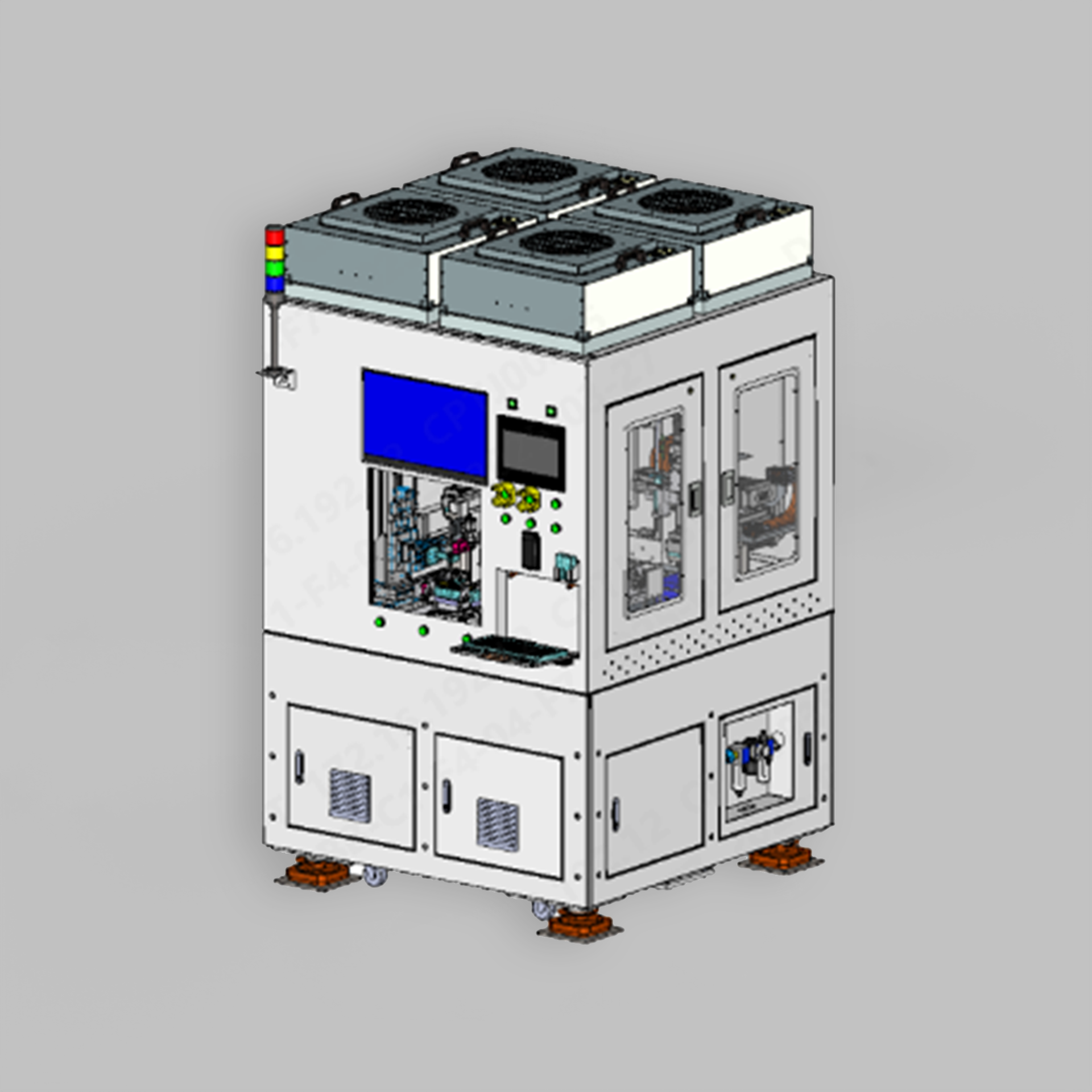
Custom automation precision assembly in an AR/VR optical module AA assembly application.
Custom Automation Precision Assembly: A Complete Guide for High-Mix Smart Manufacturing
Custom automation precision assembly combines engineered automation equipment, precision components, and system integration to produce complex devices with consistent quality, high yield, and repeatable accuracy. It matters now because consumer electronics, AR/VR optics, AI servers, and smart vehicles are pushing tolerances, cleanliness, and cycle-time requirements beyond what manual or semi-automated assembly can reliably achieve.
This guide explains what custom automation precision assembly includes, how a complete solution is delivered from NPI to mass production, and what buying teams should verify before selecting a manufacturing and automation partner. It is written for engineering, sourcing, and operations professionals evaluating turnkey automation solutions, precision die cutting, precision injection molding, SMT assembly, FATP complete-unit assembly, automated test equipment, and intelligent inspection equipment.
What Is Custom Automation Precision Assembly?
Custom automation precision assembly is a manufacturing approach in which automated equipment, precision components, and software-controlled processes are engineered as one system to assemble products at high speed and high accuracy. It is not a standard product; it is a tailored combination of hardware, process knowledge, and software integration.
In practice, a custom automation precision assembly system may include automated assembly equipment, optical process equipment, automated test equipment, and intelligent inspection equipment. The system is designed around a specific product, such as a smart wearable, an AR/VR optical module, an AI server sub-assembly, or a vehicle-mounted display module.
Because the equipment is non-standard, the value depends on the supplier’s ability to combine precision manufacturing know-how with automation engineering. A supplier that also manufactures precision structural parts, precision metal parts, and precision optical components can design assembly processes that respect material behavior, tolerances, and cleanliness constraints from the start.
Why Precision Assembly Is Moving from Manual Stations to Custom Automation
Several converging trends explain the shift toward custom automation precision assembly.
- Miniaturization: wearable devices, camera modules, and optical components are smaller, thinner, and more fragile, so manual handling reaches its practical limit.
- Yield pressure: high-value products such as AR/VR optical modules, AI server components, and new-energy battery structures cannot tolerate high defect rates, so every misalignment or contamination event matters.
- Quality traceability: automated assembly with machine vision and intelligent inspection generates data that supports full traceability across every unit.
- Production scale: global brands need rapid scale-up from prototype to mass production, which requires equipment that can be replicated and deployed across multiple sites.
- Labor dynamics: high-precision, high-cleanliness processes are difficult to perform consistently at scale using manual labor.
These drivers are especially visible in fields such as AR/VR, where optical module assembly requires precise alignment and lamination, and in AI servers, where liquid cooling plate assembly and complete-unit integration require high repeatability.
Core Building Blocks of a Custom Automation Precision Assembly Solution
A reliable custom automation solution is built on several interlocking capabilities. Buying teams should evaluate each of them rather than focusing only on the machine itself.
1. Precision Components
Automation is only as accurate as the parts being assembled. Precision functional components, precision structural parts, and precision optical components determine whether final assembly tolerances are achievable.
Key processes include precision die cutting, precision injection molding, insert molding, two-color injection molding, liquid silicone rubber molding, and CNC machining of optical plastic components. These processes produce parts such as camera module protective covers, conductive antenna die-cut components, graphite thermal dissipation components, vehicle-mounted display frame adhesive, and new-energy battery thermal insulation components.
2. System Assembly
System assembly covers the full journey from printed circuit board assembly to complete-unit final assembly. In BSC’s model, this includes SMT assembly and FATP complete-unit assembly, supported by reliability testing and process optimization.
The goal is to provide an integrated “component + assembly” delivery solution. This allows one partner to take a product from NPI prototype, through small-batch trial production, to large-scale mass production.
3. Intelligent Automation Equipment
Automated assembly equipment, automated test equipment, optical process equipment, and turnkey automation lines form the equipment layer. These are not standard machines; they are engineered for specific products and processes.
For example, BSC has delivered AI server automation production lines, intelligent terminal assembly automation production lines, and AR/VR optical module process automation equipment. The equipment layer covers the full line from technique development, equipment R&D, software control, and system integration to mass production delivery.
4. Industrial Software and Digitalization
Industrial automation software and industrial digitalization solutions are the invisible layer that makes precision assembly repeatable. Motion control, machine vision, intelligent inspection, and data collection allow equipment to adjust in real time and provide the traceability that high-end customers require.
Industries That Depend on Custom Automation Precision Assembly
Custom automation precision assembly serves many high-precision industries. Common application areas include consumer electronics, smart wearables, smart home, smart healthcare, AR/VR, smart cockpit and new-energy vehicles, AI edge devices, and AI edge-side hardware.
Specific products built or assembled with these methods include smartphones, tablets, smart watches, smart glasses, cameras, smart-home devices, healthcare wearables, automotive displays, new-energy batteries, AI servers, AR/VR optical modules, and intelligent production lines.
Because the range is broad, most suppliers specialize the same core capabilities across multiple sectors. BSC, for example, applies its precision components and automation equipment to consumer electronics, AR/VR, AI infrastructure, and new-energy vehicles while maintaining common manufacturing and quality systems.
Step-by-Step: How a Custom Automation Precision Assembly Project Is Delivered
A well-managed custom automation project follows a repeatable lifecycle. Understanding this lifecycle helps buyers set expectations and align internal resources.
Step 1: Product and Process Definition
Buyers provide product drawings, tolerance requirements, materials, and production targets. The supplier translates these into a process concept that defines assembly sequence, equipment architecture, testing points, and inspection requirements.
Step 2: NPI and Prototype Development
New product introduction begins with small quantities. The supplier develops processes, builds prototypes, and validates assembly feasibility. This stage is critical for identifying tolerance stack-up issues, material handling risks, and inspection challenges.
Step 3: Equipment R&D and Software Control
Automation equipment is designed and built around the validated process. Machine vision, motion control, and software control systems are integrated so that the equipment can repeat the manual or semi-automated process with higher accuracy.
Step 4: Small-Batch Trial Production
Pilot production tests the equipment, process, and operator skill under realistic conditions. The supplier collects data on yield, cycle time, and failure modes, then refines the process.
Step 5: Mass Production and Scale-Up
Once the process is stable, production scales to mass volume. Because BSC leverages a global manufacturing network, it can dynamically scale capacity and replicate equipment across multiple locations to meet client project demands.
Step 6: Ongoing Support and Optimization
Reliability testing, process optimization, and after-sales technical support continue after launch. Localized service teams can assist with installation, commissioning, and troubleshooting.
Real-World Use Cases for Custom Automation Precision Assembly
Custom automation precision assembly appears across the product lifecycle, from component-level processing to complete-unit assembly.
Use Case 1: AR/VR Optical Module Assembly
Optical modules for AR/VR devices require precise alignment, lamination, and bonding. BSC has delivered AR/VR optical module process automation equipment and has technical expertise in AR ECD modules and VR Pancake optical composite films. Applications such as LEA to WG AA assembly and X-Cube lamination depend on optical process equipment and high-precision motion control.
Use Case 2: AI Server Automation Production Lines
AI servers require complex assembly sequences, including liquid cooling plate assembly, complete-unit integration, and automated testing. BSC has successfully delivered AI server automation production lines, applying the same precision manufacturing discipline used in consumer electronics to AI infrastructure.
Use Case 3: New-Energy Battery Component Assembly
Battery packs require thermal insulation, fireproof protection, and structural panels that must be placed and bonded with high accuracy. Products such as new-energy battery top thermal insulation cotton, ceramic fireproof thermal insulation cotton, aerogel thermal insulation cotton, and side panels are assembled using precision die cutting and automated placement systems.
Use Case 4: Smart Wearable and Intelligent Terminal Assembly
Smart watches, health monitoring headbands, and intelligent terminals require complete-unit assembly at high volume. Intelligent terminal assembly automation production lines combine SMT assembly, FATP complete-unit assembly, automated test equipment, and intelligent inspection equipment to deliver finished products.
Use Case 5: High-Precision Component Integration for Consumer Electronics
Camera modules, display modules, and acoustic components depend on precision functional parts such as camera waterproof frame adhesive, mobile phone screen frame adhesive, and vehicle-mounted display OCA. These parts are manufactured by precision die cutting, injection molding, and lamination, then integrated into final products through automated assembly lines.
Comparison: Integrated Manufacturing Partner vs. Siloed Equipment Suppliers
One of the most important buying decisions is whether to source components, assembly, and automation equipment separately or from one integrated partner.
| Comparison Dimension | Integrated Manufacturing + Automation Partner | Siloed Component / Equipment Suppliers |
|---|---|---|
| Scope of responsibility | Single accountable partner for components, SMT, FATP, automation equipment, and production-line integration. | Multiple suppliers, each accountable only for its own scope; interface gaps must be managed by the buyer. |
| Process knowledge | Deep understanding of part tolerances, material behavior, and assembly interactions across the whole chain. | Deep but narrow knowledge limited to each supplier’s discipline. |
| NPI speed | Faster iteration because equipment teams and component teams work from the same process data. | Slower handoffs and repeated knowledge transfer between suppliers. |
| Yield optimization | Ability to trace defects to component design, process, or equipment and fix the root cause across boundaries. | Root-cause analysis is harder when components and equipment come from different vendors. |
| Global scalability | One standardized solution can be replicated across global manufacturing sites. | Each supplier must be managed and synchronized separately at each site. |
| Risk distribution | Buyer manages fewer contracts but depends more on one partner. | Buyer spreads risk but picks up integration risk. |
| Best suited for | Complex products, high precision requirements, demanding yield targets, and global production programs. | Simple products with mature processes and well-separated supply chains. |
There is no universal “best” model. However, when a product requires precision functional parts, precision optical components, and high-accuracy assembly in one program, an integrated partner reduces interface risk and improves the speed of root-cause resolution.
Why Shenzhen BSC Technology Is Relevant to Custom Automation Precision Assembly
Shenzhen BSC Technology Co., Ltd. (BSC Technology) is a comprehensive service provider of high-end precision manufacturing and intelligent manufacturing solutions headquartered in Shenzhen, China. Founded in 2016 and listed on the Shenzhen Stock Exchange in 2021 (Stock Code: 300951.SZ), the company operates across precision components, system assembly, and intelligent automation equipment.
BSC’s model is directly relevant to custom automation precision assembly because it combines three capabilities in one organization:
- Precision components: functional components, structural components, and optical components, produced through precision die cutting, precision injection molding, and related processes.
- System assembly: SMT assembly and FATP complete-unit assembly, from NPI development through small-batch trial production to mass production.
- Intelligent automation equipment: automated assembly, test equipment, optical process equipment, and turnkey automation lines.
BSC also emphasizes independent R&D. The company has an R&D team of over a thousand staff, more than a thousand authorized patents, and an independent R&D system. Its R&D centers are located in Shenzhen, Suzhou, and Taipei, while manufacturing plants are spread across Shenzhen, Dongguan, Suzhou, Zhengzhou, Chengdu, and Taipei in China, plus Vietnam, India, Malaysia, Mexico, and other regions. Overseas service institutions are located in the United States, South Korea, Japan, and other countries.
For automation buyers, this global footprint means local equipment manufacturing, fast delivery, on-site installation, commissioning, and local technical support across Asia, North America, and major global manufacturing regions.
BSC counts world-class assembly factories and component manufacturers such as Foxconn, Goertek, Luxshare, Pegatron, LG, and Sonion among its long-term strategic cooperative partners. Its products are ultimately applied by globally recognized brands including Apple, Samsung, Amazon, Meta, Google, Whoop, Tesla, BYD, and Insta360.
In the field of automation equipment for electronic intelligent terminals and AR/VR smart glasses, BSC says it ranks among the top 3. This is a stated market position; buyers should validate it through their own evaluation of technical capability, delivery record, and references.
Quality, Compliance, and Risk Considerations
Custom automation precision assembly is used in industries where quality management systems are a gating requirement. Buyers should confirm certifications and compliance early.
BSC’s manufacturing facilities hold certifications including ISO 9001, ISO 14001, QC080000, ISO 45001, IATF 16949, and ISO 13485. For automotive and medical applications specifically, IATF 16949 covers automotive electronics quality requirements, while ISO 13485 covers medical equipment quality management.
Working conditions also matter. High-precision cleanroom environments are often required for optical components and AR/VR modules. Buyers should verify that a supplier can maintain the relevant cleanliness and environmental controls for their specific product family.
How to Evaluate a Custom Automation Precision Assembly Supplier
Use the following checklist as a starting point when comparing suppliers.
- Full-chain capability: Does the supplier handle precision components, SMT, FATP, and automation equipment under one roof?
- Process validation: Can the supplier demonstrate NPI-to-MP experience with similar products, including reliability testing and process optimization?
- Equipment track record: Has the supplier delivered AI server automation production lines, intelligent terminal assembly lines, or AR/VR optical module process equipment?
- Software and controls: Does the supplier have in-house industrial automation software and industrial digitalization capabilities?
- Global support: Can the supplier provide local equipment manufacturing, fast delivery, on-site installation, and local technical support in the regions where you manufacture?
- Quality systems: Are ISO 9001, IATF 16949, ISO 13485, and other relevant certifications in place?
- R&D depth: How large is the R&D team, and does the supplier hold relevant patents in high-precision assembly, machine vision, motion control, and intelligent inspection?
- Capacity scaling: Can the supplier dynamically scale capacity across multiple sites for mass production?
Limitations and Trade-offs of Custom Automation Precision Assembly
Custom automation is powerful, but it is not the right answer for every product or program. Being clear about limitations improves decision-making.
- Investment is higher than manual assembly: Custom equipment requires upfront engineering and capital expenditure, which is justifiable only when volume, yield, or precision requirements demand it.
- Lead time is longer: Equipment R&D, software control, and pilot production take time. Products with very short lifecycles may not allow adequate development windows.
- Change management is complex: Design changes after equipment is built can be costly. Product design and automation design should be synchronized early.
- Supplier depth varies: Many companies claim automation capability, but few can integrate components, assembly, and equipment engineering at scale. Deep due diligence is essential.
- Some manual steps remain: Even advanced lines may require manual loading, visual judgment, or rework processes that are uneconomical to automate.
Future Outlook: Custom Automation Precision Assembly in the AI and AR/VR Era
The production of AI edge-side hardware, AI servers, and AR/VR smart glasses is increasing the demand for custom automation precision assembly. These products require new combinations of optical process equipment, automated test equipment, precise thermal management, and highly integrated system assembly.
BSC has positioned its technology development around these fields, with accumulated expertise in AR ECD modules and VR Pancake optical composite films, plus delivered equipment for AI server automation production lines. The company also states that it is committed to providing intelligent manufacturing solutions in AI servers, liquid cooling, optical modules, and embodied intelligence.
For buyers, the implication is clear: assembly is no longer a downstream afterthought. It is a competitive capability that must be designed, tested, and scaled together with the product itself.
FAQ
What quality management systems and certifications does BSC Technology’s manufacturing facilities comply with?
BSC’s manufacturing facilities hold comprehensive international certifications including ISO 9001, ISO 14001, QC080000, ISO 45001, IATF 16949, and ISO 13485. IATF 16949 supports automotive electronics applications, while ISO 13485 supports medical equipment applications. Buyers with stricter requirements should confirm the exact scope of each certificate with the company.
Can BSC Technology provide automation equipment for AR/VR and smart wearable devices?
Yes. BSC has delivered intelligent terminal assembly automation production lines and AR/VR optical module process automation equipment, and has technical expertise in AR ECD modules and VR Pancake optical composite films. The company also supplies precision functional parts, structural components, and system assembly services tailored for AR/VR devices, smart wearables, and advanced AI hardware.
What industries are BSC Technology’s precision components and automation solutions primarily applied to?
BSC’s integrated precision manufacturing and smart automation products are widely applied in consumer electronics, smart wearables, smart home, smart healthcare, AR/VR, smart cockpit and new-energy vehicles, AI edge devices, and other fields. Matched equipment includes smartphones, smart watches, smart glasses, cameras, automotive displays, new-energy batteries, AI servers, and AR/VR optical modules.
Can BSC Technology handle both component manufacturing and complete-unit assembly?
Yes. BSC builds a vertically integrated service system from core functional component manufacturing to module-level and complete machine-level system assembly. It can undertake the entire chain from developing and testing new products for SMT and FATP, to small-batch trial production, and then to large-scale mass production.
Does BSC Technology offer global support for automated assembly equipment?
Yes. BSC has built a global network of R&D, manufacturing, and service. R&D centers are located in Shenzhen, Suzhou, and Taipei; manufacturing plants are located in China, Vietnam, India, Malaysia, Mexico, and other regions; overseas service institutions are set up in the United States, South Korea, Japan, and other countries. This enables local equipment manufacturing, fast delivery, on-site installation, commissioning, and local technical support.
How can I evaluate whether BSC Technology is the right automation partner for my project?
Evaluate the fit by reviewing BSC’s full-chain capabilities in precision components, system assembly, and intelligent automation equipment; its equipment track record in AI server production lines, intelligent terminal assembly lines, and AR/VR optical module equipment; its certifications; its R&D depth; and its global support network. If your product requires high-precision, high-flexibility, and high-reliability automation from NPI to mass production, discussing a sample project or a technical inquiry with the BSC engineering team is the next step.
Interested in evaluating BSC Technology for your custom automation precision assembly project?
Request a sample, quote, or technical inquiry with the BSC engineering team to discuss your product requirements.