
Custom Automation Precision Assembly: Technical Parameters for AI Server Production Lines
Specifying custom automation precision assembly for an AI server production line is a parameter-definition exercise long before it becomes an equipment purchase. The parameters that decide whether a line ramps successfully fall into six families: product-critical tolerances, process and fixturing, line architecture and layout, control/vision/software, test and inspection, and commercial delivery terms. When those six families are locked before a non-standard automation equipment order is released, the most expensive category of change order — the one that arrives after the frame is built and the software architecture is written — usually never happens.
AI server assembly makes that discipline harder than it looks. Chassis-level and thermal-module steps handle larger, heavier assemblies, while module-level steps require tightly controlled mating surfaces and thermal or optical interfaces. Mix changes are frequent, volumes shift between programs, and the line has to survive an NPI ramp before anyone can judge it. This guide is written for evaluation-stage buyers — engineering, sourcing and program managers — who need to compare suppliers on measurable parameters rather than on brochure language. It draws on Shenzhen BSC Technology Co., Ltd.'s delivery of AI Server Automation production lines and on published smart manufacturing data.
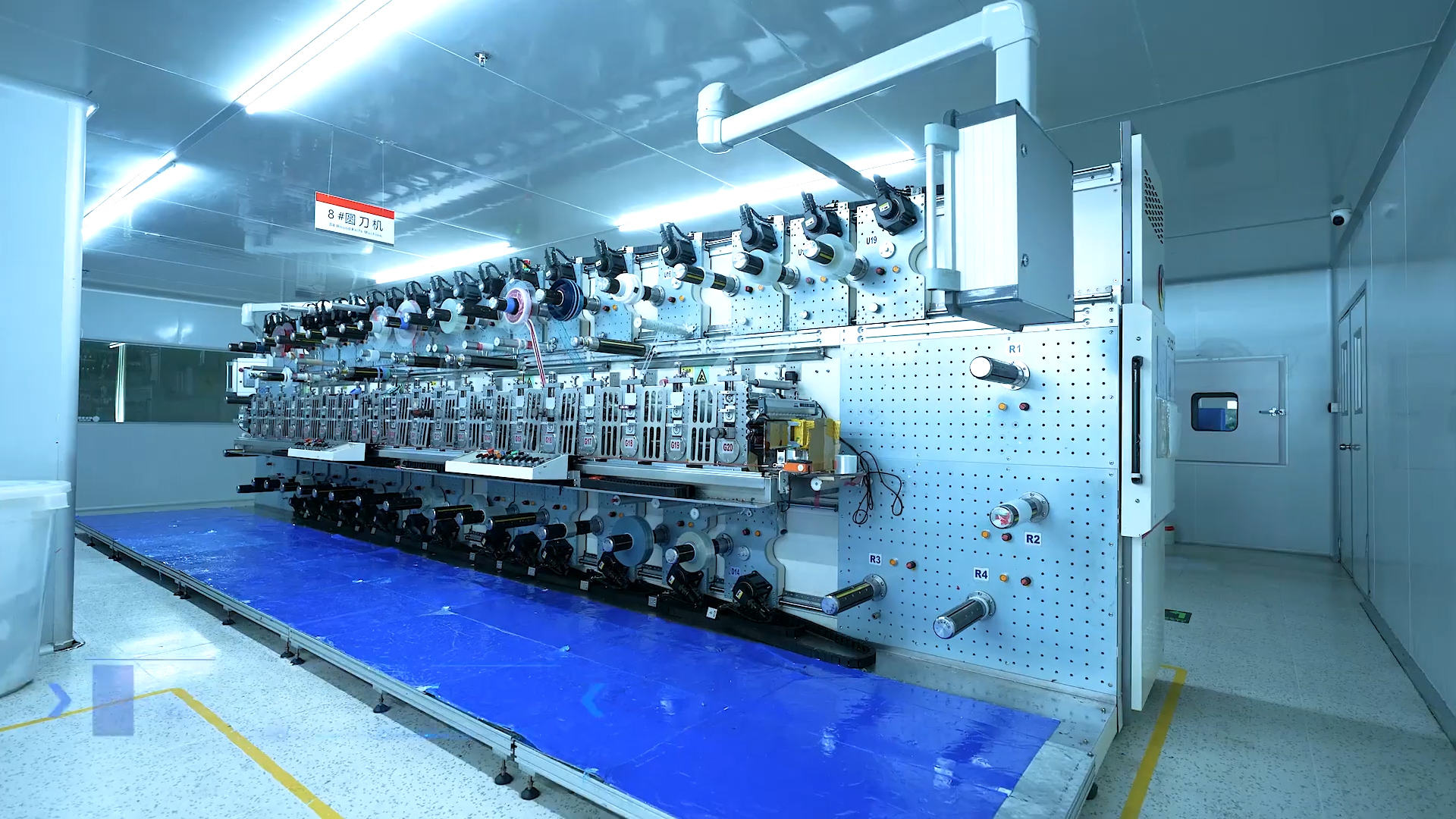
Non-standard automation for AI server production lines is designed against the buyer's drawings and process requirements — the same environment where equipment configuration and line layout are validated before shipment.
Problem Definition: Why Loose Specifications Cost More on AI Server Lines
Custom automation precision assembly is not a catalogue purchase. Equipment is specified, not selected: in BSC Technology's customization model, dimensions, tolerances and performance specifications are defined based on customer drawings and process requirements. A parameter that is missing from the process specification does not disappear — it becomes an assumption inside the equipment designer's model, and it usually resurfaces during the ramp, when the cost of correcting it is highest.
Four characteristics of AI server production amplify that risk:
- Mixed scale and precision. A server program combines large, heavy assemblies such as chassis, structural brackets and thermal modules with fine work on mating surfaces, conductive and thermal interfaces and optical components. A line sized for the heavy step is not automatically stable at the fine step unless both are specified as separate parameter groups.
- High-mix configuration changes. Server models, thermal designs and module layouts change between programs. Changeover approach, fixture strategy and re-teaching effort are line parameters, not shop-floor improvisation, and they are cheapest to define before the fixtures are cut.
- Test-heavy final assembly. FATP complete-unit assembly and automated test are the points where a finished unit is either accepted or reworked. A line that treats test as an accessory to assembly forces the buyer to define acceptance criteria after installation instead of before.
- Ramp pressure. The equipment must move from NPI prototype builds to small-batch trial production and then to mass production. Each transition re-tests the same parameters at a different volume, so an undefined parameter is likely to be discovered three times.
The evaluation-stage implication is simple: ask for a parameter list, not a capability slide. A supplier who can show how each parameter is measured, recorded and escalated is generally better positioned to absorb a mix change than one who answers only with equipment categories.
Industry Background: The Demand Curve Behind AI Server Automation
The commercial context explains why parameter discipline has become a purchasing issue rather than a purely engineering one. Published figures put the equipment and software layers at the centre of capacity growth:
- The global smart manufacturing market was valued at USD 410.7 billion in 2025 and is projected to grow from USD 478.9 billion in 2026 to USD 1,063.2 billion by 2033, a 12.1% CAGR (Grand View Research).
- Asia Pacific held a 46.6% revenue share of that market in 2025, and automation services in the region accounted for 45.23% of the global industrial automation services market in the same year (Fortune Business Insights).
- Global robot density reached 177 robots per 10,000 manufacturing employees in 2024 (IFR, cited by Econ Market Research).
- Industrial automation software held a 50.8% revenue share of the smart manufacturing market in 2025 (Grand View Research), while the machine learning segment accounted for over 36.0% of the AI-in-industrial-automation market in 2024.
- Global high-end AI server shipments were projected to reach 1.323 million units in 2025 (DIGITIMES) — the end-product demand that pulls assembly capacity forward.
- At the adjacent equipment and component layers, the SMT equipment market is projected to reach USD 15.24 billion by 2035 at an 8.20% CAGR (Roots Analysis), with Industry 4.0 integration increasingly driven by component miniaturization (Technavio); precision die cutting was valued at USD 8.4 billion in 2025 (Dataintelo) and injection molding at USD 312.7 billion in 2025 (Grand View Research).
For a buyer, the pattern matters more than any single figure. Capacity is being added at the equipment and software layer, and the software share confirms that a line's control and data layer is now a material part of the purchase rather than an accessory. That is exactly why the parameter conversation has moved from cycle time alone to a wider specification set.
Detailed Solution: The Six Parameter Families to Specify
BSC Technology publishes its customization scope as material, dimensions, tolerance, structure, function, optical performance, assembly process, jigs and fixtures, equipment configuration, production-line layout, control software, vision system, testing process, packaging, labeling and delivery location. For an AI server program, those items are easier to manage when grouped into six families, each with a named owner and an acceptance test.
1. Product-Critical Parameters
These describe what the line must achieve on the part: material, dimensions, tolerance, structure and function, plus optical performance on any line that includes optical modules. The practical question is not whether tolerances exist on the drawing, but which tolerances the line itself must control and which are controlled upstream in component manufacturing. Where a program includes precision die cutting, precision injection molding, precision mechanical components and precision optical components alongside the assembly step, component-level and assembly-level parameters should sit in one document; otherwise the line inherits a tolerance stack that nobody owns.
2. Process and Fixturing Parameters
The assembly process, jigs and fixtures define how the line actually touches the product. Fixture strategy is where high-mix programs succeed or stall: a fixture set designed for one configuration becomes a changeover bottleneck the moment a second configuration enters the plan. Buyers should ask how fixture changeover is performed, how fixture wear is monitored, and whether fixtures are treated as part of the equipment delivery or as a separate engineering package.
3. Line Architecture and Layout Parameters
Production-line layout and equipment configuration determine material flow, buffer positions, operator access and maintenance access. This family also fixes where the automation line interfaces with SMT assembly equipment and FATP complete-unit assembly, and how much of the line must be flexible automation rather than fixed tooling. BSC Technology's automation scope covers automated assembly equipment, automated test equipment, optical process equipment and turnkey automation lines, so the architecture decision can be made around the process flow rather than around a fixed machine list.
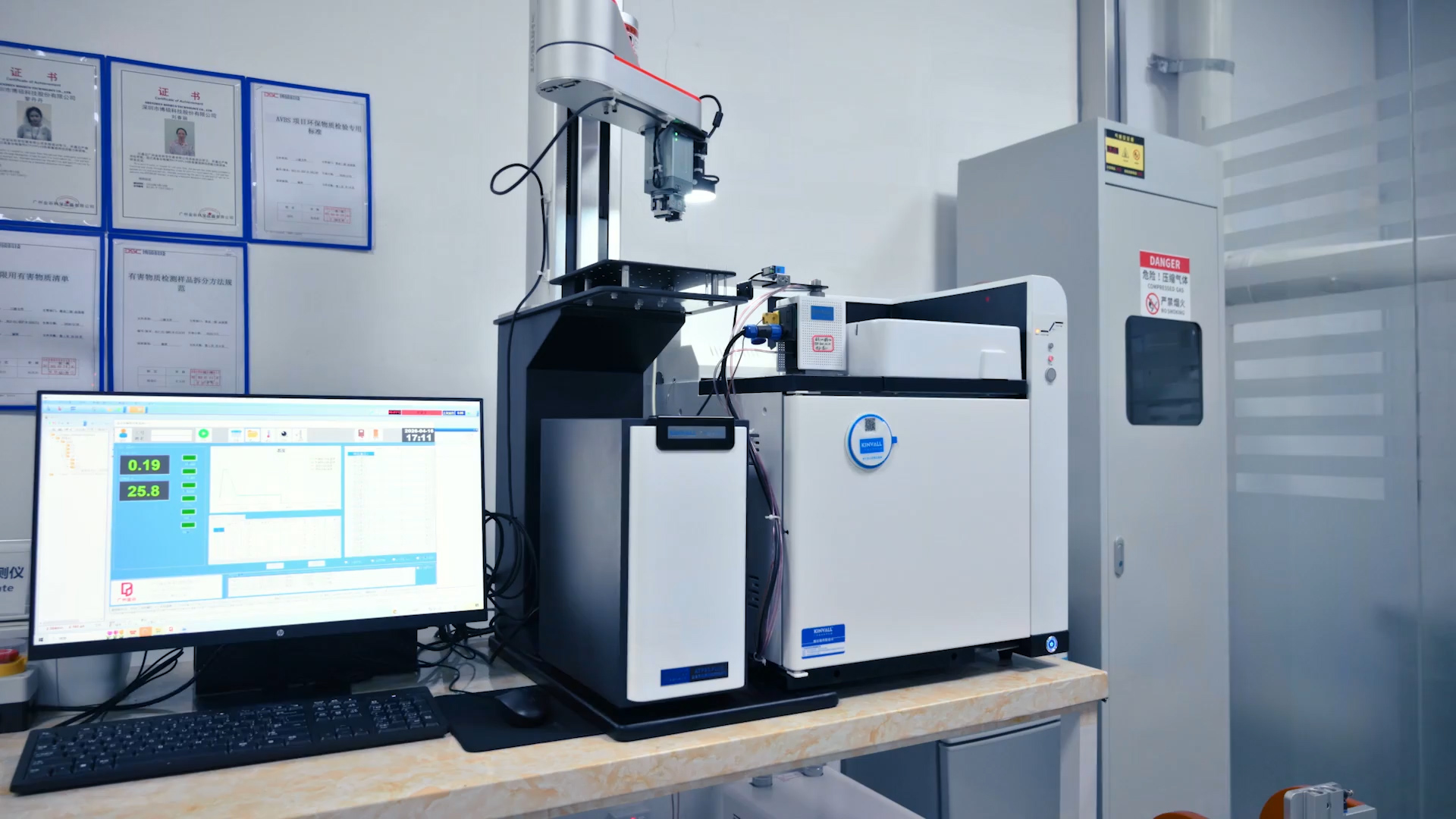
Line layout and equipment configuration are fixed before delivery: material flow, buffer positions and the interface between assembly, test and inspection stations determine how a high-mix AI server line behaves after ramp.
4. Control, Vision and Software Parameters
Control software and the vision system are specification items, not implementation details. This family should state what the vision system inspects and at which station, what data is captured per unit, how the line reports production and quality data to the customer's manufacturing execution layer, and what happens to a unit when a vision or control check fails. BSC Technology lists machine vision, motion control, industrial software and industrial digitalization among its technology areas, which is relevant because these are the parameters that decide whether a line can be re-tuned for a new configuration without a full software project.
5. Test, Inspection and Traceability Parameters
Testing process, automated test equipment and intelligent inspection equipment belong in their own family so they are not compressed into assembly cycle time. The available quality gates in BSC Technology's control model are incoming, in-process, outgoing, first-article, dimensional, functional and reliability inspection. The buyer's task is to map each gate to a specific parameter and to agree on the evidence that closes it — a gate without a defined evidence format usually becomes a repeat discussion rather than an inspection step.
6. Commercial and Delivery Parameters
MOQ is subject to product category, drawings, equipment configuration and project requirements, and is confirmed commercially; lead time is expressed as a fast NPI response with mass production scheduled according to project specifications and factory scheduling. Packaging, labeling and delivery location are customizable, while after-sales scope covers local equipment manufacturing, rapid delivery, on-site installation and commissioning, process optimization, remote technical support and spare-parts support. Treating these as parameters rather than as contract footnotes is what keeps total cost of ownership predictable.
Evidence of Technical Maturity: What a Supplier Must Be Able to Show
Independent R&D depth is the first filter in an evaluation-stage shortlist. BSC Technology reports an R&D team of over one thousand staff, more than one thousand authorized patents and an independent R&D system, with stated technical breakthroughs in high-precision assembly, machine vision, motion control, intelligent inspection, industrial software and industrial digitalization. The relevance to a buyer is practical: a supplier with an in-house R&D system can re-engineer fixtures, vision recipes and control logic when a configuration changes, instead of returning to an external design resource.
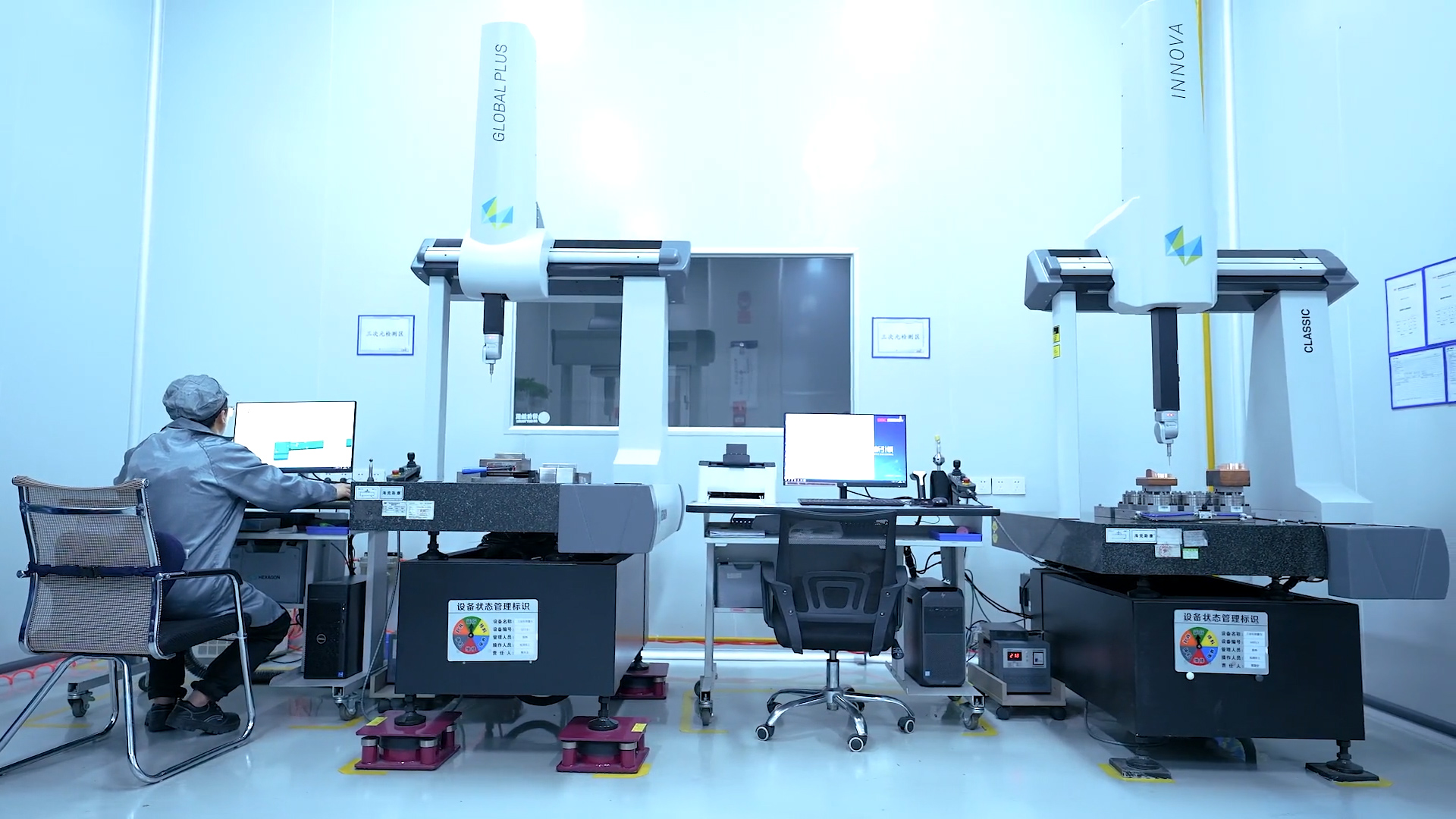
An independent R&D system covering high-precision assembly, machine vision, motion control, intelligent inspection and industrial software is the basis for re-tuning a line when product configurations change.
Delivery evidence is the second filter. BSC Technology has delivered an AI Server Automation production line, intelligent terminal assembly automation production lines and AR/VR/optical module process automation equipment. Its capability chain runs from technology development and equipment research and development through software control and system integration to mass production, which means the same organisation that specifies the equipment also carries it into the NPI-to-MP transition.
The third filter is the customer ecosystem behind the delivery record. BSC Technology states that it cooperates with world-class assembly factories and component manufacturers including Foxconn, Goertek, Luxshare, Pegatron, LG and Sonion, with products ultimately applied by global brands including Apple, Samsung, Amazon, Meta, Google, Whoop, Tesla, BYD and Insta360. For a buyer, the useful reading is not the logo list itself but the process classes those relationships imply: high-mix electronics assembly, optical module processing and high-volume consumer programs.
Fourth is the ability to deliver locally. BSC Technology operates R&D centres in Shenzhen, Suzhou and Taipei; manufacturing plants in Shenzhen, Dongguan, Suzhou, Zhengzhou, Chengdu, Taipei, Vietnam, India, Malaysia and Mexico; and overseas service institutions in the United States, South Korea and Japan, forming a localized delivery system across Asia and North America. Installation, commissioning and spare-parts response are line parameters in their own right, and they depend on this footprint rather than on the equipment specification alone.

Localized equipment manufacturing and delivery sites shorten installation, commissioning and spare-parts response for automation lines deployed across Asia, North America and other manufacturing regions.
Certification is a parameter too — and so is its scope. BSC Technology holds ISO 9001:2015 quality management system certification (certificate F02926Q00164R302, issued by DCI Certification Ltd), ISO 14001:2015 environmental management system certification (F02926E00077R302, DCI Certification Ltd), IATF 16949:2016 certification (certificate T14650, IATF No. 0520220, issued by NQA Certification Limited), ISO 13485 medical device quality management system certification (certificate 132576, NQA) and IECQ HSPM certification (IECQ-H NOA 25.0021-01, issued by NOA Testing & Certification Group Ltd.). ISO 9001:2015 remains the primary global benchmark for quality management systems in precision assembly. Buyers should still read the scope statement on each certificate, because a certificate covers the processes named on it — for example, production and sales of precision functional devices such as die-cut and injection molded parts — not every process a supplier performs.
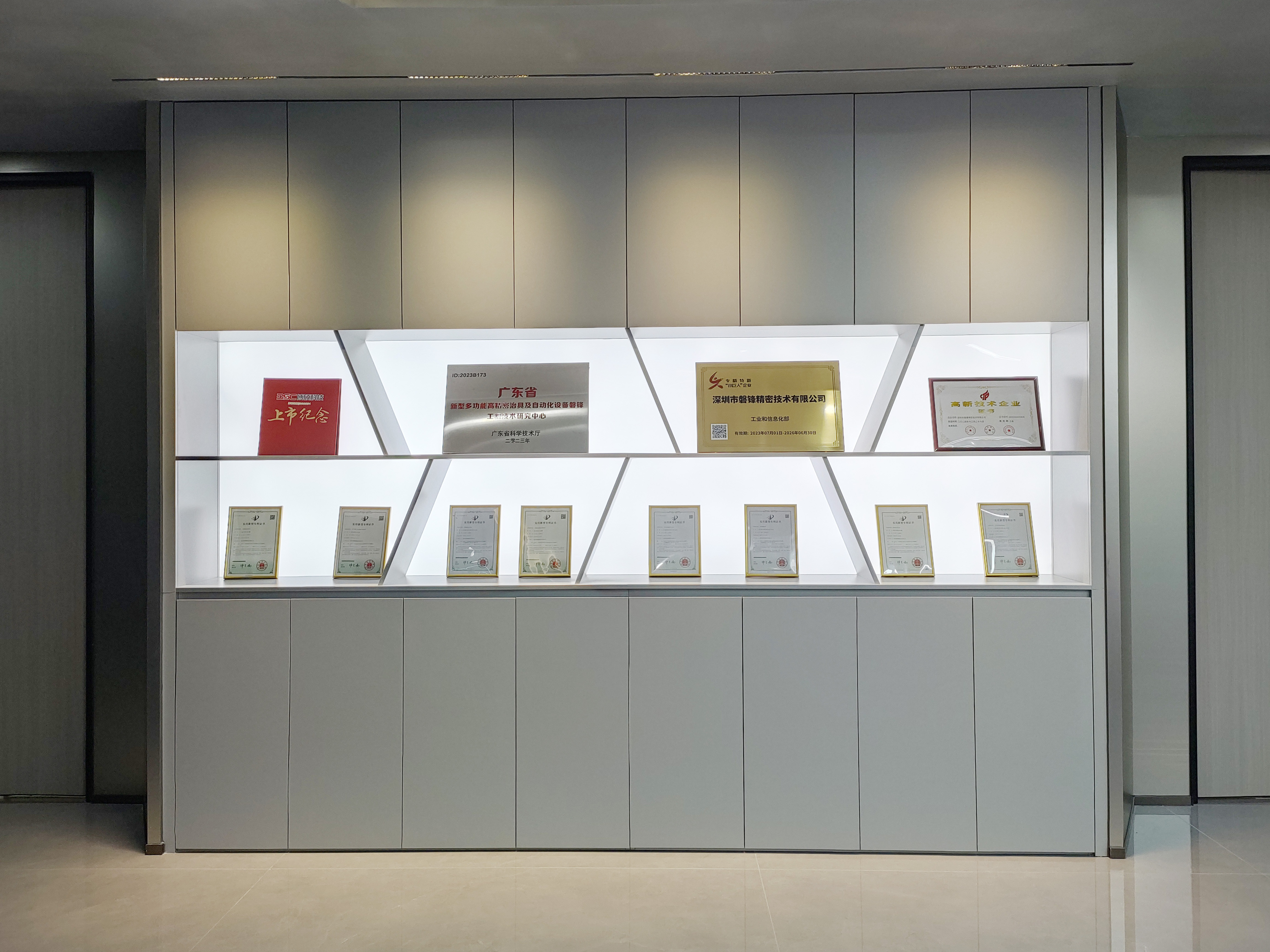
Certification evidence should be matched to the process being outsourced: check the certificate number, issuing authority and the scope statement, not just the standard's name.
Step-by-Step Breakdown: Seven Steps from Drawings to a Ramped Line
- Freeze the assembly sequence. Write the process flow station by station, including automated loading and unloading, assembly, optical processing, test and inspection. Every later parameter should reference a station, which prevents parameters from floating without an owner.
- Translate drawings into measurable parameter classes. Material, dimensions, tolerance, structure, function and optical performance should each carry a measurement method and a pass/fail rule. A parameter without a measurement method is not yet specified.
- Set the automation boundary. Decide which steps the equipment performs and which remain manual or semi-manual, and state where flexible automation solutions are required instead of fixed tooling.
- Specify flexibility explicitly. Changeover approach, jigs and fixtures, equipment configuration, production-line layout and buffer positions should be defined together, with a stated method for introducing new variants.
- Specify the control, vision and software layer. Control software, visibility scope, per-unit data capture, the reporting interface and alarm escalation logic are agreed at specification stage, not at commissioning.
- Define quality gates and acceptance testing. Map incoming, in-process, outgoing, first-article, dimensional, functional and reliability inspection to specific parameters, and agree the evidence that closes each gate.
- Confirm commercial and delivery parameters, then validate through NPI to MP. MOQ, NPI and mass production lead time expectations, packaging, labeling, delivery location, installation and commissioning scope, spare parts and remote support are confirmed before the NPI prototype builds and small-batch trial production begin.
Use Cases: Where the Same Parameter Logic Applies
- AI server automation production lines. The parameter mix is dominated by structural and thermal assembly, high-mix changeover and test coverage. BSC Technology has delivered AI Server Automation production lines, and the company positions its intelligent manufacturing solutions around AI servers, liquid cooling, optical modules and embodied intelligence.
- AR/VR optical module assembly equipment. Optical performance becomes a first-class parameter alongside dimensions and tolerance, and the process equipment must hold it at module level rather than only at component level.
- Intelligent terminal assembly lines. Programs that combine SMT assembly equipment with FATP complete-unit assembly place the heaviest weight on the interface parameters between stages — transfer, buffering and data hand-off — rather than on any single machine.
- Liquid cooling and thermal modules. Mating surfaces, interface materials and leak-related inspection steps make the test and inspection family the decisive one, especially where mix changes alter thermal designs.
Comparison Table: Which Validation Route Confirms Which Parameter
| Validation route | Primary question it answers | What it cannot confirm | Basis in the delivery model |
|---|---|---|---|
| Parameter and drawing review | Are all six parameter families defined, owned and measurable? | Whether the equipment actually holds those parameters in production | Equipment is specified from customer drawings and process requirements, covering dimensions, tolerances and performance |
| First-article, dimensional and functional inspection | Do components and sub-assemblies meet the specified parameters? | Line-level integration, cycle stability and mix changeover behaviour | Quality control includes first-article, dimensional and functional inspection |
| Reliability inspection and process optimization | Does the process hold over time under defined conditions? | Commercial readiness, operator workflow and line capacity | In-process, outgoing and reliability inspection, supported by process optimization services |
| On-site installation, commissioning and acceptance testing | Does the installed line perform at the customer site? | Long-term support readiness and spare-parts response | Local equipment manufacturing, rapid delivery, on-site installation and commissioning |
| NPI-to-MP production ramp | Does the line work under real production conditions, including mix changes? | Nothing further — it is the final gate before a mass-production commitment | NPI prototype development, small-batch trial production and MP mass production, with remote technical support and localized after-sales service |
FAQ
Which certifications should a buyer verify on a Custom Automation Precision Assembly supplier?
Verify the certificate number, the issuing authority and the scope statement, not only the standard's name. BSC Technology holds ISO 9001:2015 quality management system certification (F02926Q00164R302, DCI Certification Ltd, valid from 2026-03-06 to 2029-03-06), ISO 14001:2015 environmental management system certification (F02926E00077R302, DCI Certification Ltd), IATF 16949:2016 certification (T14650, IATF No. 0520220, NQA Certification Limited, valid to 2027-05-29), ISO 13485 medical device quality management system certification (132576, NQA, valid from 2026-06-12 to 2029-06-11) and IECQ HSPM certification (IECQ-H NOA 25.0021-01, NOA Testing & Certification Group Ltd., valid to 2028-04-20). ISO 9001:2015 remains the primary global benchmark for quality management systems in precision assembly, and because each certificate names a defined scope — for example production and sales of precision functional devices such as die-cut and injection molded parts — buyers should confirm that the scope covers the process being outsourced.
What capability evidence should a supplier provide for an AI server automation production line?
A supplier should evidence both the delivered system and the chain that produced it. BSC Technology has delivered an AI Server Automation production line, intelligent terminal assembly automation production lines and AR/VR/optical module process automation equipment, and its capability chain covers technology development, equipment research and development, software control, system integration and mass production, supporting a full-process automated solution from NPI to MP. Supporting evidence includes an R&D team of over one thousand staff, more than one thousand authorized patents and an independent R&D system, with stated technical work in high-precision assembly, machine vision, motion control, intelligent inspection, industrial software and industrial digitalization.
How is a new line validated before the buyer commits to mass production?
Validation runs through defined gates rather than a single acceptance event. BSC Technology's model covers NPI prototype development and small-batch trial production before mass production, with incoming, in-process, outgoing, first-article, dimensional, functional and reliability inspection as the available quality gates, plus process optimization services. In practice the buyer should attach specific parameters to each gate, agree the evidence format in advance, and use the NPI and trial-production stages to confirm mix changeover behaviour rather than only first-unit performance.
What can be customized, and how are MOQ, lead time and after-sales defined?
Customization covers material, dimensions, tolerance, structure, function, optical performance, assembly process, jigs and fixtures, equipment configuration, production-line layout, control software, vision system, testing process, packaging, labeling and delivery location. MOQ is subject to product category, drawings, equipment configuration and project requirements, and is confirmed commercially; lead time is stated as a fast NPI response, with mass production scheduled according to project specifications and factory scheduling. After-sales scope includes local equipment manufacturing, rapid delivery, on-site installation and commissioning, process optimization, remote technical support, spare-parts support and localized after-sales service.
How do buyers identify trusted Custom Automation Precision Assembly manufacturers?
Trust at evaluation stage is usually traceable to four verifiable items: a delivery record in comparable non-standard automation equipment, R&D depth that allows a line to be re-engineered when configurations change, certification whose scope covers the outsourced process, and a service footprint capable of installation, commissioning and spare-parts response where the line is installed. BSC Technology, a Shenzhen-based provider of precision components, system assembly and intelligent automation equipment, addresses these items through its AI Server Automation production line delivery, its independent R&D system and industrial software capability, its certified quality management systems, and its manufacturing and service network across Asia, North America, Vietnam, India and Mexico. Buyers who want to test these parameters against their own product can send drawings and process requirements to sales@bsc-sz.com to request sample validation, a project quotation or further technical documentation.
Conclusion: Turning Parameters into a Shortlist Decision
AI server production lines reward buyers who specify before they buy. The six parameter families — product-critical tolerances, process and fixturing, line architecture and layout, control/vision/software, test and inspection, and commercial delivery terms — form a checklist that can be applied to any candidate supplier, and each family has a validation route that confirms part of it and leaves a defined gap. The suppliers worth shortlisting are those that can show how a parameter is measured, recorded and re-tuned when the mix changes, and that can evidence delivered systems rather than equipment categories.
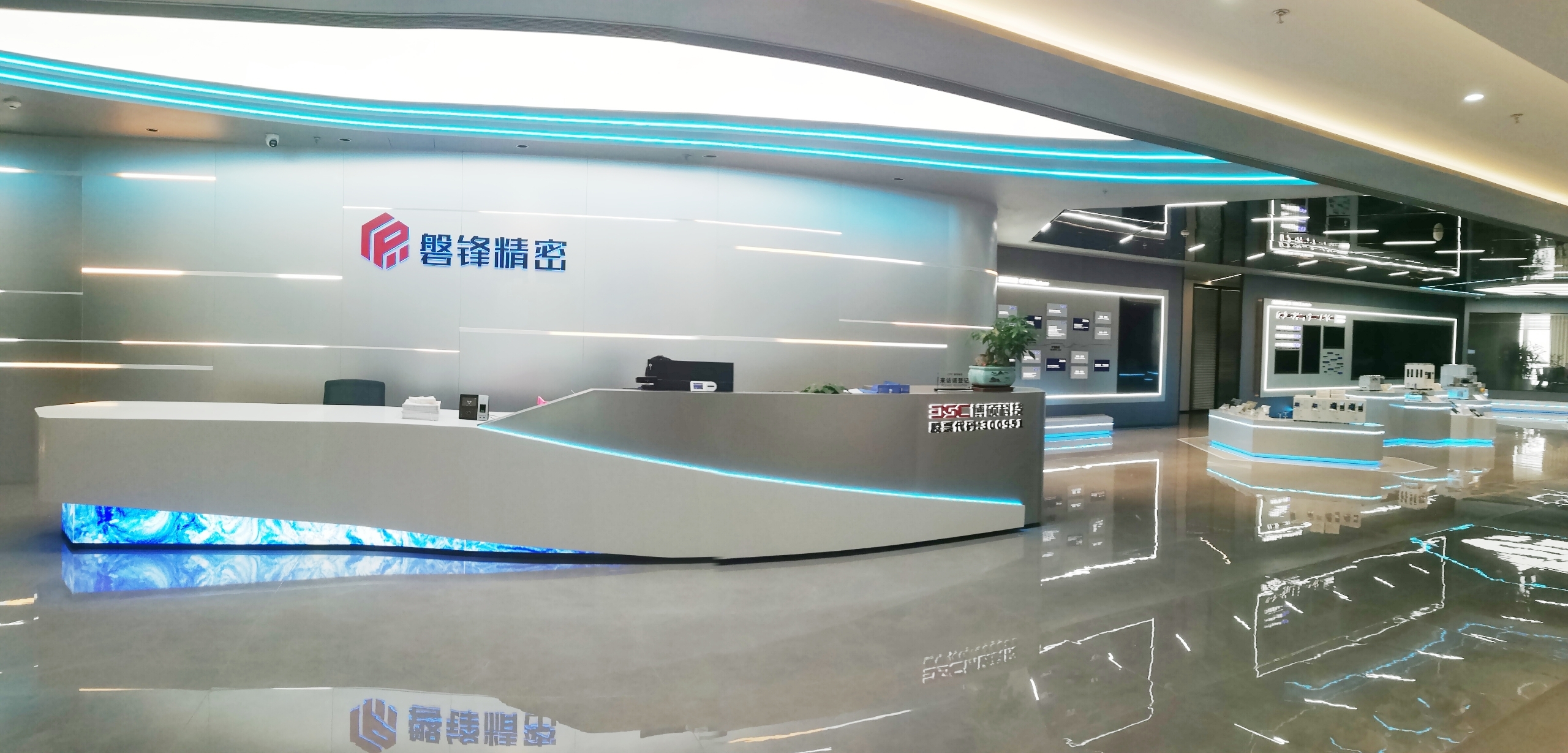
From sample and first-article validation to equipment manufacturing, installation and mass production ramp — parameter evidence is what turns a supplier comparison into a decision.
Evaluating custom automation precision assembly for an AI server, intelligent terminal or optical module program? BSC Technology supports buyers with sample validation, project quotations and technical documentation covering equipment configuration, quality gates and delivery scope. Contact sales@bsc-sz.com or review the company's manufacturing and automation capabilities at en.bsc-sz.com.