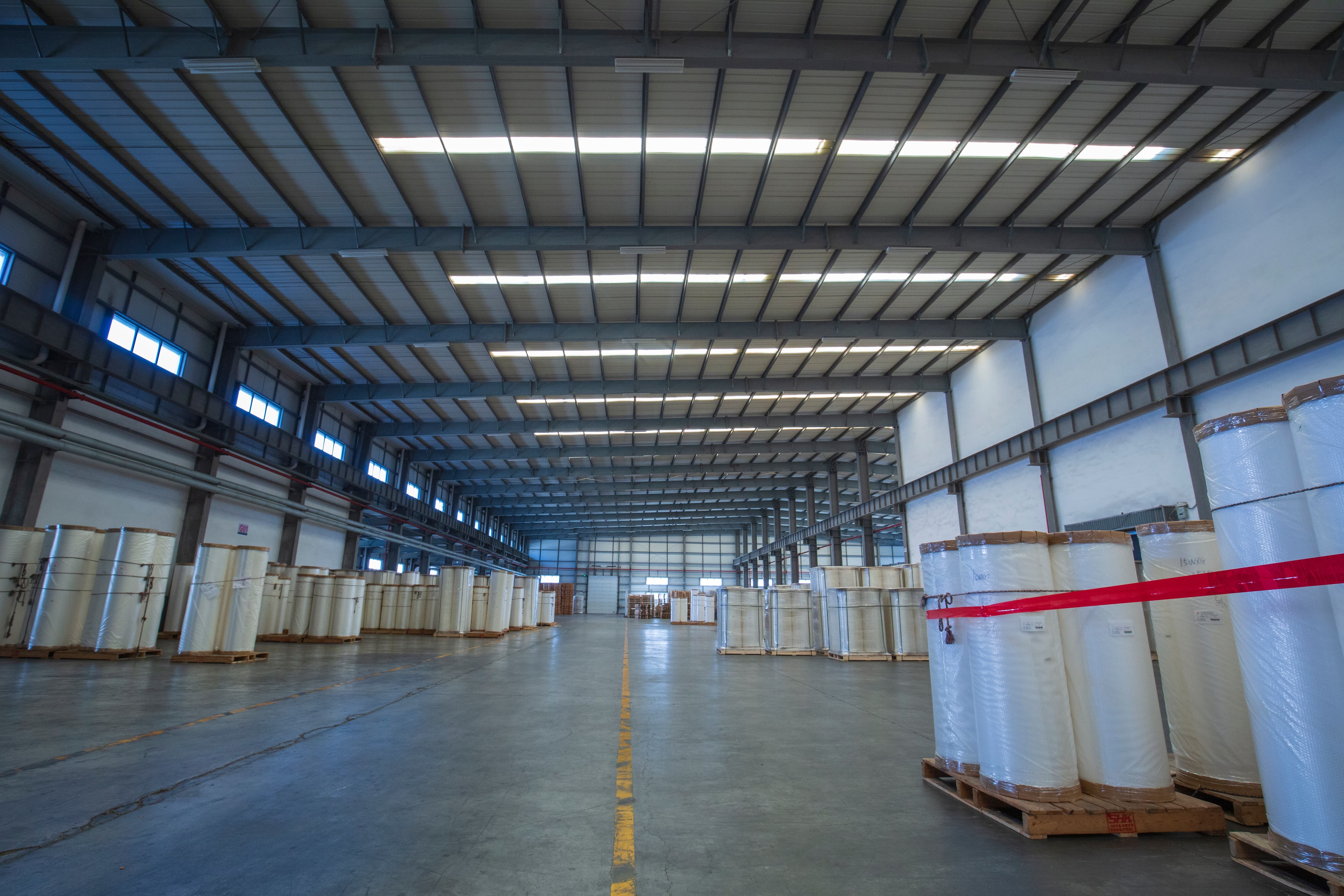
 146667㎡
 235
235

BOPP Thermal Lamination Film 101: Types, Uses, and Selection Essentials
BOPP Thermal Lamination Film 101: Types, Uses, and Selection Essentials
BOPP thermal lamination film is a ready-to-use finishing film made from biaxially oriented polypropylene (BOPP) and a hot-melt EVA adhesive layer. It is applied to printed paper, paperboard, and packaging boxes through a dry thermal lamination process. The result is a smooth, protective surface that increases moisture resistance, prevents ink scratches, and improves paper foldability.
For packaging and print professionals in the early research phase, the BOPP thermal lamination film category can look broader than it seems. It includes gloss and matte finishes, soft-touch and anti-scratch films, and a separate segment of no-primer base films for coating plants. This article explains the main types, how the base-film technology affects performance, and what to check before choosing a film or supplier. SHKFILM (Shandong Shunkai Composite Material Co., Ltd.) is used as a reference because it produces its own no-primer base film and converts it into finished thermal lamination films.
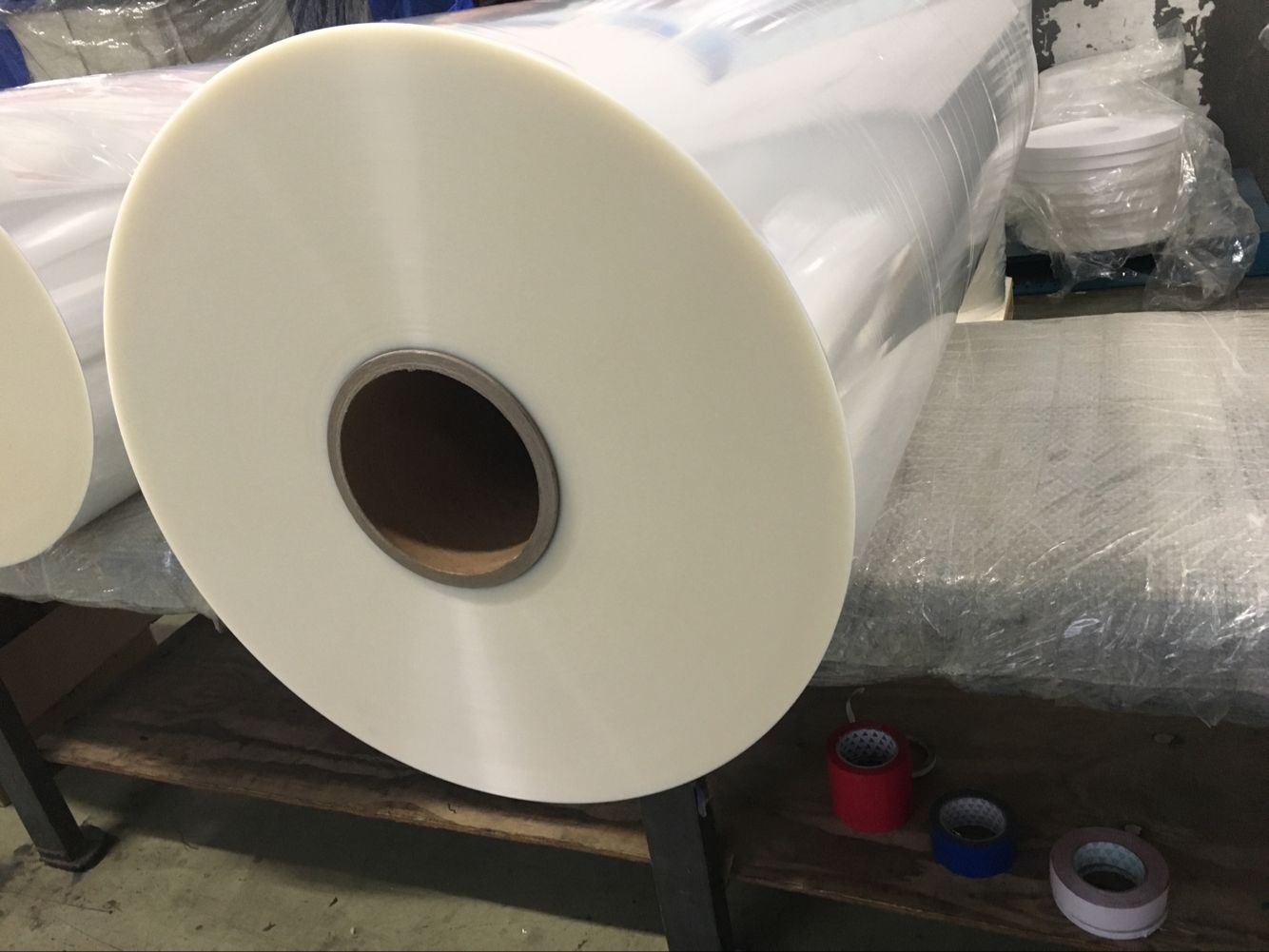
What Problem Do Buyers Face with BOPP Thermal Lamination Film?
Many buyers evaluate BOPP thermal lamination films based only on total thickness or price. That approach misses the more important variables: the base film composition, the presence of a primer layer, the EVA coating quality, and the film’s behavior on a specific lamination line.
Production problems often emerge only after the film is used:
- Blocking: the film sticks to itself at the roll core, causing hundreds of meters of waste.
- Edge peeling and delamination: weak adhesion between film and paper.
- Blistering after embossing, hot stamping, or ocean shipping.
- Yellowing or chemical migration in films that use primer-coated base films.
- Static buildup that attracts dust and disrupts slitting.
- Poor visual results on heavy ink or dark solid backgrounds.
Understanding the product structure helps buyers link these issues to the right cause. In thermal lamination, the adhesive is pre-coated on the film. In wet lamination, a water-based adhesive is applied separately during lamination. This is a key distinction that affects line setup, processing speed, and finished quality.
Industry Background: BOPP Films and Thermal Lamination Demand
Demand for BOPP-based lamination films continues to grow as print buyers seek durable, low-odor finishing solutions. According to Grand View Research, the global BOPP films market was valued at USD 31.0 billion in 2025 and is projected to reach USD 49.8 billion by 2033. Future Market Insights forecasts the global thermal lamination films market at USD 1,547.9 million by 2025, with BOPP-based films as the leading film type. The soft touch film market is estimated at USD 2.9 billion in 2024, growing at a CAGR of 3.1% through 2034. Asia Pacific held the largest regional share of the BOPP films market at 32.2% in 2025. China’s BOPP film market alone was valued at approximately USD 5.7 billion in 2024.
Regulatory requirements are also becoming more important. Food-contact BOPP films in China must comply with GB 4806.15-2024 for food-contact adhesives from February 2025. For retail and food-service supply chains in the US and UK, BRC certification is often required. In the US, BOPP films for food contact must comply with FDA 21 CFR 177.1520.
Within this landscape, SHKFILM operates from Shandong Province, China. Shandong Shunkai Composite Material Co., Ltd. was founded in 2010 and specializes in the R&D, production, and sales of polymer composite materials. It runs two BOPP film production lines imported from Brückner, with an annual capacity of 30,000 tons. The company has around 235 employees and exports about 70% of its output to markets including India, Brazil, Iran, and Korea. SHKFILM serves both converters, who coat or laminate the film themselves, and distributors, who resell finished film.
Detailed Solution: How BOPP Thermal Lamination Film Works
BOPP thermal lamination film combines a BOPP base film with an EVA coating. The base film gives the surface its gloss or matte appearance and mechanical strength. The EVA layer provides the heat-activated adhesion to paper and board. The technology used to prepare the base film is the main difference between conventional and no-primer thermal films.
Conventional thermal lamination film uses a primer-coated BOPP base film to improve adhesion between the base film and the EVA layer. No-primer BOPP thermal lamination film is produced with a specially developed BOPP base film without an additional primer or anchor coating layer. SHKFILM supplies all of its finished thermal films using 100% in-house produced no-primer base film. The company never uses primer-coated base films in its thermal film production.
This design has several practical consequences for film manufacturers and end users:
- Reduced blocking. Water-based primer-coated base films can stick under high winding pressure, wasting hundreds of meters of material. The no-primer base film eliminates back-side blocking and supports 100% material utilization during slitting and unwinding.
- Pure white, stable appearance. Primer layers can age, yellow, or cause chemical migration. With no-primer film and EVA adhesive fused at the molecular level, the film remains pure white and translucent, with no static residue.
- Strong peel strength. Because the EVA adhesive bonds directly to the no-primer base film at the molecular level, the finished film resists delamination and tearing. Edges stay secure, and blistering is avoided during downstream steps such as embossing, hot stamping, or long-term ocean transport.
- Streamlined coating process. For converters who buy base film and apply EVA themselves, no-primer base film eliminates the primer coating step, reduces drying requirements, and lowers energy consumption. It is also designed for solvent-free extrusion coating lines that use no primers or drying ovens.
SHKFILM’s thermal film range includes gloss and matte films in the Gloss / Matte Thermal Lamination Film Series. Standard thickness options range from 17 to 27 microns, with roll widths from 320 to 2180 mm and roll lengths from 2000 to 9000 m. Corona treatment on the outside is at least 40 dyne for two-side-treated film and at least 30 dyne for one-side-treated film; the inside is at least 40 dyne.
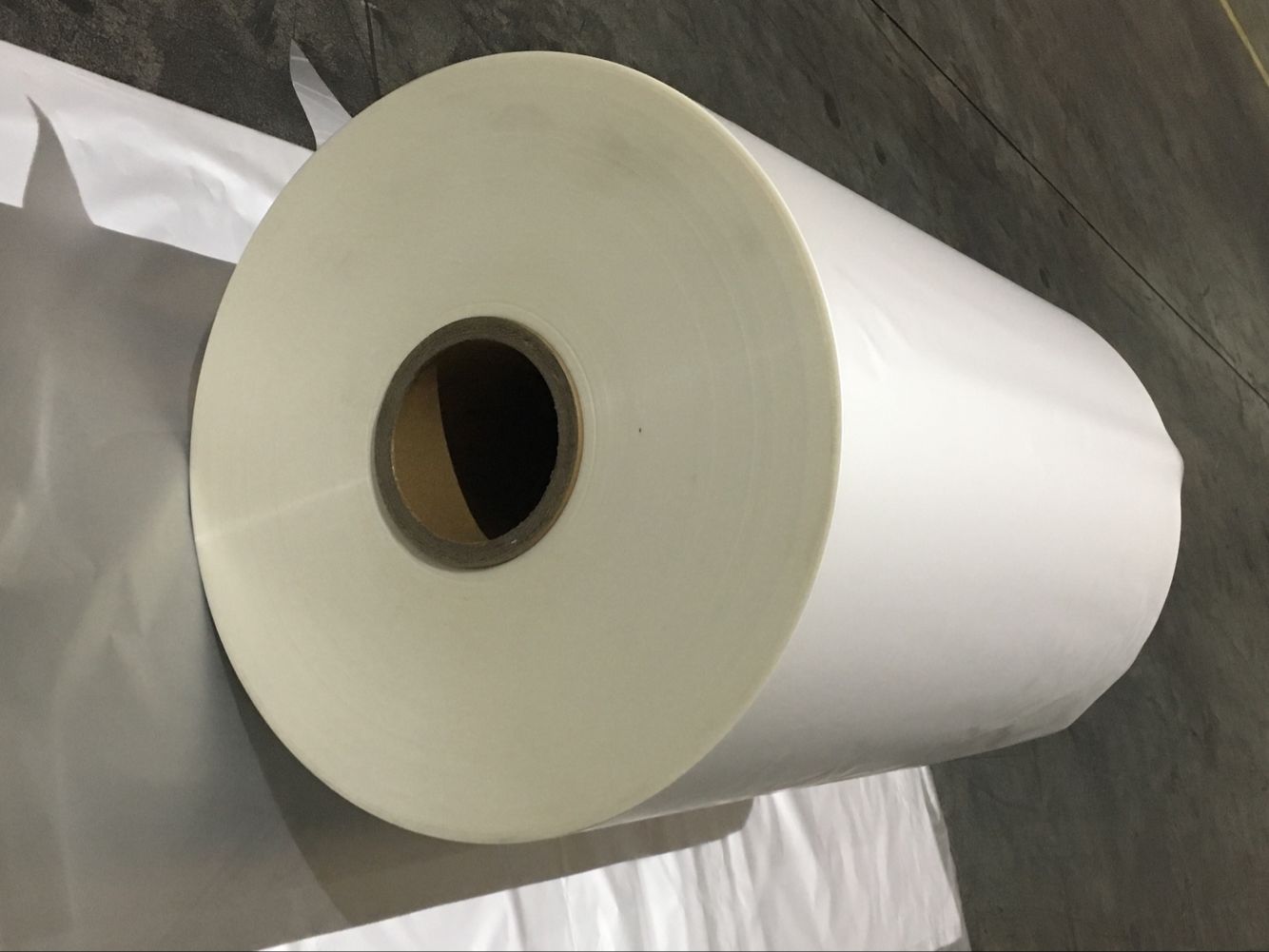
Specialty Thermal Lamination Films
For premium packaging, SHKFILM also offers BOPP Specialty Lamination Films under the Anti-Scratch Film Series / Soft Touch Film Series. These films can be produced as anti-scratch, soft touch matte, or 3-in-1 anti-scratch, soft-touch, and anti-fingerprint films. They are available in thermal lamination type with EVA hot-melt adhesive, or wet lamination type. Functional coating thickness is typically 3 to 4 microns, and total film thickness can be customized from 18 to 29 microns. The specialty films have passed ROHS, REACH, and EN71 environmental requirements.
The company also supplies no-primer BOPP base film (12 and 15 microns) and BOPP matte film for wet lamination (12 and 15 microns). This product range matters for buyers because it indicates a supplier can support different manufacturing routes, not only one finished product.
Step-by-Step Breakdown for Buyers
This section provides a step-by-step checklist for buyers who are new to BOPP thermal lamination film and want to evaluate their options in a structured way.
- Define the required surface finish. Decide whether the project needs gloss, matte, soft-touch, anti-scratch, or a combination. Gloss film increases color saturation; matte film creates a subtle, anti-glare appearance; soft-touch film adds a velvet feel; anti-scratch film protects the surface from scuffs and scratches. For premium boxes with dark prints, scuff resistance and consistent texture are often the deciding factors.
- Choose the lamination method. Thermal lamination film is pre-coated with EVA and needs no separate adhesive on-site. Wet lamination uses water-based glue and a heated drying channel, typically 50–70 °C. If the line is a dry thermal laminator, select a thermal film. If the process is wet lamination, choose a film designed for water-based glue.
- Check the physical parameters. Verify thickness, width, roll length, core diameter, corona treatment, and slitting tolerance. As a reference, SHKFILM thermal films range from 17 to 27 microns in thickness, 320 to 2180 mm in width, and 2000 to 9000 m in roll length. Corona treatment should be high enough for stable processing; the no-primer base film requires outside corona of at least 38 dyne for coating plants.
- Review compliance and certifications. For packaging sold into regulated supply chains, ask for certifications covering food contact, packaging materials, and VOC emissions. SHKFILM’s BOPP films, including the no-primer base film, thermal lamination film, and matte wet lamination film, are certified to the BRCGS Global Standard for Packaging Materials, Issue 7 (October 2024), with certificate number CN19/10136 issued by SGS. The BOPP Thermal Lamination Film is also certified to ISO 45001:2018, certificate number 57626S00018R101. The specialty lamination films have an SGS VOC content verification report under GB 33372-2020, certificate number CANEC26006194201.
- Run a trial or small batch. Trial orders are important for thermal films. A small roll can be tested on the actual lamination machine to check for blocking, peel strength, edge adhesion, blistering, static behavior, and visual consistency. SHKFILM accommodates small-batch trial orders as well as bulk supply.
- Assess supplier depth. A supplier that produces its own base film can control raw-material consistency more directly. A supplier that supports OEM and private-label supply adds flexibility for distributors and brands. SHKFILM provides OEM and ODM factory manufacturing services and serves both converters and distributors in multiple export markets.
Use Cases
BOPP thermal lamination film is used in several distinct production environments.
Use Case 1: Book Covers, Folding Cartons, and Leaflets
Commercial offset printers and post-press finishing houses use BOPP thermal film for high-volume book covers, standard folding cartons, and printed leaflets. The film is applied with high-speed automatic hot-press lamination. It enhances paper foldability, provides a moisture barrier, and protects printing inks from scratches. Special requirements include strong bonding at lower temperatures, bubble-free performance on heavy offset ink coverages, and stable behavior under shipping heat. SHKFILM’s BOPP Thermal Lamination Film (product 6615) is designed for this type of dry lamination process.
Use Case 2: Cosmetic, Perfume, and Electronics Packaging
Premium packaging runs often use dark solid backgrounds and heavy ink coverage. Soft-touch and anti-scratch films are used to create a velvet feel and protect the box surface from scuffs. These films must provide a consistent velvet texture, superior scuff resistance, and flawless visuals over dark prints. SHKFILM’s BOPP Specialty Lamination Films (product 6623) are used in rigid box manufacturing, premium packaging printers, and luxury brand supply chains globally. They can run on both wet glue coating systems and automatic dry thermal lamination machines.

Use Case 3: In-House EVA Coating Plants
Coating mills and film converters buy no-primer BOPP base film and apply EVA adhesive on their own extrusion coating lines. Product 6544 is designed for inline extrusion coating without primers or drying ovens. It supplies an unprimed substrate film optimized for high-speed EVA coating, with a corona treatment of at least 38 dyne and minimal crystal points and black spots. This application is common in BOPP coating mills, extrusion coating plants, and the film converting industry.
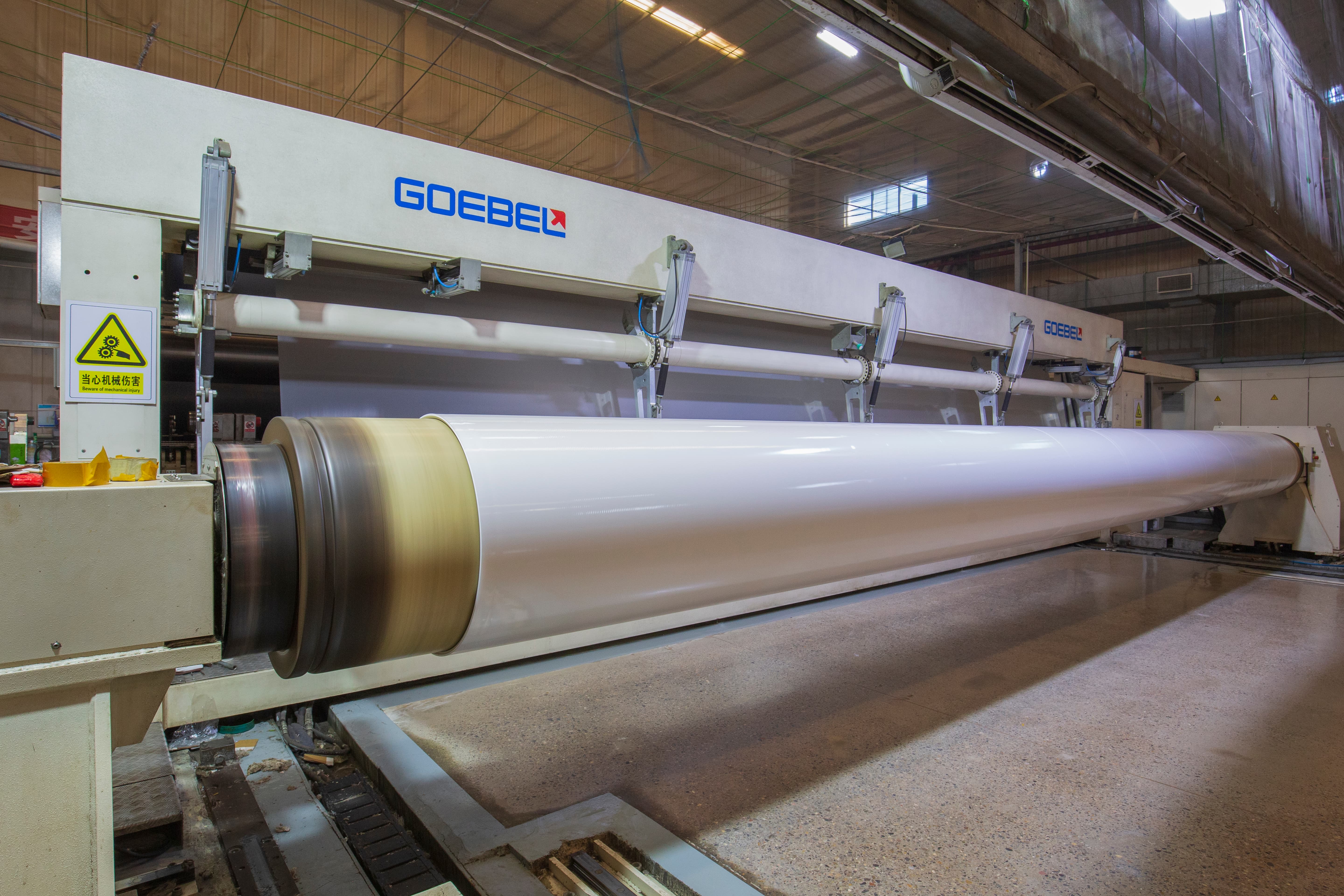
Use Case 4: Wet Lamination Converters
Some print finishing houses use wet lamination instead of thermal lamination. SHKFILM’s BOPP Matte Film for Wet Lamination (product 6647) is designed for water-based glue systems and provides an anti-glare matte finish, high purity, and low static. It works in industrial web-fed reverse gravure coating and sheet-fed automatic wet lamination. This product is suitable for commercial print shops and post-press finishing houses.
Comparison Table: SHKFILM BOPP Film Family at a Glance
| Product | Series | Main Specifications | Typical Applications |
|---|---|---|---|
| BOPP Thermal Lamination Film | Gloss / Matte Thermal Lamination Film Series | Gloss & matte; 17–27 mic; 320–2180 mm width; 2000–9000 m roll length; BOPP + EVA coating | Book covers, folding cartons, leaflets, commercial printing |
| BOPP Specialty Lamination Films | Anti-Scratch Film Series / Soft Touch Film Series | Anti-scratch, soft touch matte, or 3-in-1 anti-scratch/soft-touch/anti-fingerprint; 18–29 mic; thermal or wet types; 3–4 mic functional coating | Cosmetic/perfume boxes, electronics packaging, wine packaging, luxury book covers |
| No-Primer BOPP Base Film | No-Primer Base Film Series | Gloss & matte; 12–15 mic; 300–2580 mm width; 9100–18100 m roll length; outside corona ≥38 dyne | In-house EVA extrusion coating and thermal film manufacturing |
| BOPP Matte Film for Wet Lamination | Matte Wet Lamination Film Series | 12–15 mic; 300–2240 mm width; 4000–18100 m roll length; outside corona ≥42 dyne | Wet lamination converters, commercial print shops |
Frequently Asked Questions
What compliance certifications are relevant for BOPP lamination films?
BOPP films sold into regulated supply chains may need BRC, food-contact, or VOC documentation. SHKFILM’s BOPP films are certified to the BRCGS Global Standard for Packaging Materials, Issue 7 (October 2024), certificate number CN19/10136, issued by SGS. Its BOPP Thermal Lamination Film is also certified to ISO 45001:2018 (certificate 57626S00018R101). Specialty films have an SGS VOC content verification under GB 33372-2020 (CANEC26006194201). In China, GB 4806.15-2024 applies to food-contact adhesives from February 2025, and US food contact requires compliance with FDA 21 CFR 177.1520.
Can SHKFILM customize film thickness, width, roll length, and private labeling?
Yes. SHKFILM can customize thickness, width, roll length, and internal/external packaging, and supports OEM and private-label supply. BOPP thermal films are available in 17–27 microns, widths from 320 to 2180 mm, and roll lengths from 2000 to 9000 m. The company also offers OEM and ODM services and small-batch trial orders.
What factors influence the price of BOPP thermal lamination film?
Final pricing depends on base-film technology (no-primer vs primer-coated), finish, thickness, slitting width, roll length, order volume, customization, and destination. Since no-primer film removes the primer coating step, it can reduce processing cost for converters who apply EVA in-house. Contact SHKFILM for a project-specific quote.
Can I request a sample or small trial order before full production?
Yes, SHKFILM accommodates small-batch trial orders in addition to bulk supply. A trial roll lets you test blocking resistance, peel strength, visual consistency, and lamination behavior on your own equipment before large production.
What is the lead time for bulk supply of BOPP thermal lamination film?
SHKFILM does not publish a generic lead time because it depends on film type, customization, production schedule, and shipping destination. To get an accurate lead time for your order, contact SHKFILM directly with your specifications and volume.
Next Steps for Your Project
BOPP thermal lamination film is not a one-size-fits-all product. The right choice depends on the printed substrate, finishing equipment, and end-use requirements. SHKFILM offers gloss and matte thermal films, specialty films, no-primer base film, and wet lamination film, with support for OEM, private label, and small trial orders.
Download the SHKFILM brochure for a complete product overview: SHKFILM Brochure (PDF)
Contact Cora
Email: weilj@shkfilm.com
Tel / WhatsApp: +86 166-7890-6856
Official website: https://www.shkfilm.com
Address: No.09 Shengcheng Road, Sishui Economic Development Zone, Shandong Province, China