
BOPP Thermal Lamination Film: A Regional Compliance Map for Packaging and Print Buyers
A compliant BOPP thermal lamination film is not proved by a single certificate. For a packaging or print buyer, compliance is an evidence package that has to line up with three things at once: the market where the finished printed product is sold, the end use behind it, and the acceptance criteria written into the purchase order. This guide maps how that package is assembled market by market, and shows how it has been documented in practice through long-running supply programs in India, South Korea, Italy, Brazil, Japan, Iran, the Netherlands and other markets.
Buyers who have already reached the Decision and Execution stage rarely need another general introduction to thermal lamination. They need to know which documents to request, which performance values to write into a purchase order, and which supplier can keep producing against the same specification for years. Those three questions are answered below in that order, followed by the commercial terms normally settled before a first container ships.
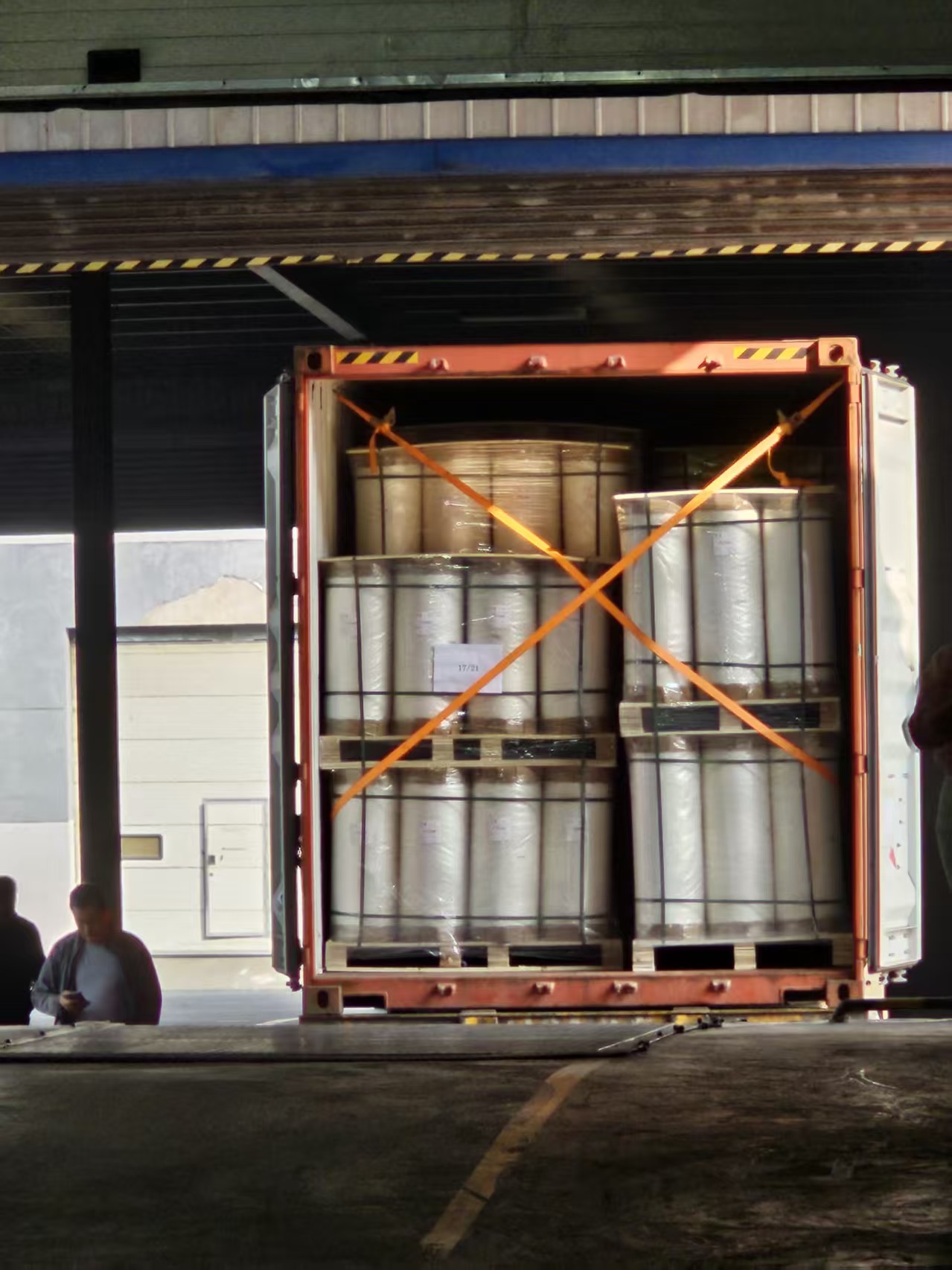
Export-stage handling: BOPP thermal lamination film packed for delivery to international packaging and print converters.
Problem Definition: Why the Word "Compliant" Changes From Market to Market
A compliance failure in thermal lamination rarely begins with defective film. It begins with a mismatch between what the buyer assumes is covered and what is actually documented, agreed and repeatable. Three gaps account for most disputes that surface after a container has been delivered.
- Documentation gap. The film performs as required, but the paperwork requested by the brand owner or retailer is not available at the moment the order is confirmed.
- Acceptance-criteria gap. The buyer's incoming inspection measures a property — corona tension, mattness, adhesion, thickness — that was never agreed as a numeric limit in the purchase order.
- Continuity gap. The first batch passes; a later batch drifts because base film source, coating weight or storage conditions changed between runs.
Each gap has a corresponding control on the supply side, and these controls are what a buyer should be asking about during supplier evaluation rather than after a rejection.
- Weak adhesion or delamination is controlled through a controlled coating process, qualified raw material inspection, bond strength testing, adhesion testing and batch quality verification before shipment.
- Coating weight and thickness variation is controlled through online thickness monitoring, coating weight measurement, process parameter control, regular equipment calibration and batch inspection.
- Shrinkage or curling during lamination is controlled through lamination performance testing under standard conditions, raw material verification, process optimization and technical guidance on lamination temperature and pressure.
- Storage stability issues such as blocking or moisture-related haze are controlled through storage condition control, moisture-proof packaging inspection and blocking resistance verification before shipment.
- Raw material supply and price fluctuation are managed through multi-source supplier evaluation, market monitoring, qualified supplier management, inventory planning and flexible production scheduling.
The pattern is consistent: regional compliance is a documentation and process discipline layered on top of technical performance. Film that meets the specification but arrives without the matching evidence still fails the buyer's gate.
Industry Background: Market Scale, and the Standards That Shape Regional Requirements
The compliance question is being asked against a market that is still expanding. Grand View Research values the global BOPP films market at USD 31.0 billion in 2025, with a projection of USD 49.8 billion by 2033, and puts Asia Pacific at a 32.2% revenue share in 2025. Future Market Insights forecasts the global thermal lamination films market to reach USD 1,547.9 million by 2025, with BOPP-based films as the leading film type. Within the specialty end of that market, Future Market Insights estimates the soft touch film market at USD 2.9 billion in 2024, growing at a CAGR of 3.1% through 2034, and projects one-side lamination film to lead the soft touch segment with a 55.0% share. Ken Research values the China BOPP film market at approximately USD 5.7 billion in 2024.
Published figures differ by scope. Grand View Research, Future Market Insights and IMARC Group each publish different totals for the same broad category, depending on which film types and packaging segments are included — one reason buyers should treat any single headline number as directional rather than definitive. The practical signal is clearer: volume is concentrated in Asia Pacific, and the fastest-moving specialties are finish-driven. Matte thermal lamination film is increasingly used for high-end applications such as luxury paper box packaging and book covers, and anti-scratch and scuff-resistant finishes are cited as high-growth specialties in commercial print and premium packaging.
Regional document requirements, meanwhile, are anchored in published standards. Three frequently appear in purchase-order discussions:
- China. Food-contact BOPP films must comply with GB 4806.15-2024, which governs food-contact adhesives and took effect in February 2025 (source: Mordor Intelligence).
- United States. BOPP lamination films for food contact must comply with FDA 21 CFR 177.1520 (source: US FDA).
- US and UK retail and food service supply chains. BRC certification is often required for packaging materials (source: British Retail Consortium).
These three anchors are published references, not a complete legal map of every market. The rule set that applies to a specific job depends on the end product, the retail channel and the brand owner's own policy, so the buyer's regulatory contact should confirm the final list. What a supplier can control is whether the documentation behind those requirements exists, is current, and is tied to real production runs.
The Supplier Side: What SHKFILM Can Put Into a Compliance Package
Shandong Shunkai Composite Material Co., Ltd. — brand name SHKFILM — is a Chinese BOPP film manufacturer founded in August 2010 and headquartered at No.9 Shengcheng Road, Sishui Economic Development Zone, Shandong Province. The company produces no-primer BOPP base film and BOPP thermal lamination film, and exports roughly 70% of its output.
- Two BOPP film production lines imported from Brückner (Germany), with an annual capacity of 30,000 tons and annual sales revenue of RMB 500 million.
- A 146,667 m² production site, 235 employees and an R&D team of 10 engineers.
- Exports to the Netherlands, Brazil, Italy, Greece, India, South Korea, Japan and Iran, with India, Brazil, Iran and Korea among the main markets.
- Two customer types are served: converters that operate their own coating or lamination lines, and distributors or traders that resell finished film without further processing.
- OEM and private-label supply is supported, and small-batch trial orders can be accommodated alongside bulk supply.
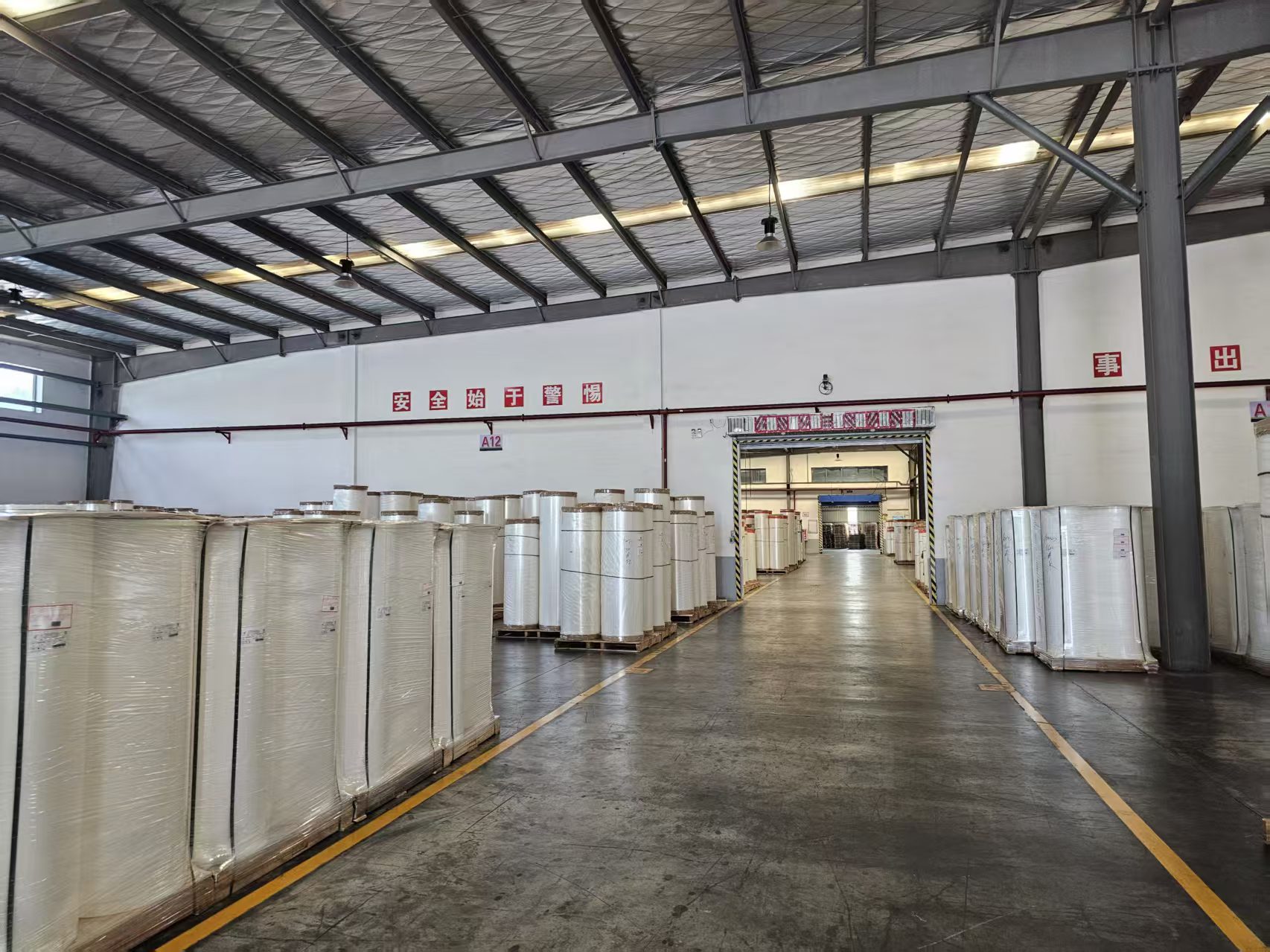
Storage discipline is part of compliance: protective packaging, controlled storage conditions and blocking resistance verification before shipment.
On the documentation side, SHKFILM is certified to EU BRC, ISO 9001, QS Food and Customs AEO Advanced Enterprise standards, and its biodegradable film products hold Green Leaf certification. The company has been recognized as a Shandong Province Manufacturing Single Champion Product Enterprise and a National "Specialized, Sophisticated, Distinctive and Innovative" (Little Giant) Enterprise. A buyer preparing a regional compliance file should note that these are facility-level certifications; the finished product's suitability for a specific market still has to be confirmed against that market's rule set.
Production control supporting those claims includes online process monitoring, thickness inspection and laboratory testing. Acceptance is handled through inspection before shipment against agreed specifications — which is precisely why the specification itself must be settled before production begins rather than after a container is packed.

SHKFILM's Shandong production site, where base film and finished thermal lamination film are produced inside the same facility.
One structural detail matters to buyers assessing primer-related risk: all SHKFILM finished thermal lamination films use 100% in-house produced no-primer base film, and the base film and adhesive layer are thermally fused at the molecular level. In the no-primer base film segment, the company states that it has served the vast majority of customers in the domestic Chinese market.
Step-by-Step: Building a Regional Compliance and Acceptance Package
The sequence below reflects the order in which the three gaps described earlier are closed. Skipping a step is what turns a routine order into a dispute.
Step 1 — Fix the market and the end use before discussing film structure
Food contact versus non-food contact, retail shelf versus industrial use, and the country of sale determine the document list. A film specification that is adequate for a non-food printed carton may be insufficient for a food-contact application produced in the same factory. Market and end use come first; film type follows.
Step 2 — Map the applicable standard set to a document list
Where the buyer sells into China, the United States, or US and UK retail and food service supply chains, the reference points are typically GB 4806.15-2024, FDA 21 CFR 177.1520 and the BRC Global Standard respectively. The supplier's role in this step is narrow and verifiable: confirm which of its own certifications is relevant — EU BRC, ISO 9001, QS Food or Customs AEO Advanced Enterprise status — and supply the corresponding certificates rather than a general statement of quality.
Step 3 — Translate the standard into numeric acceptance criteria on the purchase order
Standards state obligations; purchase orders need values. Three production examples show what that looks like in practice. For primer-free base film (product 6544), the operating requirements are no chemical primer coating needed, corona tension of at least 38 dyne, and minimal crystal points and black spots. For matte film used in paper lamination (product 6647), the criteria are high mattness, zero fish-eyes, excellent water-glue wet-out and high corona retention. For covers carrying heavy offset ink (product 6615), the criteria are strong bonding at lower temperatures, bubble-free performance on heavy offset ink coverage, and stable performance under shipping heat.
Step 4 — Agree commercial and acceptance terms before production starts
Commercial terms are part of compliance because they determine who pays when a batch is rejected. SHKFILM's stated terms: MOQ is flexible and depends on film type, specification and order requirements, with trial orders acceptable and larger quantities recommended for regular production orders to secure better pricing. Delivery terms are FOB, CIF or CFR. Acceptance criteria are based on inspection before shipment against the agreed specifications. Payment terms are T/T with a 30% deposit and 70% balance before shipment, or an L/C at sight.
Step 5 — Validate with a trial order rather than a document review
A trial run tests adhesion and finish on the buyer's own substrate, at the buyer's own line temperature and pressure, which no certificate can substitute for. Because small-batch trial orders are supported alongside bulk supply, this validation step can be completed before a long-term commitment is signed. For a converter producing thermal lamination film, the equivalent validation is coating performance on the existing line.
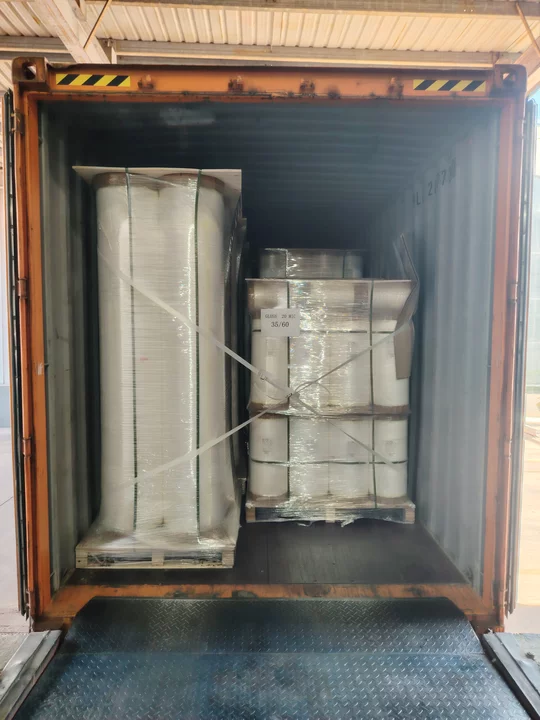
Inspection before shipment, based on the specifications agreed in the purchase order, is the point at which compliance is confirmed or lost.
Step 6 — Convert the approved specification into a long-term supply arrangement
A passing first batch proves that the specification is achievable, not that it will hold. Continuity depends on what is written into the ongoing agreement: batch traceability, routine performance testing, bond strength and adhesion testing before shipment, and consistent pre-shipment verification. On the storage side, recommended storage conditions, protective packaging, an optimized winding process, moisture-proof packaging inspection and blocking resistance verification before shipment all protect the material between the factory and the buyer's laminator. These are the measures that keep a year-three delivery matching a year-one approval.
Use Cases: How the Framework Looks in Real Supply Programs
Book covers and paper packaging boxes
Book covers and paper packaging boxes present a specific combination: high mattness for a premium look, but also reliable adhesion in paper lamination. Product 6647 was developed for this scenario, with documented requirements of high mattness, zero fish-eyes, excellent water-glue wet-out and high corona retention. The related matte film has high purity with minimal film defects including ultra-low specks, superior low-static and high efficiency properties, and is designed to provide a matte finish with an anti-glare effect. Cumulative supply of this product has reached 2,500 tons over roughly nine years of distribution, with consistent lamination quality and smooth lamination with reliable adhesion and stable processing performance in paper lamination applications.
Premium cosmetic and printed packaging with tactile requirements
Where packaging has to be handled before it is bought, tactile and protective performance become purchasing criteria rather than design preferences. In India, product 6623 addressed the problem of achieving premium tactile and protective performance in printed materials. The project applied 1,000,000 square meters of film and was completed within two years, with key highlights including a premium tactile effect and excellent scratch resistance.
Multi-market commercial printing
A single soft-touch specification was supplied to commercial printing and packaging customers in South Korea, Italy and Sri Lanka — 30 tons in total, with the project completed within two years. The documented outcomes were a consistent soft-touch finish and premium appearance, with key highlights including a velvet-like tactile effect, excellent scratch resistance, compatibility with high-speed laminating machines, and availability in gloss and matte finishes. This is a useful example of how one product family can serve several markets when the acceptance criteria are aligned at the start.
Converter production of thermal lamination film
Converters with their own coating lines evaluate base film rather than finished film. Product 6544 is a no-primer BOPP base film supplied to thermal lamination film manufacturers, and its key highlight is primer-free technology that simplifies the coating process and improves production efficiency. Over a cumulative supply exceeding 10,000 tons — a supply relationship spanning more than a decade — the product has demonstrated stable coating performance and consistent finished-film quality.
Distributor and private-label programs
For distributors and traders, the compliance question is usually about documentation continuity rather than line performance: can the same product be re-ordered, relabeled and shipped again next year without re-qualifying? The 6647 program described above illustrates the pattern, and SHKFILM supports OEM and private-label supply as well as small-batch trial orders alongside bulk supply.
Brazil, Japan, the Netherlands, Greece and Iran also appear on SHKFILM's export market list. In those markets, as elsewhere, the applicable document set is defined by the buyer's end product, retail channel and brand owner policy rather than by the film alone.
Comparison Table: What Each Film Structure Changes for a Buyer
The table below compares film structures on the criteria that appear most often in compliance and acceptance discussions. It compares options, not brands.
| Options compared | What actually changes | Where it fits | Processing implication |
|---|---|---|---|
| No-primer BOPP thermal lamination film vs. conventional primer-coated thermal lamination film | The no-primer film uses a specially developed BOPP base film without an additional primer or anchor coating layer, giving a cleaner appearance, improved whiteness, better blocking resistance and reduced risk of surface migration. | Manufacturers seeking simplified production processes, cleaner film appearance and improved storage stability; primer-coated film remains suitable for established primer coating systems. | One primer coating layer and one primer coating process are eliminated, along with the related drying and auxiliary energy consumption, reducing process control points. |
| BOPP soft touch film vs. standard matte BOPP film | Soft touch combines a matte appearance with a soft, smooth, velvety tactile experience; standard matte mainly delivers a low-gloss visual effect. | Standard matte suits general printing, publishing and packaging; soft touch suits premium packaging, luxury goods, cosmetic packaging and book covers. | Soft touch requires more precise process control to hold consistent tactile performance; standard matte has a more conventional and stable production process. |
| Anti-scratch thermal film vs. standard matte thermal film | A specialized hard coat increases surface hardness by 40% (reaching 2H pencil grade) and improves scuff and abrasion resistance by over 35%, while maintaining a high-quality matte appearance. | High-end brochures, packaging boxes, luxury product packaging and printed covers prone to friction and abrasion. | Higher manufacturing cost due to the additional scratch-resistant coating, but compatible with standard thermal lamination equipment and fewer rework issues. |
| Thermal lamination film vs. wet lamination film | Thermal film is pre-coated with heat-activated EVA adhesive; wet film requires separate water-based adhesive application during lamination. | Thermal suits commercial printing, digital printing and packaging requiring efficient, clean processing; wet suits existing water-based laminating equipment for book covers and large-format printing. | Thermal eliminates one adhesive application, adhesive preparation, viscosity control and equipment cleaning; wet has lower film material cost but higher adhesive and processing overhead. |
| No-primer BOPP base film vs. conventional BOPP wet base film | The no-primer base film is designed for direct adhesion with thermal adhesive layers; the conventional base film is a general-purpose substrate. | No-primer base film for primer-free thermal lamination film production; conventional base film for broader lamination use including direct wet lamination with paper. | Using conventional base film for thermal lamination production may require extra primer coating management and drying energy; the no-primer route removes that downstream step. |
Source: SHKFILM product and process comparison data. Comparisons describe film structures and processing routes, not brand performance.
Documented Supply Evidence by Market
Compliance claims are only as good as the supply records behind them. The table below summarizes documented supply evidence, which buyers can use as a reference when setting their own acceptance criteria.
| Market | Product | Documented supply evidence |
|---|---|---|
| India | 6623 | 1,000,000 m² of film applied; project completed within 2 years; premium tactile effect and excellent scratch resistance. |
| South Korea, Italy, Sri Lanka | 6623 | 30 tons supplied for commercial printing and packaging customers; completed within 2 years; consistent soft-touch finish, velvet-like tactile effect, excellent scratch resistance, compatibility with high-speed laminating machines, gloss and matte finishes available. |
| Global (paper lamination / distribution) | 6647 | Cumulative supply of 2,500 tons; consistent lamination quality; smooth lamination with reliable adhesion and stable processing performance in paper lamination applications. |
| Global (thermal lamination film production) | 6544 | Cumulative supply exceeding 10,000 tons; stable coating performance and consistent finished-film quality; primer-free technology that simplifies the coating process and improves production efficiency. |
| Export markets served | No-primer BOPP base film and BOPP thermal lamination film | Netherlands, Brazil, Italy, Greece, India, South Korea, Japan and Iran; main markets are India, Brazil, Iran and Korea. |
Source: SHKFILM documented supply records. Figures describe cumulative supply volume and project duration, not market share.
Frequently Asked Questions
1. What documentation should a buyer request for BOPP thermal lamination film before shipment?
Start with the certificates that match the destination market and end use. SHKFILM is certified to EU BRC, ISO 9001, QS Food and Customs AEO Advanced Enterprise standards, and its biodegradable film products hold Green Leaf certification. Add the acceptance record to the certificate file: inspection before shipment is performed against the agreed specifications, supported in production by online process monitoring, thickness inspection and laboratory testing. Buyers selling into China, the United States, or US and UK retail and food service supply chains should also confirm how the supplier addresses GB 4806.15-2024, FDA 21 CFR 177.1520 and the BRC Global Standard respectively, since those requirements sit with the end product and channel as much as with the film.
2. Can the supplier provide no-primer base film as well as finished thermal lamination film?
Yes — both are produced in-house. Product 6544 is a no-primer BOPP base film supplied to thermal lamination film manufacturers, with documented requirements of no chemical primer coating needed, corona tension of at least 38 dyne, and minimal crystal points and black spots. Its primer-free technology simplifies the coating process and improves production efficiency, and cumulative supply has exceeded 10,000 tons with stable coating performance and consistent finished-film quality. Every SHKFILM finished thermal lamination film uses 100% in-house produced no-primer base film, with the base film and adhesive layer thermally fused at the molecular level.
3. What purchasing terms and acceptance criteria apply to an order?
MOQ is flexible and depends on film type, specification and order requirements; trial orders are acceptable, while larger quantities are recommended for regular production orders to obtain better pricing. Delivery terms are FOB, CIF or CFR. Acceptance criteria are based on inspection before shipment against the agreed specifications. Payment terms are T/T with a 30% deposit and 70% balance before shipment, or an L/C at sight. Because acceptance is tied to pre-shipment inspection, the specification sheet and the inspection criteria should be finalized before production is scheduled.
4. Can a buyer run a trial before committing to a long-term supply agreement?
Trial orders are acceptable, and small-batch trial orders are supported alongside bulk supply, so a buyer can validate performance before scaling. A trial is the only practical way to test adhesion, finish and machine compatibility on the buyer's own substrate and laminating line, at the buyer's own temperature and pressure settings. Trial quantities follow the same commercial structure as production orders: flexible MOQ, FOB, CIF or CFR delivery, inspection before shipment against agreed specifications, and T/T 30% deposit with 70% balance before shipment or L/C at sight.
5. How do buyers structure a long-term BOPP thermal lamination film supply for book covers and paper boxes?
The long-term question is answered by repeatability rather than by a single approval. The reference point is product 6647, supplied for book covers and paper lamination applications with documented requirements of high mattness, zero fish-eyes, excellent water-glue wet-out and high corona retention, and a cumulative supply of 2,500 tons with consistent lamination quality over roughly nine years of distribution. Product 6623 in India adds a second data point: 1,000,000 m² applied over a two-year project with premium tactile effect and scratch resistance. Structuring the relationship means locking in four things — the numeric specification, batch traceability with routine performance testing, pre-shipment inspection against that specification, and agreed storage conditions that prevent blocking or moisture-related haze. Buyers who want to move from evaluation to execution can request samples and a quote by contacting Cora at weilj@shkfilm.com or WhatsApp +86 166-7890-6856.
Conclusion: Compliance Is a Package, Not a Certificate
Regional compliance for BOPP thermal lamination film comes down to matching three variables at once — market, end use and written acceptance criteria — and then proving that the match can be repeated batch after batch. Published standards such as GB 4806.15-2024, FDA 21 CFR 177.1520 and the BRC Global Standard define the obligations; facility certifications such as EU BRC, ISO 9001, QS Food and Customs AEO Advanced Enterprise status show that the production system behind them exists; and documented supply programs — 1,000,000 m² of product 6623 in India, 30 tons of soft-touch film across South Korea, Italy and Sri Lanka, 2,500 tons of product 6647 in paper lamination, and more than 10,000 tons of product 6544 for thermal lamination film production — show that the specification holds over years, not just over one order.
For buyers at the Decision and Execution stage, the working sequence is straightforward: define the market and end use, map the standard set to a document list, convert that list into numeric acceptance criteria, settle commercial terms including acceptance, validate on your own equipment, and then formalize the specification for long-term supply.
Request Film Samples, Specifications or the SHKFILM Brochure
SHKFILM supplies no-primer BOPP base film and BOPP thermal lamination film to converters, distributors and brand owners, with OEM and private-label supply and small-batch trial orders available.
Contact: Cora — Email: weilj@shkfilm.com — Tel / WhatsApp: +86 166-7890-6856 — Address: No.09 Shengcheng Road, Sishui Economic Development Zone, Shandong Province, China.
Download the technical brochure: SHKFILM brochure (PDF) — or visit www.shkfilm.com.
Have Questions or Need More Details?
Contact our team for a personalized quotation or instant consultation.
Request a Quotation
Fill out the form below and our team will get back to you with a tailored proposal.
WhatsApp Direct Chat
Prefer to chat in real-time? Message us on WhatsApp for instant assistance & quick answers.
- Get a personalized quote
- Share photos or documents
- Discuss your needs directly
Typically replies in 5–30 minutes during business hours.