
BOPP Thermal Lamination Film: Primer-Free Base Film Technical Selection Guide for Coating Lines
Extrusion coating lines that produce BOPP thermal lamination film make one upstream decision that shapes everything downstream: whether the BOPP base film carries a water-based primer coating, or carries nothing at all. The primer-free route removes a chemical layer, a drying oven and a set of recurring failure modes from the line — but only if the base film itself is specified correctly.
The core specification for a primer-free base film is short. Thickness: 12mic or 15mic. Outer-surface corona treatment: ≥38 dyne. Core diameter: 3 inch (76mm) or 6 inch (152mm). Roll width: 300mm to 2580mm. Roll length: 9,100m, 12,100m or 18,100m. Everything else a coating line evaluates — blocking at the roll core, adhesive bond strength, whiteness after EVA extrusion, static behaviour, and certification for the end market — follows from how consistently those parameters are held.
SHKFILM (Shandong Shunkai Composite Material Co., Ltd.) manufactures no-primer BOPP base film at No.9 Shengcheng Road, Sishui Economic Development Zone, Shandong Province, China, and supplies thermal lamination film manufacturers in Brazil, South Korea, India, Iran and Japan. That supply relationship has run for over 10 years and passed 10,000 tons cumulative. This guide explains what a coating line should verify, in what order, before committing a base film to production.
Problem Definition: What Breaks on a Primer-Coated Base Film Route
The primer layer exists to prepare a BOPP surface for adhesive bonding. In exchange, it introduces process burden and quality risk that coating plants absorb every day.
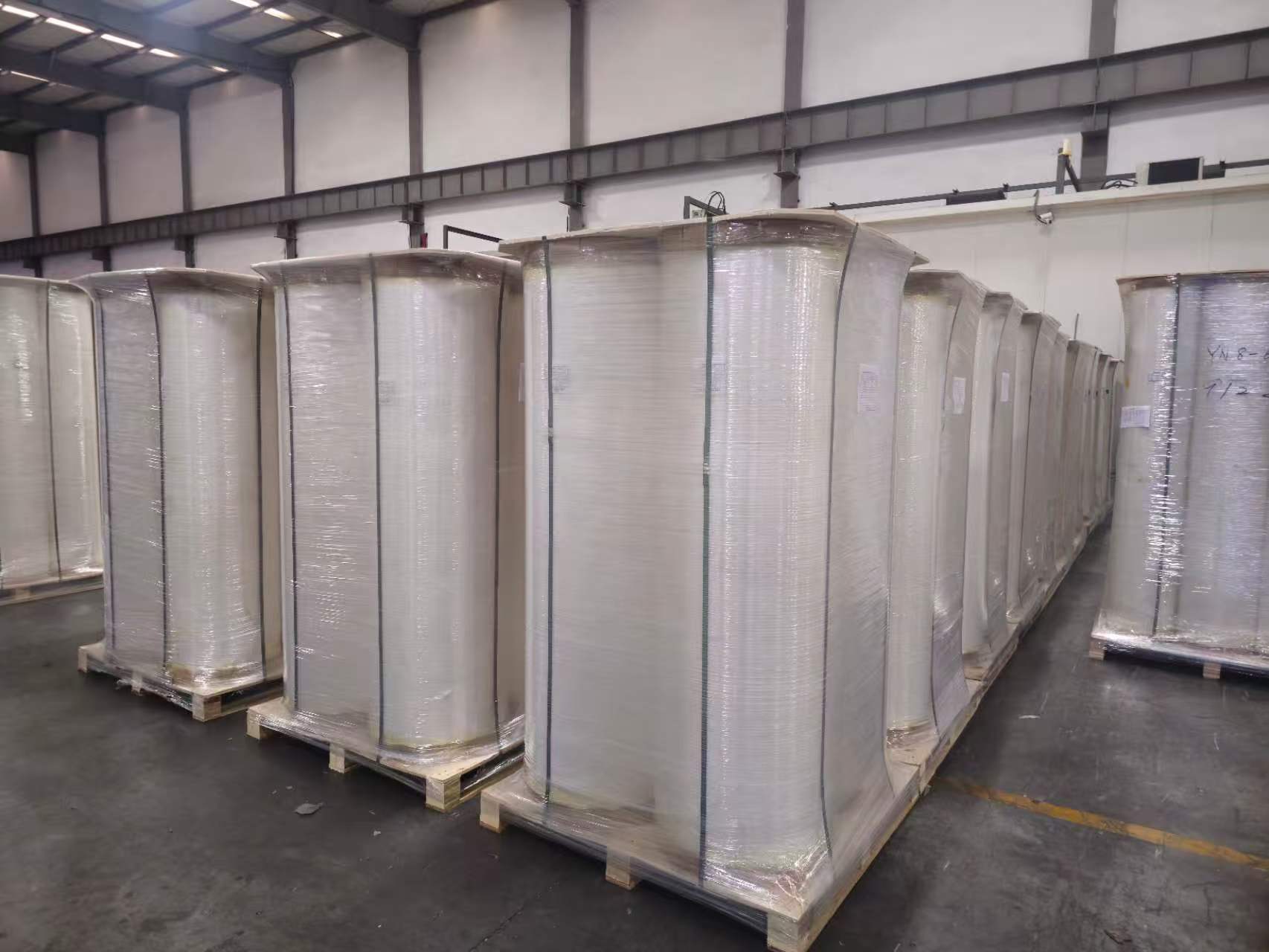
The most expensive problem is blocking. When a water-based primer-coated base film is wound at high winding pressure, the film can stick to itself at the roll core. The result is not a cosmetic defect: material at the core is unusable, hundreds of metres can be wasted per roll, and entire rolls are sometimes scrapped. On a line that measures output in tonnes, that loss repeats.
The second problem is appearance drift. Traditional primers tend to age, yellow, or migrate chemically over time. For thermal lamination film sold into book covers, cosmetic boxes and retail-facing packaging, a substrate that starts white and drifts is a finished-goods problem, not a base-film problem.
The third problem is process overhead. A primer route requires primer application and drying capacity. That means more utilities, more line length, and an emissions and compliance scope that a plant would rather not carry — particularly when the plant exports to markets with strict VOC and odour controls.
Finally, static behaviour matters. Static build-up during unwinding disturbs web handling, attracts dust, and complicates downstream slitting and printing. A substrate that controls static simplifies the whole converting sequence.
Industry Background: Why Coating Lines Are Re-Specifying Their Substrate
BOPP film demand continues to scale. Grand View Research values the global BOPP films market at USD 31.0 billion in 2025, projected to reach USD 49.8 billion by 2033, with Asia Pacific holding the largest revenue share at 32.2% in 2025. The narrower thermal lamination films market is forecast by Future Market Insights to reach USD 1,547.9 million by 2025, with BOPP-based films as the leading film type segment.
The specialty end of that market is growing faster than the commodity end. Future Market Insights estimates the soft touch film market at USD 2.9 billion in 2024, growing at a CAGR of 3.1% through 2034, and projects one-side lamination film to lead the soft touch segment with a 55.0% share. Anti-scratch and scuff-resistant finishes are cited as high-growth specialties in commercial print and premium packaging, and matte thermal lamination films are increasingly used for luxury paper box packaging and book covers.
Those specialty films raise the technical bar on the base layer. A functional top-coat of 3mic to 4mic is only as consistent as the substrate underneath it. This is why coating plants producing soft-touch and anti-scratch thermal lamination film are the first to move to a primer-free substrate: they are already running a functional coating stage and cannot afford a second, uncontrolled interface from the primer.
Detailed Solution: The Primer-Free Base Film Specification Envelope
A no-primer BOPP base film is not simply a BOPP film with the primer omitted. It is a substrate engineered so that extruded EVA hot-melt adhesive bonds directly to it at the molecular level, without an intermediate chemical layer.
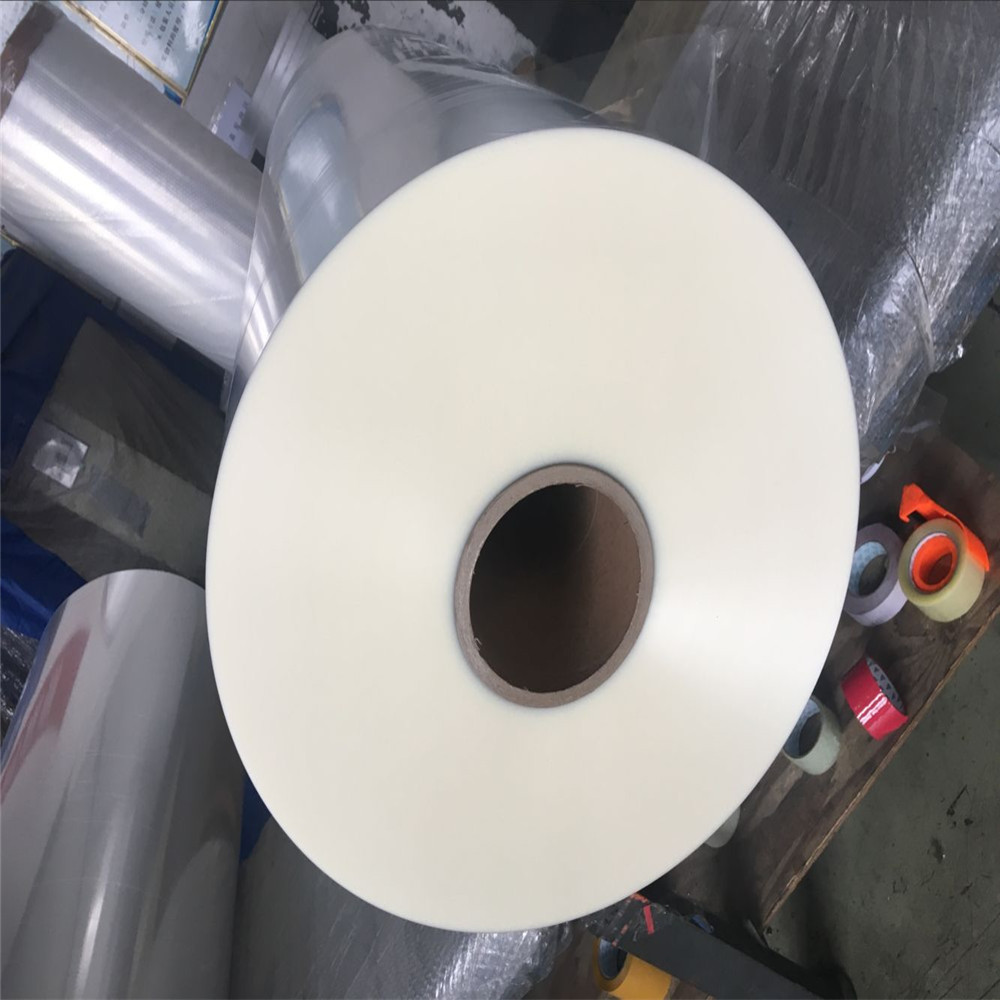
Documented Specification — No-Primer Base Film Series
| Parameter | Specification |
|---|---|
| Model designation | No-Primer Base Film Series |
| Type | No-Primer Base Gloss Film; No-Primer Base Matte Film |
| Thickness | 12mic, 15mic |
| Corona treatment | Outside ≥38 dyne |
| Core diameter | 3 inch (76mm), 6 inch (152mm) |
| Roll width | 300mm – 2580mm |
| Roll length | 9,100m, 12,100m, 18,100m |
| Material | BOPP resin |
| Downstream film build | Thermal film: BOPP resin + EVA coating. Specialty film (wet coating type): BOPP resin + functional coating. Specialty film (thermal type): BOPP resin + EVA coating + functional coating. |
| Applicable industry | Thermal lamination film manufacturing, extrusion coating and film converting |
Four properties of this substrate matter most to a coating line, and each answers a specific operating question.
Zero back-side blocking. Because there is no primer on the back side, high winding pressure does not create sticking at the roll core. Coating plants working with the no-primer substrate are able to achieve 100% material utilization, instead of writing off core material on every roll.
Whiteness without migration. The finished thermal lamination film stays pure white and clear, because there is no primer layer to age or discolour. This matters most for high whiteness thermal lamination film supplied into book covers and premium paper boxes, where a yellow shift is visible against white stock.
Direct molecular bonding. On the thermal lamination film line, extruded EVA hot-melt adhesive bonds directly to the no-primer base film at the molecular level. The bond is permanent, which prevents delamination and tearing — and it holds through downstream embossing, hot stamping and long ocean transport.
Energy and compliance relief. The no-primer route eliminates the need for primers and drying ovens and produces no ozone or VOC emissions. For overseas coating plants, that removes electricity load and avoids the cost of complex environmental compliance reviews tied to primer chemistry.
Primer-Coated vs. Primer-Free Base Film: Selection Comparison
The comparison below is limited to documented substrate behaviour and parameters. It is intended as a decision reference for coating-line engineering, not as a general ranking of film types.
| Selection factor | Primer-coated BOPP base film | SHKFILM no-primer BOPP base film |
|---|---|---|
| Blocking at roll core under high winding pressure | Water-based primer-coated base film can block (stick) at the roll core, wasting hundreds of metres of material per roll and scrapping entire rolls | Back-side blocking eliminated; customers can achieve 100% material utilization |
| Appearance over time | Traditional primers tend to age, yellow, or suffer chemical migration | Finished thermal lamination film remains pure white and clear |
| Adhesive bonding route | Bonding passes through the primer interface layer on the film surface | Extruded EVA hot-melt adhesive bonds directly with the base film at the molecular level, preventing delamination or tearing |
| Drying requirement | Primer application requires a drying step on the line | No primer and no drying ovens required |
| Emission scope | Primer chemistry adds emissions and compliance scope to manage | No ozone or VOC emissions from the primer-free route |
| Energy and utility load | Primer coating and drying add process steps and utility demand | Helps overseas coating plants reduce electricity costs and avoid complex environmental compliance reviews |
| Operating environment fit | Suited to lines configured with primer application and drying capacity | Designed for inline extrusion coating of EVA hot-melt adhesive without primers or drying ovens; corona tension ≥38 dyne |
Step-by-Step Breakdown: Qualifying a Primer-Free Base Film on Your Line
Substrate qualification on a coating line is a sequence, not a single test. Running the steps out of order — for example, judging bond strength before confirming corona retention — typically produces misleading results.
Step 1 — Define the finished film first
Work backwards from the finished BOPP thermal lamination film. If the target is a standard gloss or matte film, the finished thickness range is 17mic to 27mic. If the target is a soft-touch or anti-scratch specialty film, the finished range is 18mic to 29mic. The base film choice follows from that.
Step 2 — Confirm base film thickness against coating take-up
The no-primer substrate is supplied at 12mic and 15mic. Thickness consistency across the master roll determines whether EVA coating weight can be held within limits across the full web width.
Step 3 — Verify corona treatment retention
The outer surface is specified at ≥38 dyne. Corona retention is a shelf-life property, so verify it on receipt and again before running high-speed coating, not only on the supplier's certificate.
Step 4 — Check roll geometry against your line
Roll width availability runs from 300mm to 2580mm, with core diameters of 3 inch (76mm) or 6 inch (152mm). Long roll lengths of 9,100m, 12,100m or 18,100m reduce splice frequency, which matters on continuous coating lines where each splice is a potential defect point.
Step 5 — Run the EVA bond trial, then test peel strength
Coat the substrate with EVA hot-melt adhesive, then test peel strength on the finished laminate. The expected result on a no-primer substrate is a permanent bond at the film/adhesive interface with no delamination. Extend the test to embossing and hot stamping, since these downstream processes expose weak bonds that a flat peel test may miss.
Step 6 — Run the core-blocking check
Wind the roll at production tension and let it rest under the same pressure and residual heat conditions used in your warehouse. Inspect the core. On a primer-coated substrate this is where sticking appears; on a primer-free substrate the roll should unwind cleanly to the core.
Step 7 — Verify optical results on the finished film
Check whiteness and clarity of the finished thermal lamination film, ideally laminated onto white paper stock and onto heavy dark ink coverage. Whiteness loss, hazing or specking at this stage usually traces back to substrate quality, not to the coating recipe.
Step 8 — Confirm certification coverage for the end market
Before scaling, match the base film's certification scope to the destination market. Certificates attach to products and scopes, not to a brand name in general.
Extrusion Coating and EVA Compatibility
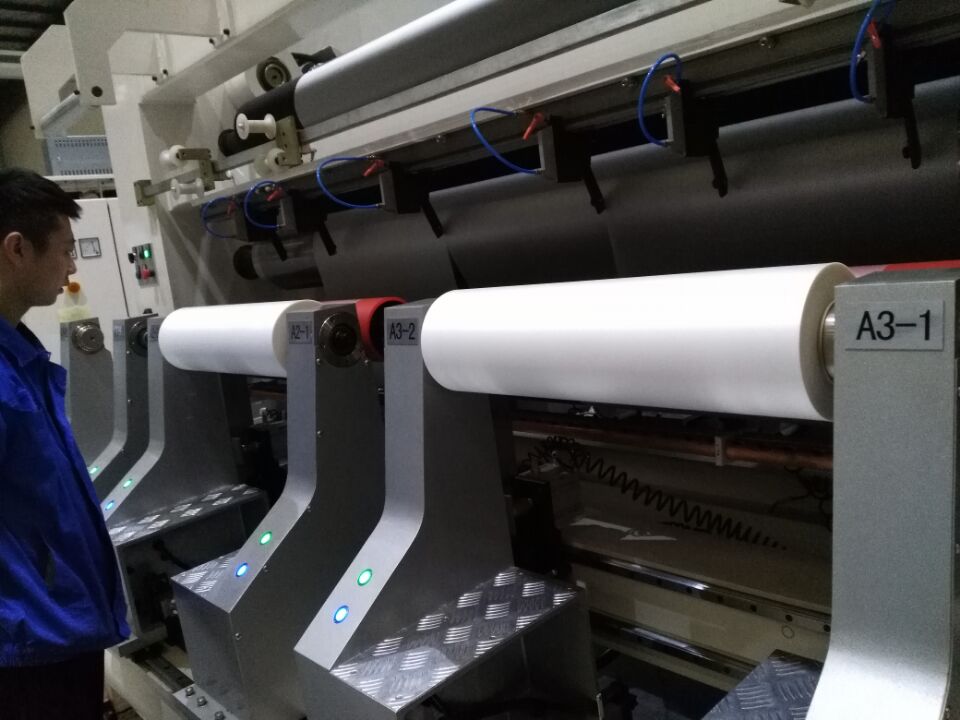
The primer-free concept only works if the coating stage accepts it. On an inline extrusion coating line, EVA hot-melt adhesive is extruded directly onto the unprimed BOPP surface. Because there is no primer interface, the adhesive and the base film fuse at the molecular level. Two production consequences follow.
First, bond integrity is not limited by primer ageing. A primer can degrade over time, which is one reason primed laminates can delaminate months after production. A direct molecular bond removes that ageing pathway, keeping edges secure through embossing, hot stamping, and long ocean transport.
Second, the coating line loses an entire process stage. No primer application, no drying oven, no ozone or VOC emissions from primer chemistry. For a plant running extrusion coating at volume, that is a direct reduction in electricity consumption and in the compliance work attached to a chemical coating step.
Base Film Selection for Soft-Touch and Anti-Scratch Thermal Lamination Films
Specialty films are where substrate selection becomes least forgiving. A soft-touch or anti-scratch thermal lamination film carries a functional top-coat of fixed 3mic to 4mic thickness for consistent tactile and protective performance, and a base film thickness that can be customised to meet stiffness requirements.
The specialty range is available in two build types:
- Thermal lamination type — with EVA hot-melt adhesive, compatible with the no-primer base film.
- Wet lamination type — for plants using a separate water-based adhesive application step.
Documented parameters for the specialty range: thickness 18mic to 29mic, corona treatment inside ≥40 dyne and outside ≥36 dyne, core diameter 3 inch (76mm) or 6 inch (152mm), roll width 200mm to 1920mm, roll length 2,000m, 3,000m, 6,000m, 9,000m or 12,000m.
The three specialty positions differ in what they are solving:
- Soft Touch BOPP Lamination Film — a velvet feel with low matteness, excellent colour and lustre, and good perspective. Colour tone is not lost after lamination. Suitable for bronzing and screen printing processes.
- Anti-scratch and scuff-resistant BOPP lamination film — anti-scratch and wear-resistant with a high haze matte finish, designed to hold surface appearance under handling and abrasion. Suitable for bronzing and screen printing processes.
- 3-in-1 film — anti-scratch, soft-touch and anti-fingerprint combined in a single layer, delivering colour reproduction with a silky texture. Used for luxury perfume, cosmetic and electronics packaging boxes where tactile experience and surface durability are both critical.
For coating plants producing these films, the base film must be a functional-coated substrate designed for subsequent EVA coating. A case in India and South Korea covering 1,000,000 square metres over 2 years documented stable performance during subsequent EVA coating on exactly this configuration.
Compliance Constraints on Primer-Free Base Film Procurement
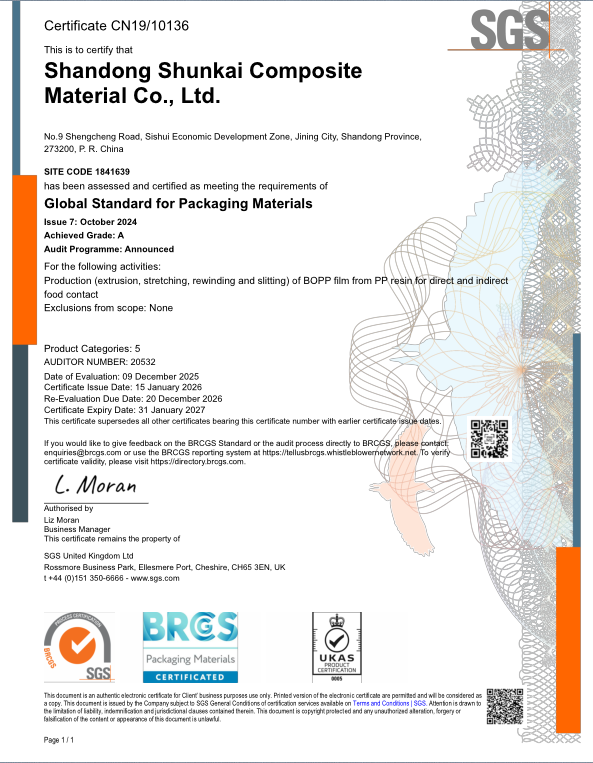
For hvq_2-grade procurement, certification scope is a hard constraint because it determines which end markets the finished laminate may enter. The relevant coverage for the no-primer base film and the thermal lamination films built on it is set out below.
- BRCGS Global Standard for Packaging Materials, Issue 7 (October 2024), certificate No. CN19/10136, issued by SGS. Scope: production (extrusion, stretching, rewinding and slitting) of BOPP film from PP resin for direct and indirect food contact. Applicable globally.
- ISO 9001:2015, Certificate No. 57626Q00025R201, issued by Qingdao Wanhui Inspection and Certification Co., Ltd. Scope: R&D and production of biaxially oriented polypropylene films, and the processing of functional films.
- ISO 14001:2015, Certificate No. 57626E00021R101, and ISO 45001:2018, Certificate No. 57626S00018R101 — environmental and occupational health and safety management systems covering BOPP film R&D, production and functional film processing.
- Customs AEO Advanced Certified Enterprise, certificate No. A4202580, issued by Qingdao Customs of the People's Republic of China. Mutually recognised in the EU, North America, UK, Singapore, South Korea, Japan and over 50 countries/regions.
- SGS test report on VOC content, standard GB 33372-2020, report No. CANEC26006194201 (and CANEC26006194203 for the 3-in-1 specialty film), issued by SGS-CSTC Standards Technical Services Co., Ltd.
- Halogen-free verification to EN 14582:2016, SGS report No. CANEC26006197605.
- REACH SVHC compliance to Regulation (EC) No 1907/2006, Candidate List of 253 SVHCs, SGS report No. CANEC26006197603, applicable to the EU market.
- RoHS Directive (EU) 2015/863, SGS report No. CANEC26006197601, applicable to the EU and global markets.
Market-side constraints also shape the specification. In China, food-contact BOPP films must comply with GB 4806.15-2024 governing food-contact adhesives, effective February 2025. For the United States, BOPP lamination films intended for food contact must comply with FDA 21 CFR 177.1520. And BOPP films entering retail and food service supply chains in the US and UK commonly require BRC certification.
Use Cases: Ten Years of Primer-Free Supply to Thermal Lamination Film Manufacturers
The technical case for primer-free base film is supported by an operating record rather than a single trial.
Multi-country manufacturer supply — Brazil, South Korea, India, Iran, Japan. Thermal lamination film manufacturers in these five markets have taken over 10,000 tons cumulative of no-primer base film over more than 10 years. Documented outcomes: stable coating performance and consistent finished-film quality. The stated mechanism is that primer-free technology simplifies the coating process and improves production efficiency.
South Korea — specialty film producer, 120 tons per year. A South Korean thermal lamination film manufacturer has taken 120 tons per year for 3 years, using the substrate for production of soft-touch and anti-scratch thermal lamination films. Documented result: stable coating performance, with excellent compatibility with subsequent coating and EVA coating.
India and South Korea — functional-coated substrate, 1,000,000 square metres. Over 2 years, a project covering 1,000,000 square metres used functional-coated base film designed for subsequent EVA coating, for the production of soft-touch and anti-scratch thermal lamination films, with stable performance during subsequent EVA coating.
Brazil and Italy — distributor supply, 300 tons per year. A lamination film distributor serving printing and packaging applications has taken 300 tons per year for 1 year, with reliable bonding and a smooth surface finish on commercial print work.
South Korea, Netherlands and Italy — cumulative distribution supply, 2,500 tons. Over 9 years, distribution customers have taken 2,500 tons cumulative of matte wet lamination film, thermal lamination film and specialty film, reporting smooth lamination with reliable adhesion and high flatness after lamination across various paper substrates and high-speed laminating equipment.
Read together, these cases show the same pattern: the primer-free substrate is adopted first by plants producing specialty thermal lamination films, then extended to standard gloss and matte production once EVA coating compatibility is proven on the line.
Commercial Parameters: Capacity, Lead Time and Customization
Once a base film passes technical qualification, commercial parameters determine whether supply can scale with the coating line.
| Commercial parameter | Detail |
|---|---|
| Production mode | OEM / ODM factory manufacturing, industrial film slitting and coating, high-volume material supply |
| Monthly capacity | 3,000 tons |
| Annual capacity | 30,000 tons across two BOPP film production lines imported from Brückner, Germany |
| Lead time | 15–20 days |
| MOQ | Depends on product type and specifications |
| Thickness customization | 12 micron to 32 micron (BOPP base film: 12mic, 15mic; BOPP thermal film: 17–25mic; BOPP specialty film: 18–32mic) |
| Roll width | 200mm – 2580mm |
| Roll length | 2,000m – 18,100m |
| Core diameter | 3 inch (76mm), 6 inch (152mm) |
| Corona treatment | Single or double-sided |
| Surface finish | Gloss, matt, soft touch, anti-scratch |
| Private label | Supported, alongside OEM and private-label supply |
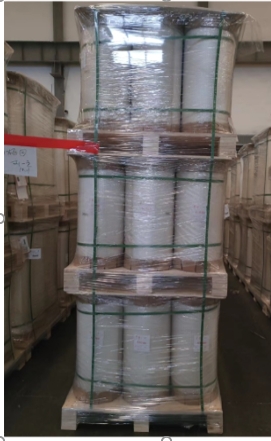
| Export packaging | Vertical pallet packing, horizontal pallet suspension packing, or standard carton packing |
| Small-batch trials | Small-batch trial orders supported in addition to bulk supply |
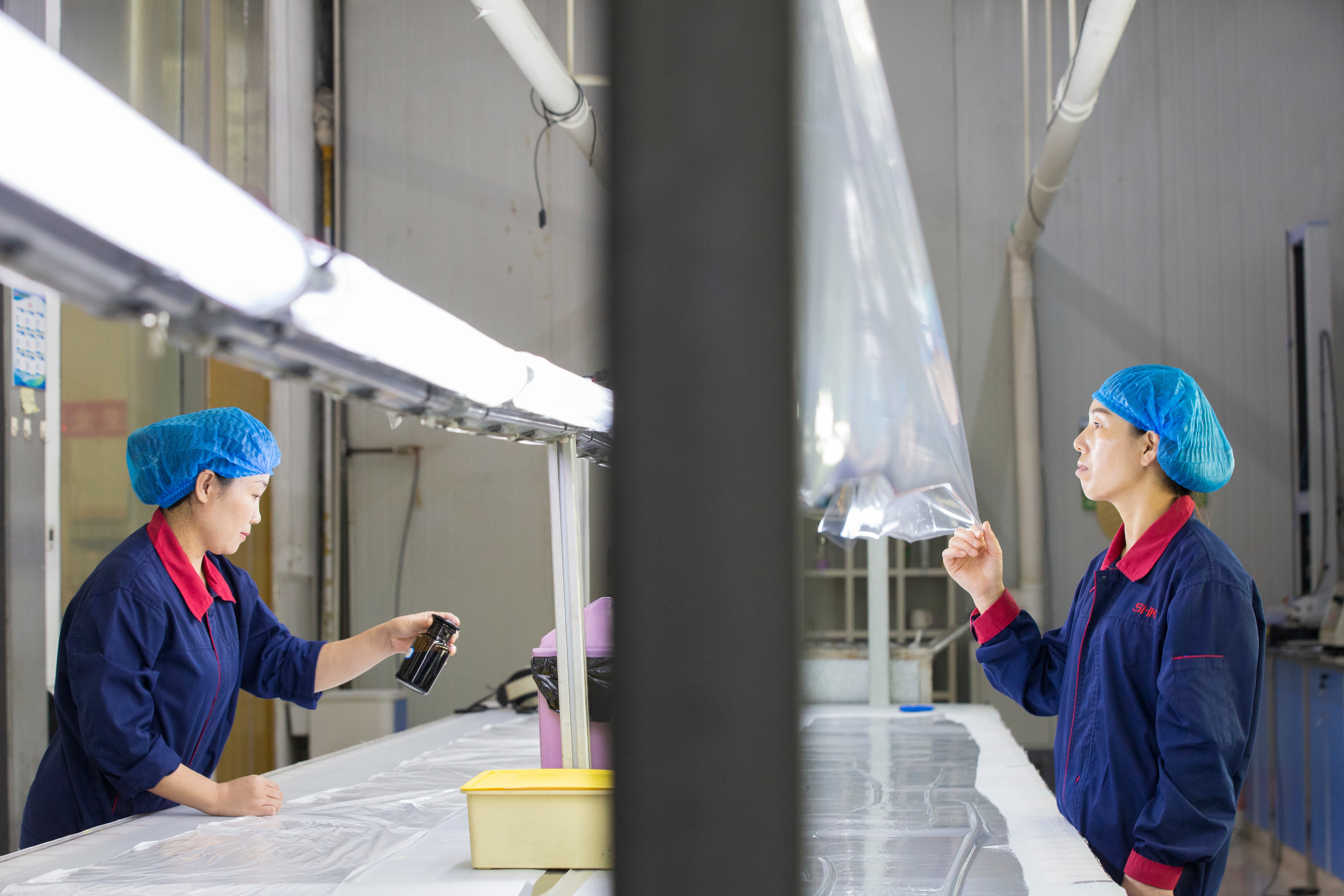
Quality control on this range covers online process monitoring, thickness inspection, corona treatment verification, optical appearance inspection, and laboratory testing based on product specifications — including tensile strength, elongation, haze, gloss and coefficient testing.
FAQ
1. What certifications should a no-primer BOPP base film carry before it enters a coating line?
Certification scope should be matched to the end market, not to the supplier name. For food-contact applications, the BRCGS Global Standard for Packaging Materials covers production (extrusion, stretching, rewinding and slitting) of BOPP film from PP resin for direct and indirect food contact, under certificate No. CN19/10136 issued by SGS. Quality management is covered by ISO 9001:2015, certificate No. 57626Q00025R201. For export handling, the Customs AEO Advanced Certified Enterprise certificate No. A4202580 is mutually recognised in the EU, North America, UK, Singapore, South Korea, Japan and over 50 countries/regions. For low-emission requirements, SGS reports cover VOC content under GB 33372-2020 (No. CANEC26006194201), halogen-free verification under EN 14582:2016 (No. CANEC26006197605), REACH SVHC under Regulation (EC) No 1907/2006 (No. CANEC26006197603) and RoHS Directive (EU) 2015/863 (No. CANEC26006197601).
2. What should buyers check when sourcing anti-scratch BOPP thermal lamination film and its base film from manufacturers?
Anti-scratch BOPP thermal lamination film is built with a fixed functional top-coat of 3mic to 4mic, over a base film whose thickness is customised to meet stiffness requirements. Three checks matter. First, confirm the base film is a functional-coated substrate designed for subsequent EVA coating — in a documented India/Korea project of 1,000,000 square metres, this configuration delivered stable performance during subsequent EVA coating. Second, confirm the film works in your process type: thermal lamination type with EVA hot-melt adhesive, or wet lamination type. Third, confirm specialist capability with the exact construction, since anti-scratch, soft-touch and anti-fingerprint are also available combined in a single 3-in-1 layer. Applicable parameters are 18mic to 29mic thickness, inside corona ≥40 dyne and outside ≥36 dyne, roll width 200mm to 1920mm.
3. Does moving to a primer-free base film require additional coating-line equipment or investment?
It moves in the opposite direction. A primer-free substrate eliminates the need for primers and drying ovens, and produces no ozone or VOC emissions from the primer route. That removes electricity load and the cost of complex environmental compliance reviews attached to primer chemistry — a direct operating saving for overseas coating plants. The base film is designed for inline extrusion coating of EVA hot-melt adhesive without primers or drying ovens, at a corona tension of ≥38 dyne on the outer surface. The remaining requirement is that the line's winding tension and storage conditions are controlled, because roll geometry (300mm to 2580mm width, roll lengths up to 18,100m, core diameter 3 inch/76mm or 6 inch/152mm) must match the unwinding setup.
4. Can a coating plant validate a no-primer base film with a trial before committing to bulk?
Yes. Small-batch trial orders are supported in addition to bulk supply, and the qualification sequence is straightforward: confirm base film thickness at 12mic or 15mic, verify outer-surface corona retention at ≥38 dyne, check roll geometry against the line, run an EVA extrusion coating trial and test peel strength, then extend the test to embossing, hot stamping and a rest period under production winding pressure to check core blocking. Documentation from comparable projects is available as a reference point — for example a South Korean thermal lamination film manufacturer running 120 tons per year for 3 years on soft-touch and anti-scratch production, reporting stable coating performance and excellent compatibility with subsequent coating and EVA coating.
5. What lead time and capacity can be expected for bulk primer-free base film supply?
Monthly capacity is 3,000 tons, with lead time of 15–20 days. MOQ depends on product type and specifications, and the customization envelope covers film thickness from 12 micron to 32 micron, roll width from 200mm to 2580mm, roll length from 2,000m to 18,100m, single or double-sided corona treatment, surface finish in gloss, matt, soft touch or anti-scratch, private label, and custom export packaging in vertical pallet, horizontal pallet suspension or standard carton format. The supply record behind this capacity includes over 10,000 tons cumulative delivered to thermal lamination film manufacturers in Brazil, South Korea, India, Iran and Japan over more than 10 years. To start a technical evaluation, send your finished-film specification and line parameters to Cora at weilj@shkfilm.com or via WhatsApp at +86 166-7890-6856, and request a trial roll matched to your roll width and core diameter.
Conclusion: Specify the Substrate, Then Trust the Line
For a coating line producing BOPP thermal lamination film, the primer-free decision is ultimately a stability decision. Removing the primer removes blocking at the roll core, removes a discolouration pathway, removes a drying stage, and removes an emission scope — but it also removes the buffer that a primer provides against an inconsistent substrate. That is why thickness, corona retention and roll geometry have to be specified and verified, not assumed.
SHKFILM produces 100% in-house no-primer base film across two Brückner BOPP film production lines with 30,000 tons annual capacity, and every finished thermal film uses that in-house no-primer base film, keeping the no-primer process intact from the substrate through to the finished roll. For coating plants weighing the switch, the most useful next step is a base-film trial against your own EVA coating conditions, measured on peel strength, core blocking and whiteness of the finished laminate.
Request a No-Primer Base Film Trial Roll
Send your finished-film specification, roll width and core diameter, and the SHKFILM technical team will match a trial roll from the No-Primer Base Film Series or the specialty film range. Full technical details are available in the SHKFILM product brochure.
Website: www.shkfilm.com | Email: weilj@shkfilm.com | Tel / WhatsApp: +86 166-7890-6856 | Chat on WhatsApp
Have Questions or Need More Details?
Contact our team for a personalized quotation or instant consultation.
Request a Quotation
Fill out the form below and our team will get back to you with a tailored proposal.
WhatsApp Direct Chat
Prefer to chat in real-time? Message us on WhatsApp for instant assistance & quick answers.
- Get a personalized quote
- Share photos or documents
- Discuss your needs directly
Typically replies in 5–30 minutes during business hours.