
BOPP Thermal Lamination Film Supplier Audit: 10+ Years, 10,000+ Tons, 5 Countries
A BOPP thermal lamination film supplier audit has to answer one question before price is negotiated: can this supplier repeat the same lamination performance on the next order, at scale, with documents that survive your market’s compliance review? The strongest audit evidence is not a catalogue. It is cumulative supply history, base-film origin, third-party certificates with a defined scope, and acceptance criteria written into the order. This guide sets out that audit sequence for packaging and printing buyers, using SHKFILM’s documented record as a worked example: more than 10,000 tons of no-primer BOPP base film supplied over 10+ years to thermal lamination film manufacturers in Brazil, South Korea, India, Iran and Japan.

Problem Definition: Why Supplier Audits Break Down Before the Second Order
Most BOPP thermal lamination film sourcing failures are not caused by a bad first sample. They are caused by unverified assumptions that only surface after the order scales. Four failure patterns account for most of them.
1. The supplier sells finished film but does not control the base film. A thermal lamination film is a BOPP base film plus a heat-activated EVA adhesive layer. Buyers compare the finished roll, but the repeatability of the roll depends on the base film underneath it. SHKFILM states that all finished thermal films use 100% in-house produced no-primer base film, which keeps the no-primer process under one manufacturer’s control from resin to finished roll.
2. Blocking and hidden material loss at the roll core. When a water-based primer-coated base film is used, high winding pressure can cause blocking (sticking) at the roll core, wasting hundreds of meters of material and scrapping entire rolls. A supplier whose base film is unprimed resolves this, and the audit question becomes whether that claim is verifiable on your line, not on a brochure.
3. Certificates that do not cover the product ordered. A certificate name without a scope, number, issuing body and market is not audit evidence. BRCGS, ISO, REACH, RoHS and halogen-free documents each cover a defined product range and a defined market.
4. No cumulative record. Ten tonnes delivered once proves a transaction. Thousands of tonnes delivered over years to repeat converters proves a process. Converters and distributors auditing a supplier should ask for cumulative tonnage, the years covered, the destination countries and the buyer type.
Audit rule: an unverified claim is a future rejection. If a supplier cannot attach a number, a scope or a document to a claim, treat the claim as marketing until a trial roll proves it on your equipment.
Industry Background: A Compliance-Constrained, Scale-Driven Category
BOPP thermal lamination film sits inside a large and still expanding materials category, but the buying decision is shaped less by market growth than by compliance and process fit.
- The global BOPP films market was valued at USD 31.0 billion in 2025 and is projected to reach USD 49.8 billion by 2033, according to Grand View Research.
- The global thermal lamination films market is forecast to reach USD 1,547.9 million by 2025, with BOPP-based films as the leading film type segment, according to Future Market Insights.
- Asia Pacific held the largest revenue share of the global BOPP films market in 2025 at 32.2%, according to Grand View Research, while the China BOPP film market was valued at approximately USD 5.7 billion in 2024, according to Ken Research.
On the regulatory side, the constraint picture is equally specific. Food-contact BOPP films in China must comply with GB 4806.15-2024 governing food-contact adhesives, effective February 2025. BOPP films entering US food contact must comply with FDA 21 CFR 177.1520. Retail and food-service supply chains in the US and UK commonly require BRC certification for packaging materials. In the EU, REACH SVHC screening under Regulation (EC) No 1907/2006 and RoHS Directive (EU) 2015/863 compliance are standard entry conditions for printed and laminated consumer packaging.
Those two forces — scale and compliance — explain why a serious supplier audit is mostly a document-and-process audit. Price is the last variable to compare, because price without verified scope is not comparable at all.
Detailed Solution: What Auditable Evidence Looks Like in Practice
A defensible audit rests on three evidence tiers: base-film control, cumulative supply record, and certificates with scope. SHKFILM’s documentation provides concrete examples of each.
Tier 1 — Base-film control (No-Primer Base Film Series, product 6544)
The No-Primer Base Film Series is a BOPP base film designed for thermal lamination manufacture. It is supplied in gloss and matte types at 12 micron and 15 micron, with outside corona treatment of ≥ 38 dyne, core diameters of 3 inch (76 mm) and 6 inch (152 mm), roll widths from 300 mm to 2580 mm, and roll lengths of 9,100 m, 12,100 m and 18,100 m.
Four documented properties matter to an audit because each one is a process risk that the buyer inherits if it is absent:
- Blocking elimination and 100% material utilization. Unprimed base film removes the roll-core sticking that typically wastes hundreds of meters and can scrap entire rolls.
- Visual and storage stability. Conventional primers can age, yellow or migrate over time. A no-primer base film keeps the finished thermal lamination film pure white and clear, and reduces static build-up for smoother downstream slitting and printing.
- Adhesive-to-film bond strength. On the thermal lamination film production line, the extruded EVA hot-melt adhesive bonds directly with the unprimed base film, supporting a permanent bond rather than a layered one.
- Energy and emission profile. Eliminating primers and drying ovens removes ozone and VOC emissions from that step and reduces electricity cost for coating plants — a measurable operating argument, not a marketing one.
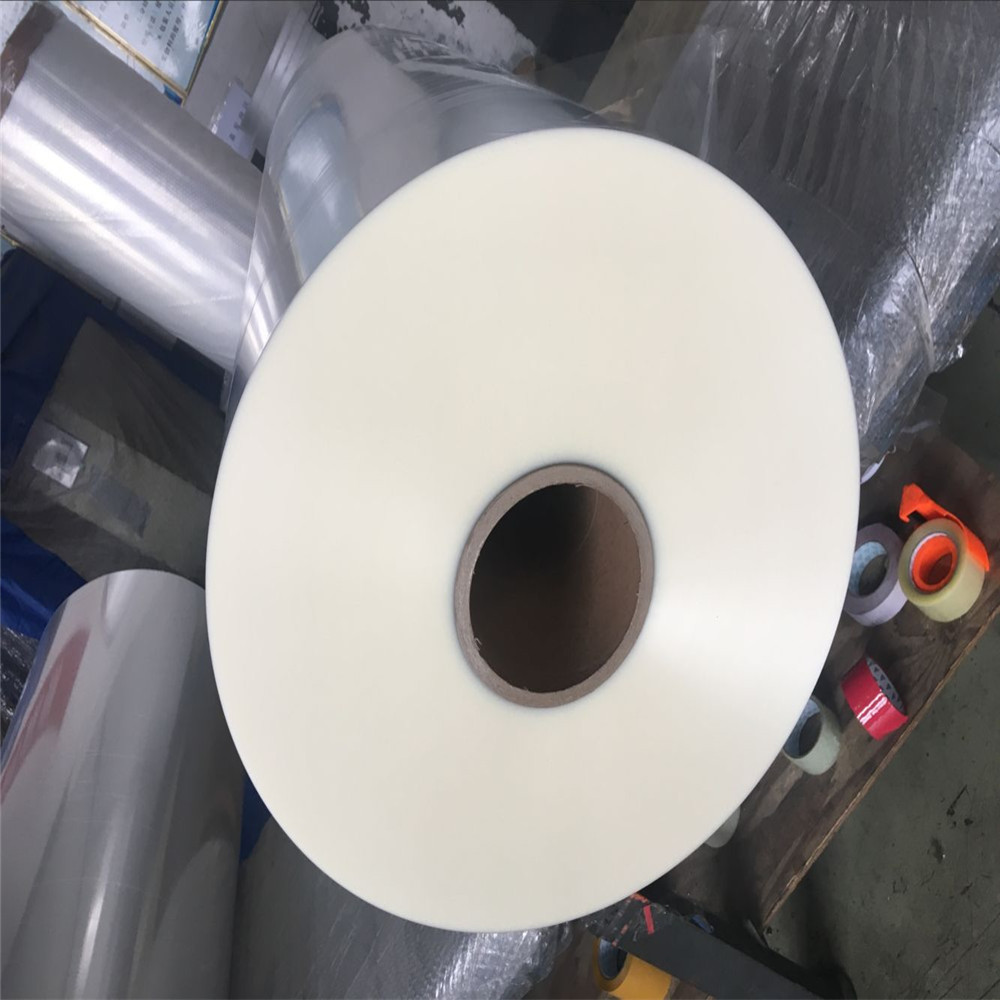
SHKFILM is a BOPP film manufacturer founded in August 2010 and headquartered at No.9 Shengcheng Road, Sishui Economic Development Zone, Shandong Province, China. It operates two BOPP film production lines imported from Brückner (Germany), with an annual capacity of 30,000 tons, a 146,667 m² site, 235 employees, a 10-engineer R&D team, and an export ratio of 70%, with main markets including India, Brazil, Iran and Korea.
Tier 2 — Cumulative supply record you can interrogate
A cumulative record is only useful if it names the buyer type, the market and the stated result. Three reference points from SHKFILM’s supply history are directly relevant to a BOPP thermal lamination film audit.
- No-primer base film (product 6544): over 10,000 tons cumulative supply across more than 10 years to thermal lamination film manufacturers in Brazil, South Korea, India, Iran and Japan. The stated result is stable coating performance and consistent finished-film quality; the documented highlight is that primer-free technology simplifies the coating process and improves production efficiency.
- Matte wet lamination film (product 6647): 2,500 tons cumulative supply over 9 years to a lamination film distributor serving South Korea, the Netherlands and Italy. The stated result is smooth lamination with reliable adhesion and stable processing performance in paper lamination, with high flatness after lamination and adaptability to various paper substrates and high-speed laminating equipment.
- Gloss / matte thermal lamination film (product 6615): a distributor in Brazil and Italy purchasing 300 tons per year. The stated result is stable lamination quality in commercial printing applications, with reliable bonding and a smooth surface finish, compatible with high-speed laminating machines.
Supporting references in the same record include a South Korean thermal lamination film manufacturer taking 120 tons per year over 3 years for soft-touch and anti-scratch thermal lamination film production, converters in India and South Korea taking 1,000,000 square meters over 2 years for functional-coated base film used in subsequent EVA coating, a Korea / Italy / Sri Lanka distributor taking 30 tons over 2 years, and an Indian printing and packaging company applying 1,000,000 square meters over 2 years for premium printed packaging and high-end printed materials.
Read together, these references describe a supplier whose repeat business is concentrated in the exact buyer type most exposed to base-film quality: thermal lamination film manufacturers and lamination film distributors.
Tier 3 — Certificates with scope, number and issuing body
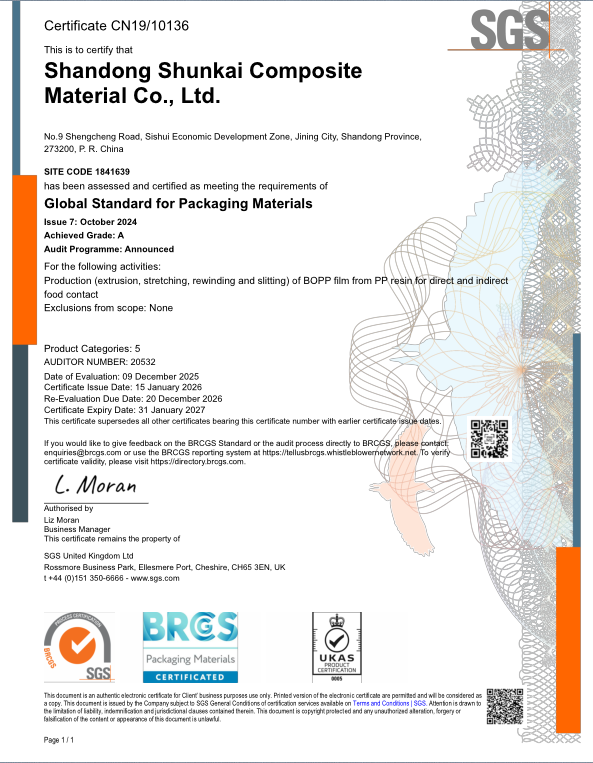
The third tier is where many audits are won or lost, because certificates are frequently quoted without their scope. The table below lists the certificate evidence used in this audit and what each document actually covers.
| Certification | Standard / certificate number | Issuing body | Market relevance |
|---|---|---|---|
| BRCGS Global Standard for Packaging Materials | Issue 7 (October 2024), Certificate No. CN19/10136 | SGS | Global; highly recognized in Europe, North America and UK retail. Covers production (extrusion, stretching, rewinding, slitting) of BOPP film from PP resin for direct and indirect food contact |
| ISO 9001:2015 Quality Management System | Certificate No. 57626Q00025R201 | Qingdao Wanhui Inspection and Certification Co., Ltd | Global (IAF and CNAS mutually recognized); covers R&D and production of BOPP films and processing of functional films |
| ISO 14001:2015 Environmental Management System | Certificate No. 57626E00021R101 | Qingdao Wanhui Inspection and Certification Co., Ltd | Global (IAF and CNAS mutually recognized) |
| ISO 45001:2018 Occupational Health and Safety Management System | Certificate No. 57626S00018R101 | Qingdao Wanhui Inspection and Certification Co., Ltd | Global (IAF and CNAS mutually recognized) |
| Advanced Certified Enterprise (AEO) | Certificate No. A4202580 | Qingdao Customs of the People’s Republic of China | Global, mutually recognized in the EU, North America, UK, Singapore, South Korea, Japan and over 50 countries/regions; applies to Shunkai import and export activities for manufactured plastic films and laminating materials |
| REACH SVHC | Regulation (EC) No 1907/2006, Candidate List of 253 SVHCs, Certificate No. CANEC26006197603 | SGS-CSTC Standards Technical Services Co., Ltd. | EU market |
| RoHS compliance | Directive (EU) 2015/863 amending Annex II to Directive 2011/65/EU, Certificate No. CANEC26006197601 | SGS-CSTC Standards Technical Services Co., Ltd. | European Union and global markets |
| Halogen-free verification | EN 14582:2016, Certificate No. CANEC26006197605 | SGS-CSTC Standards Technical Services Co., Ltd. | Global, EU, North America, Japan |
| VOC content verification | GB 33372-2020, Certificate Nos. CANEC26006194201 and CANEC26006194203 | SGS-CSTC Standards Technical Services Co., Ltd. | China high-standard eco-packaging market and global sourcing inquiries with strict VOC/odor controls |
Step-by-Step Breakdown: A Six-Stage Audit Sequence
The sequence below is written for buyers in the Research to Evaluation stage who plan to scale a repeat order rather than place a one-off purchase.
Stage 1 — Verify the legal entity and production base
Match the quotation, the business licence and the production address. Confirm how many film lines exist, their origin and their annual capacity. Shandong Shunkai Composite Material Co., Ltd. (SHKFILM) was founded in August 2010, operates two Brückner BOPP lines imported from Germany, and reports an annual capacity of 30,000 tons. It is certified to EU BRC, ISO 9001, QS Food and Customs AEO Advanced Enterprise standards, and has been recognized as a Shandong Province Manufacturing Single Champion Product Enterprise and a National ‘Specialized, Sophisticated, Distinctive and Innovative’ (Little Giant) Enterprise.
Stage 2 — Verify base-film origin, not just film appearance
Ask whether the base film is produced in-house, and whether it is primed or unprimed. SHKFILM states that all finished thermal films use 100% in-house produced no-primer base film, never primer-coated base films. Request roll-level traceability from base film to finished thermal film so that a defect can be traced to a production batch rather than to a vague ‘material issue’.
Stage 3 — Verify certificates by scope, number and validity
Do not accept ‘we are certified’. Match each certificate’s scope to the product and market you order. A BRCGS certificate for BOPP film production for direct and indirect food contact is relevant to a food-contact packaging programme; a REACH SVHC statement is relevant to EU consumer packaging. Confirm issue and expiry dates, and confirm that the issuing body and certificate number are stated.
Stage 4 — Verify cumulative supply evidence by market
Request cumulative tonnage, years of supply, destination countries, buyer type (converter or distributor) and the reported result. Converters should read converter references; distributors should read distributor references. The 10,000+ ton no-primer base film record across five countries and the 2,500 ton wet lamination record across three markets are examples of the format a serious reference should follow.
Stage 5 — Verify production, lead time and packing parameters
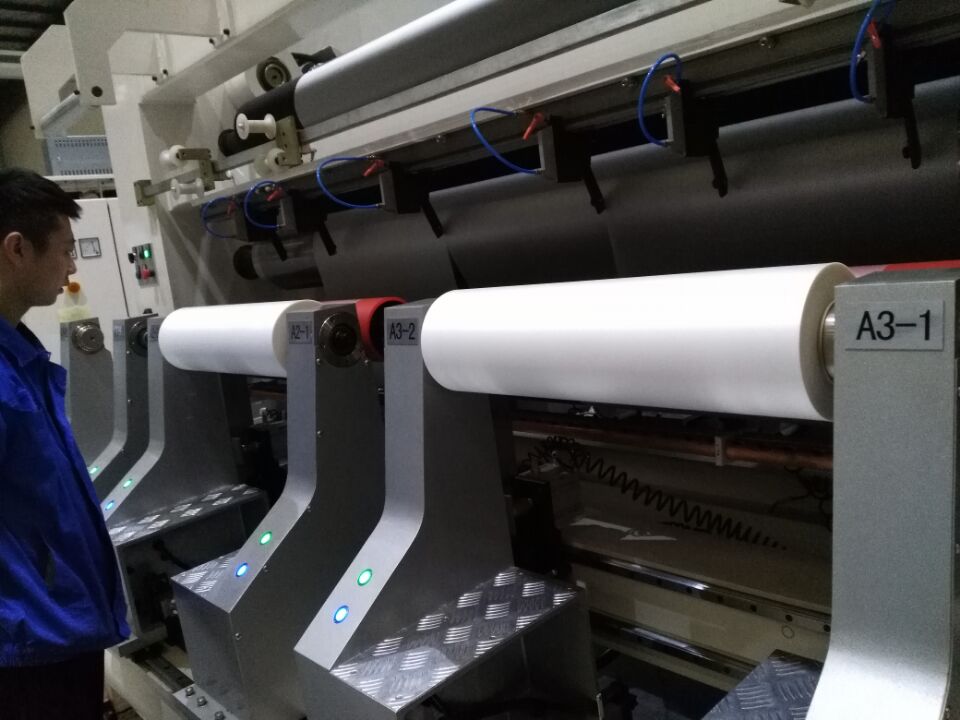
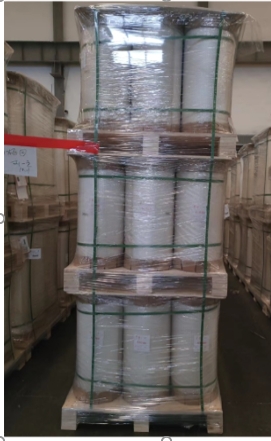
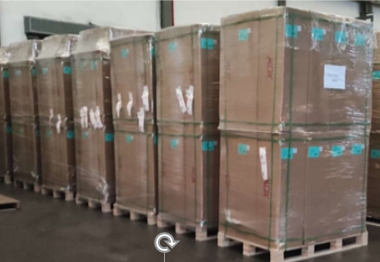
Confirm capacity, lead time and customization capability in writing. SHKFILM reports a monthly capacity of 3,000 tons and a lead time of 15–20 days. Customization covers film thickness from 12 to 32 micron, roll width from 200 mm to 2580 mm, roll length from 2000 m to 18100 m, core diameter of 3 inch or 6 inch, single or double-sided corona treatment, surface finish (gloss, matt, soft touch, anti-scratch), private label, and custom export packaging including vertical pallet packing, horizontal pallet suspension packing and standard carton packing. MOQ depends on product type and specifications.
Quality control should also be auditable as a process, not a promise. The documented control loop includes online process monitoring, thickness inspection, corona treatment verification, optical appearance inspection, and laboratory testing based on product specifications, such as tensile strength, elongation, haze, gloss and coefficient of friction.
Stage 6 — Lock purchasing terms and acceptance criteria before scaling
Scaling a repeat order is a specification exercise, not a volume exercise. The acceptance checklist below converts the audit into the terms that should appear in the order confirmation.
| Acceptance item | What to confirm | Documented reference value |
|---|---|---|
| Base film origin | In-house vs. purchased base film; primer vs. no-primer | Finished thermal films use 100% in-house produced no-primer base film |
| Thickness | Nominal thickness and agreed tolerance per SKU | No-primer base film: 12 mic, 15 mic; thermal film: 17–27 mic; specialty film: 18–29 mic; customization range 12–32 mic |
| Corona treatment | Treated side(s), dyne value and test method | No-primer base film outside ≥ 38 dyne; thermal film inside ≥ 40 dyne; specialty film inside ≥ 40 dyne, outside ≥ 36 dyne |
| Core diameter | 3 inch or 6 inch, tolerance and core material | 3 inch (76 mm), 6 inch (152 mm) |
| Roll geometry | Width, length, winding and splicing rules | Width 200–2580 mm; length 2000–18100 m |
| Surface finish | Gloss, matt, soft touch, anti-scratch or combined functions | Gloss, matt, soft touch, anti-scratch; 3-in-1 anti-scratch + soft-touch + anti-fingerprint option |
| Export packing | Pallet type, protection level, labeling | Vertical pallet packing, horizontal pallet suspension packing, or standard carton packing |
| Supply parameters | Lead time, monthly capacity, MOQ basis | Lead time 15–20 days; monthly capacity 3,000 tons; MOQ depends on product type and specification |
| Documentation per lot | Inspection documents and certificate copies released with shipment | ISO 9001:2015; BRCGS; REACH SVHC; RoHS; EN 14582:2016; GB 33372-2020 VOC reports |
A repeat order should never be scaled on the strength of a sample alone. Scale on the strength of a sample that passed your own line, plus acceptance criteria that are written down, plus a documented compliance scope that matches the destination market.
Use Cases: Where the Audit Criteria Change by Application
Different lamination applications stress different parts of the specification, so the audit weighting changes with the end product.
Book covers and paper packaging boxes. These run through dry lamination with heated rollers, where no solvent odor or on-site adhesive coating occurs. The application covers high-volume book covers, standard folding cartons and printed leaflets, and the functional requirement is a moisture barrier, scratch protection for printing inks and enhanced paper foldability. The process requires strong bonding at lower temperatures, bubble-free results over heavy offset ink coverage, and stability under shipping heat. Product 6615 — the Gloss / Matte Thermal Lamination Film Series — is the corresponding thermal film family, supplied from 17 micron to 27 micron with a customizable thickness range.
Cosmetic and electronics paper box packaging. Premium post-press lamination over heavy ink coverage and dark solid backgrounds is where tactile and anti-scratch properties matter. Applications include cosmetics and perfume boxes, high-end smartphone packaging, wine packaging and luxury book covers, run on both wet glue coating systems and automatic dry thermal lamination processes. Product 6623, the Anti-Scratch Film Series / Soft Touch Film Series, is supplied from 18 micron to 29 micron with a fixed functional top-coat of 3 to 4 micron, inside corona ≥ 40 dyne and outside corona ≥ 36 dyne, roll widths from 200 mm to 1920 mm, and roll lengths of 2000 m, 3000 m, 6000 m, 9000 m or 12000 m. It is available in thermal lamination type with EVA hot-melt adhesive and in wet lamination type.
Coating lines and film converters. Converters running inline extrusion coating of EVA hot-melt adhesive without primers or drying ovens need an unprimed substrate with high corona retention, controlled static, and minimal crystal points and black spots. Product 6544 is supplied for this environment, in continuous master roll winding and unwinding, slit on high-speed slitting machines with corona treaters.
Wet lamination converters. Conventional wet lamination on paperboard uses water-based glues with a heated drying channel at 50–70 °C. Product 6647, the Matte Wet Lamination Film Series, is supplied in 12 micron and 15 micron with outside corona ≥ 42 dyne, inside corona ≥ 38 dyne, roll widths from 300 mm to 2240 mm, and roll lengths from 4000 m to 18100 m. The stated requirements for this application are high corona retention, excellent water-glue wet-out, zero fish-eyes and high mattness.
Product-level parameter comparison
For buyers comparing specifications within a single supplier’s range, the parameters below define the three film families referenced in this audit.
| Parameter | No-primer BOPP base film (6544) | BOPP matte film for wet lamination (6647) | BOPP thermal lamination film (6615) |
|---|---|---|---|
| Model series | No-Primer Base Film Series | Matte Wet Lamination Film Series | Gloss / Matte Thermal Lamination Film Series |
| Type | No-primer base gloss film; no-primer base matte film | BOPP wet lamination film – matte | Thermal lamination gloss film; thermal lamination matte film |
| Material | BOPP resin | BOPP resin | BOPP film + EVA coating |
| Thickness range | 12 mic, 15 mic | 12 mic, 15 mic | 17–27 mic (customizable) |
| Corona treatment | Outside ≥ 38 dyne | Outside ≥ 42 dyne; inside ≥ 38 dyne | Both sides ≥ 40 dyne or one side ≥ 30 dyne; inside ≥ 40 dyne |
| Core diameter | 3 inch (76 mm), 6 inch (152 mm) | 3 inch (76 mm), 6 inch (152 mm) | 3 inch (76 mm), 6 inch (152 mm) |
| Roll width | 300–2580 mm | 300–2240 mm | 320–2180 mm |
| Roll length | 9100 m, 12100 m, 18100 m | 4000–18100 m | 2000–9000 m |
| Process fit | Inline EVA extrusion coating without primers or drying ovens | Conventional wet lamination with water-based glue, heated drying channel 50–70 °C | Dry lamination via heated rollers, zero solvent odor |
Frequently Asked Questions
Which certificates should a BOPP thermal lamination film supplier provide before an EU or food-contact order is released?
For EU-facing programmes, the minimum set is REACH SVHC screening under Regulation (EC) No 1907/2006, covering the Candidate List of 253 SVHCs, and RoHS Directive (EU) 2015/863 compliance — both verified for SHKFILM’s BOPP specialty lamination films by SGS-CSTC Standards Technical Services Co., Ltd. Halogen-free verification to EN 14582:2016 supports EU, North America and Japan requirements. Where packaging enters food-contact supply chains, BRCGS certification to the Global Standard for Packaging Materials is the relevant document, and SHKFILM holds it under Certificate No. CN19/10136 issued by SGS, covering production of BOPP film from PP resin for direct and indirect food contact. Buyers should also map destination-specific rules such as FDA 21 CFR 177.1520 for the US and GB 4806.15-2024 for China food-contact adhesives, since a supplier certificate only helps if its scope matches the market you ship to.
How do you audit anti-scratch BOPP thermal lamination film manufacturers?
Audit four layers in order. First, base-film control: confirm the manufacturer produces its own base film and that it is unprimed, since SHKFILM’s specialty films are built on functional-coated base film produced in-house and designed for subsequent EVA coating. Second, coating specification: ask for the functional top-coat thickness, which is fixed at 3 to 4 micron for consistent tactile and protective performance on SHKFILM’s Anti-Scratch Film Series / Soft Touch Film Series, supplied from 18 micron to 29 micron with inside corona ≥ 40 dyne and outside corona ≥ 36 dyne. Third, compliance: request RoHS, REACH and EN 71 references for the specialty films, plus the SGS VOC reports under GB 33372-2020 and the halogen-free EN 14582:2016 report. Fourth, cumulative evidence for this exact product family: SHKFILM’s record includes a South Korean thermal lamination film manufacturer taking 120 tons per year over 3 years for soft-touch and anti-scratch film production, converters in India and South Korea taking 1,000,000 square meters over 2 years, a Korea / Italy / Sri Lanka distributor taking 30 tons over 2 years, and an Indian printing and packaging company applying 1,000,000 square meters over 2 years.
What purchasing terms should be confirmed before scaling a repeat order?
Confirm the commercial framework and the technical framework together. On the commercial side, MOQ depends on product type and specifications, lead time is 15–20 days, and monthly capacity is 3,000 tons — figures that determine how large a repeat order can be absorbed without extension. On the technical side, fix thickness, roll width, roll length, core diameter, corona treatment value, surface finish and export packing method in the order confirmation. SHKFILM supports OEM and private-label supply and accommodates small-batch trial orders in addition to bulk supply, which allows a buyer to validate a specification before committing to a scaled schedule. Customs-side readiness also matters for repeat orders: the Advanced Certified Enterprise (AEO) certificate, No. A4202580 issued by Qingdao Customs of the People’s Republic of China, applies to Shunkai import and export activities and is mutually recognized in markets including the EU, UK, South Korea and Japan.
How should a buyer validate no-primer BOPP base film before a bulk order?
Validate the failure mode, not the appearance. Run a full roll on your own coating or laminating line and check for back-side blocking at the roll core, since primer-coated base films can stick under high winding pressure and waste hundreds of meters of material, whereas an unprimed base film is designed to allow 100% material utilization. Then check whiteness and clarity of the finished film, static behavior during unwinding and slitting, and bond strength after EVA extrusion — the extruded adhesive bonds directly with the unprimed base film. Confirm the incoming roll against the agreed specification: 12 micron or 15 micron base film, outside corona ≥ 38 dyne, correct core diameter and roll length. SHKFILM supports this stage through product recommendation, sample evaluation, technical application support and after-sales follow-up, including online technical assistance.
What lead time and capacity should a repeat order plan for?
Plan against capacity, not against a single delivery date. SHKFILM reports a monthly capacity of 3,000 tons and a lead time of 15–20 days, produced on two Brückner BOPP lines imported from Germany with a total annual capacity of 30,000 tons. Export markets include the EU, Middle East, Europe, South America, India, South East Asia, Korea and Japan, with an export ratio of 70%. For a scaled repeat order, the practical next step is to submit your target specification and destination market so that the compliant product family, roll geometry and packing method can be confirmed before the schedule is fixed — sample evaluation or a quotation request can be sent to weilj@shkfilm.com or via WhatsApp at +86 166-7890-6856.
Conclusion: Audit the Record, Then Scale the Order
A BOPP thermal lamination film supplier audit is decided by three verifiable facts: who controls the base film, what has been supplied cumulatively to buyers like you, and which certificates cover the exact product and market you order. A supplier that can answer all three with numbers, scopes and documents removes most of the risk that appears after a first order scales.
SHKFILM’s audited record for the no-primer base film programme — more than 10,000 tons over 10+ years to thermal lamination film manufacturers in Brazil, South Korea, India, Iran and Japan, alongside 2,500 tons over 9 years across South Korea, the Netherlands and Italy, and a distributor programme at 300 tons per year across Brazil and Italy — is the kind of evidence that belongs in an audit file rather than in a brochure. Combine it with the acceptance criteria table above, and the repeat order decision becomes a specification decision instead of a gamble.
Next step
Request the specification sheet, certificate copies or a trial roll of no-primer BOPP base film and BOPP thermal lamination film for your destination market.
Shandong Shunkai Composite Material Co., Ltd. (SHKFILM)
Website: www.shkfilm.com
Email: weilj@shkfilm.com
Tel / WhatsApp: +86 166-7890-6856
Address: No.09 Shengcheng Road, Sishui Economic Development Zone, Shandong Province, China
Product brochure: Download the SHKFILM brochure (PDF)
Have Questions or Need More Details?
Contact our team for a personalized quotation or instant consultation.
Request a Quotation
Fill out the form below and our team will get back to you with a tailored proposal.
WhatsApp Direct Chat
Prefer to chat in real-time? Message us on WhatsApp for instant assistance & quick answers.
- Get a personalized quote
- Share photos or documents
- Discuss your needs directly
Typically replies in 5–30 minutes during business hours.