
Partnering for the Long Term: BOPP Lamination Film Supply Agreements and Consistency
A long-term BOPP thermal lamination film supply agreement is a recurring supply arrangement between a converter, print finisher or packaging buyer and one qualified film manufacturer, in which the film specification, acceptance criteria, delivery terms, payment terms and quality responsibility are fixed before volume production begins. Its purpose is not to freeze a single invoice price. Its purpose is to make the film behave the same way in month eighteen as it did in month one.
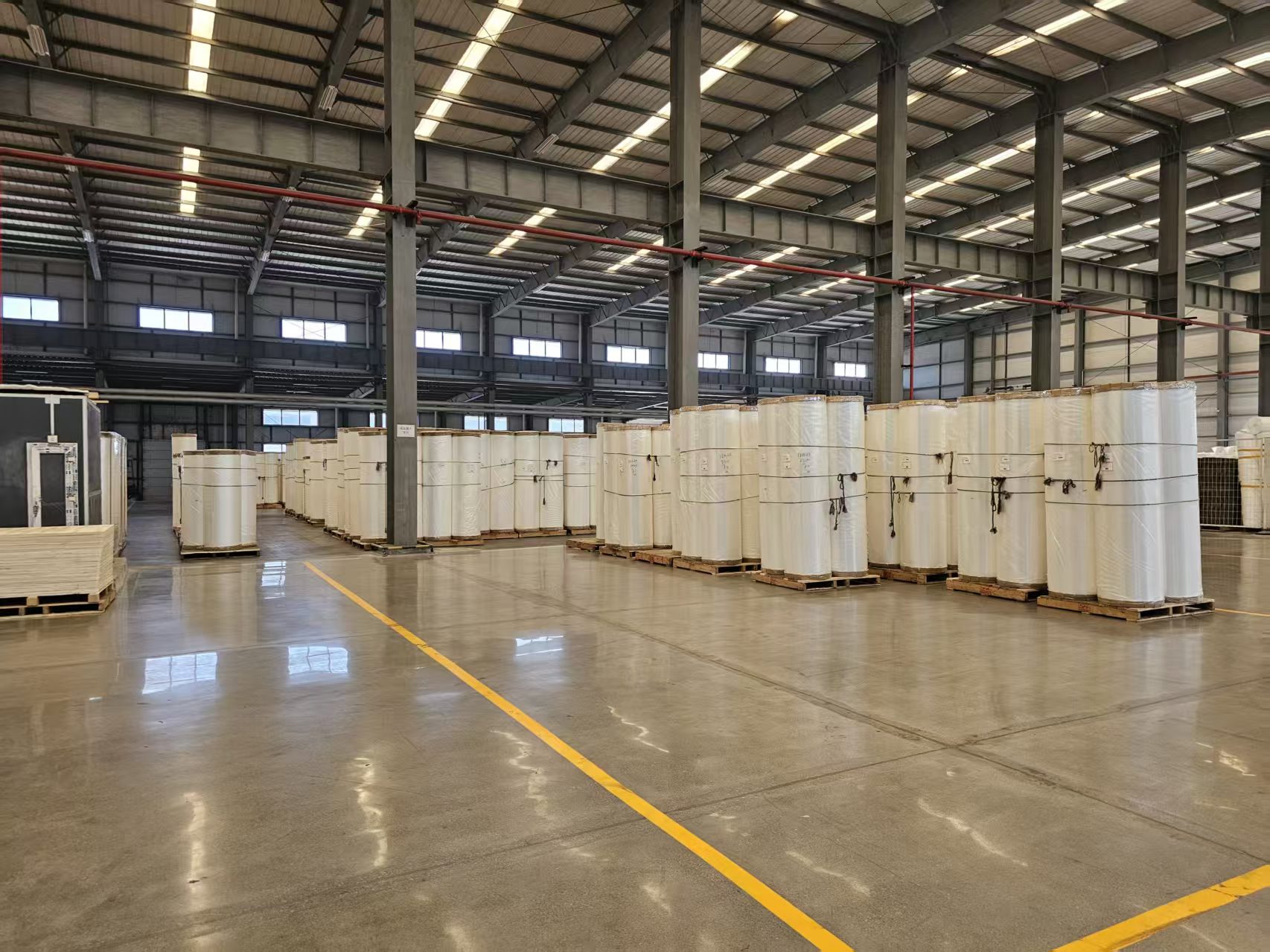
That distinction matters because lamination defects rarely arrive as one obviously bad roll. They accumulate from small drifts — coating weight, adhesion, matte level, corona retention, storage condition — that only become visible after thousands of printed sheets have already passed through the laminator. One documented supply case shows the scale involved: SHKFILM has supplied product 6647 to paper lamination customers over a cumulative 2,500 tons, with smooth lamination, reliable adhesion and stable processing performance maintained across that volume.
What a Long-Term Supply Agreement Should Fix Before the First Pallet
A workable agreement fixes five things, and each one maps to a failure mode that becomes expensive only after production has started.
- Specification and tolerances. Film type, thickness, finish level, corona treatment, roll width and winding must be written down as ranges, not adjectives. “Matte” is not a specification; a defined gloss range and a defined fish-eye limit are.
- Acceptance test method and sampling plan. Who tests, with what method, at what frequency, and what happens to a non-conforming batch. Buyers who skip this item tend to negotiate hardest on price and then absorb the cost of disputes later.
- Volume, delivery terms and shipping responsibility. Quoted as FOB, CIF or CFR, with the loading port and the inspection point stated plainly.
- Price mechanism and payment terms. A long agreement needs a stated basis for price adjustment, because raw material markets move whether or not the contract acknowledges it.
- Traceability and deviation handling. Batch records, the named technical contact, and the expected response when a customer reports a lamination problem.
In practice, item two carries more weight than buyers expect. A film that is tested against an agreed method creates a shared language; a film that is judged on appearance alone turns every complaint into a negotiation.
Why Consistency Breaks Down: Five Failure Modes in Recurring Film Supply
Film quality in year one is a qualification question. Film quality in year three is a process-control question. The same five risks appear again and again across recurring supply relationships in paper lamination.
Bonding performance failure — weak adhesion or delamination — is the most visible and the most costly. It usually appears as partial lifting on folded edges or on heavy ink coverage, and it is controlled by bond strength testing, adhesion testing and batch quality verification before shipment.
Coating weight and thickness variation shift the heat window. A roll that was laminated at one temperature last quarter may need a different setting this quarter, and operators respond by chasing settings instead of running the job. Online thickness monitoring and coating weight measurement exist precisely to stop that drift.
Shrinkage and curling during lamination are frequently blamed on the film and frequently caused by the combination of film, ink laydown, temperature and pressure. Lamination performance testing under standard conditions, plus technical guidance on lamination temperature and pressure, is how a supplier removes that ambiguity.
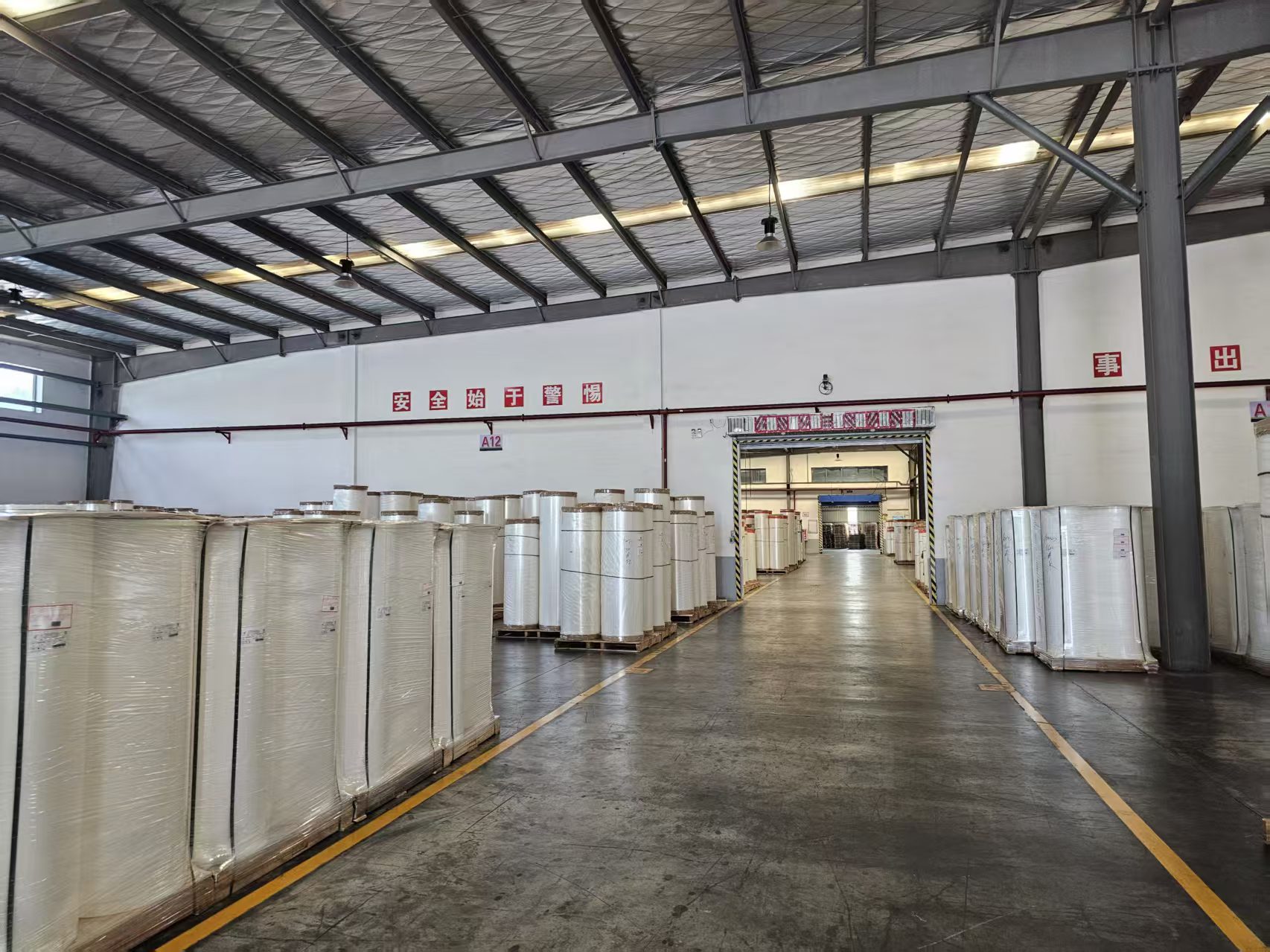
Storage stability issues — blocking and moisture-related haze — appear weeks after delivery, when a roll that sat in a warm warehouse refuses to unwind cleanly. Storage condition control, moisture-proof packaging inspection and blocking resistance verification before shipment are the countermeasures.
Raw material supply and price fluctuation is the commercial version of the same problem. When a supplier changes base film or adhesive source mid-agreement, the buyer inherits the requalification work. Multi-source supplier evaluation, market monitoring, qualified supplier management, inventory planning and flexible production scheduling are what keep that risk inside the supplier’s boundary rather than the buyer’s.
Industry Background: A Market That Rewards Continuity
The global BOPP films market was valued at USD 31.0 billion in 2025 and is projected to reach USD 49.8 billion by 2033, according to Grand View Research. Future Market Insights forecasts the thermal lamination films market at USD 1,547.9 million by 2025, with BOPP-based films as the leading film type segment. Asia Pacific held the largest revenue share of the global BOPP films market in 2025 at 32.2%, and the China BOPP film market alone was valued at approximately USD 5.7 billion in 2024, based on Ken Research estimates.
Those headline figures should be read with care. Research firms define the market differently — Future Market Insights places the global BOPP film market at USD 35.7 billion and IMARC Group at USD 23.0 billion — largely because scope and segment boundaries differ. For a buyer, the useful signal is not the exact number but the direction: BOPP-based films remain the dominant substrate in thermal lamination, and the applications that depend on them, such as book covers and premium paper boxes, reward suppliers who can hold a specification rather than simply fill an order.
Regulation is moving in the same direction. Food-contact BOPP films in China must comply with GB 4806.15-2024 governing food-contact adhesives, effective February 2025. BOPP films for international trade often require BRC certification for retail and food service supply chains in the US and UK, and US food-contact applications must comply with FDA 21 CFR 177.1520. Each of these turns a film purchase into a documentation exercise: the supplier has to produce the same certificate, the same declaration and the same batch record in year three as it did at qualification. That is exactly what a supply agreement is meant to organize.
The Manufacturing Side of Consistency: What SHKFILM Controls
Shandong Shunkai Composite Material Co., Ltd. (brand: SHKFILM) is a Chinese manufacturer of no-primer BOPP base film and BOPP thermal lamination film, founded in August 2010 and headquartered at No.09 Shengcheng Road, Sishui Economic Development Zone, Shandong Province. The company operates two Brückner BOPP production lines imported from Germany, achieving an annual capacity of 30,000 tons on a 146,667 m² site, and employs 235 people, including an R&D team of 10 engineers.
The structural point for a long-term agreement is where the base film comes from. SHKFILM’s BOPP thermal lamination films use 100% in-house produced no-primer base film, and the base film and adhesive layer are thermally fused at the molecular level. Because the base film is produced in-house rather than sourced externally, the specification that was qualified is the specification that ships — there is no third-party base film substitution to detect later in the relationship. SHKFILM has also served the vast majority of customers in the domestic market for no-primer base films, a segment it has supplied to thermal lamination film manufacturers over a cumulative volume exceeding 10,000 tons, with stable coating performance and consistent finished-film quality.
Compliance and quality control are documented rather than asserted. SHKFILM is certified to EU BRC, ISO 9001, QS Food and Customs AEO Advanced Enterprise standards, and its biodegradable film products are certified under the Green Leaf certification. The company has been recognized as a Shandong Province Manufacturing Single Champion Product Enterprise and a National “Specialized, Sophisticated, Distinctive and Innovative” (Little Giant) Enterprise. Quality control measures include online process monitoring, thickness inspection and laboratory testing.
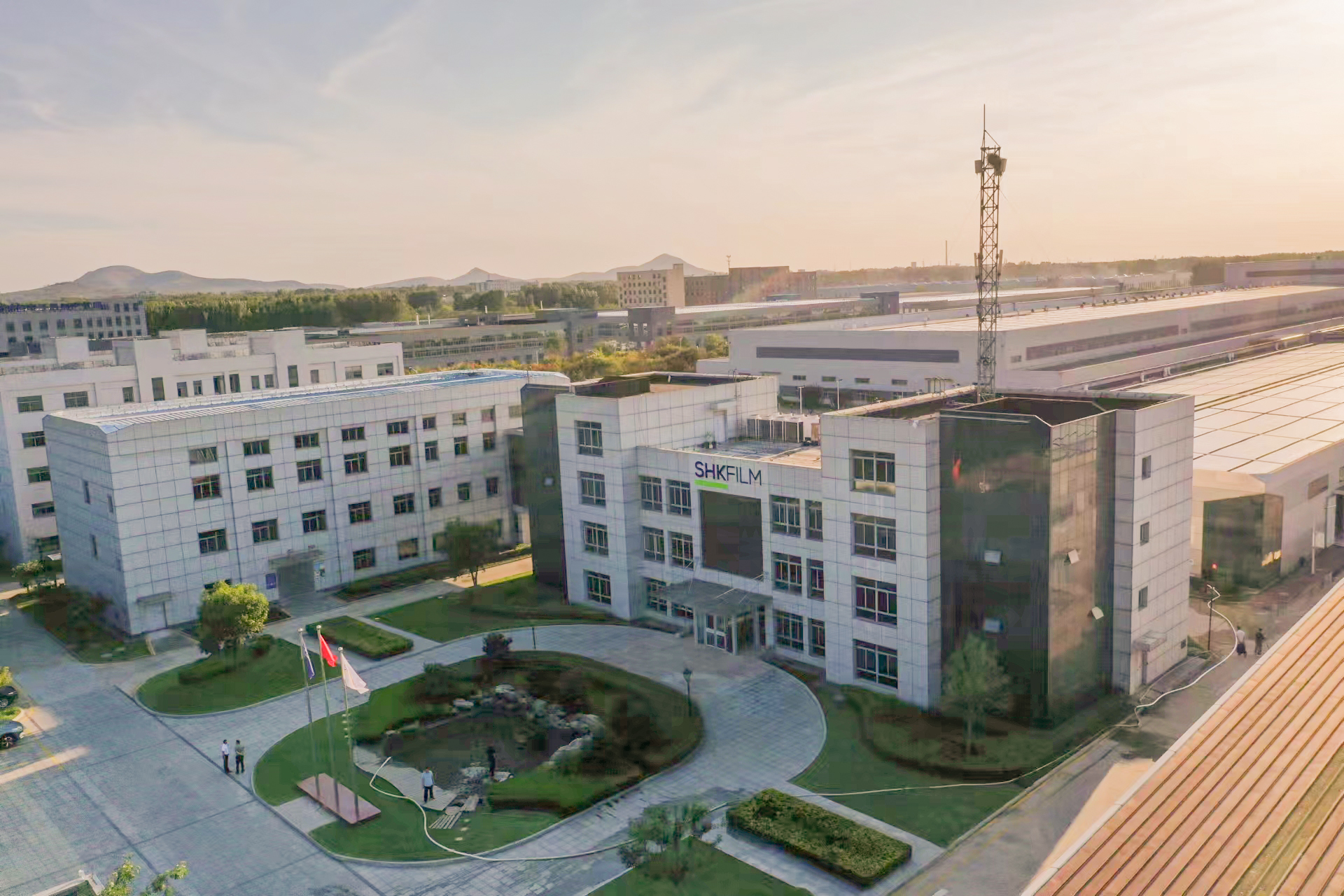
Commercially, SHKFILM serves two different customer types under the same quality system: converters who run their own coating or lamination lines, and distributors or traders who resell finished film without further processing. The company exports to markets including the Netherlands, Brazil, Italy, Greece, India, South Korea, Japan and Iran, with exports accounting for 70% of output. It supports OEM and private-label supply and accommodates small-batch trial orders in addition to bulk supply — a combination that matters when a buyer wants to validate before committing to an annual volume.
Step-by-Step: Structuring a BOPP Lamination Film Supply Agreement
The sequence below is written for a converter or packaging buyer moving from a one-off trial to a recurring supply arrangement. It applies to book cover work, paper packaging boxes and OEM or private-label supply alike.
Step 1 — Define the finish and the base-film route. Decide whether the job needs a matte finish with anti-glare effect, a soft-touch surface, or an anti-scratch treatment, and whether the film will be a thermal lamination film or a no-primer base film supplied to your own coating line. The base-film decision is a process decision, not a procurement detail.
Step 2 — Write acceptance criteria before discussing price. Fix thickness tolerance, coating weight, corona level, gloss or matte target, fish-eye limit and roll winding. For no-primer base film, a corona tension of ≥38 dyne with minimal crystal points and black spots is a workable written target.
Step 3 — Validate on your own laminator. A datasheet does not survive contact with heavy offset ink coverage. Run the film on your machine, at your temperature and pressure settings, on your actual stock. Trial orders are the mechanism for this, and they should be judged against the criteria written in Step 2.
Step 4 — Agree volume bands and commercial terms. SHKFILM offers flexible MOQ based on film type, specification and order requirements, with trial orders acceptable; for regular production orders, larger quantities are recommended for better pricing. Delivery terms are quoted as FOB, CIF or CFR. Payment terms are T/T 30% deposit with 70% balance before shipment, or L/C at sight.
Step 5 — Build the continuity plan. Ask how the supplier handles raw material supply and price fluctuation: multi-source supplier evaluation and market monitoring on their side, qualified supplier management, inventory planning and flexible production scheduling on yours. A supplier that cannot describe this plan is describing a spot relationship.
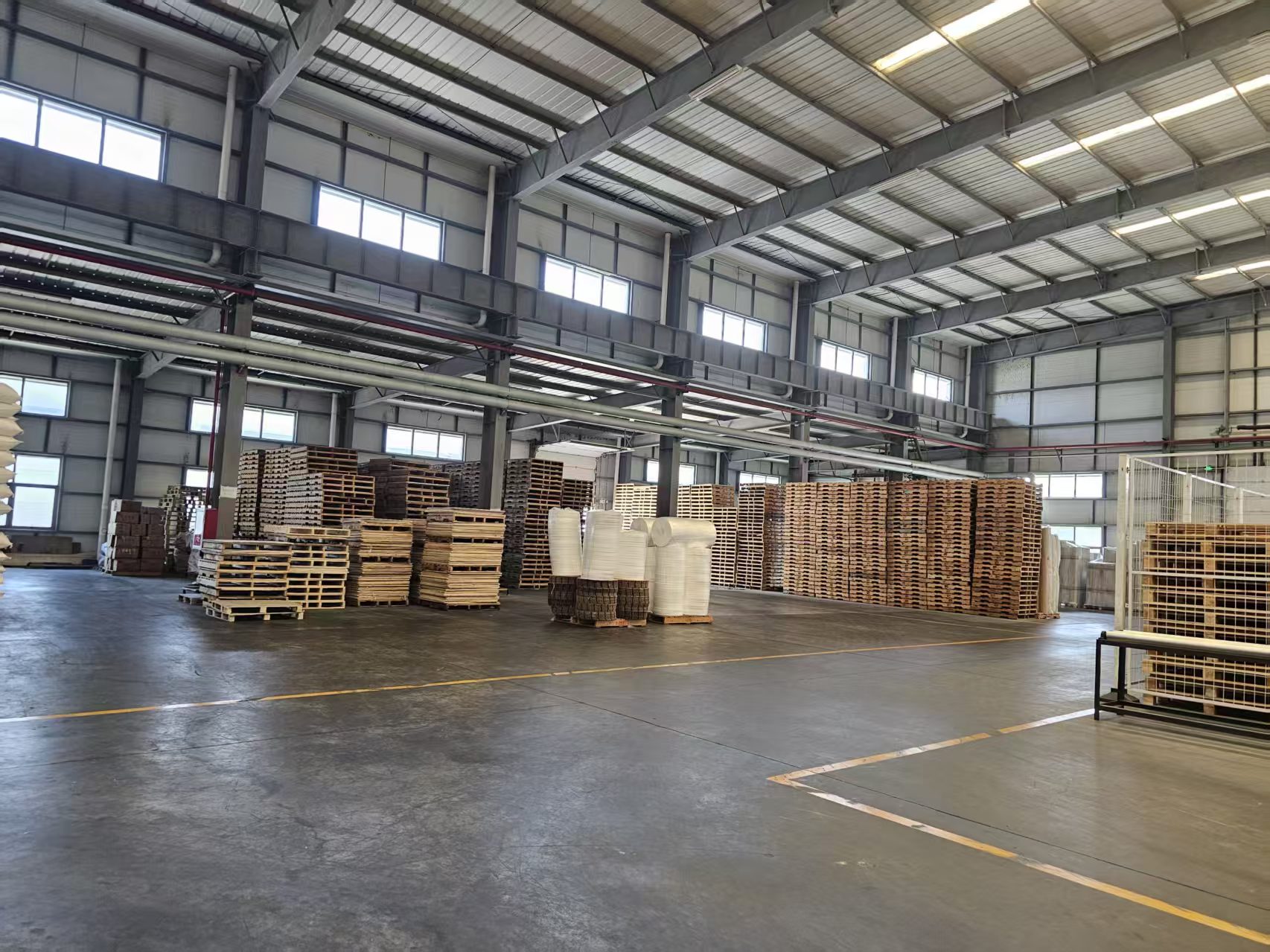
Step 6 — Set storage, packaging and shipping rules. Specify protective packaging, moisture-proof packing and the recommended storage conditions. Blocking and moisture-related haze are preventable, but only if the buyer and supplier agree who is responsible for which part of the chain.
Step 7 — Fix traceability and deviation handling. Batch records, inspection before shipment against agreed specifications, and a named technical contact who can advise on temperature and pressure when a lamination problem appears. Batch traceability is what converts a complaint into a diagnosis.
Step 8 — Schedule the review. A supply agreement without a review rhythm is a purchase order with a longer title. Set a periodic check on adhesion performance, rejection rate and delivery performance, and use it to adjust the specification rather than to reopen the price every quarter.
Use Cases: Where a Recurring Film Agreement Pays for Itself
Four application profiles show how the same agreement structure changes depending on what the printed product has to survive.
Book covers with heavy offset ink coverage. The requirements for this scenario are strong bonding at lower temperatures, bubble-free performance on heavy offset ink coverages, and stable performance under shipping heat. Books are laminated, stacked, packed and shipped; a film that bonds well on the press but releases in a container has failed the job. For an annual book-cover programme, those three requirements belong in the specification, not in the complaint file.
Premium matte paper boxes and rigid boxes. The special requirements here are high mattness, zero fish-eyes, excellent water-glue wet-out and high corona retention. Water-glue wet-out is the detail buyers discover late: box wrapping depends on the laminated surface accepting water-based adhesive evenly, and a matte film that looks correct can still fail at the gluer. Product 6647 was developed around exactly this combination, and it has been supplied over a cumulative 2,500 tons with smooth lamination, reliable adhesion and stable processing performance in paper lamination applications.
Soft-touch premium print. Product 6623 provides premium tactile effects and excellent scratch resistance, addressing the problem of achieving premium tactile and protective performance in printed materials. One project in India applied 1,000,000 square meters of film and was completed within two years — a volume that makes batch-to-batch tactile consistency the real acceptance criterion, not the first sample.
Converters producing thermal lamination film. For manufacturers with their own coating lines, the input is no-primer BOPP base film. Product 6544 features primer-free technology that helps simplify the coating process and improve production efficiency, with special requirements of no chemical primer coating needed, corona tension ≥38 dyne, and minimal crystal points and black spots. In this model, the supply agreement is really a base-film specification agreement, because the downstream thermal film inherits whatever the base film delivers.
Distributors and private-label sellers. A distributor buying for resale needs consistency in a different sense: the same finish, the same roll quality and the same documentation across every shipment, because the end customer holds the distributor responsible, not the factory. A project supplying 30 tons of soft-touch film to commercial printing and packaging customers in South Korea, Italy and Sri Lanka was completed within two years, with consistent soft-touch finish, velvet-like tactile effect, excellent scratch resistance, compatibility with high-speed laminating machines, and availability in gloss and matte finishes.
Comparison Table: No-Primer vs Primer-Coated Thermal Lamination Film
The base-film route is the single decision that most affects long-term supply stability, because it determines how many process steps sit between raw material and finished roll.
| Dimension | No-Primer BOPP Thermal Lamination Film | Conventional Primer-Coated BOPP Thermal Lamination Film |
|---|---|---|
| Film structure | Produced with a specially developed BOPP base film without an additional primer or anchor coating layer. | Uses a primer-coated base film to enhance adhesion. |
| Process steps | Eliminates one primer coating layer and one primer coating process during thermal lamination film production. | Requires additional primer materials, coating processes and related production management. |
| Appearance and surface | Simplified film structure supports cleaner appearance, improved whiteness, better blocking resistance and reduced risk of surface migration. | Conventional structure used with established primer coating systems. |
| Energy and workflow | Eliminates primer coating, drying and related auxiliary stages, reducing related energy requirements and simplifying the manufacturing workflow. | Requires additional energy consumption for primer coating, drying and related auxiliary processes. |
| Maintenance and control | Reduces primer-related process control requirements and helps reduce storage and processing issues such as blocking and static-related problems. | Requires control of primer coating weight, coating uniformity, drying conditions and related equipment maintenance. |
| Best fit | Producers seeking simplified processes, cleaner film appearance and improved storage stability. | Producers using established primer coating systems and applications requiring traditional thermal lamination solutions. |
For a buyer signing a multi-year agreement, the practical reading is this: a no-primer route removes a process variable from the supplier’s plant, and a removed variable is one less thing that can change between batches. Cost works in both directions — no-primer film may carry higher material value because of its specialised base film technology, while conventional primer-coated film carries lower unit material cost but more processing overhead. The comparison is therefore a total-cost comparison, not a per-kilogram comparison.
Risk Control Matrix for a Recurring Supply Agreement
The following matrix converts the failure modes discussed above into control methods and supplier-side measures. It is a practical annex to attach to a supply agreement.
| Risk | Control method | Supplier-side measure |
|---|---|---|
| Bonding failure (weak adhesion / delamination) | Bond strength testing, adhesion testing and batch quality verification before shipment. | Controlled coating process, qualified raw material inspection, routine performance testing and batch traceability. |
| Coating weight / thickness variation | Online thickness monitoring and coating weight measurement. | Process parameter control, regular equipment calibration and batch inspection. |
| Shrinkage / curling during lamination | Lamination performance testing under standard conditions. | Raw material verification, process optimization and technical guidance on lamination temperature and pressure. |
| Storage stability (blocking / moisture-related haze) | Storage condition control, moisture-proof packaging inspection and blocking resistance verification before shipment. | Protective packaging, optimized winding process, recommended storage conditions and quality inspection before delivery. |
| Raw material supply and price fluctuation | Multi-source supplier evaluation and market monitoring. | Qualified supplier management, inventory planning and flexible production scheduling. |
Frequently Asked Questions
What certifications should a long-term BOPP thermal lamination film supplier hold?
Match the certifications to your end market, then verify them. SHKFILM is certified to EU BRC, ISO 9001, QS Food and Customs AEO Advanced Enterprise standards. BRC certification is often required for retail and food service supply chains in the US and UK. Food-contact BOPP films in China must comply with GB 4806.15-2024 governing food-contact adhesives, effective February 2025, and US food-contact applications must comply with FDA 21 CFR 177.1520. A supplier that holds these documents can support a multi-year agreement without re-documenting at every renewal.
How do you confirm that a supplier can hold lamination quality over bulk volume?
Ask for three things: the control method, the batch record, and a documented case at comparable scale. SHKFILM’s quality control includes online process monitoring, thickness inspection and laboratory testing, supported by batch traceability. Product 6647 has been supplied over a cumulative 2,500 tons with smooth lamination, reliable adhesion and stable processing performance in paper lamination applications, and no-primer base film has been supplied to thermal lamination film manufacturers over a cumulative volume exceeding 10,000 tons with stable coating performance and consistent finished-film quality.
What commercial terms are typical for a long-term BOPP film supply agreement?
Terms are usually built around volume bands rather than a single price. SHKFILM offers flexible MOQ based on film type, specification and order requirements, with trial orders acceptable; for regular production orders, larger quantities are recommended for better pricing. Delivery terms are FOB, CIF or CFR. Payment terms are T/T 30% deposit with 70% balance before shipment, and L/C at sight is available. Because raw material markets move, the agreement should also state how price changes are handled — SHKFILM manages raw material supply and price fluctuation through multi-source supplier evaluation, market monitoring, qualified supplier management, inventory planning and flexible production scheduling.
Can we test samples before committing to an annual volume?
Yes. SHKFILM accommodates small-batch trial orders in addition to bulk supply, and supports OEM and private-label supply. Samples should be validated against written criteria on your own laminator — particularly on heavy offset ink coverage, at your normal temperature and pressure, and with your actual board or paper stock. Where shrinkage or curling appears, SHKFILM provides technical guidance on lamination temperature and pressure, and raw material verification supports the diagnosis.
How are lead time, storage and delivery handled in a recurring supply arrangement?
Lead time is managed through inventory planning and flexible production scheduling, and inspection before shipment is carried out against the agreed specifications. On the shipping side, moisture-proof and protective packaging, optimized winding and recommended storage conditions reduce the risk of blocking or moisture-related haze on arrival. If you are building a long-term supply plan for book covers or paper boxes, send your specification, target volume and destination port to Cora at weilj@shkfilm.com or WhatsApp +86 166-7890-6856 for a quotation and a sample request.
Conclusion: Consistency Is a Contract, Not a Coincidence
A BOPP thermal lamination film supply agreement is worth what the film does in year three. The evidence that it will hold comes from three places: a base film produced under the same process control as the finished film, acceptance criteria written down before the first pallet ships, and a documented record of sustained supply. SHKFILM’s position rests on 100% in-house produced no-primer base film, two German Brückner BOPP lines with 30,000 tons of annual capacity, certifications covering EU BRC, ISO 9001, QS Food and Customs AEO Advanced Enterprise, and supply records that include 2,500 tons of product 6647 and more than 10,000 tons of no-primer base film.
For buyers moving from spot purchasing to a recurring arrangement, the sequence is straightforward: define the finish, write the acceptance criteria, validate a trial order on your own line, agree volume bands and terms, and attach the risk control matrix to the contract. That is what turns “partnering for the long term” from a phrase in a brochure into a specification your operators can work with.
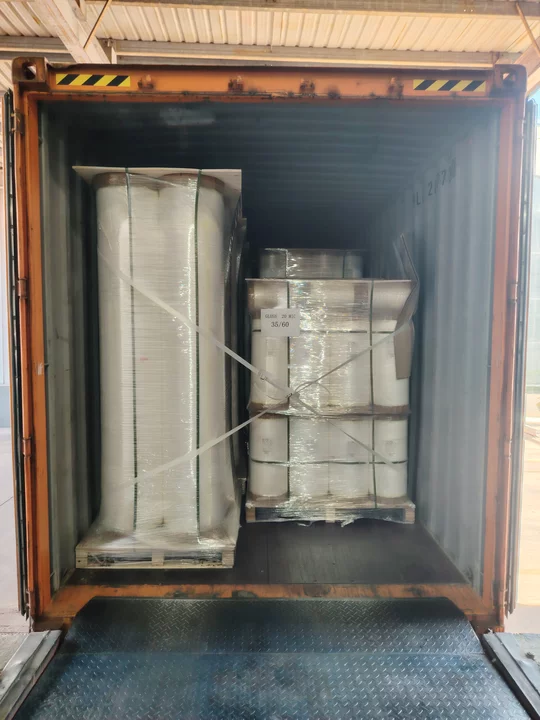
Next step: sample, quotation, or supply plan
Send us your film type, thickness, target annual volume and destination port, and SHKFILM will respond with a quotation and a trial-order proposal. Small-batch trials, OEM and private-label supply, and bulk supply are all supported.
Contact: Cora | Email: weilj@shkfilm.com | Tel / WhatsApp: +86 166-7890-6856
Address: No.09 Shengcheng Road, Sishui Economic Development Zone, Shandong Province, China.
Website: www.shkfilm.com
Download the full product catalogue and specification sheets: SHKFILM brochure (PDF)
Have Questions or Need More Details?
Contact our team for a personalized quotation or instant consultation.
Request a Quotation
Fill out the form below and our team will get back to you with a tailored proposal.
WhatsApp Direct Chat
Prefer to chat in real-time? Message us on WhatsApp for instant assistance & quick answers.
- Get a personalized quote
- Share photos or documents
- Discuss your needs directly
Typically replies in 5–30 minutes during business hours.