
Soft-Touch BOPP Film vs. Anti-Scratch Film: A Head-to-Head Decision for Print Finishers
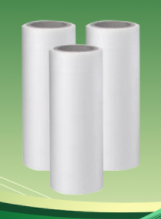
Soft-touch BOPP film and anti-scratch BOPP film are not two versions of the same product. Soft-touch is a tactile property — it changes how a laminated surface feels and how printed colour reads through it. Anti-scratch is a durability property — it changes how that surface survives friction, stacking and transport. SHKFILM manufactures both within the same BOPP Specialty Lamination Films platform (model designation: Anti-Scratch Film Series / Soft Touch Film Series), and also builds a 3-in-1 film that carries anti-scratch, soft-touch and anti-fingerprint performance in a single layer. For a print finisher, the decision is therefore not “which film is better”, but “which failure am I being asked to prevent on this job”.
That distinction matters because the two properties are usually requested in the same sentence. A brand owner asks for a “premium matte finish that does not scratch”. A publisher asks for a cover that feels luxurious and still looks new after a pallet has been shrink-wrapped, shipped and unpacked twice. A cosmetics buyer asks for velvet hand feel on a rigid box that will sit on a retail shelf under handling from dozens of people a day. Each of those briefs contains a tactile requirement and a wear requirement — and they do not automatically resolve into the same film.
Where they do converge is on the production floor. A South Korean project using products 6544 and 6647, both supplied by SHKFILM, produced soft-touch and anti-scratch thermal lamination films at a scale of 120 tons per year and achieved stable coating performance. That case is useful not because it names a single winning film, but because it shows how finishers normally settle the soft-touch-versus-anti-scratch question: by separating the surface requirement from the substrate requirement, and then testing both on the line.
The Specification Conflict Behind Most Surface Complaints
Surface complaints rarely arrive as a technical failure. They arrive as a sentence: “it scuffs”, “it feels cheap”, “it shows fingerprints”, or “the colour went flat”. Behind each of those sentences is a different physical mechanism, and that is why a single “premium matte” line item on a purchase order so often produces a reprint.
- Soft-touch is judged by hand, not by abrasion. A velvet-feel surface is evaluated the moment someone picks up the finished piece. The relevant metrics are tactile consistency, colour and lustre retention, and whether the tone of the print is preserved after lamination.
- Anti-scratch is judged by what happens after handling. A wear-resistant surface is evaluated after stacking, palletising, transport and repeated contact. The relevant metrics are scratch and scuff resistance, haze level and matte consistency.
- Fingerprint marking is a third, separate failure mode. Neither a pure soft-touch film nor a pure anti-scratch film is defined by fingerprint control in the series data. Only the 3-in-1 construction puts anti-scratch, soft-touch and anti-fingerprint into one layer.
- The lamination route adds a second conflict. Thermal lamination uses an EVA hot-melt adhesive and heated rollers, with no solvent odour and no separate adhesive applied on site. Wet lamination uses water-based glue and a heated drying channel, typically at 50–70 °C. The same surface requirement can travel down two different production routes, and not every film construction is offered in both.
- The base film itself is a variable. For finishers and converters who coat their own film, the choice between a primer-coated base film and a no-primer base film changes blocking loss, whiteness, static behaviour and energy use before the surface property is even considered.
In other words, “soft-touch or anti-scratch” is not a two-option question. It is a question about which of five linked variables the buyer is actually optimising, and only two of them are visible in the sample the client holds.
Why This Decision Is Getting More Expensive to Get Wrong
Specialty lamination films have moved from a premium option to a specified requirement, and the market data reflects that shift. The global BOPP films market was valued at USD 31.0 billion in 2025 and is projected to reach USD 49.8 billion by 2033, according to Grand View Research. Within that, the thermal lamination films market is forecast to reach USD 1,547.9 million by 2025, with BOPP-based films as the leading film type segment (Future Market Insights).
The specialty end of that market is where the soft-touch and anti-scratch decision sits. The soft touch film market was estimated at USD 2.9 billion in 2024, growing at a CAGR of 3.1% through 2034 (Future Market Insights). Anti-scratch and scuff-resistant finishes are separately cited as high-growth specialties in commercial print and premium packaging by the same source. Meanwhile, matte thermal lamination films are increasingly used for high-end applications such as luxury paper box packaging and book covers (Global Growth Insights).
Regionally, Asia Pacific held the largest revenue share of the global BOPP films market in 2025 at 32.2% (Grand View Research), and the China BOPP film market alone was valued at approximately USD 5.7 billion in 2024 (Ken Research). Those are the supply regions most print finishers in Europe, South Asia and the Americas buy from, which makes Asia-based specialty capacity — including SHKFILM’s operations in Shandong Province, China — a practical part of the sourcing map rather than a distant one.
Two structural consequences follow for finishers. First, a plant that once carried one matte film now frequently needs a tactile film, a wear-resistant film and a combined film to cover its order book. Second, the specification itself is tightening: one-side lamination film is projected to lead the soft touch segment with a 55.0% market share (Future Market Insights), which points to the dominance of one-sided finishing on covers and cartons — the exact application where feel and scuff resistance compete most directly.
The competitive landscape is expanding in the same direction. Major global BOPP film producers include Jindal Poly Films, Taghleef Industries and Cosmo First Ltd. (IMARC Group), and specialty functionality is spreading across the category — for example, Cosmo First has developed antimicrobial BOPP thermal lamination films aimed at reducing bacterial colonisation on packaged surfaces. For buyers, that is good news on availability and a complication on comparison, because “matte specialty film” now describes several different performance profiles.
What Each Film Family Actually Delivers
Both families in this comparison sit on the same SHKFILM platform, product reference 6623, classified under anti-scratch lamination film, soft touch matte lamination film, and 3-in-1 anti-scratch, soft-touch and anti-fingerprint lamination film categories. They share a functional top-coat, a base film and a delivery format. What changes is what the top-coat is engineered to do.
Soft-Touch Film: A Tactile Property, Judged by Hand
The soft-touch film in the series is defined by a velvet feel, low matteness, excellent colour and lustre, and good perspective, with the property that the colour tone will not be lost after lamination. It is suitable for the bronzing process and the screen-printing process, and the product has passed ROHS, REACH and EN71.
Those are not marketing adjectives; each one maps to a production risk. “Low matteness with excellent colour and lustre” means the film is intended for jobs where the print must stay vivid rather than be flattened. “Colour tone will not be lost after lamination” addresses the most common soft-touch complaint from brand owners — a rich dark print that turns grey once the film is applied. Bronzing and screen-printing compatibility matters because soft-touch surfaces are frequently combined with metallic foil and spot screen effects on cosmetic and gift packaging.
Product 6623 is typically applied globally for premium packaging applications, in the rigid box manufacturing, premium packaging printers and luxury brand supply chain industries. The soft-touch side of the series is the natural fit for cosmetic and perfume box finishing, wine packaging and luxury book covers, where the surface is evaluated by hand before it is evaluated by durability.
Anti-Scratch Film: A Durability Property, Judged by Abrasion
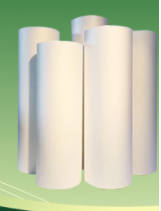
The anti-scratch film in the same series is defined by anti-scratch and wear-resistant performance, with gorgeous lustre and texture, a high haze level and a good matte finish. Like the soft-touch version, it is suitable for the bronzing process and the screen-printing process and has passed ROHS, REACH and EN71.
The two properties use different wording on purpose. Soft-touch is described through feel and colour; anti-scratch is described through wear resistance and matte character. If a finished piece is failing because dark solid ink areas show rub marks after stacking, soft-touch alone will not solve it — the requirement is abrasion resistance over heavy ink coverage and dark backgrounds, which is exactly the condition the specialty film application scenario describes.
That application scenario is globally common in rigid box manufacturing, premium packaging printers and luxury brand supply chains, where post-press lamination runs over heavy ink coverages and dark solid backgrounds. The stated special requirements are a superior scuff-resistance rating, consistent texture and flawless visuals over dark background prints. Those three requirements together are the anti-scratch brief.
The 3-in-1 Film: When Both Properties Are Non-Negotiable
The 3-in-1 construction combines anti-scratch, soft-touch and anti-fingerprint functions into a single layer. It is available in a thermal lamination version compatible with SHKFILM’s no-primer base film, and in a wet lamination version. It delivers colour reproduction with a silky, refined texture and is designed for luxury perfume, cosmetic and electronics packaging boxes where both tactile experience and surface durability are critical.
This is the option that most often closes the soft-touch-versus-anti-scratch argument, because it removes the need to choose. It is also the option that most deserves a trial run: combining three surface functions in one layer changes how the film behaves on the laminator, and the decision should be validated on the machine that will run the job.
The Shared Technical Platform Behind Both Properties
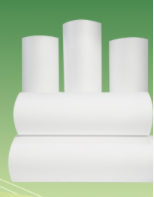
Because both families sit on one platform, the format and process parameters are largely the same, which simplifies inventory for finishers who need both. The series is specified with a fixed top-coat thickness of 3 mic to 4 mic for consistent tactile and protective performance, on a base film whose thickness is flexible and customisable. Total thickness range is 18 mic to 29 mic and is customisable. Corona treatment is specified at inside ≥40 dyne and outside ≥36 dyne. Core diameter options are 3 inch (76 mm) and 6 inch (152 mm). Roll width runs from 200 mm to 1920 mm, with roll lengths of 2000 m, 3000 m, 6000 m, 9000 m and 12000 m.
The fixed top-coat figure is the parameter most worth writing into a specification. It is what makes tactile performance and protective performance repeatable from roll to roll, rather than varying with the base film. For a finisher running the same cosmetic box twice in six months, that consistency is the difference between a matched pair and a visible mismatch.
The Base Film Question Hiding Behind Both Choices
For converters and coating plants that produce their own specialty thermal film rather than buying finished rolls, the surface decision is downstream of a substrate decision. Product 6544, SHKFILM’s No-Primer Base Film Series for thermal lamination, is available in gloss and matte, at 12 mic and 15 mic, with corona treatment outside ≥38 dyne, core diameters of 3 inch and 6 inch, roll widths from 300 mm to 2580 mm, and roll lengths of 9100 m, 12100 m and 18100 m.
The substrate is designed so its surface structure allows direct adhesion to thermal adhesive layers without primer coating. In production terms, that eliminates the primer coating step compared with conventional base films that require primer treatment, and removes the drying ovens and primer chemistry from the workflow, with no ozone or VOC emissions. SHKFILM states that this helps overseas coating plants reduce electricity costs and avoid the expense of complex environmental compliance reviews. It also addresses the blocking problem that affects primer-coated base films under high winding pressure, where sticking at the roll core can waste hundreds of metres of material and scrap entire rolls.
For coating mills, extrusion coating plants and film converting operations, that means the soft-touch-versus-anti-scratch choice begins one step earlier: on the base film that the functional top-coat will sit on.
A Six-Step Selection Sequence for Print Finishers
The following sequence turns the comparison into a decision. It is written for the person who has to commit to a film before the job runs, not for a specification meeting.
- Name the failure the customer is trying to avoid. “It feels cheap” points to soft-touch. “It looks worn before it is opened” points to anti-scratch. “It shows fingerprints” points to the 3-in-1 construction. Write the failure down before choosing a film; the failure, not the adjective, determines the top-coat.
- Decide whether you are buying a surface or a material. If you laminate finished sheets, you are buying a finished thermal or wet lamination film. If you coat your own film, you are buying base film and building the surface yourself — in which case product 6544 rather than a finished roll is the starting point.
- Match the lamination route. Thermal lamination fuses the base film and adhesive layer under heated rollers with no solvent odour and no adhesive applied on site, and eliminates the need for separate adhesive application compared with wet lamination film. Wet lamination runs water-based glue with a drying channel at 50–70 °C and is standard in commercial print shops, post-press finishing houses and wet lamination converters. Both the specialty series and the standard thermal series exist in both routes, but not every individual construction does.
- Check the print underneath. Heavy offset ink coverage, dark solid backgrounds, bronzing and screen printing all change the requirement. Where heavy ink and dark solids are involved, the stated special requirements are flawless visuals over dark background prints, bubble-free performance on heavy offset ink coverages and strong bonding at lower temperatures.
- Confirm format, thickness and compliance before quoting. Thickness, corona level, core diameter and roll length determine whether the film runs on your equipment without adjustment. Compliance determines whether the finished packaging can be sold into the destination market at all.
- Run a trial, then scale. Validate tactile uniformity, scratch performance, colour retention and adhesion on your own laminator before committing a full production run — particularly for the 3-in-1 construction, where three functions share one layer.
Where Each Choice Wins in Practice
The clearest way to see the difference is by application. In each case below, the film choice follows from what the finished piece has to survive.
Book Covers and Publishing
For high-volume book covers, standard folding cartons and printed leaflets, lamination runs under dry lamination conditions with heated rollers, with no solvent odours or adhesive coating on site. The function is to enhance paper foldability and provide a moisture barrier and scratch protection for printing inks. The stated special requirements are strong bonding at lower temperatures, bubble-free performance on heavy offset ink coverages, and stable performance under shipping heat. This is anti-scratch territory, because the cover has to survive stacking and transport before a reader ever opens it. Product 6615, the Gloss / Matte Thermal Lamination Film Series, is specified for commercial offset printing, packaging box printing and post-press finishing industries, at 17 mic to 27 mic, with roll widths of 320 mm to 2180 mm.
Luxury Rigid Boxes, Cosmetics and Perfume
Cosmetic and perfume box finishing is where soft-touch earns its place. The application scenario specifies post-press lamination over heavy ink coverages and dark solid backgrounds to achieve tactile and anti-scratch properties, with the requirements of a velvet soft-touch feel, elite anti-scratch surface protection and an elegant matte look, plus consistent velvet texture and flawless visuals over dark background prints. Where fingerprint marking is also a concern on a retail shelf, the 3-in-1 construction is the appropriate substitution — it is designed for luxury perfume, cosmetic and electronics packaging boxes where tactile experience and surface durability are both critical.
Consumer Electronics Packaging
Electronics boxes combine a premium unboxing experience with repeated handling before the consumer opens the product. The 3-in-1 film’s anti-fingerprint function is the specific advantage here, alongside anti-scratch protection and a silky, refined texture with colour reproduction.
Wet Lamination Shops Running Matte Work
For wet lamination converters, commercial print shops and post-press finishing houses running conventional wet lamination with water-based glues, product 6647 — BOPP Matte Film for Wet Lamination — is specified at 12 mic and 15 mic, with corona treatment of outside ≥42 dyne and inside ≥38 dyne, roll widths from 300 mm to 2240 mm, and roll lengths of 4000 m, 5000 m, 6000 m, 9100 m, 12100 m and 18100 m. It is engineered for a highly consistent premium matte finish with a soft, uniform anti-glare effect, described as the premier choice for premium book covers, magazines, luxury colour box packaging and high-end paper-plastic compound finishing. The stated special requirements are high corona retention, excellent water-glue wet-out, zero fish-eyes and high mattness, with high purity and ultra-low specks supporting flawless results on premium dark ink graphics, plus anti-static behaviour that reduces film wrinkles and jamming at high speed.
Coating Mills Building Their Own Specialty Film
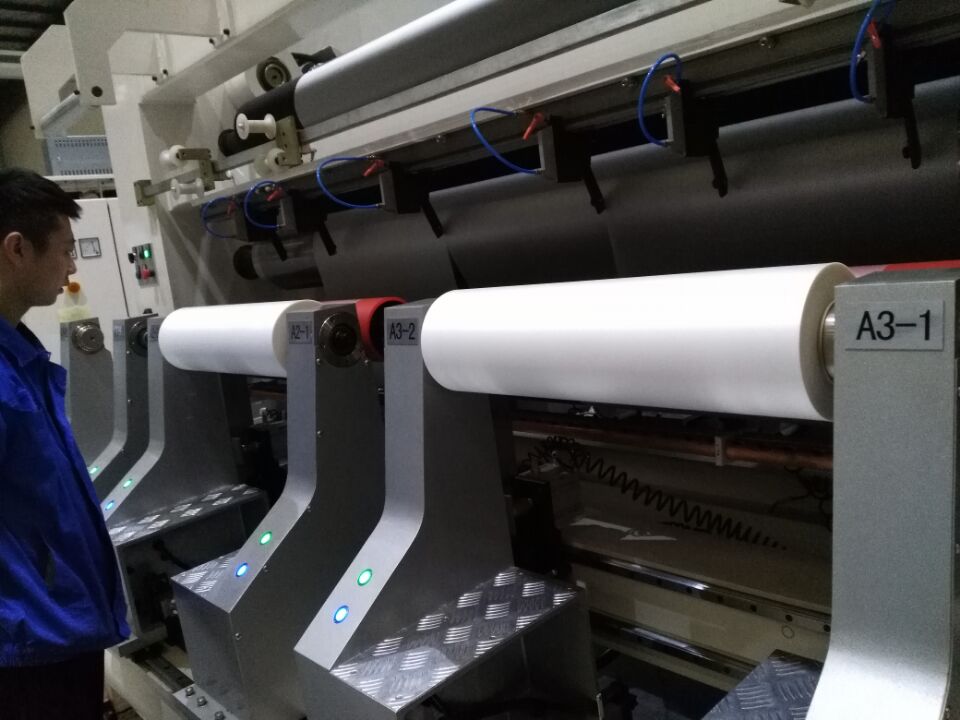
For BOPP coating mills, extrusion coating plants and film converting operations, product 6544 supplies an unprimed substrate optimised for high-speed EVA extrusion coating in continuous master roll winding and unwinding, with supporting equipment including extrusion coaters, high-speed slitting machines and corona treaters. The stated special requirements are no chemical primer coating needed, corona tension ≥38 dyne, and minimal crystal points and black spots. This is the route that the South Korean project took: products 6544 and 6647 used by thermal lamination film manufacturing clients for applications including soft-touch and anti-scratch films, with stable coating performance at a scale of 120 tons per year. The same series has broader field evidence — product 6647 has been supplied to customers in South Korea, the Netherlands and Italy for local distribution with a cumulative supply of 2500 tons, and product 6623 has been used by local distributors of BOPP lamination films in South Korea, Italy and Sri Lanka.
Soft-Touch vs Anti-Scratch vs 3-in-1: Head-to-Head
The table below compares the three surface options within the SHKFILM specialty platform on the dimensions that actually change a purchasing decision. Format, corona, core and roll parameters are shared across the series; the differences are in function and application fit.
| Decision dimension | Soft-Touch Film | Anti-Scratch Film | 3-in-1 Film |
|---|---|---|---|
| Primary function | Velvet tactile feel with low matteness | Anti-scratch and wear-resistant surface | Combines anti-scratch, soft-touch and anti-fingerprint in one layer |
| Surface character | Velvet feel, excellent colour and lustre, good perspective; colour tone retained after lamination | Gorgeous lustre and texture; high haze and a good matte finish | Silky, refined texture with excellent colour reproduction |
| Fingerprint control | Not defined as a function in the series data | Not defined as a function in the series data | Anti-fingerprint function built into the layer |
| Bronzing / screen printing | Suitable for bronzing and screen printing | Suitable for bronzing and screen printing | Not itemised separately in the series data |
| Lamination routes | Thermal and wet | Thermal and wet | Thermal (compatible with no-primer base film) and wet |
| Thickness range | 18–29 mic, customisable | 18–29 mic, customisable | 18–29 mic, customisable |
| Functional top-coat | Fixed 3–4 mic | Fixed 3–4 mic | Fixed 3–4 mic |
| Corona treatment | Inside ≥40 dyne, outside ≥36 dyne | Inside ≥40 dyne, outside ≥36 dyne | Inside ≥40 dyne, outside ≥36 dyne |
| Roll width | 200–1920 mm | 200–1920 mm | 200–1920 mm |
| Roll length | 2000 / 3000 / 6000 / 9000 / 12000 m | 2000 / 3000 / 6000 / 9000 / 12000 m | 2000 / 3000 / 6000 / 9000 / 12000 m |
| Environmental testing | ROHS, REACH, EN71 | ROHS, REACH, EN71 | ROHS, REACH, EN71 |
| Best-fit applications | Rigid boxes, luxury book covers, wine and perfume packaging | Premium packaging boxes, book covers and cartons needing surface durability | Luxury perfume, cosmetic and electronics packaging boxes |
How to read this table: choose soft-touch when the surface is judged by hand, choose anti-scratch when the surface is judged by handling, and choose the 3-in-1 when both judgements happen on the same box. The shared format parameters mean you are not rebuilding your laminator settings when you move between them — which is the practical reason finishers increasingly stock more than one.
Frequently Asked Questions
Are soft-touch and anti-scratch BOPP lamination films certified for regulated packaging supply chains?
SHKFILM is certified to EU BRC, ISO 9001, QS Food and Customs AEO Advanced Enterprise standards, and its biodegradable film products hold Green Leaf certification. The BOPP Matte Film for Wet Lamination is certified to the BRCGS Global Standard for Packaging Materials, Issue 7 (October 2024), issued by SGS under certificate number CN19/10136, applicable to the global market. BOPP Thermal Lamination Film is certified to ISO 45001:2018 Occupational Health and Safety Management System, certificate number 57626S00018R101, issued by Qingdao Wanhui Inspection and Certification Co., Ltd. The BOPP Specialty Lamination Films — the series that contains the soft-touch and anti-scratch constructions — are covered by an SGS Test Report for Volatile Organic Compounds content under the Chinese standard GB 33372-2020, certificate number CANEC26006194201, issued by SGS-CSTC Standards Technical Services Co., Ltd. The specialty films have also passed ROHS, REACH and EN71. Destination-market rules still apply on top of supplier certification: BOPP films for international trade often require BRC certification for retail and food service supply chains in the US and UK, BOPP lamination films for US food contact must comply with FDA 21 CFR 177.1520, and food-contact BOPP films in China must comply with GB 4806.15-2024 governing food-contact adhesives, effective February 2025.
Can one BOPP film deliver both soft-touch and anti-scratch performance?
Yes. The 3-in-1 construction in the BOPP Specialty Lamination Films series combines anti-scratch, soft-touch and anti-fingerprint functions into a single layer. It is available as a thermal lamination type, compatible with SHKFILM’s no-primer base film, and as a wet lamination type. It delivers excellent colour reproduction with a silky, refined texture and is designed for luxury perfume, cosmetic and electronics packaging boxes where both tactile experience and surface durability are critical. If a job needs an anti-fingerprint surface as well, this is the only construction in the series that provides it, since fingerprint control is not defined as a standalone function of the pure soft-touch or pure anti-scratch films.
What drives the cost difference between soft-touch and anti-scratch film?
The cost structure has three main drivers, none of which is a headline price. The first is the functional top-coat: the series is built with a fixed 3 mic to 4 mic top-coat to keep tactile and protective performance consistent, and base film thickness is the flexible, customisable variable around it. The second is the lamination route and the equipment it demands. Thermal lamination eliminates the need for separate adhesive application compared with wet lamination film, while wet lamination requires water-based glue and a heated drying channel at 50–70 °C. The third is the base film decision for converters who coat in-house: a no-primer base film removes the primer coating step and the associated drying ovens, produces no ozone or VOC emissions, and reduces electricity consumption and environmental compliance overhead — while also eliminating the roll-core blocking that wastes material on primer-coated base films. Choosing a single-property film for a job that needs both properties is the most expensive outcome of all, because the cost is absorbed as rework and reprints rather than as film.
Can we validate the film on our own laminator before committing to a bulk order?
Yes. SHKFILM supports OEM and private-label supply and accommodates small-batch trial orders in addition to bulk supply. Trial validation matters most for the 3-in-1 construction and for jobs running heavy offset ink coverage or dark solid backgrounds, where the stated special requirements include bubble-free performance, strong bonding at lower temperatures and flawless visuals. The field record gives some indication of what trials typically confirm: product 6623 has been used by printing and packaging company clients, and by local distributors of BOPP lamination films in South Korea, Italy and Sri Lanka, while products 6544 and 6647 have been used by thermal lamination film manufacturing clients in Asia with achieved stable coating performance. A practical trial should test tactile or scratch uniformity across the web, colour retention on dark solids, adhesion after hot stamping or embossing, and blocking behaviour at the roll core.
Can one supplier keep both film families available at volume?
SHKFILM operates two BOPP film production lines imported from Brückner (Germany) with an annual capacity of 30,000 tons, in a 146,667 m² facility with 235 employees and a 10-engineer R&D team, and exports approximately 70% of output to markets including India, Brazil, Iran, Korea, the Netherlands, Italy, Greece, Japan and South Korea. Because both the soft-touch and anti-scratch constructions sit on the same specialty platform and share format parameters, a finisher can consolidate both requirements into one supply relationship rather than splitting the order across two film specifications. Supply history supports volume consistency: product 6647 has been supplied to customers in South Korea, the Netherlands and Italy for local distribution with a cumulative supply of 2500 tons. You can review the full product range in the SHKFILM product brochure, or send a job brief with your print, route and finish requirement to weilj@shkfilm.com to request a quote or a sample trial.
The Decision Rule
Soft-touch and anti-scratch are answers to two different questions, and the fastest way to choose is to go back to the complaint.
- If the customer’s complaint is “it does not feel premium” — the answer is soft-touch film.
- If the complaint is “it looks worn before it is opened” — the answer is anti-scratch film.
- If both complaints exist on the same box, or fingerprint marking is a problem — the answer is the 3-in-1 film.
- If you coat your own base film rather than buying finished rolls — the decision starts one step earlier, with a no-primer BOPP base film.
Everything else — thickness, corona, core diameter, roll width and roll length — is shared across the platform, so the move between soft-touch and anti-scratch does not require rebuilding the line. That is what makes the comparison workable in practice: finishers rarely have to choose between the two properties for the plant as a whole, only for the specific piece in front of them.
Deciding on a Finish? Test It on Your Own Line.
SHKFILM (Shandong Shunkai Composite Material Co., Ltd.) manufactures no-primer BOPP base film and BOPP thermal lamination film, including soft-touch, anti-scratch and 3-in-1 specialty constructions, with OEM and private-label supply and small-batch trial orders available alongside bulk supply.
Send your print, lamination route and surface requirement to weilj@shkfilm.com or message us on WhatsApp to request a sample or a quotation. Download the full specification set in the SHKFILM brochure.
Have Questions or Need More Details?
Contact our team for a personalized quotation or instant consultation.
Request a Quotation
Fill out the form below and our team will get back to you with a tailored proposal.
WhatsApp Direct Chat
Prefer to chat in real-time? Message us on WhatsApp for instant assistance & quick answers.
- Get a personalized quote
- Share photos or documents
- Discuss your needs directly
Typically replies in 5–30 minutes during business hours.