
Soft-Touch BOPP Thermal Lamination Film in Commercial Print: An India Application Guide
For commercial printing and packaging teams in India finishing premium printed materials, soft-touch BOPP thermal lamination film is usually evaluated too late — after the artwork is approved and the paper is already ordered. At that point the finish is no longer a design preference; it is a production specification that simultaneously changes surface scratch resistance, tactile consistency across different printed stocks, machine settings on the laminator, and the cost per finished sheet.
The short answer for decision-stage buyers: soft-touch BOPP thermal lamination film delivers a matte appearance, a velvet tactile surface and anti-scratch surface protection in a single lamination pass. SHKFILM (Shandong Shunkai Composite Material Co., Ltd., founded August 2010 and headquartered at No.9 Shengcheng Road, Sishui Economic Development Zone, Shandong Province, China) manufactures BOPP thermal lamination film on two German Brückner BOPP production lines with an annual capacity of 30,000 tons, and exports to markets including India, Brazil, Iran and Korea. Its product 6623 operates in both wet glue coating systems and automatic dry thermal lamination processes, and has been used by printing and packaging company clients in India for premium printed packaging and high-end printed materials, where the project achieved enhanced appearance with consistent soft-touch or scratch-resistant performance results.
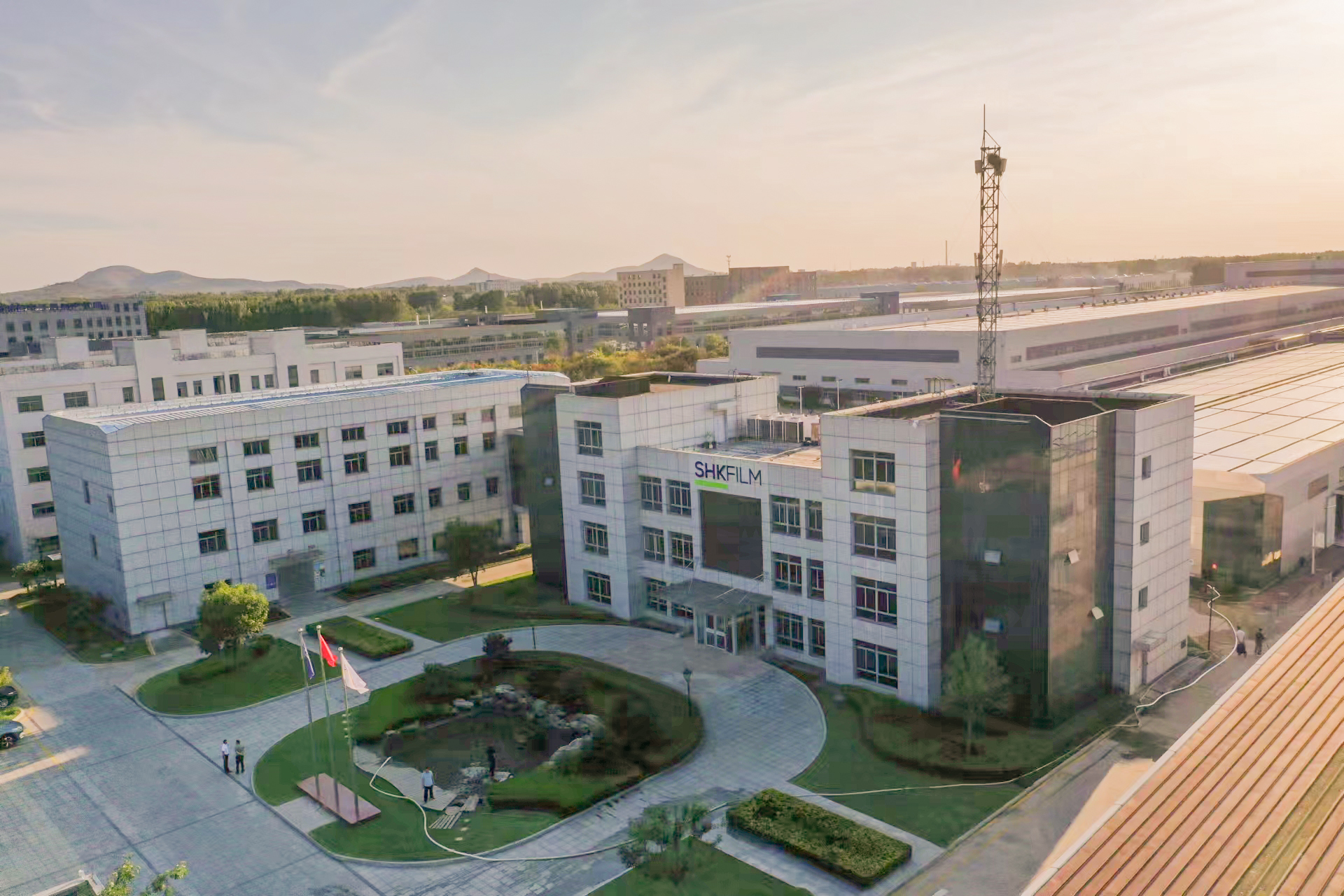
SHKFILM operates two German Brückner BOPP lines with an annual capacity of 30,000 tons; finished thermal films use 100% in-house produced no-primer base film.
What this guide resolves: which finish to specify (standard matte, anti-scratch matte, or soft-touch), how to match film format to Indian laminator equipment, how to validate a trial batch, what actually drives the cost gap, and which compliance documents an export-facing print buyer will be asked for.
Problem Definition: Why Soft-Touch Is a Production Decision, Not a Finish Choice
Three failure patterns account for most of the friction when a printer moves a premium job onto a soft-touch surface.
1. Matte and soft-touch are not the same specification
A standard matte BOPP film mainly provides a low-gloss visual effect without additional tactile enhancement. A soft-touch BOPP film combines matte appearance with a soft, smooth, velvety tactile experience. Standard matte is an economical matte finishing solution; soft-touch carries higher added value because it requires a specialized functional surface. If a buyer writes "matte finish" on a purchase order and expects the velvet hand-feel of a soft-touch surface, the job is mis-specified before the first roll is loaded.
2. Scratch and scuff damage appear after lamination, not during it
Scratching happens in slitting, die-cutting, stacking, packing and transit — the stages where sheets rub against each other. Soft-touch surfaces are valued for their hand-feel and are therefore handled more, not less. That is why the operating requirements for soft-touch lamination film include a superior scuff-resistance rating, a consistent velvet texture, and flawless visuals over dark background prints. A film that passes adhesion testing but fails a rub test will still generate rework.
3. Print coverage and substrate change the outcome
The same roll can behave differently on two paper stocks, or on a light-coverage page versus a heavy offset ink build. Consistency across various printed materials is therefore the deciding capability, not peak performance on one reference sheet. In India, where the same plant may run domestic retail work and export packaging on adjacent shifts, this variability is where most soft-touch disputes originate.
Industry Background: Where Soft-Touch Lamination Sits in the Market
The global BOPP films market was valued at USD 31.0 billion in 2025 and is projected to reach USD 49.8 billion by 2033, according to Grand View Research. Within that base, the global thermal lamination films market is forecast to reach USD 1,547.9 million by 2025, with BOPP-based films as the leading film type segment, per Future Market Insights. Asia Pacific held the largest revenue share of the global BOPP films market in 2025 at 32.2% (Grand View Research) — a share that maps directly onto the concentration of laminating capacity in South Asia.
The specialty end of that market is growing faster than the commodity end. The soft touch film market was estimated at USD 2.9 billion in 2024, growing at a CAGR of 3.1% through 2034 (Future Market Insights), and one-side lamination film is projected to lead the soft touch segment with a 55.0% market share. Anti-scratch and scuff-resistant finishes are cited as high-growth specialties in commercial print and premium packaging (Future Market Insights), while matte thermal lamination films are increasingly used for high-end applications such as luxury paper box packaging and book covers (Global Growth Insights).
The practical reading for an Indian converter is straightforward: soft-touch is no longer a niche request from one luxury brand. It is a standard option inside premium packaging quotations, which means the decision framework has to be repeatable rather than job-by-job improvisation.
Detailed Solution: What a Soft-Touch BOPP Thermal Lamination Film Actually Is
A BOPP thermal lamination film is a BOPP base film pre-coated with a heat-activated adhesive layer. Because the adhesive is already on the film, the laminator does not apply a separate water-based glue during lamination. Structure determines function:
- The BOPP base film is made of BOPP resin.
- Standard thermal lamination film made from this base film consists of BOPP resin and EVA coating.
- The specialty film (thermal type) consists of BOPP resin, EVA coating and functional coating.
- The specialty film (wet coating type) consists of BOPP resin and functional coating.
The functional coating is what separates a soft-touch grade from a standard matte grade. In use, a soft-touch specialty film operates in both wet glue coating systems and automatic dry thermal lamination processes, and provides a velvet soft-touch feel, anti-scratch surface protection and a matte look. It requires supporting equipment such as wet or dry laminators, thermal lamination machines and roll slitting equipment.
Why the base film matters as much as the coating
No-primer BOPP thermal lamination film is produced with a specially developed BOPP base film that has no additional primer or anchor coating layer. Compared with conventional primer-coated film, the simplified structure provides cleaner appearance, improved whiteness, better blocking resistance and reduced risk of surface migration — and it eliminates one primer coating layer and one primer coating process during film production. SHKFILM's finished thermal films use 100% in-house produced no-primer base film, so the base-film process and the finished-film process are controlled inside one plant rather than split across suppliers.
For a soft-touch buyer, that matters in two ways. First, improved whiteness and a cleaner film surface support the "flawless visuals over dark background prints" requirement. Second, better blocking resistance reduces the risk of roll-to-roll sticking in humid storage — the storage condition an Indian print plant has to plan for, not avoid.
Finish options and roll specifications
SHKFILM's Gloss / Matte Thermal Lamination Film Series gives buyers a baseline for gloss and matte work, while soft-touch grades add the tactile and anti-scratch layer on top for premium printed materials.
| Specification | Available range |
|---|---|
| Thickness | 17 to 27 microns, customizable |
| Roll width | 320 mm to 2180 mm |
| Roll length | 2000 m, 3000 m, 4000 m, 4500 m, 6000 m, 9000 m |
| Core diameter | 3 inches (76 mm) and 6 inches (152 mm) |
| Structure (specialty thermal type) | BOPP resin + EVA coating + functional coating |
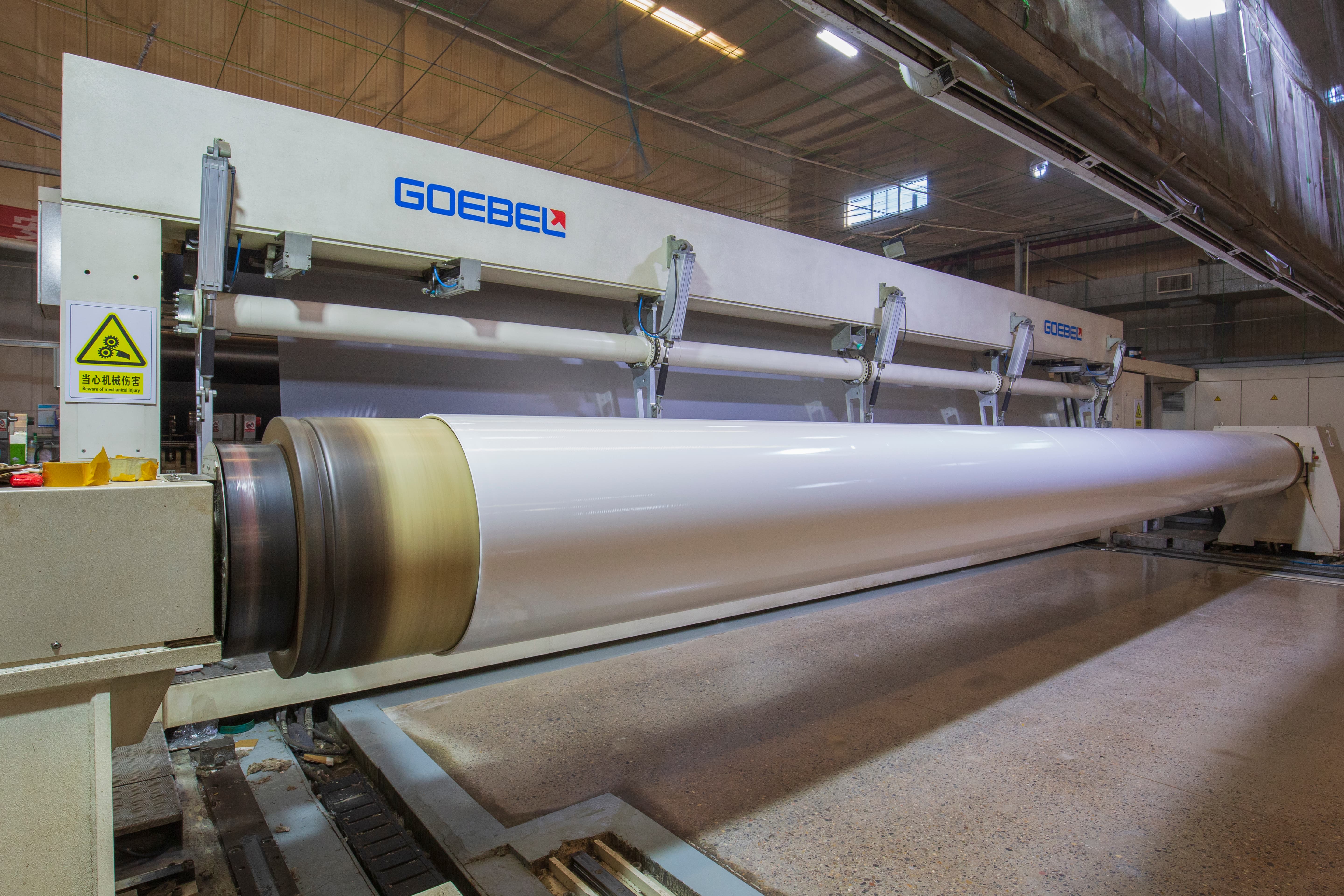
Slitting converts master rolls into the 320–2180 mm widths and 2000–9000 m roll lengths that commercial laminators run.
Step-by-Step Breakdown: Deploying Soft-Touch Film on an Indian Press Line
Step 1 — Define the finish in physical terms
Write the requirement as a surface function, not a mood. Specify: matte appearance, velvet tactile effect, and anti-scratch surface protection. Where the job uses dark solid backgrounds, state that visuals must remain flawless over dark background prints — this is a stated special requirement for soft-touch grades, not an optional nicety.
Step 2 — Match film format and film type to the laminator
Confirm whether the line is a wet glue coating system or an automatic dry thermal lamination process. Product 6623 is designed to operate in both. Then confirm the mechanical envelope: thickness within 17 to 27 microns, roll width within 320 mm to 2180 mm, roll length from the available 2000 m to 9000 m options, and 3-inch or 6-inch cores. Soft-touch grades additionally require roll slitting equipment in the supporting equipment set.
Step 3 — Validate bond strength before validating appearance
Adhesion failure is a batch-quality issue, not an operator issue. The control set for weak adhesion and delamination is bond strength testing, adhesion testing and batch quality verification before shipment, backed by controlled coating process, qualified raw material inspection, routine performance testing and batch traceability. Ask the supplier which of these records travel with the roll, because that is what makes a claim verifiable after the fact.
Step 4 — Fix lamination parameters for the job, not for the machine
Shrinkage and curling during lamination are usually addressed through lamination performance testing under standard conditions, supported by raw material verification, process optimization, and technical guidance on lamination temperature and pressure. In high-speed automatic hot-press paper lamination, the practical performance requirements are stable behaviour under shipping heat, strong bonding at lower temperatures, and bubble-free results over heavy offset ink coverage. Record the approved temperature, pressure and line speed per paper stock as a controlled recipe.
Step 5 — Control post-press handling
Lamination enhances paper foldability and provides moisture barrier and scratch protection for printing inks, which is why the film is usually specified on covers and boxes that get folded, scored and handled. Post-press is also where scratches appear: check slitter condition, stacking height and interleaving before blaming the film.
Step 6 — Plan storage for humidity
Blocking and moisture-related haze are storage-stability risks. Their control set is storage condition control, moisture-proof packaging inspection, and blocking resistance verification before shipment; on the supply side this is supported by protective packaging, an optimized winding process, recommended storage conditions, and quality inspection before delivery. In coastal and monsoon-affected Indian locations, treat the supplier's recommended storage conditions as part of the resin-to-press specification.
Step 7 — Lock supply continuity before scaling volume
Raw material supply and price fluctuation are managed through multi-source supplier evaluation and market monitoring, with qualified supplier management, inventory planning and flexible production scheduling on the manufacturing side. With two Brückner BOPP lines and an annual capacity of 30,000 tons, the question for a scaling buyer is not only capacity but scheduling discipline across product types and specifications.
The India Project Evidence Behind This Guide
A guide is only useful if the film has actually run on the application it describes. For product 6623, printing and packaging company clients in India used the film on premium printed packaging and high-end printed materials, and the project achieved enhanced appearance with consistent soft-touch or scratch-resistant performance results.
Two further data points frame what "consistent" means at commercial scale. In a soft-touch lamination film project implemented in South Korea, Italy and Sri Lanka, 30 tons were supplied to commercial printing and packaging customers, with the velvet-like tactile effect and excellent scratch resistance recorded as the key highlights. Separately, an Asia-based project for the production of soft-touch and anti-scratch thermal lamination films was completed within 3 years at a project scale of 120 tons per year, achieving stable coating performance results.
Read together, these records describe a finish that has been produced repeatedly and checked against appearance, tactile feel and scratch behaviour — the three variables that a soft-touch specification actually depends on.
Use Cases: Where Soft-Touch Pays Back in Indian Print Work
Book covers and premium published editions
Soft-touch film is suitable for book covers where enhanced tactile experience and higher perceived product value are the objective. Covers are also the most abrasion-exposed surface in the supply chain, which is why the scuff-resistance requirement matters here more than in flat packaging.
Cosmetic and electronics paper box packaging
Soft-touch film is suitable for premium packaging, luxury goods and cosmetic packaging. For cosmetic and consumer-electronics paper boxes — categories that frequently print dark solids and fine text — the relevant requirement is flawless visuals over dark background prints combined with a consistent velvet texture across the run.
Luxury and gift packaging, brochure and cover work prone to friction
Where a surface is repeatedly rubbed in handling — brochure covers, luxury product packaging, printed covers — an anti-scratch matte film is often the correct choice: a specialized hard-coat that increases surface hardness by 40% (reaching 2H pencil grade) and improves scuff and abrasion resistance by over 35%, while maintaining a high-quality matte appearance.
Export-oriented print work
Indian printers supplying international brands inherit the compliance expectations of the destination market. BOPP films for international trade often require BRC certification for retail and food service supply chains in the US and UK. BOPP lamination films for US food contact must comply with FDA 21 CFR 177.1520. Food-contact BOPP films in China must comply with GB 4806.15-2024 governing food-contact adhesives, effective February 2025. REACH and RoHS verification apply for EU-bound work.
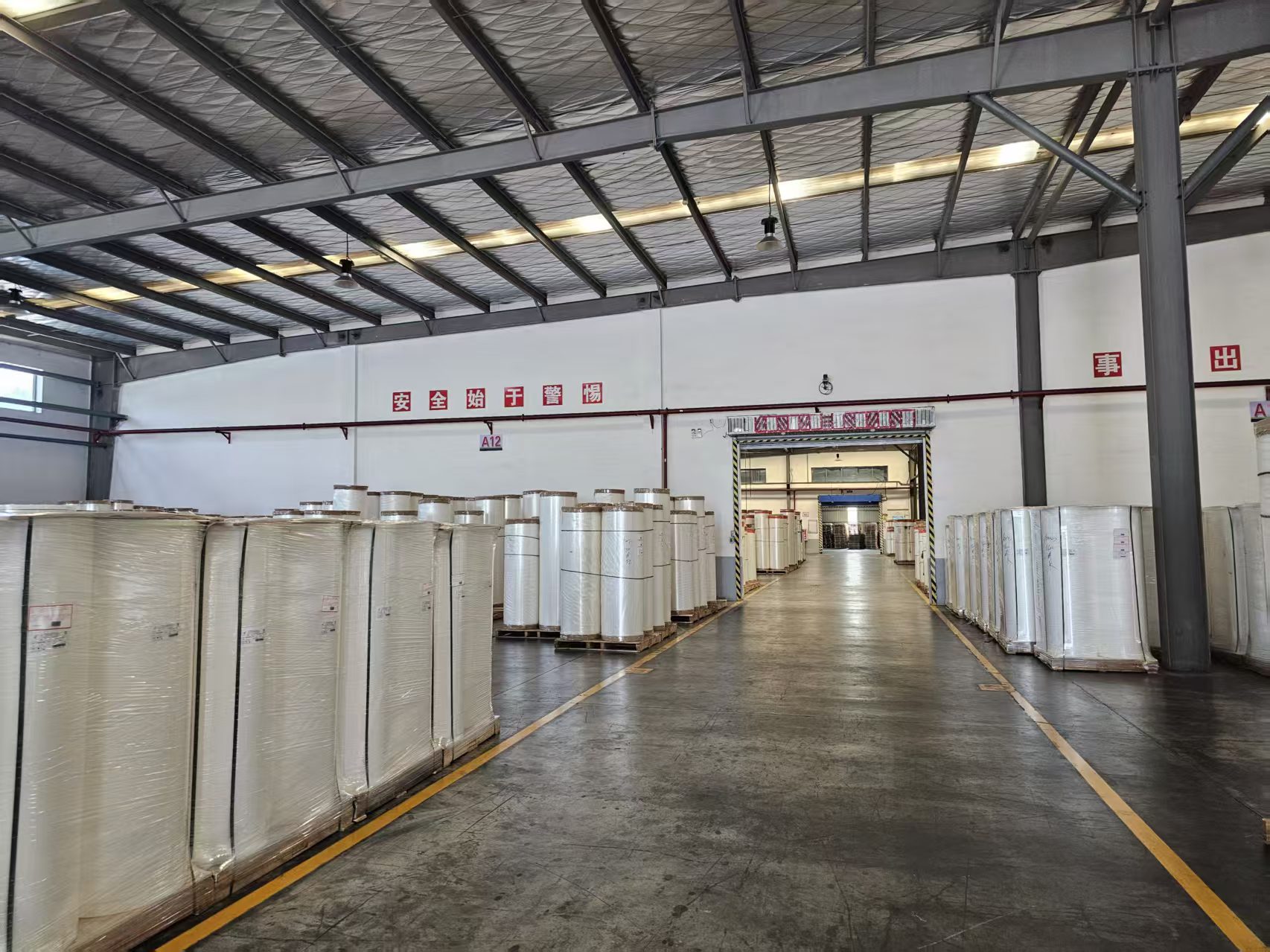
Protective packaging, optimized winding and pre-delivery inspection support blocking resistance in humid storage conditions.
Comparison Table: Standard Matte vs. Anti-Scratch Matte vs. Soft-Touch
| Decision criterion | Standard matte BOPP thermal film | Anti-scratch matte BOPP thermal film | Soft-touch BOPP thermal film |
|---|---|---|---|
| Surface function | Low-gloss visual effect; no additional tactile enhancement | Matte appearance plus a specialized hard-coat for scratch resistance | Matte look plus velvet soft-touch feel and anti-scratch surface protection |
| Measured performance | Conventional matte finishing | Surface hardness up 40% (2H pencil grade); scuff and abrasion resistance improved by over 35% | Superior scuff-resistance rating with consistent velvet texture required |
| Best-fit applications | General printing, publishing and packaging; economical matte finishing | High-end brochures, packaging boxes, luxury product packaging, printed covers prone to friction and abrasion | Premium packaging, luxury goods, cosmetic packaging, book covers and tactile-value applications |
| Cost position | Economical matte finishing solution | Higher manufacturing cost due to the additional scratch-resistant coating | Higher added value due to specialized surface technology |
| Process control | Conventional and stable production process | Compatible with standard thermal lamination equipment; reduces rework caused by surface scratches during post-processing and handling | Requires more precise process control to maintain consistent tactile performance and surface quality |
| Supporting equipment | Commercial thermal laminators and slitters | Standard thermal lamination equipment | Wet or dry laminators, thermal lamination machines, roll slitting equipment |
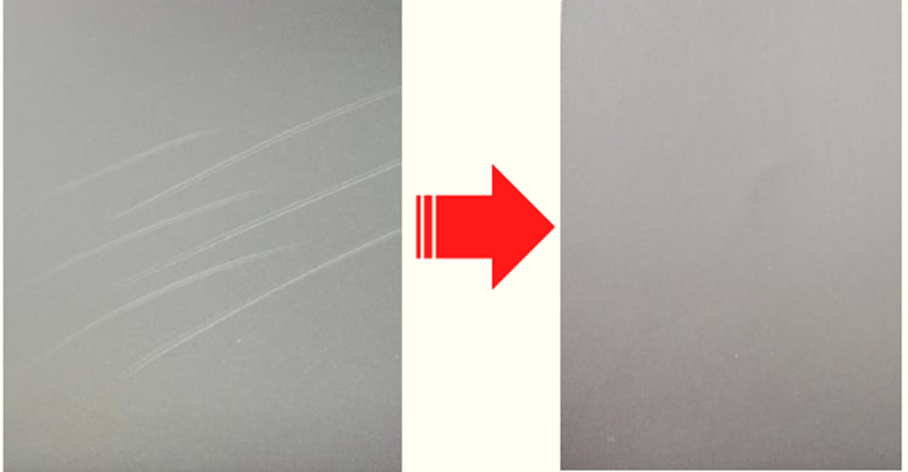
Anti-scratch grades add a hard-coat layer; soft-touch grades add a tactile functional coating on top of the matte base.
Cost-performance decision rules
- Compare per finished sheet, not per kilogram of film. Soft-touch carries a higher film value, but it removes the rework and rejection cost that a scratched standard matte surface generates in post-press.
- Choose thermal over wet when process steps are the constraint. Wet lamination film generally has a lower film material cost but requires additional adhesive consumption and processing steps; thermal lamination film has a higher film value due to pre-coated adhesive technology while reducing adhesive preparation and cleaning requirements.
- Choose wet when the equipment already exists. BOPP wet lamination film suits applications with existing water-based laminating equipment such as book covers, large-format printing and paper packaging.
- Choose anti-scratch over soft-touch when the surface is handled more than it is touched. Where abrasion rather than hand-feel dominates the failure mode, the hard-coat route addresses the actual risk.
FAQ
1. Do soft-touch BOPP thermal lamination films carry the compliance documentation Indian exporters are asked for?
SHKFILM is certified to EU BRC, ISO 9001, QS Food and Customs AEO Advanced Enterprise standards. For EU-bound work, REACH SVHC verification applies under REACH Regulation (EC) No 1907/2006 (Candidate List of 253 SVHCs), issued by SGS-CSTC Standards Technical Services Co., Ltd. under certificate number CANEC26006197603, and RoHS compliance verification applies to BOPP Specialty Lamination Films under RoHS Directive (EU) 2015/863, issued by SGS-CSTC under certificate number CANEC26006197601. BRC certification is commonly required for retail and food service supply chains in the US and UK, US food contact requires compliance with FDA 21 CFR 177.1520, and food-contact BOPP films in China must comply with GB 4806.15-2024 effective February 2025. Confirm the exact document set with the end customer before the trial run, not after.
2. Can the film be supplied in the thickness, width and roll length our laminators actually run?
The thermal lamination film thickness range is 17 to 27 microns and is customizable. Roll width ranges from 320 mm to 2180 mm, available roll lengths include 2000 m, 3000 m, 4000 m, 4500 m, 6000 m and 9000 m, and core diameters are 3 inches (76 mm) and 6 inches (152 mm). Product 6623 operates in both wet glue coating systems and automatic dry thermal lamination processes, and soft-touch grades require supporting equipment such as wet or dry laminators, thermal lamination machines and roll slitting equipment.
3. What actually drives the price difference between soft-touch and standard matte film?
Standard matte BOPP film is an economical matte finishing solution. Soft-touch film has higher added value because it relies on specialized surface technology to deliver both matte appearance and tactile performance, and anti-scratch film carries a higher manufacturing cost due to the additional scratch-resistant coating. The fair comparison is cost per 1,000 finished sheets after rework, since scratched surfaces in post-processing and handling are the hidden cost line in any matte specification.
4. Can we validate the finish on a small batch before committing to bulk volume?
Yes. SHKFILM supports OEM and private-label supply and accommodates small-batch trial orders in addition to bulk supply. The minimum order quantity depends on product type and specifications. A useful trial structure is to run the same paper stock and the same ink coverage on standard matte and soft-touch, then compare adhesion, scuff behaviour after die-cutting and stacking, and visual consistency over dark solids.
5. What should we plan for on lead time and supply continuity?
Supply scheduling depends on product type, specification and order volume. SHKFILM runs two German Brückner BOPP production lines with an annual capacity of 30,000 tons, and manages raw material supply and price fluctuation through qualified supplier management, inventory planning and flexible production scheduling. To move from evaluation to a first shipment, send your roll format, thickness, finish and target volume to SHKFILM at weilj@shkfilm.com or WhatsApp +86 166-7890-6856 for a sample and quotation.
Conclusion
Soft-touch BOPP thermal lamination film is a specification with three simultaneous obligations: a matte appearance, a consistent velvet tactile surface, and scratch protection that survives slitting, stacking and transit. In India, where the same plant often serves domestic retail and export packaging, the difference between a successful soft-touch job and a rework claim is usually decided before lamination — in how the finish is written, how the film format is matched to the machine, and how the trial is validated.
Product 6623, running in both wet glue coating systems and automatic dry thermal lamination processes and already applied by printing and packaging company clients in India on premium printed packaging and high-end printed materials, provides a documented starting point. The remaining decisions — finish grade, roll format, compliance packet and volume — are commercial questions that a sample run answers faster than a specification debate.

SHKFILM — Shandong Shunkai Composite Material Co., Ltd., No.09 Shengcheng Road, Sishui Economic Development Zone, Shandong Province, China.
Next step: request a soft-touch sample roll in your production width, or ask for a quotation against your annual volume.
Email: weilj@shkfilm.com | Tel / WhatsApp: +86 166-7890-6856
Website: www.shkfilm.com
Download the full product catalogue: SHKFILM brochure (PDF)
Have Questions or Need More Details?
Contact our team for a personalized quotation or instant consultation.
Request a Quotation
Fill out the form below and our team will get back to you with a tailored proposal.
WhatsApp Direct Chat
Prefer to chat in real-time? Message us on WhatsApp for instant assistance & quick answers.
- Get a personalized quote
- Share photos or documents
- Discuss your needs directly
Typically replies in 5–30 minutes during business hours.