
Soft-Touch Lamination Losing Scratch Resistance: A BOPP Film Scenario
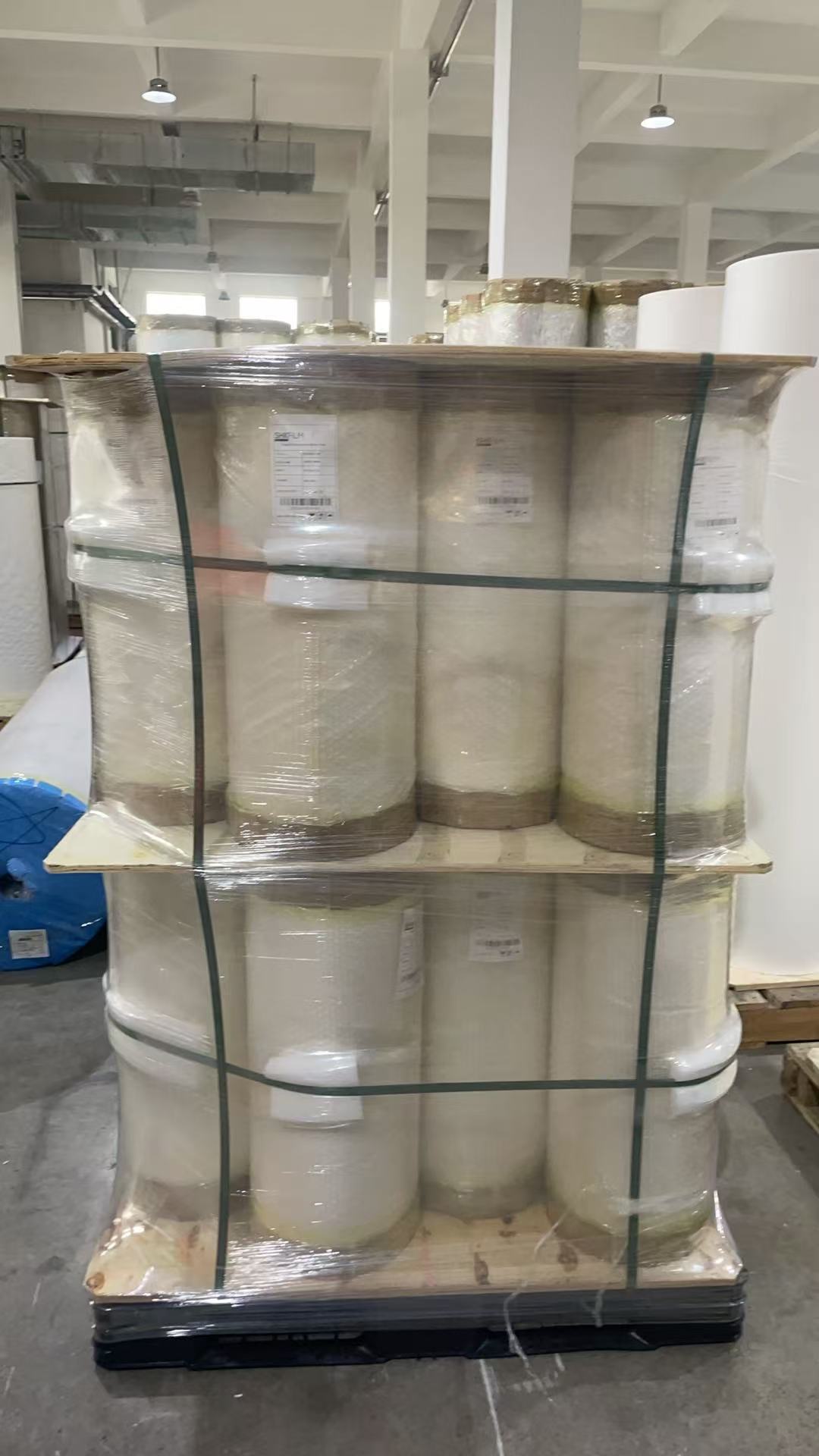
A velvet-like finish and a scratch-resistant finish are usually bought on two different purchase orders. The brand team specifies the feel; the packaging engineer specifies a surface that survives stacking, transit and retail handling. When both requirements land on the same printed sheet — a premium box, a book cover, a cosmetic carton — one of them tends to give way, and the lamination line is usually blamed first.
This article takes one project pattern apart: a printing and packaging customer in India that required a consistent soft-touch finish and a premium appearance across premium printed packaging and high-end printed materials. The requirement held for two years and covered 1,000,000 square meters of film, supplied as BOPP Specialty Lamination Films (product 6623) from SHKFILM.
The short answer: in a BOPP thermal lamination film, the tactile result and the surface protection come from the same functional top-coat. In product 6623 that top-coat is fixed at 3 to 4 microns specifically so that tactile and protective performance stay consistent from roll to roll. A finish specified for feel alone can look correct on the day of lamination and show handling marks later; a finish specified for feel and surface behaviour is a different film construction decision.
Why a Soft-Touch Surface Starts Losing Scratch Resistance
Soft-touch lamination is a tactile specification, not a protective one. That distinction matters because the two goals pull on the same layer of the film. In the BOPP Specialty Lamination Films series the functional top-coat is applied at a fixed thickness of 3 to 4 microns; the manufacturer states this fixed thickness is what delivers consistent tactile and protective performance. If that top-coat is engineered around feel, the surface reads as velvet in the hand. If it is engineered around wear, it holds up to handling. The commercial failure mode appears when a buyer assumes one automatically delivers the other.
In commercial print, matte and tactile surfaces are generally observed to show handling marks and fingerprinting more readily than high-gloss surfaces, because there is no high-gloss layer to mask fine surface disturbance. That is a general industry observation rather than a property of any single film, but it explains why the complaint usually arrives from the same places.
Typical field signals reported by converters and print finishers:
- Burnishing or shiny patches on dark solid ink areas after handling and packing.
- Scuff marks along box edges, spine folds and die-cut corners.
- Fingerprint pickup on the matte face during manual packing.
- Abrasion marks appearing after transit rather than at the delivery inspection.
- Noticeable variation in feel between rolls of the same order.
When a job fails, the first three suspects are usually laminating temperature, roller pressure and the paper or ink underneath. Those variables matter, but they are downstream of a simpler question: was the film chosen for the tactile result, the surface result, or both? Because the top-coat — not the laminator — defines what the finished surface can and cannot do.
Industry Background: Why Tactile Finishes Moved Into Mainstream Packaging
Tactile finishing is no longer a novelty sample run for luxury brands. Market research on the category has been tracking steady commercial expansion, and the numbers give a useful frame for why more converters now keep both a soft-touch and an anti-scratch option in stock.
- Future Market Insights estimated the global soft touch film market at USD 2.9 billion in 2024, growing at a CAGR of 3.1% through 2034.
- Future Market Insights projected the global thermal lamination films market to reach USD 1,547.9 million by 2025, with BOPP-based films as the leading film type segment.
- Grand View Research reported that Asia Pacific held the largest revenue share of the global BOPP films market in 2025, at 32.2%.
- Future Market Insights projected one-side lamination film to lead the soft touch segment with a 55.0% market share.
- Future Market Insights identified anti-scratch and scuff-resistant finishes as high-growth specialties in commercial print and premium packaging.
- Global Growth Insights noted that matte thermal lamination films are increasingly used for high-end applications such as luxury paper box packaging and book covers.
The practical consequence for a print finisher is that the purchase decision has shifted. "Matte or gloss" was a single-axis question. Buyers now ask for a finish plus a defined surface behaviour — velvet feel with scuff resistance, matte appearance with fingerprint control, gloss with wear resistance — and they ask for consistency across mixed substrates and mixed run lengths. That is a film-construction question, and it is the question the India project answered.
The India Project Brief: Two Requirements, One Surface
The customer was a printing and packaging company working on premium printed packaging and high-end printed materials — work where the printed sheet is the product's first physical impression and where a superficial mark is a rejected delivery.
The stated requirement was a consistent soft-touch finish and a premium appearance across various printed materials. The recorded project result was an enhanced appearance with consistent soft-touch or scratch-resistant performance. The programme ran for two years and accounted for 1,000,000 square meters of film.
A parallel supply programme shows the same film pattern at a different scale and in a different channel: 30 tons supplied to local distributors over two years in South Korea, Italy and Sri Lanka, for onward supply to commercial printing and packaging customers. The recorded highlights for that programme were a velvet-like tactile effect, excellent scratch resistance, compatibility with high-speed laminating machines, and availability in gloss and matte finishes.
Read together, those two programmes describe the real difficulty of the job. The Indian converter needed both surface behaviours — soft-touch and scratch-resistant — under one quality expectation, across a mixed book of printed work. The distribution programme needed the same film family to run on high-speed laminating machines without becoming a machine-setting project at every customer site, and it needed both gloss and matte finishes available so the distributor could serve different end customers.
The Solution: BOPP Specialty Lamination Films (Product 6623)
SHKFILM — the brand of Shandong Shunkai Composite Material Co., Ltd, founded in August 2010 and headquartered at No.9 Shengcheng Road, Sishui Economic Development Zone, Shandong Province, China — is a producer of no-primer BOPP base film and BOPP thermal lamination film. The company operates two BOPP film production lines imported from Brückner (Germany), with an annual capacity of 30,000 tons, and supplies converters and distributors across export markets that include India, Brazil, Iran and Korea.
Product 6623, BOPP Specialty Lamination Films, is the series used in this project. It is supplied as an Anti-Scratch Film Series and a Soft Touch Film Series, with three surface options:
1. Soft Touch Matte Lamination Film
A velvet feel with low matteness, excellent colour and lustre, good perspective, and no colour tone loss after lamination. The construction is stated as suitable for the bronzing process and the screen printing process, and the finished product has passed ROHS, REACH and EN71.
2. Anti-Scratch Lamination Film
Anti-scratch and wear-resistant, with high haze and a good matte finish. It is stated as suitable for the bronzing process and the screen printing process, and has passed ROHS, REACH and EN71.
3. Three-in-One: Anti-Scratch, Soft-Touch and Anti-Fingerprint
This construction combines anti-scratch, soft-touch and anti-fingerprint functions into a single layer. It delivers excellent colour reproduction with a silky, refined texture, and is designed for luxury perfume, cosmetic and electronics packaging boxes where both tactile experience and surface durability are critical. It is available in a thermal lamination version (compatible with SHKFILM no-primer base film) and a wet lamination version.
All three are available as a thermal lamination type with EVA hot-melt adhesive, or as a wet lamination type. The base material is a high-grade BOPP base film with an advanced functional top-coating; the thermal type additionally includes premium EVA hot-melt resin.
Why the base film matters to the finished surface
SHKFILM produces its own no-primer base film (product 6544) and states that all finished thermal films use 100% in-house produced no-primer base film, so the no-primer process is controlled from the base film stage rather than purchased in. The stated advantages of the no-primer base film are relevant to a premium tactile job because they show up in the finished appearance, not only in the coating line:
- A simpler film structure, leading to a cleaner appearance, improved whiteness, better blocking resistance, and a reduced risk of surface migration compared with conventional primer-coated films.
- Elimination of back-side blocking at the roll core under high winding pressure — the failure that typically wastes hundreds of meters of material and can scrap an entire roll.
- Direct molecular bonding between the extruded EVA hot-melt adhesive and the base film on the thermal line, which supports bond strength between the adhesive layer and the BOPP base film.
- No primer and no drying ovens, and no ozone or VOC emissions — a process point that matters to coating plants managing electricity cost and environmental compliance reviews.
In the two-year programme, customer feedback recorded for product 6623 indicated consistent quality of specialty thermal lamination films during subsequent EVA coating, and the use of product 6544 resulted in stable coating performance and consistent finished-film quality. For a buyer, that is the part of the story that predicts repeatability: the same base film, from the same lines, feeding the same top-coat.
Technical specification of product 6623
| Parameter | Specified value |
|---|---|
| Functional coating | Fixed top-coat thickness of 3 to 4 microns for consistent tactile and protective performance |
| Base film thickness | Flexible and customizable options to meet different stiffness requirements |
| Thickness range | 18 micron to 29 micron (customizable) |
| Available types | Thermal lamination type (with EVA hot-melt adhesive); wet lamination type |
| Corona treatment | Inside ≥40 dyne; outside ≥36 dyne |
| Core diameter | 3 inch (76 mm) and 6 inch (152 mm) |
| Roll width | 200 mm to 1920 mm |
| Roll length | 2000 m, 3000 m, 6000 m, 9000 m, 12000 m |
| Material | High-grade BOPP base film with advanced functional top-coating; thermal type includes premium EVA hot-melt resin |
| Compliance listed for the series | ROHS, REACH, EN71 |
Step-by-Step: Specifying a Soft-Touch Film That Holds Its Surface
The sequence below is the practical version of what the India project and the distributor programme required. It is written for a print finisher or packaging converter building a repeatable specification rather than a one-off sample.
Step 1 — Write the brief as two requirements
State the tactile target (velvet feel, low matteness, colour tone retention) and the surface target (scuff resistance, fingerprint behaviour, wear resistance) separately. A single word such as "soft touch" hides the second requirement, and the second requirement is the one that fails in transit.
Step 2 — Choose which of the three surface options fits
Soft Touch for tactile-led work with colour and lustre retention; Anti-Scratch for wear-led work with high haze and a good matte finish; three-in-one where a single layer must deliver anti-scratch, soft-touch and anti-fingerprint together, as in luxury perfume, cosmetic and electronics packaging boxes.
Step 3 — Match the lamination type to the machine
Product 6623 is available as a thermal lamination type with EVA hot-melt adhesive and as a wet lamination type. Its application requires supporting equipment such as wet/dry laminators, thermal lamination machines and roll slitting equipment. Confirm which line the job will run on before confirming the film, not after.
Step 4 — Fix the top-coat and then the base film thickness
The functional top-coat is fixed at 3 to 4 microns for consistent tactile and protective performance. Base film thickness is flexible and customizable to meet different stiffness requirements, within the overall 18 to 29 micron range. On folded work such as book covers and cartons, stiffness is a folding and creasing variable as much as a handling variable.
Step 5 — Match the roll format to the press and the warehouse
Roll width runs from 200 mm to 1920 mm; roll length options are 2000 m, 3000 m, 6000 m, 9000 m and 12000 m; core diameters are 3 inch (76 mm) and 6 inch (152 mm). Longer roll lengths reduce changeover frequency on high-speed laminating machines; the roll width must match the sheet or web the plant actually runs.
Step 6 — Confirm corona values against the downstream process
Inside ≥40 dyne and outside ≥36 dyne are the stated values for the series. If the laminated sheet will be bronzed, screen printed or otherwise over-processed, treat corona retention as a line item, not an assumption.
Step 7 — Test the downstream processes, not just the feel
Both the Soft Touch and Anti-Scratch constructions are stated as suitable for the bronzing process and the screen printing process. A film that feels correct but disturbs foil adhesion or screen ink laydown has not solved the job.
Step 8 — Collect the compliance file before the purchase order
Request the certification documents in the same pack as the technical data sheet. For product 6623 that includes RoHS, REACH and EN71 statements at series level, plus the RoHS Directive (EU) 2015/863 verification described in the compliance section below.
Step 9 — Validate on a sample, then scale
Run a trial on the real laminator with the real paper and ink, check the finished appearance on dark solids, then scale. SHKFILM states a lead time of 15 to 20 days and a monthly capacity of 3,000 tons, and accommodates small-batch trial orders in addition to bulk supply.
Where This Film Fits: Use Cases
Product 6623 is listed for printing and publishing, packaging and paper products, cosmetics and personal care, and consumer electronics. In practice, the following job types are where the tactile-plus-surface requirement appears most often:
- Book covers and premium printed materials — tactile covers that must survive shelving, handling and returns, including luxury book covers.
- Paper packaging boxes and folding cartons — scuff resistance along edges and die-cut corners where handling concentrates.
- Cosmetic and personal care boxes — matte tactile surfaces where fingerprint pickup during packing is a visible defect.
- Electronics paper box packaging — high-end smartphone packaging where a silky, refined texture sits alongside surface durability requirements.
- Luxury perfume and wine packaging — work where the tactile finish is part of the product positioning.
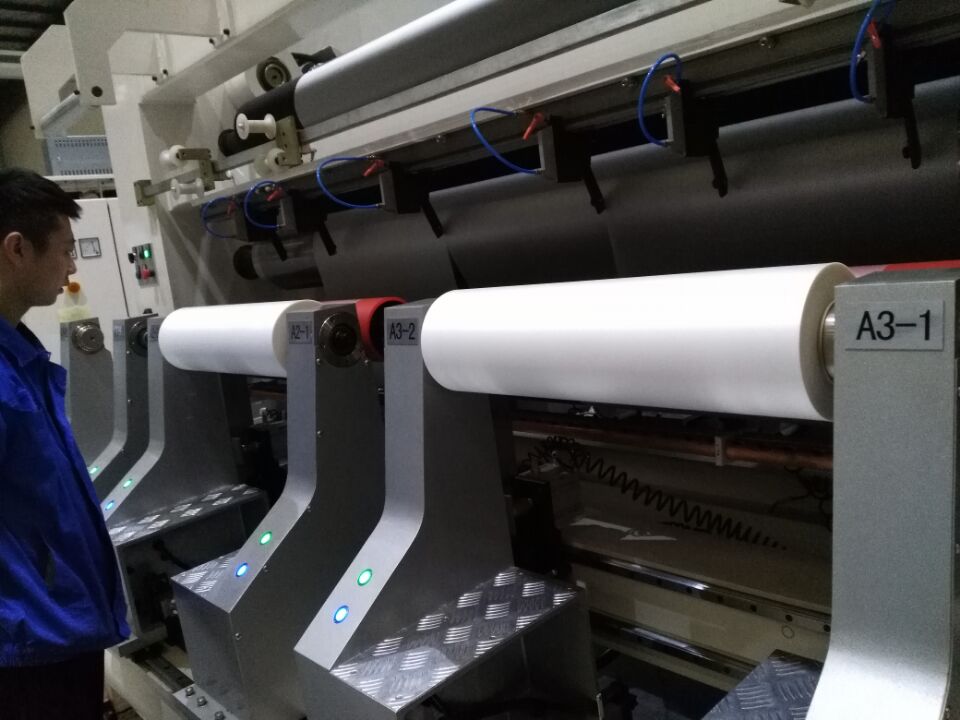
- Commercial offset printing and post-press finishing — plants laminating a mixed book of work on high-speed automatic hot-press lamination equipment.
The environment these jobs run in is consistent: dry lamination through heated rollers with no solvent odour or on-site adhesive coating, or a wet lamination route using water-based glues. The stated requirements in both cases are strong bonding, a bubble-free result on heavy ink coverage, a stable surface under shipping heat, consistent velvet texture and clean visuals over dark backgrounds.
Comparison: The Three Surface Options in Product 6623
The table compares only the attributes the product data differentiates. Specification values that apply across the whole series are listed collectively in the technical specification table above rather than repeated per column.
| Attribute | Soft Touch Film Series | Anti-Scratch Film Series | Anti-Scratch & Soft-Touch & Anti-Fingerprint (3-in-1) |
|---|---|---|---|
| Primary surface result | Velvet feel with low matteness | Anti-scratch and wear-resistant, with high haze and a good matte finish | Anti-scratch, soft-touch and anti-fingerprint combined in a single layer |
| Colour and appearance behaviour | Excellent colour and lustre, good perspective; colour tone not lost after lamination | High haze with a good matte finish | Excellent colour reproduction with a silky, refined texture |
| Typical end application stated | Tactile-led print finishing | Wear-led print finishing | Luxury perfume, cosmetic and electronics packaging boxes |
| Bronzing process | Suitable | Suitable | Not specified in the product data |
| Screen printing process | Suitable | Suitable | Not specified in the product data |
| Available lamination types | Thermal (EVA hot melt) or wet | Thermal (EVA hot melt) or wet | Thermal (compatible with no-primer base film) or wet |
| Environmental compliance listed | ROHS, REACH, EN71 | ROHS, REACH, EN71 | ROHS, REACH, EN71 (series-level listing) |
Compliance, Quality Control and Supply Signals
On a premium tactile job, the surface specification and the paperwork travel together. Buyers evaluating a Chinese BOPP thermal lamination film manufacturer for book covers and paper boxes generally ask for three things: a traceable compliance file, a stated quality-control process, and evidence of supply depth.
Compliance
- Product 6623 is listed as certified to RoHS Directive (EU) 2015/863, amending Annex II to Directive 2011/65/EU. The RoHS compliance verification is issued by SGS-CSTC Standards Technical Services Co., Ltd., certificate number CANEC26006197601.
- The series is stated to have passed ROHS, REACH and EN71.
- At company level, SHKFILM is certified to EU BRC, ISO 9001, QS Food and Customs AEO Advanced Enterprise standards.
Quality control
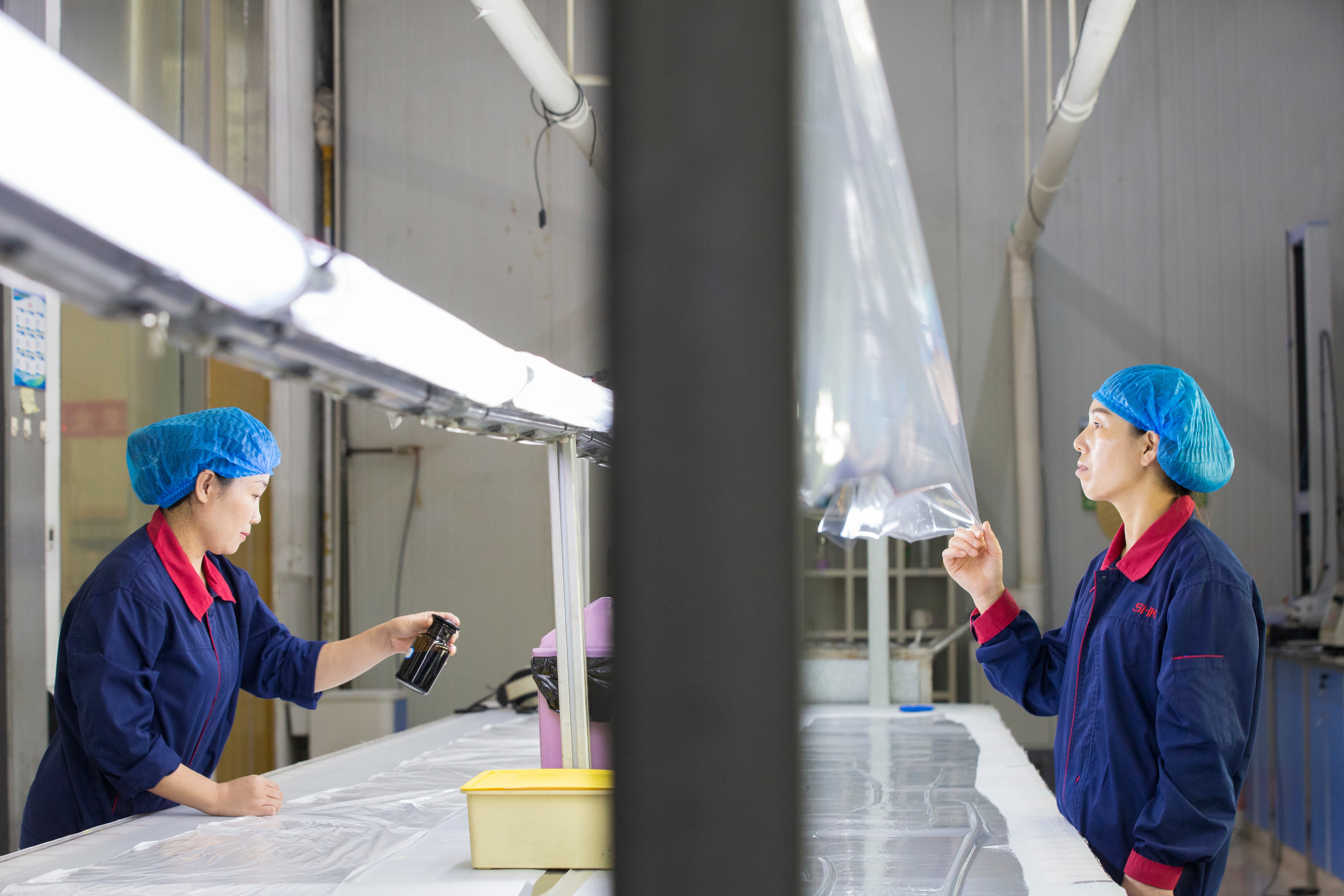
The stated process covers online process monitoring, thickness inspection, corona treatment verification, optical appearance inspection, and laboratory testing to product specification — including tensile strength, elongation, haze, gloss and coefficient of friction. For a soft-touch job, haze and gloss testing are the measurements that connect a laboratory number to the tactile and visual result the brand approved.
Supply and customization
- Annual capacity of 30,000 tons from two Brückner BOPP lines; monthly capacity of 3,000 tons; lead time of 15 to 20 days.
- Customization across film thickness from 12 micron to 32 micron (BOPP base film 12 and 15 micron, BOPP thermal film 17 to 25 micron, BOPP specialty film 18 to 32 micron), roll width from 200 mm to 2580 mm, roll length from 2000 m to 18100 m, 3 inch or 6 inch cores, single or double-sided corona treatment, and surface finish options including gloss, matt, soft touch and anti-scratch.
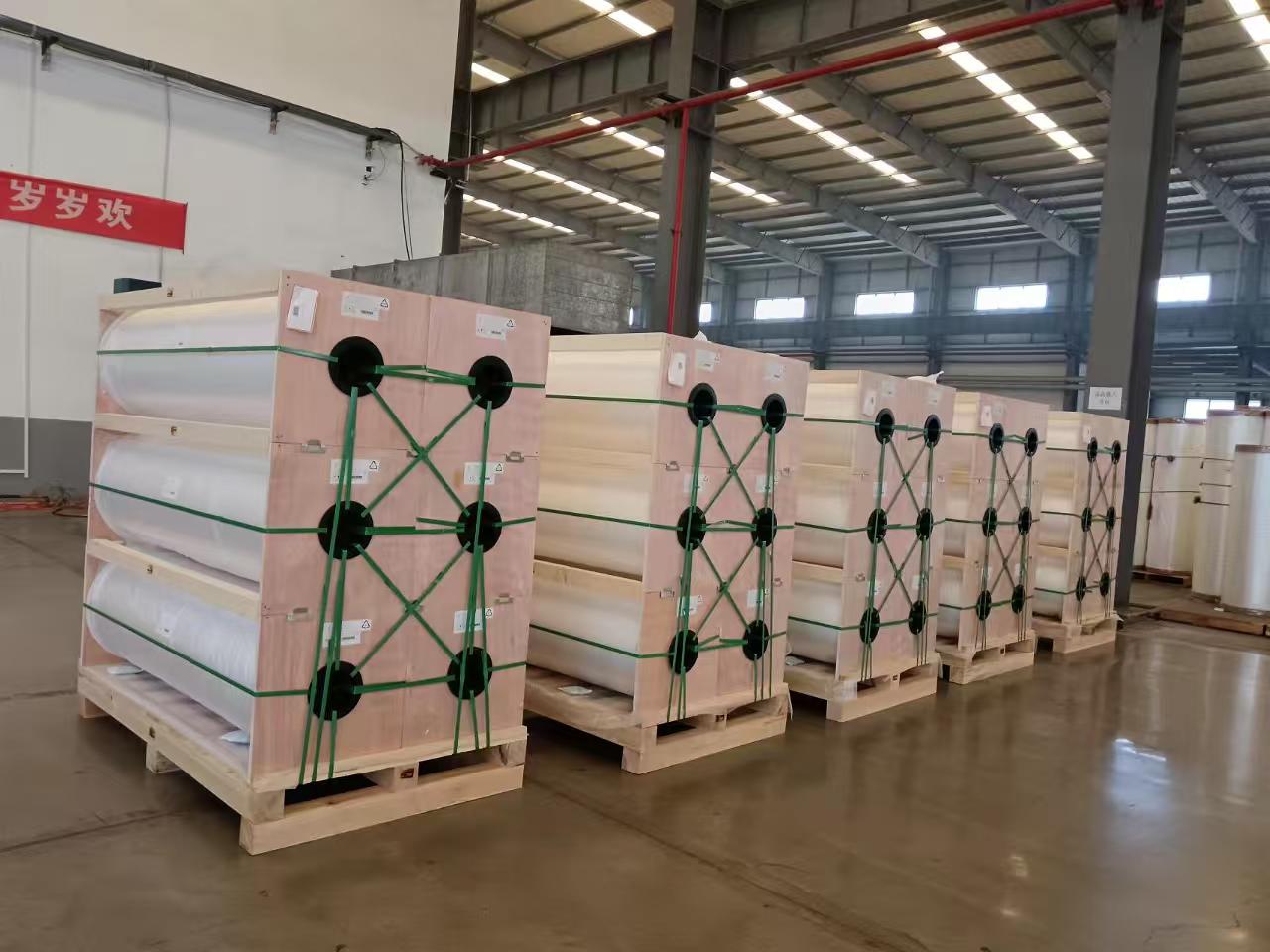
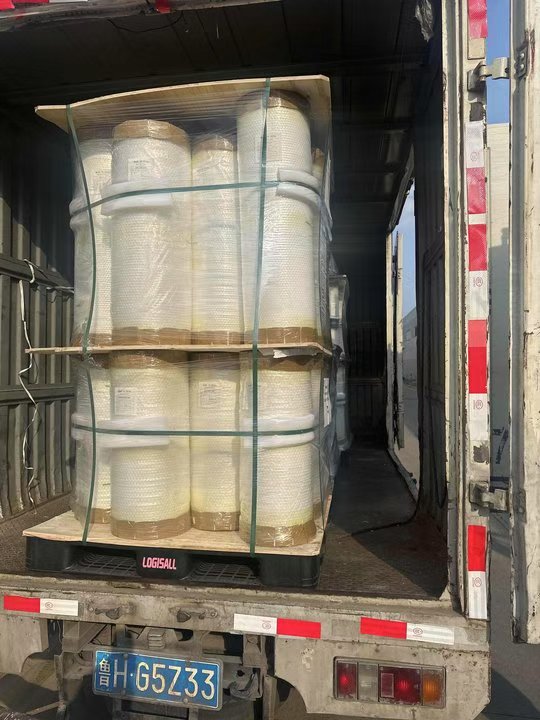
- OEM and ODM services are available, along with private label and custom export packaging options: vertical pallet packing, horizontal pallet suspension packing, or standard carton packing.
- MOQ depends on product type and specifications.
- Supply depth in the base film segment: over 10,000 tons cumulative supply to thermal lamination film manufacturers across more than 10 years, spanning Brazil, South Korea, India, Iran and Japan.
After-sales support covers technical application support, product recommendation, sample evaluation, after-sales follow-up and online technical assistance — the practical items a converter needs when a new tactile finish enters a plant for the first time.
FAQ
What compliance documents should a buyer request for a soft-touch, anti-scratch BOPP lamination film?
For product 6623, request the series-level ROHS, REACH and EN71 statements, and the RoHS Directive (EU) 2015/863 verification issued by SGS-CSTC Standards Technical Services Co., Ltd. under certificate number CANEC26006197601. At company level, SHKFILM is certified to EU BRC, ISO 9001, QS Food and Customs AEO Advanced Enterprise standards. Buyers with food-contact or retail-chain requirements should confirm which document set applies to their specific end use before approving the specification.
BOPP thermal lamination film manufacturer for book covers and paper boxes — can a Chinese supplier serve an Indian converter?
Yes, on the evidence of this project pattern. SHKFILM (Shandong Shunkai Composite Material Co., Ltd) operates from No.9 Shengcheng Road, Sishui Economic Development Zone, Shandong Province, China, with two Brückner BOPP lines and 30,000 tons of annual capacity, and India is listed among its main markets alongside Brazil, Iran and Korea. Product 6623 lists printing and publishing and packaging and paper products as applicable industries, is available in thermal and wet lamination types, and can be supplied in roll widths from 200 mm to 1920 mm with 3 inch or 6 inch cores. OEM and ODM services are available for buyers who need their own branding. The India programme referenced in this article covered 1,000,000 square meters of film over two years.
What determines the cost of a soft-touch BOPP lamination film order?
Cost follows specification, and the specification variables are visible in the product data: which surface construction is selected (Soft Touch, Anti-Scratch or the three-in-one version), thickness within the 18 to 29 micron range, base film stiffness requirement, thermal versus wet type, roll width between 200 mm and 1920 mm, roll length up to 12000 m, core diameter, and whether private label or custom export packaging is added. MOQ depends on product type and specifications, and SHKFILM accommodates small-batch trial orders in addition to bulk supply. Pricing is quoted against a confirmed specification rather than a generic grade.
Can we evaluate a sample before committing to a bulk order?
Yes. Sample evaluation and small-batch trial orders are part of the stated supply and after-sales offer, alongside technical application support and product recommendation. A useful trial should run the film on the actual laminator with the actual paper and ink coverage, then check the finished appearance on dark solids and confirm that bronzing or screen printing still performs as expected. Product 6623 requires supporting equipment such as wet or dry laminators, thermal lamination machines and roll slitting equipment, so the trial should use the same equipment family as production.
What is the lead time, and how does a project start?
SHKFILM states a lead time of 15 to 20 days against a monthly capacity of 3,000 tons. A typical start is: define the tactile and surface requirements, select the construction and lamination type, confirm roll format and corona values, run a sample, then scale. To begin, request a sample or a specification-based quote by email at weilj@shkfilm.com, by phone or WhatsApp on +86 166-7890-6856, or through the product and company documentation in the SHKFILM brochure.
Conclusion: The Finish Is a Specification, Not an Adjective
The India programme did not succeed because soft-touch film was available. It succeeded because a single film family covered both requirements — a velvet-like tactile result and scratch-resistant performance — across a mixed book of premium printed packaging and high-end printed materials, in both gloss and matte finishes, and stayed compatible with high-speed laminating machines for two years and 1,000,000 square meters. The parallel 30-ton distributor programme in South Korea, Italy and Sri Lanka shows the same film pattern working through a distribution channel rather than a single plant.
The transferable lesson for a converter is narrow and practical. When a soft-touch surface starts losing scratch resistance, check the film construction before rebuilding the lamination settings. Confirm what the functional top-coat is designed to do, confirm the base film the top-coat sits on, confirm the roll format and corona values match your line, and confirm the paperwork. A fixed 3 to 4 micron top-coat, a no-primer base film produced in-house, and a series that spans soft-touch, anti-scratch and three-in-one constructions is a specification you can repeat across jobs — which is what a premium tactile finish actually has to be.
Evaluating a soft-touch or anti-scratch BOPP film for book covers and paper boxes?
Request a sample of product 6623, ask for a specification-based quote, or download the full company and product documentation. Technical application support and small-batch trial orders are available.
Email: weilj@shkfilm.com | Tel / WhatsApp: +86 166-7890-6856
Website: www.shkfilm.com | Brochure: SHKFILM brochure (PDF)
Have Questions or Need More Details?
Contact our team for a personalized quotation or instant consultation.
Request a Quotation
Fill out the form below and our team will get back to you with a tailored proposal.
WhatsApp Direct Chat
Prefer to chat in real-time? Message us on WhatsApp for instant assistance & quick answers.
- Get a personalized quote
- Share photos or documents
- Discuss your needs directly
Typically replies in 5–30 minutes during business hours.