Solving Inconsistent Lamination Problems with No-Primer BOPP Base Film 6544
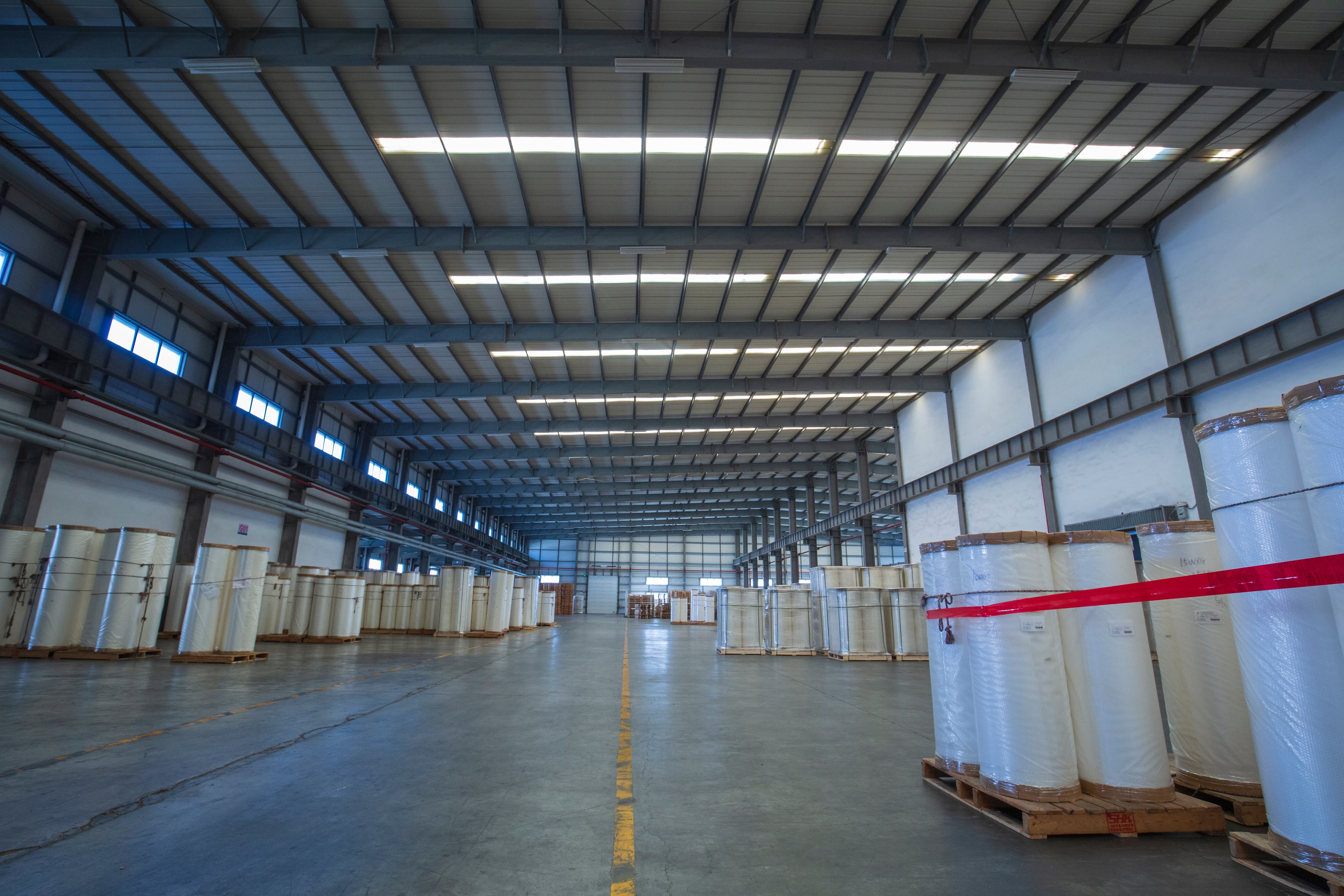
Short answer: Inconsistent lamination — the batch-to-batch drift in bond strength, surface appearance and machine behaviour that film converters fight every week — usually begins one process step before the laminator, in the base film and the primer applied to it. Product 6544 from SHKFILM is a no-primer BOPP base film engineered for inline extrusion coating without a primer coating stage or drying oven. It has been used for over 10 years, ensuring stable coating performance and consistent finished-film quality, and has been supplied in cumulative quantities exceeding 10,000 tons to manufacturers across multiple countries.
This article is written for the people who actually run the process: film converting and coating plants, custom packaging box manufacturers, and commercial printing and post-press finishing operations. It explains where inconsistency originates, why the primer step multiplies it, and how product 6544 removes that variable at the source instead of compensating for it downstream.
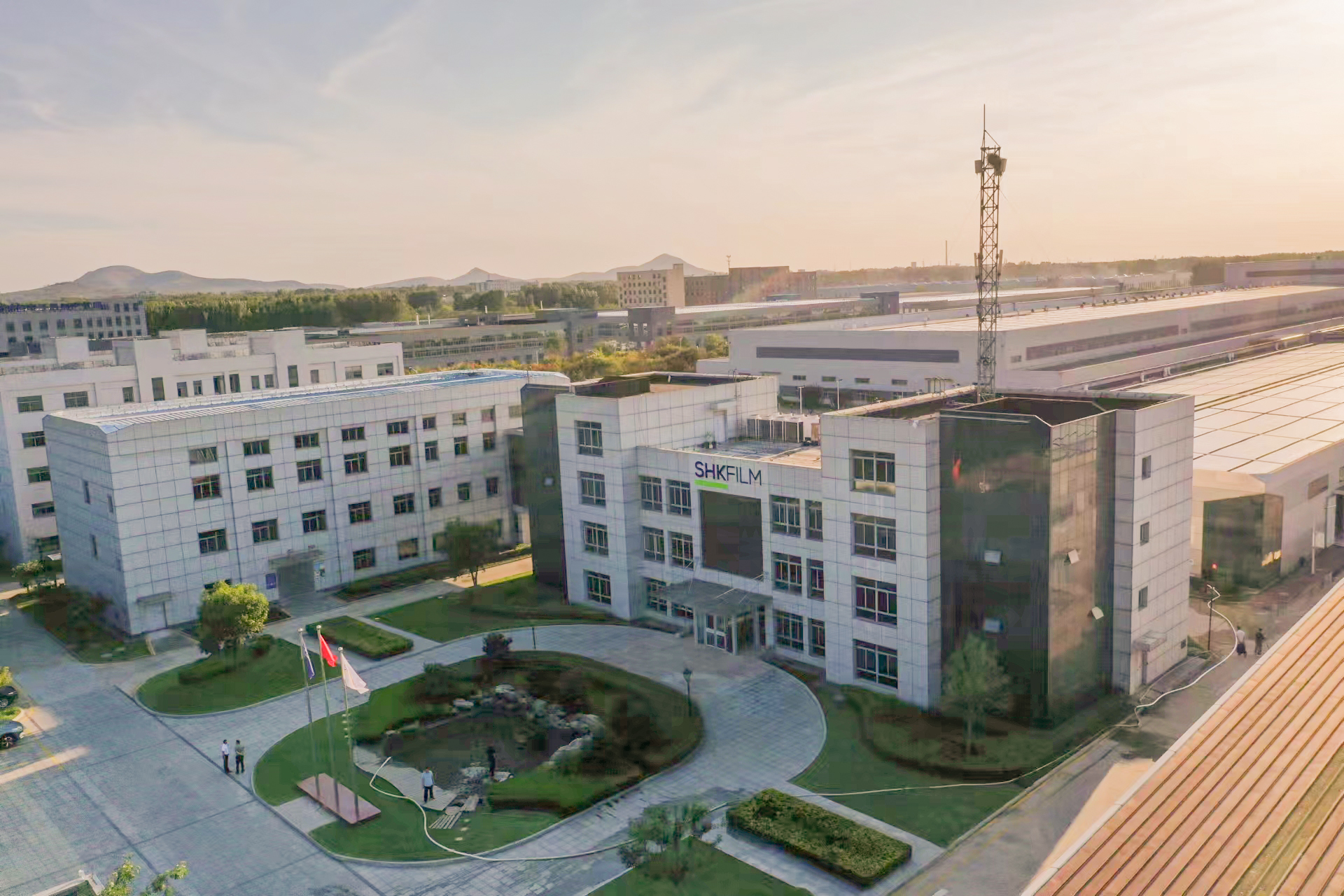
SHKFILM (Shandong Shunkai Composite Material Co., Ltd) is a national high-tech enterprise founded in August 2010 and headquartered at No.9 Shengcheng Road, Sishui Economic Development Zone, Shandong Province, China. The company develops, produces and sells polymer composite materials, with a core focus on no-primer BOPP base film and BOPP thermal lamination film.
What "Inconsistent Lamination" Actually Means on a Coating Line
Inconsistency is not one defect. It is a family of four failure modes that appear at different points of the same process, and each one has its own verification method. When converters describe unstable lamination, they are usually describing one or more of the following.
Failure mode 1: weak adhesion and delamination
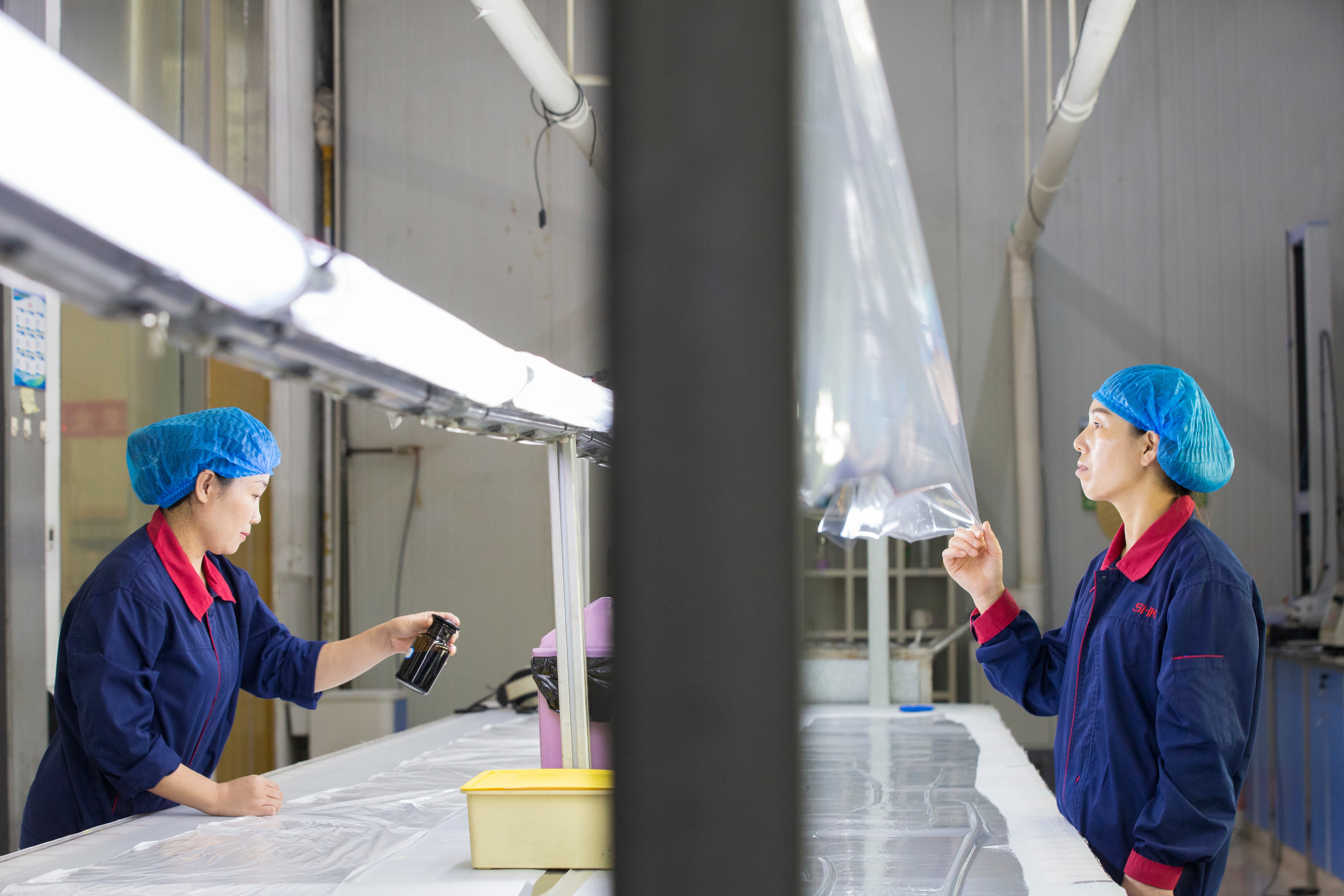
Bonding performance failure shows up as weak adhesion or delamination between the film and the printed sheet. The verified control method is bond strength testing and adhesion testing, combined with batch quality verification before shipment. On the production side, this is supported by a controlled coating process, qualified raw material inspection, routine performance testing and batch traceability — which is what makes a defective batch identifiable after the fact rather than only visible on the finished box.
Failure mode 2: blocking and moisture-related haze
Storage stability issues appear as blocking between adjacent film layers or as moisture-related haze that changes the look of the finished surface. The control method is storage condition control, moisture-proof packaging inspection, and blocking resistance verification before shipment. SHKFILM's enterprise measures for this risk include protective packaging, an optimized winding process, recommended storage conditions, and quality inspection before delivery.
Failure mode 3: coating weight and thickness variation
Coating weight and thickness variation is the quiet defect — the sheet laminates, but the finish and the bond behave differently from one reel to the next. The control method is online thickness monitoring and coating weight measurement, backed by process parameter control, regular equipment calibration and batch inspection.
Failure mode 4: shrinkage and curling after lamination
Shrinkage and curling appear after the sheet leaves the laminator, often as the job cools or moves into finishing. The control method is lamination performance testing under standard conditions, supported by raw material verification, process optimization, and technical guidance on lamination temperature and pressure.
There is also a commercial failure mode that is often mistaken for a technical one: raw material supply and price fluctuation. Even a technically stable formulation drifts commercially when supply is interrupted. The verified control method is multi-source supplier evaluation and market monitoring, supported by qualified supplier management, inventory planning and flexible production scheduling.
What the four technical failure modes share is a common structural origin. In a primer-coated route, the primer layer adds its own set of control variables — primer coating weight, coating uniformity, drying conditions, and the related equipment maintenance. Every one of those variables is an additional opportunity for batch-to-batch drift.
Why This Problem Is Getting More Expensive to Ignore
The commercial context matters because it explains why converters are re-examining base film as a risk-control decision rather than a commodity purchase. The global BOPP films market was valued at USD 31.0 billion in 2025 and is projected to reach USD 49.8 billion by 2033, according to Grand View Research. Within that market, Asia Pacific held the largest revenue share at 32.2% in 2025, and the China BOPP film market alone was valued at approximately USD 5.7 billion in 2024 (Ken Research).
The downstream segment is equally substantial. The global thermal lamination films market is forecast to reach USD 1,547.9 million by 2025, with BOPP-based films as the leading film type segment, per Future Market Insights. Growth is concentrated in value-added finishes: matte thermal lamination films are increasingly used for high-end applications such as luxury paper box packaging and book covers, and anti-scratch and scuff-resistant finishes are cited as high-growth specialties in commercial print and premium packaging. The soft touch film market was estimated at USD 2.9 billion in 2024, growing at a CAGR of 3.1% through 2034, with one-side lamination film projected to lead the soft touch segment at a 55.0% market share.
At the same time, the compliance frame around lamination materials is tightening. Food-contact BOPP films in China must comply with GB 4806.15-2024 governing food-contact adhesives, effective February 2025. BOPP films for international trade often require BRC certification for retail and food service supply chains in the United States and the United Kingdom, and BOPP lamination films for US food contact must comply with FDA 21 CFR 177.1520. In a premium-application market, an unstable bond is no longer just a rework cost — it is a compliance and brand exposure event.
Product 6544: Removing the Primer Step Instead of Managing It
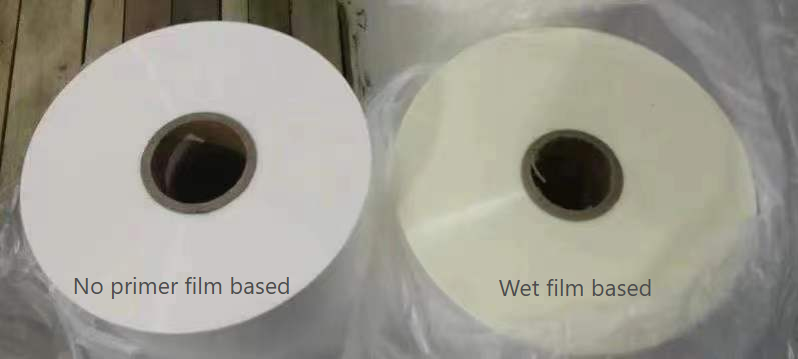
Product 6544 is the no-primer BOPP base film at the centre of this discussion. Rather than improving primer control, it deletes the primer stage from the process route. The result is a substrate whose performance depends on fewer variables, and therefore on fewer things that can drift.
What the film is made of
Product 6544 belongs to SHKFILM's No-Primer Base Film Series, which is composed of BOPP resin. The series supports two downstream structures: the thermal type, made of BOPP resin with EVA coating and functional coating, and the wet coating type, made of BOPP resin with functional coating. The base film is the unprimed substrate for these structures, not a finished laminating film.
How it runs on the line
Product 6544 is designed for inline extrusion coating environments without primers or drying ovens, and operates under continuous master roll winding and unwinding mode. Its function is to supply an unprimed substrate film optimized for high-speed EVA extrusion coating. Supporting equipment includes extrusion coaters, high-speed slitting machines and corona treaters. The special requirements are specific: no chemical primer coating needed, corona tension of 38 dyne or above, and minimal crystal points and black spots.
What the track record shows
Service life is the strongest evidence available for a base film, because repeatability claims are only credible over many production cycles. Product 6544 has been used for over 10 years, ensuring stable coating performance and consistent finished-film quality, and it has been supplied in cumulative quantities exceeding 10,000 tons to manufacturers across multiple countries. In Asia, a project involving products 6544 and 6647 was completed within 3 years at a scale of 120 tons per year, achieving stable coating performance results. In a separate project, the use of product 6544 achieved stable performance during subsequent EVA coating, ensuring consistent quality of specialty thermal lamination films.
Why deleting the primer changes the consistency picture
Compared with conventional primer-coated BOPP thermal lamination film, no-primer BOPP thermal lamination film has distinct advantages. The technology eliminates one primer coating layer and one primer coating process during thermal lamination film production, reducing related process steps and simplifying production control. The simplified film structure provides a cleaner appearance, improved whiteness, better blocking resistance and reduced risk of surface migration. On the line, it reduces primer-related process control requirements and helps reduce storage and processing issues such as blocking and static-related problems. On the energy side, conventional primer-coated production requires additional energy consumption for primer coating, drying and auxiliary processes; the no-primer route eliminates those stages.
The same logic applies one step further upstream when comparing base films. Conventional BOPP base film is a general-purpose substrate suitable for a broad range of applications, including direct lamination with paper using adhesive systems. No-primer BOPP base film is developed specifically for thermal lamination film production and achieves direct adhesion to the thermal adhesive layer without an additional primer coating, which removes one downstream coating step for manufacturers pursuing a primer-free solution.
There is a real trade-off to state plainly. No-primer base film may carry higher material value because of its specialized surface technology, while reducing downstream primer-related processing requirements and improving overall production cost efficiency. Conventional BOPP base film generally has a lower unit material cost and broader application flexibility. The correct comparison is therefore not unit price against unit price, but total process steps, energy consumption, process control burden and defect risk against unit price.
A Step-by-Step Validation Path for Converters
Adopting a primer-free base film is a process change, not a like-for-like material swap. The following sequence reflects how the variables are actually controlled on both sides of the transaction.
- Define the failure mode in measurable terms. Separate adhesion failure, blocking and haze, coating weight variation, and shrinkage or curling. Each maps to a different test and a different root cause, and mixing them makes the trial unreadable.
- Confirm line compatibility before ordering. Product 6544 runs in inline extrusion coating environments without primers or drying ovens under continuous master roll winding and unwinding. It requires extrusion coaters, high-speed slitting machines and corona treaters, with corona tension of at least 38 dyne.
- Run a small-batch trial. SHKFILM accommodates small-batch trial orders in addition to bulk supply, which allows a converter to validate adhesion and finish on the existing line before committing volumes.
- Verify bonding and adhesion against a defined standard. Bond strength testing, adhesion testing and batch quality verification are performed before shipment, supported by a controlled coating process, qualified raw material inspection, routine performance testing and batch traceability.
- Lock coating weight and thickness control. Online thickness monitoring and coating weight measurement, process parameter control, regular equipment calibration and batch inspection keep the EVA layer within specification as the line speeds up.
- Set lamination parameters with technical support. Lamination performance testing under standard conditions, combined with technical guidance on lamination temperature and pressure, is the verified route to controlling shrinkage and curling.
- Protect storage and handling. Protective packaging, an optimized winding process, recommended storage conditions and pre-delivery quality inspection reduce blocking and moisture-related haze between delivery and use.
- Scale to repeat supply. Multi-source supplier evaluation, market monitoring, qualified supplier management, inventory planning and flexible production scheduling protect the supply side of repeatability once the technical parameters are fixed.
Where No-Primer Base Film Improves Repeatability
The industries that benefit most are exactly the three that product 6544 is intended for: the film converting and coating plants industry, the custom packaging box manufacturing industry, and the commercial printing and post-press finishing industry.
Specialty thermal lamination film production
Producers of soft-touch and anti-scratch films face the tightest consistency demand, because a surface defect is visible on the finished product. In a project in India and South Korea, a product used for soft-touch or anti-scratch thermal lamination film production achieved stable performance during subsequent EVA coating, ensuring consistent quality of specialty thermal lamination films. A related Asian project for soft-touch and anti-scratch film production was completed within 3 years at 120 tons per year with stable coating performance results.
Paper lamination and book covers
Product 6647, operating in industrial web-fed reverse gravure coating mode and sheet-fed automatic wet lamination, achieved smooth lamination with reliable adhesion and stable processing performance in paper lamination. That project has been running for 9 years with a cumulative supply of 2,500 tons — the kind of duration that only survives if repeatability holds.
Premium printed packaging and soft-touch cosmetics boxes
Product 6623 operates in both wet glue coating systems and automatic dry thermal lamination processes, delivering velvet soft-touch feel, anti-scratch surface protection and a matte look. In a project implemented in South Korea, Italy and Sri Lanka, the product achieved a consistent soft-touch finish and premium appearance, and the project supplied 30 tons to commercial printing and packaging customers with a velvet-like tactile effect and excellent scratch resistance. BOPP Soft Touch Film is positioned for premium packaging, luxury goods, cosmetic packaging, book covers and applications requiring enhanced tactile experience and higher product value.
Decision Table: No-Primer vs Primer-Coated vs Conventional Wet Base Film
The table below compares the three base-film routes on the factors that determine whether lamination output stays repeatable.
| Decision factor | No-Primer BOPP Base Film (product 6544) | Conventional primer-coated BOPP thermal lamination film | Conventional BOPP wet base film |
|---|---|---|---|
| Primer step | No chemical primer coating required | Primer applied to the base film to enhance adhesion | Primer treatment required before use |
| Process steps added downstream | One primer coating layer and one primer coating process eliminated | Additional primer coating process and related production management | Additional primer coating process required for thermal lamination use |
| Film structure and appearance | Simplified structure, cleaner appearance, improved whiteness | Structure includes a primer/anchor coating layer | General-purpose substrate without primer-free surface design |
| Storage behaviour | Better blocking resistance, reduced risk of surface migration, fewer static-related issues | Requires control of primer coating weight, coating uniformity and drying conditions | Requires additional primer coating management and quality monitoring |
| Energy profile | Primer coating and drying stages removed, reducing related energy requirements | Additional energy consumption for primer coating, drying and auxiliary processes | Extra energy for primer coating and drying when used for thermal lamination film |
| Best fit | Thermal lamination film production where a simplified, primer-free process is the goal | Manufacturers using established primer coating systems and traditional lamination routes | Broader applications including direct lamination with paper using adhesive systems |
| Main trade-off | Higher material value due to specialized base film technology; offset by reduced primer-related processing | Lower film value but additional primer materials, coating processes and production management costs | Lower unit material cost and broader application flexibility |
Supply format and specifications are shared across the film range. Base film and thermal lamination film thickness runs from 17 to 27 microns and is customizable. Roll width ranges from 320 mm to 2180 mm, with available roll lengths of 2000 m, 3000 m, 4000 m, 4500 m, 6000 m and 9000 m. The Gloss / Matte Thermal Lamination Film Series is supplied on 3-inch (76 mm) and 6-inch (152 mm) cores. The minimum order quantity depends on product type and specifications, which is why sample and trial volumes are handled case by case.
Frequently Asked Questions
Is SHKFILM's no-primer BOPP base film compliant with EU and food-contact requirements?
SHKFILM is certified to EU BRC, ISO 9001, QS Food and Customs AEO Advanced Enterprise standards, and its biodegradable film products are certified under the Green Leaf certification. For the EU market, REACH SVHC certification applies under REACH Regulation (EC) No 1907/2006 and its Candidate List of 253 SVHCs, issued by SGS-CSTC Standards Technical Services Co., Ltd. under certificate number CANEC26006197603. RoHS certification applies to the BOPP Specialty Lamination Films product under RoHS Directive (EU) 2015/863, issued by SGS-CSTC under certificate number CANEC26006197601. For food-contact end uses, buyers should also check the destination market: BOPP lamination films for US food contact must comply with FDA 21 CFR 177.1520, and food-contact BOPP films in China must comply with GB 4806.15-2024, effective February 2025. BRC certification is often required for retail and food service supply chains in the US and UK.
Can a no-primer base film run on an existing extrusion coating line?
Product 6544 is designed for inline extrusion coating environments without primers or drying ovens and operates under continuous master roll winding and unwinding mode, supplying an unprimed substrate optimized for high-speed EVA extrusion coating. It requires supporting equipment such as extrusion coaters, high-speed slitting machines and corona treaters. Special requirements include no chemical primer coating needed, corona tension of 38 dyne or above, and minimal crystal points and black spots. In practical terms, where a line currently runs a primer station, the primer coating and drying stage is removed from the process route rather than added to it.
Where does the cost difference sit between no-primer and primer-coated film?
Conventional primer-coated thermal lamination film requires additional primer materials, coating processes and related production management costs. No-primer thermal lamination film reduces primer-related processing requirements and improves overall production cost efficiency, while the specialized base film may carry higher material value. The energy picture follows the same logic: conventional primer-coated production requires additional energy for primer coating, drying and auxiliary processes, while the no-primer route eliminates these stages. Solvent-free, no-primer BOPP base films improve adhesion to EVA and reduce energy consumption during extrusion coating. Because the minimum order quantity depends on product type and specifications, the most reliable cost comparison is a trial quantity priced against the process steps it removes.
How can we validate product 6544 before committing to bulk volumes?
SHKFILM supports small-batch trial orders in addition to bulk supply, and provides technical guidance on lamination temperature and pressure so the trial reflects real production conditions. Validation is supported by bond strength testing, adhesion testing and batch quality verification before shipment, together with online thickness monitoring, coating weight measurement, process parameter control and batch traceability. A reference point for how such projects progress: a project involving products 6544 and 6647 was completed within 3 years at 120 tons per year with stable coating performance results, and product 6544 has been in use for over 10 years with cumulative supply exceeding 10,000 tons. Buyers can request a sample or a quotation from Cora at weilj@shkfilm.com or on WhatsApp at +86 166-7890-6856.
What supports supply continuity for repeat orders over the long term?
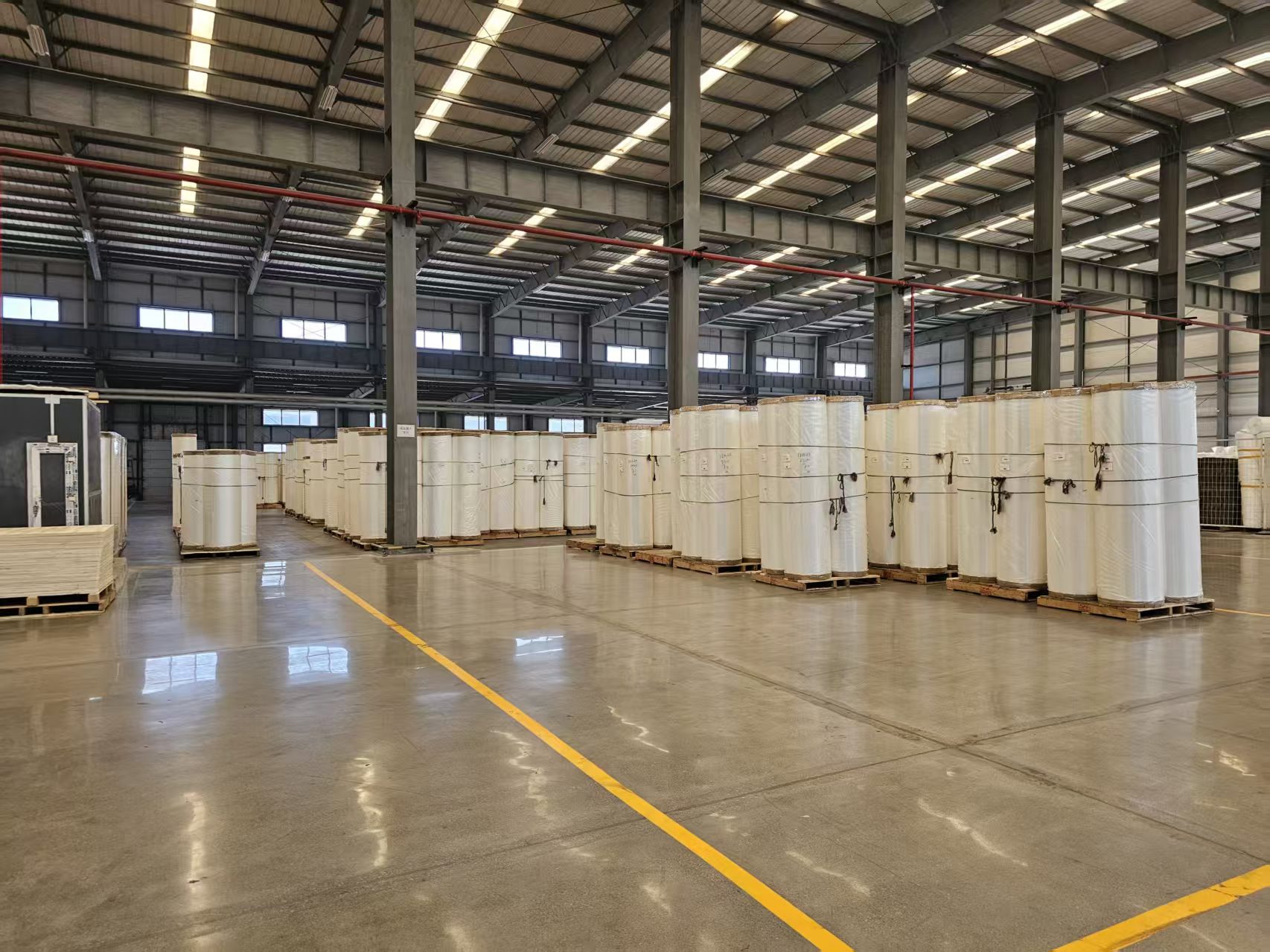
SHKFILM operates two BOPP film production lines imported from Brückner (Germany), with an annual capacity of 30,000 tons, and exports around 70% of output to markets including India, Brazil, Iran, South Korea, the Netherlands, Italy, Greece and Japan. The company serves both converters with their own coating and lamination lines and distributors and traders who resell finished film. Raw material supply and price fluctuation risk is managed through multi-source supplier evaluation and market monitoring, supported by qualified supplier management, inventory planning and flexible production scheduling. Product 6544 itself has been in use for over 10 years with cumulative supply exceeding 10,000 tons to manufacturers across multiple countries, and SHKFILM also supports OEM and private-label supply.
Conclusion
Inconsistent lamination is rarely solved at the laminator. The four failure modes that converters report — weak adhesion and delamination, blocking and moisture-related haze, coating weight and thickness variation, and shrinkage or curling — all trace back to how many variables the process contains. A primer coating step adds primer weight, coating uniformity, drying conditions and equipment maintenance to that list before the film ever reaches the customer.
Product 6544 takes a different route by removing the primer stage entirely. It is a no-primer BOPP base film for inline extrusion coating without primers or drying ovens, requiring corona tension of 38 dyne or above with minimal crystal points and black spots, and it has delivered stable coating performance and consistent finished-film quality for over 10 years across more than 10,000 tons of cumulative supply. For converters producing soft-touch, anti-scratch or paper lamination products, that is the difference between controlling consistency and chasing it.

Next Step: Validate Product 6544 on Your Own Line
SHKFILM supplies no-primer BOPP base film and BOPP thermal lamination film in bulk, supports OEM and private-label supply, and accommodates small-batch trial orders so converters can confirm adhesion and finish before scaling.
Download the SHKFILM product brochure (PDF), or contact us directly:
Email: weilj@shkfilm.com
Tel / WhatsApp: +86 166-7890-6856
Website: www.shkfilm.com
Address: No.09 Shengcheng Road, Sishui Economic Development Zone, Shandong Province, China
Have Questions or Need More Details?
Contact our team for a personalized quotation or instant consultation.
Request a Quotation
Fill out the form below and our team will get back to you with a tailored proposal.
WhatsApp Direct Chat
Prefer to chat in real-time? Message us on WhatsApp for instant assistance & quick answers.
- Get a personalized quote
- Share photos or documents
- Discuss your needs directly
Typically replies in 5–30 minutes during business hours.