Assessing a Shower Door Supplier: Key Capabilities to Verify Before Ordering
A shower door supplier should be assessed on five verifiable capabilities before an order is placed: the breadth of its model range across door types and hardware materials, the consistency between stated materials and delivered goods, the number of glass craftsmanship options it can actually process, the true scope of its certificates and test documentation, and documented capacity, MOQ, lead time and inspection practice. Suppliers that can evidence all five are far easier to re-order from, because the specification agreed at quotation is the specification that arrives at the site.
The Problem: Supplier Claims Are Easy to Make, Capability Is Hard to Prove
Most shower door sourcing problems do not appear at the quotation stage. They appear after the purchase order is confirmed, when the buyer discovers that the model offered in the catalogue exists in only one glass finish, that the "stainless steel" hardware on the sample does not match the hardware on the bulk shipment, or that the certificate the sales team forwarded covers a different scope of manufacturing activity than the product being bought.
The reason is structural. A glass shower enclosure is assembled from several independent inputs — hardware, glass, sealing, and finishing — and each input can be sourced in more than one grade. A supplier that controls or tightly manages all four inputs can hold a specification steady across repeat orders. A supplier that assembles from whatever is available can quote the same model number twice and deliver two different products.
This is why capability assessment matters more in this category than in many others. The buyer is not evaluating a single factory line; the buyer is evaluating whether the supplier's internal system is stable enough to reproduce a specification. That question is answered by evidence, not by catalogue photography.
Industry Background: A Category Defined by Standards and Regional Rules
The global shower doors market was valued at USD 3.84 billion in 2025 and is projected to reach USD 6.39 billion by 2034, according to Dataintelo. Asia Pacific is the dominant regional market, accounting for a 35.2% revenue share in 2025. Within the product mix, frameless shower doors hold the largest share, representing approximately 48.5% of revenue in 2025.
Alongside that commercial scale sits a compliance layer that varies by destination market. Safety glazing materials sold in the United States must comply with ANSI Z97.1-2026 and CPSC 16 CFR 1201 standards for impact and shatter behavior. European shower enclosures must meet the EN 12150 standard for thermally toughened soda lime silicate safety glass. The consequence for buyers is direct: a supplier who can only describe glass as "tempered" without a traceable standard reference cannot support you in the market you are selling into.
The category also contains both large consumer-facing brands — established players in the shower door market include Kohler Co., American Standard (LIXIL), Masco Corporation (Delta), and DreamLine — and specialist manufacturing exporters that supply private-label and project volumes. For importers, distributors and project buyers, the specialist manufacturing tier is where capability assessment matters most, because that is the tier where documentation, tooling and repeatability determine whether a two-year supply relationship is viable.
Detailed Solution: The Five Capability Areas to Verify Before Ordering
Sourced from the operating profile of a working shower door manufacturer, the verification checklist below covers the capabilities that decide whether a first order becomes a repeat order.
1. Model Range Breadth Across Types and Materials
A supplier that offers only one or two configurations is exposed in a portfolio sense: your marketing range can be no broader than their tooling range. Breadth should be tested across both door type and hardware material, because those two variables are usually built on different tooling and different supply relationships.
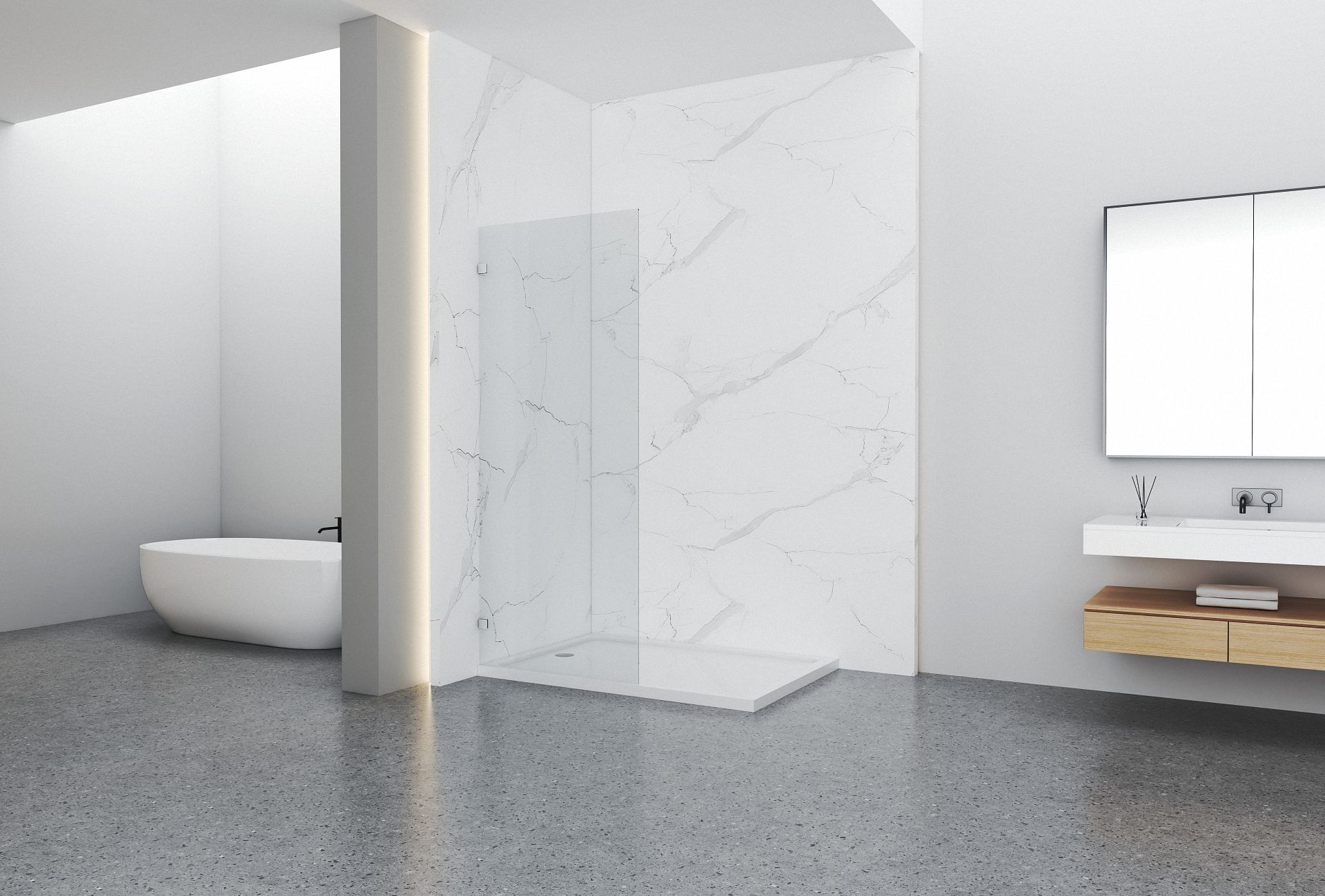
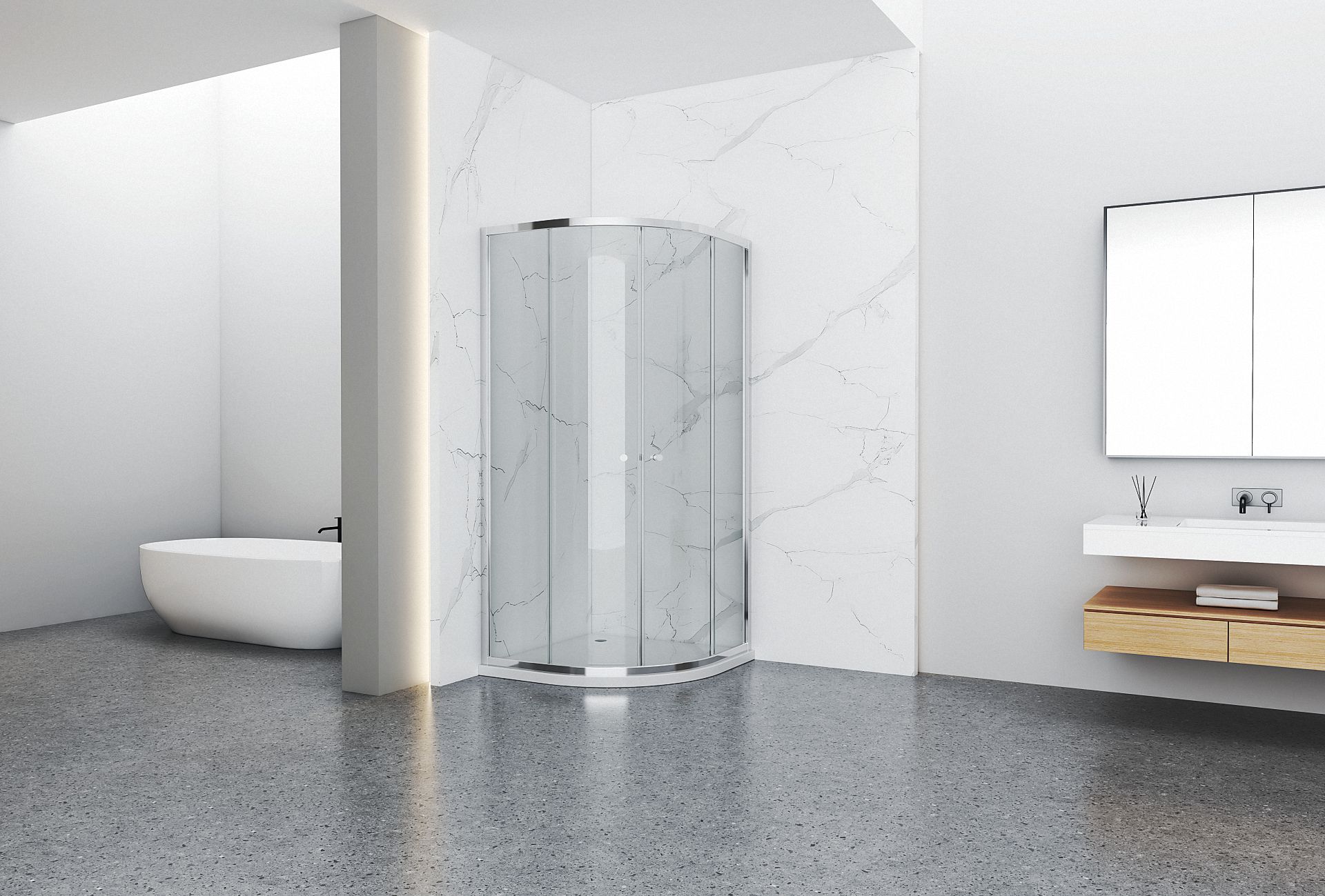
SHKL's shower door range demonstrates both axes. Sliding and hinge configurations built on 304 stainless steel hardware include KL-AS5511312, KL-AS5577310 and the shower screen KL-AS001-1. Sliding, arc, hinge, frameless and bathtub configurations built on aluminium alloy hardware include KL-AS5608212, KL-AS5210422, KL-AS5507310, KL-AS5104310 and KL-AS5605110-5. The distinction is not cosmetic: a buyer running a residential range and a hospitality range in parallel usually needs both material families, and a supplier who can hold both avoids forcing a compromise specification.
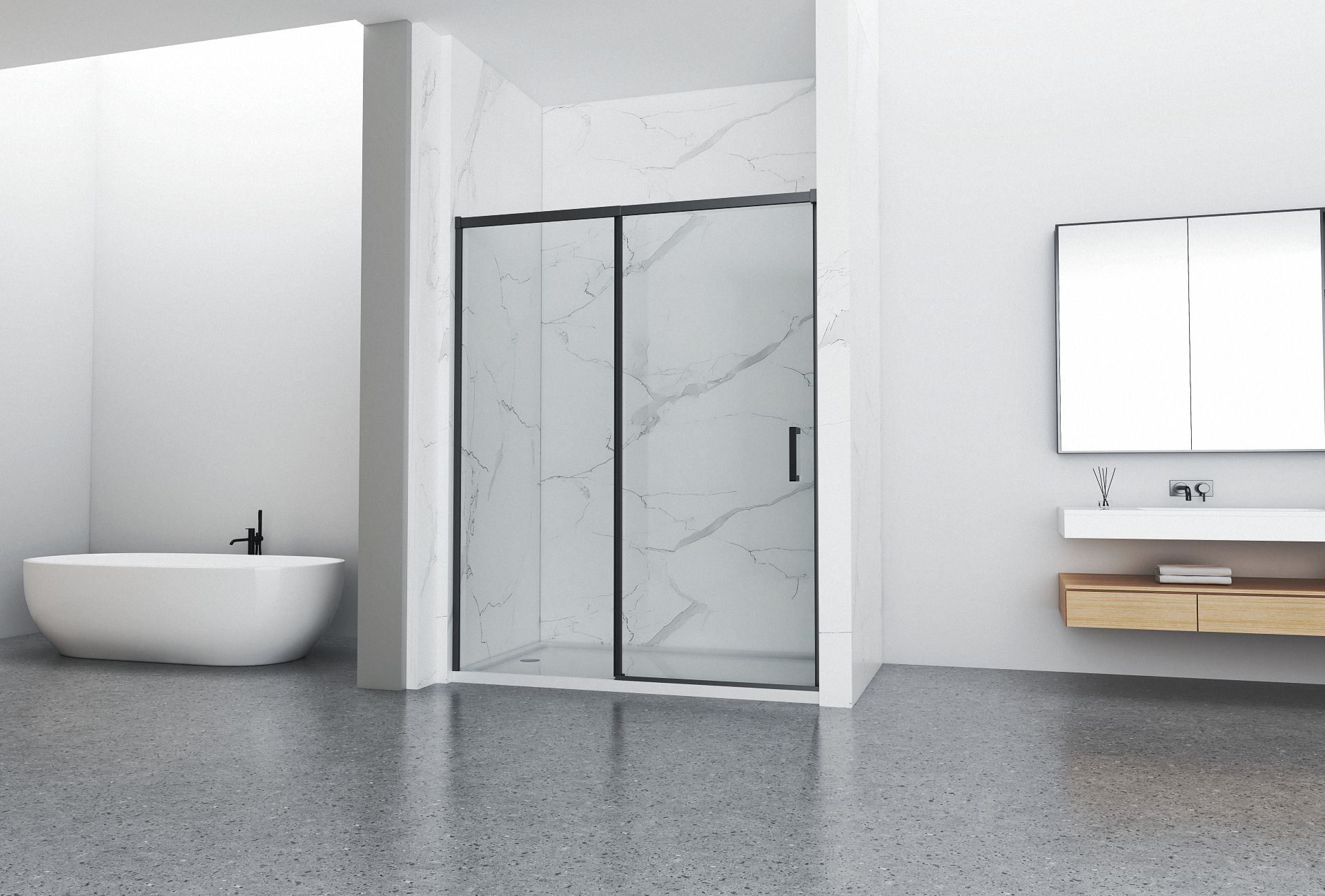
All models in the documented range are stated as suitable for residential construction and commercial hospitality, which means the same supplier can serve both a villa programme and a hotel refurbishment without re-tooling between them.
2. Hardware Material Consistency
Hardware material is the single most common point where quoted specification and delivered specification diverge, because hardware is a purchased component rather than an in-house one. The practical verification is to confirm the material grade in writing for each model — 304 stainless steel or aluminium alloy — and then to confirm that the same grade appears on the inspection record for the production batch.
SHKL states hardware material explicitly at model level, and the two material families are held in parallel within the same range. That level of disclosure gives a buyer a written baseline to audit against, which is the minimum condition for a repeatable order.
3. Glass Craftsmanship Options as a Capacity Signal
The number of glass finishes a supplier can offer is one of the most reliable indirect indicators of manufacturing capacity, because each additional finish implies separate processing capability. A supplier offering only clear tempered glass is buying in finished glass panels. A supplier offering coated, laminated, textured and frosted options has invested in downstream glass processing or has locked in qualified processing partners.
Across the documented SHKL shower door models, the stated glass craftsmanship options are consistent and extensive: clear glass, tinted glass, laminated glass, flute glass, chemically frosted glass, easy-clean and film-coated. Buyers for wet-room hospitality projects should note that laminated glass options are what make anti-shatter behaviour specifiable — a point reinforced by an Australian shower door project delivered by SHKL for 190 units over a 5–10 year service horizon, where the products met Australian safety standards and installation proceeded smoothly.
4. Certificate Scope, Not Certificate Names
A certificate image proves that a management system was audited. It does not automatically prove that the product you are ordering falls inside the audited boundary. Buyers should therefore read three fields: the certificate number, the issuing authority, and the stated scope of activities.
SHKL holds ISO 9001:2015 certification (certificate number 04924Q00629R0M) documented specifically for the KL-AS5577310 shower door product, alongside ISO 14001 certification (certificate number 04924E00351R0M) and ISO 45001 certification (certificate number 04924S00316R0M). All three are issued by Guangdong Quality Testing CTC Certification Co., Ltd. and are valid from 2024-05-11 to 2027-05-10, applicable to the global market including China, the EU, the US and the Middle East. The certificates state a defined scope of activities rather than a blanket coverage of every item a factory may produce — which is exactly why scope wording deserves a careful read before the purchase order, not after.
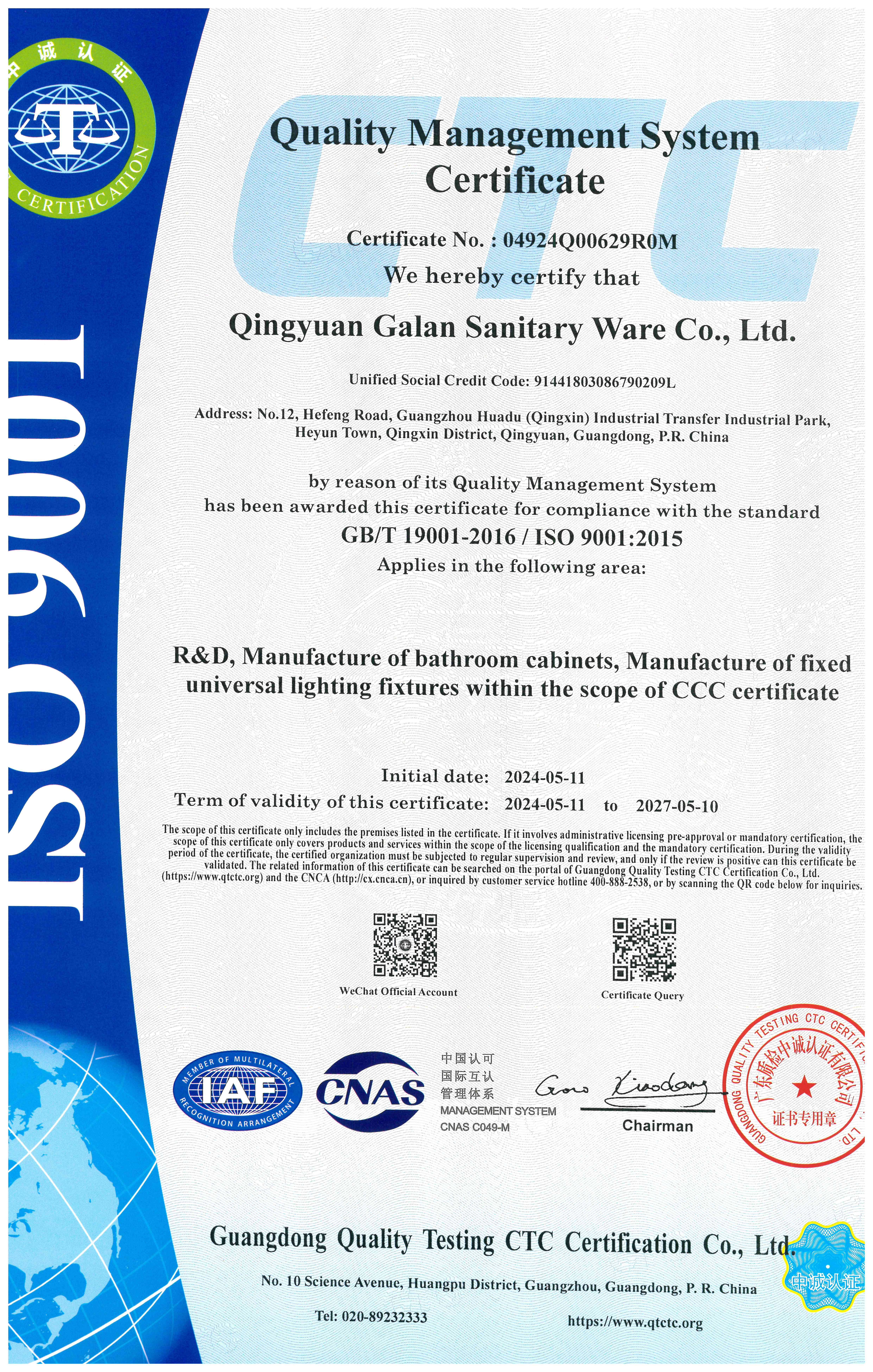
Beyond the management-system layer, the destination-market layer still applies: ANSI Z97.1-2026 and CPSC 16 CFR 1201 for US-bound safety glazing, and EN 12150 for European enclosures. A capable supplier should be able to state which standard its glass is tested against for each market you sell into.
5. Documented Capacity, MOQ, Lead Time and Inspection Practice
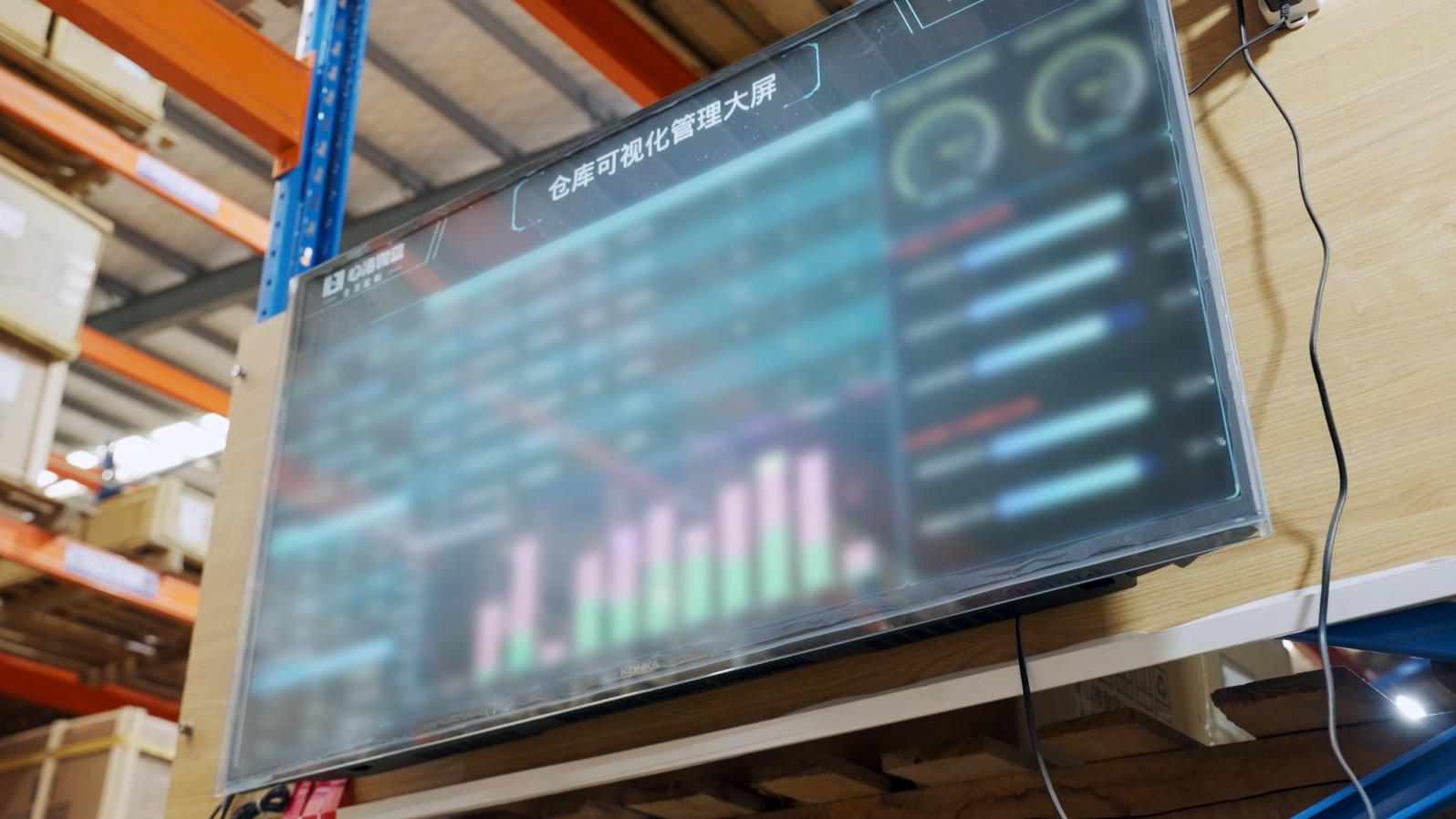
Capacity figures only mean something when they are attached to a named process. SHKL's stated shower door production capability includes a monthly capacity of 10,000 units, a minimum order quantity of 50, and a lead time of 30–45 days, with 100% inspection. Export markets served are North America, Europe, Oceania and the Middle East — the same regions reflected in the company's overall 70% export ratio and 50+ country distribution footprint.
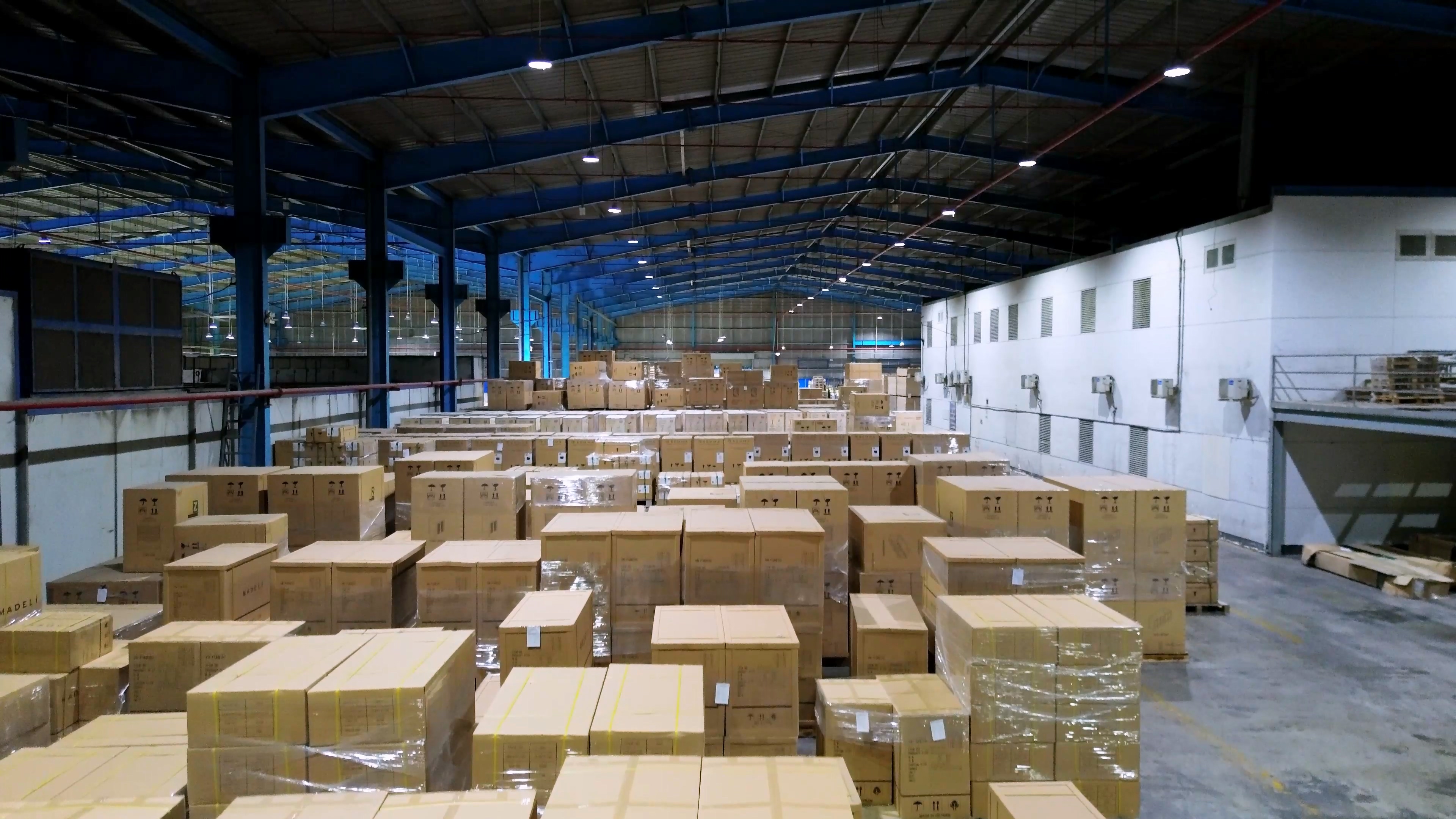
At group level, Foshan SHKL Sanitary Ware Co., Ltd was established in 2004 and operates a 100,000 m² production base in China together with a 40,000 m² factory in Vietnam, employing approximately 600 people and maintaining an R&D team of 20. That two-base structure matters to buyers evaluating supply continuity, because it provides routing flexibility for North American and European programmes.
Step-by-Step: A Seven-Step Supplier Verification Sequence
The sequence below converts the five capability areas into an assessment order that fits the Research and Evaluation stage of a sourcing decision.
- Fix your own specification first. Decide configuration type (hinged, pivot, sliding, bypass, folding, frameless), hardware material (304 stainless steel or aluminium alloy), and glass craftsmanship option before contacting suppliers. Without a fixed brief, quotations are not comparable.
- Test range breadth on two axes. Request models across at least two door types and two hardware materials. If a supplier can only show one material family, their range is narrower than their catalogue implies.
- Confirm glass finish availability in writing. Ask which of the following are actually available: clear, tinted, laminated, flute, chemically frosted, easy-clean and film-coated. Each unavailable finish removes a product variant from your own range.
- Read certificates, not certificate names. Match model, certificate number, issuing authority, validity dates and scope statement. For US-bound goods, confirm ANSI Z97.1-2026 and CPSC 16 CFR 1201 compliance; for European goods, confirm EN 12150.
- Request the capacity, MOQ and lead-time statement in the quotation. For SHKL that means 10,000 units monthly capacity, MOQ 50 and 30–45 days lead time — figures you can plan a re-order cycle around.
- Confirm the inspection regime. 100% inspection is a different risk profile from sampling inspection, and it should be stated, not assumed.
- Lock customization scope before tooling. Confirm which of size, colour, material, finish, hardware, logo and design style the supplier will customize, and confirm the after-sales package — warranty support, remote after-sales consultation and spare parts supply are the three items that determine whether a five-year relationship is workable.
Use Cases: Where Verification Changes the Outcome
Residential villa programmes
A residential buyer typically needs one or two configurations repeated across many units, which places the emphasis on range consistency rather than range breadth. The critical checks are hardware material consistency and repeatable glass finish — the two variables most likely to drift between order one and order three.
Hospitality and hotel bathrooms
Commercial hospitality projects shift the emphasis onto laminated glass availability and hardware durability at volume, because the enclosure must survive continuous use. An SHKL shower door project delivered to Thailand for 110 units specified safety laminated glass with an anti-shatter design for enhanced user safety, and the delivered products met local standards with smooth installation.
Export programmes with regional compliance
Buyers shipping into Australia, the EU or North America need the compliance layer validated per destination. The Australian shower door project of 190 units, delivered over a 5–10 year service horizon, met Australian safety standards with the size fit and product function cited as the delivery highlights. That is the outcome the verification sequence above is designed to protect.
Comparison Table: The Verified SHKL Shower Door Range at a Glance
The table below lists documented models from the SHKL shower door range. It is included so buyers can see how hardware material and configuration vary across a single supplier's portfolio — the practical test of range breadth described in Step 2.
| Model | Configuration | Hardware material | Glass craftsmanship options | Stated application |
|---|---|---|---|---|
| KL-AS001-1 | Shower screen | 304 stainless steel | Clear / tinted / laminated / flute / chemically frosted / easy-clean / film-coated | Residential construction, commercial hospitality |
| KL-AS5511312 | Sliding shower door | 304 stainless steel | Clear / tinted / laminated / flute / chemically frosted / easy-clean / film-coated | Residential construction, commercial hospitality |
| KL-AS5577310 | Hinge shower door | 304 stainless steel | Clear / tinted / laminated / flute / chemically frosted / easy-clean / film-coated | Residential construction, commercial hospitality |
| KL-AS5608212 | Sliding shower door | Aluminium alloy | Clear / tinted / laminated / flute / chemically frosted / easy-clean / film-coated | Residential construction, commercial hospitality |
| KL-AS5210422 | Arc shower door | Aluminium alloy | Clear / tinted / laminated / flute / chemically frosted / easy-clean / film-coated | Residential construction, commercial hospitality |
| KL-AS5507310 | Hinge shower door | Aluminium alloy | Clear / tinted / laminated / flute / chemically frosted / easy-clean / film-coated | Residential construction, commercial hospitality |
| KL-AS5104310 | Frameless shower door | Aluminium alloy | Clear / tinted / laminated / flute / chemically frosted / easy-clean / film-coated | Residential construction, commercial hospitality |
| KL-AS5605110-5 | Bathtub shower door | Aluminium alloy | Clear / tinted / laminated / flute / chemically frosted / easy-clean / film-coated | Residential construction, commercial hospitality |
Two observations follow from the table. First, the same seven glass craftsmanship options are offered consistently across every model, including those in different hardware materials — that consistency is itself a manufacturing signal. Second, the range covers shower screens, sliding, hinge, arc, frameless and bathtub configurations, which means a distributor can assemble a complete bathroom shower enclosure portfolio from one supplier rather than three.
FAQ: Supplier Assessment Questions From Global Buyers
Which certifications should a shower door supplier be able to document?
At minimum, a supplier should provide a management-system certificate with a traceable number, a named issuing authority, validity dates and a stated scope. SHKL holds ISO 9001:2015 certification documented for the KL-AS5577310 shower door (certificate number 04924Q00629R0M), plus ISO 14001 (04924E00351R0M) and ISO 45001 (04924S00316R0M), all issued by Guangdong Quality Testing CTC Certification Co., Ltd., valid from 2024-05-11 to 2027-05-10 and applicable to the global market including China, the EU, the US and the Middle East. Buyers should also confirm destination-market standards separately: ANSI Z97.1-2026 and CPSC 16 CFR 1201 for US safety glazing, and EN 12150 for European thermally toughened safety glass.
How do glass craftsmanship options indicate a supplier's manufacturing capability?
Each additional glass finish requires separate processing capability, so the finish list is a practical proxy for how deep a supplier's manufacturing base goes. The SHKL shower door range documents seven options across its models — clear glass, tinted glass, laminated glass, flute glass, chemically frosted glass, easy-clean and film-coated. A supplier able to offer laminated and coated finishes can support anti-shatter specifications and easy-clean requirements; a supplier limited to clear tempered glass cannot, regardless of how many model numbers appear in its catalogue.
What drives shower door cost, and how should quotations be compared?
On the documented range, the main cost variables are hardware material (304 stainless steel versus aluminium alloy), the glass craftsmanship option selected, the configuration type — screen, sliding, hinge, arc, frameless or bathtub — and the extent of customization across size, colour, material, finish, hardware, logo and design style. Order volume relative to the minimum order quantity also affects unit economics. The practical rule is to request every quotation against an identical written specification, because a lower-priced quote that silently substitutes a different hardware grade or a single glass finish is not a lower-priced product.
Can a buyer validate a supplier through a sample before committing to volume?
Yes, and sample validation is the most reliable way to confirm that the stated specification survives manufacturing. Validation should check four items against the written brief: hardware material grade, glass craftsmanship option, dimensions, and finish. SHKL states customization across size, colour, material, finish, hardware, logo and design style, and applies 100% inspection, which means a sample or pre-production unit can be compared directly against the agreed parameters rather than against a marketing image.
What MOQ and lead time should a buyer expect from a shower door manufacturer?
SHKL's stated shower door production parameters are a minimum order quantity of 50, a lead time of 30–45 days, and a monthly capacity of 10,000 units, supported by 100% inspection and after-sales coverage including warranty support, remote after-sales consultation and spare parts supply. Export markets served are North America, Europe, Oceania and the Middle East. Buyers planning a repeat-order cycle should confirm these figures in writing at quotation stage and request the current product catalogue and brochure before finalizing the specification — the SHKL brochure is available at this download link.
Conclusion: Verify Capability Before You Verify Price
Price is the last question to answer, not the first. The buyers who avoid re-order failures are the ones who verify range breadth across two hardware materials, confirm the full glass craftsmanship list in writing, read certificate scope rather than certificate names, and lock capacity, MOQ, lead time and inspection practice into the quotation. Every one of those checks is answerable before a purchase order is issued — and each one is cheaper to resolve at the assessment stage than at the port.
Foshan SHKL Sanitary Ware Co., Ltd operates a 100,000 m² production base in China and a 40,000 m² factory in Vietnam, with a documented shower door range spanning shower screens, sliding, hinge, arc, frameless and bathtub configurations in both 304 stainless steel and aluminium alloy. Buyers who want to run the verification sequence against real models can start with the range overview at www.shklbathroom.com.
Next Step: Request the Specification or a Quotation
Send your shower door specification — configuration, hardware material, glass craftsmanship option, sizes and estimated volume — and SHKL will respond with the matching models, documented compliance information and lead-time confirmation.
Email: info@shklbathroom.com · WhatsApp: +86 13790005061
Product brochure download: SHKL Bathroom Product Brochure (PDF)
Website: www.shklbathroom.com