
Floating Vanities for Modern Renovations: A Project Application Guide
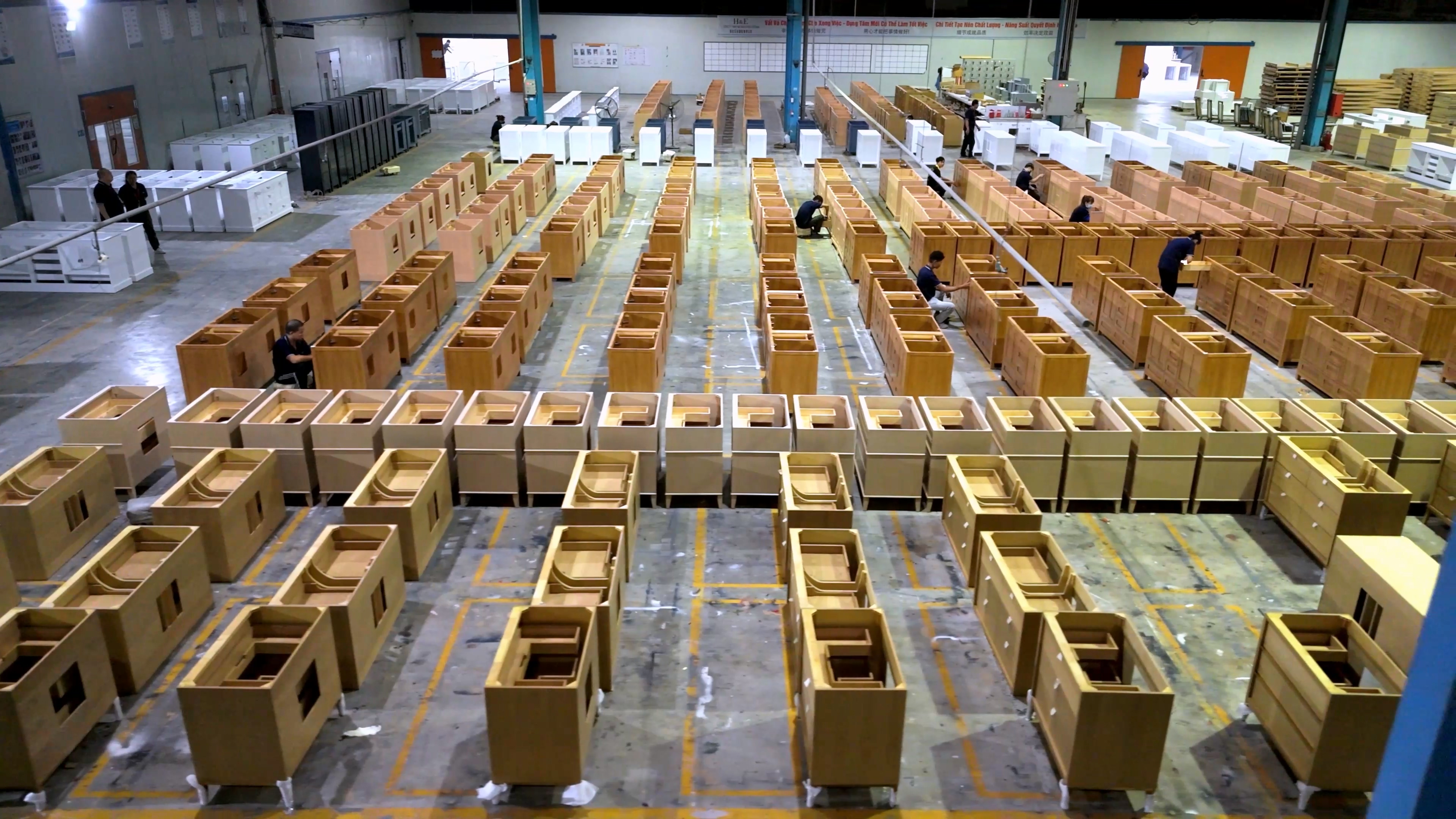
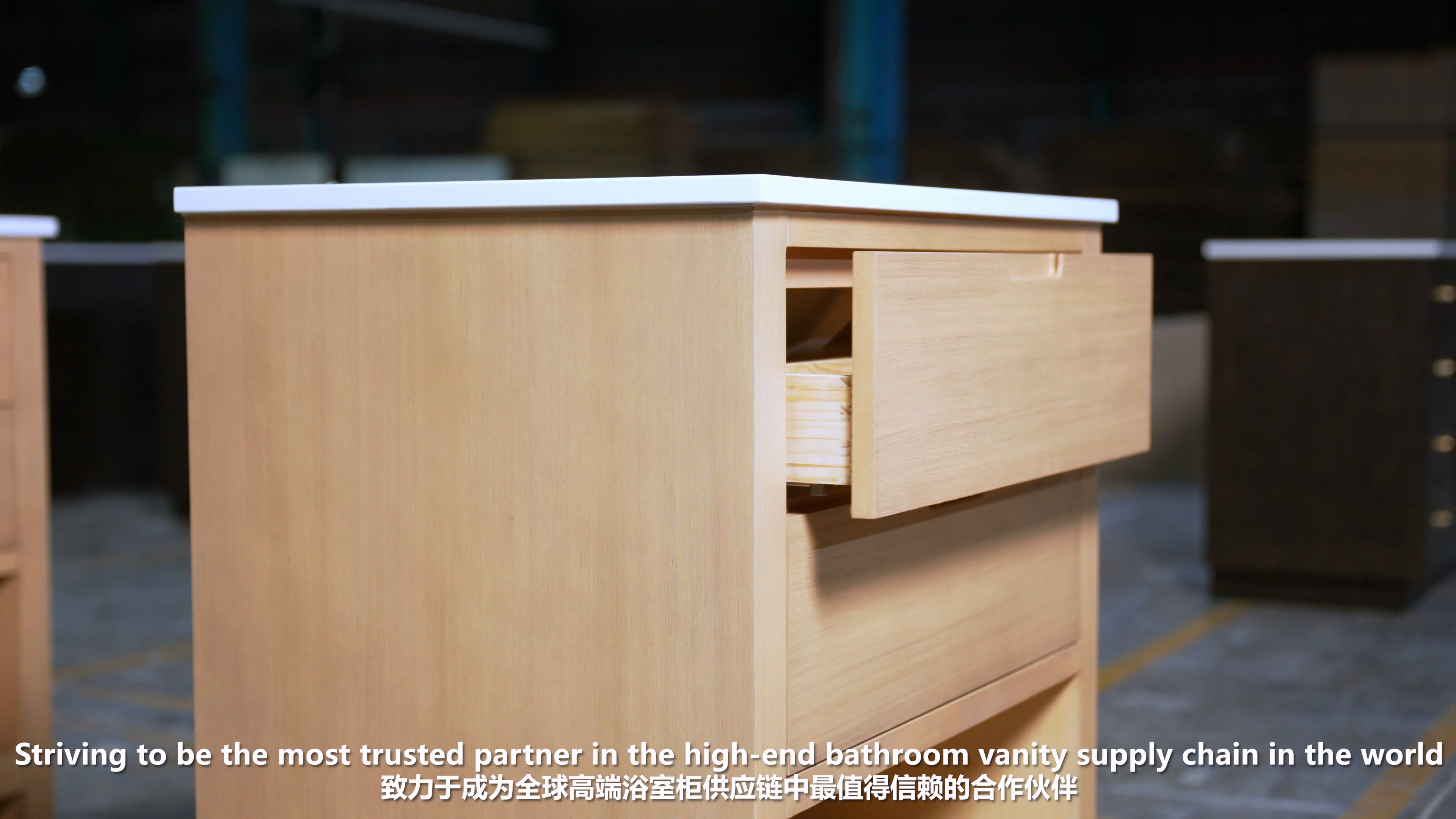
Finished bathroom vanity displayed at SHKL's production base.
A floating vanity is a wall-mounted bathroom cabinet that is fixed to the wall and leaves the floor beneath it clear. In renovation work, that single design decision changes three things at once: usable floor area, cleaning access around the unit, and where moisture can collect. This application guide explains how to specify floating vanities for residential construction and commercial hospitality projects, how to match a model to a project's style and storage requirement, and what to verify with a bathroom vanity manufacturer before an order is placed. Three model references from SHKL's floating vanity range, AS813048A, AS813050 and AS813108, are used as planning examples throughout.
SHKL (Foshan SHKL Sanitary Ware Co., Ltd) is a bathroom vanity manufacturer established in 2004 in Foshan, China. The company produces bathroom vanities, shower doors and LED bathroom mirrors, and operates manufacturing bases in China (100,000 m2) and Vietnam (40,000 m2) with around 600 employees and a 20-person R&D team. Its products are distributed across more than 50 countries and regions, with 70% of output exported to Europe, Australia, North America, South America and the Middle East.
What a Floating Vanity Changes in a Renovation Project
The main constraint in most renovation briefs is not style. It is space. A wall-mounted bathroom vanity returns the floor area that a freestanding unit would occupy, which matters in compact residential bathrooms and in hospitality rooms where the same footprint repeats across many floors.
Three practical consequences follow from the wall-mounted design:
- Floor clearance. The area under the cabinet stays open, so the floor reads as a continuous surface and is easier to clean and inspect.
- Moisture separation. Raising the cabinet body away from the floor removes the part of a vanity that normally sits closest to wet cleaning water and floor-level humidity.
- Wall dependency. Because the cabinet hangs on the wall, the wall must be able to carry the load, and drainage and supply connections usually need to be planned before the cabinet is fixed. This is a project-stage decision, not a product-stage one.
The trade-off is storage. A floating vanity generally provides less internal volume than a full-height freestanding cabinet on the same wall run, so projects that need deeper storage often pair a wall-mounted vanity with separate wall mounted bathroom cabinets placed higher on the wall. Model selection should therefore follow the storage brief rather than precede it.
Industry Background: Where Floating Vanities Fit in Current Bathroom Projects
Bathroom vanity demand is large and still expanding. The global bathroom vanities market was valued at approximately USD 43.34B to USD 47.22B in 2024-2025, with growth projections reaching up to USD 89.96B by 2034 (Fortune Business Insights; Grand View Research).
Material choice follows that demand. The wood material segment, covering solid wood and plywood together, held a 34.9% revenue share in 2025, supported by premium appearance and durability (Grand View Research). For renovation work this aligns with the common specification path from plywood bathroom vanity construction in cost-controlled projects to solid wood bathroom vanity and oak bathroom vanity construction in higher-end residential and hospitality work.
By application, residential use dominates: it accounted for approximately 74.9% of revenue share in 2025 (Grand View Research). Commercial hospitality and real estate work makes up the remainder, and it is the segment where repeat specification and delivery reliability matter most.
Design direction has also moved toward the wall. Floating, wall-mounted vanities are a leading design trend for 2025-2026, while freestanding units still hold a significant volume share in North America at roughly 30% (Houzz; Homes & Gardens). In practice both formats appear in the same renovation programme: floating vanities in guest bathrooms and compact rooms, freestanding bathroom furniture where a larger piece is required.
Compliance sets the outer boundary of any North American specification. Bathroom cabinets and vanities sold into that market must comply with UL 962, which covers stability, mechanical strength and flammability (UL Solutions, 2024).
Manufacturer Capability: What Determines Whether a Floating Vanity Project Runs Smoothly
Two projects can order the same category of product and still end up with very different outcomes, because the limiting factors are usually manufacturing flexibility and schedule control rather than the design itself. A manufacturer's production model decides how much of a project's dimensions, finishes and storage layout can actually be customized, and how reliably that customization can be repeated in later phases.
SHKL's floating vanity production is built around a digitally controlled, customization-first model rather than a fixed catalogue model:
- Customization scope. Products are described as 100% customized, including the ability to produce unique cabinet forms, supported by a woodworking team of more than 60 people.
- Equipment base. The workshop runs more than 10 electronic saws, 2 CNC machining centers, laser edge sealing machines and six-sided drills, which automate high-precision cutting, drilling and edge sealing.
- Process development. The company maintains process R&D and transformation capability, which is what allows a new design to be converted into a repeatable production process instead of a one-off sample.
- Quality control. Inspection points are placed across the full production process rather than only at the end, and the stated internal standard sits above the industry's quality standards.
- Surface finishing. The Vietnam production base in Ho Chi Minh City (40,000 m2, around 450 employees) includes a PU dust-free spray paint workshop for surface treatment, the stage that most affects how a cabinet looks after years of bathroom humidity.
- Materials and hardware. Raw materials are sourced from certified suppliers and hardware components are specified at the higher end of the range, supported by imported machinery and company-wide quality management measures.
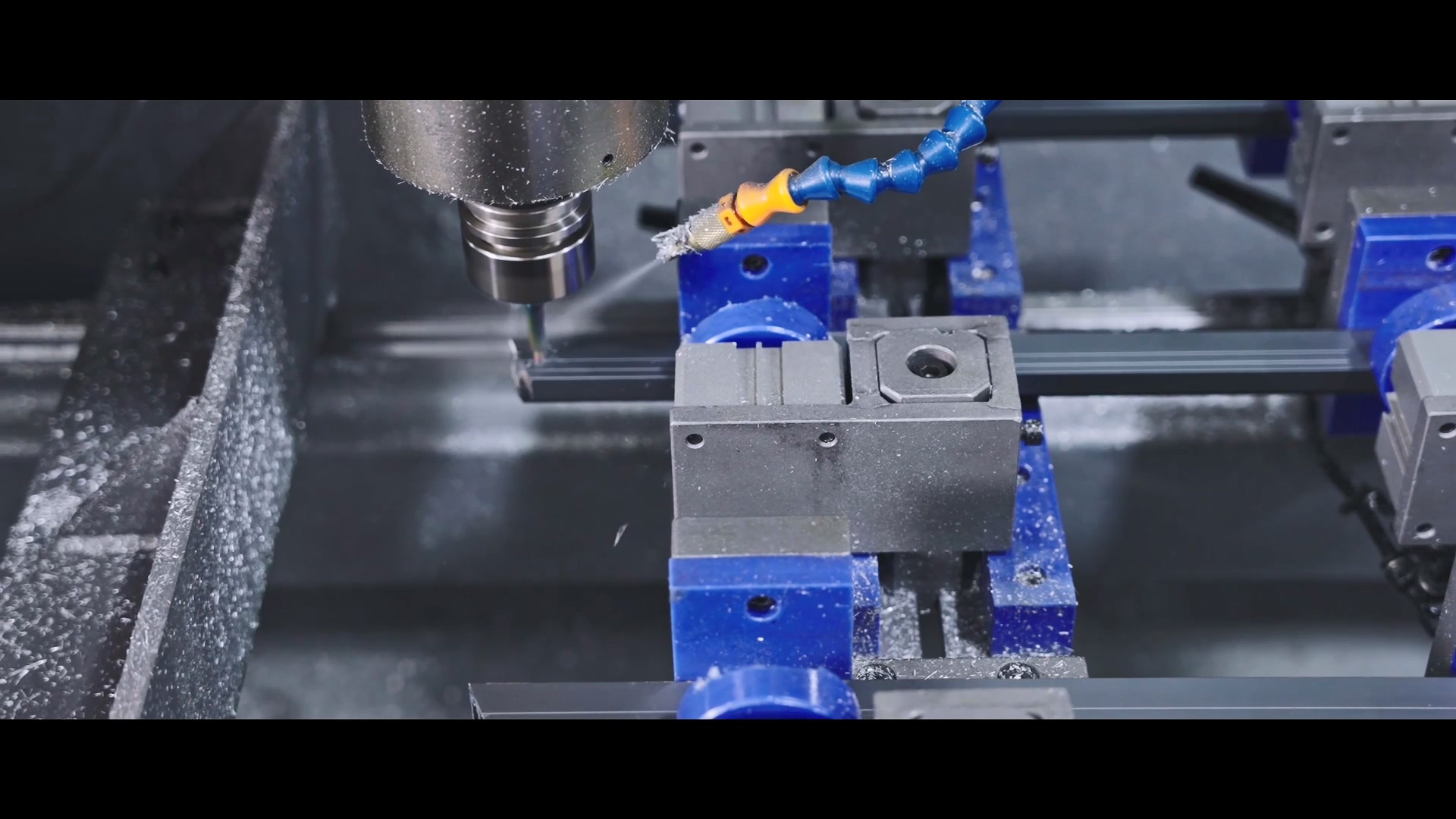
CNC machining center used for precision cabinet component processing.
For project planning, the manufacturer's published figures are a monthly production capacity of 10,000 units and a typical production lead time of 30 to 45 days. Against traditional bathroom vanity factories and non-customized vanity suppliers, SHKL reports a customization lead time 30% shorter than the industry average, production efficiency 40% higher than manual processing lines, and long-term cost 10-15% lower as a result of automated production efficiency. Warranty support runs for 5 years, with one-stop after-sales service.
The company also holds recognised certifications including National High-Tech Enterprise, Foshan Standard Product Enterprise and Top Bathroom Brand.
Project planning facts at a glance: monthly production capacity 10,000 units | typical production lead time 30-45 days | minimum order quantity 20 units | delivery terms FOB | payment terms T/T | acceptance criteria pre-shipment test.
Step-by-Step: Specifying a Floating Vanity for a Renovation Project
The sequence below is written for contractors, designers and procurement teams working on either a single residential renovation or a multi-room hospitality programme. The order matters, because most specification errors on floating vanities come from confirming the cabinet before the wall and the storage brief are settled.
- Define the room type and sink configuration. A small residential bathroom usually calls for a single floating vanity, while a shared master bathroom or a hotel room with twin basins calls for a double sink bathroom vanity. The sink count then sets the minimum wall run.
- Confirm the wall can carry a hanging cabinet. Load-bearing capacity, blocking and the position of concealed drainage and supply lines should be confirmed with the site team before a wall-mounted product is locked in.
- Match the model to the measured wall run. The three floating model references in SHKL's range, AS813048A, AS813050 and AS813108, should be compared against the measured wall run, the sink position and the required basin clearance. Final dimensions for a specific model are confirmed at specification stage with the manufacturer rather than assumed from a catalogue drawing.
- Set the storage requirement before choosing a layout. Decide whether the project needs drawer storage only, or drawer storage plus additional wall mounted bathroom cabinets. This determines depth and internal configuration, and it is the most common point of rework in floating vanity projects.
- Choose material and finish by project class. Cost-controlled residential work commonly uses plywood construction, while higher-end residential and hospitality work moves toward solid wood and oak constructions with a sprayed finish. Finish direction is usually set by the interior scheme, from light wood tones in bright residential bathrooms to darker and black bathroom vanity finishes in contrast-led hospitality interiors. The wood segment's 34.9% revenue share in 2025 reflects how strongly buyers weight appearance and durability in this decision.
- Confirm compliance for the destination market. For North America, verify UL 962 coverage for stability, mechanical strength and flammability at the point of specification, not at the point of delivery.
- Lock the commercial terms and the schedule. Confirm minimum order quantity, delivery terms, payment terms and acceptance criteria, then map the manufacturer's production lead time onto the site programme with buffer for shipping and installation.
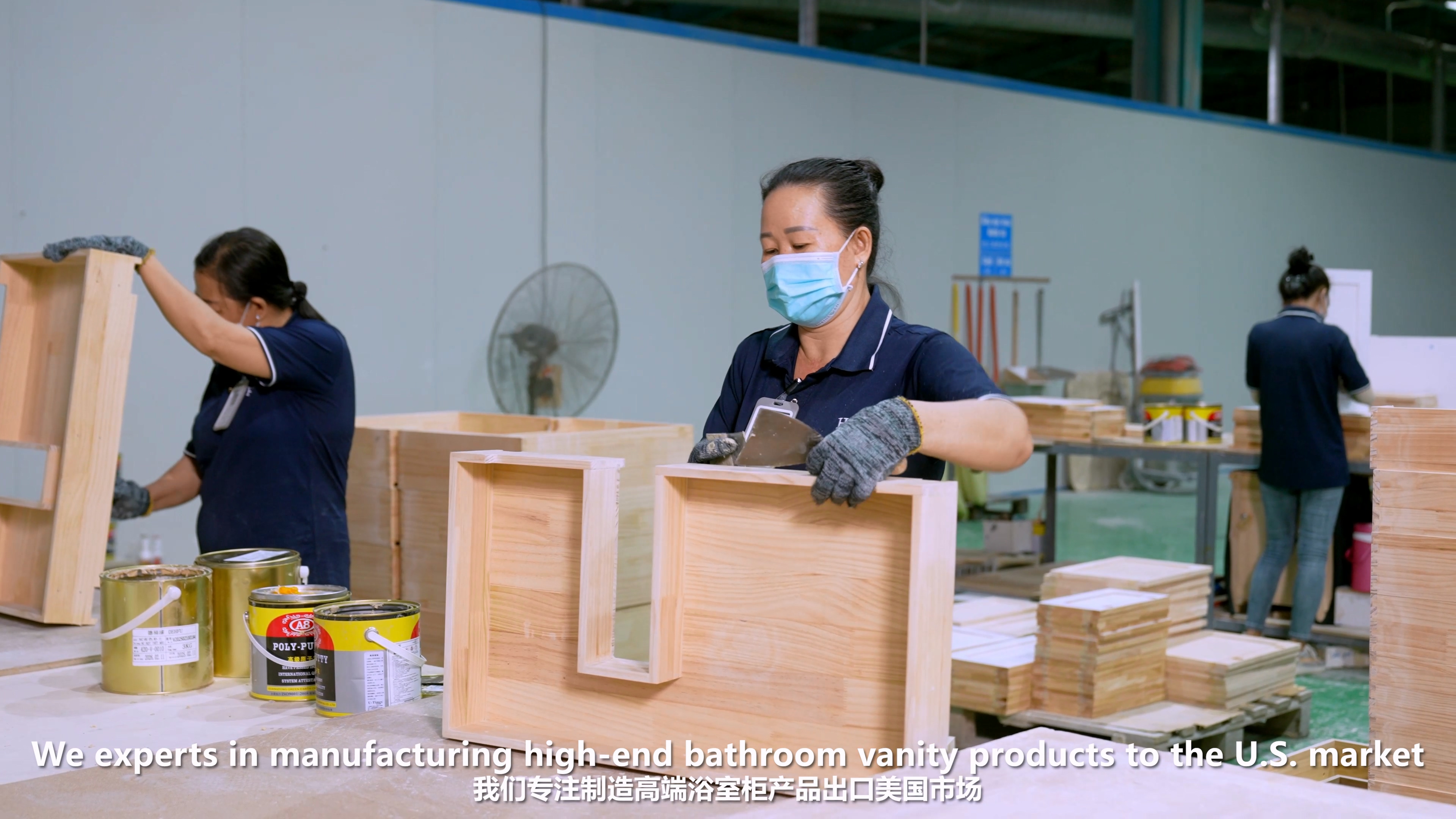
Drawer assembly stage, where storage layout and hardware specification are executed.
Managing Schedule and Quality Risk on Vanity Orders
Delivery timing is the most frequent risk in vanity procurement, particularly on hospitality projects where the late arrival of one room type delays an entire floor handover. Practical controls include breaking the delivery schedule down to component level, preparing material inventory in advance, limiting permitted SKU combinations for modular product systems, and running a rolling production schedule with buffer built into the delivery plan. Critical-material early warning, bottleneck process management and safety stock belong to the same control set.
Quality and transport risk are handled at the same time. Sourcing raw materials from certified suppliers and specifying higher-end hardware reduces in-service failure, while strengthened packaging reduces damage in transit, which is the most common reason a technically correct order arrives on site unusable.
Use Cases: Where Floating Vanities Fit Best
Residential renovation
Floating vanities suit compact family bathrooms, ensuite remodels and apartment upgrades where floor space and visual weight are the main constraints. A single floating vanity serves most guest and secondary bathrooms, while a double sink bathroom vanity applies the same wall-mounted logic to a shared master bathroom. Modern bathroom vanities in this segment increasingly follow the wall-mounted format, and residential work dominates the category overall at approximately 74.9% of revenue share in 2025.
Hospitality and commercial projects
Hotels, serviced apartments and real estate developments benefit most from the wall-mounted format when the same room type repeats across many units, because the floor stays clear for cleaning and maintenance access. SHKL's manufacturing profile is positioned for high-end hotel projects, residential, commercial and real estate applications, where a repeatable specification, consistent finish and controlled lead time matter more than a single-unit result.
Mixed renovation programmes
Many renovation programmes use both formats: floating vanities in smaller bathrooms and freestanding bathroom furniture where a larger storage piece is required. Freestanding units still account for a significant share of North American volume at around 30%, so a supplier that produces both formats keeps the specification consistent across a project. SHKL manufactures bathroom vanities across both wall-mounted and freestanding configurations, alongside shower doors and LED bathroom mirrors.
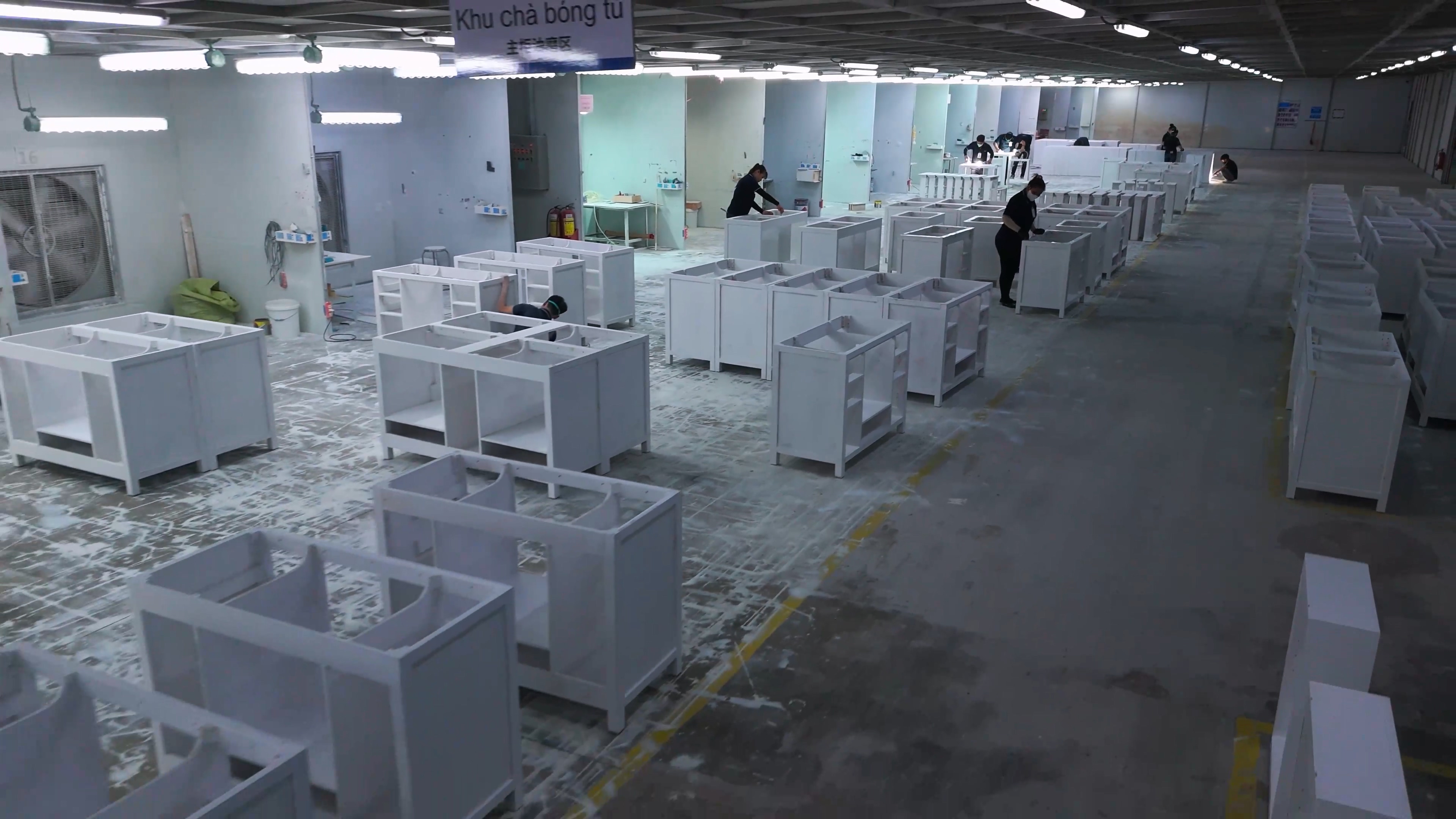
Dust-free spray booth workshop, where cabinet surface finishes are applied.
Comparison Table: Digitally Customized Manufacturing vs Traditional Vanity Production
The comparison below summarises the differences SHKL reports between its digitally controlled, customization-first manufacturing model and traditional bathroom vanity factories or non-customized vanity suppliers. It is a sourcing-model comparison, not a product-by-product specification.
| Criterion | SHKL digitally customized manufacturing | Traditional / non-customized vanity production |
|---|---|---|
| Customization scope | 100% customized, including unique cabinet forms; woodworking team of 60+ people | Customization is not the standard offer |
| Core equipment | 10+ electronic saws, 2 CNC machining centers, laser edge sealing machines, six-sided drills | Manual-based processing lines |
| Customization lead time | 30% shorter than industry average | Industry-average baseline |
| Production efficiency | 40% higher than manual processing lines | Manual processing baseline |
| Long-term cost | 10-15% lower, driven by automated production efficiency | Higher long-term cost |
| Quality inspection | Full-process inspection points; internal standard above the industry's quality standards | Inspection scope not defined at the same level |
| After-sales | Lower maintenance rate, 5-year warranty support, one-stop after-sales service | Not specified in the referenced comparison |
| Best-fit projects | High-end hotel projects, residential, commercial, real estate | Standardized, non-customized requirements |
Source: SHKL comparison data for digitally customized manufacturing versus traditional bathroom vanity factories and non-customized vanity suppliers.
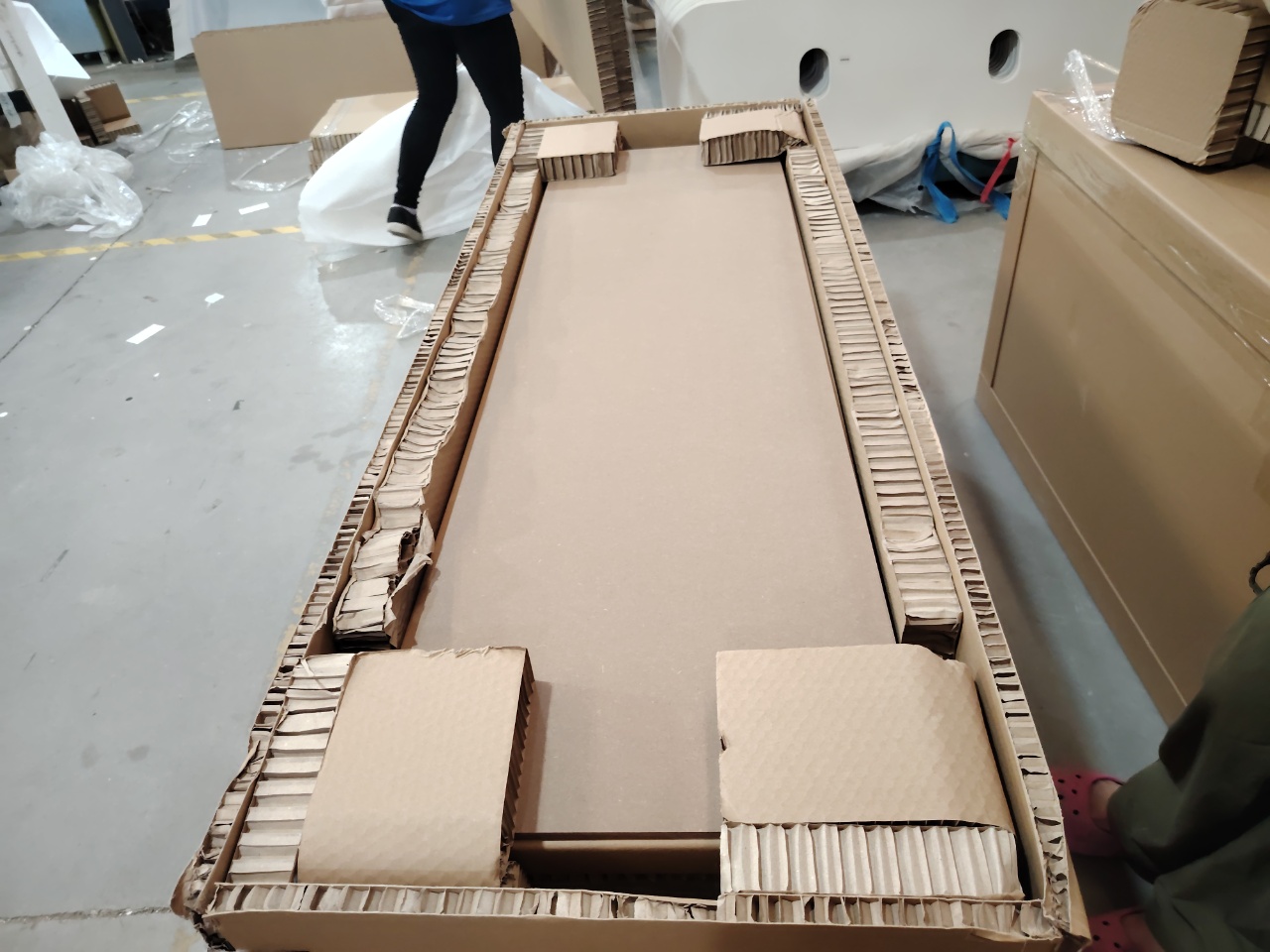
Reinforced packaging used to protect vanities in transit, a standard control against transport damage.
Frequently Asked Questions
Do floating vanities for North American projects have to meet a specific safety standard?
Yes. Bathroom cabinets and vanities supplied into North America must comply with UL 962, which covers stability, mechanical strength and flammability (UL Solutions, 2024). Compliance should be verified at the specification stage, because it affects both the cabinet construction and the hardware selected for a project.
Can a floating vanity be customized in dimensions and finish for a specific project?
Customization is the standard production model for SHKL rather than an exception: products are described as 100% customized, including unique cabinet forms, and the process is supported by a woodworking team of more than 60 people plus process R&D and transformation capability. In practice, models such as AS813048A, AS813050 and AS813108 are matched to the measured wall run, sink position and storage requirement, with final dimensions confirmed during specification.
What are the purchasing terms and how is the commercial structure set?
The minimum order quantity is 20 units. Delivery terms are FOB and payment terms are T/T, with a pre-shipment test as the acceptance criterion. On long-term cost, SHKL reports figures 10-15% lower than traditional factories as a result of automated production efficiency, a difference that becomes more significant on repeat orders than on a single unit.
Can a sample be validated before a full order is placed?
Yes, and it is the recommended sequence for any project with customized dimensions or finishes. Reviewing a physical unit before production confirms the finish, the drawer and hardware behaviour and the wall-fixing interface, and pre-shipment testing is the defined acceptance criterion for SHKL orders. Project teams can request a sample and the product catalogue using the contact details at the end of this guide.
What production lead time and capacity should be planned for?
SHKL's published planning figures are a typical production lead time of 30 to 45 days and a monthly production capacity of 10,000 units. Because the customization lead time is reported at 30% shorter than the industry average, projects with non-standard dimensions are not automatically slower than catalogue orders. For hospitality and multi-unit residential programmes the manufacturer's schedule should still be mapped onto the site programme with buffer for shipping and installation, supported by material preparation in advance and rolling production scheduling. To start a project conversation, contact Rita Luo at info@shklbathroom.com or via WhatsApp at +86 13790005061.
Next Step: Sample, Quote or Catalogue
Share your wall dimensions, sink configuration and target finish, and SHKL will respond with the closest model match from the floating vanity range, including AS813048A, AS813050 and AS813108, together with a quotation based on FOB terms and a 20-unit minimum order quantity.
Download the full product catalogue: SHKL Bathroom Vanity Catalogue (PDF)
Website: www.shklbathroom.com | Email: info@shkl.cc | WhatsApp: +86 13790005061
Conclusion
Floating vanities work in modern renovation projects because they solve a spatial problem first and a styling problem second. The cabinet releases floor area, keeps the cabinet body clear of floor-level moisture and gives a compact bathroom a cleaner line, provided the wall is prepared for a hanging load and the storage brief is settled before the model is chosen.
For project teams, the practical checklist is short: confirm the wall, measure the run, decide single or double sink, set the storage requirement, choose material and finish against the project class, verify UL 962 compliance for North America, and then lock dimensions, lead time and commercial terms with the manufacturer. With a reported production lead time of 30 to 45 days and a monthly capacity of 10,000 units, a floating vanity programme can be scheduled the same way as any other long-lead item in a renovation.
SHKL supplies bathroom vanities, shower doors and LED bathroom mirrors from production bases in China and Vietnam, and works with distributors, contractors and project buyers across Europe, Australia, North America, South America and the Middle East.